Home Blog Page 437

What is the significance of Tulsi Day?

0

Tulsi Day, celebrated to honor the sacred Tulsi plant (Ocimum sanctum), holds great spiritual, cultural, and ecological significance in Indian traditions. Revered as “Holy Basil,” Tulsi is deeply connected to Hindu mythology and is considered a manifestation of the goddess Lakshmi, the consort of Lord Vishnu.

Mythological Backstory

The legend behind Tulsi Day is rooted in the story of Vrinda, a devout woman and the wife of the demon king Jalandhar. Vrinda’s unwavering devotion to her husband made Jalandhar invincible. To protect the world from Jalandhar’s tyranny, Lord Vishnu disguised himself as Jalandhar, breaking Vrinda’s chastity and weakening the demon. When Vrinda realized the deception, she cursed Vishnu to turn into stone, leading to the creation of the Shaligram stone. Heartbroken, she immolated herself.

Moved by her devotion, Lord Vishnu blessed her to be reborn as the sacred Tulsi plant. He declared that she would be worshipped and united with him during the annual Tulsi Vivah (marriage of Tulsi and Shaligram) in the Hindu month of Kartik.

Significance

Spiritual: Tulsi is revered as a purifier of the mind, body, and soul. It is believed to bring peace, prosperity, and good health to households. Worshipping Tulsi is equivalent to worshipping Lord Vishnu.

Medicinal: Tulsi is known for its medicinal properties in Ayurveda, offering remedies for colds, respiratory issues, and stress.

Ecological: Tulsi plays a vital role in purifying the environment by releasing oxygen and absorbing toxins.

Celebration

Tulsi Day is observed by performing rituals like watering the plant, lighting a lamp near it, and reciting prayers. It is a reminder of the interconnectedness of spirituality, health, and nature in Indian culture.

How Christmas is celebrated in different parts of the world?

0

Christmas, celebrated on December 25th, is a global festival marked by unique traditions across different cultures and regions. Let’s explore how this joyous occasion is observed in various parts of the world.

  1. Europe

United Kingdom: Christmas here is all about festive decorations, carol singing, and elaborate feasts. On Christmas Eve, children hang stockings hoping for gifts from Father Christmas. The day concludes with a traditional dinner of roast turkey, Brussels sprouts, and Christmas pudding.

Germany: Germans celebrate Advent leading up to Christmas. Christmas markets, known as Weihnachtsmärkte, sell ornaments, crafts, and mulled wine. On December 6th, children receive small gifts in shoes for St. Nicholas Day.

Italy: Italians observe La Befana, a friendly witch who brings gifts to children on January 6th. Christmas Eve features a grand feast, often seafood-based, called La Vigilia.

  1. North America

United States: Christmas is marked by decorating Christmas trees, exchanging gifts, and Santa Claus visits. Communities often hold parades and light displays, while families enjoy meals featuring ham, turkey, and pies.

Canada: Many Canadian traditions resemble those in the U.S., but French-speaking regions celebrate Réveillon, a Christmas Eve feast. Ice skating and winter activities are also popular.

  1. Latin America

Mexico: Festivities begin with Las Posadas, a reenactment of Mary and Joseph’s search for shelter. Families enjoy tamales and ponche (fruit punch). At midnight on Christmas Eve, Misa de Gallo (Midnight Mass) is held.

Brazil: A tropical Christmas involves beach outings and fireworks. The traditional dinner includes roast pork, turkey, and rice with raisins.

  1. Asia

India: Though a minority celebrate Christmas, churches are beautifully decorated, and feasts include traditional Indian sweets. In Goa, vibrant street fairs and midnight masses are highlights.

Japan: Christmas is more of a commercial and romantic holiday. People exchange gifts, and eating KFC has become a quirky tradition!

  1. Africa

South Africa: Christmas falls during summer, and families enjoy barbecues called braais. Churches hold vibrant carol services.

Ethiopia: Celebrated on January 7th, Ethiopian Christmas (Genna) involves fasting, prayers, and a special stew called doro wat.

  1. Australia and New Zealand

Christmas occurs during summer, so celebrations often include outdoor barbecues, beach gatherings, and camping. Santa may arrive on a surfboard, and families sing carols under the stars.

Conclusion

Christmas unites people worldwide, blending local customs with universal themes of joy, giving, and togetherness. This diversity makes the festival not only a religious occasion but also a vibrant cultural celebration.

Jaguar Unveils the Type 00 Concept Car as Part of Controversial Rebranding

0

Jaguar has taken a bold step into the future with the unveiling of its Type 00 concept electric coupe, marking a significant part of its transformation into an electric-only luxury automaker. The concept car, which debuted in Miami, represents more than just a new vehicle – it’s a symbol of Jaguar’s new direction. However, this radical shift has sparked intense debate among car enthusiasts, critics, and long-time fans of the brand.

A Bold New Design Philosophy

The Type 00 is not your average car. With its futuristic design, it flaunts an elongated hood, a low-slung roofline, and a fastback body style without a rear window, making it a striking presence. The exterior is painted in a vibrant Miami Pink and London Blue, adding a unique flair. Inside, the car continues to push boundaries with butterfly doors, a stone plinth between the seats, and elegant brass accents, creating an atmosphere of luxury and innovation. One of the most notable features of the Type 00 is the digital display that spans across the windshield, visible even when other screens retract, highlighting the concept’s cutting-edge technology.

This unveiling comes as part of Jaguar’s broader rebranding effort, with the company adopting a new “Copy Nothing” design philosophy. The philosophy signifies a departure from traditional car design, embracing bold and unconventional elements. However, the car’s design and the rebranding campaign have drawn mixed reactions, with some enthusiasts criticizing the company for straying too far from its heritage.

The Electric Future and Production Model

While the Type 00 is a concept, it offers a glimpse into Jaguar’s upcoming production electric vehicle—a four-door grand tourer set to be released next year. According to Jaguar, this vehicle will have an impressive range of up to 430 miles on a single charge and feature rapid charging capabilities, addressing one of the major concerns of electric vehicle (EV) owners today.

However, the global shift to electric vehicles has been slower than anticipated, and Jaguar’s pivot to an all-electric lineup comes at a challenging time. Despite the Type 00’s stunning design and technical prowess, there are doubts about whether the company can capture the public’s imagination and regain its market share. With competitors like Tesla and Porsche already dominating the EV market, Jaguar faces an uphill battle in securing its place in the rapidly evolving automotive industry.

A Controversial Rebrand

Alongside the launch of the Type 00, Jaguar’s rebranding campaign has garnered significant attention and criticism. One of the most controversial aspects of the campaign was a promotional video that featured vibrant settings and models, but no actual cars. This choice led to accusations that Jaguar was abandoning its core identity by removing the iconic leaping cat emblem, a symbol synonymous with the brand for decades.

Critics have accused Jaguar of trying too hard to embrace modern trends, with some calling the rebranding effort overly “woke” and disconnected from the brand’s traditional luxury and performance values. In response, Jaguar has defended its approach, with Rawdon Glover, the company’s managing director, rejecting these claims. He emphasized that the campaign is part of the company’s effort to reposition itself as a high-end luxury brand, moving away from traditional stereotypes. Glover also condemned some of the more negative online reactions, acknowledging the controversy but standing by the company’s vision.

The Road Ahead for Jaguar

Jaguar’s decision to pause its UK sales and focus on its 2026 relaunch is a bold move, but one that highlights the company’s commitment to revamping its image. However, the rebranding and pivot to electric vehicles come with significant risks. With Jaguar now owned by Tata Motors, the company faces increased pressure to evolve and compete in a fast-paced and competitive market. The company’s focus on exclusivity and high-end luxury may alienate its long-standing customer base, and whether this strategy will succeed remains to be seen.

As the electric vehicle market continues to grow and evolve, Jaguar’s future will depend on its ability to balance innovation with tradition. The unveiling of the Type 00 concept car is a step in that direction, but it remains to be seen if this daring leap into the future will help Jaguar regain its position as a leader in the luxury automotive world.

Devendra Fadnavis: A Journey from RSS Cadet to Three-Time Chief Minister of Maharashtra

0

Devendra Fadnavis is set to take oath as the Chief Minister of Maharashtra for the third time today at 5:30 PM at Azad Maidan. This marks yet another milestone in a political journey shaped by resilience, strategy, and an unwavering commitment to public service. From his formative years in Nagpur to becoming a pivotal figure in Maharashtra politics, Fadnavis’s story is one of ambition and determination.

A Childhood Influenced by Politics

Born on July 22, 1970, in Nagpur to a Marathi Brahmin family, Devendra Fadnavis grew up in a politically active household. His father, Gangadhar Rao, was a BJP leader and an RSS pracharak who served briefly as a member of the Maharashtra Legislative Council. Fadnavis’s early exposure to politics was deeply influenced by his father’s activism, especially during the Emergency period in 1975. When his father was jailed, a young Fadnavis developed a strong aversion to then-Prime Minister Indira Gandhi. In protest, he left the Indira Convent School where he was enrolled at the time.

After completing his schooling at Saraswati Shishu Mandir, Fadnavis pursued law and later earned a postgraduate degree in business management from Germany. His academic journey reflects his pursuit of intellectual growth, even though he chose politics over a professional career.

Early Political Career: From Corporator to MLA

Fadnavis’s political career began at a young age, shaped by his association with the Rashtriya Swayamsevak Sangh (RSS) and the Akhil Bharatiya Vidyarthi Parishad (ABVP). At just 17, he lost his father, but with his elder brother managing family responsibilities, Fadnavis devoted himself entirely to politics.

In 1992, he was elected as a corporator in the Nagpur Municipal Corporation. By 1997, he made history by becoming Nagpur’s youngest mayor at the age of 27. Two years later, he won the Nagpur West Assembly seat, marking his entry into state politics. Fadnavis would go on to serve five consecutive terms as an MLA, representing Nagpur with distinction.

A Strategic Mind: Navigating Party Politics

Fadnavis’s rise within the BJP was a mix of strategic acumen and adaptability. Initially mentored by Nitin Gadkari, he later aligned himself with Gopinath Munde when intra-party rivalries surfaced. This calculated shift proved instrumental in elevating Fadnavis’s stature within the BJP.

When the BJP needed a non-Marathi face to lead Maharashtra, Fadnavis emerged as the natural choice. His successes as an election strategist in states like Bihar, Goa, and Kerala bolstered his reputation as a leader who could deliver results.

The Young and Visionary Chief Minister

In 2014, Fadnavis became Maharashtra’s Chief Minister at 44, the second-youngest in the state’s history. His tenure was marked by significant achievements, including infrastructure projects, rural development, and innovative governance practices. Notably, he was the first Chief Minister in 49 years to complete a full five-year term in Maharashtra, reflecting his political resilience and administrative acumen.

Personal Life: A Partnership of Equals

In 2005, Fadnavis married Amruta Ranade, a banker, singer, and actress. Their relationship, which began as an arranged marriage, quickly grew into a partnership built on mutual respect. Amruta has often described her husband as a grounded and sincere individual. Together, they have a daughter, Divija.

The 2019 Political Drama and Resilience

Fadnavis’s second term as Chief Minister in 2019 was short-lived, lasting only 80 hours due to political upheaval involving alliances and defections. However, his now-iconic quote in the Assembly, “I am the sea; I will return,” symbolized his determination to reclaim his position.

In 2022, Fadnavis played a key role in the political realignment that led to Eknath Shinde becoming Chief Minister. While initially reluctant to serve as Deputy Chief Minister, he eventually accepted the role, reportedly at the insistence of Prime Minister Narendra Modi. This move showcased his loyalty to the party and willingness to prioritize collective goals over personal ambition.

A Legacy in the Making

Fadnavis’s return as Chief Minister for a third term cements his position as one of Maharashtra’s most influential leaders. From his grassroots beginnings to navigating the complexities of coalition politics, his journey is a testament to adaptability, resilience, and vision.

As Fadnavis takes on the mantle once again, all eyes will be on how he steers Maharashtra toward progress while addressing its myriad challenges. His story, marked by triumphs and trials, continues to inspire not just his supporters but also those who aspire to leave a mark in public service.

Meet Eva, the cat becomes the first pet to enter India through Cochin Airport

0

In a landmark moment for Cochin International Airport, a one-year-old Turkish-breed cat named Eva made history as the first pet to arrive from abroad. Eva’s journey from Doha, Qatar, was more than a personal triumph for her owner, K A Ramachandran—it marked the airport’s achievement in becoming only the seventh in India to be certified to receive pets from overseas, thanks to its newly acquired Animal Quarantine and Certification Services (AQCS) certification.

Eva’s story is as heartwarming as it is historic. Rescued as an abandoned kitten near Ramachandran’s apartment in Doha, she quickly became an inseparable part of his family. “She was more than just a pet—she became a family member,” Ramachandran, an automobile mechanic returning to Kerala after 34 years abroad, shared. Encouraged by his son Rineesh, who still resides in Doha, Ramachandran undertook the complex process of ensuring Eva could accompany him to India.

An Arduous Journey Across Borders
Bringing a pet from abroad to India is no easy feat. Eva’s journey involved meticulous planning, starting with a veterinary examination and the issuance of a pet passport detailing her age, vaccinations, and health status. Additionally, a no-objection certificate from the Union Ministry of Animal Husbandry’s AQCS was mandatory.

With the necessary paperwork, including vaccination certificates, a health certificate, and proof of Ramachandran’s own travel plans, Eva was cleared for travel. The cost? A modest 340 Qatari Riyals for her weight and carrier, which was stowed safely under Ramachandran’s seat during the flight.

Cochin Airport’s Landmark Moment
Eva’s arrival is not just a personal milestone for Ramachandran and his family but also a significant achievement for Cochin International Airport. The AQCS certification allows the airport to cater to pet owners, opening new possibilities for those wishing to relocate with their furry companions.

This development positions Cochin among an elite group of Indian airports offering such services, enhancing its reputation as a forward-thinking hub.

A Symbol of Compassion and Progress
Eva’s story is more than a logistical success—it’s a testament to compassion, perseverance, and the growing recognition of pets as integral members of families. Her journey from the streets of Doha to her new home in Kerala symbolizes the lengths people are willing to go to ensure their beloved pets remain by their side, no matter the challenges.

As Eva settles into her new life in Thrissur, her story serves as an inspiration for pet owners worldwide and a reminder that every journey, no matter how challenging, is worth it when love is the destination.

Exciting news for Bengaluru! India’s First Bamboo-themed metro station here..

0

Khushi Sharma

India’s First Bamboo-themed metro station in Bengaluru?
The Bamboo Bazar Metro Station in Bangalore, India will be the country’s first bamboo-themed metro station.


The Bangalore Metro Rail Corporation Limited (BMRCL) has unveiled plans to develop India’s first bamboo-themed metro station in Bengaluru, marking a significant green initiative in urban infrastructure. This innovative project aims to integrate sustainable architecture.

Punati Shridhar, Chairman of the Bamboo Society of India (BSI) and former Principal Chief Conservator of Forest, stated that the BMRCL agreed to their request for a bamboo-themed station. The station will be decorated with bamboo and Bambusa tulda wood from Tripura. The medians under the metro will also be covered with native and Indian bamboo.

Uber launches India’s first water transport service with Shikara bookings in Srinagar

0

Khushi Sharma

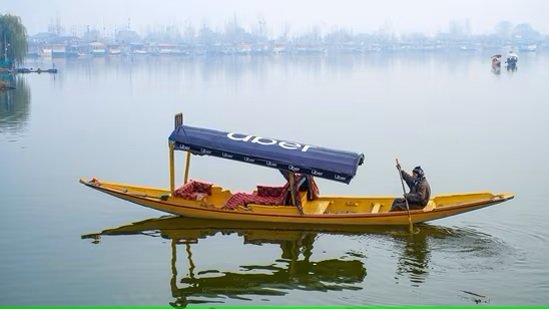
Uber has introduced its first-ever water transport service in India, Uber Shikara, on Srinagar’s Dal Lake.

This service allows tourists to book shikara rides through the Uber app, blending technology with tradition to enhance the tourism experience. The rides, available from 10 AM to 5 PM, last one hour and can accommodate up to four passengers.

Initially, seven shikaras are part of the service, with plans to expand based on demand. Uber has partnered with local shikara operators, ensuring fixed rates and helping boost their business by eliminating bargaining. Bookings can be made up to 15 days in advance.

Uber came to India in 2013, and now it claims to have over 10 lakh drivers on board. “Uber in India has the second largest market worldwide in terms of drivers,” said Dara Khosrowshahi, CEO of Uber.


Now booking a ride in dal lake in kashmir is now as easy as tapping your phone. With it’s widespread market it has also launched its water transport service in India with traditional shikara ride at dal lake in Srinagar. This is Uber’s first such service in Asia.


The price for 1 hour is 800 Indian rupees. On your way you get to see the most amazing views like Kabootar khana, Lotus lake, Floating garden and many more.

Netherland Special Series: Pranita Adwait Deshpande scripting story of empowerment transcending borders…

0

In a world where cultural boundaries often seem insurmountable, there are individuals who dedicate their lives to building bridges and fostering understanding. Adv. Pranita Adwait Deshpande is one such trailblazer—a lawyer, journalist, writer, and community leader whose journey reflects resilience, innovation, and an unwavering commitment to making a difference. From her roots in Vidarbha, India, to her transformative work in the Netherlands, she has seamlessly blended her professional expertise and cultural heritage to empower communities, advocating for justice, and celebrating the richness of Indian traditions on a global stage.

This article explores her inspiring journey—a testament to the power of determination, leadership, and the ability to create meaningful change across borders.

In a world driven by ambition and resilience, few individuals embody the spirit of empowerment, cultural advocacy, and global impact as profoundly as Adv. Pranita Adwait Deshpande. A lawyer, journalist, and writer, Mrs. Deshpande’s journey is an inspiring testament to perseverance, purpose, and unwavering commitment to bridging communities while staying true to her Indian heritage.

A Journey Rooted in Advocacy

Born and raised in Akola, Vidarbha, Mrs. Deshpande earned her law degree from Dr. Babasaheb Ambedkar Marathwada University in Aurangabad. Her early career in India spanned over nine years, where she worked with renowned organisations such as ICICI Bank, Sharekhan Pvt Ltd, and MD India Healthcare Services.

Her dedication to empowering women extended beyond professional boundaries, creating a foundation for her future endeavors on the global stage.

An Advocate Abroad: Building Bridges in the Netherlands

In 2017, life took a transformative turn as Mrs. Deshpande relocated to the Netherlands with her husband, Adwait Deshpande, and son, Ansh. What began as a new chapter became a mission to bridge cultural and social gaps. Her contributions to the Indian diaspora community, particularly through the Foundation for Critical Choices for India (FCCI), where she serves as Director of International Affairs, have been remarkable. FCCI’s initiatives aim to address issues of strategic importance to India while leveraging the expertise of Non-Resident Indians (NRIs) and Persons of Indian Origin (PIOs).

Her passion for connecting communities extends through her writing, where she eloquently explores topics such as Indian culture, law, and societal challenges. Her articles have been widely published in reputed newspapers and media houses, including Lokmat Times, Sakal, Free Press Journal, EBNW Story, and News 21.

Author, Thinker, and Advocate

Mrs. Deshpande’s literary contributions reflect her dedication to inspiring change. Her first book, Bharatatil Mahilanche Swatantra ani Suraksha, highlights women’s rights and safety in India. It was launched by Maharashtra Chief Minister Hon. Shri Uddhav Thackeray. Her second book, Be Your Own Sparkle, emphasizes self-empowerment and gained recognition from Hon. Ex-President Pratibha Patil. In 2024, she presented her third book, Yatra – Indian Heritage Beyond Borders, to President Shrimati Droupadi Murmu, underscoring the importance of preserving and celebrating Indian heritage worldwide.

A Multifaceted Leader

Mrs. Deshpande’s impact is not limited to her writing. She has worked closely with the Gandhi Centre, Embassy of India, The Hague, to promote Indian art and culture. Her recent role at the International Criminal Court (ICC) in The Hague highlights her commitment to justice and human rights on a global scale.

Her entrepreneurial spirit led her to establish Ansh Overseas B.V., an import-export company that promotes Indian agricultural excellence. Collaborating with Indian farmers, she ensures the delivery of high-quality produce to European markets, reinforcing the value of India’s agricultural heritage.

In addition, her efforts to integrate health and well-being into the community led to the creation of the Netherlands Yogasana Sports Association (NYSA). Through workshops, training programs, and national competitions, NYSA has brought the ancient discipline of Yogasana into the limelight as a competitive sport.

Recognized for Excellence

Mrs. Deshpande’s work has earned accolades from Indian and Dutch communities alike. In 2021, she received the International Media Award for Journalism from the Netherlands India Association. Her contributions to women’s empowerment and social work have also been recognized by organizations such as the Thane Municipal Corporation and Apurva Production Mumbai.

Empowering Lives Across Borders

Through her multifaceted roles as a lawyer, writer, journalist, and entrepreneur, Adv. Pranita Adwait Deshpande continues to inspire individuals worldwide. Her dedication to fostering cultural understanding, promoting Indian heritage, and addressing global challenges reflects a life driven by purpose.

As she aptly expresses in her second book, Be Your Own Sparkle, every individual has the potential to shine, transform, and create an impact. Mrs. Deshpande exemplifies this philosophy, proving that a determined spirit knows no boundaries.

For updates, insights, and inspiration, connect with Mrs. Deshpande on her platforms and join her journey of making a difference across borders.

Stay Connected:

Let her story inspire yours!

Mumbai to Navi Mumbai Airport in Just 17 Minutes by Water Taxis

0

In a groundbreaking move to alleviate congestion and improve connectivity, Union Minister Nitin Gadkari has announced a proposed water taxi service that will drastically reduce travel time to the Navi Mumbai International Airport. Once operational, passengers will be able to reach the airport from Mumbai in just 17 minutes, offering a swift, eco-friendly alternative to the city’s traffic-choked roads.

A Game-Changer for Urban Transport

Speaking at an election rally in Thane, Gadkari underscored the government’s commitment to developing innovative solutions to Mumbai’s traffic and pollution challenges. The water taxi service will utilize Mumbai and Thane’s extensive sea routes, providing a fast and efficient transport option for commuters. A jetty has already been constructed near the upcoming airport to facilitate this ambitious project, according to reports from News18.

The initiative is expected to have a significant impact on Mumbai’s transportation landscape, offering relief from the city’s notorious congestion while contributing to the reduction of air pollution.

Supporting Infrastructure Projects

The water taxi is part of a broader plan to improve connectivity across the Mumbai-Thane region. Gadkari also highlighted the New Delhi-Mumbai Expressway, a key infrastructure project aimed at diverting external traffic from Mumbai and Pune. The expressway, once completed, will ease the burden on metropolitan roads, offering a smoother and faster route for intercity travel.

Water Taxis: A Proven Solution

Water taxis are not a novel concept. Cities around the world, including Paris, New Orleans, Trinidad, and Auckland, have successfully implemented such systems to enhance urban mobility. India’s first water taxi service was launched in Kerala in 2020, and now Mumbai is poised to adopt this innovative transport model.

By leveraging its coastal geography, Mumbai is taking a step toward sustainable urban transportation. The proposed service promises to not only revolutionize travel to the Navi Mumbai International Airport but also set a benchmark for integrating water-based transport solutions into urban mobility plans.

A Future-Ready Mumbai

The introduction of water taxis aligns with the government’s vision of creating smart, sustainable cities. By addressing pressing issues like traffic congestion and pollution, this initiative positions Mumbai as a pioneer in embracing modern transportation solutions. For residents and travelers alike, the water taxi service will bring efficiency, speed, and environmental benefits, making it a win-win for the region.

With the project underway, Mumbaikars can look forward to smoother, faster commutes—ushering in a new era of urban transport.

18-year-old Samaira Hullur from Karnataka has become the youngest pilot to obtain a commercial license

0

In a remarkable milestone, Samaira Hullur, an 18-year-old from Vijayapura district in Karnataka, has earned the distinction of being India’s youngest individual to obtain a commercial pilot license. Her inspiring journey is a testament to determination, rigorous training, and a passion for aviation.

A Journey Fueled by Passion

Samaira’s aviation dreams took flight during a helicopter ride organized by the Vijayapura district administration at the Bijapur Utsav, sparking her fascination with flying. Encouraged by her father, Ameen Hullur, an interior designer, she set her sights on a career in aviation, embarking on a path that few dare to tread at such a young age.

Her foundation for success was laid during her early education at Sainik School and her subsequent studies in science at Kendriya Vidyalaya. This academic groundwork, combined with her determination, positioned her for the rigorous challenges of aviation training.

Achieving the Dream

Samaira’s journey to becoming a commercial pilot was marked by exceptional focus and hard work. She cleared six exams conducted by the Directorate General of Civil Aviation (DGCA) and completed 200 hours of flight training over just one and a half years. Her training began at the Vijay Yadav Aviation Academy (VYAA) in Delhi, followed by advanced sessions at the Carver Aviation Academy in Baramati, Maharashtra.

At the age of 17, Samaira had already cleared five out of six DGCA exams. However, the final exam on radio transmission technology required her to be at least 18 years old. She successfully completed it as soon as she met the age requirement, earning her license shortly after.

Rigorous Training and Dedication

Samaira’s training was nothing short of exhaustive. It included essential skills like night flying and multi-engine aircraft operations, which are critical components of the 200-hour flight experience required for a commercial pilot license. She credits her success to her dedicated trainers, Captain Tapesh Kumar and Vinod Yadav, as well as the unwavering support of her parents.

An Inspiration for Aspiring Pilots

Samaira Hullur’s achievement is not just a personal milestone but also an inspiration for young Indians, especially women, aspiring to break barriers in traditionally male-dominated fields. Her story highlights the power of passion, hard work, and the importance of strong familial and institutional support in realizing one’s dreams.

As Samaira takes to the skies as India’s youngest commercial pilot, she symbolizes a future where the sky is not the limit—it’s just the beginning.