Home Blog Page 394

No One Should Face This: A Father’s Mission to Ensure No Rare Disease Patient Suffers Alone

0

Through policy reforms, court appeals for rare disease funding, and the establishment of a dedicated center in Bengaluru, Prasanna Shirol is ensuring that parents and children affected by rare diseases receive the support they deserve.

A Father’s Fight Against the Odds

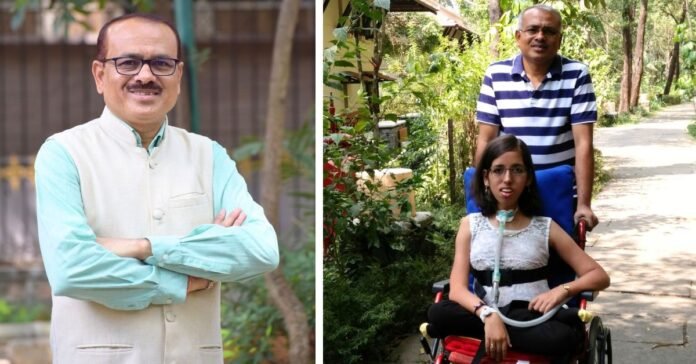
“You often hear of parents building their savings so their children can lead more comfortable lives in the long run. But I didn’t have the long run to think about. I just had the present,” recalls Prasanna Shirol, whose daughter, Nidhi, became India’s first reported Pompe patient.

Pompe disease is a rare genetic disorder that leads to glycogen accumulation in the muscles, affecting vital organs. With a prevalence of 1 in 40,000 to 1 in 3,00,000, the disease often limits life expectancy to just two years. Yet, Nidhi defied those odds, surviving for 22 years. However, the road to diagnosis was anything but easy. When she was born, genetic testing was in its infancy in India, leading to a long and arduous diagnostic journey.

The first seven years of Nidhi’s life were marked by countless hospital visits, inconclusive tests, and an overwhelming sense of helplessness. “Right from when Nidhi was four months old, we started noticing problems with digestion, frequent pneumonia, and delayed motor skills. By one and a half years, she still couldn’t stand on her own,” Prasanna shares. It took visits to over 40 hospitals before they finally got a diagnosis.

No One Should Face This: A Father’s Mission to Ensure No Rare Disease Patient Suffers Alone

Despite the devastating news, a silver lining emerged. Prasanna connected with the Netherlands-based International Pompe Association, which led him to Genzyme, a U.S.-based biotechnology company that provided access to a charitable program offering life-saving medication free of cost. But while Nidhi had a lifeline, Prasanna couldn’t stop thinking about families who lacked such opportunities.

Turning Pain Into Purpose: The Birth of ORDI

Rare disease drugs, also known as ‘orphan drugs,’ often cost crores, making them inaccessible for most families. The disparity in access to medical treatment prompted Prasanna to establish the Organization for Rare Diseases India (ORDI) in 2014, an advocacy platform dedicated to supporting rare disease patients and their families.

“No one should have to face the uncertainty that we faced,” he asserts. “If I had started this journey just for my daughter, it probably would have ended with her. But I started it to help other children and parents who have nowhere to turn.”

No One Should Face This: A Father’s Mission to Ensure No Rare Disease Patient Suffers Alone

Prasanna’s advocacy work gained momentum, and soon, he was taking India’s rare disease conversation to a global stage. He attended APARDO (Asia Pacific Alliance of Rare Disease Organisations) meetings in Manila, collaborated with global healthcare giants like Merck to explore clinical trial opportunities for Indian patients, and represented India at the COLLABORATE Initiative in Prague, aimed at addressing challenges in adult-onset rare diseases.

Despite his current stature, Prasanna’s early years with ORDI were riddled with personal sacrifices. “I quit my job, spent over a lakh per month on my daughter’s treatment, and had no idea how I managed to run my home for 12 years,” he reflects. But he persisted, driven by the kindness he received and the desire to pay it forward.

A Lifeline for Rare Disease Patients

ORDI has made significant strides in ensuring access to medical funding. For years, Prasanna faced bureaucratic resistance while advocating for government support. “Officials would tell me, ‘Thousands of children die of diarrhea and malaria every year. Why should we allocate funds for rare diseases?’” he recalls.

His persistence paid off in 2017 when a landmark decision led to the sanctioning of Rs 100 crore for rare disease treatment. This fund now entitles qualifying patients to Rs 50 lakh for treatment at designated ‘centres of excellence’ in public hospitals across India.

One such patient, Rekha K, was featured on a TV show in 2011 discussing her struggle with Mucopolysaccharidosis type IV (MPS IV), a genetic disorder affecting bone growth. Prasanna happened to watch that episode. Moved by her story, he reached out and introduced her to ORDI. “At the time, ORDI was just a small group, but Prasanna uncle has been my biggest support ever since,” says Rekha, who, along with her brother, also battling a rare disease, received career guidance and job placement assistance through ORDI.

The Rare Diseases Care Coordination Centre

ORDI’s impact extends beyond financial assistance. In Bengaluru, Prasanna launched the Rare Diseases Care Coordination Centre (RDCCC) at the Indira Gandhi Institute of Child Health, a pioneering facility designed to ease the treatment process for patients and their families.

“When Nidhi was undergoing enzyme-replacement therapy, she needed an infusion every fortnight. Each session meant 12 hours of painful pricks as nurses struggled to find a vein,” Prasanna explains. At RDCCC, children are treated by a dedicated staff, ensuring continuity of care. The center, with its child-friendly environment and comfortable waiting areas, has already treated 275 patients and is serving as a model for similar centers nationwide.

ORDI has also stationed coordinators at other government-approved treatment centers to assist families in navigating the complexities of rare disease treatment and funding applications.

Shaping Public Perception and Policy

Prasanna is now focused on shifting public perception and making rare diseases a part of mainstream health discussions. One way ORDI achieves this is through Racefor7, an annual marathon held across 20 cities to raise awareness about rare diseases. The event, scheduled for February 23 at 7 AM, invites participants from all walks of life to support the cause.

In addition, ORDI launched India’s first nationwide rare disease helpline (+91 8892 555 000), providing information, medical guidance, and even emotional support for affected families. “Sometimes, we even talk to their employers to help them understand what the families are going through,” Prasanna shares.

A Legacy of Hope

Recognized globally, Prasanna was named an Ashoka Fellow in 2018 and awarded the ‘RARE Champion of Hope’ in 2019. However, for him, the real victory lies in the messages he receives from grateful parents. “When a parent sends me a picture of their child receiving treatment and says, ‘Thank you, because of you my child is alive,’ that’s what makes my day.”

For Prasanna, Nidhi’s story was never just about one child—it was about changing the narrative for every rare disease patient in India. And with each life he touches, his mission continues: to ensure that no one has to endure the journey alone.
AI’s Future Lies in India, Predict International Tech Giants

0

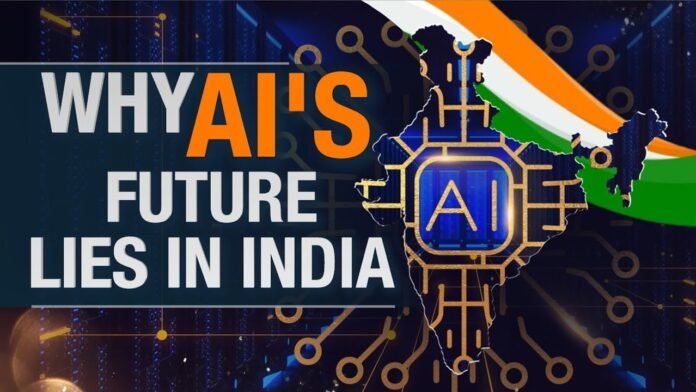
As Artificial Intelligence (AI) continues to reshape industries and redefine the global technological landscape, India is emerging as a key player in this revolution. Leading figures from major tech companies increasingly recognize India’s potential as a global AI powerhouse. With its massive talent pool, rapid adoption of AI technologies, and substantial data wealth, India is poised to become a frontrunner in AI innovation, development, and deployment.

India’s AI Potential: A Global Perspective

International tech leaders are united in their vision of India playing a pivotal role in the future of Artificial Intelligence (AI). The country is no longer just a consumer of AI-driven technology but an active participant in shaping the industry’s future. Here’s what the biggest names in the global technology sector are saying:

Sam Altman, CEO, OpenAI

“India is an incredibly important market for AI in general and OpenAI in particular. It is our second-biggest market; we tripled our users here in the last year. Seeing what people in India are building—whether it’s AI stacks, chips, models, or applications—India should be doing everything. India should be among the leaders of the AI revolution.”

Sundar Pichai, CEO, Google

“As the world adopts Artificial Intelligence, India has the opportunity to lead the AI frontier.”

Satya Nadella, Chairman & CEO, Microsoft

“India can do great work in the area of Indic languages and in transforming its industries using artificial intelligence. I believe the next big breakthrough in AI is yet to come, and India has the mathematics talent, academic institutions, and research ecosystem to drive that innovation.”

Jensen Huang, CEO, Nvidia

“India’s importance in the world of technology is undeniable, particularly as the home to some of the world’s top computer scientists. India has the potential to become a global leader in AI innovation. It makes complete sense that India should manufacture its own AI. The next generation of India will be the back-office for AI delivery.”

Arvind Krishna, CEO, IBM

“India is poised to become a global leader in AI deployment. With its massive population and vast data resources, India has a unique advantage in the AI landscape.”

Saibal Chakraborty, BCG

“India’s swift adoption of AI is redefining its competitive edge globally, with 30% of Indian companies having maximized AI’s value potential—surpassing the global average of 26%. With 100% of companies actively experimenting with AI, India stands out for its readiness to harness AI’s potential.”

Reports and Surveys Supporting India’s AI Growth

  • Bosch Tech Compass Survey 2025: Over 50% of Indians are actively self-educating in AI-related skills, making the country a frontrunner in AI readiness.
  • Emeritus Global Workplace Skills Study 2025: India’s AI adoption rate is the highest globally, with 94% of Indian professionals believing that mastering AI skills will accelerate their career growth.

India’s AI Industry: Beyond Just a Market

India is not just a consumer of AI but a development hub.

Vishal Sikka, Former CTO of SAP & Infosys

“When China can do it with DeepSeek, India—long accustomed to excelling in a resource-constrained environment—certainly can. India is vast and important for the future of the world. It should not just build AI applications but also develop AI models.”

Lisa Su, CEO, AMD

“India is more than just a market for AMD; it is an essential development hub. Our largest research and development (R&D) facility outside the U.S. is located in Bengaluru. Every aspect of our product line goes through our design center here in India.”

Shantanu Narayen, Chair & CEO, Adobe Systems

“India has great skills, great talent, and a unique approach to innovation. The country has always been at the forefront of pioneering new technologies while optimizing costs.”

India’s AI-Driven Future

Global tech giants are clear: India’s future is intricately tied to the future of AI. With a growing talent pool, rapid adoption of AI technologies, and a strategic focus on both AI applications and model development, India is poised to lead the charge in AI’s global evolution. As the country continues to invest in AI research, infrastructure, and education, the coming years could see India solidify its position as a dominant force in the world of AI.

Bollywood Actress Saumya Pandey shares her journey, inspiring many from small cities to dream big

0

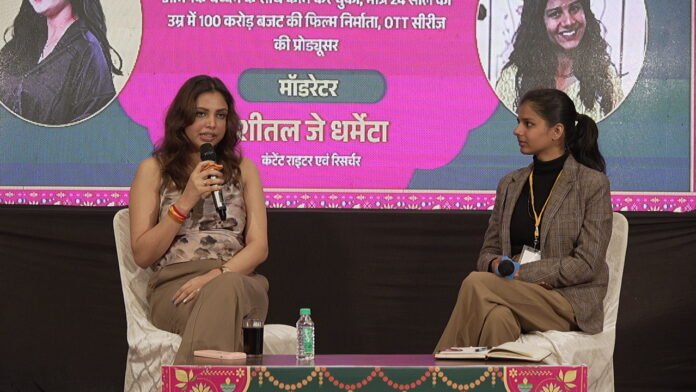
Ratlam witnessed a vibrant celebration of media and creativity during the Malwa Media Fest held on January 24th and 25th, 2025. Adding a touch of Bollywood glamour to the occasion was actress Saumya Pandey, who graced the event and shared her insightful perspectives on women’s representation in cinema. Hailing from Jabalpur, Madhya Pradesh, Pandey encouraged young individuals to perceive parental advice as guidance rather than a burden. Currently, she is producing a Rs 100 crore movie with the renowned filmmaker duo Abbas-Mustan on an OTT platform.

From Sports Enthusiast to Bollywood Star: Saumya’s Journey

When asked about her journey into acting, Saumya revealed that her initial aspirations were far from the silver screen.

“Acting was never my first goal. It all began with sports,” she shared. Growing up in Chhatarpur, Jabalpur, Badamalanga, and Bundelkhand, she pursued hockey, badminton, and volleyball. As a child, she often visited her maternal grandmother’s small house in Pratapgarh, Uttar Pradesh, and aspired to create a better life for herself.

Her father, a police officer, played a crucial role in shaping her worldview. Observing injustices like child labour and domestic hardships made her determined to make a difference. Initially, she aspired to join the civil services as an IAS or IPS officer, but fate had other plans.

During her time in college in Jabalpur, she faced a turning point. Encouraged by her teachers, she participated in a modeling event at her fresher’s party. Despite her initial hesitations—having never worn heels or used makeup—she took a leap of faith. The experience changed her perception, showing her that the stage and camera could be powerful mediums for societal change.

Championing Hindi and Cultural Roots in Bollywood

Unlike many in the industry who adapt to westernized norms, Saumya takes immense pride in her Hindi roots.

“Bollywood is not a university with fixed rules. It’s your values that set you apart,” she emphasized. She cited actresses like Janhvi Kapoor and Yami Gautam as examples of those who stay true to their cultural heritage. Initially, her fluency in Hindi made her appear older than her age in Mumbai, but she embraced a balance of Hindi and English to navigate the industry while retaining her linguistic pride.

Bollywood Actress Saumya Pandey shares her journey, inspiring many from small cities to dream big

Family’s Reaction to Her Career Shift

Coming from a disciplined background, convincing her family about her unconventional career choice was a challenge.

“When I told my father I was pursuing modeling, he asked, ‘What is that?’” she recalled humorously. Initially, he wasn’t convinced and assumed it was a short-lived phase. But Saumya was determined—she spent three years excelling in modeling, winning showstopper titles, and even training as an air hostess. Eventually, she made the bold decision to move to Mumbai.

Her father, though skeptical, supported her in his own way. “He never said no outright but always made me wait a year before fulfilling any request. At the time, it felt frustrating, but today, I realize how much it taught me about discipline and patience,” she reflected.

Navigating Struggles in Mumbai and Entering Cinema

Saumya’s journey in Mumbai wasn’t easy. The first six months were spent finding a place to live, facing countless struggles, and adapting to the competitive environment.

“I had no acting experience. I started with modeling and later joined theatre. Mumbai can be overwhelming, and many people lose sight of their dreams amidst the distractions,” she shared.

Her perseverance paid off when she received a call from Mukesh Chhabra Casting Company for an audition. “I had to speak in Haryanvi, but I ended up mixing multiple languages. Yet, it was entertaining, and I cleared the audition,” she teased, keeping the project details under wraps.

Advice for Aspiring Actors from Small Towns

For young dreamers from rural backgrounds, Saumya’s advice is clear—Mumbai is not the only destination for success.

“You can start your journey in your hometown too. Families may not always understand initially, but if you’re passionate and determined, they will eventually come around. The world criticizes until you succeed, but once you do, they celebrate you,” she concluded.

Saumya Pandey’s journey is a testament to resilience, cultural pride, and the power of dreams. As she continues breaking barriers in Bollywood, she remains an inspiration for many aspiring actors from small towns across India.

This Kolkata Duo is Bringing Authentic Nolen Gur Back to Homes Across India

0

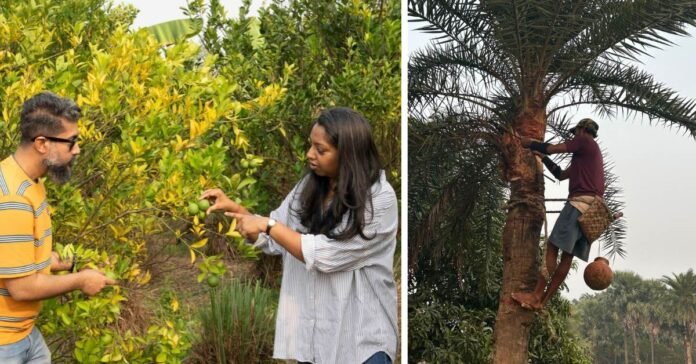
As winter sets in across West Bengal, a distinctive sweetness fills the air, heralding the arrival of nolen gur, a seasonal delicacy cherished for generations. Harvested from the sap of date and palm trees, this golden jaggery holds a unique place in Bengali culture. However, with modernization and changing lifestyles, the traditional art of making nolen gur is fading. Enter Senjuti Mahato and Abhishek Choudhury, the founders of Earth Story Farms, who are on a mission to revive and preserve this age-old craft, ensuring that authentic nolen gur reaches households across India.

A Shared Passion for Authentic Food

Both Senjuti and Abhishek have deep roots in West Bengal’s cultural fabric. Senjuti, a JNU political science graduate with over seventeen years in advertising, possesses a keen understanding of market trends and consumer behavior. Meanwhile, Abhishek, an IIM Calcutta MBA graduate, has spent years working in community development and sustainability.

“What really concerned us was the uncertainty about the authenticity of our food,” says Senjuti. “We realized that many traditional ingredients were being replaced by processed alternatives, and we wanted to change that. Our goal is to make clean eating a culture.”

This vision led them to establish Earth Story Farms in 2020, with a commitment to producing and promoting pure, natural food sourced directly from the land.

Earth Story Farms: Keeping Tradition Alive

The heart of Earth Story Farms lies in Bankura, a region renowned for its ideal climate—cold temperatures and clear skies—perfect for nolen gur production. “The making of nolen gur is not just about producing a sweet product, it is an art form that is deeply connected to the rhythms of nature,” says Senjuti.

The process begins with the skilled shiulis (local farmers) who carefully tap date palm trees to collect the sap. “The first incision is made just before sunset, allowing the sap to flow into earthen pots overnight,” explains Abhishek. By morning, the collected sap is transferred to a woodfire cooking unit, where it is slowly thickened into liquid jaggery (‘jhola gur’) or solid jaggery (‘patali gur’).

“The delicate balance of time, heat, and craftsmanship ensures that the final product retains its rich flavor and natural sweetness, unlike mass-produced jaggery that often contains preservatives and artificial additives,” Abhishek adds.

Sustainability and Year-Round Livelihoods

One of the key challenges in nolen gur production is that it is a seasonal activity, typically limited to winter months when the sap flows freely. However, Earth Story Farms has expanded its product range, ensuring year-round employment for over 80 artisans, including 50 shiulis who collect sap and 35 jaggery artisans responsible for cooking and shaping the final product.

“As gur artisans, our biggest concern was securing a steady livelihood,” says Mintu (45), a farmer and gur artisan. “Thanks to Earth Story Farms, we now have year-round work, crafting different jaggery products suited to each season.”

This Kolkata Duo is Bringing Authentic Nolen Gur Back to Homes Across India

For Prakash (27), a farmer, this venture has been life-changing. “Earth Story Farms has given us the opportunity to work in our own village, without having to migrate to cities. We can now sustain ourselves while preserving our traditional craft.”

Bringing Nolen Gur to Modern Homes

While nolen gur remains their signature product, Earth Story Farms offers a range of traditional and innovative products, including:

  • Sundarbans’ authentic honey
  • Handcrafted pickles
  • Pure cow ghee
  • Kasundi (Bengali mustard sauce)
  • Spiced gur haldi latte – a modern health drink blending turmeric and nolen gur

Their efforts have received enthusiastic responses from customers. Syeda Sufia Hasan, a recent buyer, recalls purchasing patali gur for her father. “The moment he tasted it, he was transported back to his childhood. The jaggery’s richness and purity are unmatched.”

A Balance Between Tradition and Innovation

While Earth Story Farms remains deeply committed to traditional methods, they have embraced modern innovation in their packaging and distribution. “We keep the production methods traditional but adapt the presentation for today’s consumers. For example, instead of large circular blocks, we offer patali gur in convenient cubes for easy use in home kitchens,” says Senjuti.

Abhishek adds, “People are returning to traditional, healthy eating. While the shift is gradual, we believe the demand for authentic, natural foods will only grow.”

The Road Ahead

Beyond reviving nolen gur, Earth Story Farms aims to preserve other endangered traditional foods and ensure that future generations appreciate their cultural and health benefits. “It’s not just about selling a product; it’s about connecting people to their culinary heritage and the natural goodness of real food,” says Abhishek.

With their deep-rooted passion and commitment, Senjuti Mahato and Abhishek Choudhury are ensuring that nolen gur remains a beloved staple in homes across India—one sweet, golden bite at a time.

Life Insurance vs Term Insurance: What’s the Difference?

0

Choosing between life insurance and term insurance can feel overwhelming, but understanding their key differences makes it easier. Both provide financial protection, but they serve different needs. 

Whether you’re looking for lifelong coverage or affordable protection for a set period, this guide will help you decide which insurance plan suits your requirements.

What is Life Insurance?

Life insurance is an agreement between a person and an insurer, where the insurer promises to pay a sum to the beneficiary upon the insured person’s death or after a set period in exchange for premium payments. In this policy, the policyholder pays premiums for a specific term, and in return, the insurer offers life coverage. 

A lump sum death benefit is provided in case of the policyholder’s untimely demise. Some policies also offer a maturity benefit at the end of the term. Lack of awareness and varied products can confuse potential customers about life insurance.

6 Benefits of Life Insurance

  1. Financial Protection: Life insurance offers critical financial security, ensuring that your dependents are supported with a lump sum or regular payouts in case of an unforeseen event.
  2. Tax Benefits: Premiums paid for life insurance are entitled to tax deductions under Section 80C, and the maturity or death benefits are tax-exempt under Section 10(10D).
  3. Loan Collateral: Certain life insurance policies can serve as collateral for loans, offering access to funds in emergencies or when immediate liquidity is required.
  4. Additional Coverage Options: Riders like critical illness or accidental death benefits can be added to your policy, expanding coverage to better safeguard against unforeseen circumstances.
  5. Flexible Premium Payment: Life insurance policies allow flexibility in premium payments, letting policyholders choose between monthly, quarterly, or annual payment options for convenience and budgeting.
  6. Potential Discounts: Buying life insurance online or choosing specific payment methods may lead to significant discounts, making it an affordable option for more individuals.

Types of Life Insurance

Life insurance plans cater to different financial goals. Here’s a breakdown:

Type of PolicyCoverage Details
Term Life InsuranceProvides pure risk coverage for a specific term.
Whole Life InsuranceCovers the policyholders for life with a savings component.
Endowment PlansOffers insurance plus a savings benefit.
Money-back PlansProvide regular payouts during the policy term.
Unit Linked Insurance Plans (ULIPs)Combine insurance with market-linked investments.
Child Insurance PlansSecures funds for a child’s education and future.

What is Term Insurance?

Term insurance is a type of life insurance that covers the policyholder’s life for a fixed period. If the policyholder passes away during this time, the nominee receives a lump sum payout. However, unlike whole-life or endowment plans, term insurance does not include savings or investments.

How Does Term Insurance Work?

  1. Choose Coverage & Duration: Carefully determine the right coverage amount and duration to ensure financial security for your dependents and loved ones.
  2. Fixed Premium Payments: Commit to paying a fixed premium regularly throughout the term to maintain coverage without sudden cost changes.
  3. Nominee Benefit at Death: The nominee benefit pays the sum assured to the beneficiary in case of the policyholder’s death during the term.
  4. No Maturity Benefit: If the policyholder outlives the policy term, there are no benefits unless the policy includes a return-of-premium option.

Key Features of Term Insurance

  1. Affordably Priced: The premium on this plan is relatively lower than that of most life insurance plans available on the market.
  2. High Sum Assured: The plan provides a high sum assured, thus ensuring that your family will be well catered for with a huge payout in case of death.
  3. Customisable Payouts: It allows you to decide how you want the payout, whether in a lump sum, staggered payments, or monthly instalments for flexibility.
  4. Additional Benefits: As riders can be added to enhance your coverage further, they can include riders for accidental death, or critical illness benefits for greater protection of you and your family.

6 Differences Between Life Insurance and Term Insurance

FeatureLife InsuranceTerm Insurance
Coverage DurationLifelong or fixed-term optionsFixed-term only
PayoutDeath benefit + possible maturity/savings benefitDeath benefit only
Premium CostHigher due to the additional benefitsLower, as it offers pure protection
Investment ComponentAvailable in some plansNot available
Loan Against PolicyAvailable in some plansNot applicable
Tax BenefitsAvailable under Sections 80(C) & 10(10D)Available under Sections 80(C) & 10(10D)

Why You Should Consider Having Life Insurance

Life insurance is essential for financial planning. Whether you choose term insurance or a broader life insurance plan depends on your long-term goals.

Who Should Choose Life Insurance?

  • Individuals seeking lifelong financial security.
  • Those looking to combine insurance with savings or investment.
  • Policyholders who may need liquidity through loans against their policy.

Who Should Choose Term Insurance?

  • People looking for affordable, high-coverage protection.
  • Young professionals secure their family’s future at a lower cost.
  • Homeowners with long-term financial obligations like mortgages.

Both life insurance and term insurance offer essential financial protection. A life insurance plan is ideal if you want coverage that covers you for the rest of your life and also provides savings benefits. However, if you need cost-effective coverage for a specific period, term insurance is the right choice. Assess your financial needs, compare options, and choose the plan that provides peace of mind for you and your loved ones.

What is NASA’s Pandora Mission?

0

NASA is gearing up for an exciting new mission, Pandora, set to launch in 2025. This mission will play a pivotal role in studying the atmospheres of distant exoplanets, addressing critical gaps left by the overwhelming demand for observation time on the James Webb Space Telescope (JWST). With a focus on clouds, hazes, and water vapor, Pandora aims to bring us closer to understanding the habitability of worlds beyond our solar system.

Understanding Exoplanets

Exoplanets are planets that orbit stars outside our solar system. Studying them provides essential insights into planetary formation and the potential for life beyond Earth. As of now, NASA has confirmed over 5,800 exoplanets, but many remain unstudied due to the complexities involved in analyzing their atmospheres.

Mission Objectives

Pandora’s primary objectives include:

  • Analyzing the atmospheres of at least 20 exoplanets, focusing on gas giants and super-Earths.
  • Investigating the presence of water vapor, methane, and carbon dioxide—key indicators of planetary habitability.
  • Monitoring stellar activity to understand how stars influence atmospheric observations.
  • Supporting JWST and other missions by enhancing exoplanet atmospheric models.
  • Demonstrating how small satellites can contribute to astrophysical research.

Key Features of Pandora

Pandora will be equipped with a 17.7-inch (45 cm) aperture Cassegrain telescope. While smaller and less sensitive than JWST, its extended observational capabilities allow it to focus on long-duration studies. The mission will use the transit method, capturing starlight that filters through an exoplanet’s atmosphere, revealing critical chemical signatures.

Overcoming Observational Challenges

One of Pandora’s biggest challenges is stellar interference—variations in a star’s brightness that can complicate exoplanetary observations. To address this, the mission will conduct long-duration monitoring of each exoplanet across multiple sessions, allowing scientists to separate starlight fluctuations from planetary atmospheric signals.

The Significance of Water Detection

Water vapor is one of the strongest indicators of potential habitability. Pandora’s ability to detect water in exoplanetary atmospheres will offer valuable insights into the existence of “water worlds”—planets that may have conditions suitable for sustaining life.

Complementing Existing Missions

Pandora is designed to work alongside JWST and other telescopes, enhancing the accuracy of atmospheric models and contributing to a more detailed understanding of exoplanet diversity and evolution. Its long-duration observations will provide continuous data to refine our knowledge of distant planetary systems.

A Leap Forward in Exoplanet Research

The launch of Pandora marks a significant step forward in the search for habitable planets. By refining our understanding of distant atmospheres, it will contribute to future missions aimed at identifying Earth-like worlds with conditions suitable for life. As scientists continue to explore the vastness of the universe, Pandora will serve as a crucial tool in unraveling the mysteries of planetary formation and habitability beyond our solar system.

Shiv Shakti Point: First mission to achieve a soft landing on the moon’s south pole

0

India’s Chandrayaan-3 mission marked a historic milestone in lunar exploration when, on August 23, 2023, it became the first mission to achieve a soft landing on the moon’s south pole. The landing site, named Shiv Shakti Point, has now been estimated to be 3.7 billion years old, a period that coincides with the emergence of primitive microbial life on Earth.

Mission Overview

Chandrayaan-3, India’s third lunar exploration mission, was launched by the Indian Space Research Organisation (ISRO) with the goal of studying the moon’s surface, particularly its south pole region. The mission’s key components, the Vikram lander and Pragyan rover, provided crucial data about the moon’s geological history and surface composition.

Age Estimation of Shiv Shakti Point

ISRO’s Physical Research Laboratory conducted a detailed analysis of the site, using high-resolution imaging to study craters and rock formations. Their study of 25 craters revealed an estimated age of 3.7 billion years, an observation corroborated by additional crater studies in the vicinity.

Geological Features of Shiv Shakti Point

The Shiv Shakti Point showcases diverse lunar terrain, classified into three types:

  • High-relief rugged terrain
  • High-relief smooth plains
  • Low-relief smooth plains (where the lander touched down)

Interestingly, the low-relief smooth plains were found to be the oldest, offering valuable insights into the moon’s past.

Impact Crater Analysis

The landing site is surrounded by major impact craters, including:

  • Manzinus Crater (3.9 billion years old)
  • Boguslawsky Crater (4 billion years old)
  • Schomberger Crater

These craters have played a significant role in shaping the geological features of the region by dispersing ejecta from past impacts.

Rock Distribution and Composition

The Pragyan rover examined 5,764 rock samples, of which 525 measured over 5 meters in length. Notably, the largest rocks were found near a fresh crater, located 14 km south of the landing site, suggesting minimal space weathering and recent geological activity.

Significance of the Findings

The findings from Chandrayaan-3 provide valuable insights into the moon’s evolution and its connection to Earth’s history. The estimated age of Shiv Shakti Point coincides with a crucial period on Earth when microbial life began to emerge. Furthermore, studying the geological features and crater formations could offer clues about the moon’s past conditions and the potential for life in similar extraterrestrial environments.

As India continues its journey in space exploration, the Chandrayaan-3 mission and its discoveries at Shiv Shakti Point stand as a testament to the nation’s growing prowess in planetary science and lunar research.

Kashmir’s Solar-Powered Car ‘Ray’ Successfully Completes Trial, Set for Road Launch by June

0

Innovation is thriving in Kashmir as Bilal Ahmad, a mathematics teacher from Srinagar, has successfully tested his solar-powered car named ‘Ray.’ This groundbreaking vehicle, designed to run on renewable energy, is expected to hit the roads by June 2025.

A Vision Turned Reality

Bilal Ahmad dedicated years to designing and developing this eco-friendly automobile, which cost over ₹20 lakh to build. The car features solar panels installed on its roof, bonnet, and trunk, capable of generating approximately 1 kilowatt-hour (kWh) of energy.

Performance & Charging Efficiency

One of the key highlights of ‘Ray’ is its efficient charging system. The car takes about 4 to 5 hours to fully charge and can travel up to 100 kilometers on a single charge. Additionally, the vehicle continuously charges itself during travel through solar energy and can also be powered using electricity when needed.

A Sustainable Future

Bilal’s invention is a step towards sustainable mobility and reducing dependency on fossil fuels. The successful trial marks a significant milestone in promoting green energy solutions in Kashmir. With the launch planned for mid-year, ‘Ray’ could pave the way for more innovative solar-powered vehicles in India.

Stay tuned for more updates on this revolutionary eco-friendly innovation!

Promise Day 2025: Date, history, significance and meaningful ways to celebrate this special day before Valentine’s Day

0

Promise Day, celebrated on February 11, is a cherished occasion during Valentine’s Week that allows people to express their love and devotion through heartfelt commitments. Whether between partners, friends, or family members, promises made on this day symbolize trust, support, and lasting relationships.

When is Promise Day 2025?

Every year, Promise Day is observed with enthusiasm on February 11. In 2025, it falls on a Tuesday, giving couples and loved ones a chance to reaffirm their commitments and strengthen their bonds.

History of Promise Day

Unlike some traditional celebrations, Promise Day does not have deep historical roots. Instead, it emerged as part of Valentine’s Week, influenced by modern romantic customs and commercial trends. Over the years, it has grown in popularity, becoming an integral part of love celebrations worldwide.

Significance of Promise Day

Promise Day is all about making meaningful commitments that reflect dependability and trust. These promises can take many forms, from pledging unwavering love and faithfulness in romantic relationships to offering support and care to friends and family. The day serves as a powerful reminder of the importance of honesty, understanding, and loyalty in building strong, lasting connections.

How to Celebrate Promise Day 2025

Looking for ways to make Promise Day special? Here are some thoughtful ideas:

  • Exchange Gifts: Surprise your loved one with personalized gifts that symbolize your promise and devotion.
  • Write Love Letters: Express your emotions in a heartfelt love letter, creating a timeless keepsake of your feelings.
  • Make Romantic Gestures: Plan a special date night, a scenic long drive, or an intimate moment to strengthen your bond.
  • Public Declarations: Some couples choose to make their promises in front of friends and family, reinforcing their commitment.
  • Promises Beyond Romance: This day isn’t just for couples—make heartfelt promises to friends and family, reaffirming the value of these cherished relationships.

Summing Up

Promise Day is a celebration of love, trust, and commitment, making it an essential part of Valentine’s Week. Whether through grand gestures or simple words, the promises made on this day hold the power to nurture and sustain meaningful relationships. As you celebrate Promise Day 2025, take a moment to reflect on the bonds you cherish and strengthen them with sincere, heartfelt commitments.

What is PM-AJAY Scheme?

0

The Pradhan Mantri Anusuchit Jaati Abhyuday Yojana (PM-AJAY) is a government initiative designed to uplift Scheduled Caste (SC) communities across India. Launched with the aim of combating poverty and improving socio-economic conditions, the scheme primarily focuses on employment generation and educational enhancement. Recently, the central advisory committee convened to review its progress and strategize future actions for effective implementation.

Objectives of PM-AJAY

The primary goal of PM-AJAY is to reduce poverty among SC communities through skill development and income-generating initiatives. It also seeks to improve literacy rates and encourage SC enrolment in educational institutions, particularly in aspirational districts, fostering long-term socio-economic advancement.

Core Components

PM-AJAY is structured around three key components:

  1. Adarsh Gram Development: This initiative transforms SC-majority villages into model villages through integrated development. It focuses on essential infrastructure and socio-economic indicators across ten domains, including education, health, and financial inclusion.
  2. Grants-in-Aid: This component supports district and state-level projects aimed at socio-economic development. It includes comprehensive livelihood projects that create sustainable income opportunities for SC communities, enhancing their economic independence.
  3. Hostel Construction: To improve educational access, the scheme promotes the establishment of hostels for SC students. This initiative aims to reduce dropout rates and provide a supportive environment for higher education.

Achievements Under PM-AJAY

As of FY 2023-24, significant progress has been recorded:

  • 1,834 villages have been designated as Adarsh Gram, benefiting from enhanced infrastructure and social programs.
  • The grants-in-aid component has approved projects across 17 states, improving livelihood opportunities.
  • 15 new hostels have been sanctioned, ensuring better access to higher education for SC students.

Monitoring and Collaboration

The successful implementation of PM-AJAY requires collaboration among various stakeholders. The central advisory committee emphasized the importance of community participation and enhanced project monitoring mechanisms. Continuous assessment of socio-economic indicators is essential to measure progress and refine strategies.

Future Directions

Moving forward, the scheme will focus on:

  • Strengthening partnerships with state and district authorities to enhance execution.
  • Increasing funding for skill development and infrastructure projects to provide sustainable growth opportunities.
  • Empowering SC individuals through education and employment, fostering inclusive growth nationwide.

PM-AJAY stands as a crucial initiative in India’s journey towards equitable development, ensuring that Scheduled Caste communities receive the resources and opportunities necessary for a better future.