Home Blog Page 392

Temples to Visit During Maha Shivaratri

0

Maha Shivaratri, one of the most sacred festivals dedicated to Lord Shiva, is celebrated with great fervor across India. Devotees observe fasts, chant prayers, and visit revered Shiva temples to seek blessings. If you’re planning a spiritual journey this Maha Shivaratri, here are some of the most significant temples you should visit:

1. Kashi Vishwanath Temple, Varanasi (Uttar Pradesh)

One of the twelve Jyotirlingas, the Kashi Vishwanath Temple in Varanasi is considered the holiest of all Shiva temples. On Maha Shivaratri, thousands of devotees throng the temple, performing ‘Rudrabhishek’ and participating in grand processions. The energy and devotion in Varanasi on this night make it an unparalleled experience.

2. Kedarnath Temple, Uttarakhand

Nestled in the Himalayas, the Kedarnath Temple is one of the Char Dham pilgrimage sites. Though it remains closed during winter, devotees still worship Lord Shiva here through special rituals at the Omkareshwar Temple in Ukhimath, where the deity is temporarily moved.

3. Mahakaleshwar Temple, Ujjain (Madhya Pradesh)

Famous for its ‘Bhasma Aarti,’ the Mahakaleshwar Temple is another Jyotirlinga shrine that attracts lakhs of devotees on Maha Shivaratri. The night-long celebrations, including abhishekams and bhajans, create a deeply spiritual atmosphere.

4. Somnath Temple, Gujarat

Revered as the first among the twelve Jyotirlingas, the Somnath Temple is an architectural marvel with deep spiritual significance. The temple witnesses grand Shivaratri celebrations with elaborate rituals, aartis, and cultural performances.

5. Brihadeeswarar Temple, Tamil Nadu

A UNESCO World Heritage site, the Brihadeeswarar Temple in Thanjavur is a masterpiece of Dravidian architecture. Maha Shivaratri here is marked by elaborate processions and special prayers offered to Lord Shiva.

6. Lingaraj Temple, Odisha

One of the most prominent temples in Bhubaneswar, the Lingaraj Temple sees a massive influx of devotees during Maha Shivaratri. The temple premises light up beautifully, and the ‘Mahadeepa’ ritual is a major highlight of the celebrations.

7. Ramanathaswamy Temple, Rameswaram (Tamil Nadu)

Situated on the sacred island of Rameswaram, this temple is one of the Char Dham sites and an important pilgrimage center for Shiva devotees. Maha Shivaratri is celebrated with grand rituals and special prayers.

8. Neelkanth Mahadev Temple, Uttarakhand

Perched amidst dense forests and scenic landscapes, this temple is associated with the legend of Lord Shiva consuming poison during the Samudra Manthan. Devotees trek to the temple to seek divine blessings on Maha Shivaratri.

9. Tarakeshwar Temple, West Bengal

Located in Hooghly district, this temple is a significant pilgrimage site in eastern India. Maha Shivaratri is celebrated with traditional rituals, kirtans, and night-long vigils.

10. Grishneshwar Temple, Maharashtra

Situated near the Ellora caves, the Grishneshwar Temple is the last of the twelve Jyotirlingas. Devotees gather here to offer prayers and witness the special abhishekam rituals performed during Maha Shivaratri.

Summing Up

Maha Shivaratri is not just a festival; it is a spiritual journey that connects devotees with the divine. Visiting these temples during this auspicious time can be a transformative experience, allowing you to immerse yourself in devotion and the powerful energy of Lord Shiva. Whether you choose to visit a Jyotirlinga shrine or a local Shiva temple, the essence of Maha Shivaratri lies in sincere prayer and unwavering faith.


Maha Shivaratri 2025: All you need to know

0

Maha Shivaratri, a significant Hindu festival, is observed annually in honor of Lord Shiva. This sacred occasion symbolizes the divine union of Lord Shiva and Goddess Parvati, making it one of the most revered celebrations in Hindu tradition. The festival falls on the 14th night of the new moon in the month of Phalgun (February-March) and is celebrated with immense devotion across India. In 2025, Maha Shivaratri will be observed on Wednesday, February 26.

Significance of Maha Shivaratri

Maha Shivaratri holds profound spiritual significance, representing the conquest of ignorance and darkness through prayer, fasting, and meditation. It is believed that on this night, divine energies are at their peak, making it an opportune time for spiritual seekers to attain higher consciousness. The festival is not just a celebration but a night of deep introspection, where devotees seek the blessings of Lord Shiva to overcome obstacles in life.

Several legends are associated with Maha Shivaratri. According to one popular belief, this was the night when Lord Shiva performed the cosmic dance of destruction and creation, known as the ‘Tandava.’ Another legend states that it was on this auspicious night that Shiva and Parvati were united in marriage, making it a highly significant day for married couples and unmarried women seeking a righteous life partner.

Maha Shivaratri Puja Rituals

The rituals of Maha Shivaratri begin early in the morning and continue throughout the night. Devotees take a holy bath before sunrise, wear clean attire, and visit Shiva temples to perform the traditional puja. Women, in particular, engage in worship with great devotion, offering items such as:

  • Water and Milk: Used for bathing the Shiva Lingam, symbolizing the purification of the soul.
  • Bel Leaves: Representing spiritual enlightenment and devotion.
  • Fruits and Sweets: Offered for the fulfillment of desires and well-being.
  • Incense Sticks and Lamps: Denoting prosperity and wisdom.
  • Betel Leaves: Signifying contentment and satisfaction in life.

One of the most distinctive aspects of Maha Shivaratri is the night-long vigil, known as Jaagran. Devotees stay awake, chanting ‘Om Namah Shivay’ and singing devotional hymns in praise of Lord Shiva, reinforcing their spiritual discipline and devotion.

Legends Behind Maha Shivaratri Vrat

Maha Shivaratri is steeped in fascinating mythological tales. One such story from the Garuda Purana tells of a hunter who unknowingly performed a complete Shiva Puja while seeking refuge under a Bilva tree. Due to his unintentional devotion, he attained salvation after his demise. This legend emphasizes the belief that even an unintentional offering to Lord Shiva on this day can bestow divine blessings.

Another well-known legend describes how Goddess Parvati undertook intense penance to win Lord Shiva as her husband. Her unwavering devotion pleased Lord Shiva, leading to their divine marriage on Maha Shivaratri.

How is Maha Shivaratri Celebrated Across India?

Maha Shivaratri is observed with immense zeal in different parts of India, with each region having unique traditions:

  • Tamil Nadu (Annamalai Temple): Devotees undertake a 14-kilometer barefoot walk around the temple at the Annamalai hills, known as Girivalam.
  • Mandi, Himachal Pradesh: The famous Mandi Shivaratri Fair attracts devotees from across the country, where over 200 Hindu deities are believed to gather.
  • West Bengal (Tarakeswar Temple): Unmarried women visit this sacred site to seek blessings for a good husband.
  • Varanasi, Uttar Pradesh: The ghats come alive with religious processions, where devotees offer prayers and perform rituals along the holy Ganges.
  • Ujjain, Madhya Pradesh: Home to the revered Mahakaleshwar Jyotirlinga, Ujjain hosts grand celebrations with night-long prayers and recitations.

Prominent Shiva Temples to Visit During Maha Shivaratri

If you wish to experience the festival’s spiritual grandeur, these temples are ideal destinations:

  1. Neelkanth Mahadev Temple, Haridwar, Uttarakhand – A significant pilgrimage site where devotees take a holy dip in the Ganges before worship.
  2. Umananda Temple, Guwahati, Assam – A Shiva temple situated on the smallest river island in the world.
  3. Bhavnath Taleti, Junagadh, Gujarat – Hosts a grand five-day-long Mela attracting thousands of devotees.
  4. Matangeshwar Temple, Khajuraho, Madhya Pradesh – Known for its ten-day-long celebrations.
  5. Somanath Jyotirlinga, Gujarat – The first among the 12 Jyotirlingas, adorned beautifully with flowers and lights during the festival.
  6. Isha Yoga Center, Coimbatore, Tamil Nadu – Organized by Sadhguru, the celebrations here feature dance, meditation, and a special satsang.

Summing Up

Maha Shivaratri is not merely a festival but a spiritual journey that offers an opportunity for self-reflection, devotion, and inner transformation. Whether you observe a strict fast, visit a temple, or engage in prayers at home, the essence of Maha Shivaratri lies in seeking divine blessings, attaining wisdom, and embracing spiritual awakening. As the night unfolds on February 26, 2025, let the chants of ‘Om Namah Shivay’ resonate across the world, uniting devotees in a shared bond of faith and devotion to Lord Shiva.

Rail Coach Restaurants to Open in Pushkar, Udaipur, Bhilwara, and Abu Road

0

Ajmer | The Indian Railways is set to introduce Rail Coach Restaurants at four key locations—Pushkar, Udaipur, Bhilwara, and Abu Road. This initiative aims to transform decommissioned railway coaches into unique dining experiences, offering passengers and locals a new way to enjoy quality food in a railway-themed setting.

In addition to the rail coach restaurants, the railway authorities plan to introduce food trucks at prime locations within their premises. These food trucks will operate on leased land, with the bidding process scheduled to take place online in February.

According to railway norms, a coach is declared condemned after completing 24 years of service. Traditionally, these decommissioned coaches are sold to scrap dealers through auctions. However, the railways now plan to repurpose well-maintained coaches into stylish restaurants, ensuring a sustainable and innovative approach to their utilization.

With this initiative, the railway aims to enhance passenger amenities while creating new business opportunities. The upcoming rail coach restaurants and food truck spaces are expected to attract travelers, food enthusiasts, and local residents, boosting tourism and the local economy.

The Exciting World of Ludo: How to Download and Start Playing in Minutes!

0

From family gatherings to online platforms, Ludo has always been a game that brings people together. Today, it’s easier than ever to dive into the world of Ludo, thanks to quick downloads and user-friendly apps. Whether you want to sharpen your skills or enjoy a casual match, Ludo offers something for everyone, making it a timeless favourite for all age groups.

Zupee takes your Ludo experience to the next level with its exciting variations designed for every kind of player. Whether looking for fast-paced matches or strategic gameplay, Zupee has something for everyone. Choose from Ludo Supreme for quick-timed rounds, Ludo Ninja where strategy outshines luck as there’s no dice involved, Ludo Turbo for high-energy, short matches, or Ludo Supreme League for competitive tournaments with rewarding challenges. With these unique versions, Zupee ensures a fresh and engaging experience every time you play.

The Rise of Online Ludo Games

Online Ludo has picked up with its combination of nostalgia and convenience. These games stand out from others in their ability to bring people together for friendly matches or competitive tournaments. Ludo is no longer just a game but has also become a skill development and winning opportunity through features such as multiplayer modes, real-time gameplay, and cash rewards.

The rise of money games online has also contributed to Ludo’s appeal. Players can test their skills against opponents from across the globe while enjoying the chance to win exciting prizes. Apps like Zupee have led the charge by providing secure and fair platforms to elevate the gaming experience.

How to Download Ludo Games on Your Device?

Getting started with online Ludo is simple. Here’s a step-by-step guide to download Ludo and start playing:

For Android Users:

  1. Visit the Official Website or App Store: Trusted platforms like Zupee ensure a safe download.
  2. Download the APK: Click the download button on the website or app store listing.
  3. Install the App: Locate the downloaded file and follow the prompts to install it.
  4. Sign Up or Log In: Create an account or log in with existing credentials.

For iOS Users:

  1. Go to the Apple App Store: Search for your preferred Ludo app, like Zupee.
  2. Tap “Get”: Download the app directly to your iPhone or iPad.
  3. Set Up Your Profile: Complete the quick sign-up process and start playing.

Features to Look for in a Good Ludo App

Choosing the right Ludo app is crucial for an enjoyable experience. Here are some key features to consider:

  1. Secure Transactions: Look for apps with trusted payment methods for deposits and withdrawals.
  2. Variety of Game Modes: Apps like Zupee offer multiple modes, such as time-based or move-based gameplay, to suit different preferences.
  3. Fair Play Certification: Ensure the app uses RNG (Random Number Generator) technology to maintain fairness.
  4. User-Friendly Interface: A clean and intuitive design enhances the gaming experience.
  5. Quick Withdrawals: Platforms like Zupee provide instant payouts through UPI, bank transfers, or e-wallets, ensuring you get your winnings without delay.
  6. Exciting Rewards and Bonuses: Extra incentives make the game more engaging, from sign-up bonuses to referral rewards.

Troubleshooting Common Issues While Downloading or Playing

Sometimes, you might encounter issues while downloading or playing a Ludo app. Here’s how to resolve them:

  1. Download Errors:

Ensure you have a stable internet connection. Clear the cache or restart your device before retrying.

  • Installation Problems:

Verify that your device meets the app’s system requirements. Enable permissions for APK files if downloading from a website.

  • Gameplay Lag:

Close background apps to free up RAM.Use a strong Wi-Fi connection for seamless performance.

  • Payment Issues:

Double-check your payment details before confirming. Contact customer support for unresolved transaction problems.

Conclusion

Ludo has transitioned from a simple board game to a global online sensation. By combining skill, strategy, and rewards, it’s no surprise that millions are flocking to download Ludo apps and participate in money games online. Platforms like Zupee have set the standard for secure and enjoyable gameplay, making it easier than ever to play and win real cash.

So, why wait? Download your favorite Ludo app today and experience the thrill of gaming with added rewards. Whether you’re in it for fun or competition, the world of online Ludo is ready for you.

Rose Day 2025: Date, History, Significance, and the Meaning Behind Different Rose Colours

0

As Valentine’s Week 2025 approaches, the romantic season officially begins with Rose Day on February 7. This special day, dedicated to love and affection, sets the tone for a week filled with heartfelt gestures, leading up to the most-awaited day—Valentine’s Day on February 14.

On Rose Day, couples exchange roses, whether as single blooms or lavish bouquets, to express their emotions. But beyond its beauty, the rose holds deep symbolic meaning, representing love, passion, admiration, and more, depending on its colour.

History of Rose Day

While the exact origins of Rose Day remain unclear, the tradition of flowers as symbols of love and passion spans centuries across different cultures.

Roses have been immortalized in literature, art, and cinema as emblems of romance. One of the most iconic examples is Disney’s Beauty and the Beast, where a single enchanted rose plays a crucial role in the love story.

In ancient mythology:

  • Roman Mythology linked roses to Venus, the goddess of love, who was often depicted surrounded by the flowers.
  • Greek Mythology honored Aphrodite, the goddess of love, as the “Goddess of the Rose”, symbolizing beauty and passion.
  • Victorian Era (1837–1901) introduced floriography—the language of flowers—where each bloom carried a specific meaning. Red roses, in particular, were associated with deep, passionate love.

Historically, China is believed to be the birthplace of rose cultivation, but the flower’s significance extends across Asian, Middle Eastern, and European cultures. In many traditions, roses symbolize prosperity, good fortune, and eternal love.

The universal reverence for roses across time and cultures has solidified their place as the ultimate flower of love.

Significance of Rose Day

Rose Day is more than just an occasion to exchange flowers—it represents the first step in expressing love. A single rose or a grand bouquet can convey emotions that words often fail to express.

As Valentine’s Week unfolds—with Chocolate Day, Hug Day, Promise Day, and more—each day builds upon the romantic journey. The rose sets the foundation, symbolizing admiration, affection, and deep emotions.

Whether given to a partner, a friend, or a secret crush, the act of gifting a rose is a timeless expression of love and care.

The Meaning Behind Different Rose Colours

While red roses dominate romantic gestures, roses bloom in a variety of colours, each carrying a unique meaning:

Rose ColourMeaning
Red RoseDeep, passionate love; conveys “I love you”
Purple RoseFascination and “Love at first sight”
Pink RoseGrace, admiration, and appreciation
Orange RoseEnthusiasm, excitement, and energy
White RoseInnocence, purity, and new beginnings
Yellow RoseFriendship, joy, and warmth

Choose Your Rose Wisely!

  • Want to confess your love? A red rose is the perfect choice.
  • Expressing admiration or appreciation? Opt for pink.
  • Celebrating friendship? A yellow rose is ideal.
  • If you’re feeling bold and adventurous, surprise someone with an orange rose.

Celebrate Love with the Perfect Rose

As Rose Day 2025 approaches, let this beautiful flower help you express your emotions. Whether it’s a classic red rose for love, a pink rose for admiration, or a yellow rose for friendship, the gesture is a subtle yet powerful expression of feelings.

So, pick the perfect rose and let love bloom this Valentine’s Week!

Pune Students Bring Science to the Fields, Helping Farmers Improve Soil Health

0

In a remarkable initiative, students of Deep Griha Academy in Pune are bridging the gap between education and agriculture by using soil testing kits to help local farmers assess and enhance soil health. This hands-on learning experience is not only enriching their scientific knowledge but also making a real-world impact on their community.

A Student-Led Initiative for Farmers

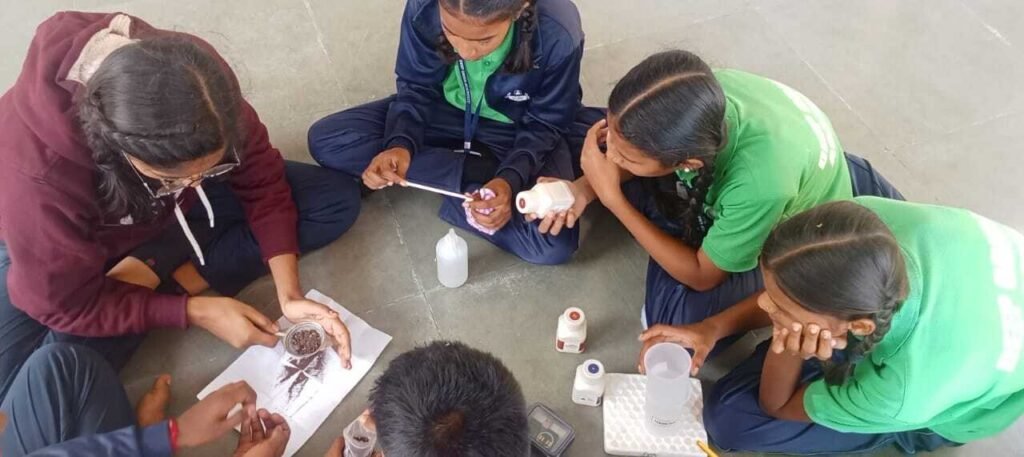
In December 2024, the Academy, located in Deulgaon Gada, Morgaon Road, Daund Taluka, hosted an event where farmers from neighboring villages brought soil samples for testing. However, the scientists conducting the tests were not seasoned experts—they were students from classes seven and eight.

“Soil health is the backbone of sustainable agriculture. By equipping students with the knowledge to improve it, we take the first step towards better farming practices,” says Ashlesha Onawale, Director of Deep Griha Society, which runs the Academy.

Pune Students Bring Science to the Fields, Helping Farmers Improve Soil Health

Integrating Agriculture into Education

In 2007, Deep Griha Academy introduced agriculture as a core subject in its curriculum. The goal was to ensure that students understood agriculture’s significance—not just as an economic driver, but as a means of sustaining their communities.

“At our academy, children learn the entire farming cycle—from sowing seeds to harvesting—while also being introduced to organic farming methods,” explains Swapna Sonkambale, the school’s organic agriculture teacher.

Recognizing the challenges farmers face in accessing soil health data, the school collaborated with Proximal Soilsens, a company specializing in soil testing kits. With support from Tushar Hande of the Business Department and Dr. Rajul Patkar, co-founder of the company, the academy acquired these kits, enabling students to conduct real-time soil analysis for farmers.

Empowering Students Through Practical Learning

The initiative started as a pilot project with 15 students from class 7, who were trained in soil science fundamentals—including key nutrients like nitrogen, phosphorus, potassium, organic carbon, and pH balance.

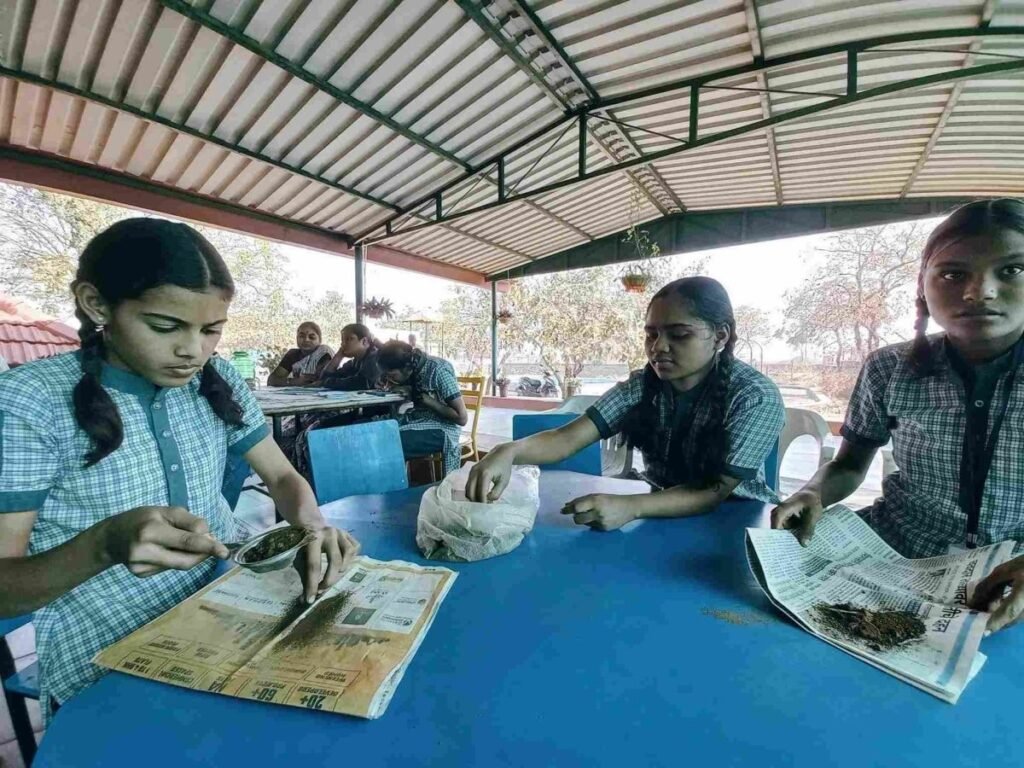
Once the students mastered the theoretical concepts, they moved on to practical application. “We taught them how to collect soil samples, analyze them using the Soilsens kit, and interpret the results,” Swapna shares.

The process is simple yet effective:

  1. Students mix soil with specific chemical reagents.
  2. The solution is tested using the Nutrisens device, which connects to a smartphone.
  3. Data is instantly retrieved and analyzed through an agricultural app.
  4. Within 30-35 minutes, a detailed soil health report is generated—a stark contrast to traditional methods, which can take weeks or even months.

Bringing Science to the Fields

On December 17, 2024, the students conducted a large-scale soil testing event for 15 farmers from villages like Yavat, Supa, Kedgaon, Kasurdi, Deulgaon Gada, and Boripardhi.

When the farmers arrived, students took the lead—testing soil samples, analyzing the results, and advising farmers on soil health improvements.

“The farmers were amazed by how quickly we could generate reports and give them actionable recommendations,” says Angela Aram, the school’s Programme & Corporate Engagement Coordinator.

For instance, if a soil sample had adequate nitrogen or potassium, students advised against unnecessary fertilizer use, helping farmers save money and reduce chemical dependency. If a deficiency in organic carbon was detected, they suggested using organic manure or planting leguminous crops to naturally restore soil fertility.

Students as Change-Makers

For the students, this experience was more than just a classroom exercise—it was a transformational journey.

“I used to think soil testing was something only farmers did,” says 14-year-old Santosh Sharma. “But now, I understand its importance and feel proud that I can help farmers make better decisions for their crops.”

Similarly, 13-year-old Divya Sharma is thrilled that her newfound knowledge allows her to assist local farmers. “Before, they had to travel long distances for soil testing, but now they can do it here, saving time and money.”

Expanding the Impact

Encouraged by the success of the pilot project, Deep Griha Academy is scaling up the initiative.

“We aim to include more students from class 7 and 8 and conduct between 35 to 40 soil tests in the coming months,” says Ashlesha.

By integrating science with real-world problem-solving, the school is empowering young minds while supporting the farming community.

“This is just the beginning,” concludes Swapna. “Through education, we’re not only cultivating knowledge but also nurturing a generation that values sustainability, innovation, and social responsibility.”

Under the Shade of Trees, A Teacher’s Open-Air School Transforms Tribal Education in West Bengal

0

When the COVID-19 pandemic forced schools to shut, thousands of children across India were left without access to education. In the remote Bagdabra forest of Murshidabad, West Bengal, this crisis was especially severe for tribal children like Biplab, a class 8 student whose education came to a standstill due to a lack of online access.

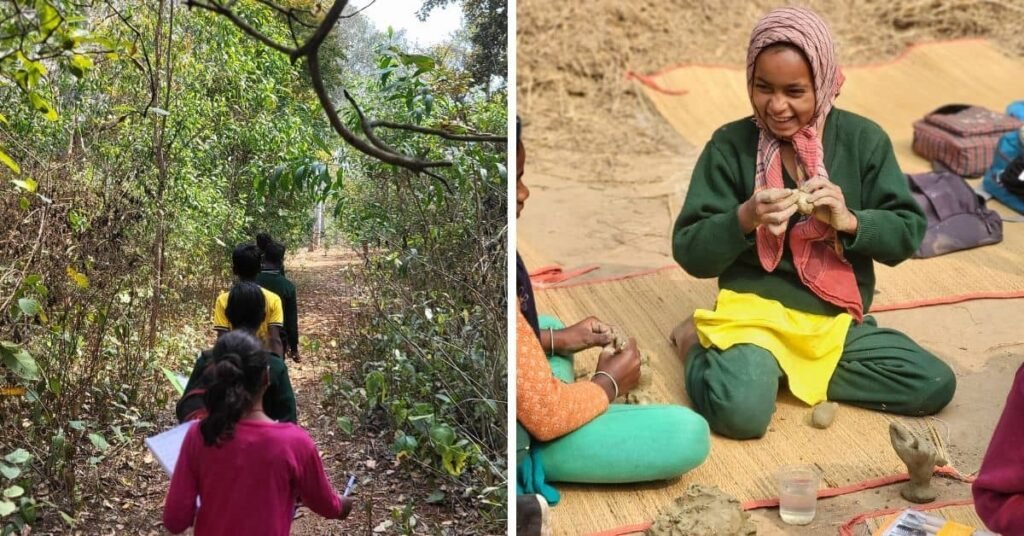
Amidst this uncertainty, Professor Angshuman Thakur, a Bengali literature professor at Prof Syed Nurul Hasan College, stepped in with an extraordinary solution. In 2021, he founded Anirvana Gacher Iskul—an open-air school nestled under the shade of neem and mango trees.

A Classroom Without Walls

Inspired by Rabindranath Tagore’s philosophy of holistic education, Angshuman designed the school to blend traditional learning with creative pursuits. Children engage in academic subjects alongside activities like drawing, clay modelling, music, and environmental awareness, fostering both intellectual and artistic development. His innovative teaching methods link textbook lessons to nature, making learning more interactive and relevant.

What started with just five children has now grown into a thriving educational space for over 105 students from kindergarten to class 12.

A Self-Sustaining Model

Unlike conventional schools, Anirvana Gacher Iskul operates on community donations and Angshuman’s personal savings. With a nominal fee of Rs 300 per child per month, the school remains accessible to families who otherwise struggle to afford education.

“Through this initiative, we aim not just to educate children but to uplift the entire community. We are instilling an entrepreneurial spirit in these students, which will help transform their villages,” says Angshuman.

Under the Shade of Trees, A Teacher’s Open-Air School Transforms Tribal Education in West Bengal

Beyond Basic Education: A Vision for the Future

To ensure children don’t have to choose between formal schooling and his initiative, Angshuman runs the school before regular school hours, allowing students to benefit from both.

His long-term dream? An eco-friendly campus with a library and computer lab, providing students with the tools they need to compete in a rapidly evolving world.

Through one teacher’s dedication, a community once on the brink of educational neglect is now blossoming with hope and opportunity—all under the shade of trees.

Antarctic Research Expedition in the Ross Sea

0

The Ross Sea has become a focal point for international marine research. Recent expeditions have highlighted its ecological significance and the urgent need for conservation. Scientists from various countries, including India, are conducting extensive studies to understand the biodiversity of this unique marine environment. The current expedition, led by marine scientist Sherine Sonia Cubelio, is part of a 40-day collaborative effort aimed at assessing living resources in the region.

Geographic Overview of the Ross Sea

  • The Ross Sea is located in the Southern Ocean.
  • It covers an area of approximately 1.55 million square kilometers.
  • The sea is bordered by Cape Adare and Cape Colbeck.
  • It features a mix of shallow and deep marine regions.
  • The sea floor is primarily less than 900 meters deep.
  • Notably, it is one of the least-iced regions of Antarctica, allowing for easier access for research vessels.

Biodiversity and Marine Protected Areas

  • The Ross Sea is home to diverse marine life.
  • It supports the largest colony of emperor penguins globally.
  • The area has been designated as a marine protected zone.
  • This protection prohibits fishing to preserve its unique ecosystems.
  • Researchers are studying environmental DNA to understand the distribution of zooplankton and fish communities.
  • This research is crucial for assessing the health of marine ecosystems.

Climate Change and Its Impact

The Ross Sea serves as a natural laboratory for studying climate change. Its unique conditions provide vital information about global climate systems. The region plays a crucial role in sea ice production, influencing ocean currents and heat distribution worldwide. Understanding these dynamics is essential for predicting future climate scenarios.

Historical Context of Exploration

The Ross Sea has a rich history of exploration. It was first penetrated by the HMS Erebus and HMS Terror in 1841. Since then, various nations have conducted research in the area. The coastal regions have been geologically explored, leading to a better understanding of Antarctica’s geology and ecology.

Conservation Efforts and Regulatory Framework

The Commission for the Conservation of Antarctic Marine Living Resources (CCAMLR) oversees conservation efforts in the region. Established in 1980, CCAMLR aims to preserve marine life and environmental integrity. It monitors the effects of fishing and harvesting in the Southern Ocean. The Ecosystem Monitoring Program (CEMP) further supports these conservation efforts.

The ongoing research in the Ross Sea is vital for global marine conservation. The insights gained will help shape future policies to protect this pristine environment while enhancing our understanding of climate change and marine biodiversity.

What is Nematode Management?

0

Plant parasitic nematodes are emerging as a major threat to Indian agriculture, causing annual crop losses worth ₹25,000 crore. A recent symposium in Goa, attended by over 100 agricultural scientists, highlighted the urgent need for effective nematode management to protect soil health and sustain crop productivity.

Understanding Nematodes

  • Nematodes are microscopic worms belonging to the phylum Nematoda.
  • They are one of the most abundant animals on Earth, existing in diverse environments like soil, freshwater, and marine habitats.
  • While some nematodes are beneficial, parasitic species attack plant roots, leading to stunted growth and reduced yields.

Impact on Agriculture

Parasitic nematodes often go undetected until significant damage has occurred, making them a silent but devastating threat. Their impact on crop yields underscores the need for awareness and proactive management strategies.

Sustainable Management Strategies

Experts at the symposium recommended several strategies for sustainable nematode control, including:

  • Crop rotation to break nematode life cycles and reduce infestations.
  • Breeding resistant plant varieties to enhance crop resilience.
  • Biological control agents, such as beneficial microbes and fungi, to naturally suppress nematode populations.

Technology and Innovation in Nematode Control

Technological advancements play a crucial role in managing nematode infestations. Syngenta India is investing in research and development (R&D) to create innovative solutions. Collaborations between industry and academia are also seen as vital for developing sustainable agricultural practices.

Raising Awareness Among Farmers

Many farmers are unaware of the significant impact nematodes have on crop yields. The symposium emphasized the importance of education and outreach programs to equip farmers with the knowledge and tools to identify and manage nematode infestations effectively.

The Need for Research and Development

The symposium participants called for increased investment in scientific research to develop robust nematode management solutions. A strong R&D pipeline is essential for:

  • Developing effective biopesticides and nematicides.
  • Enhancing early detection techniques through advanced diagnostics.
  • Implementing integrated pest management (IPM) approaches for long-term sustainability.

Summing Up

Nematodes pose a significant but often overlooked challenge in Indian agriculture. Through scientific innovation, farmer education, and sustainable management practices, India can mitigate the effects of nematode infestations and ensure long-term agricultural productivity.

IAS Officer Turns Farmer: Pioneering Water-Efficient Paddy Cultivation

0

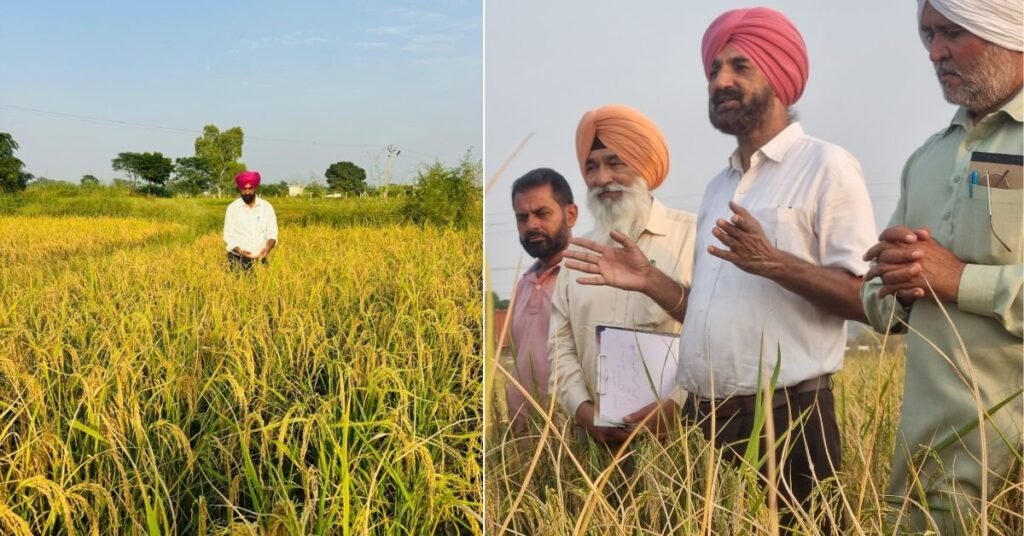
Retired IAS officer Kahan Singh Pannu from Punjab has introduced an innovative farming technique called Seeding of Rice on Beds (SRB) to combat groundwater depletion. His method not only conserves water but also reduces costs and promotes sustainable agriculture.

Punjab’s Groundwater Crisis

Punjab, often referred to as the breadbasket of India, faces a severe groundwater crisis. Data from the Central Groundwater Board warns that by 2039, the state’s groundwater could drop below 1,000 feet due to excessive extraction for paddy cultivation. Currently, 87% of Punjab’s farmland is used for rice farming, with 97% of groundwater dedicated to irrigation.

“This over-extraction has been happening for decades,” says Kahan Singh Pannu, who has seen firsthand the drastic decline in water levels in his village, Jai Nagar.

Introducing the SRB Technique

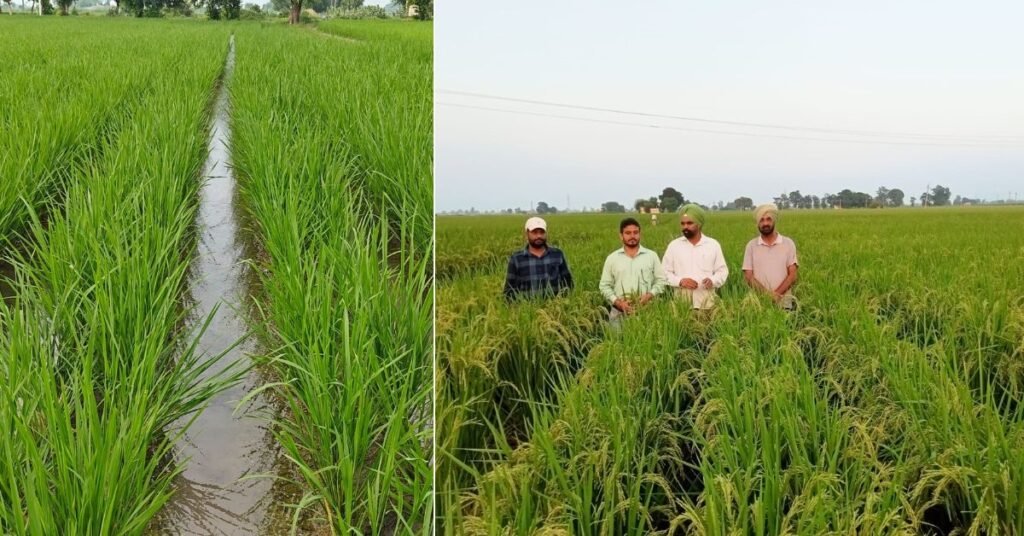
With a strong agricultural background and years of public service, Kahan Singh developed the SRB technique, which drastically reduces water usage by 75% compared to traditional paddy farming.

  • Traditional paddy farming requires 4,000 liters of water per kilogram of rice.
  • The SRB technique ensures water reaches the roots without flooding fields.
  • Water is applied only in furrows, preventing wastage and maintaining soil health.

Revolutionary Flying Robot Technology

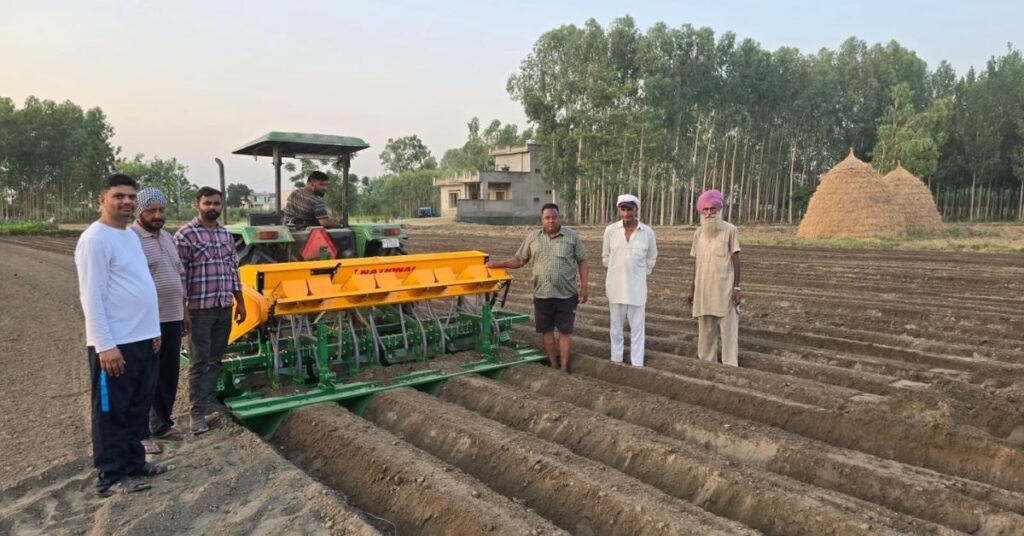
To implement this method efficiently, Kahan Singh collaborated with agricultural equipment manufacturers to develop the SRB device, a machine that:

  • Prepares beds and plants seeds simultaneously.
  • Saves labor costs and increases precision in farming.
  • Uses herbicide-tolerant seeds to address weed growth without flooding fields.
IAS Officer Turns Farmer: Pioneering Water-Efficient Paddy Cultivation

Farmers Adopt SRB with Great Success

During the latest growing season, 12 trial sites across Punjab implemented SRB with promising results. Farmers reported significant cost savings:

  • Jaswinder Singh, a farmer from Lambra village, used the technique on two acres and saved ₹8,000 per acre in irrigation and labor costs.
  • “Earlier, we had to irrigate the field 20 times, but with SRB, just four times was enough,” he shares.
  • Despite lower water usage, yields remained consistent at 24 quintals per acre.

A Sustainable Future for Punjab

With groundwater levels plummeting, SRB presents a revolutionary shift in paddy farming. Farmers are increasingly adopting the technique, reducing costs and preserving groundwater.

Reflecting on Punjab’s agricultural heritage, Kahan Singh states, “I have so many childhood memories tied to wells. Today, functioning wells are nowhere in sight. We need to shift towards regenerative and conservation-oriented agriculture.”

As the former IAS officer continues to inspire change, his pioneering efforts show that one innovative solution can transform an entire region, paving the way for a sustainable future in Indian agriculture.