Home Blog Page 384

From Setbacks to Success: How Narendra Kumar Girwa Became Rajasthan’s Pearl Farming Pioneer

0

A chance encounter with a YouTube video transformed the life of Narendra Kumar Girwa, propelling him from financial struggles to becoming a trailblazer in freshwater pearl farming. Despite Rajasthan’s arid climate and his own lack of agricultural background, Narendra’s unwavering determination turned an improbable dream into a thriving reality.

A Fortuitous Discovery

A decade ago, Narendra was searching for terrace farming videos when an accidental typo led him to content about pearl farming. Intrigued, he delved deeper, realizing the vast potential in an industry that few in his home state had explored.

At the time, his life was in turmoil. Born and raised in Kishangarh Renwal, Jaipur, in a middle-income family with five siblings, Narendra had no land or farming experience. After graduation, he opened a bookstore near schools and colleges, which thrived for eight years. However, his landlord unexpectedly reclaimed the space, forcing Narendra to relocate to a less favorable location. The move proved disastrous—he lost Rs 4–5 lakh, and despite his wife’s support through her tailoring work, their financial situation worsened.

With his savings depleted and no viable alternatives in sight, Narendra faced a daunting crossroad.

Turning Challenges into Opportunities

While searching for new business opportunities, Narendra’s accidental discovery of pearl farming seemed like a glimmer of hope. Many, including his own family, doubted the feasibility of pearl farming in Rajasthan’s climate. “People thought I had lost my mind,” he recalls with a laugh. But undeterred by skepticism, he sought formal training at the Central Institute of Freshwater Aquaculture (CIFA) in Odisha, where he paid Rs 6,000 for a five-day intensive course on pearl cultivation.

Armed with knowledge and conviction, he purchased 500 mussels from Kerala and embarked on his first attempt in 2015. However, the endeavor quickly turned into a crisis. Rajasthan’s dry climate and the lack of local expertise posed immense challenges. Within two weeks, ammonia levels in the water rose, killing most of his mussels—only 35 survived. “I had failed miserably,” he admits.

But failure was not the end of his journey—it was the beginning of his relentless pursuit of success.

Refining the Craft & Achieving Breakthroughs

Narendra meticulously studied his mistakes and worked on refining his techniques. He invested months in understanding pond conditions, experimenting with water quality management, and ensuring the right environment for mussels to thrive. He endured a loss of Rs 50,000 in the process but never gave up.

Six months later, he procured another batch of 500 mussels and made crucial adjustments. His persistence paid off. Over the next 18 months, he improved the mussel survival rate to 70% and successfully harvested 700 pearls, earning him Rs 2 lakh. His button-shaped pearls, distinguished by their unique luster, captivated the market and validated his risky endeavor.

Today, Narendra’s pearl farming business spans 300 square feet with 3,000 mussels. With a yield of 5,000 pearls per cycle, he generates an impressive income of Rs 10–15 lakh every 18 months. His pearls, sold through Amazon and retail markets, have even led him into the world of pearl-based jewelry, further diversifying his income.

Inspiring & Educating a New Generation of Farmers

Narendra’s success story has resonated far beyond his village. Recognizing the power of knowledge-sharing, he has trained over 200 aspiring pearl farmers from Madhya Pradesh, Gujarat, and Uttar Pradesh. His two-day workshops, priced at Rs 4,000, provide in-depth guidance on pearl farming and ongoing mentorship.

Among his trainees is Jodhpur’s Aditya Kachawa, who praises Narendra’s commitment: “The training was incredibly detailed, and Narendra ji is always available for guidance. With his help, I now cultivate 1,000 pearl mussels in my cemented pond.”

Narendra’s expertise has also drawn attention from international audiences. Though invited to share his knowledge in Dubai, Bhutan, and London, he remains dedicated to uplifting local farmers. His influence even extends abroad, with his guidance contributing to pearl pond setups in Nepal.

Secrets to Successful Pearl Farming

For those inspired by Narendra’s journey, he shares key insights:

  1. Source high-quality mussels. Transport them in wet jute sacks and sprinkle water regularly to maintain their health.
  2. Start small. A 10×15-foot pond is sufficient for 1,000 mussels, making pearl farming viable even in limited spaces.
  3. Maintain optimal water quality. Ammonia levels must be kept at zero. Using a water cooler motor for two to three hours daily helps regulate water circulation.
  4. Adapt to the climate. Narendra digs ponds five feet deep and utilizes green shades to maintain water temperatures between 10–30 degrees Celsius.
  5. Maximize profitability. With a 70% mussel survival rate, farmers can earn up to Rs 4 lakh from 1,400 pearls. Additionally, shell waste can be repurposed into handicrafts for extra income.

A Legacy of Resilience & Innovation

Narendra Kumar Girwa’s journey exemplifies how determination and adaptability can transform adversity into prosperity. From losing his bookstore to pioneering an industry in Rajasthan, he has not only secured his own future but has also created new opportunities for others.

His story is a testament to the power of curiosity, perseverance, and the willingness to take unconventional paths. By turning setbacks into stepping stones, Narendra has illuminated a path for countless others to follow—one pearl at a time.


Two day itenary to visit Ajmer

0

Rudra Pratap Singh

Nestled in the Aravalli ranges, Ajmer is a vibrant confluence of faiths, traditions, and architecture. Located 130 km from Jaipur and 14 km from Pushkar, the city seamlessly blends history, spirituality, and nature.

A City of Legends and Legacy

Derived from ‘Ajay Meru’ (invincible hill), Ajmer was once the stronghold of the Chauhan dynasty. Today, its forts, museums, and havelis reflect a grand past.

Ajmer Sharif Dargah: The Spiritual Heart

The Ajmer Sharif Dargah, enshrining Sufi saint Khwaja Moinuddin Chishti, is a revered site attracting millions. The shrine’s soulful qawwalis and silver-adorned gates exude a sense of serenity.

Diverse Spiritual Landmarks

Ajmer is also home to Soniji Ki Nasiyan, a Jain temple with gold-plated marvels, and the sacred Pushkar Lake and Brahma Temple, significant in Hinduism.

Pushkar Camel Fair: A Cultural Spectacle

This annual event transforms Pushkar into a vibrant hub of camel races, cultural performances, and traditional competitions, offering a glimpse into Rajasthan’s rich heritage.

Forts, Palaces, and Museums

Taragarh Fort’s hilltop views, Prithviraj Smarak’s grandeur, and Akbari Fort’s historical significance make Ajmer a haven for history enthusiasts. The Ajmer Government Museum houses artifacts narrating Rajasthan’s royal past.

Arts, Crafts, and Music

Ajmer’s qawwalis, Kishangarh miniature paintings, and Phad art highlight its artistic richness. The bustling bazaars are perfect for souvenirs like embroidered leather goods and intricate jewelry.

Nature and Wildlife

Ana Sagar and Foy Sagar Lakes offer scenic retreats, while Todgarh Raoli Wildlife Sanctuary boasts exotic fauna, from leopards to chinkaras, delighting nature lovers.

Adventure and Cuisine

Thrill-seekers can enjoy camel safaris and hot air balloon rides over the Thar Desert. Ajmer’s cuisine, from Kadhi-Kachori to Mughal-inspired Biryani and Sohan Halwa, is a treat for food lovers.

2-Day Ajmer Itinerary

Day 1: Spiritual and Historical Exploration

Visit Ajmer Sharif Dargah early morning for a serene experience.

Explore Soniji Ki Nasiyan and admire its golden hall.

Head to Taragarh Fort for panoramic views and sunset.

Enjoy an authentic Rajasthani dinner at a local eatery.

Day 2: Culture, Adventure, and Shopping

Take a morning trip to Pushkar Lake and Brahma Temple.

Experience the Pushkar Camel Safari or hot air balloon ride.

Visit Akbari Fort and the Ajmer Government Museum.

End the day exploring Ajmer’s bustling bazaars for souvenirs and street food.

Ajmer’s charm lies in its seamless blend of history, spirituality, and adventure. Plan your visit between October and February to experience it at its best!

Meet Aaryan Shukla: The 14-Year-Old ‘Human Calculator’ Who Shattered Six Guinness World Records in a Day

0

Rudra Pratap Singh

At just 14 years old, Aaryan Shukla has redefined the boundaries of mental calculation, breaking not one but six Guinness World Records in a single day. Hailing from Maharashtra, India, this math prodigy has earned the title of a ‘human calculator,’ astonishing the world with his unparalleled speed and accuracy.

A Day of Record-Breaking Feats

Last year, Aaryan first set a world record for the fastest time to mentally add 50 five-digit numbers in front of a live audience—achieving the feat in just 25.19 seconds, roughly one addition every half a second. His extraordinary performance led to an invitation to Dubai, where Guinness World Records challenged him with the toughest mental calculations ever attempted.

In an astonishing display of talent, Aaryan shattered six records in a single day, accomplishing the following:

Fastest time to mentally add 100 four-digit numbers

Fastest time to mentally add 200 four-digit numbers

Fastest time to mentally add 50 five-digit numbers

Fastest time to divide a 20-digit number by a 10-digit number

Fastest time to multiply 10 sets of two five-digit numbers

Fastest time to multiply 10 sets of two eight-digit numbers

Inside the Mind of a Math Prodigy

When asked about his incredible abilities, Aaryan explained, “A lot of things in mental calculations happen in a flash of a second, so I cannot say what happens inside my head. I just do it naturally. Basically, it’s so fast that you can’t think—you just need to do the calculations.”

His dedication to the craft is relentless. “Daily practice is one of the most important aspects to prepare for competitions, so I practice for about 5-6 hours daily,” he revealed. Along with rigorous training, he credits yoga for helping him stay calm and focused.

A Talent Nurtured From an Early Age

Aaryan’s journey with numbers began early. His mother recalls, “He enjoyed studying and playing with numbers. At the age of six, he started practicing mental calculations, and he was very good. So, we began researching it further. By the age of eight, he competed internationally and won medals and trophies—it was a great achievement.”

From a young boy with a love for numbers to a world record-breaking sensation, Aaryan Shukla has proven that with dedication, passion, and hard work, even the most challenging feats can be conquered. His achievements not only place him in the league of history-making mathematicians but also inspire young minds worldwide to push the boundaries of what is possible.

Do you know about Celestial Spectacle: The Planetary Alignment that you can see after Maha Kumbh 2025

0

Rudra Pratap Singh

As Maha Kumbh 2025 draws to a grand conclusion, the skies above Earth are putting on a rare cosmic show. A spectacular planetary alignment is underway, with all seven planets—Mercury, Venus, Mars, Jupiter, Saturn, Uranus, and Neptune—visible in the night sky from India. This celestial phenomenon is set to peak on February 28, 2025, when all planets align on one side of the Sun, adding an extraordinary layer of significance to the spiritual festivities.

A Rare Planetary Parade

This planetary parade began in January 2025, with Venus, Mars, Jupiter, Saturn, Uranus, and Neptune becoming visible. As February progresses, Mercury joins the lineup, completing the celestial arrangement. While Mercury, Venus, Mars, Jupiter, and Saturn can be spotted with the naked eye, Uranus and Neptune will require binoculars or a telescope due to their faintness. The best viewing times are during twilight hours, just after sunset or before sunrise, when the planets are positioned higher in the sky.

The term “planetary alignment” is often used to describe such events, even though it lacks a strict scientific definition. In this case, it refers to the simultaneous visibility of multiple planets along the ecliptic—the Sun’s apparent path across the sky—due to their nearly aligned orbits.

Significance in Maha Kumbh

Maha Kumbh is a festival deeply intertwined with celestial movements, particularly the orbit of Jupiter. Held every four years in rotation at Haridwar, Ujjain, and Nashik, and once every 12 years in Prayagraj, it attracts millions of devotees who believe that bathing in the sacred rivers during this time cleanses them of sins and leads to liberation from the cycle of life and death.

The rare alignment of planets during Maha Kumbh 2025 is seen as a divine occurrence, amplifying spiritual energies and making this already auspicious period even more special. Many devotees view this celestial event as a cosmic blessing, reinforcing the festival’s spiritual significance.

When Will This Happen Again?

For those who miss this extraordinary event, astronomers predict a similar spectacle in mid-August 2025, when six planets will be visible in the morning sky. While Uranus and Neptune may still require optical aid, the alignment will offer another stunning opportunity to witness the wonders of the cosmos.

As devotees gather to take a sacred dip in the holy rivers and gaze up at the celestial marvel above, Maha Kumbh 2025 becomes a profound confluence of spirituality and science—an event where the heavens and Earth truly align

Story of Shivaji, a symbol of Maharashtra’s pride ruling millions hearts, echoes across Munich during grand celebrations…

0

Shivpratishthan Munich is an organization established by followers of Chhatrapati Shivaji Maharaj in Germany. For the past three years, it has been organizing grand celebrations of Shivjayanti and Shivrajyabhishek. These events have always received an overwhelming response from all his proud followers.

Continuing this tradition, on February 9, 2025, a grand Shivjayanti celebration was held in Munich. More than 50 artists and over 300 spectators participated in the event.

The programme commenced with the ceremonial worship of Chhatrapati Shivaji Maharaj’s idol.

On this occasion, Mr. Shatrughna Sinha, a Consul General, Indian Embassy in Munich, graced the event as the chief guest.

Story of Shivaji, a symbol of Maharashtra's pride ruling millions hearts, echoes across Munich during grand celebrations...

The main organizers of Shivpratishthan, Mr. Sandip Musale, Dr. Praveen Patil, Mr. Vikrant Khemkar, and committee members Mr. Yogesh Tarte, Dr. Anil Jagtap, Mr. Vipin Gondchewar, and Mr. Ramakant Gawali welcomed him with a bouquet. Mr. Sinha then addressed the audience, offering valuable insights on the occasion of Shivjayanti.

The organizers expressed their gratitude to Maharashtra Mandal Munich for their support in making the event successful.

Following this, all Marathi entrepreneurs in Munich were felicitated with bouquets in recognition of their remarkable contributions.

The event began with a melodious musical performance dedicated to Shivaji Maharaj titled Shivkalyan Raja.

Several local artists presented various performances, including Shivstuti, Powada, historical art forms from the Shiv era and a message on fort conservation in Maharashtra.

From young children to adults, everyone participated enthusiastically, and the audience responded with great appreciation.

Young artist Charudatta Jadhav delivered a powerful Powada performance on the legendary warrior Tanaji Malusare, which captivated the audience.

The grand finale featured a spectacular theatrical presentation of the historic battle of Pawankhind, leaving the audience with goosebumps.

Despite being far from Maharashtra, Shivpratishthan Munich remains committed to spreading the legacy and ideals of Chhatrapati Shivaji Maharaj!

Jai Bhavani! Jai Shivaji! Jai Maharashtra!

Two Engineers Use Art to Transform the Lives of Bengaluru’s Slum Children

0

Forced to leave their villages in search of a better life, many migrant families in Bengaluru’s slums struggle to provide education for their children. Proud Indian, an NGO founded by two engineers, is bridging this gap through innovative education initiatives and art programs, empowering children to dream beyond mere survival.

A Glimmer of Hope in the Slums

Huddled under the dim glow of a streetlight in a crowded Bengaluru slum, 12-year-old Nadia (name changed) sketched furiously on a piece of cardboard. Her family, displaced from their drought-stricken village, barely managed to make ends meet, leaving little room for school supplies—let alone art materials.

Her parents migrated from Raichur, where poor groundwater levels make farming an unreliable source of income. “They earn just Rs 200 per day in farmlands, but in Bengaluru, daily wages can go up to Rs 800-1000,” shares Chenthil Kumar, co-founder of Proud Indian.

Despite their struggles, Nadia finds solace in painting. “Recently, I tried cake-based paint and created a vibrant sky. You can see that painting on my wall,” she says proudly. But for children like her, education and artistic expression often take a backseat as survival remains the priority. “Their parents are too focused on ensuring they don’t go to bed hungry,” explains Chenthil.

The Birth of Proud Indian

Growing up in Tamil Nadu’s Kanyakumari, Chenthil was deeply affected by the devastation of the 2004 tsunami. Witnessing families struggle for food and shelter left a lasting impact on him. Years later, while pursuing aeronautical engineering in Bengaluru, he continued his humanitarian efforts.

In 2014, while working on relief efforts, Chenthil met Sarjun H., another passionate volunteer. The two engineers recognized a shared mission: to uplift the lives of underprivileged children through education. In 2019, they founded Proud Indian with the goal of providing quality education to children with limited access to learning opportunities.

Over the last five years, the NGO has reached thousands of children, offering them food, education, and most importantly, hope.

Introducing Community Schools

For children of migrant workers, education is often disrupted as families move from one place to another. “Most parents don’t obtain transfer certificates from their child’s previous school, which makes it difficult to enroll them in government schools,” explains Chenthil.

To bridge this gap, Proud Indian collaborates with NGOs like Gubbachi Learning Community, Samriti, and Ruva to run community schools in Bengaluru. The students are grouped based on their learning levels:

  • S1: Can read a sentence
  • S2: Can read a word
  • S3: Can read an alphabet

“The community school acts as a bridge course and helps children pass at least Class 10,” says Jinchu Mariam Sunny from Gubbachi Learning Community. “We’ve impacted over 1,900 children so far.”

This alternative schooling model allows students to complete two subjects per year, ensuring they graduate within two to three years. Proud Indian also conducts spoken English classes on weekends, significantly improving the children’s communication skills.

Art as a Means of Expression and Empowerment

For underprivileged children, even basic education can feel like a luxury, making art seem like an unattainable dream. “I didn’t want external factors to decide who could practice art,” says Chenthil.

In 2024, he and Sarjun launched Kalakriti, a one-day art festival where children could showcase their talents. The first edition saw 280 students from various NGOs competing in dance, singing, rangoli, and painting competitions. “The stage was huge. I was so happy when we won second place,” says 14-year-old Sameer (name changed), who participated in group dance.

Beyond just an event, Kalakriti has become a launchpad for young artists. “We bring in professionals to mentor the winners, training them for a year so they can participate in larger competitions,” shares Chenthil.

Keeping Dreams Alive

With every passing year, Chenthil and Sarjun’s mission grows stronger. “We want to show that art is not just an extracurricular activity—it’s a sustainable career option,” says Chenthil. Through Proud Indian, thousands of children now have access to both education and artistic expression.

Looking ahead, the duo hopes to impact even more young lives, proving that education and creativity can pave the way for a brighter future—one brushstroke at a time.

India Elected Vice President of IALA: Strengthening Global Maritime Leadership

0

India has been elected as the Vice President of the International Organization of Aids to Marine Navigation (IALA) during its first General Assembly in Singapore. This significant achievement underscores India’s growing influence in global maritime affairs and highlights its commitment to ensuring safer and more efficient navigation.

Background of IALA

Established in 1957 as a non-governmental organization (NGO), the International Association of Marine Aids to Navigation and Lighthouse Authorities (IALA) was founded with the mission of uniting global marine navigation authorities. The organization facilitates knowledge-sharing among stakeholders, including government agencies, manufacturers, and scientific institutes, to enhance maritime safety standards.

In August 2024, IALA transitioned from an NGO to an inter-governmental organization (IGO). This transformation, ratified by 34 states, enables IALA to play a more authoritative role in setting global standards for marine navigation. The transition strengthens its ability to harmonize navigational systems, promote best practices, and enhance safety measures worldwide.

India’s Role in IALA

India’s election to the Vice Presidency of IALA marks a milestone in its maritime governance journey. This leadership role allows India to actively participate in shaping international maritime policies and standards. As a Vice President, India will contribute to advancing navigational safety, supporting sustainable maritime operations, and fostering collaboration among IALA member states.

Additionally, India is set to host IALA meetings in the coming years, reinforcing its leadership and commitment to maritime safety and technological advancements.

Objectives of IALA

IALA is dedicated to harmonizing global maritime navigation systems. Its primary objectives include:

  • Developing and implementing international standards for marine navigation aids.
  • Enhancing maritime safety and efficiency through collaboration among member states and industry stakeholders.
  • Encouraging technological advancements and best practices to improve navigation systems.
  • Strengthening the protection of marine environments by mitigating navigational risks.

Technical Committees and Standards

IALA operates several technical committees composed of global maritime experts. These committees work towards establishing best practice standards and issuing recommendations to enhance navigational safety. Some of IALA’s notable contributions include:

  • The IALA Maritime Buoyage System: A globally recognized system that standardizes maritime navigation aids.
  • The Automatic Identification System (AIS): A system that improves vessel tracking and communication, ensuring safer navigation in busy waterways.
  • E-Navigation Strategies: Digital advancements that integrate new technologies into maritime navigation.

Impact on Maritime Safety

The transition of IALA into an inter-governmental organization signifies a major step toward strengthening maritime governance. By enhancing its authority, IALA contributes to reducing maritime accidents, improving efficiency in global shipping routes, and protecting marine ecosystems. The organization’s efforts in promoting safety measures, sustainability initiatives, and technological integration continue to benefit the global maritime community.

Summing Up

India’s election as the Vice President of IALA is a testament to its leadership in maritime affairs. By holding a key position in IALA, India is poised to play a crucial role in shaping the future of global marine navigation, fostering safer waters, and driving innovation in maritime technology. This achievement not only elevates India’s status in international maritime governance but also strengthens its commitment to ensuring a secure and sustainable maritime environment.

How Beekeeping is Transforming Lives and the Environment

0

Rudra Pratap Singh

In an era where sustainability and entrepreneurship go hand in hand, beekeeping is making a triumphant comeback, offering a blend of environmental stewardship and financial success. For farmers and urban enthusiasts alike, this ancient practice is proving to be more than just about honey—it’s a gateway to a sustainable livelihood, biodiversity enrichment, and food security.

Unlike conventional farming, which often demands heavy investments and long waiting periods for returns, beekeeping requires a minimal one-time investment and has the potential to pay for itself within a year. If the hum of bees and the promise of golden prosperity entice you, here are some expert tips to help you embark on this rewarding journey.

  1. Beekeeping is for Everyone Above 15

Passion is the key ingredient in beekeeping, says Apoorva BV, a Karnataka-based beekeeper managing 550 hives in Bengaluru. With an annual turnover of Rs 2 crore, he reassures aspiring apiarists that vast farmlands aren’t a prerequisite.

“The only requirement is a keen interest in rearing bees and an attentive eye to monitor the progress of your hive. Anyone above the age of 15 can start a bee farm, and the time commitment is minimal—just 20 minutes a week. Once you become proficient, even less!” says Apoorva.

  1. Choosing the Right Bee Variety

Selecting the right species of bees can make all the difference in productivity. Haryana-based Jagpal Singh Phogat, who specializes in raising Apis mellifera, highlights their high honey yield and pollination benefits.

“During the flowering season, honey can be harvested within just 10 days. On average, I extract around 40 kg of honey per box annually,” he shares. This makes Apis mellifera a lucrative option for those looking to maximize their yield.

  1. Location Matters

Beekeeping can flourish in diverse settings—from rural farms to urban balconies—provided there is a good nectar source. Ideal locations should be free from industrial pollutants and fire hazards while offering a variety of flowering plants like sunflowers, hibiscus, and fruit-bearing trees. Access to fresh running water is also essential, as bees need hydration to sustain their colonies.

Kerala-based beekeeper Bensislas attributes his success to aligning his hives with seasonal blooms in his rubber plantation and moringa farm.

“Wherever we place the hive, bees collect nectar from the nearest available sources. Choosing the right spot is crucial. Annually, I produce around 1,500 kg of honey and earn Rs 15,000 to Rs 20,000 per month from sales,” he explains.

  1. Handle with Care

Beekeeping demands caution, patience, and the right protective gear. A full bee suit is essential for heavy-duty tasks, while hats with retractable veils are sufficient for routine maintenance. Handling bees gently ensures their cooperation and minimizes the risk of stings.

Recalling his early missteps, Jagpal shares, “I once suffered swollen eyes due to a lack of knowledge about bee behavior. Over time, I learned to be gentle while removing hive frames. I also advise against wearing perfumes, scented oils, or black clothing, as these can agitate bees.”

For beginners, a basic bee box and protective equipment cost around Rs 5,000—a small price to pay for a profitable and fulfilling venture.

  1. Beyond Honey: Maximizing Profits with Byproducts

While honey is the primary product, beekeepers can tap into lucrative byproduct markets to maximize returns. Specializing in niche varieties like moringa and rubber honey can attract premium buyers. Additionally, expanding into products such as beeswax, soap, bee pollen, and royal jelly can significantly boost revenue.

Jagpal, who has diversified his offerings, has seen his business flourish. “Last year, I achieved an annual turnover of Rs 2 crore by selling raw honey and byproducts,” he says.

The Bigger Picture: Beekeeping as Environmental Stewardship

Beekeeping is more than just a business—it’s a commitment to environmental conservation. Bees play a crucial role in pollination, supporting ecosystems, increasing crop yields, and maintaining biodiversity. By nurturing bees, we nurture the planet.

Whether you’re in a bustling city or a serene countryside, the promise of prosperity through beekeeping is limitless. So, take that first step today. Let the rhythmic hum of bees guide you toward a future rich with opportunity, sustainability, and the golden sweetness of success

ISRO’s Visionary Leap: Pushing Boundaries in Space Exploration

0

Rudra Pratap Singh

As humanity inches closer to an era of interplanetary travel, the Indian Space Research Organisation (ISRO) is setting its sights on a future brimming with possibilities. From next-generation rockets to human spaceflight and lunar sample return missions, ISRO’s roadmap for the coming decade is nothing short of groundbreaking. With innovation at its core, India’s space ambitions are poised to redefine the nation’s role in the cosmos.

A Giant Leap in Rocketry: The Next-Generation Launch Vehicle

Imagine a rocket so powerful that it dwarfs its predecessors, capable of carrying a staggering 30,000 kg payload to Low Earth Orbit (LEO). ISRO’s upcoming next-generation launch vehicle will be precisely that—a colossal engineering marvel, 1,000 times more powerful than the legendary SLV-3. Designed with reusability in mind, the rocket will incorporate nine engines in the first stage, each generating an astounding 110 tons of thrust, with three additional stages and two solid strap-on boosters. More than just an advancement in payload capacity, this new vehicle will revolutionize cost-efficiency and sustainability in spaceflight, setting the stage for reusable Indian rockets in the near future.

Gaganyaan: India’s First Steps Towards Human Spaceflight

The dawn of Indian human spaceflight is on the horizon. Scheduled for launch in 2026, the highly anticipated Gaganyaan Mission will send three Indian astronauts to LEO at an altitude of 400 kilometers, making history as India’s first crewed space mission. The mission will utilize the human-rated LVM 3 (HLVM 3), an upgraded version of the LVM 3 rocket, fortified with enhanced thermal and structural safety margins to protect its crew.

Before this milestone launch, six uncrewed test flights will pave the way, the first of which is set to take off from Sriharikota later this year. Meanwhile, astronauts are undergoing intensive physical and technical training, preparing them for their momentous journey into space. The success of Gaganyaan will mark India’s entry into the exclusive club of human spaceflight nations, joining the ranks of the USA, Russia, and China.

Chandrayaan-4: A Historic Lunar Sample Return Mission

Building on the success of Chandrayaan-3, India is now setting its sights on an even more ambitious lunar mission—Chandrayaan-4, scheduled for launch in 2027. This mission will take India beyond mere exploration, aiming to collect and return samples from the Moon’s enigmatic south pole.

A formidable 9,200 kg spacecraft will embark on this journey aboard two Mark III rockets. The mission will feature five specialized modules, two of which will dock in lunar orbit while the other two land on the Moon’s surface to conduct experiments and sample collection. Once its objectives in lunar orbit are completed, the sample return module will make its way back to Earth, carrying invaluable material that could unravel the Moon’s ancient mysteries. If successful, Chandrayaan-4 will position India among the elite nations capable of lunar sample return, paving the way for future deep-space exploration.

NavIC: Strengthening India’s Global Navigation System

Beyond deep space missions, ISRO is fortifying India’s Navigation with Indian Constellation (NavIC), a satellite-based navigation system essential for both civilian and military applications. Currently in its first phase, the system is set to expand with five additional satellites under Phase II, scheduled for deployment over the next two years. Once complete, NavIC will significantly enhance India’s navigation capabilities, providing independent and precise location-based services across the subcontinent and beyond.

A Decade of Innovation: ISRO’s Vision for the Future

Looking ahead, ISRO has charted an ambitious roadmap for the next decade, with key objectives including:

The Gaganyaan mission and Chandrayaan-4 to advance human spaceflight and lunar exploration.

Development of next-generation launch vehicles with increased payload capacity and reusability.

Establishing an Indian space station for scientific research and interplanetary exploration.

Expanding India’s satellite network to enhance communication, navigation, and disaster management services.

From reaching new frontiers in space travel to transforming global navigation and satellite communications, ISRO is laying the groundwork for a future where India stands tall among the world’s leading spacefaring nations. With every mission, every innovation, and every bold leap forward, India is crafting a legacy that will inspire generations to come.

25-YO HIV Survivor, Ill-Treated as a Child, Defied Stigma To Become a Marathon Champion

0

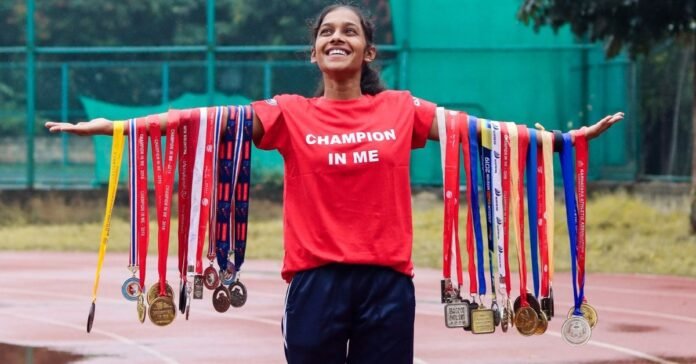
Sonika Sanju Kumar vividly remembers the first time she stepped onto the running track. With each rhythmic pound of her feet against the ground, she left behind the whispers of stigma that had followed her for years.

“The only place where I am not discriminated against is when I am on the running track,” she says, her voice filled with determination.

Born with HIV, Sonika faced more struggles due to societal prejudice than the physical challenges of her condition. But today, as an accomplished marathon runner, she is a beacon of resilience and hope, inspiring many others.

Her journey into sports began in 2009 when Elvis Joseph, a former national athlete, visited the Sneha Care Home, where Sonika lived, to introduce children to sports. It was through this visit that she learned about ‘Champion in Me’ — an initiative launched in 2009 by the Bangalore Schools Sports Foundation (BSSF) to support children living with HIV through the power of sports.

From Isolation to Inspiration

Growing up in a small town in Maharashtra, Sonika lost her parents at just one and a half years old. The discovery of her HIV status at the age of seven led to alienation.

“I was given a separate plate and tumbler. If I accidentally touched anyone, they would go and take a quick bath,” she recalls painfully. “When relatives visited, my grandfather made me sit under a tree in the backyard.”

Life changed for Sonika in 2010 when she moved to Bengaluru. “Elvis sir saw my potential and encouraged me to participate in ‘Champion in Me’,” she shares. “For the first time, I met others like me, and I felt a sense of belonging.”

Through rigorous training and mentorship, Sonika discovered her passion for running. The track became her sanctuary—a place where her strengths overshadowed her limitations. In 2018, she participated in the Kolkata Marathon, securing third place in the women’s category. Her medals now stand as a testament to her grit and perseverance.

Empowering Children with HIV

For Elvis Joseph, ‘Champion in Me’ is more than just a sports initiative; it is a movement.

“I saw a need for an empowering platform for children living with HIV,” says Elvis. “Sports build character and discipline, but more importantly, they break barriers.”

The programme integrates sports, education, and skill development to ensure holistic growth. Through annual sports meets, specialized training modules, and mentorship, it creates an inclusive environment where children can thrive.

Since its inception, the initiative has reached over 40,000 children, offering them not just the right to play but a stage to showcase their talents and rewrite societal narratives.

Competing Globally

Elvis has dedicated his life to identifying talent and placing them on the right platforms.

“We provide top-tier training and select promising athletes for marathons and competitions,” he explains. “This gives them the confidence to face the world.”

One such athlete is Manik Prabhu, who represented India at the International Children’s Games in the Netherlands in 2015. Born in North Karnataka, Manik grew up facing severe discrimination due to his HIV-positive status.

Joining ‘Champion in Me’ changed his life. Under Elvis’ mentorship, he honed his athletic skills and developed the confidence to compete. His proudest moment was wearing the Indian jersey on an international platform.

“I got the recognition I deserved, and sports created that opportunity for me,” Manik says. Over the years, he and other participants have competed in prestigious marathons in Boston, Colombo, and Bangkok, proving that HIV is no barrier to excellence.

Running Towards a Better Future

While Elvis continues to advocate for these young athletes, he urges the Government and corporate sector to step up.

“We’ve had support from Olympians and leaders, but with the Indian Government, it’s always a golden handshake,” he remarks.

To extend opportunities beyond sports, he introduced ‘The Rising 20s’, a second phase of the initiative focusing on skill development.

“We help these youth complete their education and acquire practical life skills to ensure they lead independent lives,” he explains. Many participants have successfully secured jobs and now live with dignity.

Looking ahead, Elvis is training Bharati, who is set to become the first HIV-positive person to compete in the Mount Everest Marathon this May.

“It’s a high-altitude run on rough terrain, but Bharati is determined,” he says proudly. “She’s doing this not just for herself, but to raise awareness for women like her.”

Sonika and Manik’s journeys are proof of the programme’s success. Through ‘Champion in Me’, they have found their passion and a sense of purpose. Their stories inspire hope and highlight the power of inclusive initiatives in transforming lives.

As Elvis and his team continue to champion change through sports, they remind us that with the right support, every child can rise above their circumstances and achieve greatness.