Home Blog Page 374

AKFD Studio Hosts Banana Chat 8.0: Amit Krishn Gulati Unfolds Creativity and Design

0

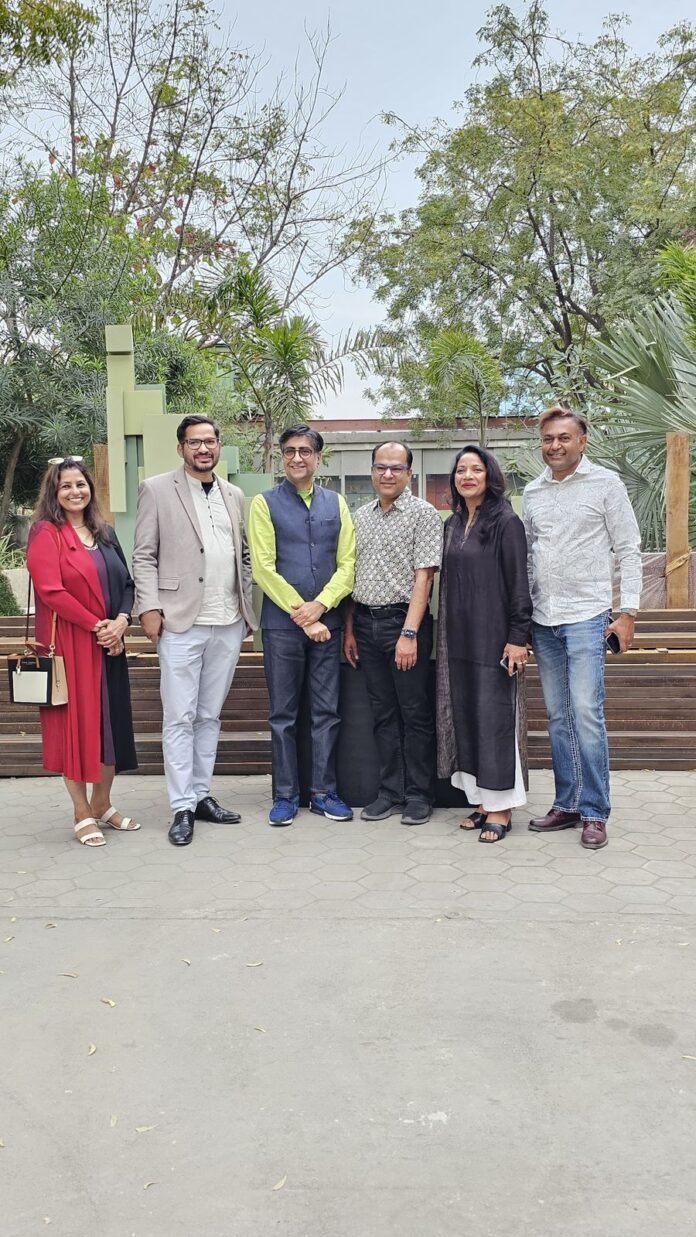
The latest edition of Banana Chat 8.0, held at the AKFD Studio Experience Center in Sitapura Industrial Area, brought together creative minds for an engaging discussion on design, innovation, and interdisciplinary creativity. Hosted on the auspicious day of Amavasya, this edition featured a thought-provoking conversation between renowned designer Amit Krishn Gulati, co-founder of Incubis, and architect Dhruv Gupta.

Organized in collaboration with ADI – Association of Designers of India, Jaipur Chapter, Banana Chat 8.0 reaffirmed its commitment to fostering design excellence and community building in the Indian creative space.

Exploring the Boundaries of Design

Amit Krishn Gulati, a celebrated name in the world of product design and innovation, captivated the audience with his journey, illustrating how Incubis integrates diverse disciplines to push the boundaries of design. He delved into the firm’s latest work, particularly in the realm of robotics and autonomous mobility, offering insights into the evolving nature of design as a multidisciplinary practice.

Throughout the session, Ar. Dhruv Gupta steered the conversation towards the relevance of adaptability and exploration in the creative process. The discussion not only highlighted emerging trends but also inspired young designers to cultivate unique styles and embrace innovation in their craft.

A Gathering of Design Enthusiasts

The event saw an impressive turnout, with prominent architects and designers in attendance, including Ar. Kavita & Nischal Jain, Ar. Rekha Nemani, Sharoz Alam, Abhishek Chaudhary, Shikha Singh, and Juhi Kedia. Their participation reinforced the significance of such platforms in building a robust and collaborative design ecosystem in Jaipur.

Encouraging Consistency and Creativity

As the event drew to a close, AKFD Studio co-founder Geetanjali Kasliwal delivered a heartfelt vote of thanks. She emphasized the importance of consistency in nurturing design talent, encouraging emerging professionals to develop their signature styles through sustained effort and experimentation.

With Banana Chat being a recurring feature on Amavasya, the platform continues to be a cornerstone for design discussions, networking, and creative collaboration. The initiative not only celebrates innovation but also strengthens Jaipur’s reputation as a hub for design thinkers and practitioners.

What is the story of Khatu Shyam Mandir?

0

Shri Khatu Shyam Ji is considered the Kalyugi (modern era) incarnation of Lord Krishna. His grand temple is located in the Sikar district of Rajasthan, where devotees from far and wide come to seek his blessings. Let’s explore the fascinating mythological story behind the existence of this temple.

A Revered Pilgrimage Destination

The Khatu Shyam Temple is one of India’s most renowned temples. Devotees from across the country visit this sacred place, bringing their heartfelt prayers and seeking divine intervention. The story behind the temple’s existence is deeply rooted in ancient mythology and offers an inspiring tale of sacrifice and devotion.

Who is Baba Khatu Shyam?

Khatu Shyam Ji is none other than Barbarik, the grandson of Bhima and the son of Ghatotkacha. Worshipped in the form of Khatu Shyam, Barbarik was known for his exceptional bravery and warrior spirit. At a young age, he impressed Lord Shiva and received three invincible arrows, which earned him the title Teen Baan Dhaari (the bearer of three arrows).

The Divine Legend of the Temple

One of the unique beliefs associated with the Khatu Shyam Temple is that every time a devotee visits, they experience a different appearance of Baba Shyam. Many claim that his idol undergoes subtle transformations, leaving the devotees in awe of his divine presence.

The Transformation of Barbarik into Khatu Shyam

During the great Kurukshetra war in the Mahabharata, Barbarik expressed his desire to participate in the battle. Seeking permission from his mother, Ahilavati, he asked her, “Whose side should I fight for?” Knowing that the Kauravas had a vast army and powerful warriors like Bhishma, Dronacharya, Kripacharya, and Karna, she feared that the Pandavas would be defeated. She advised her son, “Always support the side that is losing.”

Barbarik pledged to follow his mother’s words and set off for the battlefield. However, Lord Krishna, who foresaw the war’s outcome, realized that if Barbarik sided with the losing army, the course of the battle would constantly shift, making the Pandavas’ victory impossible. To prevent this, Krishna disguised himself as a Brahmin and approached Barbarik, asking for his head as alms.

At first, Barbarik was puzzled—why would a Brahmin ask for his head? Sensing something divine, he requested the Brahmin to reveal his true identity. Krishna then appeared in his Virat Roop (universal form), upon which Barbarik realized the Lord’s intent. Without hesitation, he took his sword and offered his head at Krishna’s feet.

Pleased with his devotion, Krishna held his severed head and, using amrit (nectar), granted him immortality. As a boon, Barbarik expressed his wish to witness the entire Kurukshetra war. Honoring his request, Krishna placed his head on the highest hill near the battlefield, from where Barbarik observed every moment of the epic battle.

Khatu Shyam: The Savior of the Defeated

After the war, the Pandavas debated over who deserved the credit for their victory. To resolve the matter, Krishna suggested they seek the opinion of Barbarik’s head, as he had witnessed the entire war. When asked, Barbarik replied, “I only saw Lord Krishna’s Sudarshan Chakra dancing on the battlefield while Goddess Durga drank the blood of fallen warriors. I did not see the Pandavas anywhere.”

Hearing this, the Pandavas lowered their eyes in humility, realizing that Krishna’s divine intervention was the true force behind their success. Pleased with Barbarik’s honesty and devotion, Krishna blessed him, giving him the name Shyam. He further declared, “Barbarik, there has never been and never will be a greater donor than you. As per your mother’s boon, you will always support those who are defeated and grant their wishes.”

Thus, the legend of Khatu Shyam was born, and his temple became a place where people seek solace, believing that Baba Shyam is the ultimate protector of those in distress.

The Legacy of the Khatu Shyam Temple

The temple stands as a testament to unwavering faith, selfless devotion, and divine justice. To this day, devotees believe that Khatu Shyam Ji fulfills the desires of those who surrender to him with pure hearts. The temple continues to be a beacon of hope and spiritual strength for countless followers.

Naval Anti-Ship Missile Short Range (NASM-SR): A Leap in India’s Maritime Defence

0

India has taken a significant step in strengthening its maritime security with the successful flight trials of the Naval Anti-Ship Missile Short Range (NASM-SR). Conducted jointly by the Defence Research and Development Organisation (DRDO) and the Indian Navy at the Integrated Test Range in Chandipur, Odisha, this achievement underscores India’s growing prowess in indigenous defence technology. The trials showcased the missile’s advanced capabilities, particularly its “Man-in-Loop” feature, allowing in-flight retargeting—an essential function for modern naval warfare.

Advanced Features of NASM-SR

The NASM-SR is a next-generation anti-ship missile equipped with state-of-the-art technology to ensure precise target engagement.

Key Features:

  • Indigenous Imaging Infra-Red (IIR) Seeker: Enables high-precision targeting during the terminal phase.
  • High-Bandwidth Two-Way Datalink: Transmits real-time images to the pilot, allowing for mid-flight target adjustments.
  • Man-in-Loop Capability: Offers enhanced control by enabling retargeting in response to dynamic combat situations.

These sophisticated features make NASM-SR a formidable weapon, capable of delivering strategic superiority in maritime operations.

Launch and Target Engagement Capabilities

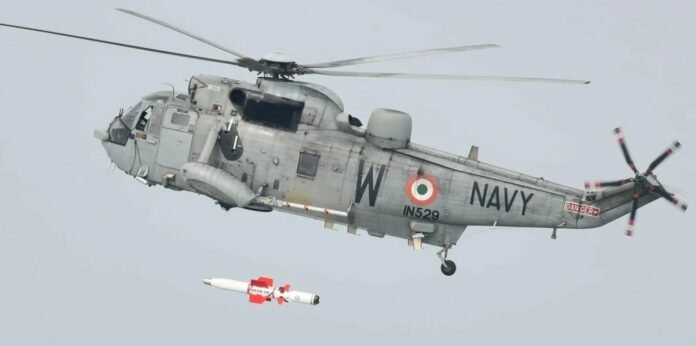
The recent trials saw NASM-SR launched from an Indian Naval Seaking helicopter. The missile initially locked onto a large target within a pre-designated search area. However, in its terminal phase, the pilot successfully redirected it to a smaller, concealed target. This ability to switch targets mid-flight, while maintaining high accuracy, highlights its advanced sea-skimming mode—a crucial tactic for evading enemy radar detection and countermeasures.

Cutting-Edge Guidance and Navigation Systems

The NASM-SR missile is designed with multiple layers of navigation and guidance systems, ensuring precision and efficiency throughout its flight path.

Navigation Components:

  • Fiber Optic Gyroscope-Based Inertial Navigation System (INS): Ensures stability and accuracy in mid-course guidance.
  • Radio Altimeter: Aids in altitude control for better maneuverability.
  • Integrated Avionics Module: Supports real-time data processing for smooth operation.
  • Electro-Mechanical Actuators: Provide precise control and steering.
  • Solid Propulsion System: Features an in-line ejectable booster and a long-burn sustainer, enhancing speed and range.

These technological advancements make NASM-SR a highly reliable and versatile weapon, ideal for neutralizing threats in complex naval environments.

Indigenous Development and Production

The NASM-SR is a testament to India’s commitment to self-reliance in defence manufacturing. It is being developed by multiple DRDO laboratories, including:

  • Research Centre Imarat (RCI)
  • Defence Research and Development Laboratory (DRDL)

Moreover, the missile’s production involves collaborations with micro, medium, and small enterprises (MSMEs) and startups, reinforcing India’s Atmanirbhar Bharat (Self-Reliant India) initiative. This partnership not only accelerates technological innovation but also strengthens India’s defence industrial base.

Strategic Importance and Future Implications

The successful trial of NASM-SR marks a crucial advancement in India’s naval warfare capabilities. Defence Minister Rajnath Singh hailed the missile’s unique “Man-in-Loop” feature, emphasizing its potential to enhance operational effectiveness through real-time mission adaptability.

Why NASM-SR Matters for India’s Defence Strategy?

  • Enhances India’s maritime strike capabilities against emerging threats.
  • Strengthens the Navy’s ability to counter enemy warships and hostile assets.
  • Reduces dependency on foreign weapon systems, promoting indigenous defence solutions.

With continued testing and refinement, NASM-SR is set to become a key asset in India’s naval arsenal, significantly reinforcing its maritime deterrence and security posture in the Indo-Pacific region.

Summing Up

The successful flight trials of NASM-SR represent a major milestone in India’s defence innovation and strategic preparedness. As the nation moves toward self-sufficiency in advanced weaponry, this indigenous missile system stands as a symbol of technological excellence, ready to safeguard India’s maritime interests in an increasingly complex global security landscape.

India’s Pivotal Role in UN Peacekeeping Missions

0

India has long been a key contributor to United Nations (UN) peacekeeping missions, demonstrating its unwavering commitment to global peace and security. Recently, External Affairs Minister S. Jaishankar reaffirmed India’s dedication to assisting Global South nations in strengthening their peacekeeping capabilities. This commitment includes specialized training and capacity-building initiatives, with a particular emphasis on empowering women peacekeepers. India’s extensive involvement in UN peacekeeping underscores its proactive approach to fostering international stability.

Understanding UN Peacekeeping Missions

UN peacekeeping missions involve multinational forces, voluntarily contributed by member states, to operate under the UN flag while wearing their national uniforms along with UN insignia. These missions serve a crucial role in:

  • Protecting civilians in conflict zones
  • Preventing conflicts through diplomatic engagement
  • Empowering local authorities to establish governance and rule of law

These forces are only permitted to use force in self-defense or to fulfill their mandate, and even then, only as a last resort.

A Brief History of UN Peacekeeping Operations

Since its inception in 1948, the UN has launched more than 71 peacekeeping missions worldwide. The first-ever mission, the United Nations Truce Supervision Organization (UNTSO), was established to monitor the armistice between Israel and its Arab neighbors. Today, UN peacekeeping operations span across diverse regions, with over 100,000 personnel from 125 countries actively engaged in 14 ongoing missions.

Funding and Contributions to UN Peacekeeping

UN peacekeeping operations are financed collectively by all member states, with financial contributions assessed based on economic capacity. The United States (26.95%) and China (18.69%) are the largest contributors to the peacekeeping budget, while India contributes approximately 0.2088%.

Countries providing troops are reimbursed by the UN at a standard rate per soldier per month. However, disparities in financial contributions and troop deployment have sparked debates over burden-sharing in peacekeeping responsibilities.

India’s Significant Contributions to UN Peacekeeping

India has been a steadfast participant in UN peacekeeping since the 1950s, deploying over 290,000 personnel across multiple missions. Presently, around 5,000 Indian peacekeepers are stationed across nine of the eleven ongoing missions.

Notable Contributions:

  • First all-female peacekeeping unit (Liberia, 2007), a landmark step towards gender inclusivity
  • Deployments in critical conflict zones, including Congo, Sudan, and Lebanon
  • Consistently ranked among the top troop-contributing nations

India’s active involvement not only strengthens its global diplomatic influence but also reinforces its aspiration for a permanent seat on the UN Security Council (UNSC).

Challenges and Criticisms of UN Peacekeeping Missions

Despite their noble objectives, UN peacekeeping operations are often subject to scrutiny and criticism. Key concerns include:

  • Strategic Limitations: Troop deployment sometimes aligns with political interests rather than humanitarian needs.
  • Financial Burden: The high cost of peacekeeping operations raises questions about financial sustainability.
  • Casualties & Risks: India has suffered 179 fatalities in peacekeeping missions, highlighting the dangers faced by personnel.

While peacekeeping efforts remain crucial, there is an increasing demand for operational reforms to enhance their effectiveness.

The Future of UN Peacekeeping: Path to Reform

The evolution of UN peacekeeping will depend on the willingness of member states to reform troop deployment strategies and financing models. As geopolitical dynamics shift, future peacekeeping missions must adapt to new-age conflicts, technology-driven warfare, and localized peace-building approaches.

India, with its longstanding peacekeeping legacy, is poised to play a pivotal role in shaping the future of global peace operations. Its emphasis on training, women’s participation, and diplomatic engagement positions it as a key architect in strengthening the UN’s peacekeeping framework.

Summing Up

India’s contributions to UN peacekeeping reflect its deep-rooted commitment to global stability and humanitarian service. As the world grapples with emerging security challenges, India’s proactive role in peacekeeping is not just a testament to its military strength but also its vision for a more peaceful and just world.

Indian Army Enhances CBRN Defence with ACADA Systems

0

The Indian Army has recently contracted 223 Automatic Chemical Agent Detection and Alarm (ACADA) systems from L&T Limited. This procurement, valued at ₹80.43 crore, is part of a broader initiative to modernise the army’s capabilities against chemical warfare threats. The ACADA systems are designed by the Defence Research and Development Organisation (DRDO) and will boost the army’s chemical, biological, radiological, and nuclear (CBRN) defence capabilities.

What is ACADA?

The ACADA system is an advanced detection apparatus for identifying chemical warfare agents (CWAs) and toxic industrial chemicals (TICs). It samples air from the environment to detect harmful substances. The system employs Ion Mobility Spectrometry (IMS) technology, which allows for high sensitivity and rapid detection.

Key Features of ACADA

ACADA features two IMS cells for continuous and simultaneous monitoring of toxic agents. It is portable and can be easily deployed in various environments. The system includes audio and visual alarms to alert personnel in case of detection. Additionally, it can be mounted on vehicles for enhanced mobility.

Indigenisation and Self-Reliance

The procurement falls under the Buy Indian (IDDM) category, promoting the government’s Atmanirbhar Bharat initiative. Over 80% of the components used in ACADA will be sourced locally. This move is expected to strengthen India’s defence manufacturing capabilities and reduce dependency on foreign technology.

Significance for Indian Army

The introduction of ACADA will enhance the Indian Army’s CBRN capabilities both during combat operations and in peacetime. It will also improve the army’s response to disaster situations, particularly those involving industrial accidents. The system’s rapid detection capability is crucial for timely interventions.

Training and Implementation

The Indian Army has established a CBRN training centre at the College of Military Engineering in Pune. This centre will facilitate training for personnel on the usage of ACADA systems. Effective training is essential for maximising the benefits of this advanced technology in the field.

Future Developments

The ACADA system is equipped with a pre-programmed chemical data library that can be updated as needed. This flexibility allows for ongoing improvements in detection capabilities. Future developments may include enhancements in the technology and integration with other defence systems for comprehensive monitoring.

This ‘12th Fail’ Farmer Created a Super Turmeric Variety — Now It’s Thriving in 13 States

0

Turmeric isn’t just a spice—it’s a tradition, a medicine, and a staple in every Indian kitchen. But what if we told you there’s a new variety that could change the way we grow it? Meet SK-4, the high-yielding, disease-resistant turmeric variety developed by a farmer, for farmers.

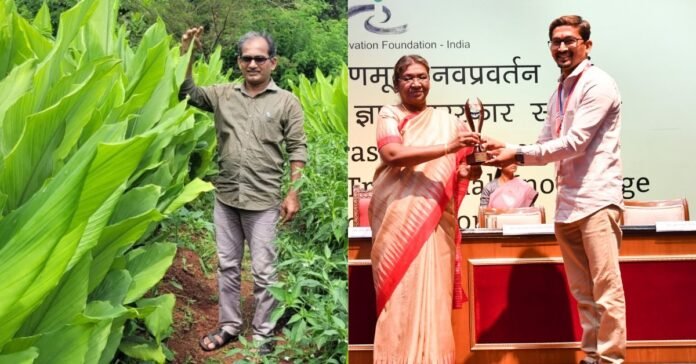
Sachin Kamlakar Karekar, a 48-year-old farmer from the lush fields of Abloli village in Maharashtra’s Ratnagiri district, has done something incredible. With a keen eye and relentless determination, he has developed SK-4, a turmeric variety that’s now being grown by over 500 farmers across Ratnagiri, Sindhudurg, and Raigad. His passion and innovation even earned him a prestigious award from President Draupadi Murmu at the 11th Biennial National Grassroots Innovation and Outstanding Traditional Knowledge Awards.

A Journey from Tradition to Innovation

India is the world’s largest producer, consumer, and exporter of turmeric, with 11.61 lakh tonnes harvested in 2022-23. In Maharashtra, the Rajapuri Salem variety has long dominated, contributing 70% of the state’s production. But Karekar saw an opportunity to improve things for farmers like him.

It all started back in 1998, when Karekar planted the local Kadja variety. Among his crops, he noticed a few standout plants—early maturing, vibrant in color, disease-free, and with bigger rhizomes. He didn’t just observe; he experimented. Year after year, he carefully selected the best plants, improving them little by little. By 2008, he had created SK-4—a variety with superior traits that could change the turmeric industry. The name? A heartfelt tribute to Shendge Kaka (the farmer who initially gave him Sangli Kadapa tubers), Special Konkan, and, of course, his own initials.

Scientific Backing and Farmer Approval

In 2020, the Dapoli-based Dr. Balasaheb Sawant Konkan Krishi Vidyapeeth (DBSKKV), along with the National Innovation Foundation (NIF), tested SK-4’s performance. The results? Outstanding. SK-4 produced a yield of 56 tonnes per hectare, making it one of the top-performing turmeric varieties, second only to the best check variety, Sona (64t/ha).

Dr. Prafulla Mali, a horticulturist at DBSKKV, is optimistic about SK-4’s future. “This variety is a blessing for farmers in high-rainfall areas like Konkan. It performs exceptionally well, and we believe it can fill the gap where seed shortages of premium varieties like Rajendra Sona exist.”

What Makes SK-4 Special?

  • Higher Curcumin Content: SK-4 boasts a curcumin content of 4%, compared to the widely grown Rajapuri Salem variety’s 3.5%. That means richer color and greater medicinal value.
  • Disease Resistance & High Yield: It’s resistant to rhizome rot (karpa) and matures in just 160-170 days.
  • Bigger, Brighter Rhizomes: Perfect for culinary and medicinal uses, making it a valuable crop for farmers.

How Farmers Are Growing SK-4

Many farmers have already adopted SK-4, and their results are astonishing. Vishram Mali from Velamb village harvested a whopping 8.15 kg of turmeric from a single sapling!

The secret? A structured cultivation approach:

  1. April: Rhizomes are planted in nursery bags.
  2. June: Saplings are transplanted into fields enriched with organic fertilizers.
  3. August: The plants receive a second round of water-soluble fertilizers.
  4. January: Irrigation continues until the plants reach maturity.
  5. February: Harvest time! Each sapling yields an impressive 3.2 kg or more.

Farmer Gajendra Paunikar, a former Agriculture Extension Officer, swears by this method. “Planting rhizomes in nursery bags rather than directly in the field gives a 90% success rate. It’s a game-changer.”

A Growing Movement Across India

SK-4 is now being cultivated in 13 states. Farmers from Nandurbar, Vidarbha, and beyond are eager to get their hands on this variety. At a recent NIF event in Rashtrapati Bhavan, farmers from across the country bought SK-4 tubers to try in their own fields.

Karekar’s hard work was officially recognized last December when the Protection of Plant Varieties & Farmers Rights Authority (PPV&FRA) granted him breeder status. That means he has exclusive rights to produce and sell SK-4 for six years—an achievement he never imagined when he first started this journey.

Advice for Aspiring Turmeric Farmers

Karekar has a word of wisdom for those looking to grow turmeric: Start small.

“I began with just one guntha (1,000 sq. ft.), and now I have 10 gunthas with 3,000 saplings. Don’t rush into large-scale farming—learn, observe, and grow steadily.”

He also runs an agritourism project on his two-acre farm, where visitors, especially bird watchers, get to experience sustainable farming up close.

With its high yield, resilience, and superior quality, SK-4 is set to revolutionize turmeric farming in India. As more farmers adopt this variety, it’s only a matter of time before SK-4 becomes the new gold standard in turmeric cultivation. The best part? It all started with one farmer’s passion for making a difference.


How a Sheriff From Madras Gave India Its Beloved Chicken 65

0

Last year, a humble yet explosive dish from India made waves on the global stage. Chicken 65 climbed from the 10th to the 3rd spot on TasteAtlas’ list of the best fried chicken dishes in the world. It was a proud moment for Indians everywhere—especially for the chefs at Chennai’s legendary Buhari Hotel, the birthplace of this cult-favorite appetizer.

Even today, the signature dish holds its place on the Buhari menu, continuing to capture hearts and taste buds with its unmistakable crunch and fiery kick. But what makes Chicken 65 so special? And how did a hyper-regional dish from a single eatery in Chennai become a sensation across India and beyond?

The Mystery Behind ‘65’

One bite into Chicken 65, and it’s an explosion of flavors—spicy, tangy, and deeply satisfying. But the origins of its intriguing name remain a subject of much debate. Some say it refers to the number of ingredients used in the dish. Others claim it was named after the year of its creation—1965. A more absurd myth suggests the chicken is marinated for 65 days before cooking. And then there’s the legend that claims the dish originally contained exactly 65 pieces of chicken!

The most plausible theory, however, takes us back to the soldiers stationed in Chennai in the mid-20th century. These army men, regular visitors at the city’s mess halls, often struggled with Tamil menus due to the language barrier. Legend has it that a soldier once pointed at item number 65 on Buhari Hotel’s menu, tasted the crispy fried chicken, and fell in love with it. Word spread, and soon, everyone was ordering ‘Chicken 65’—a name that stuck around ever since.

The Birth of an Icon

Buhari Hotel in Chennai, where the magic first happened, has a history as rich as the dish itself. Founded in 1951 by A M Buhari, a former sheriff of Madras, the hotel was born out of his passion for food, discovered during his time in Colombo. Buhari envisioned a space where food would serve as a bridge between cultures and communities, and his venture soon became one of the city’s most beloved eateries.

While the menu boasted a variety of delectable dishes, it was Chicken 65 that became an instant classic. The eatery’s jukebox, playing the hit song Dum Maro Dum, added to the electric atmosphere as diners flocked in to savor the crispy, spicy delight.

Why Chicken 65 is More Than Just a Starter

Despite being categorized as an appetizer, Chicken 65 refuses to be boxed in. Its versatility means that while some enjoy it as a side, others turn it into a full meal, pairing it with fluffy rumali roti or fragrant biryani. The passage of time has done little to dull its popularity—in fact, it has only amplified it.

Where to Try the Best Chicken 65

If you want to experience the best versions of Chicken 65, these iconic eateries should be on your list:

1. Buhari Hotel, Chennai

The birthplace of Chicken 65 still serves it in its original, unadulterated form. The menu also offers other intriguing chicken dishes named after their respective years of creation—Chicken 78, Chicken 82, and Chicken 90. Come with an appetite, because you’ll want to try everything!

2. Erode Amman Mess, Chennai

This spot is known for bold, zesty flavors. Alongside Chicken 65, their Andhra Chilli Chicken is another must-try. As Chef and culinary consultant Mathangi Kumar puts it, “These spicy dishes are not for the faint-hearted, but they keep diners coming back for more. The batter used is never greasy, and the balance between crust thickness and meat size is always perfect.”

3. Dakshin, Delhi

For a refined experience, head to Dakshin in Delhi, where the menu is a love letter to South Indian cuisine. Inspired by the ‘Military Hotels’ that once catered to army personnel, Dakshin’s menu features flavors from across Tamil Nadu, Kerala, Karnataka, Andhra Pradesh, and Telangana. Their Chicken 65 stays true to its roots while offering a touch of elegance.

Bringing Chicken 65 to Your Kitchen

Until you get the chance to visit these iconic eateries, why not try making Chicken 65 at home? Chef Saransh Goila has a fantastic recipe that captures the essence of this fiery delight. So roll up your sleeves, gather your spices, and prepare to indulge in a dish that has stood the test of time—one crispy, spicy bite at a time.

The State of India’s Environment 2025: A Comprehensive Overview

0

The State of India’s Environment 2025 report presents an in-depth analysis of India’s pressing environmental concerns. Released on February 26, 2025, by the Centre for Science and Environment (CSE) and Down To Earth (DTE), the report sheds light on critical developments in climate change, pollution, and waste management, offering valuable insights into the country’s ecological trajectory.

Key Themes of the Report

The report encompasses a broad spectrum of environmental issues, including climate change, air and water pollution, biodiversity, and waste management. Special sections delve into pressing concerns such as plastic pollution, antimicrobial resistance, and the impact of climate change on the Thar Desert. Additionally, it reflects on the 40th anniversary of the Bhopal Gas Tragedy and evaluates India’s progress towards its renewable energy targets.

Environmental Challenges in 2024

The report highlights that 2024 was marked by an alarming rise in extreme weather events. India faced severe weather conditions on 255 out of 274 days in the first nine months of the year—a significant increase from previous years. These climatic disturbances had a profound impact on agriculture, damaging over 3.2 million hectares of cropland and exacerbating food security concerns.

Public Awareness and Political Response

Environmental consciousness among the public is on the rise, influencing political discourse. The 2025 Delhi Assembly elections underscored the electorate’s growing emphasis on clean air and waste management as key priorities. In response, governments have introduced various environmental initiatives, but the report critiques their limited scope and the structural weaknesses in institutional responses.

Future Generations and Climate Change

The report also underscores the long-term implications of climate change for Generation Alpha, the youngest demographic cohort. With 2024 recorded as the hottest year on record, global temperatures have surpassed the 1.5°C threshold above pre-industrial levels, posing severe risks for future generations. Rising temperatures and extreme climate events signal an urgent need for robust policies and action to mitigate environmental damage.

Summing Up

The State of India’s Environment 2025 report serves as a crucial wake-up call, highlighting the escalating environmental challenges India faces. While awareness and policy measures are gaining traction, stronger institutional commitment and proactive strategies are imperative to safeguard the country’s ecological and climatic future. The findings emphasize the urgent need for collaborative efforts to ensure a sustainable and resilient environment for future generations.

India’s Role in UN Peacekeeping Missions

0

India has long been a significant contributor to United Nations (UN) peacekeeping missions. Recently, External Affairs Minister S. Jaishankar reaffirmed India’s commitment to supporting Global South nations in enhancing their peacekeeping capacities. This commitment includes training and capacity-building initiatives, particularly for women peacekeepers. India’s extensive involvement in peacekeeping reflects its dedication to maintaining international peace and security.

Understanding UN Peacekeeping Missions

UN peacekeeping missions involve military and police personnel voluntarily provided by member states. These forces operate under the UN flag, wearing their national uniforms along with UN identifiers. Their primary responsibilities include protecting civilians, preventing conflicts, and empowering local authorities. The use of force is restricted to self-defense or the execution of their mandate and is typically considered a last resort.

A Brief History of UN Peacekeeping Operations

Since its inception in 1948, the UN has launched over 71 peacekeeping missions worldwide. The first such mission, the United Nations Truce Supervision Organization (UNTSO), was created to monitor the armistice between Israel and its Arab neighbors. Today, more than 100,000 personnel from 125 countries serve in 14 active peacekeeping operations, showcasing the global commitment to maintaining peace.

Funding and Contributions

The financial backing of UN peacekeeping missions is a collective responsibility, with the UN Security Council overseeing operations. The largest financial contributors are the United States and China, accounting for 26.95% and 18.69% of the budget, respectively. India contributes about 0.2088%. Troop-contributing nations receive reimbursements from the UN at a standard rate per soldier per month, ensuring sustainability in peacekeeping operations.

India’s Role in UN Peacekeeping

India has played a crucial role in UN peacekeeping, deploying over 290,000 personnel since the 1950s. Presently, approximately 5,000 Indian peacekeepers are actively engaged in nine of the eleven ongoing missions. India’s participation not only strengthens its global reputation but also supports its aspirations for a permanent seat on the UN Security Council.

Challenges and Criticisms of Peacekeeping

Despite the commendable efforts of peacekeeping forces, these missions face considerable scrutiny. Critics argue that troop distribution is often influenced by national interests rather than the genuine need for conflict resolution. Additionally, the high financial costs and the risks to personnel—179 Indian peacekeepers have lost their lives in service—raise concerns about the overall efficacy of these operations.

The Future of UN Peacekeeping Missions

The future of UN peacekeeping depends on the willingness of member states to adapt and reform. This includes addressing challenges in troop contributions, funding, and operational effectiveness. As global geopolitical dynamics continue to evolve, peacekeeping missions must innovate to respond effectively to emerging conflicts and humanitarian crises.

India remains steadfast in its commitment to peacekeeping, demonstrating its dedication to global stability and reinforcing its role as a key player in international diplomacy.

DRDO and Indian Navy Successfully Test NASM-SR Missile

0

Recently, the Defence Research and Development Organisation (DRDO) and the Indian Navy successfully conducted flight trials of the Naval Anti-Ship Missile Short Range (NASM-SR) at the Integrated Test Range in Chandipur, Odisha. This milestone marks a significant advancement in India’s defence capabilities. The trials highlighted the missile’s cutting-edge features, particularly its “Man-in-Loop” capability, allowing in-flight retargeting for greater operational flexibility.

Advanced Missile Specifications and Features

The NASM-SR missile incorporates an indigenous Imaging Infra-Red (IIR) seeker for terminal guidance, ensuring precise target engagement. Additionally, it boasts a high-bandwidth two-way datalink system, transmitting real-time images back to the pilot, enabling dynamic mid-flight target selection.

Launch and Target Engagement

During the test, the missile was launched from an Indian Naval Seaking helicopter. Initially, it locked onto a large target within a designated search area. In the terminal phase, the pilot retargeted it to a smaller concealed target. This demonstrated the missile’s ability to accurately strike targets in sea-skimming mode at maximum range.

Guidance and Navigation Systems

The NASM-SR integrates a Fiber Optic Gyroscope-based Inertial Navigation System (INS) and a Radio Altimeter for mid-course guidance. It also features an advanced avionics module and electro-mechanical actuators for enhanced control. The missile is powered by a solid propulsion system, which includes an in-line ejectable booster and a long-burn sustainer, ensuring optimal range and efficiency.

Development and Production

The NASM-SR is developed through collaboration between various DRDO laboratories, including the Research Centre Imarat and the Defence Research and Development Laboratory. The production process involves partnerships with micro, medium, and small enterprises (MSMEs) and startups, underlining India’s commitment to self-reliance in defence manufacturing.

Strategic Significance of the Trials

Defence Minister Rajnath Singh lauded the successful trials, emphasizing the game-changing “Man-in-Loop” feature, which enhances operational effectiveness by allowing real-time adjustments during a mission. These successful trials not only demonstrate the missile’s technical prowess but also significantly bolster India’s maritime defence strategy, reinforcing its capability to counter emerging threats effectively.