Home Blog Page 371

Soligas and Tiger Conservation in BRT Tiger Reserve

0

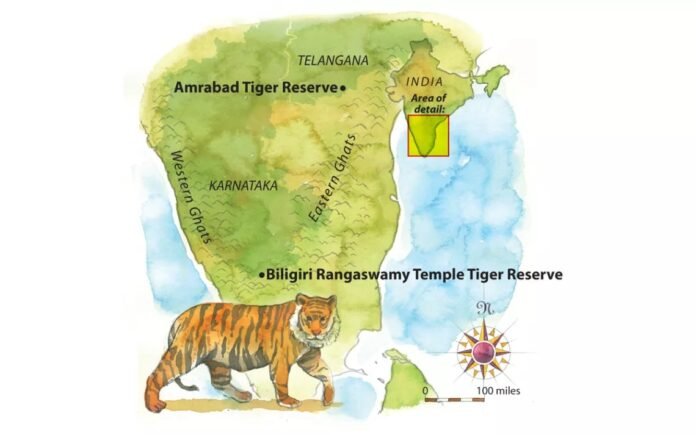
The Soliga tribe has long inhabited the Biligiri Rangaswamy Temple (BRT) Tiger Reserve in Karnataka, playing a crucial role in tiger conservation. Their harmonious relationship with the wildlife, particularly tigers, has significantly contributed to conservation efforts. Prime Minister Narendra Modi highlighted their contributions during the 119th edition of Mann Ki Baat, attributing the steady increase in tiger numbers to the Soligas’ traditional practices and cultural reverence for nature.

The Soliga Tribe: Guardians of the Forest

The name “Soliga” translates to “children of bamboo.” This indigenous community resides near the Biligiri Rangana Hills and Male Mahadeshwara Hills and has a deep-rooted connection with the forest.

  • They were the first tribe in India to be granted official rights to live inside a tiger reserve (Biligiri Rangaswamy Temple Tiger Reserve).
  • As of 2011, there were 33,871 Soligas in Karnataka and 5,965 in Tamil Nadu.
  • The Soligas communicate in Sholaga (a Dravidian language), Kannada, and Tamil.
  • They practice shifting cultivation and rely on forest produce for sustenance, with honey being a significant part of their diet.

Cultural Practices and Wildlife Conservation

The Soligas worship tigers, referring to them as Dodda Nayi (Big Dog) and even maintaining a temple dedicated to them. Their deep cultural respect for tigers has fostered a natural form of conservation, where coexistence with wildlife is integral to their way of life.

Their sustainable lifestyle ensures the preservation of natural habitats, making them model conservationists. By avoiding over-extraction and leaving portions of their harvest for the wildlife, they actively promote ecological balance.

Mitigating Human-Animal Conflict

Unlike other areas, human-animal conflict in the BRT Tiger Reserve is relatively low. The Soligas’ knowledge of animal behavior allows them to avoid encounters with tigers. By recognizing the signs of wildlife movement and adapting their routines accordingly, they minimize conflicts and protect both humans and animals.

Collaboration with the Forest Department

The Forest Department works closely with the Soligas, recognizing their deep knowledge of the land. The tribe actively participates in forest management, particularly in fire prevention efforts and wildlife monitoring. Their involvement has helped develop effective conservation strategies.

Fluctuating Tiger Population in BRT Tiger Reserve

The tiger population in BRT Tiger Reserve has seen notable changes over the years:

  • 2014: 69 tigers
  • 2018: 86 tigers
  • 2022: Decline observed due to human interference and habitat degradation

Understanding these factors is crucial for future conservation measures. Addressing habitat destruction and ensuring that conservation efforts align with traditional tribal practices can help sustain the tiger population.

Recognizing Tribal Rights for Sustainable Conservation

In 2011, the Soligas became the first tribal community in India to have their forest rights officially recognized within a tiger reserve. This landmark ruling acknowledged their historical connection to the land and reinforced their role in conservation. Recognizing and empowering tribal rights can significantly enhance conservation efforts, ensuring sustainable and community-driven forest protection.

A Broader Perspective on Conservation

India’s diverse ecosystems thrive due to the deep-rooted relationship between tribal communities and wildlife. The Soligas’ example serves as a model for conservation. The Prime Minister also cited other cultural practices across India that support biodiversity, such as Karnataka’s Huli Vesha dance, further emphasizing the deep bond between tradition and environmental stewardship.

As conservation strategies evolve, integrating indigenous knowledge with modern approaches remains a key to preserving India’s wildlife and fostering sustainable ecosystems.

Prajakta Koli & Vrishank Khanal Swap Yellow for White in a Dreamy Haldi Ceremony

0

The pre-wedding festivities of beloved YouTuber and actress Prajakta Koli and her fiancé Vrishank Khanal continue to enchant fans. Following the heartwarming mehendi ceremony, the couple celebrated their haldi ceremony with an unconventional yet elegant twist—opting for white instead of the traditional yellow.

Prajakta Koli & Vrishank Khanal Swap Yellow for White in a Dreamy Haldi Ceremony

Prajakta looked ethereal in a white salwar suit, paired with a delicate sheer dupatta, exuding grace and charm. Complementing her look, Vrishank Khanal chose an embroidered white kurta, symbolizing their serene and intimate connection. The duo’s coordinated outfits added a touch of sophistication to the joyous occasion.

Prajakta Koli & Vrishank Khanal Swap Yellow for White in a Dreamy Haldi Ceremony

The couple shared their precious moments through a joint social media post, offering a glimpse into their celebration. One picture captures a candid moment of Prajakta sitting on Vrishank’s lap, radiating love and happiness, while another showcases the couple posing against a picturesque lake backdrop, making for a dreamy frame.

Their unconventional choice to swap yellow for white in the haldi ceremony has been widely appreciated by fans and well-wishers, setting new trends for modern wedding aesthetics.

Check Out! Prajakta Koli Looks Like a Proper Marathi Mulgi at Her Sangeet Ceremony with Vrishank Khanal

0

The much-loved digital creator and actress Prajakta Koli is embracing her roots as she celebrates her wedding festivities with Vrishank Khanal. The couple’s pre-wedding celebrations have been nothing short of a grand affair, filled with love, laughter, and tradition.

Check Out! Prajakta Koli Looks Like a Proper Marathi Mulgi at Her Sangeet Ceremony with Vrishank Khanal

After mesmerizing fans with glimpses of her Haldi and Mehendi ceremonies, Prajakta has now shared stunning pictures from her Sangeet ceremony. Dressed in a traditional Marathi attire, she exudes the grace and elegance of a true Marathi mulgi, leaving her followers in awe.

Check Out! Prajakta Koli Looks Like a Proper Marathi Mulgi at Her Sangeet Ceremony with Vrishank Khanal

Her Sangeet look is a perfect blend of tradition and modernity, featuring intricate designs and vibrant hues that add to the festive spirit. The pictures, which she posted on social media, reflect the joyous moments of the night, capturing heartfelt dance performances, candid laughter, and the love shared between the soon-to-be-married couple.

Check Out! Prajakta Koli Looks Like a Proper Marathi Mulgi at Her Sangeet Ceremony with Vrishank Khanal

Fans and celebrities alike have flooded the comments section, showering the couple with best wishes and admiration. With each event, Prajakta and Vrishank’s wedding celebrations continue to captivate hearts, setting major wedding goals for all.

Stay tuned for more updates as the couple inches closer to their big day!

The Blue-Cheeked Bee-Eater: A Rare Breeding Discovery in India

0

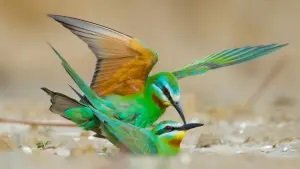
A remarkable ornithological discovery has been made in peninsular India—the Blue-Cheeked Bee-Eater (Merops persicus) has been confirmed to breed in the region for the first time. This milestone finding was recorded in the saltpans of Aandivilai, near the Manakudy Mangroves in Kanniyakumari district, Tamil Nadu.

A Unique Species: Characteristics of the Blue-Cheeked Bee-Eater

This striking bird is known for its vibrant green plumage, a distinctive blue cheek patch, and elegant tail streamers that enhance its graceful appearance. Traditionally, the Blue-Cheeked Bee-Eater has been a passage migrant and winter visitor in India. Its primary breeding locations were recorded in the Nile Delta, Pakistan, and Iran, with winter migration to various regions in Africa.

Discovery of a New Breeding Site

The discovery of a breeding population in Tamil Nadu marks a significant range expansion for the species. A detailed study conducted from January 2022 to October 2023 surveyed areas across the Pazhayar Basin, including Periyakulam, Manakudy Mangroves, Puthalam, and Aandivilai. Researchers observed a flock of Blue-Cheeked Bee-Eaters engaging in courtship behaviors, leading to the identification of their nesting sites along the saltpans of the Pazhayar river basin.

Breeding Patterns and Population Growth

During the study, the breeding season began with 28 individuals. By the end of the observation period, the number had grown to 48 birds, confirming successful breeding. The species exhibited year-round site fidelity, except for February, when they were notably absent. These findings suggest a stable and potentially growing breeding population in the region.

Threats to the Nesting Colony

Despite its ecological importance, the Aandivilai nesting colony faces multiple threats. The primary concerns include:

  • Habitat destruction due to developmental activities.
  • Coastal Regulation Zone violations, despite being a designated No Development Zone.
  • Natural threats, such as flooding and erosion, which could disrupt nesting sites.

The Urgent Need for Conservation Efforts

With the Aandivilai colony being the only known breeding site in India, conservationists are urging authorities to implement protective measures to preserve this rare and crucial habitat. Immediate steps are needed to safeguard the breeding grounds and prevent potential disturbances that could impact the population’s sustainability.

Habitat and Adaptive Behaviors

The Blue-Cheeked Bee-Eater thrives in sub-tropical semi-desert regions with scattered trees, where it either nests solitarily or in small colonies. Interestingly, this species is known to share nesting sites with the European Bee-Eater, showcasing its adaptive behavior. Outside of its breeding season, it prefers greener landscapes, displaying a remarkable ability to adjust to diverse environments.

Conclusion

The confirmation of Blue-Cheeked Bee-Eater breeding in Tamil Nadu marks a significant moment in Indian ornithology. However, the fragility of its nesting habitat calls for urgent conservation actions. By recognizing and protecting this vital breeding site, India can contribute to the long-term survival of this stunning species in the region.

Ensuring the protection of such avian wonders is a shared responsibility—one that requires immediate and sustained conservation efforts.

IAS Officer Shares Strategy for Last 3 Months Before UPSC CSE Prelims

0

In 2018, Saurabh Bhawania achieved a milestone that many aspire to but only a few attain—he cracked the UPSC Civil Services Examination with an All India Rank (AIR) of 113. His journey, marked by resilience and determination, is a testament to the power of persistence. At 32 years old, he secured an exceptional score of 201 in the interview round, the third-highest that year.

Overcoming Challenges and Balancing Responsibilities

Success did not come easy. Saurabh’s first attempt in 2017 ended at the Mains stage, but instead of giving up, he embraced the setback as motivation. He returned stronger in his second attempt, balancing rigorous UPSC preparation with his full-time job at the Reserve Bank of India (RBI) and the responsibilities of impending parenthood.

“My career in banking was fulfilling, but my heart yearned for work that made a difference,” he reflects. Inspired by his father’s admiration for civil servants and a District Collector in Dumka, Jharkhand, who actively engaged with the local community, Saurabh nurtured the dream of joining the Indian Administrative Service (IAS).

Just two months into his UPSC preparation, he and his wife Parul received life-changing news—they were expecting a child. Instead of seeing this as a challenge, Saurabh transformed it into his greatest motivation. With relentless dedication, he finally cleared the examination in his second attempt and realized his dream of becoming an IAS officer.

With his wealth of experience, Saurabh shares crucial insights for aspirants gearing up for the UPSC Prelims in May 2025.

Saurabh Bhawania’s Ultimate UPSC Prelims Preparation Tips

1. Quality Over Quantity

“There is no fixed number of study hours required to crack UPSC,” Saurabh emphasizes. A well-structured strategy matters more than mindlessly logging long hours. “While dedicating more hours helps, it’s a misconception that fewer hours won’t yield success. A focused and productive schedule can work just as well.”

For working professionals, he suggests:

  • Weekends: Study 8-9 hours per day.
  • Weekdays: Allocate 5-6 hours while balancing work commitments.
  • Holidays: Use them strategically for intensive revision.

2. Mastering the Art of Elimination

The UPSC Prelims consists of two papers:

  • General Studies (Paper I) – Determines qualification for Mains.
  • CSAT (Paper II) – A qualifying paper requiring a minimum of 33% marks.

Since Prelims follows a multiple-choice format with negative marking, mastering the elimination technique is crucial. “You may not know the answer to every question, so develop the skill of eliminating incorrect options,” Saurabh advises.

Reverse Engineering Approach:

  • If two options seem incorrect, eliminate them and make an educated guess between the remaining choices.
  • Regularly practice elimination techniques to improve accuracy.

Daily Routine: Spend 30-35 minutes solving 25-30 MCQs and analyzing explanations rigorously to understand the rationale behind each answer.

3. Prioritizing Mock Tests

Even if 90% of the syllabus is covered three months before Prelims, shift your focus to test paper practice. Saurabh advises:

  • Take subject-wise and full-length mock tests to build speed and reduce errors.
  • Aim to solve 5,000+ questions before the exam.
  • Reviewing previous years’ question papers helps recognize recurring patterns.

4. Don’t Underestimate CSAT

While General Studies determines the Prelims cut-off, CSAT is equally important. Many aspirants overlook CSAT, assuming it only requires 33% to pass, but its difficulty level has increased over the years.

CSAT Preparation Strategy:

  • Even if confident, solve past CSAT papers to assess proficiency.
  • Self-test regularly: If scoring 70-80 marks, identify weak areas and refine skills.
  • Strengthen reading comprehension, synonyms, and quantitative aptitude.

5. Smart Leave Planning for Working Aspirants

While working at RBI, Saurabh strategically planned leaves for UPSC:

  • Prelims: Took 10 days off for focused preparation.
  • Mains: Reserved three weeks for intensive study.
  • Interview: Allocated time based on his personal study timeline.

“If you’re employed, use weekends, holidays, and study breaks wisely to maximize preparation,” he advises.

Final Words of Motivation

Saurabh Bhawania’s story is a powerful reminder that success in UPSC is not about overnight miracles but consistent effort and smart strategy. Whether managing a full-time job, parenthood, or other responsibilities, the key is to stay focused, practice relentlessly, and never lose sight of the goal.

To all UPSC aspirants gearing up for Prelims 2025, believe in yourself, trust your preparation, and keep moving forward.

Stay determined, and success will follow!

Wishing you the best for the upcoming UPSC Prelims!

Amit Shah Chairs 27th Western Zonal Council Meeting in Pune

0

Union Home Minister Amit Shah presided over the 27th Western Zonal Council meeting in Pune, Maharashtra, bringing together the Chief Ministers of Maharashtra, Gujarat, and Goa, along with the Administrator of Dadra and Nagar Haveli and Daman and Diu. Senior government officials from both state and central ministries were also in attendance. The meeting reinforced the role of Zonal Councils in promoting cooperative federalism by addressing inter-state issues and fostering regional collaboration.

Historical Significance of Zonal Councils

The idea of Zonal Councils was introduced by Jawaharlal Nehru in 1956 to mitigate linguistic and regional conflicts following the States Reorganisation Act. These councils serve as platforms for states to discuss common concerns, administrative challenges, and developmental strategies. There are five Zonal Councils, each covering specific states and Union Territories, alongside the North Eastern Council, which was established in 1972.

Composition of the Zonal Councils

  • Northern Zonal Council: Haryana, Himachal Pradesh, Jammu & Kashmir, Punjab, Rajasthan, Delhi, Chandigarh.
  • Central Zonal Council: Chhattisgarh, Uttarakhand, Uttar Pradesh, Madhya Pradesh.
  • Eastern Zonal Council: Bihar, Jharkhand, Odisha, West Bengal.
  • Western Zonal Council: Goa, Gujarat, Maharashtra, Dadra & Nagar Haveli, Daman & Diu.
  • Southern Zonal Council: Andhra Pradesh, Karnataka, Kerala, Tamil Nadu, Puducherry.
  • North Eastern Council: Assam, Arunachal Pradesh, Manipur, Tripura, Mizoram, Meghalaya, Nagaland.

Leadership and Governance

Each Zonal Council is chaired by the Union Home Minister, while the Chief Minister of a member state serves as the Vice-Chairperson on a rotational basis. Additionally, ministers from participating states and senior officials from the central and state governments take part in discussions.

Objectives and Functions

Zonal Councils focus on resolving inter-state disputes, economic coordination, and policy implementation. They discuss a range of topics, including:

  • Economic planning and development
  • Inter-state transport and infrastructure
  • Law and order coordination
  • Public health and social welfare initiatives
  • Border security and administrative efficiency

Under the Modi government, Zonal Councils have transformed from advisory bodies into action-oriented platforms, ensuring faster resolution of state-specific issues.

Expansion of Zonal Council Meetings

The effectiveness of Zonal Councils has increased significantly in recent years:

  • 140% rise in meetings: From 25 (2004-2014) to 61 (2014-2025) despite pandemic disruptions.
  • 170% rise in topics discussed: From 469 (2004-2014) to 1,541 (2014-2025).
  • Threefold increase in resolved issues: From 448 (2004-2014) to 1,280 (2014-2025).
  • Target: Achieve 100% resolution of agenda items in future meetings.

Significance of the Western Region in India’s Economy

The Western Zonal Council plays a vital role in India’s economic landscape:

  • Contributes 25% of India’s GDP.
  • 80-90% of industrial operations take place in this region.
  • Accounts for over half of India’s global trade.
  • Key infrastructure, including major ports and urban development, benefits multiple states.
  • Supports commerce for landlocked states like Madhya Pradesh, Rajasthan, and Jammu & Kashmir.

Major Focus Areas of the Meeting

Boosting Financial Inclusion

  • Nearly all villages now have bank branches or postal banking services within 5 km.
  • New goal: Reduce this distance to 3 km for better accessibility.

Addressing Malnutrition and Public Health

  • Despite economic prosperity, malnutrition and stunting remain concerns.
  • States urged to intensify efforts to combat malnutrition.
  • Preventive healthcare strategies to reduce reliance on medicines and hospitals.
  • Focus on improving school dropout rates and education quality.

Encouraging Domestic Pulse Production

  • Aim to reduce dependence on pulse imports while ensuring fair prices for farmers.
  • A new mobile application enables farmers to sell produce directly at MSP.
  • States urged to promote the app and increase farmer participation.

Key Discussions and Policy Decisions

  • State-specific issues: Land transfer policies, mining regulations, fast-track rape case investigations under FTSC, implementation of ERSS-112, railway projects, and food safety measures.
  • National topics: Urban planning, affordable housing, electricity supply, Nutrition Mission, school dropout reduction, Ayushman Bharat hospital participation, and strengthening PACS (Primary Agricultural Credit Societies).
  • Sharing of best practices: Gujarat presented its automated supply chain model for the Public Distribution System (PDS).

Future Roadmap and Outcomes

  • States committed to implementing action points discussed during the meeting.
  • Renewed focus on cooperative federalism to achieve 100% coverage of welfare schemes.
  • Strengthened coordination between state and central governments for socio-economic progress.

Strengthening India’s Federal Structure

Zonal Councils play a crucial role in India’s federal system, enabling states to collaborate effectively while addressing regional disparities. By enhancing inter-state dialogue and cooperation, they contribute to balanced economic and social development. The councils also help mitigate regional conflicts, fostering a sense of unity among India’s diverse linguistic and cultural communities.

With increasing engagement and action-oriented decision-making, Zonal Councils are set to become even more instrumental in India’s governance framework.

Shaktikanta Das Appointed as Principal Secretary to the Prime Minister

0

Shaktikanta Das, former Governor of the Reserve Bank of India (RBI), has been appointed as the Principal Secretary to the Prime Minister of India, effective February 22, 2025. His appointment signals a significant shift in India’s bureaucratic landscape, as he brings a rare blend of expertise in both monetary and fiscal policy. His role will be pivotal in coordinating efforts across various ministries and advising the Prime Minister on critical economic matters.

A Storied Career in Indian Administration

Shaktikanta Das, an Indian Administrative Service (IAS) officer from the 1980 Tamil Nadu cadre, has had an illustrious career spanning over four decades. A graduate in history from St. Stephen’s College, University of Delhi, he has held numerous key positions in India’s financial and economic governance, including serving as Secretary of Fertilisers and Revenue Secretary in the Ministry of Finance.

His most prominent role came as the 25th Governor of the Reserve Bank of India, a position he held from 2018 to December 2024. His leadership at the central bank proved crucial in navigating major economic challenges over the years.

Steering the RBI Through Critical Times

Das’s six-year tenure as RBI Governor was marked by significant economic developments. He played a central role in managing India’s monetary policy during periods of uncertainty, including:

  • The COVID-19 pandemic, implementing liquidity measures and regulatory reforms to stabilize the economy.
  • The Russia-Ukraine war’s impact on inflation, ensuring stability through strategic policy interventions.
  • The withdrawal of ₹2,000 notes from circulation, enhancing currency management.
  • Global promotion of UPI and RuPay, strengthening India’s digital payments ecosystem internationally.

Under his leadership, the RBI strengthened its financial oversight, promoted fintech innovations, and balanced inflation control with economic growth.

A New Role in India’s Bureaucracy

The Principal Secretary to the Prime Minister is a highly influential position, responsible for overseeing the Prime Minister’s Office (PMO). Key responsibilities include:

  • Briefing the Prime Minister on economic, administrative, and policy matters.
  • Coordinating inter-ministerial communication to ensure seamless governance.
  • Advising on economic and financial strategies for national development.
  • Managing communications with foreign dignitaries and global economic bodies.

Das will work alongside incumbent Principal Secretary Pramod Kumar Mishra, adding an economic edge to the PMO’s decision-making process.

Legacy of Policy Leadership

Das is widely respected for his pragmatic approach to economic policy. His handling of the 2016 demonetisation process, ensuring banking and financial stability during the transition, was one of his early tests. Later, he played a crucial role in keeping financial markets operational during India’s national lockdown in 2020.

Throughout his career, he has fostered effective collaboration between the RBI and the Finance Ministry, ensuring alignment in India’s economic policies. His ability to balance fiscal prudence with growth-oriented reforms makes him a valuable asset in his new role.

Challenges Ahead

As Principal Secretary to the Prime Minister, Das will face several key challenges, including:

  • Managing inflationary pressures amid global economic fluctuations.
  • Enhancing India’s economic competitiveness through policy reforms.
  • Strengthening financial sector resilience in an evolving digital economy.
  • Coordinating policies across ministries to drive economic growth and social development.

With his deep experience in economic governance, Das is well-positioned to navigate these challenges and play a pivotal role in shaping India’s policy direction at the highest level.

His appointment marks a new era of economic-focused leadership in the PMO, reinforcing the government’s commitment to financial stability, economic growth, and administrative efficiency.

Guardians of the Himalayan Enigma: The Red Panda’s Fight for Survival

0

Master Shifu’s Real-Life Inspiration

Remember Master Shifu from Kung Fu Panda? Po’s wise mentor who preaches inner peace? Interestingly, his character is based on an animal many call the original panda. With its fox-like face and raccoon-esque tail, the red panda was first described in 1825—decades before the black-and-white giant panda became famous.

So, what exactly is a red panda?

The Elusive Fire Fox of the Himalayas

The red panda (Ailurus fulgens) is a captivating mystery in the animal kingdom. The sole survivor of the Ailurus family (from the Greek Ailurus, meaning cat), it boasts lush red fur, a bushy ringed tail, and a masked face. Though part of the Carnivora order, it dines almost exclusively on bamboo leaves. Once spread across Eurasia, red pandas now exist only in fragmented pockets of the Eastern Himalayas.

Their future is precarious. Classified as ‘Endangered’ by the International Union for Conservation of Nature (IUCN), their numbers are dwindling due to habitat loss, genetic isolation, predation by leopards and feral dogs, and climate change.

“Even though their range extends from Western Nepal to Arunachal Pradesh, habitat fragmentation has led to a lack of genetic exchange between populations,” explains Dr. Basavaraj Holeyachi, Director of the Padmaja Naidu Himalayan Zoological Park (PNHZP) in Darjeeling.

The Darjeeling Zoo’s red panda conservation programme has gained global recognition, even becoming a finalist for the 2024 World Association of Zoos and Aquariums (WAZA) Conservation Awards.

Darjeeling Zoo: A Sanctuary in the Hills

Unlike conventional zoos that merely showcase animals, the Darjeeling Zoo is dedicated to conservation and research. India’s first genetic biobank facility is housed here, aiding the preservation of endangered species like the red panda, snow leopard, and Siberian tiger.

Since the 1980s, PNHZP has successfully bred 77 snow leopards, second only to the Bronx Zoo in New York. But it is their red panda conservation that has garnered the most international attention.

“Red pandas are an iconic species of the Himalayas,” Dr. Holeyachi emphasizes. Their importance is reflected in Sikkim’s decision to name them the State Animal in the 1990s. In Darjeeling, they’ve become an unofficial mascot of the region.

Spotting a Red Panda in the Wild: A Rarity

Red pandas are notoriously elusive. These shy, arboreal creatures thrive in dense forests, preferring oak, rhododendron, and magnolia trees.

“It is very rare to spot a panda in the wild,” says Moumita Chakraborty, who has spent years researching their habitats.

To survive, red pandas need:

  • Steep, forested slopes
  • A dense bamboo understory
  • A nearby water source

In India, their last strongholds are the Singalila National Park and Neora Valley National Park, where conservation efforts are focused.

The Forest Guardians: Protecting Red Pandas in the Wild

Vishwanath Pratap, IFS, oversees three protected areas, including the Senchal Wildlife Sanctuary and Singalila National Park, home to around 40 red pandas.

“Singalila is a dense, beautiful forest, mostly untouched by human activity,” he says. Yet, illegal activities like poaching remain a concern.

To counter threats, forest rangers employ local intelligence networks and 24/7 foot patrols, especially along the Nepal-India border.

“In places like Tonglu and Dhotrey, sightings of red pandas are reported now and then,” says J Sheikh Fareed, DFO (Darjeeling Territorial Division).

Eco-tourism is also emerging as a conservation strategy. Lamahatta Eco Park, one of Darjeeling’s top tourist spots, generates ₹40 lakh annually, with 20-25% of the revenue benefiting local communities. Events like the Singalila Bird Festival further promote conservation awareness.

Rewilding Red Pandas: A Delicate Process

The Darjeeling Zoo plays a pivotal role in breeding, research, and reintroducing red pandas into the wild.

“The goal is not just rewilding but rewilding genetically diverse, robust populations,” says Vishwanath Pratap.

🔹 Individuals are carefully selected based on genetic diversity.

🔹 They undergo training to acquire survival skills.

🔹 Those that meet behavioral benchmarks enter a soft-release facility to acclimate to the wild.

🔹 Once adjusted, they are released into their natural habitat.

The Role of Genetics: Unlocking Conservation Secrets

Red pandas suffer from low genetic diversity, making them prone to diseases and reproductive issues.

“Genetic diversity is like a Swiss Army knife—it gives a species tools to survive diseases and environmental changes,” explains Dr. Karthikeyan Vasudevan, Chief Scientist at LaCONES (Laboratory for the Conservation of Endangered Species), CCMB.

Darjeeling Zoo’s Genetic Biobank:

  1. Stores DNA, RNA, sperm, and oocytes at -196°C in liquid nitrogen.
  2. Ensures only the most genetically diverse individuals are released into the wild.
  3. Aids assisted reproduction techniques like IVF and artificial insemination.

Biobanking is gaining traction globally as a vital conservation tool, helping scientists understand susceptibility to disease, reproductive success, and climate adaptation.

A Holistic Approach to Conservation

All species have a generation time—the period from birth to reproductive maturity. For red pandas, it is 18-20 months, but numerous wild factors—high infant mortality, food scarcity, and predation—affect population growth.

Captive breeding mitigates these risks by ensuring:

  1.  Stable food supply
  2. Protection from predators
  3. Careful selection of mating pairs to boost genetic diversity

“Even with just seven individuals, a population can be revived over time with careful planning,” says Dr. Vasudevan.

Red Pandas: A Symbol of Ecosystem Health

Perched in the majestic Himalayas, the red panda is not just an adorable emblem but also a barometer of ecosystem health.

As Dr. Holeyachi puts it, “Every species plays a vital role. By protecting red pandas, we safeguard their entire habitat and the countless species that depend on it.”

The fight to save red pandas is not just about a single species—it’s about preserving the delicate balance of the Himalayan wilderness.

One red panda at a time.

Virat Kohli: A Champion Beyond Cricket

0

Virat Kohli did it again! On 23 February 2025, he delivered a match-winning century against Pakistan in the ICC Champions Trophy, scoring a stunning 100 off 111 balls. This wasn’t just another century—it was yet another reminder of why Kohli is one of the greatest cricketers of all time.

But Kohli’s greatness isn’t limited to cricket. Off the field, he continues to inspire millions by using his platform for meaningful causes that extend far beyond the boundaries of the game.

Six Ways Virat Kohli is Making a Difference Beyond Cricket

1. Empowering Underprivileged Children

  • Runs the Virat Kohli Foundation (VKF), collaborating with NGOs like Smile Foundation.
  • Provides scholarships for young athletes, ensuring financial barriers don’t hinder talent.
  • Works towards education and healthcare improvements for children from struggling backgrounds.
  • Believes in giving back, knowing that cricket gave him a future.

2. Breaking the Stigma Around Mental Health

  • Openly shares his experiences with anxiety and pressure, encouraging mental well-being.
  • Advocates for better mental health support systems in Indian sports.
  • Works with mental health professionals to make resources more accessible.
  • Spreads the message: “You’re not alone, and it’s okay to ask for help.”

3. Feeding Those in Need

  • Donated crores during the COVID-19 pandemic, ensuring food, medical supplies, and support.
  • Supports hunger relief initiatives like Feeding India by Zomato.
  • His foundation works to feed children and daily wage workers.
  • Believes that while cricket wins are important, ensuring people don’t go to bed hungry is even bigger.

4. Advocating for Animal Welfare

  • Passionate about animal rights, adopting strays and supporting shelters.
  • Launched initiatives to sponsor medical treatment and shelter for abandoned animals.
  • Actively promotes environmental sustainability, including tree plantation drives and plastic reduction.
  • Takes action, not just talks, when it comes to protecting animals.

5. Supporting Senior Citizens

  • Partnered with the ABIL Foundation to support Abhalmaya, an old age home in Pune.
  • Personally visits residents, bringing them joy and attention.
  • Ensures the home receives resources and financial aid to continue its noble work.
  • Believes being a champion means caring for every generation.

6. Uplifting Young Athletes Beyond Cricket

  • Supports not just cricket but also football, athletics, and other sports.
  • Sponsors budding athletes, providing financial aid and training.
  • Assists Olympic athletes, ensuring they have the resources to compete at the highest level.
  • Believes Indian sports deserve to shine in every field, not just cricket.

More Than Just a Cricketer

Virat Kohli’s unbeaten century against Pakistan on February 23, 2025, was yet another reminder of his greatness on the field. But his real victories go far beyond cricket—helping kids study, advocating for mental health, feeding the hungry, protecting animals, and uplifting young athletes.

And the best part? He’s just getting started.

His message is clear: Being a champion isn’t just about scoring runs. It’s about making a difference.

How to Apply for PM Kisan Yojana: A Simple Guide for First-Time Farmers

0

The PM Kisan Samman Nidhi Yojana (PMKY) is a significant government initiative aimed at providing financial aid to farmers across India. Launched with the objective of supporting agricultural activities, the scheme offers an annual financial assistance of Rs 6,000, distributed in three equal instalments to eligible farmers. This support plays a crucial role in helping farmers purchase essential inputs such as seeds and fertilizers, along with covering other farming-related expenses.

Latest Update: 19th Instalment Release

  • The 19th instalment of the PM Kisan Yojana is scheduled to be credited on 24 February 2025.
  • This marks the third and final instalment for the period between December 2024 and March 2025.
  • The scheme continues to be a key contributor in sustaining India’s agricultural sector.

Eligibility Criteria for PM Kisan Scheme

To benefit from the PM Kisan Yojana, farmers must meet the following criteria:
Own agricultural land.

Be actively engaged in farming activities.

Have a bank account linked with Aadhaar.

Note: Farmers who are landless or possess insufficient landholding may not qualify for the scheme.

How to Apply for PM Kisan Yojana: Step-by-Step Guide

If you are a new farmer and wish to register, follow these simple steps:

  1. Visit the official PM Kisan portalpmkisan.gov.in
  2. Under the ‘Farmers Corner’, click on ‘New Farmer Registration’
  3. Enter your Aadhaar number, state, and bank details
  4. Upload the required documents
  5. Click ‘Submit’ – Once verified, you will start receiving your instalments

Key Components Required for Registration

To successfully apply for PM Kisan Yojana, ensure you have the following details ready:

1. Personal Details

  • Full name (as per Aadhaar card)
  • Gender
  • Category (SC/ST/OBC)
  • Age
  • Father’s name
  • Mobile number

2. Aadhaar Details

  • Aadhaar Number
  • Aadhaar-linked bank account number

3. Bank Account Information

  • Bank Account Number (linked to Aadhaar)
  • IFSC Code of the bank branch

4. Land Details

  • Size and status of landholding (owned/leased)
  • Land ownership documents (if applicable)

5. Farmer Category

  • Small or marginal farmer classification
  • Tenant or owner farmer details (if applicable)

6. Address Details

  • Permanent Address
  • State/District/Block information
  • Village Name and Pin Code

7. Self-Declaration

  • A statement confirming that the farmer is not receiving any similar benefit from other government schemes.

How to Check Your Status?

To confirm your inclusion in the beneficiary list and ensure you receive the 19th instalment, follow these steps:

  1. Visit the official PM Kisan website
  2. Click on ‘Beneficiary Status’ from the homepage
  3. Enter your Aadhaar number, bank account number, or mobile number
  4. Click ‘Get Data’ to view your beneficiary status

Common Issues and Solutions

Farmers may encounter several challenges while accessing their funds. Here are some common issues and how to resolve them:

Bank Account Mismatch – Ensure your bank and Aadhaar details are correctly linked.

Incomplete Application – Verify that all required documents have been submitted.

Duplicate Registration – Contact your local agriculture department for corrections.

Technical Problems – Visit a CSC (Common Service Center) for assistance.

Eligibility Issues – Confirm that you meet the landholding and other criteria.

Final Tips: How to Ensure You Don’t Miss Out on Support

Check Your Status Regularly – Stay updated on instalment release dates. Link Your Aadhaar and Bank Account – Ensure both are linked to avoid delays. Update Your Details – If any personal or banking information changes, update it on the PM Kisan portal.

The PM Kisan Yojana has been instrumental in uplifting Indian farmers, ensuring financial security and promoting sustainable agriculture. If you are eligible, make sure to register and verify your details to avail the benefits without any hindrances.