Recent studies have unveiled fascinating connections between lightning and the Earth’s radiation belts, reshaping our understanding of space weather and electromagnetic interactions. The Van Allen radiation belts, which consist of high-energy particles, primarily electrons and protons, encircle our planet in two distinct regions. These belts, discovered in the 1950s, have long intrigued scientists. Now, new research suggests that electromagnetic waves produced by lightning can influence these belts, triggering bursts of electrons from the inner radiation belt into the atmosphere.
Discovery of the Van Allen Radiation Belts
The discovery of the Van Allen radiation belts dates back to 1958 when the United States launched the Explorer 1 satellite. Professor James Van Allen and his team identified unexpectedly high levels of radiation surrounding Earth, leading to the revelation of two primary belts. The inner belt is primarily composed of stable high-energy protons and electrons, while the outer belt consists of dynamic high-energy electrons influenced by solar activity.
Characteristics of the Radiation Belts
The inner radiation belt extends from about 1,000 km above Earth’s surface and remains relatively stable over time. In contrast, the outer belt, located farther away, is highly variable, with fluctuations in density and energy due to solar storms and geomagnetic activity. These variations directly impact the radiation environment around Earth, affecting both space missions and satellite operations.
Recent Research and Findings
A recent study examining high-energy electron bursts from the inner radiation belt has revealed surprising new insights. Previously, scientists believed that high-energy electrons were absent from the inner belt during certain periods. However, new observations challenge this assumption, indicating that these electrons can persist in this region under specific conditions. This finding opens new avenues for research into the behavior of high-energy particles in space.
The Role of Lightning in Radiation Belt Dynamics
Lightning plays a significant role in influencing the Earth’s radiation belts. When lightning strikes, it generates electromagnetic waves known as whistlers, which can travel from the atmosphere into space. These waves interact with electrons in the inner radiation belt, altering their movement and, in some cases, ejecting them into the atmosphere. Researchers have identified strong correlations between lightning activity and electron bursts, particularly following geomagnetic storms caused by solar eruptions. These storms intensify space weather disturbances, creating conditions conducive to electron movement between the belts and Earth’s atmosphere.
Implications for Space Weather and Safety
Understanding how lightning affects the radiation belts is crucial for space exploration and satellite operations. High-energy electrons can damage satellites, disrupt communication systems, and pose risks to astronauts. By identifying the patterns of electron bursts, scientists can improve space weather forecasting, enhancing the design and safety of spacecraft. Additionally, this research underscores the intricate links between terrestrial weather phenomena and space weather events, emphasizing the need for interdisciplinary studies.
The Nature of Scientific Discovery
This research highlights the nonlinear and ever-evolving nature of scientific discovery. Unexpected findings challenge conventional theories, pushing the boundaries of human knowledge. Scientists must remain open-minded and adaptable as new data emerges, refining our understanding of space weather and its broader implications. The interplay between lightning and radiation belts exemplifies the complexity of Earth’s interconnected systems, reminding us that even familiar phenomena can hold surprising secrets.
The name itself carries weight. This isn’t some fairy-tale story of a guy who stumbled into greatness. No, Gambhir earned every bit of it—through sheer grit, hard work, and an unshakable will to win. Whether it was standing tall in the face of world-class bowlers or stepping into the chaotic world of politics, he’s always been a fighter. You don’t score 97 in a World Cup final or lead your team to two IPL titles by accident. And you certainly don’t transition from cricket to politics without a spine of steel.
Gambhir’s journey isn’t just about cricket or politics—it’s about resilience. It’s about showing up when it matters most, whether it’s for your country or your constituency. From those early days grinding it out on Delhi’s cricket grounds to now serving as the MP for East Delhi, he’s never backed down from a challenge. And let’s be clear: not many can pull that off.
If you’re looking for inspiration, Gambhir’s story is it. It’s raw, real, and relentless. And if you’re someone who appreciates a bit of strategy and skill in your downtime, you might want to try your hand at rummy tez.
Early Life and Background
Gautam Gambhir was born on October 14, 1981, in New Delhi. No silver spoon, no fancy connections—just a middle-class kid with a dream and a bat. Cricket wasn’t something he did for fun; it was everything. From the moment he could hold a bat, he knew exactly what he wanted: to wear that Indian jersey. And he wasn’t going to let anything stop him.
His journey started on the rough, dusty pitches of Delhi. No flashy academies, no shortcuts—just hours of grinding it out in the heat. He wasn’t the most talented kid out there, but he had something not many did: an unbreakable will. By the time he was in school, he was already making noise. College cricket? He owned it. Domestic cricket? He dominated it.
Let’s be clear—Gambhir’s early years weren’t glamorous. He faced setbacks, doubts, and plenty of challenges. But he didn’t whine or quit. He worked harder. By his early 20s, he wasn’t just another cricketer; he was a force to be reckoned with. And he was ready to show the world what he was made of.
Gautam Gambhir’s Cricket Career
It’s the kind of story you tell someone when they need a lesson in mental toughness. He made his international debut in 2003, but let’s be honest—it took a few years for the world to really notice him. By 2007, though, he wasn’t just another player; he was a game-changer.
Domestic Career: Gambhir didn’t just play domestic cricket—he owned it. Playing for Delhi, he was a run-machine. Big scores, gritty knocks, and an ability to dig in when the team needed him most. That’s what got him noticed. That’s what got him into the national team.
International Career: When it came to the big stage, Gambhir delivered. Period. His 97 in the 2011 World Cup final? That wasn’t just a knock; it was the backbone of India’s victory. His 75 in the 2007 T20 World Cup final? That set the tone for India’s first-ever T20 title. And let’s not forget his 206 against Australia in Tests—proof that he could dominate the best in the business.
IPL Career: As captain of the Kolkata Knight Riders, Gambhir didn’t just lead—he transformed. Two IPL titles in 2012 and 2014. He took a struggling team and turned them into champions. His leadership wasn’t about flashy speeches; it was about results.
Retirement: In December 2018, Gambhir called it a day. No fanfare, no drama—just a quiet exit from the game he loved. But his legacy? That’s anything but quiet. He left behind a career built on grit, determination, and an uncanny ability to rise to the occasion.
Gautam Gambhir’s Batting Style
Gambhir’s batting wasn’t about style points. It was about getting the job done. He had a technique that was as solid as they come, and he played the ball late, which made him a nightmare for bowlers. He wasn’t there to put on a show; he was there to win.
What made him stand out? His mental toughness. When the pressure was at its peak, Gambhir didn’t crack. He delivered. Whether it was facing Dale Steyn at his most ferocious or anchoring the innings in a World Cup final, he didn’t flinch. He rose to the occasion.
He had this ability to rotate the strike and find gaps that others missed. It wasn’t flashy, but it was effective. And that cover drive? Pure class. Even the toughest critics had to tip their hats to it.
Gautam Gambhir’s Political Career
When Gautam Gambhir walked away from cricket, he didn’t fade into the background. No golf courses, no cozy punditry gigs. He went straight into politics, swapping the pitch for the political battleground. Same fire, same intensity. If anything, he cranked it up a notch.
From Cricket to Politics
Gambhir’s move wasn’t a shock. He’d always spoken his mind, never shied away from big issues. The hunger to do more was obvious. So, in 2019, he joined the Bharatiya Janata Party (BJP). New challenge. New fight. And he was all in.
Joining the BJP
People backed him. A straight talker with a clean reputation. No fluff, no drama. He wasn’t there to make up the numbers. He got stuck in, rolled up his sleeves, and got to work.
As an MP for East Delhi
Since taking office, Gambhir hasn’t just sat behind a desk. He’s been out there, dealing with real problems—fixing roads, improving infrastructure, making sure people are heard. When COVID-19 hit, he stepped up. Oxygen, medical supplies—he got them where they needed to be. No PR stunts, just action. People noticed.
Gambhir’s political journey is still unfolding, but one thing’s for sure—he’s in it for the long haul. Whether it’s cricket or politics, he plays to win. No half measures. No shortcuts. Just graft.
Gautam Gambhir’s Achievements and Records
Gambhir’s career is studded with achievements that speak volumes about his talent and dedication. Here’s a quick look at some of his most notable records and accolades:
Gautam Gambhir’s Career Statistics
Format
Matches
Runs
Average
Highest Score
Test
58
4154
41.95
206
ODI
147
5238
39.68
150*
T20
37
932
27.41
75
Major Awards and Honors
Arjuna Award (2008)
Padma Shri (2019)
Two IPL titles with Kolkata Knight Riders (2012, 2014)
Memorable Innings:
97 in the 2011 World Cup final: This wasn’t just a knock; it was the backbone of India’s World Cup win after 28 years. Under pressure, Gambhir delivered.
75 in the 2007 T20 World Cup final: A crucial innings that set up India’s first-ever T20 World Cup victory. He didn’t just play; he led.
206 vs Australia in Test cricket: A marathon innings that showed his patience, grit, and ability to dominate the best.
Gambhir’s records aren’t just stats. They’re proof of his ability to step up when it mattered most. He didn’t just play cricket; he owned the big moments.
Gautam Gambhir’s Philanthropy and Social Work
Gambhir’s work off the field? It’s as impactful as his performances on it. He’s not just a cricketer or politician; he’s someone who uses his platform to make a real difference.
COVID-19 Relief: When the pandemic hit, Gambhir didn’t sit back. He was out there, distributing oxygen concentrators, arranging meals for the needy, and doing whatever it took to help. People noticed. They respected him for it.
Helping the Underprivileged: Gambhir has always cared about those who get left behind. Through his foundation, he’s worked on education, healthcare, and creating opportunities for marginalized communities. His focus on empowering young people? That’s where he’s really making a mark.
Mental Health Advocacy: Gambhir’s been vocal about mental health, a topic too many ignore in India. He’s spoken openly about its importance and backed initiatives to raise awareness and reduce stigma.
Gambhir’s philanthropy isn’t about headlines. It’s about action. Whether it’s cricket, politics, or social work, he’s proving that real impact comes from doing, not talking.
Gautam Gambhir has never been one for sugarcoating. Whether he was opening the batting or stepping into politics, he’s always spoken with purpose—straight to the point, no fluff. His words tell you exactly what he stands for.
“Success isn’t about personal milestones. It’s about what you do for the team.” “You don’t play for applause. You play for the flag.” “Leadership isn’t about titles. It’s about responsibility.”
These aren’t throwaway lines for a press conference. They sum up how he’s lived his life—committed, direct, always thinking beyond himself. Whether he was grinding out runs for India or fighting for his people in East Delhi, the message has stayed the same: do the job, do it properly, and don’t look for excuses.
Gautam Gambhir’s journey? It’s a lesson in reinvention and resilience. From being one of India’s most reliable cricketers to becoming a hands-on Member of Parliament, he’s shown he’s more than just a sportsman.
His cricket career is packed with moments that defined an era. Match-winning knocks in World Cup finals. Leading Kolkata Knight Riders to IPL titles. He didn’t just play; he delivered when it mattered most.
Now, as a politician, he’s bringing that same drive to East Delhi. He’s not there for the title; he’s there to work. And he’s doing it with the same intensity he brought to the field.
What makes Gambhir stand out? He’s stayed grounded. Fame, accolades—none of it has changed him. He’s focused on giving back, whether it’s through his foundation or his advocacy for mental health.
In a world where many fade after their prime, Gambhir has only gotten stronger. His legacy isn’t about runs or political wins. It’s about inspiring people to dream big and work harder.
Gautam Gambhir? He’s a champion. On the field. Off the field. Everywhere.
Frequently Asked Questions
1. What’s Gautam Gambhir’s highest score in Test cricket? 206 runs. He smashed it against Australia in 2008.
2. When did Gambhir retire? December 2018. He walked away from all forms of cricket.
3. Which constituency does he represent as an MP? East Delhi. He’s been working there since 2019.
4. What’s his highest score in T20 cricket? 75 runs. He scored it in the 2007 T20 World Cup final.
IIFA 2025: Celebrating 25 Years of Bollywood Magic in Jaipur
Jaipur, February 2025 – The International Indian Film Academy (IIFA) is set to mark its 25th anniversary with a Silver Jubilee celebration in Jaipur, Rajasthan. This milestone event, scheduled for March 8th–9th, 2025, promises two days of non-stop entertainment, star-studded appearances, and unforgettable moments.
A Star-Studded Affair
This year’s IIFA will bring together the who’s who of Bollywood. The event will feature jaw-dropping performances and appearances by superstars such as Shah Rukh Khan, Kartik Aaryan, Karan Johar, Shahid Kapoor, Madhuri Dixit, Kareena Kapoor Khan, Nora Fatehi, Kriti Sanon, Vijay Varma, Abhishek Banerjee, Aparshakti Khurana, and many more.
Additionally, more than 100 Bollywood icons will attend, including Katrina Kaif, Bobby Deol, R. Madhavan, Yo Yo Honey Singh, Arjun Kapoor, Boney Kapoor, Shalini Passi, Boman Irani, Nandamuri Balakrishna, Rajat Kapoor, Madhur Bhandarkar, Priya Mani, Ravi Kishan, Bhushan Kumar, Gajraj Rao, Guneet Monga, Kiran Rao, Shilpa Rao, Jyoti Deshpande, Dia Mirza, Esha Gupta, Kanika Dhillon, Raghav Juyal, Zayed Khan, Fardeen Khan, Ranvir Shorey, Kunal Khemu, Lakshya Lalvani, Neil Nitin Mukesh, Chunky Panday, and Manish Malhotra.
Jaipur: The Perfect Backdrop for a Grand Celebration
With its breathtaking forts, palaces, and vibrant culture, Jaipur, known as the Pink City, provides the perfect backdrop for this extravagant event, blending cinematic brilliance with royal grandeur.
A Tribute to Bollywood’s Global Reach
IIFA 2025 is more than just an awards ceremony—it is a tribute to Bollywood’s journey from India to the world. The event will celebrate the impact of Indian cinema on a global scale, bringing together fans, filmmakers, and industry legends for a night to remember.
Two Days of Unparalleled Entertainment
The event will feature electrifying dance performances, dazzling red carpets, heartfelt tributes, and musical acts that will captivate audiences. With some of Bollywood’s biggest stars performing live, IIFA 2025 is set to be a landmark celebration.
Join the Celebration
The #IIFA25 event promises to be an unforgettable experience. Film enthusiasts, industry professionals, and Bollywood fans alike will have the opportunity to witness history being made in Jaipur this March.
Bollywood’s beloved couple, Kiara Advani and Sidharth Malhotra, surprised fans on Friday by announcing that they are expecting their first child. The couple shared the joyous news through a heartfelt Instagram post, expressing their excitement about embracing parenthood.
The couple posted an adorable picture featuring them holding a tiny pair of baby socks, symbolizing the arrival of their bundle of joy. Their caption read, “The greatest gift of our lives👼 Coming soon ❤️🧿🙏🏻”—a simple yet touching way to share the special moment with their followers.
Heartfelt Wishes from Industry Colleagues
The announcement was met with immense excitement and love from their fans and industry colleagues. Ishaan Khatter was among the first to comment, writing, “Congrats guys! And bless up, lil one! Safe journey 😁🧿.” Actress Sharvari also extended her congratulations with, “Congratulations ❤️❤️”, while Neha Dhupia called it the “best news ever” with a string of heart emojis. Other celebrities, including Huma Qureshi, Rhea Kapoor, and Vikram Phadnis, also poured in their best wishes for the couple.
A Love Story Like No Other
Kiara and Sidharth’s journey together has been nothing short of a fairy tale. The duo tied the knot on February 7, 2023, in a dreamy, intimate wedding at Suryagarh Palace, Jaisalmer, surrounded by close family and friends. Later, they hosted a grand reception in Mumbai, attended by Bollywood’s biggest stars.
In a past interview with ABP News, Kiara opened up about her deep connection with Sidharth, saying, “For me, he just felt like home. Everything I was with him, I just felt like I was home. That says a lot because I do come from a home filled with love, nurturing, and pampering. To feel the same with someone else, I just knew that this is it.” Her words beautifully reflected the love and bond they share.
Upcoming Projects
On the professional front, Kiara Advani is set to star in the highly anticipated film Don 3 alongside Ranveer Singh. Meanwhile, Sidharth Malhotra is currently busy shooting for his upcoming film Param Sundari.
With this exciting new chapter unfolding in their lives, fans eagerly await more glimpses of the couple’s journey into parenthood. Wishing Kiara and Sidharth all the love and happiness as they embark on this beautiful journey together.
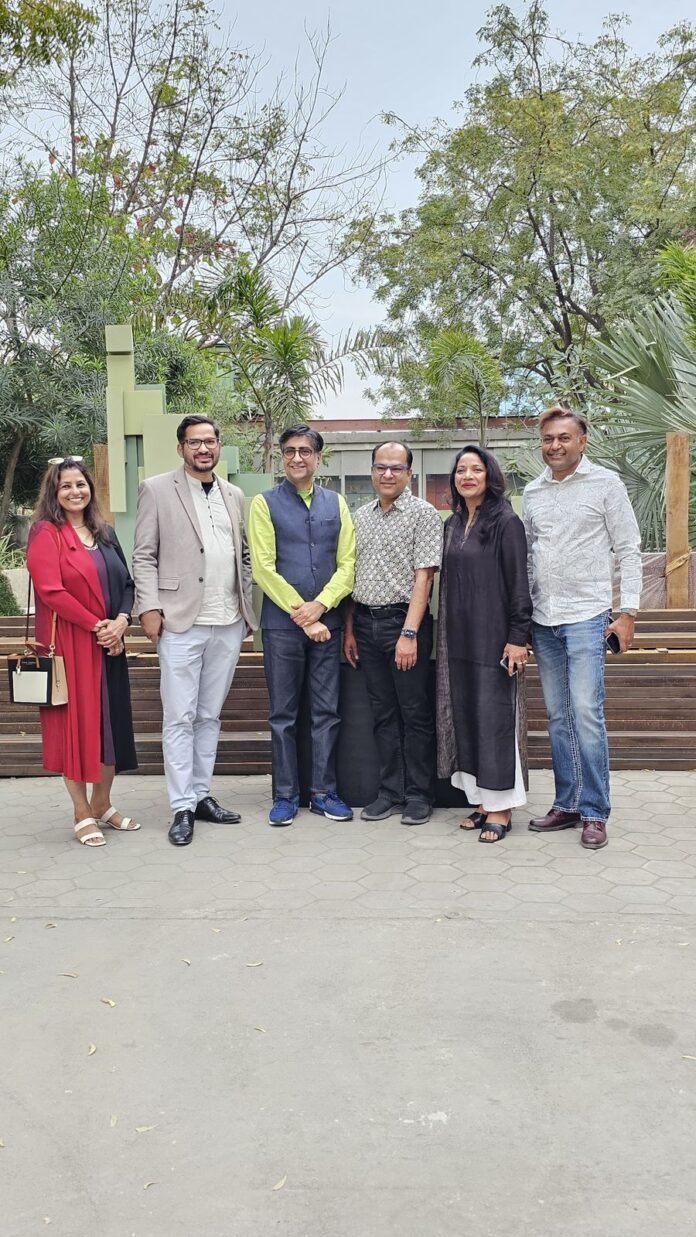
The latest edition of Banana Chat 8.0, held at the AKFD Studio Experience Center in Sitapura Industrial Area, brought together creative minds for an engaging discussion on design, innovation, and interdisciplinary creativity. Hosted on the auspicious day of Amavasya, this edition featured a thought-provoking conversation between renowned designer Amit Krishn Gulati, co-founder of Incubis, and architect Dhruv Gupta.
Organized in collaboration with ADI – Association of Designers of India, Jaipur Chapter, Banana Chat 8.0 reaffirmed its commitment to fostering design excellence and community building in the Indian creative space.
Exploring the Boundaries of Design
Amit Krishn Gulati, a celebrated name in the world of product design and innovation, captivated the audience with his journey, illustrating how Incubis integrates diverse disciplines to push the boundaries of design. He delved into the firm’s latest work, particularly in the realm of robotics and autonomous mobility, offering insights into the evolving nature of design as a multidisciplinary practice.
Throughout the session, Ar. Dhruv Gupta steered the conversation towards the relevance of adaptability and exploration in the creative process. The discussion not only highlighted emerging trends but also inspired young designers to cultivate unique styles and embrace innovation in their craft.
A Gathering of Design Enthusiasts
The event saw an impressive turnout, with prominent architects and designers in attendance, including Ar. Kavita & Nischal Jain, Ar. Rekha Nemani, Sharoz Alam, Abhishek Chaudhary, Shikha Singh, and Juhi Kedia. Their participation reinforced the significance of such platforms in building a robust and collaborative design ecosystem in Jaipur.
Encouraging Consistency and Creativity
As the event drew to a close, AKFD Studio co-founder Geetanjali Kasliwal delivered a heartfelt vote of thanks. She emphasized the importance of consistency in nurturing design talent, encouraging emerging professionals to develop their signature styles through sustained effort and experimentation.
With Banana Chat being a recurring feature on Amavasya, the platform continues to be a cornerstone for design discussions, networking, and creative collaboration. The initiative not only celebrates innovation but also strengthens Jaipur’s reputation as a hub for design thinkers and practitioners.
Shri Khatu Shyam Ji is considered the Kalyugi (modern era) incarnation of Lord Krishna. His grand temple is located in the Sikar district of Rajasthan, where devotees from far and wide come to seek his blessings. Let’s explore the fascinating mythological story behind the existence of this temple.
A Revered Pilgrimage Destination
The Khatu Shyam Temple is one of India’s most renowned temples. Devotees from across the country visit this sacred place, bringing their heartfelt prayers and seeking divine intervention. The story behind the temple’s existence is deeply rooted in ancient mythology and offers an inspiring tale of sacrifice and devotion.
Who is Baba Khatu Shyam?
Khatu Shyam Ji is none other than Barbarik, the grandson of Bhima and the son of Ghatotkacha. Worshipped in the form of Khatu Shyam, Barbarik was known for his exceptional bravery and warrior spirit. At a young age, he impressed Lord Shiva and received three invincible arrows, which earned him the title Teen Baan Dhaari (the bearer of three arrows).
The Divine Legend of the Temple
One of the unique beliefs associated with the Khatu Shyam Temple is that every time a devotee visits, they experience a different appearance of Baba Shyam. Many claim that his idol undergoes subtle transformations, leaving the devotees in awe of his divine presence.
The Transformation of Barbarik into Khatu Shyam
During the great Kurukshetra war in the Mahabharata, Barbarik expressed his desire to participate in the battle. Seeking permission from his mother, Ahilavati, he asked her, “Whose side should I fight for?” Knowing that the Kauravas had a vast army and powerful warriors like Bhishma, Dronacharya, Kripacharya, and Karna, she feared that the Pandavas would be defeated. She advised her son, “Always support the side that is losing.”
Barbarik pledged to follow his mother’s words and set off for the battlefield. However, Lord Krishna, who foresaw the war’s outcome, realized that if Barbarik sided with the losing army, the course of the battle would constantly shift, making the Pandavas’ victory impossible. To prevent this, Krishna disguised himself as a Brahmin and approached Barbarik, asking for his head as alms.
At first, Barbarik was puzzled—why would a Brahmin ask for his head? Sensing something divine, he requested the Brahmin to reveal his true identity. Krishna then appeared in his Virat Roop (universal form), upon which Barbarik realized the Lord’s intent. Without hesitation, he took his sword and offered his head at Krishna’s feet.
Pleased with his devotion, Krishna held his severed head and, using amrit (nectar), granted him immortality. As a boon, Barbarik expressed his wish to witness the entire Kurukshetra war. Honoring his request, Krishna placed his head on the highest hill near the battlefield, from where Barbarik observed every moment of the epic battle.
Khatu Shyam: The Savior of the Defeated
After the war, the Pandavas debated over who deserved the credit for their victory. To resolve the matter, Krishna suggested they seek the opinion of Barbarik’s head, as he had witnessed the entire war. When asked, Barbarik replied, “I only saw Lord Krishna’s Sudarshan Chakra dancing on the battlefield while Goddess Durga drank the blood of fallen warriors. I did not see the Pandavas anywhere.”
Hearing this, the Pandavas lowered their eyes in humility, realizing that Krishna’s divine intervention was the true force behind their success. Pleased with Barbarik’s honesty and devotion, Krishna blessed him, giving him the name Shyam. He further declared, “Barbarik, there has never been and never will be a greater donor than you. As per your mother’s boon, you will always support those who are defeated and grant their wishes.”
Thus, the legend of Khatu Shyam was born, and his temple became a place where people seek solace, believing that Baba Shyam is the ultimate protector of those in distress.
The Legacy of the Khatu Shyam Temple
The temple stands as a testament to unwavering faith, selfless devotion, and divine justice. To this day, devotees believe that Khatu Shyam Ji fulfills the desires of those who surrender to him with pure hearts. The temple continues to be a beacon of hope and spiritual strength for countless followers.
India has taken a significant step in strengthening its maritime security with the successful flight trials of the Naval Anti-Ship Missile Short Range (NASM-SR). Conducted jointly by the Defence Research and Development Organisation (DRDO) and the Indian Navy at the Integrated Test Range in Chandipur, Odisha, this achievement underscores India’s growing prowess in indigenous defence technology. The trials showcased the missile’s advanced capabilities, particularly its “Man-in-Loop” feature, allowing in-flight retargeting—an essential function for modern naval warfare.
Advanced Features of NASM-SR
The NASM-SR is a next-generation anti-ship missile equipped with state-of-the-art technology to ensure precise target engagement.
Key Features:
Indigenous Imaging Infra-Red (IIR) Seeker: Enables high-precision targeting during the terminal phase.
High-Bandwidth Two-Way Datalink: Transmits real-time images to the pilot, allowing for mid-flight target adjustments.
Man-in-Loop Capability: Offers enhanced control by enabling retargeting in response to dynamic combat situations.
These sophisticated features make NASM-SR a formidable weapon, capable of delivering strategic superiority in maritime operations.
Launch and Target Engagement Capabilities
The recent trials saw NASM-SR launched from an Indian Naval Seaking helicopter. The missile initially locked onto a large target within a pre-designated search area. However, in its terminal phase, the pilot successfully redirected it to a smaller, concealed target. This ability to switch targets mid-flight, while maintaining high accuracy, highlights its advanced sea-skimming mode—a crucial tactic for evading enemy radar detection and countermeasures.
Cutting-Edge Guidance and Navigation Systems
The NASM-SR missile is designed with multiple layers of navigation and guidance systems, ensuring precision and efficiency throughout its flight path.
Navigation Components:
Fiber Optic Gyroscope-Based Inertial Navigation System (INS): Ensures stability and accuracy in mid-course guidance.
Radio Altimeter: Aids in altitude control for better maneuverability.
Integrated Avionics Module: Supports real-time data processing for smooth operation.
Electro-Mechanical Actuators: Provide precise control and steering.
Solid Propulsion System: Features an in-line ejectable booster and a long-burn sustainer, enhancing speed and range.
These technological advancements make NASM-SR a highly reliable and versatile weapon, ideal for neutralizing threats in complex naval environments.
Indigenous Development and Production
The NASM-SR is a testament to India’s commitment to self-reliance in defence manufacturing. It is being developed by multiple DRDO laboratories, including:
Research Centre Imarat (RCI)
Defence Research and Development Laboratory (DRDL)
Moreover, the missile’s production involves collaborations with micro, medium, and small enterprises (MSMEs) and startups, reinforcing India’s Atmanirbhar Bharat (Self-Reliant India) initiative. This partnership not only accelerates technological innovation but also strengthens India’s defence industrial base.
Strategic Importance and Future Implications
The successful trial of NASM-SR marks a crucial advancement in India’s naval warfare capabilities. Defence Minister Rajnath Singh hailed the missile’s unique “Man-in-Loop” feature, emphasizing its potential to enhance operational effectiveness through real-time mission adaptability.
Why NASM-SR Matters for India’s Defence Strategy?
Enhances India’s maritime strike capabilities against emerging threats.
Strengthens the Navy’s ability to counter enemy warships and hostile assets.
Reduces dependency on foreign weapon systems, promoting indigenous defence solutions.
With continued testing and refinement, NASM-SR is set to become a key asset in India’s naval arsenal, significantly reinforcing its maritime deterrence and security posture in the Indo-Pacific region.
Summing Up
The successful flight trials of NASM-SR represent a major milestone in India’s defence innovation and strategic preparedness. As the nation moves toward self-sufficiency in advanced weaponry, this indigenous missile system stands as a symbol of technological excellence, ready to safeguard India’s maritime interests in an increasingly complex global security landscape.
India has long been a key contributor to United Nations (UN) peacekeeping missions, demonstrating its unwavering commitment to global peace and security. Recently, External Affairs Minister S. Jaishankar reaffirmed India’s dedication to assisting Global South nations in strengthening their peacekeeping capabilities. This commitment includes specialized training and capacity-building initiatives, with a particular emphasis on empowering women peacekeepers. India’s extensive involvement in UN peacekeeping underscores its proactive approach to fostering international stability.
Understanding UN Peacekeeping Missions
UN peacekeeping missions involve multinational forces, voluntarily contributed by member states, to operate under the UN flag while wearing their national uniforms along with UN insignia. These missions serve a crucial role in:
Protecting civilians in conflict zones
Preventing conflicts through diplomatic engagement
Empowering local authorities to establish governance and rule of law
These forces are only permitted to use force in self-defense or to fulfill their mandate, and even then, only as a last resort.
A Brief History of UN Peacekeeping Operations
Since its inception in 1948, the UN has launched more than 71 peacekeeping missions worldwide. The first-ever mission, the United Nations Truce Supervision Organization (UNTSO), was established to monitor the armistice between Israel and its Arab neighbors. Today, UN peacekeeping operations span across diverse regions, with over 100,000 personnel from 125 countries actively engaged in 14 ongoing missions.
Funding and Contributions to UN Peacekeeping
UN peacekeeping operations are financed collectively by all member states, with financial contributions assessed based on economic capacity. The United States (26.95%) and China (18.69%) are the largest contributors to the peacekeeping budget, while India contributes approximately 0.2088%.
Countries providing troops are reimbursed by the UN at a standard rate per soldier per month. However, disparities in financial contributions and troop deployment have sparked debates over burden-sharing in peacekeeping responsibilities.
India’s Significant Contributions to UN Peacekeeping
India has been a steadfast participant in UN peacekeeping since the 1950s, deploying over 290,000 personnel across multiple missions. Presently, around 5,000 Indian peacekeepers are stationed across nine of the eleven ongoing missions.
Notable Contributions:
First all-female peacekeeping unit (Liberia, 2007), a landmark step towards gender inclusivity
Deployments in critical conflict zones, including Congo, Sudan, and Lebanon
Consistently ranked among the top troop-contributing nations
India’s active involvement not only strengthens its global diplomatic influence but also reinforces its aspiration for a permanent seat on the UN Security Council (UNSC).
Challenges and Criticisms of UN Peacekeeping Missions
Despite their noble objectives, UN peacekeeping operations are often subject to scrutiny and criticism. Key concerns include:
Strategic Limitations: Troop deployment sometimes aligns with political interests rather than humanitarian needs.
Financial Burden: The high cost of peacekeeping operations raises questions about financial sustainability.
Casualties & Risks: India has suffered 179 fatalities in peacekeeping missions, highlighting the dangers faced by personnel.
While peacekeeping efforts remain crucial, there is an increasing demand for operational reforms to enhance their effectiveness.
The Future of UN Peacekeeping: Path to Reform
The evolution of UN peacekeeping will depend on the willingness of member states to reform troop deployment strategies and financing models. As geopolitical dynamics shift, future peacekeeping missions must adapt to new-age conflicts, technology-driven warfare, and localized peace-building approaches.
India, with its longstanding peacekeeping legacy, is poised to play a pivotal role in shaping the future of global peace operations. Its emphasis on training, women’s participation, and diplomatic engagement positions it as a key architect in strengthening the UN’s peacekeeping framework.
Summing Up
India’s contributions to UN peacekeeping reflect its deep-rooted commitment to global stability and humanitarian service. As the world grapples with emerging security challenges, India’s proactive role in peacekeeping is not just a testament to its military strength but also its vision for a more peaceful and just world.
The Indian Army has recently contracted 223 Automatic Chemical Agent Detection and Alarm (ACADA) systems from L&T Limited. This procurement, valued at ₹80.43 crore, is part of a broader initiative to modernise the army’s capabilities against chemical warfare threats. The ACADA systems are designed by the Defence Research and Development Organisation (DRDO) and will boost the army’s chemical, biological, radiological, and nuclear (CBRN) defence capabilities.
What is ACADA?
The ACADA system is an advanced detection apparatus for identifying chemical warfare agents (CWAs) and toxic industrial chemicals (TICs). It samples air from the environment to detect harmful substances. The system employs Ion Mobility Spectrometry (IMS) technology, which allows for high sensitivity and rapid detection.
Key Features of ACADA
ACADA features two IMS cells for continuous and simultaneous monitoring of toxic agents. It is portable and can be easily deployed in various environments. The system includes audio and visual alarms to alert personnel in case of detection. Additionally, it can be mounted on vehicles for enhanced mobility.
Indigenisation and Self-Reliance
The procurement falls under the Buy Indian (IDDM) category, promoting the government’s Atmanirbhar Bharat initiative. Over 80% of the components used in ACADA will be sourced locally. This move is expected to strengthen India’s defence manufacturing capabilities and reduce dependency on foreign technology.
Significance for Indian Army
The introduction of ACADA will enhance the Indian Army’s CBRN capabilities both during combat operations and in peacetime. It will also improve the army’s response to disaster situations, particularly those involving industrial accidents. The system’s rapid detection capability is crucial for timely interventions.
Training and Implementation
The Indian Army has established a CBRN training centre at the College of Military Engineering in Pune. This centre will facilitate training for personnel on the usage of ACADA systems. Effective training is essential for maximising the benefits of this advanced technology in the field.
Future Developments
The ACADA system is equipped with a pre-programmed chemical data library that can be updated as needed. This flexibility allows for ongoing improvements in detection capabilities. Future developments may include enhancements in the technology and integration with other defence systems for comprehensive monitoring.
Turmeric isn’t just a spice—it’s a tradition, a medicine, and a staple in every Indian kitchen. But what if we told you there’s a new variety that could change the way we grow it? Meet SK-4, the high-yielding, disease-resistant turmeric variety developed by a farmer, for farmers.
Sachin Kamlakar Karekar, a 48-year-old farmer from the lush fields of Abloli village in Maharashtra’s Ratnagiri district, has done something incredible. With a keen eye and relentless determination, he has developed SK-4, a turmeric variety that’s now being grown by over 500 farmers across Ratnagiri, Sindhudurg, and Raigad. His passion and innovation even earned him a prestigious award from President Draupadi Murmu at the 11th Biennial National Grassroots Innovation and Outstanding Traditional Knowledge Awards.
A Journey from Tradition to Innovation
India is the world’s largest producer, consumer, and exporter of turmeric, with 11.61 lakh tonnes harvested in 2022-23. In Maharashtra, the Rajapuri Salem variety has long dominated, contributing 70% of the state’s production. But Karekar saw an opportunity to improve things for farmers like him.
It all started back in 1998, when Karekar planted the local Kadja variety. Among his crops, he noticed a few standout plants—early maturing, vibrant in color, disease-free, and with bigger rhizomes. He didn’t just observe; he experimented. Year after year, he carefully selected the best plants, improving them little by little. By 2008, he had created SK-4—a variety with superior traits that could change the turmeric industry. The name? A heartfelt tribute to Shendge Kaka (the farmer who initially gave him Sangli Kadapa tubers), Special Konkan, and, of course, his own initials.
Scientific Backing and Farmer Approval
In 2020, the Dapoli-based Dr. Balasaheb Sawant Konkan Krishi Vidyapeeth (DBSKKV), along with the National Innovation Foundation (NIF), tested SK-4’s performance. The results? Outstanding. SK-4 produced a yield of 56 tonnes per hectare, making it one of the top-performing turmeric varieties, second only to the best check variety, Sona (64t/ha).
Dr. Prafulla Mali, a horticulturist at DBSKKV, is optimistic about SK-4’s future. “This variety is a blessing for farmers in high-rainfall areas like Konkan. It performs exceptionally well, and we believe it can fill the gap where seed shortages of premium varieties like Rajendra Sona exist.”
What Makes SK-4 Special?
Higher Curcumin Content: SK-4 boasts a curcumin content of 4%, compared to the widely grown Rajapuri Salem variety’s 3.5%. That means richer color and greater medicinal value.
Disease Resistance & High Yield: It’s resistant to rhizome rot (karpa) and matures in just 160-170 days.
Bigger, Brighter Rhizomes: Perfect for culinary and medicinal uses, making it a valuable crop for farmers.
How Farmers Are Growing SK-4
Many farmers have already adopted SK-4, and their results are astonishing. Vishram Mali from Velamb village harvested a whopping 8.15 kg of turmeric from a single sapling!
The secret? A structured cultivation approach:
April: Rhizomes are planted in nursery bags.
June: Saplings are transplanted into fields enriched with organic fertilizers.
August: The plants receive a second round of water-soluble fertilizers.
January: Irrigation continues until the plants reach maturity.
February: Harvest time! Each sapling yields an impressive 3.2 kg or more.
Farmer Gajendra Paunikar, a former Agriculture Extension Officer, swears by this method. “Planting rhizomes in nursery bags rather than directly in the field gives a 90% success rate. It’s a game-changer.”
A Growing Movement Across India
SK-4 is now being cultivated in 13 states. Farmers from Nandurbar, Vidarbha, and beyond are eager to get their hands on this variety. At a recent NIF event in Rashtrapati Bhavan, farmers from across the country bought SK-4 tubers to try in their own fields.
Karekar’s hard work was officially recognized last December when the Protection of Plant Varieties & Farmers Rights Authority (PPV&FRA) granted him breeder status. That means he has exclusive rights to produce and sell SK-4 for six years—an achievement he never imagined when he first started this journey.
Advice for Aspiring Turmeric Farmers
Karekar has a word of wisdom for those looking to grow turmeric: Start small.
“I began with just one guntha (1,000 sq. ft.), and now I have 10 gunthas with 3,000 saplings. Don’t rush into large-scale farming—learn, observe, and grow steadily.”
He also runs an agritourism project on his two-acre farm, where visitors, especially bird watchers, get to experience sustainable farming up close.
With its high yield, resilience, and superior quality, SK-4 is set to revolutionize turmeric farming in India. As more farmers adopt this variety, it’s only a matter of time before SK-4 becomes the new gold standard in turmeric cultivation. The best part? It all started with one farmer’s passion for making a difference.