Home Blog Page 342

Sahkar Taxi: India’s Cooperative-Based Ride-Hailing Revolution

0

The Government of India is set to launch “Sahkar Taxi,” a cooperative-based taxi service aimed at providing a driver-friendly alternative to existing ride-hailing giants like Ola and Uber. Union Minister Amit Shah announced this initiative in Parliament, highlighting its focus on direct driver benefits rather than corporate profits. The service will cover two-wheeler taxis, auto-rickshaws, and four-wheeler taxis across the country, offering a more sustainable and equitable model for transportation.

Background: The Need for Sahkar Taxi

India’s ride-hailing market has witnessed exponential growth over the years, with Ola and Uber dominating the sector. However, despite their success, these platforms have struggled with rising consumer demand and driver dissatisfaction. One of the major challenges is the shortage of vehicles, driven by high asset ownership costs and increasing operational expenses.

The Indian ride-hailing market is projected to reach $44.18 billion by 2030, making it a lucrative space for innovation. Sahkar Taxi aims to address the shortcomings of traditional platforms by providing a more driver-centric model that ensures greater financial independence for transport workers.

Key Features of Sahkar Taxi

Sahkar Taxi operates on a cooperative model, meaning that profits will go directly to the drivers instead of being shared with large corporations. This is a stark contrast to the commission-based model used by Ola and Uber, where companies take a significant share of the earnings. The government also plans to introduce a cooperative insurance company that will offer drivers affordable coverage to enhance their financial security.

Comparison with Existing Services

Unlike Ola and Uber, Sahkar Taxi prioritizes driver welfare. The main differences between these models include:

  • Fair Earnings: Drivers under Sahkar Taxi will receive the full fare amount, ensuring higher take-home pay.
  • No Corporate Middlemen: Traditional ride-hailing platforms deduct commissions, reducing driver profits. Sahkar Taxi eliminates this issue.
  • Government Support: The initiative is backed by the government, ensuring policy-level support and stability.

This model has already proven successful in various states, demonstrating its viability as a sustainable alternative.

State-Level Cooperative Taxi Services

Several Indian states have already experimented with cooperative taxi services:

  • West Bengal’s “Yatri Sathi” has gained traction beyond Kolkata, offering affordable fares, local language support, and 24/7 customer service.
  • Kerala’s “Kerala Savaari” is another example, currently undergoing a relaunch with updated technology and competitive pricing.

These state-level initiatives highlight a growing trend towards cooperative models in the transport sector, setting the stage for Sahkar Taxi’s nationwide implementation.

Conclusion: A Game Changer for India’s Transport Sector

Sahkar Taxi represents a paradigm shift in India’s ride-hailing industry. By prioritizing driver benefits and cooperative principles, this initiative aims to create a fair, sustainable, and driver-friendly alternative to existing platforms. If implemented successfully, it could reshape the future of urban mobility in India, offering a more equitable and profitable transportation solution for drivers nationwide.
Gaia Mission: Mapping the Milky Way and Beyond

0

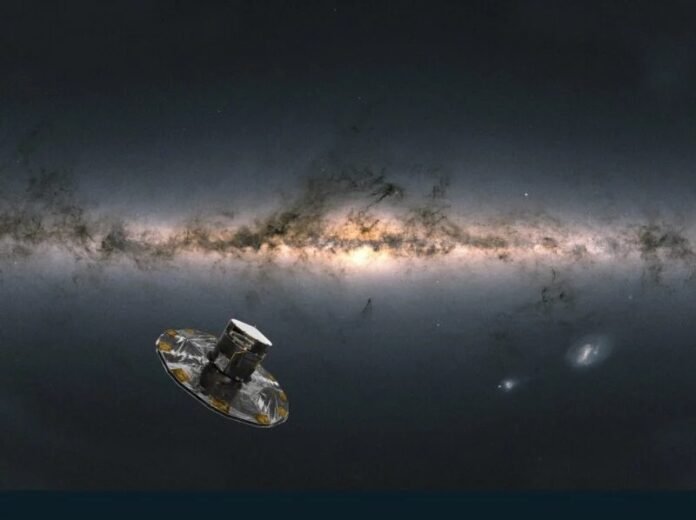
The European Space Agency (ESA) officially concluded its Gaia mission on March 27, 2025, marking the end of one of the most ambitious astronomical projects in history. Launched in December 2013, Gaia has revolutionized our understanding of the Milky Way galaxy by providing unprecedented data on its structure and evolution.

The Gaia Mission: An Overview

Originally named the Global Astrometric Interferometer for Astrophysics, Gaia was designed to map the cosmos in three dimensions. The mission’s primary goal was to precisely measure the positions, movements, and properties of billions of stars, offering new insights into the dynamic nature of our galaxy.

Positioned at Lagrange Point 2 (L2), approximately 1.5 million kilometers from Earth, Gaia was strategically placed to observe the universe without interference from celestial bodies. This location ensured optimal stability and visibility, allowing Gaia to conduct high-precision astrometric measurements.

Technological Innovations

Gaia was equipped with cutting-edge instruments that enabled it to collect vast amounts of astronomical data:

  • Twin Telescopes: Captured observations across a wide field of view.
  • Billion-Pixel Camera: The largest digital camera ever flown in space, capable of detecting incredibly faint celestial objects.
  • Three Key Instruments:
    • Astrometer – Measured star positions with extreme precision.
    • Photometer – Analyzed the brightness and color of stars.
    • Spectrometer – Determined the composition and motion of stars by analyzing their spectra.

Gaia’s Contributions to Astronomy

Over its operational period, Gaia made 3 trillion observations of around 2 billion stars and other celestial objects. The mission has resulted in over 13,000 scientific publications, dramatically enhancing our knowledge of the Milky Way’s composition and evolution. Some of Gaia’s most significant findings include:

  • Mapping the Milky Way’s Complex Structure: Gaia unveiled the galaxy’s warped disc and central bulge, revealing new details about its shape and formation.
  • Tracking Stellar Movements: The data provided a clearer picture of how stars migrate, influenced by gravitational interactions.
  • Unveiling Galactic Evolution: By identifying remnants of past galactic mergers, Gaia helped astronomers reconstruct the history of the Milky Way.

Discovery of Black Holes and Asteroids

Beyond mapping stars, Gaia made remarkable discoveries in other areas of astronomy:

  • Black Holes: Gaia identified a new type of black hole detectable only through its gravitational effects, a significant breakthrough compared to traditional detection methods that rely on emitted light.
  • Asteroids: The spacecraft cataloged over 150,000 asteroids, providing crucial data on their orbits and characteristics, some of which could pose potential threats to Earth.

Retirement and Future Data Releases

Following its final observations, Gaia was passivated, meaning all its energy sources were depleted to prevent interference with future space missions. The spacecraft has transitioned into a retirement orbit around the Sun.

Despite the mission’s conclusion, a substantial portion of Gaia’s data remains to be processed. ESA has scheduled future data releases in the coming years, ensuring that Gaia’s impact on astronomy will continue well beyond its operational lifespan.

Scientific Legacy of Gaia

Although Gaia mapped only about 2% of the estimated 100 billion stars in the Milky Way, its contributions to astronomy are profound. The mission has set the foundation for future explorations, with ongoing analysis expected to yield new discoveries in the coming decades.

Gaia’s legacy will influence generations of astronomers, paving the way for a deeper understanding of our galaxy’s structure, evolution, and the universe beyond.

Health Risks of Martian Dust: Challenges and Solutions for Future Astronauts

0

As humanity moves closer to manned missions to Mars, the health risks associated with Martian dust have become a critical area of concern. Researchers from prestigious institutions have identified the toxic components of Martian dust and outlined precautionary measures for astronaut safety. With both NASA and the Chinese Manned Space Agency planning missions to the Red Planet, understanding and mitigating these risks is essential for the success of long-duration space travel.

The Composition and Nature of Martian Dust

Martian dust consists of fine particles, each measuring only about 4% the width of a human hair. This minuscule size allows the dust to penetrate deep into the lungs and even enter the bloodstream. Unlike lunar dust, which is known for its sharp and abrasive nature, Martian dust exhibits a strong tendency to adhere to surfaces. Its composition includes:

  • Silica – Known to cause severe lung diseases.
  • Gypsum – A common mineral that may contribute to respiratory issues.
  • Heavy metals – Including chromium and arsenic, both of which pose significant health risks.
  • Perchlorates – Toxic compounds that can interfere with thyroid function.

Understanding these components is crucial for developing countermeasures to ensure astronaut safety.

Health Hazards of Martian Dust Exposure

Prolonged exposure to Martian dust can lead to serious health complications. One of the most concerning risks is silicosis, a lung disease commonly found in coal miners due to inhalation of silica particles. Additionally, perchlorates present in the dust can disrupt the thyroid gland, affecting metabolism and overall health.

Moreover, the presence of heavy metals such as chromium and arsenic raises concerns about long-term toxicity, which could lead to organ damage or cancer. The combined impact of microgravity, radiation exposure, and toxic dust particles makes astronaut health a major challenge for Mars missions.

Medical Challenges on Mars Missions

Unlike Earth-based missions, space travel to Mars presents unique medical challenges:

  • Communication Delays: The 40-minute time lag between Mars and Earth limits real-time medical assistance.
  • No Emergency Evacuation: Astronauts will have no option for immediate return to Earth in case of severe health complications.
  • Limited Medical Resources: Only a restricted supply of medical equipment and treatments will be available on the spacecraft and Mars habitat.

Given these challenges, prevention and early intervention are the best strategies to ensure astronaut well-being.

Proposed Countermeasures and Solutions

To mitigate the risks posed by Martian dust, researchers propose a combination of technological and physiological countermeasures:

  • Advanced Air Filtration Systems: High-efficiency filters will be essential to remove fine dust particles from the habitat’s atmosphere.
  • Self-Cleaning Spacesuits: These suits will minimize dust exposure by repelling dust before re-entering the habitat.
  • Electrostatic Repulsion Devices: Designed to remove dust from surfaces using electromagnetic forces, reducing contamination inside spacecraft and habitats.
  • Nutritional Interventions: Certain dietary supplements may help counteract the toxic effects of Martian dust:
    • Vitamin C can reduce the impact of chromium toxicity.
    • Iodine supplements can help protect the thyroid from perchlorate exposure.

The Future of Astronaut Health Research

These findings underscore the importance of ongoing research into astronaut health and Martian environmental hazards. As space agencies advance their preparations for human exploration of Mars, addressing the risks of Martian dust toxicity must be a top priority.

By implementing comprehensive safety measures, researchers and engineers can ensure that astronauts remain healthy and capable of carrying out their missions. Through continued innovation and international collaboration, humanity is one step closer to making Mars a safe and viable destination for long-term exploration.

Strengthening India’s Healthcare System: National Guidelines on Medical Oxygen Management

0

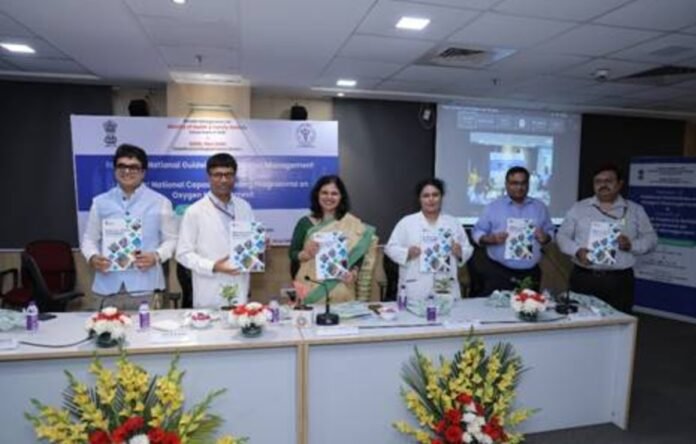
Recognizing the critical role of medical oxygen in healthcare, the Union Health Ministry has released the National Guidelines on Medical Oxygen Management and launched a National Capacity Building Programme on Oxygen Management. This initiative, in collaboration with AIIMS, New Delhi, aims to enhance the management and supply of medical oxygen across healthcare facilities in India. The programme is a direct response to the challenges encountered during the COVID-19 pandemic, particularly the severe strain on oxygen infrastructure.

National Guidelines on Medical Oxygen Management

The newly introduced guidelines provide a comprehensive framework for the procurement, storage, and administration of medical oxygen. They focus on:

  • Standardizing practices across hospitals and healthcare facilities.
  • Ensuring patient safety by improving oxygen delivery systems.
  • Enhancing clinical outcomes through better oxygen utilization.
  • Preparing for emergencies by establishing robust response mechanisms.

By implementing these guidelines, India aims to create a more resilient healthcare system, capable of efficiently managing medical oxygen resources during both routine operations and crises.

Building Expertise: Training Master Trainers

A key component of the capacity-building programme is the training of 200 master trainers, who will then educate hospital administrators and medical officers. These experts will focus on:

  • Proper handling and utilization of medical oxygen to prevent mismanagement.
  • Reducing wastage to ensure efficient use of available resources.
  • Enhancing clinical protocols for oxygen administration in hospitals nationwide.

By developing a well-trained workforce, the programme aims to embed best practices in oxygen management across the country’s healthcare infrastructure.

Lessons from the COVID-19 Pandemic

The devastating impact of the COVID-19 pandemic highlighted the urgent need for robust oxygen supply systems. The crisis exposed gaps in oxygen storage, distribution, and accessibility, underscoring the necessity for a strategic and well-coordinated approach to oxygen management. This new initiative incorporates the lessons learned from the pandemic, ensuring that healthcare facilities are better equipped to handle future emergencies.

AIIMS’ Role in Capacity Building

As a leading medical institution, AIIMS, New Delhi, is spearheading the capacity-building programme by:

  • Leading training efforts to educate healthcare professionals on best practices.
  • Promoting awareness about the critical role of oxygen management.
  • Establishing a national standard for oxygen utilization and emergency preparedness.

With AIIMS at the forefront, the programme is set to transform oxygen management practices across India, fostering a more prepared and resilient healthcare system.

A Step Towards a Stronger Healthcare Future

The launch of the National Guidelines on Medical Oxygen Management and the National Capacity Building Programme mark a significant step towards strengthening India’s healthcare system. By investing in standardized protocols, expert training, and improved infrastructure, the government is ensuring that the country is well-prepared to manage medical oxygen effectively, both in daily healthcare settings and future emergencies.

With this initiative, India is not just addressing past challenges but is also paving the way for a more secure and efficient healthcare system that prioritizes patient safety and operational excellence.

Masaki Kashiwara Wins 2025 Abel Prize for Pioneering Contributions to Mathematics

0

The prestigious Abel Prize for Mathematics has been awarded to Masaki Kashiwara in 2025 for his groundbreaking work in algebraic analysis and representation theory. The 78-year-old Japanese mathematician was honored by the Norwegian Academy of Science and Letters for his development of D-modules and the discovery of crystal bases, which have significantly influenced modern mathematical research. This recognition underscores the essential role mathematics plays in advancing scientific knowledge and technological innovation.

Understanding the Abel Prize

The Abel Prize is one of the highest honors in mathematics, recognizing outstanding contributions to the field. Named after the legendary Norwegian mathematician Niels Henrik Abel, the prize was established by the Norwegian Parliament in 2002 to honor mathematicians whose work has profoundly impacted the discipline. Unlike other sciences, mathematics does not have a dedicated Nobel Prize, making the Abel Prize a prestigious equivalent. The award includes a monetary prize of 7.5 million Norwegian kroner, roughly $720,000.

A Brief Historical Context

The concept of the Abel Prize originated in 1899, when Norwegian mathematician Sophus Lie proposed its creation. However, it was officially established only in 2002, on the 200th anniversary of Niels Henrik Abel. Abel is best known for proving the impossibility of solving the general quintic equation in radicals. His pioneering work on elliptic functions and Abelian functions laid the foundation for modern algebraic geometry and mathematical analysis, despite his tragically short life.

Masaki Kashiwara’s Groundbreaking Contributions

For over five decades, Masaki Kashiwara has reshaped algebraic analysis and representation theory. His pioneering work includes:

  • D-modules: A revolutionary framework for studying linear differential equations, offering new insights and applications across various mathematical fields.
  • Crystal Bases: Kashiwara’s discovery of these simplified the study of complex algebraic structures, making intricate calculations more accessible to mathematicians worldwide.
  • Influential Publications: His book Sheaves on Manifolds, co-authored with Pierre Schapira, has had a lasting impact on the mathematical community.

The Significance of D-Modules

Kashiwara’s D-modules have transformed how mathematicians approach linear differential equations, enabling deeper insights into their structure and solutions. These modules provide a unified perspective that bridges differential equations, representation theory, and algebraic geometry. His contributions continue to inspire new research, opening avenues for further exploration and interdisciplinary connections.

A Legacy Among the Greatest Mathematicians

Since its inception in 2003, the Abel Prize has recognized the world’s most influential mathematicians. Past laureates include:

  • Michel Talagrand (2024) – Renowned for his work in probability theory and functional analysis.
  • Jean-Pierre Serre (2003) – A foundational figure in algebraic geometry and topology.
  • Andrew Wiles (2016) – Celebrated for proving Fermat’s Last Theorem.

With Kashiwara’s recognition in 2025, the Abel Prize once again highlights the indispensable role of mathematics in shaping modern science and technology. His contributions will undoubtedly influence future generations of mathematicians, further enriching this ever-evolving discipline.

India’s Bioeconomy: A Booming Sector with a Promising Future

0

The Indian bioeconomy is witnessing unprecedented growth, emerging as a key driver of economic expansion. The recently released India BioEconomy Report 2024 by the Department of Biotechnology highlights that the sector was valued at over $165 billion in 2024, contributing more than 4.2% to the national GDP. With ambitious projections, the government anticipates this figure to reach $300 billion by 2030 and an astounding $1 trillion by 2047. This growth underscores the pivotal role of bio-based industries in shaping India’s economic future.

Understanding Bioeconomy

Bioeconomy refers to economic activities that harness biological resources, such as plants, animals, and microorganisms, as well as the replication of natural processes to produce goods and services. It emphasizes sustainability, renewable resources, and innovative technologies to create environmentally friendly solutions across multiple industries.

Current State of India’s Bioeconomy

India’s bioeconomy has seen exponential growth, nearly doubling in value over the last five years. From approximately $86 billion in 2020, it has surged to $165 billion in 2024. This expansion is accompanied by a significant rise in the number of bioeconomy-focused companies, which have increased by 90%, surpassing 10,000. Projections suggest that by 2030, this number will double, potentially generating up to 35 million jobs.

Key Contributors to the Sector

Several industries form the backbone of India’s bioeconomy, with the industrial sector leading the charge at $78 billion. This includes critical sub-sectors such as biofuels, bioplastics, and bio-based chemicals. The pharmaceutical industry follows closely, accounting for 35% of the total bioeconomy, with vaccine production playing a significant role. Additionally, biotechnology research and IT-driven innovations in biotech software and clinical trials are emerging as the fastest-growing segments, signaling new avenues for growth and technological advancement.

Regional Disparities in Bioeconomic Development

Despite the sector’s rapid expansion, its growth remains uneven across India. Five states—Maharashtra, Karnataka, Telangana, Gujarat, and Andhra Pradesh—collectively contribute over two-thirds of the total bioeconomy. Meanwhile, the eastern and northeastern regions account for less than 6% of the sector’s value. Addressing these regional imbalances through targeted investments and policy initiatives will be crucial for ensuring inclusive growth and maximizing the sector’s potential nationwide.

Challenges Hindering Growth

While the bioeconomy is poised for significant expansion, several challenges must be addressed to sustain high growth rates.

  • Innovation and Scaling: Developing and scaling bio-based solutions require significant research funding and technological advancements.
  • Policy and Infrastructure: The removal of regulatory and infrastructure barriers is essential to ensure smooth business operations.
  • Regulatory Uncertainty: Policies related to genetically modified crops and other bio-based innovations need clear and consistent frameworks to encourage investment and development.

The BioE3 Policy: A Strategic Initiative

Recognizing the sector’s vast potential, the Government of India introduced the BioE3 policy in 2024. This initiative aims to position India as a global leader in bio-manufacturing by fostering strong networks among universities, research institutions, and industries. The policy prioritizes bio-based chemicals, precision biotherapeutics, and climate-resilient agriculture, setting the foundation for sustained innovation and economic expansion.

Future Prospects: A Trillion-Dollar Vision

India’s robust foundation in biotechnology, coupled with proactive government initiatives, places it in an excellent position to capitalize on bioeconomic growth. With ongoing assessments for new projects under the BioE3 policy, the opportunities for expansion are immense. However, for the country to realize its $1 trillion bioeconomy vision by 2047, it must address current challenges, foster innovation, and ensure equitable regional growth.

With the right strategies in place, India’s bioeconomy has the potential to not only drive economic prosperity but also lead the global transition towards a sustainable and bio-based future.

Katra-Srinagar Vande Bharat Express: Know About Its Anti-Freezing Features, Earthquake Resistant Technology and Other Unique Properties

0

Are you excited to ride through the Katra-Srinagar Vande Bharat Express which shall pass through the world’ highest bridge? Are you equally excited to watch pristine views with snow capped Himalyas and beautiful scenic scenaries? If yes, you should know the unique features of this train which is designed to withstand the extreme conditions of the Kashmir region and is a milestone in Indian rail transport.

Katra-Srinagar Vande Bharat Express: Know About Its Anti-Freezing Features, Earthquake Resistant Technology and Other Unique Properties

Built for Extreme Weather

Equipped with anti-freezing features, this train can operate in temperatures as low as -20°C, ensuring year-round reliability. To maintain smooth operations during winter, a dedicated snow removal train will precede both passenger and freight trains, clearing the tracks of snow and ice.

Earthquake-Resistant Technology

Given the region’s vulnerability to seismic activity, the train is equipped with anti-vibration seismic dampers. These specialized devices absorb tremors from the Himalayan terrain, providing a safer and more comfortable journey.

Advanced Cabin and Plumbing Systems

The driver’s cabin features a heated windshield, preventing fogging and freezing for clear visibility. Additionally, the train’s plumbing and bio-toilets incorporate heating elements, ensuring functionality even in subzero temperatures.

Engineering Feats: Tunnels and Bridges

The railway project boasts 38 tunnels, including the 12.75 km-long Tunnel T-49, India’s longest transportation tunnel. The route also includes 927 bridges spanning a total of 13 kilometers. Among them, the iconic Chenab Bridge stands out as the highest railway arch bridge in the world, soaring 359 meters above the riverbed—35 meters taller than the Eiffel Tower.

Initial Operations and Future Expansion

Initially, the Vande Bharat Express will operate from Katra, as the Jammu railway station is undergoing renovation. Once the upgrades are completed, expected by August, the service will be extended to Jammu.

Overcoming Decades of Challenges

This ambitious railway project, originally launched in 1997, faced numerous geological and topographical challenges. After years of perseverance and engineering ingenuity, the project was successfully completed last month, marking a new era for rail connectivity in the region.

New Budget Comes into Effect from April 1, 2025: Key Changes to Know

0

The new budget will take effect from tomorrow, April 1, 2025, initiating the implementation of announcements made by the government in the budget presentation on February 1. While benefits like income tax exemptions and subsidies are applied immediately, infrastructure and social welfare schemes will take time due to implementation processes.

Key Changes Effective from April 1, 2025:

1. Change in Tax Slabs: New Bracket for ₹20-24 Lakh Income

What’s Changed: Under the new tax regime, income up to ₹12 lakh is now tax-free. For salaried individuals, this exemption increases to ₹12.75 lakh with a standard deduction of ₹75,000. Additionally, a new 25% tax slab has been introduced for incomes between ₹20-24 lakh.

Impact: Previously, a 30% tax applied to incomes above ₹15 lakh. Now, this threshold is raised to ₹24 lakh, reducing the tax burden on middle and upper-middle-income groups.

2. Higher TDS Exemptions: Relief on Rent and Interest Income

What’s Changed:

  • TDS on Rent: The exemption limit has increased from ₹2.4 lakh to ₹6 lakh.
  • Interest Income for Senior Citizens: TDS exemption on bank FD interest has doubled from ₹50,000 to ₹1 lakh.
  • Professional Services: TDS exemption limit increased from ₹30,000 to ₹50,000.

Impact: Reduced TDS burden for individuals, improving cash flow.

3. Increased TCS Limit: More Savings for Students Studying Abroad

What’s Changed:

  • The Tax Collected at Source (TCS) exemption for overseas education expenses has increased from ₹7 lakh to ₹10 lakh.
  • No TCS applies if the amount is taken as an education loan from a financial institution.

Impact: Families sending money for education abroad will benefit from lower deductions, making transactions smoother.

4. Extended Time for Filing Updated Returns

What’s Changed: Taxpayers can now file updated returns up to 48 months after the assessment year, compared to the previous 24-month window.

  • 60% additional tax on returns filed between 24-36 months.
  • 70% additional tax on returns filed between 36-48 months.

Impact: More time to correct errors in tax filings, encouraging voluntary compliance.

5. Capital Gains Tax on ULIPs with High Premiums

What’s Changed:

  • If ULIP (Unit Linked Insurance Plan) premiums exceed ₹2.5 lakh annually, they will be treated as capital assets.
  • Tax Rates:
    • 12.5% for holdings over 12 months (Long-Term Capital Gains – LTCG).
    • 20% for holdings under 12 months (Short-Term Capital Gains – STCG).

Impact: High-income earners will now pay taxes on ULIP benefits, preventing misuse as a tax-free investment.

6. Custom Duty Adjustments: Prices of 150-200 Items Affected

What’s Changed: Custom duties have been revised, impacting product prices.

Items Becoming Cheaper:

  • Imported cars above $40,000 or with an engine capacity over 3,000cc.
  • Motorcycles (CBU units) with an engine capacity under 1,600cc.
  • 36 life-saving medicines.
  • Electric vehicles (EVs), with duty removal on 35 capital goods for battery manufacturing.
  • 28 capital goods exempted from duty for mobile phone battery production.

Items Becoming Costlier:

  • Smart meter solar cells.
  • Imported shoes and candles.
  • Imported boats and other vessels.
  • PVC flakes.

Conclusion

These budget changes aim to provide tax relief, encourage compliance, and impact various industries. While direct tax benefits are immediate, long-term projects and price changes will evolve over time. Stay updated on further announcements by the Central Board of Indirect Taxes and Customs (CBIC).

Rajasthan Day: Watch Colourful Pics and Videos of Beautiful Celebrations at Albert Hall

0

Rajasthan Diwas Weekly Festival: Grand Cultural Evening at Albert Hall Draws Huge Crowd

A grand state-level cultural evening was organized at Albert Hall as part of the Rajasthan Diwas Weekly Festival. The event witnessed the presence of Governor Haribhau Kisanrao Bagde and Chief Minister Bhajanlal Sharma, along with a massive audience that gathered to witness the celebrations.

Rajasthani artists mesmerised the audience with vibrant performances, showcasing the state’s rich cultural heritage. Notable artists including Ravindra Upadhyay, Akanksha Sharma, Madhu Bhat, Piyush Pawar, Karanbir Bohra, and the renowned Manganiyar Group captivated the crowd with their exceptional performances. Additionally, a fusion of Kathak and traditional folk dance added to the grandeur of the evening. The Chief Minister honored the artists for their contributions, and the event concluded with a spectacular fireworks display.

It is noteworthy that Chief Minister Sharma has declared that Rajasthan Day will now be officially celebrated on Chaitra Shukla Pratipada. He highlighted that on Samvat 2006 (March 30, 1949), Iron Man Sardar Vallabhbhai Patel inaugurated Greater Rajasthan, an event of historical significance.

The celebration was graced by Deputy Chief Minister Diya Kumari, Parliamentary Affairs Minister Shri Jogaram Patel, Rajya Sabha MP Shri Madan Rathore, Secretary of Tourism and Art-Culture Shri Ravi Jain, other officials, and a large gathering of people

Rajasthan Day: Watch Colourful Pics and Videos of Beautiful Celebrations at Albert Hall

Gangaur 2025: Know Significance, Date and Rituals

0

Gangaur, also known as Gauri Puja, is a revered festival dedicated to Goddess Parvati, celebrated primarily by women in Rajasthan. This festival holds deep significance for those who pray for their husbands’ well-being and a blissful married life. It is observed on the Tritiya Tithi of the Chaitra month in the traditional Hindu calendar. In 2025, Gangaur falls on March 31st, with the Gangaur Vrat beginning on March 15th.

On March 31st, sunrise is expected at 06:23 AM and sunset at 06:38 PM, while moonrise is anticipated at 07:26 AM and moonset at 08:56 PM. The Tritiya Tithi will commence at 09:11 AM on March 31st and conclude at 05:42 AM on April 1st.

(Timings are in IST, for Ujjain.)

In Hinduism, Goddess Parvati symbolizes marital love, courage, power, and strength. During the 18-day-long Gangaur Vrat, women worship her, seeking blessings for a harmonious married life. According to tradition, Parvati returns to her parental home during this time to bless her friends. On the final day, a grand farewell is given to her as Lord Shiva arrives to escort her back, marking the culmination of the celebrations.

Throughout the festival, women observe fasts and worship clay idols of Lord Shiva and Goddess Parvati. Dressed in bright red attire, they adorn their hands with mehendi as a symbol of auspiciousness. The last three days witness vibrant processions with beautifully decorated idols paraded through the city. On the final day, the idols are immersed in water, symbolizing Goddess Parvati’s departure, while women pray for her return in the coming years.

May this Gangaur bring the blessings of Lord Shiva and Goddess Parvati into every home, bestowing peace, prosperity, and marital bliss while guiding us toward strength, love, and harmony.