Home Blog Page 340

Jahaz Mahal in Mandu: Soak The Serenity Reflecting Across This Pristine Palace Which Resembles a Ship

0

As soon as we hear the word “jahaz” (ship), our mind thinks of two things: an airplane and a water ship. But if I say “jahaz mahal” (ship palace), can there be a ship palace? Or can a palace be a ship?

The answer to this lies in this article.

Situated in Mandu, about 40 kilometers from a small district called Dhar in Madhya Pradesh, Jahaz Mahal is a palace that, when you look at it, feels like a beautiful painting framed against the backdrop of Mandu. Its beauty is extraordinary. The reason it is called Jahaz Mahal is its location between the Kapur and Munj Sagar ponds, giving the impression of a grand ship standing in the deep sea. During the rainy season, the beauty and craftsmanship of this place reach its peak, and that’s when the most tourists come to witness its splendor. Jahaz Mahal is one of the hidden and lesser-known yet magnificent heritages of Madhya Pradesh.

Historical Aspect:

It is said that this palace was built in the 15th century by Ghiyasuddin Khilji for his 15,000 queens. Its architecture is inspired by Hindu styles. There is an artistic and beautiful staircase here, designed to resemble the stairs of a ship, leading up to the upper floor. The entire structure appears to be shaped like a ship. This is the only building in Mandu whose walls were plastered. While other buildings in Mandu were constructed using lime, mortar, and stone dust, this structure was built by joining iron and stone.

(By Anjali Solanki)

How 5-Ton Lithium-Ion Forklifts Can Improve Manufacturing Efficiency?

0

Manufacturing is all about speed and precision. Delays mean missed deadlines, higher costs, and unhappy clients. But when heavy materials and bulky loads slow things down, that’s where the right equipment makes all the difference. A 5-ton electric forklift is built for lifting, shifting, and organising materials efficiently.

For steel coil, auto part, paper roll, or raw material industries, where weight must be managed without any reduction in speed, a forklift is needed. And when the forklift is backed by lithium-ion technology, it becomes even more efficient. With quicker charging, extended operating times, and lower maintenance, it becomes the wiser option compared to diesel or lead-acid options.

Many manufacturers struggle with whether to buy or rent. Owning a forklift sounds like a long-term investment, but the forklift on hire option is increasingly getting popular. Renting from premium companies provides flexibility, eliminates maintenance headaches, and lets businesses scale up or down based on demand. Whether you run a metal stamping plant or a packaging unit, choosing the right forklift is as important as the materials you produce.

Let’s explore how forklifts boost efficiency and why manufacturers are making the switch.

Handling Heavy Loads with Precision

Heavy components need to be moved quickly, and there’s no room for breakdowns or sluggish performance. The 5-ton electric forklift is built for these conditions. It lifts up to 5,000 kg with ease, ensuring even the most awkwardly shaped materials are moved without delay.

Customisation plays a big role in its efficiency. Not all materials fit neatly on a standard fork. Some need lifting hooks, others require paper roll clamps or extended forks. A steel fabrication unit, for instance, might use lifting hooks to shift long beams, while a printing press would rely on clamps to transport delicate paper rolls. When the right attachment is in place, handling time drops, and the risk of damage goes down.

 Compact Design, Maximum Agility

The 5-ton electric forklift is crafted to operate within confined spaces, making it ideal for factories where space is tight. It glides easily from workstation to workstation, sliding through narrow aisles without interfering with operations.

Advanced steering systems allow for quick turns and precise positioning, which means better stacking and faster material retrieval. With side shifters and fine-tuned controls, they can fit more materials in a smaller space while reducing retrieval time.

Manufacturers also appreciate the visibility features. Red halo lights, blue spotlights, and reverse alarms make working in dimly lit areas safer.

The Lithium-Ion Advantage: More Power, Less Waiting

Manufacturing doesn’t stop, and neither should a forklift. Traditional lead-acid batteries take hours to charge, and diesel models require regular refuelling. Lithium-ion forklifts change the game. They charge faster, last longer, and require less maintenance.

A quick charge of 30-60 minutes restores up to 80% battery life, meaning the forklift can be topped up during a break rather than taken out of action for half a day. This is a big deal for plants running multiple shifts.

Lower Maintenance, Fewer Surprises

When a machine breaks down without warning, it’s not only about repairs; it’s about delays, lost deadlines, and idle workers. Diesel-powered forklifts require routine oil changes, fuel filter changes, and occasional emission tests. Lead-acid battery models have water top-offs and battery replacements, which increase maintenance concerns.

With lithium-ion forklifts, maintenance is minimal. There are fewer moving parts to break down, and no complicated engine components that need regular servicing. Many manufacturers renting forklifts find this to be a major advantage. A forklift on hire often comes with a maintenance package, meaning any repairs or servicing are handled by the rental provider.

Safety Features That Protect Workers and Goods

The 5-ton electric forklift is built with a safety-first design that prevents typical workplace hazards.

  • Emergency stop buttons allow for instant shutdown in critical situations.
  • Red and blue safety lights increase visibility in dimly lit areas, reducing collisions.
  • Biometric user access ensures that only trained operators can use the forklift, preventing inexperienced handling.
  • Reverse alarms and automatic braking systems lower the risk of accidents in crowded workspaces.

Why Renting a 5-Ton Forklift Makes Business Sense?

Manufacturers have enough expenses without adding the upfront cost of heavy-duty forklifts. Hiring forklifts avoids large capital expenses and makes the scalability of operations easier with respect to demand.

If a factory receives an unexpected surge in orders, leasing extra forklifts for a couple of months is preferable to purchasing machines that may remain idle in the future.

Leading providers like Godrej RenTRUST offer rental plans that include customised attachments, servicing, and availability of spare parts. This makes it easier for manufacturers to focus on production without getting stuck managing equipment logistics.

Conclusion

A 5-ton electric forklift is not a piece of equipment, it’s the answer to some of manufacturing’s greatest challenges. It handles heavier loads, operates longer, and spends less time in the shop. With lithium-ion power, safety improvements, and flexibility, these forklifts keep businesses running efficiently, cutting costs and keeping production lines open.

For producers seeking efficiency without the cost, forklift on hire provides the best of both worlds: reliable performance without ownership headaches. Whether one needs to move metal sheets, transport rolls of paper, or handle delicate items, the right forklift ensures a smooth work flow, meeting deadlines, and never a hitch in production.


Nidhi Tiwari is New PS to PM Modi. Know More About This IFS Officer

0

Indian Foreign Service (IFS) officer Nidhi Tiwari has been appointed as the Private Secretary to Prime Minister Narendra Modi, according to an official government order.

Who is Nidhi Tiwari?

Nidhi Tiwari has been serving in the Prime Minister’s Office (PMO) as Deputy Secretary since January 2023. Before that, she worked as Under Secretary in the Ministry of External Affairs’ Disarmament and International Security Affairs Division. In November 2022, she joined the PMO as Under Secretary and was later promoted to Deputy Secretary.

A Special Connection with Varanasi

While preparing for the UPSC Civil Services Examination, Nidhi Tiwari worked as Assistant Commissioner (Commercial Tax) in Varanasi. She secured an All India Rank (AIR) of 96 in the exam. She hails from Mahmoorganj, Varanasi, Uttar Pradesh.

Gangaur at City Palace: Watch out Diya Kumari, Gauravi Kumari and Padmanabh from Jaipur Ex-Royal Family Offering Puja…

0

On the occasion of Gangaur, Deputy CM Diya Kumari and Princess Gauravi Kumari performed the traditional ‘Puja’ of Gangaur Mata at the Zenana Deorhi in the City Palace on Monday. Later, the royal procession was taken out from Tripolia Gate with the entourage, where His Highness Maharaja Sawai Padmanabh Singh also performed the customary ‘Puja’ of Gangaur Mata.

Gangaur at City Palace: Watch out Diya Kumari, Gauravi Kumari and Padmanabh from Jaipur Ex-Royal Family Offering Puja...

On the occasion, Maharaja Sawai Padmanabh Singh said, “Jaipur’s Gangaur and Teej Sawari are renowned globally. This year too, our effort has been to make this event more grand by adding all historical elements. Our aim in collaboration with the Department of Tourism is to keep this ancient tradition alive in the same form as it has been going on for generations. Along with this, bring out those special parts of Rajasthan, which make it unique in the world, and how to revive them. In particular, our aim is to connect the youth with our culture and traditions, so that they understand and take it forward.”

Gangaur at City Palace: Watch out Diya Kumari, Gauravi Kumari and Padmanabh from Jaipur Ex-Royal Family Offering Puja...

It is to be noted that this festival is jointly organised every year by City Palace Jaipur and Department of Tourism Rajasthan.

Gangaur at City Palace: Watch out Diya Kumari, Gauravi Kumari and Padmanabh from Jaipur Ex-Royal Family Offering Puja...

April Fools’ Day and Apple Company Day: What Else is Celebrated on April 1?

0

April 1 is widely recognised as April Fools’ Day, a day dedicated to pranks and jokes. However, it is also an important date for other celebrations, including the anniversary of Apple Inc., International Bird Day, and Edible Book Day. Additionally, it is a day of remembrance for Mary of Egypt, who is honored for her spiritual significance in Christianity.

April Fools’ Day: A Tradition of Laughter

April Fools’ Day, also known as the International Day of Laughter, is observed in many countries. Though its exact origins are unclear, one theory suggests it began in Ancient Rome and India as part of vernal equinox celebrations, where jokes were used to appease nature for good weather. Another theory links it to the 16th-century shift of New Year’s celebrations in Europe from April 1 to January 1. Those who continued to mark the new year on April 1 were playfully mocked as “April fools.”

Regardless of its origins, the tradition has persisted, with people playing pranks on friends, family, and colleagues as a lighthearted way to celebrate.

Apple Inc.’s Anniversary

On April 1, 1976, Steve Jobs, Steve Wozniak, and Ronald Wayne founded Apple Inc., now one of the most valuable technology companies in the world. The company’s first personal computer, designed by Wozniak, was priced at $666.66, simply because he liked repeating numbers. This early innovation laid the foundation for Apple’s future success. In 2025, Apple celebrates its 49th anniversary, having reported a staggering profit of $112.26 billion.

Edible Book Day: A Feast for Book Lovers

Established in 2000 by Beatrice Coron and Judith Hoffberg, Edible Book Day is a unique celebration that unites book enthusiasts, publishers, writers, illustrators, and librarians. Participants create edible versions of books, which are then displayed, discussed, and ultimately eaten. The event features awards in categories such as “Most Creative Book,” “Least Edible Book,” “Best Taste,” and “Most Delicious-Looking Book.”

International Bird Day: Protecting Avian Life

International Bird Day, observed annually on April 1, was first proposed in 1894 by Charles Almanzo Babcock, superintendent of Oil City schools. The holiday aims to promote bird conservation as a moral and environmental responsibility. A key milestone in bird protection occurred on this date in 1902, when eleven European nations signed the International Convention for the Protection of Birds Useful to Agriculture. The agreement was later ratified in multiple countries, cementing April 1 as a significant day for avian awareness and conservation efforts.

A Day of Diverse Celebrations

While April 1 is best known for pranks and humor, it is also a day of reflection, innovation, environmental consciousness, and literary creativity. From honoring the legacy of Apple Inc. to celebrating books in edible form and promoting bird conservation, April 1 offers a variety of meaningful observances beyond its famous tradition of mischief

Sarhul: A Festival of Nature, Culture, and Unity

0

The arrival of spring in the Chhotanagpur region of Jharkhand brings with it the vibrant celebration of Sarhul, one of the most significant cultural festivals of the Adivasi communities. Rooted in ancient traditions, this festival is more than just a seasonal observance; it is a sacred tribute to nature, an expression of gratitude for agricultural prosperity, and a reaffirmation of community bonds. The festival holds deep spiritual meaning, symbolizing the unbreakable connection between Adivasis and their natural surroundings.

The Sacred Sal Tree: Heart of the Festival

At the heart of Sarhul lies the Sal tree (Shorea robusta), revered as the sacred dwelling place of Sarna Maa, the protective village deity. The Adivasis believe that the Sal tree represents the harmonious union between the Sun and the Earth, both of which are essential for sustaining life. The tree is not only a spiritual symbol but also an integral part of their livelihood and ecology, providing timber, resin, and shade.

The Structure of the Celebration

Sarhul is a three-day festival filled with rituals, communal gatherings, and vibrant festivities. The first day is dedicated to preparations—villages are cleaned, homes and sacred groves (Sarna Sthals) are adorned with red and white flags, and the village priest, known as Pahan, collects fresh Sal flowers for the upcoming rituals.

The second day is the most sacred. The Pahan leads a grand ritual, offering Sal flowers, rice, and a ceremonial rooster to the deity as a mark of reverence. This is followed by lively performances of traditional dances and songs, such as Jadur and Gena, where men and women, dressed in vibrant ethnic attire, dance to the rhythmic beats of drums and flutes.

The final day culminates in a grand communal feast, where villagers gather to enjoy traditional dishes prepared from seasonal produce, accompanied by Handia (fermented rice beer). This gathering reinforces social harmony, ensuring that every member of the community, regardless of age or status, participates in the joyous occasion.

A Festival Evolving with Time

Historically, Sarhul was closely tied to hunting traditions, reflecting the early subsistence practices of the Adivasis. However, over time, as communities transitioned to agriculture, the festival adapted to include prayers for good harvests and rainfall. During the colonial era and post-independence displacement, Sarhul became a symbol of Adivasi resistance and identity, spreading beyond Jharkhand to regions such as Assam, Nepal, and Bhutan, where migrant Adivasi communities continued to honor their heritage.

Sarhul in the Contemporary World

Today, Sarhul remains a cultural cornerstone for tribes such as the Munda, Santal, and Oraon, each incorporating unique customs into the celebrations. Beyond its religious significance, the festival serves as a platform for expressing Adivasi unity and cultural resilience in the face of modernization and socio-political challenges. The festival has also found its place in urban areas, where Adivasi groups organize Sarhul parades, cultural programs, and awareness campaigns to celebrate their rich heritage.

As the world moves towards a more sustainable and nature-conscious future, Sarhul stands as a poignant reminder of humanity’s intrinsic bond with the environment. It is not just a festival—it is a legacy of reverence, gratitude, and unity, echoing the voices of generations past while inspiring future ones to honor and protect the earth that sustains them.

Empowering Tribal Entrepreneurs: Startup Mahakumbh 2025 to Boost Innovation and Growth

0

The Startup Mahakumbh 2025, set to take place from April 3-5, 2025, at Bharat Mandapam, New Delhi, marks a significant step towards fostering tribal entrepreneurship in India. Organized by the Ministry of Tribal Affairs (MoTA), this landmark event is designed to provide Scheduled Tribe (ST) entrepreneurs with a platform to showcase their innovations, gain exposure, and connect with industry leaders. The initiative coincides with Janjatiya Gaurav Varsh, commemorating the 150th birth anniversary of Bhagwan Birsa Munda, a revered tribal freedom fighter and leader.

Dharti Aaba TribePreneurs 2025: Pioneering Tribal Entrepreneurship

At the heart of Startup Mahakumbh 2025 is the flagship initiative, Dharti Aaba TribePreneurs 2025, which underscores the importance of tribal entrepreneurship in India’s economic landscape. This initiative is aimed at promoting inclusive economic growth and fostering self-reliance among tribal communities. Over 45 startups founded by ST entrepreneurs will be featured, many of which have been incubated at prestigious institutions like IIM Calcutta and IIT Bhilai. These startups span a diverse range of industries, including agriculture, technology, sustainable energy, and handicrafts, reflecting the vast potential of tribal innovation.

Objectives of Startup Mahakumbh 2025

The event serves multiple objectives, all aligned with the government’s vision of Atma Nirbhar Bharat (Self-Reliant India):

  • Promoting tribal entrepreneurship and innovation by providing a launchpad for startups to gain national and international recognition.
  • Facilitating networking opportunities with venture capitalists, impact investors, and industry experts to drive funding and mentorship.
  • Encouraging policy discussions that focus on creating a sustainable ecosystem for tribal businesses.
  • Enhancing skills development and market access for tribal entrepreneurs to ensure long-term success and scalability.

Strategic Partnerships and Funding Initiatives

To bolster the tribal startup ecosystem, MoTA has partnered with leading institutions such as IIM Calcutta and IIT Delhi. These partnerships aim to offer mentorship, business development resources, and capacity-building programs for ST entrepreneurs. Additionally, the government has established a Venture Capital Fund for Scheduled Tribes, with an initial corpus of ₹50 crore, dedicated to supporting innovation, product development, and market expansion within tribal communities.

Commitment to Inclusive Growth

The Startup Mahakumbh 2025 reflects the government’s commitment to fostering inclusive economic growth. Tribal entrepreneurs play a crucial role in preserving India’s rich cultural heritage while contributing to the nation’s economic progress. By elevating tribal startups to national and global platforms, MoTA seeks to create long-term, sustainable economic opportunities for ST communities.

This event is more than just a startup summit—it is a movement towards economic empowerment, self-sufficiency, and innovation in tribal entrepreneurship. With continued government support and industry collaboration, the future of tribal enterprises in India looks promising and transformative.

ISRO’s Semicryogenic Engine: A Breakthrough in Space Propulsion Technology

0

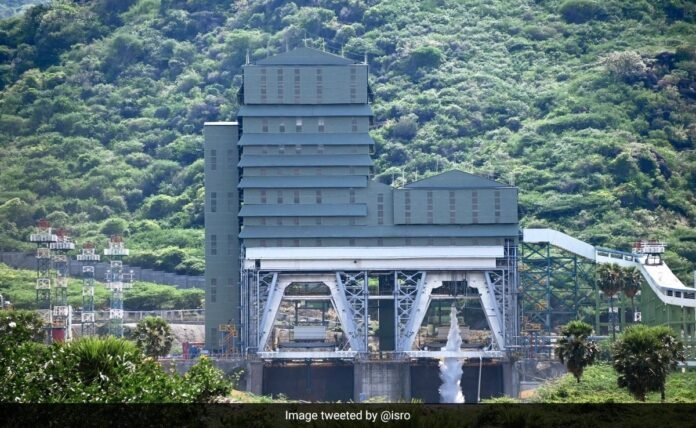
The Indian Space Research Organisation (ISRO) has achieved a significant milestone in space propulsion technology with the successful hot test of its Semicryogenic engine. This cutting-edge engine is designed to power the Semicryogenic booster stage of the Launch Vehicle Mark-3 (LVM3), significantly enhancing India’s launch capabilities. The test, conducted at the ISRO Propulsion Complex in Mahendragiri, Tamil Nadu, marked a crucial step in advancing India’s space ambitions.

Understanding the Semicryogenic Engine

The Semicryogenic engine, designated SE2000, operates using Liquid Oxygen (LOX) and Kerosene as propellants. This combination offers significant advantages over traditional hypergolic propellants, being non-toxic and environmentally safer. Moreover, it provides enhanced thrust and efficiency, enabling ISRO to increase the payload capacity of LVM3 from 4 tonnes to 5 tonnes in Geosynchronous Transfer Orbit (GTO).

Successful Hot Test and Key Achievements

On March 28, 2025, ISRO conducted a hot test of the SE2000 engine. The test, which lasted 2.5 seconds, successfully demonstrated smooth ignition and operational efficiency. It validated the performance of critical subsystems, including the pre-burner and turbo pumps, confirming that all parameters met expected benchmarks. This marks a major step toward qualifying the engine for future missions.

Major Subsystems of SE2000

The SE2000 engine consists of several essential components:

  • Thrust Chamber – Generates thrust to propel the rocket.
  • Pre-Burner – Plays a key role in initiating combustion.
  • Turbo Pump System – Ensures efficient fuel and oxidizer delivery.
  • Control Components – Regulate the engine’s operation.
  • Start-Up System – Initiates the ignition sequence.

Each of these subsystems underwent rigorous qualification tests before being integrated into the Power Head Test Article (PHTA), which serves as the test configuration for engine validation.

State-of-the-Art Test Facility and Future Plans

The Semicryogenic Integrated Engine Test (SIET) facility, inaugurated in February 2024 at ISRO’s Propulsion Research Complex, played a crucial role in the successful test. This advanced facility enables ISRO to conduct high-fidelity assessments of engine performance. Moving forward, further tests on the PHTA will focus on evaluating the propellant feed system, including turbo-pumps and the pre-burner, to ensure flawless operation in actual missions.

Challenges in Development

Developing a high-thrust semicryogenic engine presents numerous technological challenges. The technology is rare and mastered by only a handful of spacefaring nations. The engine hardware must withstand extreme temperatures and oxidizer-rich combustion environments, requiring advanced engineering solutions. ISRO’s collaboration with Indian industries has been instrumental in overcoming these hurdles and realizing this complex technology.

Significance of the Breakthrough

The development of the SE2000 Semicryogenic engine represents a leap forward for India’s space program. With increased payload capacity, ISRO will be better equipped to launch heavier satellites, support interplanetary missions, and participate in commercial space launches. This achievement further solidifies India’s position as a leading global space power and sets the stage for even more ambitious endeavors in the future.

With continued advancements in propulsion technology, ISRO is paving the way for cost-effective, efficient, and sustainable space exploration, bringing India closer to its goal of self-reliance in high-end space technologies.

UNESCO Report Calls for Improved School Meal Nutrition at Global Summit

0

During the ‘Nutrition for Growth’ event hosted by France on March 27-28, 2025, UNESCO released a new report emphasizing the importance of meal quality in schools. Titled Education and Nutrition: Learn to Eat Well, the report urges governments to enhance the nutritional value of school meals worldwide. While nearly half of primary school pupils receive meals, concerns remain about their nutritional adequacy. The report highlights the need for balanced meals and food education to support children’s health and learning.

Current Global Context

As of 2024, around 47% of primary school pupils globally benefitted from school meal programs. However, UNESCO stresses that the nutritional quality of these meals is often inadequate. Malnourishment in children remains a challenge, and enhancing meal quality can lead to better academic performance and school attendance.

Key Findings of the UNESCO Report

The report presents concerning statistics on school meal programs:

  • In 2022, 27% of school meals worldwide were not designed with input from nutritionists.
  • Only 93 out of 187 countries had legislation regulating school food.
  • Just 65% of these countries had standards for food sold in school cafeterias and vending machines.

Health Implications

UNESCO raises concerns over rising childhood obesity and food insecurity. Since 1990, childhood obesity rates have more than doubled, while many children still suffer from malnutrition. Schools play a crucial role in shaping eating habits, yet many offer unhealthy food options. The report advocates for a transition to fresh, locally sourced food and stricter nutritional guidelines.

Successful Initiatives Worldwide

Several countries have implemented effective school meal programs to improve nutrition:

  • Brazil has limited ultra-processed foods in its national school feeding program.
  • China has introduced dairy and vegetables in rural schools to enhance nutrient intake.
  • Nigeria’s Home-Grown School Feeding Programme has led to a 20% increase in primary school enrolment.
  • India’s Maharashtra initiative introduced fortified organic pearl millet, improving adolescents’ cognitive functions.

Recommendations and Future Actions

UNESCO calls on governments and education stakeholders to:

  • Prioritize fresh, unprocessed foods in school meals.
  • Reduce sugar and ultra-processed foods in school cafeterias.
  • Integrate food education into school curricula to promote healthy eating habits.
  • Develop training programs for policymakers to effectively incorporate nutrition into education systems.

A Path Forward

With its latest report, UNESCO underscores the urgent need for policy reforms to enhance school meal programs. By integrating nutritional standards, education, and sustainable practices, schools can play a pivotal role in improving children’s health and academic success worldwide.

Newly Discovered Snakehead Fish in Meghalaya: Channa nachi and Its Significance

0

Meghalaya’s rich freshwater biodiversity has received another scientific milestone with the discovery of a new species of snakehead fish, named Channa nachi. This newly identified species highlights the ecological diversity of the South Garo Hills region, where it was first collected from a stream feeding into the Simsang River system four years ago.

Habitat and Ecological Importance

Channa nachi was found in a shallow, slow-moving stream characterized by sand, leaf litter, and pebbles, which provide a suitable habitat for a variety of aquatic species. This stream is part of the larger Simsang River system, known for its lesser-explored fish diversity. Researchers believe that the presence of Channa nachi adds to the ecological significance of the region, offering new insights into its freshwater ecosystem.

Distinctive Features of Channa nachi

This species stands out due to its unique physical characteristics, including:

  • Slender, elongated body with a striking bicolor appearance.
  • A gradient from creamish-yellow on the underside to a deep blue on the upper body.
  • Pale-blue marbling across its body, giving it a distinctive aesthetic appeal.
  • Dorsal saddles that make it easily distinguishable from other snakehead species.

These features make Channa nachi a potential candidate for the ornamental fish trade, increasing its global appeal among aquarium enthusiasts.

Cultural and Scientific Significance

The species name, “nachi”, originates from the Garo language, reflecting the deep cultural and ecological ties between indigenous communities and their environment. This discovery underscores the importance of integrating local knowledge into scientific research, ensuring that conservation efforts align with traditional ecological understanding.

Impact on Conservation and Ornamental Trade

The discovery of Channa nachi further boosts interest in snakehead species, which have gained popularity in the international ornamental fish market. Other recent discoveries from Northeast India have similarly enhanced awareness of the region’s biodiversity, emphasizing the need for conservation efforts to protect these unique species from habitat degradation and overexploitation.

Future Research and Conservation Efforts

As scientists continue to uncover new snakehead species, they advocate for standardized classification methods, integrating both morphological and molecular data. This approach will ensure accurate documentation and preservation of biodiversity, paving the way for further scientific discoveries in India’s freshwater ecosystems.

With its distinct features, cultural significance, and ecological value, Channa nachi stands as a testament to Meghalaya’s rich and diverse aquatic heritage, urging further exploration and conservation of its unique species.