Home Blog Page 328

Lives on the Line: The Global Struggle to End Maternal Mortality

0

Every day, somewhere in the world, 712 women die from causes linked to pregnancy or childbirth. That’s roughly one woman every two minutes—a number that’s as heartbreaking as it is unnecessary.

But behind the statistics is a story of both progress and peril, as highlighted in the United Nations’ 2024 report, Trends in Maternal Mortality: 2000 to 2023. Published by the UN Maternal Mortality Estimation Inter-Agency Group—a collaboration between WHO, UNICEF, UNFPA, the World Bank, and the UN Department of Economic and Social Affairs—the report reveals a world that has made significant strides in maternal health but now stands at a critical crossroads.


A Drop in Numbers, But Not in Urgency

Let’s start with the good news: global maternal deaths have dropped by 40% since 2000. That’s a testament to two decades of tireless global efforts—better healthcare services, safer delivery practices, and greater awareness.

For the first time in modern reporting, no country has been classified as having “extremely high” maternal mortality, and no region bears the red mark of being “very high-risk.” That’s an achievement worth celebrating.

But before we pop the champagne, here’s the sobering twist: since 2016, progress has plateaued. In 2023 alone, approximately 260,000 women lost their lives during pregnancy or childbirth. While that’s an improvement over previous years, the world is not on track to meet the Sustainable Development Goal of fewer than 70 maternal deaths per 100,000 live births by 2030.


Unequal Burdens: A Geography of Risk

The map of maternal mortality is far from even. A staggering 70% of maternal deaths occurred in sub-Saharan Africa, while nearly 17% were in Central and Southern Asia. Conflict zones and fragile healthcare systems account for a disproportionate share—64% of deaths came from just 37 countries battling crises.

One of the most telling stories in the report comes from India. Despite dramatic progress—from a maternal mortality rate of 362 per 100,000 live births in 2000 down to 80 in 2023—India still accounted for 19,000 maternal deaths last year, tying with the Democratic Republic of Congo for the second-highest number worldwide. Only Nigeria reported more, with 75,000 maternal deaths.

For comparison, China reduced its rate from 56 to just 16 in the same period—showing what a robust healthcare system and consistent policy support can achieve.


A Tale of Two Indias

India’s national numbers mask sharp regional disparities. In southern states like Kerala and Tamil Nadu, where access to quality private healthcare is more common, maternal mortality rates have plummeted. In contrast, northern states such as Uttar Pradesh and Bihar struggle due to a toxic mix of poverty, underfunded public health services, and a lack of trained personnel.

Public health centers—especially in rural regions—often lack basic resources to manage complicated pregnancies. The result? Frequent and delayed referrals, which can turn treatable complications into fatal outcomes.


When the Pandemic Pushed Back Progress

Like so many aspects of healthcare, maternal health took a hit during the COVID-19 pandemic. Maternity services were stretched thin or halted altogether. The world witnessed an estimated 40,000 additional maternal deaths in 2021 alone, reversing years of progress.

Thankfully, post-pandemic, maternal death rates have generally returned to pre-COVID levels, but the report makes it clear: any future emergency must not interrupt essential maternal care. Health systems need to be resilient, not reactive.


What’s Killing Mothers: The Medical Realities

The leading causes of maternal death remain tragically preventable:

  • Postpartum hemorrhage
  • Hypertensive disorders like pre-eclampsia
  • Infections
  • Indirect causes such as pre-existing health conditions (e.g., diabetes, anemia, heart disease)

These are not obscure or untreatable issues. With timely, skilled care, most of these deaths could be avoided. Yet millions of women—especially in remote or underserved communities—never receive that care in time.


The Infrastructure of Hope

The road to ending maternal mortality doesn’t just run through hospitals. It winds through primary health centers, community clinics, ambulance networks, pharmacies, and training institutes. It requires well-equipped facilities, adequately staffed teams, reliable transportation, and continuous access to life-saving medications.

In many countries, these basics are still considered luxuries.


So What Can Be Done?

The report lays out a clear, urgent roadmap:

  • Invest in healthcare systems, especially at the primary and community levels.
  • Train and support skilled birth attendants—the front line of maternal care.
  • Ensure uninterrupted access to emergency obstetric care, even during crises.
  • Empower women through education, awareness, and access to reproductive health services.
  • Prioritize public health over politics, and make maternal health non-negotiable.

A Future Where No Woman Dies Giving Life

Maternal mortality is more than a health issue—it’s a mirror of societal priorities. Every death reflects a failure not just of medicine, but of equity, infrastructure, and justice.

We’ve come a long way since 2000, but the last mile is often the hardest. Still, hope glimmers—borne by midwives in remote clinics, policy makers fighting for better budgets, and researchers designing tools that save lives.

With global commitment and community action, a world where no woman dies giving life is within reach.

But we have to want it badly enough to work for it—every day, for every mother.

Gliding Through the Shadows: Rare Sighting of the Woolly Flying Squirrel in Himachal Pradesh Sparks Hope for Himalayan Wildlife

0

In late 2024, the Himachal Pradesh Forest Department captured the first photographic evidence of the Woolly Flying Squirrel in the Miyar Valley, Lahaul and Spiti district. This rare mammal had been long thought extinct until its rediscovery in 1994. This finding marks important milestone in wildlife conservation efforts in the region.

About the Woolly Flying Squirrel

  • The Woolly Flying Squirrel (Eupetaurus cinereus) is endemic to the northwestern Himalayas.
  • It is the only species within the genus Eupetaurus.
  • This nocturnal mammal is primarily found in fragmented habitats of dry conifer woodlands.
  • Its rediscovery has raised awareness about its conservation status.

Habitat and Distribution

The Woolly Flying Squirrel inhabits northern Pakistan and northwestern India. Since 1994, sightings have been recorded in the Sai Valley, Gorabad, and Balti Gali in Pakistan. Its habitat is restricted to a narrow elevational band, making it vulnerable to environmental changes.

Physical Features

This species is characterised by elastic membranes that connect its fore and hind legs, allowing it to glide. The fur is dense and silky, with a blue-gray dorsal pelage and pale gray underside. Creamy white fur covers the throat and ears, while black fur protects the soles of its feet.

Conservation Status

The Woolly Flying Squirrel is classified as ‘Endangered’ on the IUCN Red List. Conservation efforts are crucial for its survival, given its limited distribution and habitat fragmentation.

Research and Conservation Efforts

The photographic evidence was obtained through camera traps installed for a Snow Leopard census. The survey was conducted from October to December 2024, as part of the Snow Leopard Population Assessment in India initiative. This project aims to study snow leopard populations and their habitats.

WAVES 2025: Know About Its Host, Significance, and India’ Storytelling Legacy Here..

0

India Welcomes the World to Mumbai Hosting WAVES 2025

India is set to host World Audio Visual and Entertainment Summit 2025, its largest and most ambitious Media and Entertainment (M&E) summit, from May 1 to 4 in Mumbai. This landmark event marks a major milestone in India’s rise as a global media powerhouse. Organized on the lines of international forums like Davos and Cannes, WAVES 2025 aims to unite the full spectrum of the M&E industry—including films, OTT platforms, gaming, comics, AI, digital media, AVGC-XR, and emerging technologies—under one roof.

Significance: Shaping the Future of Global Media

WAVES 2025 is more than just a convention—it’s a strategic move to position India as a global hub for media and entertainment. With the Indian M&E industry projected to reach $50 billion by 2029, the summit is expected to be a catalyst for international collaboration, innovation, and industry transformation.

At the core of the summit is India’s storytelling legacy—from ancient epics to modern cinema. WAVES 2025 will celebrate this heritage while advancing future-facing narratives powered by AI, immersive tech, and digital platforms.

Major highlights include:

  • A roundtable with Prime Minister Narendra Modi and top global CEOs
  • The Global Media Dialogue with key policymakers
  • Plenary sessions featuring global thought leaders discussing trends, challenges, and opportunities in the M&E space

The event will conclude with the release of the WAVES Declaration 2025, setting a shared roadmap for the future of global media.

Benefits: A Game-Changer for India’s M&E Ecosystem

1. Global Exposure and Investment

WAVES 2025 will create a global marketplace for content and partnerships through platforms like:

  • WAVES Exhibition – showcasing tech and innovations from India and abroad
  • WAVES Bazaar and its year-round e-bazaar – promoting international trade and collaboration
  • WaveXcelerator – enabling startups to pitch to investors in real-time

2. Empowering Creators and Innovators

The summit will nurture young talent through initiatives such as the “Create in India Challenge”, giving creators a global stage and access to mentorship, funding, and visibility.

3. Celebrating Culture and Creativity

The Bharat Pavilion will offer an immersive look at India’s storytelling evolution—across print, audio, and visual formats. Meanwhile, CreatoSphere will feature:

  • Gaming arenas
  • Masterclasses and workshops
  • The grand finale of the Create in India Challenge

Cultural showcases under WAVES Cultural will include:

  • Live concerts
  • Classical and fusion performances
  • Celebrations of India’s rich artistic and musical heritage

4. Driving Technological Advancement

With a strong focus on AI, VR, and immersive storytelling, WAVES 2025 will encourage the industry to embrace innovation, adopt emerging tools, and shape the next generation of content creation.

5. Strengthening the Workforce and Ecosystem

By highlighting areas like financing, IP development, animation, music, and tech integration, the summit is expected to:

  • Attract global and domestic investment
  • Build a future-ready workforce
  • Increase India’s contribution to the global creative economy

WAVES 2025 is not just a celebration—it’s a strategic initiative to redefine India’s role in the global media landscape. With collaboration, innovation, and storytelling at its heart, it promises to set the tone for the future of entertainment worldwide.

CRPF Valour Day: Know Date, History and Significance

0

Every year on April 9, Valour Day—also known as Bravery Day—is observed to honor the extraordinary courage and sacrifice of the Central Reserve Police Force (CRPF) personnel. This year, in 2025, the CRPF marks its 60th Valour Day.

The History Behind Valour Day

Valour Day commemorates the heroic stand of CRPF personnel at Sardar Post in the Rann of Kutch, Gujarat, on April 9, 1965. On that day, a heavily armed brigade of the Pakistan Army launched a surprise attack on Indian territory. Despite being vastly outnumbered, a group of only 150 CRPF personnel defended the post with unmatched bravery.

One of the key figures in this historic battle was CRPF officer Bhawana Ram, who played a pivotal role in defending Sardar Post. This engagement marked the first direct confrontation between Indian police forces and a regular army, and the CRPF emerged victorious.

During the fierce battle, 34 Pakistani soldiers were killed and four captured alive, while six CRPF jawans laid down their lives defending the post. The Pakistani forces attempted to seize Sardar Post three times, but each time they were pushed back by the determined CRPF personnel, who showed exceptional courage and tactical skill.

In honor of their valor, April 9 is observed every year as CRPF Valour Day.

CRPF’s Continued Bravery

The CRPF has continued to uphold its legacy of bravery in various operations across the country. Notably, in 2001, CRPF personnel played a key role in thwarting the terrorist attack on the Indian Parliament, successfully neutralizing the threat and protecting national leaders and the institution.

The Best DJ Gear for Any Budget: From Entry-Level to Pro Setups

0

It’s always fun to buy new DJ gear. It’s exciting to sit down and try different pieces of equipment to determine how they will enhance the existing setup. Who wouldn’t love to invest in new equipment and advance their craft? However, money is often a concern when purchasing new equipment. People must know the essential DJ gear and focus on building the perfect setup around these pieces. They must first decide whether they want controllers, all-in-ones, or standalone/modular equipment. 

Controllers: Controllers have the lowest price tag and are popular among new DJs. A mixer connects two decksections, and the DJ needs a laptop with software to run the device. These devices can easily be used for mobile events thanks to their portability. The equipment is usually designed to work with Serato DJ or Rekordbox, two major players in the industry. However, DJs may use other programs with some MIDI mapping. 

All-In-Ones: All-in-ones are more expensive than controllers, so most DJs wait until they have experience before investing in this equipment. However, they are incredibly convenient because no laptop is needed. The DJ can take their all-in-one to events and have less to carry. These devices come with built-in screens and performance software. The DJ inserts a USB stick or SD card to begin playing music. Today, many DJs subscribe to a service, so they always have music available, even without a stick or card. All-in-ones may need a power supply, but some styles run off batteries. DJs may choose from basic two- channel devices or ones replicating a full-scale club setup. These devices run on one of two operating systems: EngineDJ or Rekordbox.

Modular Equipment: DJs with experience under their belts often want to try new things. They develop a style that is uniquely theirs and need equipment that allows them to shine. Purchasing decks and a mixer separately allows them to find the right combination for their needs. Many open-format and techno DJs invest in modular equipment, but doing so comes with a high price tag. At one time, this was the only way DJs could build a rig. As time passed, more convenient options were introduced, and they came with lower price tags. However, men and women who want to distinguish themselves and become experts in sharing tunes should consider this option. Turntables and a battle mixer are one setup a DJ might consider. With this setup, the DJ can mix and cut easily, beat-juggle, scratch, and more. DJs love this setup because they can adjust the tempo of tracks and perform crazy BPM jumps. Another option is to combine a media player and a club mixer. DJs wanting the highest level of sound quality should choose this option. Many options are offered, so DJs should try different devices to find those they love. 

Standard Rigs: Big club DJs typically use standard rigs to ensure the best performance. These rigs come with a high price tag, so experienced DJs are normally the only ones making the investment. However, the money is well spent, as this equipment can take a person’s performance to the next level. Track load times are minimal, and the sound quality cannot be beat. 

DJs may use this guide as a starting point when purchasing equipment. Regardless of what a person decides, every DJ has the same goal: to provide music people enjoy, and the right DJ rig can help them achieve this goal. Continue looking until this setup is found.

Red FM Brings Back the Magic with the 5th Season of Poila Boithak

0

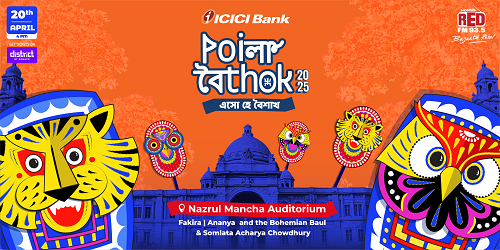
Red FM, India’s leading private radio and entertainment network, proudly presents the fifth edition of Poila Boithak, a grand celebration of Bengali culture and tradition. Scheduled for April 20, 2025, at the iconic Nazrul Mancha Auditorium, this vibrant event captures the true spirit of Poila Boishakh—the Bengali New Year.

Poila Boithak is more than just a festival; it’s an immersive journey into Bengal’s heart and heritage. The event brings together the richness of music, art, and cuisine, offering audiences a nostalgic yet contemporary experience. From soul-stirring live performances to engaging traditional activities, the celebration promises an unforgettable cultural extravaganza for all ages.

Music is the soul and spirit of Poila Boithak, and this year, attendees can look forward to electrifying performances from some of Bengal’s most celebrated artists. The stage is set, and Somlata & The Aces will enchant the audience with Somlata’s honey-like voice and hurricane-force personality. Next in line, we have Fakira, a folk-fusion-rock band that blends Baul music with contemporary sounds, ready to bring their unique energy to the stage along with Ananya and the Bohemian Baul, a musical collective reimagining Baul with a modern, eclectic twist.

At Poila Boithak, a plethora of unique cultural and interactive experiences will be offered, from live painting on greeting cards to the sweet start with Mishti Mukh, where every guest is greeted with traditional Bengali sweets. You can pen down your wishes for the new year on the larger-than-life Halkhata Installation, which will travel across the city, the final stop for this installation being the Nazrul Mancha Auditorium. The event also offers Aalta for the Ladies so that women can adorn their feet and hands with traditional Aalta motifs. At the same time, men can sport stylish chandan teekas, bringing a modern twist to age-old customs.

Speaking on the festivity, Nisha Narayanan, COO and Director of Red FM & Magic FM, said, “Poila Boithak is an immersive yet emotional celebration of new beginnings, which effortlessly moves our souls, hearts and minds to feel each moment with gratitude. Red FM is honoured to give our heartfelt tribute to Bengal’s timeless spirit through music, art, and tradition. A brand that believes in inclusion and diversity, this celebration is a reflection of that very ethos. We’re elated and blessed to continue this legacy with a fifth season. This season is the result of the seeds sown by unshaken roots and powerful intent, which has helped us walk through the essence and soul of Bengal. Phenomenal performances, moving voices, and tearful eyes are proof that this occasion of tradition truly compels us to dive deep into our being and connect us to our heritage. I think the Bengali New Year unites us to honor the past and embrace the present with joy, nostalgia and hope. We welcome you to come and be a part of this festivity and pen down your futures with a new dawn.”

Experience the grandeur of Poila Baisakh like never before. Mark your calendars for April 20, 2025, and head to Nazrul Mancha Auditorium to celebrate Bengali culture, music, and heritage. Red FM ensures that this New Year’s celebration will be remembered.

About 93.5 RED FM

Red FM stands out as India’s largest radio channel and one of the biggest entertainment networks. We are hyper-local, hyper vocal, and with our brand philosophy and attitude ‘Bajaate Raho!’ We are at the core of millennials’ hearts. By leveraging our two-decades-old legacy and expertise, we sow the seeds of a ‘larger than life experience’. We thrive on the emotional connection with the listeners and audience fashioned through a massive footprint of 69 radio stations nationwide. We create original podcasts, digital shows, and on-ground events, feature independent music, make 360-degree noise, and speak the truth. As the ‘station of expression,’ Red FM boasts over 663 award-winning campaigns including BEST BRAND, BEST FM STATION, and BEST RJs.

Kiara Advani Joins Vanesa as Brand Ambassador, Reflecting Confidence and Elegance

0

Kiara Advani, celebrated for her poise, charm, and authenticity, now steps into a new role as the face of Vanesa. Her journey in the film industry mirrors the very ethos of the brand—confidence, self-expression, and individuality.

For Kiara, fragrance goes beyond just being a scent—it’s an extension of her personality. Her preferences reflect her dynamic nature: fresh, floral notes for the day and warm amber tones for the evening. Through this exciting collaboration, Vanesa aims to capture this duality in a fragrance collection designed for the modern woman who values both versatility and elegance.

Expressing her excitement, Kiara shared:
“I’m beyond thrilled to be associated with Vanesa. For me, confidence is about embracing my true self, owning my strengths and vulnerabilities, and walking through life with authenticity. This is what makes working with Vanesa so special—the brand celebrates individuality, and that’s something I truly believe in.”

Saurabh Gupta, MD & CEO of Hamilton Sciences Pvt. Ltd., added:
“We are delighted to welcome Kiara Advani to the Vanesa family. Kiara embodies the essence of our brand with her elegance, charm, and relatable appeal. Her journey and personality perfectly align with Vanesa’s philosophy of celebrating individuality and modern femininity. We believe this collaboration will inspire women to embrace their uniqueness with confidence.”

This partnership continues Vanesa’s legacy of collaborating with strong, inspiring women, following in the footsteps of its first brand ambassador, Kareena Kapoor Khan. As Kiara takes on this new role, she brings a fresh, contemporary perspective while honoring the brand’s timeless essence.

Siddhanchal Dham’s First Anniversary: A Sacred Voyage of Devotion and Celebration

0

April 15, 2025, marks a momentous occasion in the spiritual landscape of Madhya Pradesh as Siddhanchal Dham, the state’s only ship-shaped Jain temple, celebrates its grand first anniversary. Located on Laduna Road, this architectural marvel has quickly become a spiritual magnet, drawing over two lakh devotees in its inaugural year. With its distinct design, sacred relics, and vibrant community engagement, Siddhanchal Dham is more than a temple—it’s a symbol of faith, unity, and timeless devotion.


A Temple Like No Other

Siddhanchal Dham isn’t just another temple; it’s a floating vision of devotion—crafted in the likeness of a ship, sailing on a sea of spirituality. At its spiritual core rests a 3,000-year-old idol of Lord Parshvanath, recovered from the depths of the Chambal River, making it both a place of worship and a site of ancient significance.

The temple’s foundation is rooted in generosity and scholarship. Its land was donated by Dr. Babulal Jain and Manakunwar Ostwal Jain, while its spiritual and architectural guidance came from internationally acclaimed Jain scholar Manoj Kumar Babulal Haran of Sirohi.


A Grand Celebration in Full Sail

The anniversary festivities are scheduled across two vibrant days—April 14 and 15—and promise to blend tradition, grandeur, and spirituality in a truly unforgettable way.

April 14: A Day of Rituals and Light

  • 8:00 AM: The day begins with 18 abhisheks, poojas, and archanas, performed by expert priests for participating families, invoking divine blessings.
  • Evening Highlights:
    • 6:00 PM: Aarti performed by Kumar Pal Raja.
    • 8:00 PM: The temple will glow with the sacred beauty of “Aangi Roshni”, followed by an uplifting devotional evening of bhajans.

April 15: Flag Hoisting and Procession

  • 8:00 AM: A grand religious procession will set forth from the residence of Dr. Arvind Kumar Jain and the Ostwal family at Bijli Grid, Laduna Road. Complete with drummers, bands, horse-drawn carriages, and a large community turnout, the procession will carry both the temple flag and an idol of the deity to Siddhanchal Dham.
  • 10:00 AM: Unveiling of marble statues honoring land donors Dr. Babulal Jain and Manakunwar Jain Ostwal in the temple complex.
  • 11:00 AM: The deeply symbolic “Sattar Bhedi Puja” will be conducted by Manoj Kumar Haran for the temple family.
  • 12:39 PM (Vijay Muhurat): The highlight of the celebration—the first-ever hoisting of the temple flag atop the spire by Dr. Arvind Kumar Jain, Utsav Jain, and the Ostwal family.
  • 1:00 PM: A Swami Vatsalya meal will be served, extending traditional hospitality to all present.
  • 6:00 PM & 8:00 PM: The day concludes with an evening aarti and a final round of soulful bhajan singing.

A Year of Spiritual Milestones

Since its inauguration, Siddhanchal Dham has emerged as a spiritual epicenter, welcoming over 200,000 devotees in just one year. The temple’s first floor enshrines the ancient idol of Lord Parshvanath, while the second floor is dedicated to Lord Adinath. The complex also features shrines to 12 additional Jain deities, making it a comprehensive center for Jain worship.

Pilgrimage groups en route to other revered Jain sites like Nageshwar, Ghasoi, Parasali, and Bahi Parshvanath often make it a point to visit Siddhanchal Dham. Devotees from Sitamau town and nearby rural areas frequent the temple, drawn by its unique architecture and profound sanctity.

Adding to its community-focused ethos, the temple trust provides free tea, snacks, and light meals to all visitors, ensuring that hospitality is as integral as holiness.


A Gathering of Faith

Trustee Utsav Jain shared that the temple has extended open invitations to Jain congregations across Sitamau tehsil and the entire district, many of whom will be honored during the celebrations. With spiritual fervor, cultural pride, and a vibrant turnout expected, this anniversary marks a significant milestone—not just for the temple, but for the entire Jain community.


Sailing Forward

Siddhanchal Dham stands today not just as an architectural curiosity, but as a beacon of spiritual resilience and unity. Its first anniversary is a testament to what faith, vision, and community can achieve together. As the temple’s flag rises to the sky for the very first time, so too does the promise of many more years of devotion, celebration, and divine blessings.

Indore: The Crown Jewel of India’s Cleanliness Revolution

0

In the heart of Madhya Pradesh’s Malwa region, where the air carries whispers of history and the soil has nurtured centuries of culture, one city has not only preserved its glorious heritage — it’s redefined what modern civic pride can look like. Indore, the cleanest city in India for an unprecedented eight consecutive years, is not just leading a movement — it is the movement.

From the grandeur of Rajwada Palace to the buzzing food haven of Chhappan Dukaan, Indore has seamlessly blended tradition with transformation, proving that hygiene and heritage can not only coexist, but thrive together.


The Secret Sauce Behind the Shine

So, what’s Indore’s secret? How does a bustling metropolis of over 3 million residents achieve what others can only dream of?

It’s not magic — it’s meticulous planning, civic discipline, and an infectious sense of collective responsibility.

Every single day, Indore processes over 1,600 tons of waste — and achieves a staggering 100% segregation at source. Wet waste and dry waste are sorted right at the doorstep, long before it enters the city’s waste management systems. It’s a choreography of cleanliness, powered by a committed fleet of sanitation workers who perform their duties with near-military precision.


The Bold Ban: No Bins, No Mess

One of Indore’s most radical moves was its Dustbin-Free Policy — the complete removal of public dustbins from streets. A gamble? Perhaps. But the result? Stunning.

Without bins to lean on, waste is handed directly to the collectors. No overflowing trash, no open dumps, no wandering animals scavenging leftovers. The streets stay spotless. You could quite literally eat your poha off the pavement.


Cleanliness: Not Just a Rule, But a Ritual

Indore: The Crown Jewel of India’s Cleanliness Revolution

Indore’s real success story lies not just in policy but in people. This city doesn’t wait for the government to do the cleaning — the people own it.

Fines for littering? Sure, they exist. But worse is the disapproving look from your neighbor or the stern rebuke from your child. In Indore, civic responsibility is cultural, not enforced. Shopkeepers sweep their sidewalks religiously. Schoolchildren grow up learning that cleanliness is patriotism. It’s not a campaign; it’s a way of life.

Public initiatives like “Swachhata Hi Seva” have become more than slogans — they’re daily mantras. Brooms aren’t just tools; they’re symbols of pride.


Where Clean Meets Cultural

Clean doesn’t mean clinical. Indore pulses with energy, flavor, and warmth. Stroll through Sarafa Bazaar on a moonlit night, and you’ll find glowing streets bustling with life. Jalebis sizzle, bhutte ka kees simmers, and the only thing stronger than the spice in the air is the sense of shared respect for public space.

A short trip away, the echoes of Mandu’s romantic ruins and Ujjain’s sacred ghats speak to the grandeur of Malwa’s past. But today, it’s Indore that’s writing a new chapter — one of smart, sustainable, and socially driven urban living.


Eight Times Crowned, Forever Royal

Indore: The Crown Jewel of India’s Cleanliness Revolution

To wear the cleanliness crown once is an achievement. Eight times? That’s a dynasty.

But Indore isn’t content resting on laurels. With urban sprawl on the rise and the pressure of increased tourism, the city is constantly evolving — experimenting with smart waste management tech, embracing green transport, and exploring circular economy models.

Cities across India now study the “Indore Blueprint,” hoping to bottle its brilliance. But the truth is, Indore’s success isn’t easily replicated — because it’s not just a model. It’s a mindset.


A Palace of Pride

In a land rich with royal history, Indore is the new monarch. Its throne is built on innovation, its crown forged from community effort, and its kingdom stretches across boulevards that gleam like marble halls.

This isn’t just about cleanliness. It’s about identity. About turning a civic duty into a celebration. Every clean corner, every swept step, is a declaration that this city cares.

So, raise a toast to Indore — the King of Clean, the Soul of Malwa, and the living proof that when people come together with purpose, even a broom can become a scepter.

Mangal Pandey: The Spark That Lit the Fire of India’s First War of Independence

0
xr:d:DAFcBA2EZZg:100,j:44206207139,t:23032906

In the pages of India’s long and complex history, some names don’t just appear—they ignite. One such name is Mangal Pandey. Not a king, not a general, but a sepoy with a spirit so fierce that his defiance set off a revolution. A rebellion that would shake the foundations of the British Empire and echo through time as the First War of Indian Independence.

It was April 8, 1857, when the British hung Mangal Pandey for what they called mutiny. But for India, that date became a symbol—a spark that burned into the collective memory of a nation that refused to bow.


Born of the Soil, Forged by Fire

Mangal Pandey was born in 1827, in a modest Brahmin household in what is now Uttar Pradesh. There was nothing in his early life that screamed heroism. Like many young men in colonial India, he joined the British East India Company’s Bengal Native Infantry at the age of 22, more out of economic necessity than ideological fervor. He was posted to the 34th Regiment—a rank-and-file soldier in the massive colonial machinery.

Life as a sepoy wasn’t glamorous. Low wages, brutal discipline, and the constant reminder that you were serving an empire that mocked your faith and disregarded your dignity—this was the everyday grind. But Pandey was not the kind to swallow insult silently. Towering in stature, strong in body and spirit, he was deeply grounded in his religious identity and cultural pride.


The Tipping Point: Faith, Fury, and the Cartridge Controversy

The 1850s were a powder keg of resentment across India. And the match? It came in the form of a new Enfield rifle. The cartridges were rumored to be greased with cow and pig fat—offensive to both Hindus and Muslims. To load the rifle, soldiers had to bite open these cartridges, directly violating religious beliefs.

For Mangal Pandey and countless others, this was more than disrespect. It was a slap in the face. A calculated insult. And he refused to take it lying down.


Barrackpore: Where the First Flame Was Lit

On March 29, 1857, at the military garrison in Barrackpore near Kolkata, Pandey made his stand. Fueled by rage and resolve, he attacked British officers. Alone. Armed. Unyielding.

The act was spontaneous, some say reckless—but it was also courageous. A lone sepoy had dared to rise against the might of the British Empire. He was subdued, court-martialed, and sentenced to death. The British feared his actions might inspire a wider rebellion—and they were right.

On April 8, 1857, Mangal Pandey was hanged. His body fell, but his legend rose.


From “Madman” to Martyr

To the British, he was a troublemaker, a mutineer, a madman. But to Indians, he became the first hero of the revolution. The man who, with no army and no manifesto, lit a fuse that would burn for decades.

His rebellion was not calculated, but it was catalytic. He did not wait for a movement—he became one. The war that followed—the Revolt of 1857—saw rulers, soldiers, and civilians rise across the subcontinent. It failed militarily, but it unified the Indian consciousness, planting the seeds of nationalism that would bear fruit in 1947.


Legacy in Stone, Song, and Silver Screen

Today, Mangal Pandey stands immortal. His name graces streets, schools, statues, and even postage stamps. His story is taught in textbooks and celebrated in temples of pop culture—including the 2005 Bollywood film starring Aamir Khan, which painted his fiery defiance with cinematic glory.

Every April 8, Indians pause to remember. Not just the man, but the moment. The fire. The fight. The cost of freedom.


A Hero for the Ages

Mangal Pandey’s life wasn’t lived on a grand stage. He wasn’t born into royalty or leadership. He was one of the nameless many—until he chose not to be. Until he chose rebellion over silence. Until he dared to say “enough” when everyone else stayed quiet.

His name, Mangal, meaning “auspicious,” proved prophetic—not for a peaceful life, but for the promise of a nation that would rise because one man stood up.


In a world full of followers, Mangal Pandey chose to be the spark. And in doing so, he lit the fire of freedom.