Home Blog Page 324

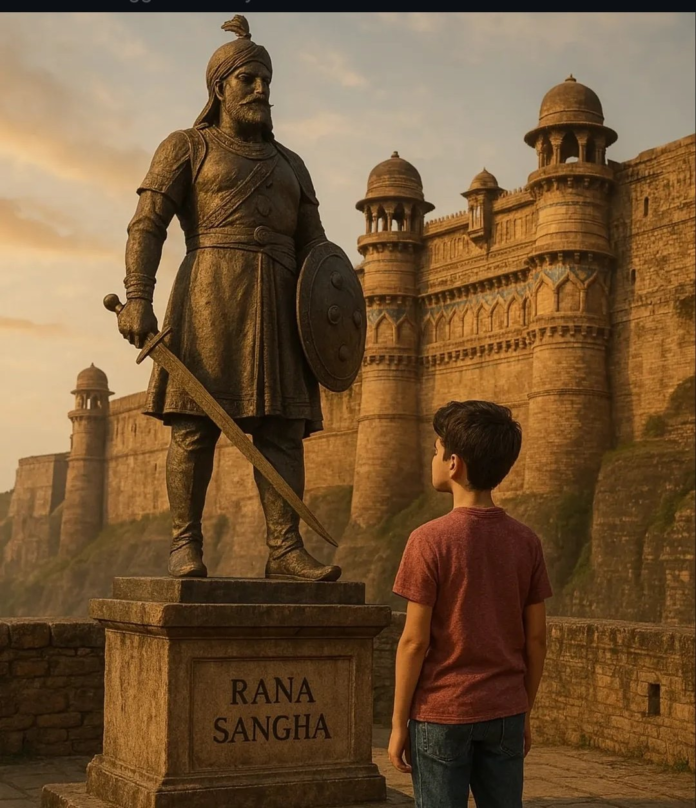
Maharana Sanga: Meet The King Who Fought 100 Battles But Bowed To Enemies Despite Sustaining 80 wounds, Lost An Eye, Got His Arm Severed and Also Had His Leg Cripped too…

0

By Anjali Solanki

“In the heart of Mewar, where courage was forged in the fires of adversity, a warrior king rose to etch his name in the annals of history Maharana Sangram Singh, the indomitable Rana Sanga.”

As we commemorate Maharana Sanga Jayanti, we honor a towering figure whose life was a testament to valor, unity, and unrelenting defiance against overwhelming odds. Born on April 12 in 1482 in Chittorgarh, Rana Sanga, the ruler of Mewar from 1508 to 1528, was not just a king but a symbol of resistance and resilience. His historical contributions reshaped the landscape of northern India in the 16th century, and his legacy continues to inspire generations to stand firm in the face of challenges. This article explores who Maharana Sanga was, his monumental contributions, and how today’s youth can draw inspiration from his extraordinary life.

Who Was Maharana Sanga?

Maharana Sangram Singh, popularly known as Rana Sanga, was a scion of the Sisodia dynasty, one of the most revered Rajput clans of Rajasthan. Ascending the throne of Mewar after a fierce struggle with his brothers, Sanga inherited a kingdom surrounded by powerful sultanates. Despite losing an eye, an arm, and bearing over 80 wounds from countless battles, he transformed Mewar into a formidable power, uniting Rajput clans and challenging the might of Delhi, Malwa, and Gujarat. His capital at Chittorgarh stood as a beacon of Hindu sovereignty in a time of relentless invasions.

Historical Contributions of Maharana Sanga

  1. Unification of Rajput Clans

In an era when Rajputana was fragmented by internal rivalries, Rana Sanga achieved the near-impossible uniting warring Rajput clans through diplomacy and marital alliances. By forging a confederacy of Rajput states, he created a unified front against external threats, laying the groundwork for collective resistance. This unity was a precursor to later Rajput defiance, notably under his grandson, Maharana Pratap.
Sanga’s military campaigns were legendary. He expanded Mewar’s boundaries across present-day Rajasthan, Gujarat, Madhya Pradesh, Haryana, and parts of Uttar Pradesh.

His victories in battles like Khatoli (1517), Dholpur (1518), and Gagron (1519) against the Lodi dynasty and Malwa Sultanate showcased his tactical genius. At its zenith in 1521, his empire stretched from Malwa in the south to the borders of Agra, earning him the allegiance of nearly all Rajput chiefs.
Sanga’s most defining contribution was his resistance against Babur, the founder of the Mughal Empire. In 1527, he led a Rajput coalition against Babur at the Battle of Khanwa. Though defeated due to Babur’s innovative use of gunpowder, Sanga’s initial successes at Bayana and his fearless stand inspired future generations to resist foreign domination. He is regarded as one of the last independent Hindu rulers of northern India to control vast territories.
Beyond the battlefield, Sanga was a patron of the arts and a defender of religious tolerance. He supported poets like Malik Muhammad Jayasi, author of Padmavat, and ensured that people of all faiths could practice freely in Mewar. His reign saw Mewar flourish as a cultural hub, preserving Rajput traditions amid turbulent times.
Sanga’s body bore the scars of his commitment 80 wounds, a lost eye, a severed arm, and a crippled leg. Yet, he never wavered. His death in 1528, possibly due to poisoning by his own nobles after refusing to submit to Babur, marked the end of an era. However, his spirit of defiance lived on, inspiring his successors, particularly Maharana Pratap, to continue the fight for independence.

Lessons for Today’s Generation

Maharana Sanga’s life offers profound lessons for the youth of today, navigating a world of rapid change and challenges. Here’s how his legacy can inspire Despite physical injuries and constant threats, Sanga never backed down. His resilience teaches us to face personal and professional setbacks with determination. Whether it’s overcoming academic struggles, workplace challenges, or personal loss, Sanga’s life reminds us that true strength lies in perseverance.

International Day of Human Space Flight, 12 April, When Humanity Touched the Stars

0

Giant Leap for Mankind: Celebrating the Day Humanity Touched the Stars

On April 12th, the world pauses to look up, not in wonder, but in celebration. It’s the International Day of Human Space Flight, a day etched in history, not just for the daring feat it commemorates, but for the boundless possibilities it ignited.

Imagine, for a moment, the year 1961. The world was gripped by Cold War tensions, yet amidst this backdrop, a young Soviet cosmonaut named Yuri Gagarin strapped himself into a metal capsule, Vostok 1, and launched into the unknown. That single, 108-minute orbit wasn’t just a personal triumph; it was a seismic shift for humanity, a moment when we collectively broke free from Earth’s cradle.

Fifty years later, in 2011, the United Nations General Assembly recognised the profound significance of this event, declaring April 12th as a day to honor this pivotal moment. Resolution A/RES/65/271 wasn’t just a nod to history; it was a reaffirmation of our collective aspiration to explore the cosmos, not for conquest, but for the betterment of all.

Why does this matter? Because Gagarin’s flight wasn’t merely a space race victory. It was the spark that ignited a global pursuit of knowledge. Space exploration has yielded countless advancements that touch our lives daily: from satellite communication and GPS to medical imaging and weather forecasting. It’s a testament to human ingenuity and the power of collaborative spirit.

This day isn’t just about celebrating the past; it’s about looking forward. It’s about remembering that the vast expanse beyond our planet holds not just scientific wonders, but also the potential for sustainable development. As we grapple with global challenges, the lessons learned from space – resourcefulness, innovation, and a shared perspective – become ever more critical.

So, on April 12th, take a moment to gaze at the night sky. Remember Yuri Gagarin, the pioneer who dared to reach for the stars. And let’s celebrate not just a historical event, but the enduring human spirit that continues to propel us towards a future where the boundaries of our world are constantly expanding. It’s a reminder that, together, we can achieve the seemingly impossible, and that the greatest adventures are often those that take us beyond the familiar.

Hanuman Jayanti 2025 Special: These Six Remarkable Temples Speak the Story of Devotion and Strength

0

Lord Hanuman, the son of the Wind God Vayu, stands as the paramount devotee of Lord Rama, his unwavering loyalty immortalised in legends. Revered as a Vedic scholar, Hanuman is known by numerous epithets: Anjaneya and Anjaniputra (son of Anjana), Maruti and Vayuputra (son of Marut/Vayu), and Bajrangbali (diamond-strong). This powerful deity commands global devotion, evidenced by the worldwide presence of Hanuman temples, particularly in India.

Let’s explore eight remarkable Hanuman temples within India:

1. Sankat Mochan Hanuman Temple (Varanasi)

  • Location: Banks of the Assi River, Varanasi, Uttar Pradesh.
  • History: Believed to be established in the 16th century by Sant Goswami Tulsidas, author of the Ramcharitmanas.
  • Special Feature: Lord Hanuman faces Lord Rama within the temple.
  • Legend: Tulsidas is said to have had a vision of Lord Hanuman at this very spot.

2. Jakhu Temple (Shimla)

  • Location: Jakhu Hill, Shimla, Himachal Pradesh.
  • History: Traced back to the Ramayana, built following Lord Hanuman’s visit during the war.
  • Special Feature: A 108-foot Hanuman statue, unveiled in 2010.
  • Legend: During the Ramayana war, Hanuman rested here while retrieving the Sanjivani booti to revive Lakshmana.
  • Interesting Facts:
    • An annual Dussehra festival is celebrated.
    • A 2017 ropeway enhances accessibility.
    • Panoramic views of the Shivalik range.
    • Abundant monkey populations.

3. Mahavir Mandir (Patna)

  • Location: Patna, Bihar.
  • History: Founded by Swami Balanand in 1730, gaining prominence during the 1947 partition. Replaced with marble temple in 1987.
  • Special Features: Three-tiered structure:
    • Ground floor: Hanuman idols (wish-fulfilling and sin-purifying) and a Shiva shrine.
    • First floor: Idols of Rama, Krishna, Shiva, Parvati, Nandi, and the Ramsetu Shila.
    • Second floor: Religious Ceremony space.
  • Interesting Facts:
    • Second most-visited North Indian shrine after Vaishno Devi.
    • Massive Ram Navami gatherings.
    • Known as Manokamna Temple (wish-fulfillment).
    • Paritala Anjaneya in Andhra Pradesh is the worlds tallest Hanuman statue.

4. Bala Hanuman Temple (Jamnagar)

  • Location: Ranmal/Lakhota Lake, Jamnagar, Gujarat.
  • History: Established by Shri Prem Bhushanji Maharaj in 1963-64.
  • Special Features: Idols of Rama, Lakshmana, Sita, and Hanuman.
  • Interesting Facts:
    • Continuous chanting of “Sri Ram, Jai Ram, Jai Jai Ram” since August 1, 1964 (Guinness World Record).
    • Proximity to Khijadia Bird Sanctuary.

5. Hanuman Mandir (Allahabad/Prayagraj)

  • Location: Sangam, Allahabad/Prayagraj, Uttar Pradesh.
  • History: Believed to date back to the Ramayana.
  • Special Features: A 20-foot long, 8-foot wide reclining Hanuman statue (Lete Hanuman). Part of the statue is submerged in water.
  • Legends:
    • Hanuman rested here after burning Lanka.
    • A traders wish was granted after leaving the statue there.
  • Interesting Facts:
    • Near Akbar/Allahabad Fort.

6. Namakkal Anjaneyar Temple (Namakkal)

  • Location: Namakkal, Tamil Nadu.
  • History: Temple and idols believed to exist since the 5th century CE.
  • Special Features: A pillared hall leading to the sanctum, and an 18-foot Hanuman statue facing the Narasimha shrine.
  • Legend: Goddess Lakshmi performed penance here, and Hanuman entrusted her with a Saligrama image of Vishnu.
  • Interesting Facts:
    • Panguni Uthiram festival (March-April).
    • Narasimhaswamy Temple nearby.

The Vanishing Hoofbeats of Tamil Nadu: Saving the Vembur Sheep

0

In the sun-drenched fields of Thoothukudi and Virudhunagar, a quiet drama is unfolding. Among the native grasses and thorny scrublands, flocks of white sheep with chestnut-red patches graze serenely. These are the Vembur sheep, affectionately called Pottu Aadu by local farmers — a name that reflects their trademark spotty appearance.

But behind their tranquil presence lies a growing storm. A proposed industrial project threatens not just their grazing land, but their very existence. If we’re not careful, the rhythmic hoofbeats of the Vembur sheep could soon become an echo of the past.

Meet the Pottu Aadu: A Breed Born of the Land

Unlike their fluffy cousins up north, Vembur sheep are hair sheep, meaning they don’t grow wool and require no shearing. Their lean, medium-sized bodies and drooping ears are well-suited to the hot, arid conditions of southern Tamil Nadu. What truly makes them stand out, though, is their coat — a painterly blend of white with reddish-brown splotches that seem almost designed to match the rust-colored soil they roam on.

They are low-maintenance grazers, feeding primarily on native vegetation without the need for expensive commercial fodder. This makes them the perfect partner for the region’s traditional pastoral lifestyle — sustainable, hardy, and deeply woven into the rhythm of rural life.

More Than Livestock: A Symbol of Survival and Culture

For many farming families in the region, Vembur sheep are a lifeline. Their milk, meat, and occasional sales at market provide vital income. A pair of Vembur sheep can fetch up to ₹18,000 to ₹20,000 — no small sum for a household dependent on agriculture.

But these animals are not just assets — they are cultural icons. Their presence at local festivals, rituals, and even storytelling traditions reflects a legacy that has passed down generations. In many homes, raising Vembur sheep is more than a job — it’s a tradition, an identity.

A Herd in Decline: From Numbers to Nearness

As of 1998, the Vembur sheep population stood at around 31,000, with average flock sizes of nearly 39. That number hasn’t changed much in recent years — but that’s part of the problem. The breed’s slow reproductive cycle (usually one lamb per pregnancy) means that any sudden shock — like a loss of grazing land — could tip the population into dangerous decline.

Which brings us to the looming threat: industrialisation.

The Grazing Grounds Dilemma: When Progress Collides with Heritage

The SIPCOT industrial project, poised to claim nearly 1,000 acres of vital pastureland, has local farmers alarmed. These are not just empty fields — they are the lifeblood of the Vembur sheep. Without grazing land, the sheep cannot survive. Without the sheep, farmers may be forced to abandon livestock farming altogether.

In a region where economic opportunities are already scarce, this could have generational consequences. It’s not just an environmental issue. It’s an economic and cultural loss rolled into one.

Can Conservation Keep Pace?

Efforts are being made. A government farm in Sattur is working to preserve the breed. But while the controlled environment helps with breeding, it lacks the wide, open pastures that Vembur sheep need to thrive. Experts warn that trying to conserve this breed without understanding its natural habitat is like trying to save a fish by keeping it out of water.

Furthermore, conservationists stress that the genetic traits of the Vembur sheep — resilience, adaptability, and low resource needs — are irreplaceable. In a future where sustainable livestock could play a crucial role in climate resilience, losing this breed would be a backward step.

The Road Ahead: Hoofprints or History?

The biggest threat might not be bulldozers or concrete. It might be disinterest. The younger generation, drawn to urban jobs and digital lives, is showing less interest in livestock farming. Without their participation, the chain of knowledge and care that has preserved the Vembur sheep for centuries could break.

To secure the future of the Pottu Aadu, we need a blend of policy, passion, and participation. Protecting their grazing land, incentivising sustainable livestock farming, involving youth, and raising awareness through education and media can help turn the tide.

Conclusion: A Battle Between Memory and Machinery

The Vembur sheep isn’t just a breed — it’s a living chapter of Tamil Nadu’s pastoral history. To lose it would be to erase a piece of the land’s soul. As the gears of industry turn, let’s ensure they don’t crush the quiet grace of a sheep that has walked these fields for centuries.

Preserving the Vembur sheep isn’t about resisting progress — it’s about ensuring that progress doesn’t come at the cost of identity, biodiversity, and the quiet dignity of a life lived close to the land.

Dr. B.R. Ambedkar: The Architect of Modern India and a Beacon for Every Student

0

Every year, April 14 marks more than just the birth of a man — it marks the rise of an idea. Ambedkar Jayanti, celebrated across India with reverence and reflection, commemorates the life and legacy of Dr. B.R. Ambedkar — the chief architect of the Indian Constitution, a fierce crusader for social justice, and a beacon for generations of learners and leaders.

This isn’t just a birthday celebration. It’s a national salute to intellect, resistance, and transformation.

Born to Change the Script: Early Life and Struggles

Born in 1891 in the military cantonment town of Mhow (now in Madhya Pradesh), Bhimrao Ramji Ambedkar came into the world as part of the Mahar community — one of the so-called “untouchable” castes. His early years were filled with prejudice and pain. Denied the right to drink from public water sources, made to sit apart in classrooms, and often treated as invisible — Ambedkar’s introduction to society was harsh and humiliating.

But even as a child, he showed a defiance that would later define his legacy. Where others tried to shut him out, he opened books. And from those pages, he began to write his own story.

A Scholar Without Borders: Education Across Continents

Ambedkar’s journey from the margins to the global stage is nothing short of revolutionary. With the support of Maharaja Sayajirao Gaekwad of Baroda, he pursued higher education abroad, shattering centuries of caste-based constraints.

  • At Columbia University, he earned an M.A. and later a Ph.D. in Economics, impressing professors with his intellect and insight.
  • At the London School of Economics, he pursued further research and became a barrister at Gray’s Inn.
  • Along the way, he absorbed the principles of liberty, equality, and fraternity — ideals that would later flow into the veins of the Indian Constitution.

Ambedkar didn’t just earn degrees — he built intellectual artillery to fight systemic oppression.

The Constitution and Beyond: Building the Republic

When India won independence, Ambedkar was chosen to chair the Constitution Drafting Committee — a symbolic and seismic moment in Indian history. A man once deemed “untouchable” was now scripting the supreme law of the land.

Under his guidance, the Constitution of India enshrined:

  • Abolition of untouchability
  • Equality before the law
  • Freedom of religion and expression
  • Affirmative action (reservations) for the upliftment of Scheduled Castes and Tribes

Ambedkar didn’t just create legal frameworks — he envisioned an India where dignity was not a privilege, but a right.

Clash of Titans: Ambedkar and Gandhi

Though both Mahatma Gandhi and Ambedkar sought upliftment of the oppressed, their paths often diverged. Gandhi worked within the Hindu framework, advocating reform and using the term “Harijan” (children of God). Ambedkar, however, saw caste as an irredeemable construct and sought its complete annihilation.

Their most notable conflict came during the Poona Pact (1932), when Ambedkar demanded separate electorates for Dalits. Gandhi opposed this, fearing it would fragment Hindu society. The result was a compromise — reserved seats instead of separate electorates — but the ideological rift endured.

Ambedkar’s stance was clear: political freedom meant nothing without social emancipation.

Spiritual Rebellion: Embracing Buddhism

In the final chapter of his life, Ambedkar took one of his most defining steps. Disillusioned with the caste rigidity of Hinduism, he publicly converted to Buddhism on October 14, 1956, along with half a million followers.

To Ambedkar, Buddhism wasn’t just a religion — it was a declaration of equality, compassion, and reason. This marked the beginning of the Navayana (Neo-Buddhist) movement, breathing new life into an ancient faith and offering liberation to millions seeking dignity.

Ambedkar Jayanti: Why It Matters Today

On Ambedkar Jayanti, floral tributes and statues only scratch the surface. The real homage lies in understanding and living his ideals:

  • For students, his life is a masterclass in overcoming odds.
  • For lawmakers, his Constitution is the ethical compass of the republic.
  • For citizens, his message is a call to challenge injustice wherever it lurks — in classrooms, boardrooms, or village squares.

Legacy: A Torch That Never Dies

Dr. Ambedkar passed away on December 6, 1956, but his words still roar in courtrooms, classrooms, and protest grounds:

Educate, Agitate, Organize.

He was more than a statesman — he was a visionary, a scholar, a fighter, and a liberator. Ambedkar Jayanti is not just a date on the calendar. It’s a yearly reminder that true progress comes not from privilege, but from perseverance.

As students, thinkers, and citizens of a democracy he helped build, the best way to celebrate Ambedkar Jayanti is to read him, remember him, and rise because of him.

Google’s Ironwood Chip: Ushering in a New Era of AI Inference Power

0

In the ever-escalating race for AI dominance, Google just made a bold move. With the unveiling of its new Ironwood processor, the tech giant has dropped a silicon gauntlet — aimed squarely at reshaping the future of artificial intelligence and challenging long-time rival Nvidia on its own turf.

The Ironwood chip isn’t just another piece of tech; it’s the product of a decade-long, behind-the-scenes engineering marathon, now revealed to the world. Designed specifically for AI inference — the rapid, real-time decision-making side of artificial intelligence — Ironwood isn’t about training AI models from scratch. It’s about making those models respond now.

From powering chatbots to streamlining customer service in milliseconds, Ironwood is the speed boost AI didn’t know it needed — but now can’t live without.


What Is Inference Computing, and Why Does It Matter?

Imagine teaching someone everything about driving a car. That’s AI training.

Now imagine that person actually driving in traffic, navigating turns, responding to sudden stops — that’s inference.

Inference computing is what allows AI to apply its training in real-world situations: a chatbot understanding your sarcasm, a medical AI recognizing symptoms instantly, or a voice assistant replying with eerie accuracy.

The faster and more energy-efficient this process is, the smoother and smarter your interaction feels. That’s the battlefield Ironwood is stepping into — and Google’s gunning for gold.


Inside Ironwood: What Makes This Chip Special?

Let’s get into the nuts and bolts — or rather, the wafers and transistors.

Ironwood is designed for scalability and raw performance, capable of operating in massive clusters of up to 9,216 units. That’s not just processing power — that’s AI superpower.

The chip combines the best features of Google’s previous processors and goes further by:

  • Doubling performance-per-watt compared to the earlier Trillium chip
  • Expanding memory, a game-changer for handling complex, memory-intensive AI tasks
  • Optimizing for inference, meaning faster, smarter, and more energy-efficient AI responses

In short, Ironwood isn’t just stronger — it’s leaner, smarter, and built for real-world AI at scale.


TPUs vs. Ironwood: Same Team, Different Game Plans

You may know Google’s Tensor Processing Units (TPUs) — powerful chips that have been the backbone of its AI model training and cloud-based AI infrastructure. But TPUs, while mighty, are largely confined to internal systems or Google Cloud customers.

Ironwood flips the script — it’s designed to be more versatile, more scalable, and better suited for commercial AI applications that need real-time inference. It’s about giving AI muscles not just in Google’s data centers, but potentially in businesses everywhere.


Why Ironwood Isn’t Just a Chip — It’s a Strategy

Let’s be real — this is also about tech independence.

By investing in its own AI hardware, Google is making a decisive shift away from relying on Nvidia, whose chips currently dominate the AI space. It’s a strategic power move: own the hardware, control the pace, and shape the ecosystem.

With Ironwood, Google is creating an internal feedback loop of hardware and software optimization — much like Apple does with its iPhones — giving it an edge that goes beyond silicon.


What This Means for the Future of AI

Ironwood’s impact won’t just be felt in Google’s backrooms. It has the potential to transform industries:

  • Healthcare: Real-time diagnostics and decision support
  • Finance: Lightning-fast fraud detection and risk analysis
  • Customer Service: Hyper-intelligent, responsive virtual agents
  • Logistics: Dynamic route optimization and demand forecasting

As AI models get more complex, the need for lightning-fast, energy-efficient inference will only grow. And Ironwood looks ready to deliver.


Looking Ahead: A Smarter, Faster AI Future

Google’s Ironwood is more than just the latest gadget in a tech arms race — it’s a beacon of where AI is headed: faster, smarter, and deeply embedded in our daily lives.

It also signals a broader trend: the rise of tailored AI hardware. Just as every AI task doesn’t need the same brain, not every chip needs the same design. The future will be built on chips crafted for purpose — not just power.

And with Ironwood, Google just fired the starting gun.


The question now isn’t whether AI will shape our world — it’s who’s building the best tools to do it.

And if Google has its way, Ironwood might just be the processor that fuels the next great leap.

The Future Arrives on Track: Japan Unveils World’s First 3D-Printed Train Station

0

In the quiet town of Arida, where trains have rumbled past for decades, a futuristic revolution unfolded almost overnight. Beneath the cover of darkness and the watchful eyes of engineers, Japan ushered in a new era — one where concrete is printed, time is compressed, and infrastructure gets a digital reboot.

This isn’t the premise of a sci-fi novel. This is Hatsushima Station — the world’s first 3D-printed railway station, unveiled by Japan’s West Japan Railway Company (JR West). Rising from the ashes of a weathered wooden predecessor that had served since 1948, the new station isn’t just a structure; it’s a symbol — of innovation, adaptation, and a future-ready mindset.


A Station Built in Six Hours? Believe It.

The word “construction” usually brings to mind long months of scaffolding, dust, delays, and drilling. But Hatsushima’s makeover rewrites the playbook.

How fast was it built? Try under six hours.

Thanks to the creative minds at Serendix, a trailblazing construction firm, the components for the station were 3D-printed over just seven days in Kumamoto Prefecture. The materials? A specialized, super-durable mortar — think of it as the concrete of tomorrow, engineered for endurance. Once printed, the components made a 500-mile journey across Japan to Arida.

Then, under the stars and after the last train departed, the assembly began. With cranes lifting each prefabricated piece into place like Lego blocks of the future, the entire station was standing — ready and real — before sunrise.

Though compact at just over 100 square feet (about the size of a studio apartment), the station is sturdy, sleek, and efficient. Final touches — like interior finishes and ticketing systems — are still underway, but the structure itself is ready to serve.


Why This Innovation Matters

This isn’t just a cool tech story. This is a vital solution to a national challenge.

Japan is ageing — rapidly. With fewer workers available and rural infrastructure deteriorating, traditional construction just can’t keep up. Rebuilding or repairing even a modest railway station can take two to three months and a sizable workforce. Hatsushima proves that with 3D printing, what once took months now takes mere days — even hours on site.

The implications are profound. Remote or declining regions could now receive updated infrastructure quickly and affordably. Maintenance bottlenecks? Reduced. Labour shortages? Sidestepped. Construction waste? Minimized.


Japan Is Just the Beginning

The world is watching — and following suit.

India, for instance, has entered the game with sustainable flair. In Pune, Godrej Properties recently revealed the country’s first 3D-printed villa, designed using recycled materials to shrink the carbon footprint. The house is more than just shelter — it’s a prototype of greener, faster housing for a growing population.

In the United States and parts of Europe, 3D-printed homes are being tested in disaster relief zones, eco-communities, and urban micro-living solutions. The momentum is real, and it’s accelerating.


What’s Next for Hatsushima — and Beyond

Set to officially open its digital doors in July 2025, Hatsushima Station is just the first chapter. JR West sees this as a test case — a live, functioning proof-of-concept. If all goes well, we could see more such stations blooming like mushrooms across Japan’s rail network, especially in lesser-populated areas.

It’s not hard to imagine a future where portable 3D-printers roll in like caravans, building emergency shelters, bus stops, medical centres — wherever and whenever they’re needed.


Final Stop: A Glimpse into Tomorrow

In a world juggling environmental urgency, labour shortages, and infrastructure decay, 3D printing offers a poetic solution: build less, but build smarter. Let machines do the heavy lifting, while humans dream bigger.

Hatsushima Station might be small in size, but it marks a giant leap in how we think about space, time, and construction. It’s not just a train station — it’s a portal into the possibilities of modern architecture and tech-powered resilience.

So next time you’re waiting for a train, look around. The platform you’re standing on might be the next thing to be printed, not poured.

All aboard the future. It’s arriving faster than you think.

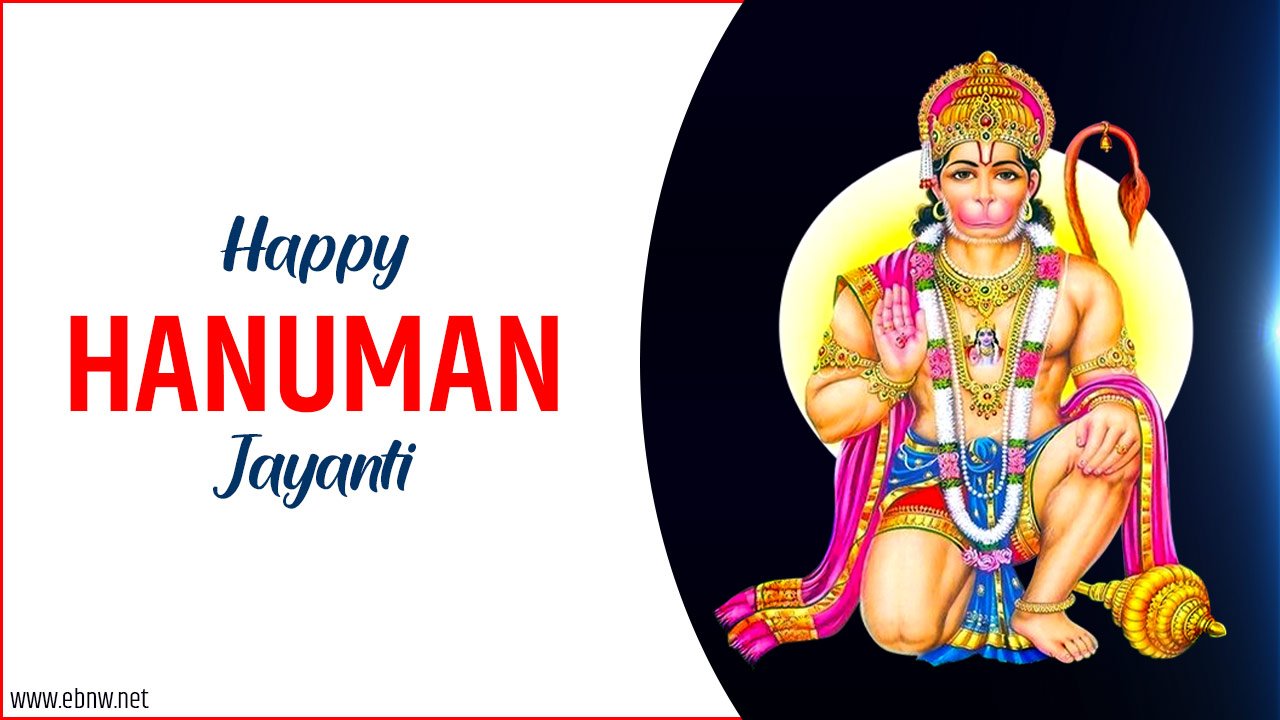
Hanuman Jayanti: The Day Devotion Took Form

0

As the first rays of the sun break over temple domes and mango leaves rustle in warm summer winds, chants of “Jai Hanuman!” echo through the air. It’s not just another day. It’s Hanuman Jayanti — a celebration of strength, selfless service, and unshakeable devotion.


Who Is Hanuman?

Imagine a figure with the courage of a lion, the humility of a monk, and the loyalty of a lifelong friend — that’s Lord Hanuman. A central figure in the Indian epic Ramayana, Hanuman is the ultimate devotee of Lord Rama, and a symbol of valor, wisdom, and unwavering faith. He’s not just a mythological character — he’s a living energy, a guardian, a guide for millions.

Born to Anjana and Kesari, and blessed by the wind god Vayu, Hanuman is often referred to as Pavanputra — the son of the wind. His tale is a mix of awe-inspiring feats and heartfelt humility. Whether it’s leaping across oceans to find Sita, lifting mountains to save Lakshmana, or burning down Lanka with nothing but his tail and willpower — Hanuman’s life is a masterclass in devotion-in-action.


What Is Hanuman Jayanti?

Hanuman Jayanti marks the birth of this extraordinary deity. Celebrated on different dates across regions, in most parts of India — especially in the North — it falls during Chaitra Purnima (March–April), the full moon day of the Hindu month of Chaitra. In the South, especially in Karnataka and Tamil Nadu, it is celebrated during Margazhi or Hanumath Jayanthi in Margashirsha (December–January).

Despite the calendar differences, the emotion is the same — it’s a day to honor not just the birth of a god, but the birth of boundless devotion and strength.


How Is It Celebrated?

Temple Rituals & Processions

From grand temples to humble home shrines, Hanuman idols are anointed with vermilion (sindoor) and oil — a symbolic offering derived from legends where Hanuman smeared sindoor all over his body to express his love for Rama. Devotees gather for early morning rituals, chanting Hanuman Chalisa and Sundar Kand — verses that narrate his strength, wit, and unwavering commitment.

In many cities, dramatic Ramlila plays, bhajans (devotional songs), and processions fill the streets. Giant effigies of Hanuman, with his mace in one hand and the mountain of herbs in another, tower over crowds — a reminder that divine help is never far away.

Fasting & Feasting

Many observe fasts, consuming only fruits or simple vegetarian meals. Prasadam (offering) like boondi, besan laddoo, and panakam (a jaggery drink) is distributed. In some homes, kids are encouraged to mimic Hanuman’s mischievous childhood stories — flying toward the sun, thinking it was a mango!


The Symbolism of Hanuman

Hanuman isn’t worshipped out of fear — he’s revered out of love and admiration. He embodies qualities that speak across ages:

  • Strength that serves, never intimidates.
  • Wisdom that acts, not just contemplates.
  • Devotion that asks for nothing in return.
  • Egolessness in a world obsessed with self.

His image — with a muscular body and folded hands — perfectly balances power and humility.

He’s also the protector of the weak, the remover of obstacles (Sankat Mochan), and the deity invoked for courage, especially by wrestlers, students, travelers, and soldiers.


Why Hanuman Still Matters

In today’s fast-scrolling, hyper-anxious world, Hanuman is more relevant than ever. He’s not just a god of the past — he’s a metaphor for inner resilience.

Feeling overwhelmed? Think of Hanuman lifting an entire mountain. Losing focus? Chant the Hanuman Chalisa and feel the energy shift. Fighting for something noble? Walk his path — action rooted in selflessness.

He teaches us that true strength isn’t about domination — it’s about devotion with direction.


Hanuman in Culture and Beyond

From temple walls to comic books, TV shows to tattoos — Hanuman is one of the most beloved and widely represented deities in Indian pop culture. He’s the only character from ancient epics who gets to be both a mythological legend and a Marvel-worthy superhero.

In yoga philosophy, Hanumanasana (a full split posture) is named after his leap to Lanka — a literal stretch of faith.

And in every corner of India, from dusty village shrines to busy city intersections, there’s always a little Hanuman — sitting silently, reminding us of the power of service and the beauty of surrender.


A Final Bow to the Mighty Monkey God

So when you see that saffron flag fluttering above a Hanuman temple, or hear the rhythmic beat of the dhol on Hanuman Jayanti, pause. Take a breath. Remember the monkey god who could move mountains — and inspire hearts.

In a world that often celebrates loud power, Hanuman teaches us the might of quiet strength. On this Jayanti, may his blessings give you the courage to leap, the wisdom to serve, and the grace to bow.

Jai Bajrangbali!

Tamil Nadu Like You’ve Never Seen It Before: 10 Districts, 10 Stories – In Pictures

0

Tamil Nadu Through Its Treasures: A Journey of Culture, Craft, and Character

From the spice-scented breezes of Erode to the firecracker skies of Sivakasi, Tamil Nadu is not just a state — it’s a vibrant mosaic of legacy, labour, and local pride. Every district here whispers stories through its products — each petal, grain, spark, and stitch is a chapter in a rich narrative shaped by generations.

Buckle up for a journey through ten districts that shine bright on the cultural map of Tamil Nadu — not just for what they create, but for the soul with which they do it.


1. Madurai – Where the Jasmine Blooms Like Poetry

Tamil Nadu Like You’ve Never Seen It Before: 10 Districts, 10 Stories – In Pictures

In Madurai, the air is often heavy with the intoxicating scent of Madurai Malli — jasmine that’s more than a flower. It’s tradition, it’s tenderness, it’s temple offering and bridal crown. With its tightly furled buds and unforgettable fragrance, this jasmine wears the Geographical Indication (GI) tag like a badge of honor. Women weave garlands before sunrise, their fingers flying as fast as their grandmothers once did — keeping both beauty and heritage alive.


2. Salem – Mangoes Sweetened by the Sun

Tamil Nadu Like You’ve Never Seen It Before: 10 Districts, 10 Stories – In Pictures

Welcome to mango country. Salem’s sun-drenched orchards grow legends like Imam Pasand and Malgoa. These mangoes, ripened under dry heat and loamy soil, carry a sweetness that’s not just about taste — it’s memory. Every bite is summer, childhood, and sticky fingers all at once. And when the mango crates roll into town? You don’t just buy fruit — you take home a piece of Salem’s soul.


3. Dindigul – Locking in Legacy

Tamil Nadu Like You’ve Never Seen It Before: 10 Districts, 10 Stories – In Pictures

Dindigul’s locks aren’t just mechanisms; they’re metaphors. Forged with precision, passed through time, and stamped with a GI tag, these sturdy beauties secure everything from temple doors to jail gates. Crafted using techniques over 150 years old, these locks are more than metal — they’re trust, tradition, and a clinking reminder that artistry often hides in utility.


4. Erode – Golden Roots of the Earth

Tamil Nadu Like You’ve Never Seen It Before: 10 Districts, 10 Stories – In Pictures

Nicknamed the Turmeric City, Erode gives the world a golden gift — turmeric bursting with curcumin, the compound we revere for its healing powers. Here, turmeric isn’t just a spice. It’s medicine, it’s ritual, it’s color smeared on cheeks during festivals and mixed into warm milk during sick days. The markets here hum with the energy of trade — and the promise of wellness.


5. Virudhunagar – Fire and Flame in Sivakasi

Tamil Nadu Like You’ve Never Seen It Before: 10 Districts, 10 Stories – In Pictures

When Diwali’s sky bursts into light, the sparks often trace their origins back to Sivakasi. Tucked inside Virudhunagar, this town earned its nickname “Little Japan” thanks to its industrious spirit. Matchboxes, printing presses, and fireworks have powered generations here. Yes, the industry’s been under a safety microscope, but efforts toward modernization are lighting a new path forward — responsibly, sustainably, and brilliantly.


6. Villupuram – The Cashew Capital

Tamil Nadu Like You’ve Never Seen It Before: 10 Districts, 10 Stories – In Pictures

Villupuram’s sandy soil nurtures something creamy, crunchy, and curiously addictive — the humble cashew. Thousands of women work in local processing units, hands expertly shelling and sorting, roasting and packing. These nuts may seem small, but they carry a giant legacy — one of empowerment, industry, and delicious simplicity.


7. Thanjavur – Dolls That Dance

Say hello to the Thanjavur Thalaiyatti Bommai — the nodding-head dancing dolls that bring cheer to any shelf. Made of terracotta or papier-mâché and painted by hand, they bounce with the slightest nudge, smiling through centuries of craftsmanship. Thanjavur may be famous for its temples and classical music, but these bobbleheads? They’re the district’s quirkiest cultural ambassadors.


8. Coimbatore – Motors That Move a Nation

Tamil Nadu Like You’ve Never Seen It Before: 10 Districts, 10 Stories – In Pictures

Coimbatore is where machines hum like mantras. Often called the Manchester of South India, it began with textiles and bloomed into a motor and pump manufacturing mecca. From irrigation systems to industrial equipment, “Made in Coimbatore” motors power not just devices — but dreams, businesses, and farms across India.


9. Tirunelveli – Halwa Heaven

Tamil Nadu Like You’ve Never Seen It Before: 10 Districts, 10 Stories – In Pictures

Ah, Tirunelveli — where the streets echo with stories and the sweet shops beckon with trays of glistening halwa. Made with wheat, ghee, and sugar — and a splash of the sacred Thamirabarani river water — this dessert melts in your mouth and lodges in your heart. A visit here isn’t complete without watching the halwa-makers stir massive cauldrons with rhythm and reverence.


10. Tiruppur – Threads of Global Fashion

Tamil Nadu Like You’ve Never Seen It Before: 10 Districts, 10 Stories – In Pictures

Walk into a store in Europe or America, flip over a t-shirt label, and don’t be surprised to read: Made in Tiruppur. This knitwear capital of India is a global powerhouse in apparel. From everyday basics to branded sportswear, Tiruppur’s factories weave fashion with innovation, speed, and a growing commitment to sustainability.


The Soul Beneath the Surface

These districts aren’t just known for what they make — but for how they make it: with skill, pride, and an invisible thread of community. Each product tells a story — of mothers and grandfathers, of late nights and early mornings, of tradition shaping the present and peeking into the future.

So next time you travel through Tamil Nadu, look beyond the obvious. Seek out a doll that dances, taste a spoonful of golden halwa, or simply stop to smell the jasmine. There’s a world here — waiting for you to feel it, not just see it.

‘Women Ride Too’: Meet the 1000+ Bikers From Kerala Taking Indian Roads by Storm

0

Riding Beyond Boundaries: How Women in India Are Reclaiming the Road, One Mile at a Time

Even today, when a woman revs up a motorcycle and hits the road, heads still turn. Some turn with admiration, others with surprise — and a few with that lingering blink of disbelief, like they’ve just seen a unicorn in a leather jacket.

Why the fuss? Is it because society still hasn’t shaken off the old belief that motorcycles are strictly a man’s domain — built for brawn, not balance? Or is it because, for generations, the cultural narrative handed women the pillion seat, not the handlebars?

But something is changing — and it’s loud, bold, and powered by 350cc of roaring defiance.


Kerala’s Quiet Revolution on Two Wheels

In the palm-fringed city of Calicut, a riding movement is rewriting rules and revving up resistance. Meet CRF Women on Wheels, a powerful sub-group of the Calicut Riding Family (CRF) — founded by Fais N in 2016 with one clear goal: to help women swap hesitation for horsepower.

‘Women Ride Too’: Meet the 1000+ Bikers From Kerala Taking Indian Roads by Storm

What started as a humble initiative in Calicut’s parks has grown into a full-blown revolution on wheels. Over 1,000 women across India have learned to ride under the CRF banner. And trust us, this isn’t just about learning how to shift gears — it’s about shifting mindsets.


From Pillion to Pilot: Sesharani’s Ride of Liberation

For Sesharani, 30, the road to independence started with a dilemma. A passionate traveler, she’d always depended on her brother and his friends for road trips. But when her brother moved abroad, a question lingered: What now?

“He just said, ‘If you want to go somewhere, gear up, turn on the GPS, and go,’” she recalls. That push sent her on a new path — not just figuratively, but literally.

She joined CRF in 2020. Just four months later, she was already on a multi-day ride from Kasargod to Kanyakumari on her Royal Enfield Classic 350. From time management to road safety, every ride was a classroom, every mistake a lesson, and every mile a milestone.

Discipline was non-negotiable. “By 5 am, the bikes had to be ready. Delaying the ride wasn’t an option,” she shares.

But the ultimate test? Ladakh. Seventeen days of rugged terrain, biting winds, and sky-scraping altitudes. She recalls crashing once, her protective gear absorbing the worst of it. Still, she rode on — with support from the CRF community, and grit stitched into every kilometer.

Weekdays, she’s an IT professional at Deloitte. Weekends? “Booked — either for family, myself, or my bike,” she grins.


Seema’s Second Act: It’s Never Too Late to Ride

At 52, Seema Warrier, a special needs educator, isn’t just riding — she’s blazing a trail.

Her first love affair with bikes started young. But for years, it was just a dream deferred. Then came the pandemic, and with it, a realization: if not now, when?

For her 49th birthday, her husband gifted her a Royal Enfield Meteor 350 — affectionately named Pumpkin. Friends thought she’d lost it. “Buy a car,” they said. “It’s safer.” But Seema knew better. She took Pumpkin for a spin through Wayanad’s hairpin bends, and never looked back.

CRF gave her more than skills — it gave her a sisterhood of riders and the confidence to tackle every roadblock, literal and metaphorical.

In 2023, she suffered a severe wrist fracture after dozing off at the handlebar. Everyone expected her to quit. Instead, she healed, trained, and within three months, she was back on the saddle — riding to Ladakh with the CRF community.

“I may take longer to recover now,” she says with a laugh, “but my passion hasn’t aged a day.”


More Than a Hobby — It’s a Movement

CRF’s founder, Fais, saw the need long before the world caught on. “I noticed women around me hesitated to ride. Not because they couldn’t, but because they’d been told they shouldn’t,” he explains.

So he built a space where that fear could be replaced with freedom. Today, many of the women trained under CRF have become trainers themselves — passing on the torch, one throttle at a time.

The roads of Kerala, Tamil Nadu, Goa, Karnataka, and Maharashtra now echo with the unmistakable rumble of women taking charge — of their bikes, their journeys, and their stories.


Breaking Bias with Every Ride

From first-time riders to mid-life motorcyclists, every CRF woman carries more than a helmet — she carries a message. That it’s never too late. That strength isn’t gendered. That freedom doesn’t come with a designated driver.

Whether it’s Sesharani scheduling weekend rides between code deployments, or Seema proving age is no barrier to boldness, these women aren’t just riding bikes — they’re rewriting what it means to take control.

As Seema beautifully puts it, “Riding has given me confidence, strength, and a second family. I wouldn’t trade it for anything.”

And with every mile they cover, they’re not just traveling the country — they’re carving out a road where every woman feels free to ride, explore, and belong.


Let the engines roar. The revolution is on two wheels — and it’s only gaining speed.