Home Blog Page 316

These Stunning Flamingo Photos Show Why Pulicat Lake Near Chennai Is a Must-Visit This April

0

When the Sky Turns Pink: The Flamingo Season of Pulicat Lake

Every year, as the northeast monsoon tiptoes into Tamil Nadu, something quietly magical happens near Chennai. From the first chill of November to the warmth of May, a delicate pink wave sweeps across the skies, descending gracefully onto Pulicat Lake—a sprawling brackish lagoon straddling the borders of Tamil Nadu and Andhra Pradesh.

These Stunning Flamingo Photos Show Why Pulicat Lake Near Chennai Is a Must-Visit This April

This is no ordinary seasonal change. For birders, photographers, and lovers of the wild, it’s a spectacle of elegance. A celebration of wings and water. It’s flamingo season.


The Lake that Blushes Pink

Pulicat Lake, serene and shimmering, wears many crowns—but none as glorious as being the flamingo capital of Tamil Nadu. Its calm, nutrient-rich waters and protected ecosystem offer the perfect winter refuge for these long-legged visitors. As thousands of flamingos arrive, the lake transforms into a canvas of color—blushing with pink feathers, mirrored reflections, and the hush of synchronized wingbeats.

These Stunning Flamingo Photos Show Why Pulicat Lake Near Chennai Is a Must-Visit This April

While the first flocks touch down as early as November, the real showstopper months are mid-December through February. That’s when Pulicat bursts into life—flamingos standing, flying, feeding, and dancing in near-perfect harmony.


A Photographer’s Love Affair

Among those captivated by this yearly migration is Barath Karthi R K, a 24-year-old wildlife photographer who has been documenting the flamingos since 2018. His journey began with modest equipment—a Canon 750D and a basic 75–300mm lens—but the experience left an indelible impression.

These Stunning Flamingo Photos Show Why Pulicat Lake Near Chennai Is a Must-Visit This April

“My first visit felt like I had stepped into another world,” Barath recalls. “The gear wasn’t great, but nothing could’ve prepared me for the magic of those birds in flight.”

Since then, the lake has become his annual pilgrimage. Each return, he says, offers something new: a moment of stillness, a burst of movement, a surreal line of flamingos walking in perfect synchrony—”as if choreographed by nature herself.”

This year was no exception. “The flamingos were especially active,” he says. “And the quieter we stayed, the closer they came. It was as if they trusted us.”


Through the Lens, Into the Wild

With the soft glow of dawn painting the lake in gold and amber, Barath captured everything a wildlife photographer dreams of—flamingos soaring against the rising sun, gliding effortlessly over water, landing with grace, and foraging in tranquil silence.

These Stunning Flamingo Photos Show Why Pulicat Lake Near Chennai Is a Must-Visit This April

“The reflections, the sounds, the light—it was beyond words,” he says. “It’s a place where time slows down and nature takes center stage.”


Beyond Pulicat

These Stunning Flamingo Photos Show Why Pulicat Lake Near Chennai Is a Must-Visit This April

Though Pulicat is the crown jewel, flamingo sightings stretch along Tamil Nadu’s East Coast Road. Quiet havens like Odiyur Lake and lesser-known marshlands also host these elegant migrants. These hidden pockets, often shielded from the chaos of city life, offer equally mesmerizing views for those willing to wander.


A Promise in Pink

These Stunning Flamingo Photos Show Why Pulicat Lake Near Chennai Is a Must-Visit This April

As summer approaches, the flamingos begin their long journey back, leaving behind shimmering memories and the softest imprint on the land and hearts alike. But for those lucky enough to witness it, their presence lingers like a secret—shared between sky, water, and those who looked up and noticed.

In the end, the flamingo season is more than a migration. It’s a reminder—of stillness, beauty, and the wild wonder waiting just beyond Chennai’s cityscape.
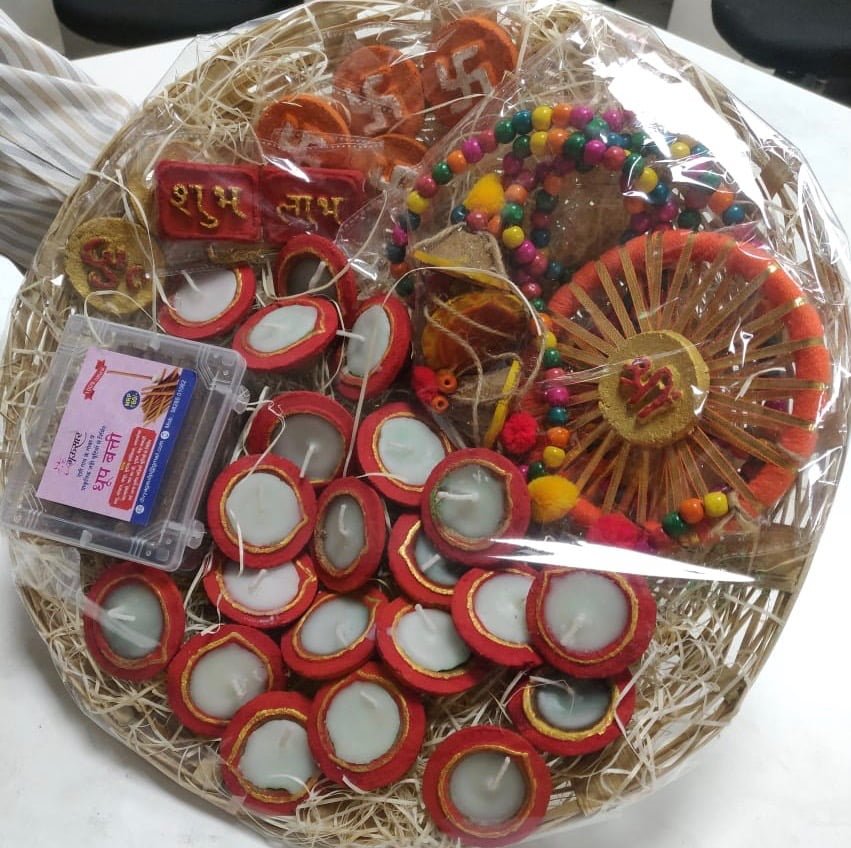
Lighting A Diya: Knowing the Scientific Aspects of This Sacred Practice…

0

Lighting a diya is a sacred offering, a moment to connect with the divine and invite blessings into the home. For modern seekers, it’s a science-backed ritual that purifies the air, calms the mind, and aligns with eco-conscious values. The Flame Campaign’s trending revival of this practice reminds us that a single flame can illuminate both the heart and the environment. So, whether you light a mitti ka diya for tradition, wellness, or both, let its glow guide you toward positivity, peace, and prosperity.

A flame is the visible, glowing manifestation of combustion—a chemical reaction where fuel (like oil or ghee in a diya) combines with oxygen, releasing heat, light, and energy. In the context of a diya, this flame is more than physics; it’s a symbol of knowledge dispelling ignorance, purity overcoming negativity, and hope triumphing over darkness. The diya’s flame, fueled by cotton wicks and natural oils, dances with intention, carrying both spiritual weight and measurable scientific effects.

The resurgence of diya lighting, notably through initiatives like the “Flame Campaign” championed by Saint Dr. MSG Insan, is capturing hearts globally. This movement encourages lighting earthen diyas with mustard oil or ghee every morning and evening to purify the environment and foster positivity. Here’s why it’s becoming a trend

Posts on internet highlight the campaign’s reach, with millions of followers adopting the practice and sharing its benefits, from purified air to happier homes. This digital buzz makes #LightUpDiya a viral movement.

Scientific Aspects of Lighting a Diya

  • Beyond its spiritual allure, lighting a diya has tangible scientific benefits, making it a practice grounded in both faith and reason.
  • The heat from a diya’s flame, especially when fueled by mustard oil or ghee, can kill airborne bacteria, viruses, and germs. .
  • The combustion of natural oils like sesame or mustard produces negative ions, which neutralize pollutants and allergens, creating a cleaner breathing environment.
  • The warm, flickering light of a diya mimics natural sunlight, stimulating serotonin production to uplift mood and reduce anxiety. Ayurveda notes that gazing at the flame strengthens vision by exercising eye muscles.
  • When paired with natural fuels, the subtle aroma of burning ghee or mustard oil can have calming effects, similar to essential oil diffusers, promoting relaxation.
  • The flame’s heat purifies the surrounding space by reducing microbial load, a practice especially relevant in traditional homes where diyas were lit near Tulsi plants or entrances to ward off pests and negativity

World Banana Day: India Leads Globally in Production…

0

In the vibrant world of bananas, India reigns supreme as the global leader in production! This fruit, packed with nutrition and versatility, is not just a dietary staple but a cornerstone of agricultural pride. Let’s explore India’s banana legacy, its nutritional prowess, and its boundless potential on the world stage.

India, the world’s largest banana producer, yields 37.47 million metric tons annually, accounting for 19.37% of global production. Rich in vitamin B6, potassium, and vitamin C, bananas strengthen muscles, reduce stress, and promote overall health.

The warm climates of states like Maharashtra, Tamil Nadu, and Gujarat are ideal for banana cultivation, though states like Uttar Pradesh and Madhya Pradesh also contribute significantly. As a cash crop, bananas mature in 11-16 months, with year-round demand driven by their nutritional value. India now cultivates bananas throughout the year, unlocking immense export opportunities.

Page-Turners Over Pixels: Young Readers Revive Physical Hindi and English Novels

0

By Anjali Solanki

In an age dominated by screens and e-books, a quiet revolution is unfolding among young readers in India. Defying the digital tide, millennials and Gen Z are rediscovering the charm of physical novels in both Hindi and English, breathing new life into bookstores, libraries, and literary communities. The tactile allure of flipping pages, the scent of ink, and the joy of building personal bookshelves are drawing young bibliophiles back to physical books, sparking a cultural revival that celebrates the timeless magic of storytelling.
The Resurgence of Physical Books
While e-readers and smartphones offer convenience, young readers are increasingly gravitating toward the sensory experience of physical novels. Independent bookstores in cities like Delhi, Mumbai, and Jaipur report a surge in sales of Hindi and English fiction, with classics, contemporary novels, and translated works flying off the shelves. Social media platforms like Instagram, snapchat, facebook thread and X are abuzz with #BookTok and #Bookstagram communities, where young readers showcase their collections, share reviews, and inspire others to ditch pixels for paper.

This revival is not just about aesthetics. For many, physical books offer a respite from screen fatigue and a deeper connection to the narrative.

Voices of Young Readers

To understand this growing trend, we spoke to several young readers about their love for physical Hindi and English novels and the books that have left a lasting impact.

Priya, a student –

Page-Turners Over Pixels: Young Readers Revive Physical Hindi and English Novels

Priya, who reads both Hindi and English novels, is passionate about Hindi literature’s resurgence. “Hindi novels have such depth, but they were overlooked for years.

Saloni Danotiya, a student

Page-Turners Over Pixels: Young Readers Revive Physical Hindi and English Novels

A self-proclaimed fantasy nerd, prefers English novels but is exploring Hindi translation. “The physical book is so hefty, but it feels like holding a whole world. I can’t imagine reading it on a Kindle.

Why Physical Books Are Winning

Young readers cite several reasons for choosing physical novels over digital formats. First, the tactile experience feeling the texture of pages, hearing the soft rustle of paper creates a sensory bond that e-books lack. Second, physical books are collectible, with beautifully designed covers and special editions becoming prized possessions. Third, reading a physical book encourages mindfulness, offering a break from the distractions of notifications and apps

How This Mumbai Mom Turns Old Toys Into Beautiful, Sustainable Furniture

0

From Forgotten Toys to Functional Art: How Poonam Shah is Giving Childhood Memories a Second Life

“Art is not just about creating something beautiful — it’s about breathing life into the forgotten, the discarded, and the overlooked.” That’s the philosophy Mumbai-based artist Poonam Shah (37) lives by. In a quiet corner of her studio, she’s doing something extraordinary: transforming outgrown children’s toys into stunning resin furniture that holds not just form, but feeling.

How This Mumbai Mom Turns Old Toys Into Beautiful, Sustainable Furniture

Her journey, like her art, is deeply layered — a story of shifting continents, career changes, and the magic of rediscovering childhood through creativity.


The First Spark: From Finance to Fluid Art

Born and raised in Mumbai, Poonam followed a traditional career path at first. With a master’s degree in finance from the UK and a job at Deloitte, her future seemed all mapped out. But a move to Philadelphia changed everything. There, she stumbled upon resin art for the first time — a medium so dynamic and visceral, she felt an immediate pull.

“It was like discovering an entire universe I didn’t know existed,” she recalls. Though art had always run in her veins — thanks to her mother’s creative influence — it had remained a hobby. Until now.

Workshops, art galleries, and hours of observing resin works later, she was hooked. But it wasn’t until she returned to India, just before the pandemic, that she made a bold decision: to leave the world of finance behind and embrace her creative calling full-time.


The Turning Point: A Daughter’s Innocent Question

The game-changer came not from a client or a business plan, but from her daughter Ayana. One day, the seven-year-old looked up at her and asked, “Can you make something out of my old toys?” That single question sparked an idea that would define Poonam’s new creative direction.

How This Mumbai Mom Turns Old Toys Into Beautiful, Sustainable Furniture

She began experimenting — encasing Ayana’s broken crayons, puzzle pieces, and toy blocks in resin slabs. One slab sat idle in her studio for weeks, until inspiration struck again: why not turn it into a rocking chair for Ayana?

“That first chair became the soul of a whole new venture — my kids’ line,” says Poonam. “It wasn’t just furniture. It was memory made tangible.”


Furniture That Tells a Story

Poonam now creates custom resin furniture — tables, lamps, and chairs — that serve as keepsakes of childhood. Clients send her their children’s toys, and she transforms them into breathtaking pieces that are equal parts art and nostalgia.

Each project starts with a design consultation where Poonam understands the client’s vision. Then comes the painstaking process of creating wooden or silicone moulds, carefully arranging the toys, and layering them in resin. Once hardened, the piece is sanded, polished, and finished to perfection.

“It takes weeks, sometimes a month or more,” she says. “But when parents see their child’s joy — recognizing their toys in a brand-new avatar — it’s priceless.”


Why It Works: The Emotional Value

Her work resonates not just because it’s beautiful, but because it’s meaningful. One client from Mumbai recalls the moment her grandson saw his old toy cars embedded in a table. “His face lit up like fireworks,” she shares. “It wasn’t just furniture — it was a part of his story.”

How This Mumbai Mom Turns Old Toys Into Beautiful, Sustainable Furniture

And that’s exactly what Poonam aims for: to freeze time, preserve joy, and give old objects new life.

She especially loves working with bright, flat toys — they add vibrancy and character to each creation. “It captures the chaos and colour of childhood,” she smiles. “Every piece tells a story.”

One of her most memorable creations? A table with frozen candies embedded in resin — sweet in more ways than one. But her personal favourite will always be the first rocking chair made for Ayana. “That piece started it all,” she says. “It’s now one of my bestsellers.”

How This Mumbai Mom Turns Old Toys Into Beautiful, Sustainable Furniture

A One-Woman Movement (With a Team)

What started as a solo project is now a fast-growing brand — Poonam Shah Art — based in Andheri West, Mumbai. She officially launched the business in 2023, after three years of mastering the craft. With a team of 7–10 people handling production, she focuses on design and personalisation.

Instagram has been a game-changer. “That’s where most of my clients discover me,” she says. “It’s the perfect visual medium to showcase the process and final product.” Her client base now spans cities like Delhi, Bengaluru, Pune, Hyderabad, and even Assam — with Delhi coming second only to Mumbai in demand.


Balancing Motherhood and a Growing Business

Being a full-time artist and a full-time mum is no small feat, but Poonam has found her rhythm. “In the beginning, I worked odd hours — early mornings, late nights — when Ayana was asleep. Now, with my team, I get more time to focus on the creative process.”

How This Mumbai Mom Turns Old Toys Into Beautiful, Sustainable Furniture

She sources materials — resin, moulds, hardeners — from local vendors and collaborates with packers and movers for shipping. Smaller items go out via private courier services. Her operations may be handmade, but her reach is anything but small.


What’s Next: A Future Full of Stories

What keeps her going? The emotional weight each piece carries. “These toys meant something to someone. I get to give them a new story, a new purpose,” she says.

Poonam dreams of expanding her studio space, experimenting with newer forms and materials, and maybe even collaborating with schools and museums to introduce memory-based art into educational spaces.

“I’m not just creating furniture,” she says with a proud smile. “I’m helping families preserve a piece of their childhood. That, to me, is priceless.”

Through every curve of resin and every embedded toy, Poonam Shah is crafting more than art — she’s crafting legacy. One memory at a time.

How a Self-Taught Artist Is Using Powerful Hyper-Realistic Paintings to Save Wildlife

0

“I don’t have to be a millionaire to help animals or people. A thought is what matters.”

This quiet yet thunderous realisation lit the spark for Deeksha Chauhan, a 29-year-old self-taught wildlife artist whose work doesn’t just hang on walls — it speaks, roars, breathes, and sometimes even weeps.

Armed with paint, patience, and a heart that beats in tune with the wild, Deeksha has turned her life into a canvas of compassion — using realism and hyper-realism to breathe life into animals that most of us only glimpse through screens or fleeting safaris. Her mission? To awaken empathy, ignite awareness, and make wildlife conservation a conversation no one can look away from.


Sketching Between the Lines of Life

Deeksha’s story doesn’t begin in a fancy art school or a curated studio — it begins with the loving hands of her mother, who introduced her to tabla, harmonium, and the rhythmic heartbeat of creativity. While music and dance played their parts, it was painting that quietly stole her soul.

How a Self-Taught Artist Is Using Powerful Hyper-Realistic Paintings to Save Wildlife

Back in school, while teachers preached the Pythagorean theorem, Deeksha’s real equations played out in the margins of her notebooks, where wild creatures slowly emerged in ink and graphite. “Especially during math class,” she laughs, “that’s when my creativity really took off.”

But creativity, as we know, often collides with convention.


The Long Detour

Despite her artistic instincts, Deeksha followed a familiar route laid out by well-meaning expectations. She pursued an engineering degree at Vidya College, Meerut, and then dabbled in the corporate world, hopping from HR to sales to business analysis — but nothing stuck.

“Whatever job I took up, I couldn’t stay there for more than three weeks,” she says. The cubicle walls were too tight, the KPIs too uninspiring. Her heart, clearly, was still drawing lions somewhere in the background.

In a bid to find meaning, Deeksha turned to research, Python programming, chemistry, even neuroscience. But no path sparked the same fire. “It always felt like I was chasing something, but not what I was meant to find.”

What she found instead — or what found her — was art, patiently waiting like an old friend.


The Turning Point: A Loss, A Decision

It was the death of her beloved pet dog — who passed away in her arms — that became the breaking point and the breakthrough. Grief turned into reflection. Reflection turned into resolve.

“I watched videos of animal abuse, and I felt so helpless. The questions haunted me: Why do they suffer like this? What am I doing to help?

The answer came from within.

Deeksha decided she would no longer wait for someone else to make a difference. She would sharpen her skills, sell her art, and fund animal welfare through every brushstroke. She created an Instagram account, and her journey as a wildlife artist officially began.


Learning From the Wild and the World

Deeksha didn’t learn art from a classroom. She became her own mentor, studying international artists online and obsessively analyzing techniques. One of her biggest inspirations was Nick Sider, a New York-based hyperrealist known for his animal portraits.

How a Self-Taught Artist Is Using Powerful Hyper-Realistic Paintings to Save Wildlife

“I was fascinated by how lifelike those paintings felt. They gave me the same emotional impact I felt when seeing real wildlife,” she shares.

Over time, she taught herself how to turn paint into fur, feathers, and feeling — crafting images that people often mistake for photographs or even AI-generated art. Spoiler alert: they’re 100% handmade.


Art That Gives Back

From her first black-and-white tiger to a five-by-three foot hyperrealistic big cat she still hopes finds a worthy home, Deeksha has poured herself into every piece. Her other favorite? A 3D painting of a rhinoceros so detailed, it had Facebook users debating whether it was real.

One of her clients, pulmonologist Dr. Nishith Kumar, summed it up: “People walk into my office and ask, ‘Who clicked this picture?’ They’re shocked when I tell them it’s a painting.”

But Deeksha’s art doesn’t just sit in frames — it funds causes. She donates proceeds to small animal welfare groups, helps in local conservation, and has sold 50+ paintings across India, the US, Canada, and Europe.


Living Light, Painting Deep

Living as a full-time artist isn’t easy. But Deeksha has found freedom in simplicity. She lives frugally, spending most of her income on art supplies and wildlife donations.

Her nomadic lifestyle fuels her creativity. “I prefer staying with locals over luxury hotels. In return, I teach children about insects, animals, and why they matter.”

Nature, she says, is her greatest teacher. She studies it closely — the way light hits an eagle’s eye, the way dust clings to an elephant’s foot. It all shows up later, immortalized in paint.


From Painting Animals to Protecting Them

While commissions pay the bills, Deeksha’s heart beats loudest for the wild. Each piece takes 1 to 4 months, depending on complexity. Prices range from Rs 5,000 to Rs 1.2 lakh, and she’s earned about Rs 4 lakh in four years — but the real currency for her is impact.

How a Self-Taught Artist Is Using Powerful Hyper-Realistic Paintings to Save Wildlife

Her future vision? A full ecosystem of art, education, and conservation. She’s teaching children not just to draw, but to respect and protect the natural world. She’s exploring fundraising through art, creating awareness campaigns, and dreaming of larger wildlife-focused initiatives.


Painting with Purpose

Every time Deeksha picks up a brush, it’s not just for beauty — it’s for a cause. It’s for the tigers, the rhinos, the insects we overlook and the birds we forget to listen to.

She reminds us that art doesn’t just decorate — it educates, it activates, and it heals.

Through realism, she reconnects us to a world we’re losing touch with. Through hyperrealism, she makes us feel what the wild feels. And through heart, she’s showing us that change doesn’t need grand stages — just steady hands, a clear purpose, and the courage to begin.


Deeksha Chauhan is more than an artist. She’s a quiet revolutionary, wielding pencils and paints like tools of protest and love.

And if you listen closely — between the brushstrokes — you just might hear the roar of something bigger than art.

Meet the First Turtle To Swim 3500 Km Across 2 Coasts: What It Tells Us About Olive Ridley Nesting

0

In a story that sounds more like myth than science, a lone Olive Ridley sea turtle — known to researchers only by her tag, 03233 — has performed an awe-striking feat of nature. Flippers slicing through vast stretches of blue, she has journeyed over 3,500 kilometres, from the serene sands of Odisha’s Rushikulya beach to the rugged coastline of Ratnagiri in Maharashtra.

And with that final push of her flippers onto the western shore, she’s done more than just complete a marathon migration — she’s rewritten the playbook on Olive Ridley nesting behaviour.


A First in Indian Marine History

For decades, scientists believed Olive Ridleys were fiercely loyal to their birthing beaches, returning year after year to the exact spot where their life began. But Turtle 03233? She’s gently glided past that theory.

Originally tagged during the 2021–22 nesting season by the Zoological Survey of India (ZSI), her journey has since been monitored through satellite tracking. And this is no ordinary blip on the radar. This is the first confirmed case of an Olive Ridley nesting on both India’s eastern and western coasts — a marine mic-drop moment for conservationists across the country.

The moment came into the spotlight when IAS officer Supriya Sahu took to social media to share the discovery. And the response? Nothing short of amazed applause.


More Than Just a Journey — It’s a Revelation

Beyond the novelty, Turtle 03233’s migration reveals something deeper: resilience, adaptability, and possibly survival strategy in an era of rapidly changing climates.

Traditionally, Olive Ridleys were believed to return exclusively to their natal beaches for nesting. This new evidence, however, suggests these turtles might be more flexible in their nesting preferences — a trait that could be critical as sea levels rise, coastlines shift, and marine ecosystems reel from human impact.

For conservationists, it’s a wake-up call. It means models based on rigid nesting patterns may need to be reevaluated — and fast.


Tamil Nadu and the Wider Message

While the turtle didn’t stop in Tamil Nadu on her cross-country swim, the implications of her journey ripple far beyond her landfalls.

“Her migration has strong takeaways for Tamil Nadu’s coastal conservation efforts,” says Supriya Sahu, highlighting the importance of inter-state collaboration. Tamil Nadu, which continues to enhance its coastal protection through the work of voluntary organisations, can benefit from understanding that these turtles don’t just belong to one beach — they belong to all of us.


The Bigger Picture: One Ocean, Many Shores

Turtle 03233’s odyssey is not just about science. It’s a story of connection.

As she glides silently through warm currents, ducking under fishing nets and passing unseen coastlines, she reminds us that the ocean does not divide — it connects. It connects Odisha with Maharashtra. It links people, policies, ecosystems. It ties together stories of local fishermen, coastal activists, and barefoot scientists who work under moonlight to protect nesting turtles.


A Call to Deeper Conservation

Meet the First Turtle To Swim 3500 Km Across 2 Coasts: What It Tells Us About Olive Ridley Nesting

Her story is also a call to action:

  • Long-term tracking of marine species must become more widespread.
  • Data-sharing between coastal states should be the norm, not the exception.
  • Community involvement in conservation — from local villagers to schoolchildren — is the secret sauce.
  • And perhaps most importantly, we need to preserve the mystery and magic of these incredible creatures, whose life journeys still hold so many unknowns.

Because sometimes, all it takes is one turtle to open up an entire ocean of understanding.


An Olive Ridley Among the Waves

In a stunning image shared by the Student Sea Turtle Conservation Network (SSTCN), an Olive Ridley bobs gently between the waves — silent, small, and powerful beyond measure.

She carries no luggage. No passport. Just instinct and endurance, and a story worth sharing a thousand times over.

As Turtle 03233 continues her journey through India’s interconnected waters, she doesn’t just carve a path through the sea — she charts a new course for marine conservation across the subcontinent.

And perhaps, in doing so, she shows us what it means to be truly at home in the world.

Behind the Viral Delhi Professor Video: What’s the Science of Cow Dung & Cooling?

0

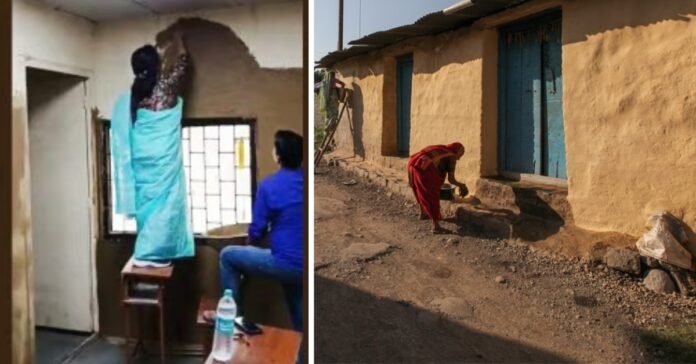
At Delhi University’s Laxmibai College, students expected a fresh coat of paint. What they didn’t expect was their principal, Dr. Pratyush Vatsala, climbing onto a chair and smoothing cow dung onto the classroom wall.

In a world obsessed with shiny surfaces and sleek finishes, it was a moment of dissonance — and, for some, disbelief. A viral video captured the scene. The internet was quick to react with a mix of shock, satire, and… curiosity.

But what looked like a quirky throwback was, in fact, a quiet revolution — one that’s digging deep into India’s traditional knowledge and offering real, earthy solutions to the climate crisis.


The Dirt on Dung: A Legacy Reborn

For generations in rural India, cow dung wasn’t waste — it was a way of life. Floors were smeared with it. Walls were plastered with it. Entire homes were built with it. It kept insects away, purified spaces, and perhaps most importantly, kept homes naturally cool in the sweltering Indian summer.

Then came cement. Concrete. Air conditioners. And with them, the slow erosion of ancient wisdom.

But now, as our cities heat up and our electricity bills skyrocket, an unlikely hero is making a comeback — with a surprising scientific edge.


A Climate-Savvy Comeback

The principal’s cow-dung-coated classroom might have raised eyebrows, but environmental pioneers across India are proving there’s method in this madness.

Behind the Viral Delhi Professor Video: What’s the Science of Cow Dung & Cooling?

Enter Dr. Shivdarshan Malik, a civil engineer turned eco-innovator. Haunted by the loss of green farmland to grey concrete, Dr. Malik turned to his roots — and found answers in cow dung.

“People once dismissed it as backward,” he says. “But cow dung has properties that modern construction materials just can’t match.”

With years of research, he developed two game-changing products:

  • Vedic Plaster: A breathable blend of cow dung, clay, neem leaves, gypsum, and more.
  • Gocrete Bricks: Heat-reducing, eco-friendly bricks made from cow dung and local soil.

Together, they offer homes that are cooler by up to 7°C — without touching the AC remote.


The Science Behind the Slather

Cow dung is packed with perks. It:

  • Acts as a natural insulator, regulating indoor temperatures.
  • Has antimicrobial properties, making it a hygienic coating for homes.
  • Is breathable, preventing dampness and trapped heat.
  • And it’s biodegradable, renewable, and very low-cost.

In fact, homes built or renovated with Vedic Plaster have reported zero need for air conditioning. One family saved ₹8,000 a month on electricity. That’s not just eco-friendly — that’s wallet-friendly.


Building Dreams with Dirt

Across the country, eco-conscious citizens are embracing tradition with pride.

Behind the Viral Delhi Professor Video: What’s the Science of Cow Dung & Cooling?

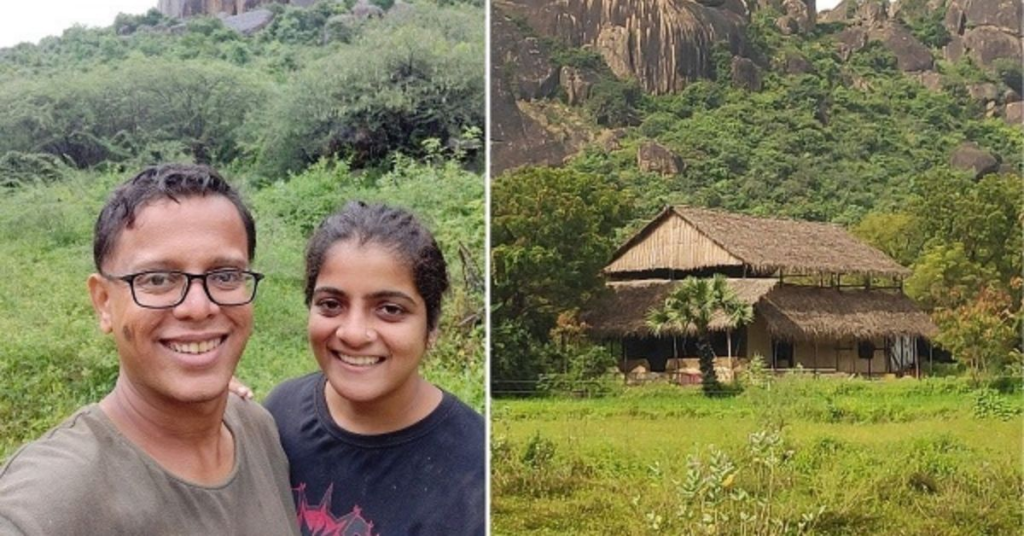
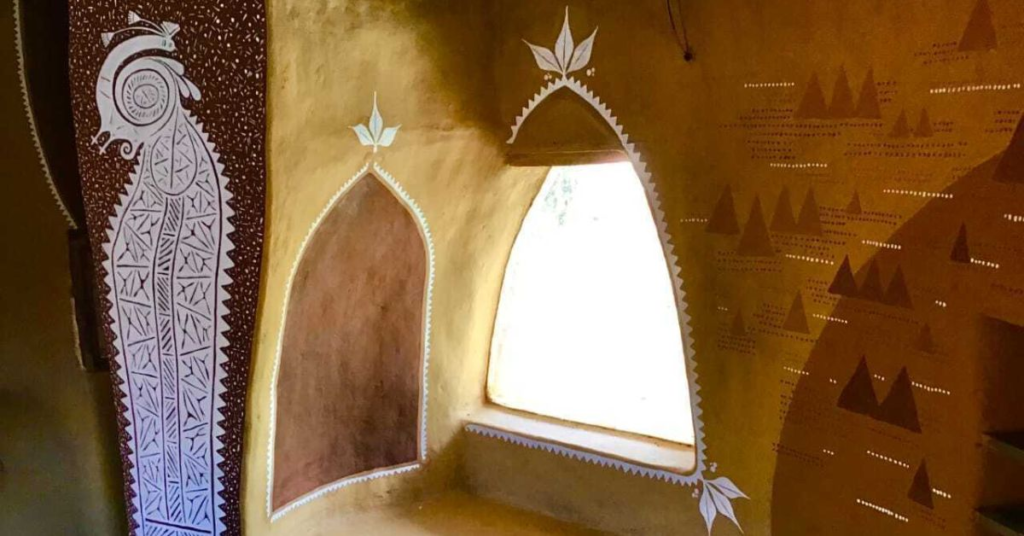
In Tamil Nadu, Sudhakar and Noushadya built a sustainable farm home using mud, lime, second-hand wood, and of course, cow dung. “We wanted to reduce our carbon footprint,” says Noushadya. “So we skipped concrete almost entirely.”

Behind the Viral Delhi Professor Video: What’s the Science of Cow Dung & Cooling?

In Mumbai, Kiran Amati created a circular studio-home out of wood, straw, cow dung, and mud. It’s rustic, yes — but also cool, clean, and sustainable. His innovative waste system even uses dry leaves and sawdust instead of septic tanks.

These homes may look old-school, but their architecture is future-proof.


What Can We Learn from a Wall?

That wall at Laxmibai College? It’s more than a viral video. It’s a statement.

It reminds us that solutions to climate change don’t always come from air-conditioned labs or high-rise towers. Sometimes, they come from cow sheds, from village huts, from the hands of our grandparents.

India’s construction industry is one of the largest in the world — and one of the most energy-hungry. But with innovations like Vedic Plaster and Gocrete Bricks, we have a rare chance to blend the wisdom of the past with the needs of the present.

And maybe — just maybe — a little cow dung could help cool not just our homes, but our planet too.


Dung and Done? Not Quite.

This is just the beginning. As architects, urban planners, and homeowners look for low-cost, high-impact alternatives, cow dung could be the star of a sustainable housing movement.

What we once wiped away, we now need to embrace.

After all, in the race to survive climate change, every degree cooler — and every idea rooted in the earth — counts.

More Than Metal: The Soulful Shine of Ratlam’s Golden Heritage

0

By Anjali Solanki

Nestled in the heart of Madhya Pradesh, Ratlam—once known as Ratnapuri, or “the city of gems”—owes its name and fame to Raja Ratan Singh, a legendary warrior whose valor and vision helped shape the city’s destiny. Long before Ratlam became known for its bustling railway junction or spicy Ratlami sev, it sparkled with a quieter, more radiant allure: gold. This is the story of Ratlam’s golden legacy—steeped in history, crafted by artisans, and treasured by generations.

A Historical Glint

Centuries ago, when Malwa was a vibrant crossroads of trade and conquest, Ratlam rose as a haven for artisans and traders. Fertile lands and a strategic location attracted merchants from far and wide, but it was the exceptional purity of its gold that truly captivated them.

Under the patronage of the Rathore rulers, especially during the 17th century reign of Raja Ratan Singh—who founded Ratlam State with Mughal approval—goldsmiths flourished. Their work became so renowned that whispers of Ratlam’s gold markets traveled through bazaars across India.

During the British Raj, Ratlam’s gold trade reached new heights. The Sarafa Bazaar, with its maze of narrow lanes, became the epicenter of this flourishing commerce. Here, gold wasn’t just molded—it was imbued with meaning. Necklaces bore Mughal motifs, bangles shimmered with Rajput elegance, and earrings danced with Malwa’s folk artistry. Known for its remarkable 92% purity, Ratlam’s gold drew traders from Rajasthan, Gujarat, and beyond.

“Ratlam’s gold isn’t just wealth,” an old jeweler once said, eyes gleaming like the metal he shaped. “It’s trust. A bride’s dowry, a family’s savings, a king’s tribute—all rested on our gold’s purity.”


Craftsmanship Through the Ages

Ratlam’s distinction lies not only in the purity of its gold but in the hands that shape it. Signature patterns like Jodha-Akbar, Kundan, and Polki became synonymous with Ratlam craftsmanship. Even today, the Sarafa Bazaar glows with 22-karat and 24-karat jewellery, each piece echoing centuries of skill and tradition.

More than a commodity, gold in Ratlam has long been a cultural cornerstone. During Diwali, the Sarafa transforms into a golden carnival, and devotees offer jewelry at the Kalika Mata Temple to seek blessings of prosperity. For weddings, families still travel from miles away, trusting Ratlam’s gold to start new beginnings. In times of uncertainty—be it poor harvests or looming wars—gold served as a family’s safety net.

Holding onto Traditions in a Changing World

The 20th century brought economic shifts and India’s independence. While cities like Mumbai and Delhi chased modern trends, Ratlam’s goldsmiths stayed rooted in tradition, upholding quality with BIS hallmarking standards. Today, even as digital gold and ETFs lure younger investors, the Sarafa Bazaar’s old-world charm continues to thrive.

“Gold is eternal,” goes a local proverb. In Ratlam, it’s not just a saying—it’s a truth etched into every shop’s ledger.

Voices from the Bazaar

Vishal Dangi, third-generation jeweler at Dangi Jewellers:
“Our gold’s purity is our identity. Customers come from all over India because they know we don’t compromise. Prices are high now—₹91,816 for 10 grams of 24-karat—but weddings and festivals keep us busy. Gold isn’t just money here; it’s emotion.”

More Than Metal: The Soulful Shine of Ratlam’s Golden Heritage

Sanjay Chhajed, jeweller and designer:
“Ratlam’s strength is in its craftsmanship. Our Kundan work is unmatched, though online platforms have made things more competitive. I tell customers: touch the gold, feel its weight—that’s how you know it’s real. The market’s volatile, but the trust in Ratlam gold remains solid.”

More Than Metal: The Soulful Shine of Ratlam’s Golden Heritage

A City that Glitters Still

Today, Ratlam’s gold market is a blend of heritage and modern commerce. The Sarafa Bazaar still draws crowds—tourists marvel at the intricate designs, while locals haggle with seasoned ease. Shops like D.P. Jewellers, Kataria, Chhajed, and DC boast crore-plus turnovers, continuing a legacy that began centuries ago.

In Ratlam, gold is more than a metal. It’s memory, tradition, craftsmanship—and most of all, trust. That’s why it will always be known as The Golden City.

Marsh Watch: Mapping the Mugger Crocodiles of Tamil Nadu

0

At the crack of dawn in the Cauvery delta, the river stirs. Mist rises in wisps from the water’s surface. Fishermen cast their nets with practiced ease. And somewhere, half-submerged in the quiet, unblinking eyes rise above the current — the mugger crocodiles are watching.

These ancient reptiles, survivors from a world before humans, are now at the centre of a modern dilemma: how do we share space with them without conflict?

Thanks to recent efforts by the Tamil Nadu Forest Department, we might finally be inching toward that answer.


The Return of a River Ghost

The mugger crocodile (Crocodylus palustris), India’s most widespread crocodilian, has long inhabited the country’s rivers, reservoirs, and wetlands. But despite their ubiquity, surprisingly little was known about their population status in Tamil Nadu’s Cauvery delta — until now.

A preliminary study conducted by the Wildlife Portal of India, in collaboration with the Forest Department, has mapped over 50 individuals in Anaikarai alone, along the Kollidam River. The total count across surveyed regions is already at 85 live sightings, and researchers believe that number is likely an underestimation.

This isn’t just a census. It’s the first step in understanding how to coexist safely with one of India’s most misunderstood predators.


From Shadows to Statistics: Why This Study Matters

Before this initiative, there was no baseline data on mugger populations in the delta. No population trends. No understanding of critical habitats. In conservation terms, they were shadows slipping through the shallows.

The ongoing survey spans over 1,000 km of river systems, including the Thenpannaiyar and Veeranam water bodies. It’s helping chart not just where crocodiles live, but where they intersect with humans — especially in conflict-prone areas.

Perhaps the most sobering insight? Many of the most vital habitats don’t fall under protected Reserve Forests, but lie in areas administered by the Public Works Department — regions with frequent human activity, from fishing to open defecation. These areas often double as basking or nesting zones for crocs, leading to dangerous overlaps in daily routines.


The Cost of Coexistence

When humans and crocodiles cross paths, tragedy can strike — for both species. The study’s focus isn’t just on counting crocodiles, but on preventing conflict.

To this end, the Forest Department recommends establishing Emergency Response Teams in high-risk districts such as Cuddalore. These specialized units would be trained to handle crocodile-related emergencies — from rescuing animals in distress to managing panic in local communities.

Other suggestions include:

  • Restricting public access to known basking and nesting sites.
  • Building infrastructure to minimize accidental encounters — such as raised pathways or designated fishing zones.
  • Community outreach and education, promoting behavioral change through culturally sensitive campaigns.

Because real conservation isn’t just about animals. It’s about people, too.


Breeding Grounds and the Bigger Picture

Tamil Nadu already hosts breeding centers in Sathanur (299 individuals), Hogenakkal (93), and Amaravathi (82). These centres provide both protection and research opportunities, acting as genetic banks for the species.

But it’s the wild populations — like those in the Kollidam stretch — that truly represent the health of the ecosystem.

Wild crocodiles don’t just survive; they stabilize ecosystems. As apex predators, they regulate fish populations, maintain wetland health, and even help clean water bodies by consuming carrion.

Protecting them is not just about species survival. It’s about ecological balance.


Investing in a Future With Crocodiles

Recognizing the urgency of the situation, the Tamil Nadu government has greenlit ₹2.5 crore for a Crocodile Conservation Centre at Anaikarai. While bureaucratic hurdles initially delayed the project — including land acquisition issues — an alternate site has now been selected.

So far:

  • 1 lakh has gone into awareness programs.
  • 5 lakh into equipment and tools.
  • 6.5 lakh into research — including mapping breeding sites and designing conflict mitigation frameworks.

This is a major milestone. Not just for crocodiles, but for science-driven policy, and for the possibility of harmonious human-wildlife coexistence.


The Ancient Reptile and the Modern Choice

There’s something humbling about staring into the eyes of a mugger crocodile — an animal that has survived ice ages, tectonic shifts, and the rise and fall of empires. And yet, its greatest challenge might be us.

This study marks a turning point. With data, planning, and cooperation, Tamil Nadu is choosing a path that honors both its people and its wild heritage.

Because the rivers belong to everyone. And the more we understand the creatures who call them home, the more wisely we can share the flow.