As the world celebrates Earth Day on April 22, it marks a significant occasion to raise awareness about pressing environmental issues and take action to address the challenges that threaten the health of our planet.
The History of Earth Day
The global environmental movement owes much to EARTHDAY.ORG (formerly known as Earth Day Network), which played a pivotal role in establishing Earth Day. The organization was founded with the mission to unite people around the world in a shared commitment to the environment.
“EARTHDAY.ORG’s founders created and organized the very first Earth Day on April 22, 1970. Since then, the organization has mobilized over 1 billion people every year—on Earth Day and beyond—to protect the planet,” according to the official website.
From tackling climate change and combating pollution to promoting sustainable practices and halting deforestation, Earth Day continues to serve as a powerful reminder of the collective responsibility we all share in safeguarding Earth for future generations
The global environmental movement owes much to EARTHDAY.ORG (formerly Earth Day Network), which played a pivotal role in launching Earth Day. The first official Earth Day was held on April 22, 1970, in the United States, initiated by environmental activists and supported by millions who took to the streets to protest against environmental degradation.
In 1971, the global significance of Earth Day grew when UN Secretary-General U Thant held a special ceremony at the United Nations Headquarters in New York, marking the first time the day was officially recognized at an international diplomatic level.
Since then, Earth Day has evolved into a worldwide movement, with over 1 billion people participating annually in events and actions focused on climate change, pollution, deforestation, and sustainability.
Earth Day theme
The theme for Earth Day 2025 is “Our Power, Our Planet.” It focuses on measures to achieve ‘triple clean electricity’ goal by 2030 using renewable energy. The day advocates protection of natural resources such as air, oceans, soil, ecosystems, wildlife, and human health by harnessing renewable sources of energy.
For decades, Kilpauk was known for its serenity, its greenery, and its old-world bungalows. But fast forward to now, and it has evolved into a well-connected residential hotspot. The locality sits conveniently close to areas like Perambur, making it ideal for those who want quick access to business districts and lifestyle centres.
Thanks to infrastructure upgrades such as the Kilpauk Metro Station, improved road networks, and top-tier educational institutions and medical centres, homebuyers are increasingly favouring this location for its liveability quotient.
The combination of infrastructure and peaceful living has prompted several top builders to introduce premium flats for sale in Kilpauk.
Neighbourhood with a Modern Makeover
Kilpauk has always held a certain charm. Its proximity to Egmore and Anna Nagar, and accessibility to the metro and arterial roads have long made it a preferred address for Chennai’s old guard. But now, the area is striking the perfect balance between vintage charm and modern infrastructure.
Many builders have brought in a new wave of innovation, offering everything from rooftop infinity pools and co-working pods to electric vehicle charging stations and green-certified buildings. This modern take on urban living is attracting a new demographic of homebuyers, those who want tradition and connectivity but also desire comfort, technology, and lifestyle upgrades.
Why Flats for Sale in Kilpauk Are the New Address of Convenience?
For working professionals, connectivity can make or break a location. Kilpauk’s strategic positioning offers unbeatable access to prime city zones. Whether it’s Mount Road, Nungambakkam, T Nagar or Anna Nagar, commute times are significantly lower than Kilpauk thanks to exceptional metro connectivity and arterial roads.
Families are looking atflats for sale in Kilpauk, not just for the commute benefits but also for access to reputed schools like SBOA and Velammal Vidyalaya. Add to this top-tier healthcare options, and you begin to see why 3 BHK flats for sale in Chennai, especially in Kilpauk, are becoming such a draw.
For daily convenience, the area is brimming with supermarkets, parks, gyms, cafes, and more, making it a self-contained ecosystem perfect for modern urban living.
Flats That Reflect Aspirational Lifestyles
One of the most significant changes in Chennai’s housing market is the shift in homebuyer expectations. It’s no longer just about owning property, it’s about experiencing community, sustainability, and lifestyle within your living space. The flats for sale in Kilpauk today are designed for exactly that.
They feature modular kitchens, smart home automation, air purification systems, landscaped gardens, indoor game zones, and even mini-theatres within the project premises.
These amenities are especially popular among families with children and working couples who want a slice of luxury and convenience without having to travel miles outside the city.
How Smart Floor Plans Are Shaping Decisions?
Modern floor planning is one of the standout factors driving interest in 3 BHK flats for sale in Chennai. In Kilpauk, builders are focusing on practical yet elegant layouts that maximise natural light, airflow, and privacy without wasting space.
In a bustling city like Chennai, where space is always at a premium, homebuyers are turning to smartly designed apartments that give the feel of a larger home. This design sensibility is making 3 BHK units more appealing than ever, especially for growing families or those working from home.
A Community for Every Lifestyle
What’s especially compelling about Kilpauk is its demographic diversity. Whether you’re a working couple, a joint family, an NRI looking for a smart investment, or retirees who want peaceful city living, flats for sale in Kilpauk cater to every lifestyle.
Projects here aren’t one-size-fits-all—they include everything from compact 2 BHKs to spacious3 BHK flats for sale in Chennai with private terraces and garden views. This wide range gives homebuyers more freedom to choose a home that fits their exact needs instead of compromising due to budget or space constraints.
Kilpauk vs Other Central Chennai Neighbourhoods
While T Nagar and Nungambakkam have traditionally enjoyed popularity, traffic congestion, over-commercialisation, and rising property saturation are turning homebuyers towards quieter, better-planned locations. Kilpauk offers the same central access minus the chaos, making it an excellent middle ground for those who want connectivity without compromising on quality of life.
Plus, newer flats for sale in Kilpauk come with far better internal specifications, safety standards, and structural design, ensuring that homebuyers are investing in a future-ready property.
Find Your Dream Home
With new developments redefining what it means to live in the heart of Chennai, flats for sale in Kilpauk are offering more than just a place to stay; they’re offering a lifestyle, an investment, and a long-term plan for better living.
Homebuyers looking for 3 BHK flats for sale in Chennai can’t afford to overlook what this evolving neighbourhood has to offer. From unbeatable location perks and modern amenities to thoughtful planning and builder credibility, flats for sale in Kilpauk are carving out their space as one of Chennai’s top residential destinations.
If you’re seeking a mix of elegance, ease, and future-forward living, then Kilpauk is ready to welcome you home. With renowned builders like Casagrand setting the standard, investing in a flat here could be one of the smartest choices you make for yourself and your family.
There’s something magical about an Easter egg hunt — whether it unfolds across a lush garden, a building compound, or the cozy corners of your living room. For many of us, it wasn’t about fancy baskets or picture-perfect eggs. It was the thrill of discovery, the giggles echoing down hallways, and the excitement of finding that one elusive egg tucked behind a curtain or snug under the couch.
Easter egg hunts, with roots in springtime festivals, have long symbolized renewal and new beginnings. Eggs, in particular, represent life and hope. Over the centuries, this simple tradition of hiding and seeking eggs has woven itself into celebrations worldwide, becoming a ritual of joy — especially for children.
But as times change and the planet beckons for gentler care, why not make this joyous tradition a little kinder to the Earth? With a pinch of creativity and a sprinkle of upcycling spirit, your Easter celebration can become not only memorable but beautifully mindful.
Here are six imaginative, eco-friendly ideas to transform your Easter egg hunt into a planet-positive adventure:
1. Dye Eggs with Kitchen Scraps Bring back the charm of real eggs and ditch the plastic. Nature’s pantry is full of brilliant hues waiting to be unlocked:
Red cabbage turns eggs a dreamy blue
Turmeric (haldi) brings out golden yellows
Onion peels offer a rich, burnt orange
To add a whimsical touch, wrap leaves or herbs like coriander around the eggs using muslin cloth before dyeing. When unwrapped, you’ll reveal delicate botanical imprints — tiny masterpieces straight from nature.
2. Wrap Eggs in Upcycled Fabric Skip the paint — let your old dupattas, kurtas, or sarees take the spotlight. Cut them into squares and gently wrap each egg, tying them with jute, yarn, or recycled string. Tuck in sprigs of tulsi, curry leaves, or dried petals for a festive, desi flair. These fabric wraps double as table décor or napkin holders post-hunt.
3. Craft DIY Baskets from Recycled Materials The best Easter baskets don’t come from stores — they’re made at home, with love and leftover craft supplies:
Weave baskets from rolled-up magazine pages
Cut soda bottles in half and decorate them into bunny-shaped containers with cotton tails and googly eyes
Not only do these activities spark creativity, they also reduce waste and give old materials a fresh new life.
4. Smart Fillers: Experiences, Not Plastic What goes inside the egg matters as much as the hunt itself. Rethink traditional fillers:
Handwritten clues for a treasure map-style scavenger hunt
Seed bombs made from old newspaper and wildflower seeds
Experience coupons like “extra bedtime story,” “you pick movie night,” or “bake cookies together”
These thoughtful fillers nurture imagination and deepen bonds — no sugar rush required.
5. Toilet Roll Clue Scrolls Before tossing those cardboard tubes, give them a twist. Flattened toilet rolls become scrolls for riddles, maps, or secret notes. Wrap them in leftover paper scraps, seal with leaves or recycled foil, and hide them alongside the eggs to turn the whole hunt into a full-blown mystery quest.
6. Natural Nest Fillers: Goodbye Plastic Grass Plastic Easter grass might look festive, but it lingers in landfills far longer than the celebration lasts. Instead, try:
Shredded newspaper soaked in tea for a vintage look
Real moss or dried backyard grass for earthy texture
Coconut coir for a soft, sustainable nest
These alternatives are biodegradable, beautiful, and full of rustic charm. Plus, they make your Easter baskets look like something straight out of a woodland fairytale.
In the end, what makes an Easter egg hunt truly special isn’t the candy or the décor. It’s the joy, the curiosity, the family coming together — and now, perhaps, the gentle whisper of leaves and petals, of old things turned new.
This Easter, let’s gift our children more than just treats. Let’s give them memories wrapped in nature, tradition reimagined with purpose, and celebrations that leave behind footprints of joy — not plastic.
Skip the Plastic, Spark Wonder: 10 Thoughtful Gifts That Help Kids Fall in Love With Nature
Picture this.
It’s a quiet Sunday morning. The sunlight spills in through the window, warm and golden. Your child, still in their pajamas, tiptoes over to the windowsill — not to grab a tablet or a toy, but to check on a little green shoot pushing its way out of the soil. They gently touch the leaves, water the soil with care, and then — a burst of joy — they call out, “There’s a bud!”
Moments like these? They last.
Long after the latest plastic toy has been forgotten, these small, rooted rituals stay in their hearts. Because it’s not just about the plant. It’s about connection. Patience. Wonder. A sense of magic that comes from something real.
In a world bursting with screens and distractions, one of the most meaningful things we can do is help our kids slow down and connect with the natural world. And no, you don’t need to move to the mountains or start a farm. Sometimes, all it takes is a packet of seeds, a pair of binoculars, or a notebook with room for leaf rubbings.
So if you’re looking for gifts that go beyond plastic — gifts that spark joy and nurture a deeper bond with the planet — here are 10 thoughtful, nature-friendly ideas that are fun, purposeful, and easy to bring into your child’s life.
1. The Grow-Your-Own Garden Kit
There’s something magical about watching a child’s eyes light up as the first leaf unfurls from a seed they planted. A gardening kit turns an ordinary weekend into a green adventure — messy hands, proud smiles, and all.
Try this:The Little Gardener’s Kit by Sow and Grow has everything — pots, seeds, soil, and instructions — designed just for little hands. Perfect even for apartment dwellers.
2. A Tree of Their Own
Imagine growing up alongside a tree you planted yourself — measuring its growth, watching birds visit, naming it even. It’s a lifelong friendship with nature.
Try this: Plant a tree in your child’s name through platforms like Grow-Trees.com or SayTrees. Many provide tracking and digital certificates, so your child can watch their tree grow from afar.
3. A Nature Explorer’s Journal
Not just a diary — a treasure map. This is where your child records that odd-shaped leaf they found, sketches a butterfly, or notes a strange bug they saw on a walk.
Try this: Make one with recycled paper or grab an Eco Journal from Earthy Tweens. Handcrafted, planet-friendly, and perfect for pint-sized naturalists.
4. A DIY Terrarium Kit
Miniature ecosystems in a jar — what’s not to love? Terrariums are fun to build and nearly self-sustaining, making them ideal for city kids craving a tiny jungle of their own.
Try this:myBageecha offers beautifully packaged DIY kits that you can assemble together in an afternoon of quiet joy.
5. A Book That Brings Nature Alive
The right story can transport your child from their reading nook to a rainforest, a coral reef, or even a future Earth in need of saving. Nature books plant empathy and curiosity where it matters most — the imagination.
Try this:A Cloud Called Bhura by Bijal Vachharajani is an eco-fiction gem for tweens (ages 9–12). Think activism, climate change, and hope, all set in Mumbai.
6. A Rainwater Harvesting Kit
Yes, it’s science. But it’s also play. These DIY kits teach kids how to conserve water by experimenting with rooftops, tanks, and runoff. They’re hands-on, and they make sustainability fun.
Try this:Butterfly Edufields has engaging, build-it-yourself science kits — including one on rainwater harvesting that’s perfect for curious minds aged 8–12.
7. A Bird Feeder or Birdhouse
Want your child to slow down? Hang a bird feeder near a window. Give them binoculars. Watching birds swoop in each morning can become a quiet, meditative joy.
Try this:Nature Forever Society sells sturdy wooden birdhouses that kids can paint, personalize, and hang with pride.
8. An Organic Farm Visit
Pulling carrots from the earth, watching cows graze, or simply running barefoot in the mud — the simplest things can become the most treasured memories.
Try this:Pala Farms in Goa and The Farm in Chennai offer immersive family-friendly experiences where kids can play farmer for a day.
9. A Composting Kit (Yes, for Kids!)
Who knew decomposing banana peels could be this cool? Composting teaches kids about cycles, waste, and transformation. Plus, it’s oddly satisfying to watch scraps turn into rich, dark soil.
Try this:Daily Dump has child-friendly composters in bright colors, with easy guides to make the whole process feel like a game.
10. A Subscription to a Nature Activity Box
Curated eco-fun, delivered to your doorstep. These boxes mix science, crafts, and nature-based learning — all wrapped in a kid-friendly format.
Try this:Geniusbox is a great pick. Their eco-themed kits are packed with hands-on projects that teach, entertain, and inspire.
A Final Thought: Gifts That Grow With Them
Our children are growing up in a world that’s changing fast — environmentally, technologically, socially. But they’re also growing up with an incredible capacity to care, to act, to imagine better futures.
So let’s give them gifts that do more than dazzle. Let’s give them things that ground them. That fill their minds with wonder and their hands with purpose. That help them look at a patch of soil, a fluttering leaf, or a quiet bird and feel a connection.
Because sometimes, the most powerful gift isn’t the one that lights up their eyes — but the one that plants a seed in their soul.
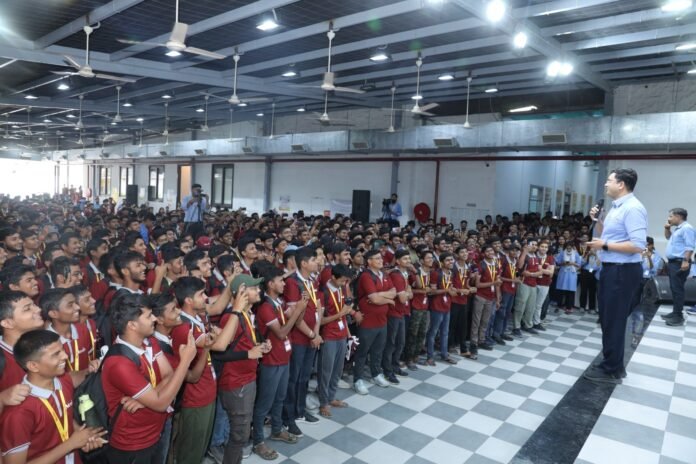
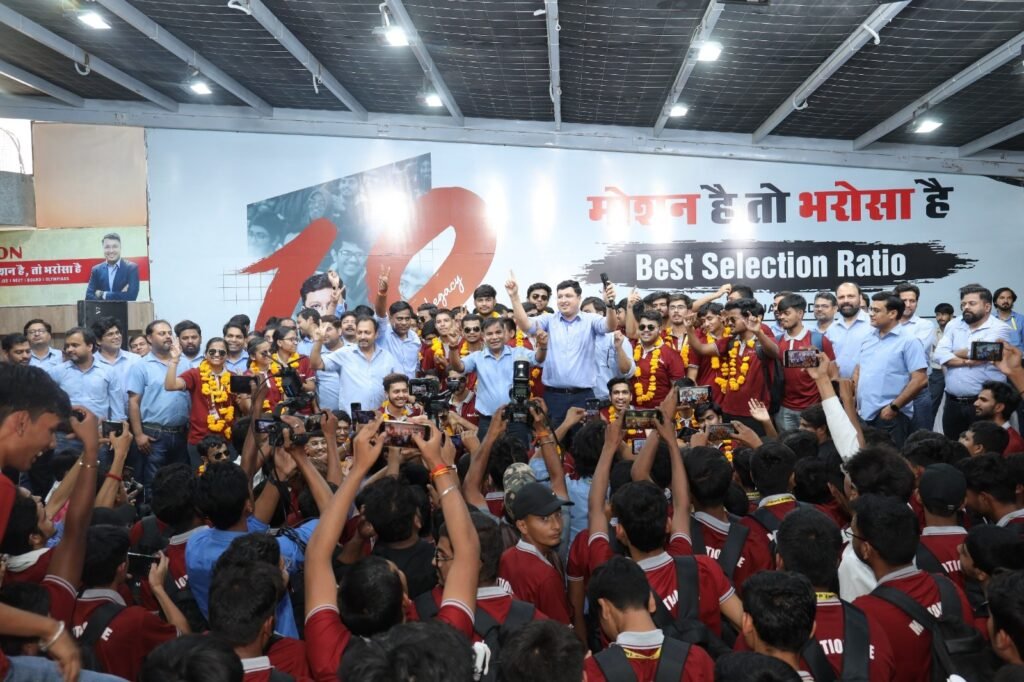
Motion Education has once again established itself as a frontrunner in competitive exam preparation, achieving an extraordinary 65.8% qualification rate for JEE Advanced 2025. This figure is nearly four times the national average of 16.25%. Out of 10,532 students enrolled, 6,930 have successfully qualified for the next phase of the prestigious engineering entrance exam.
Under the leadership of renowned educator Nitin Vijay, popularly known as NV Sir or the “Real Jeetu Bhaiya” of Kota, Motion Education has delivered remarkable results. Four students have secured ranks within the Top 100, with seventeen in the Top 500 and thirty-nine in the Top 1000. In total, 453 students have secured ranks within the top 10,000. The institute’s elite programs, including Eklavya, IMMP, and the A and V batches, recorded a 100% success rate, further cementing Motion’s legacy of excellence.
This year’s performance is a result of both academic rigor and a student-centric approach. Motion’s inclusive learning model continues to uplift diverse groups, with seven students from SC, ST, and PwD categories securing ranks within the Top 500. Additionally, 76.3% of dropper batch students qualified, demonstrating the strength of Motion’s personalized mentorship and focused classroom strategies.
Nitin Vijay attributed the success to consistent effort, innovation, and belief in student potential. He emphasised that success isn’t reserved for toppers alone, but for those who are teachable, consistent, and resilient. He also reaffirmed Motion’s philosophy of “students first, results next,” which drives initiatives such as regular motivational sessions, access to in-house counselors, stress management workshops, and peer support systems.
Technology has played a key role in enhancing learning outcomes. Motion’s AI-powered ecosystem—including tools like the CPS Machine, AI-generated DPPs, smart test analytics, and adaptive study materials—has helped bridge learning gaps and empower even average learners to perform at their best.
Motion Education was established in 2007 in Kota, Rajasthan, by Nitin Vijay. Over the years, it has become one of the most trusted names for IIT-JEE and NEET preparation. Known for its academic excellence and innovative teaching methods, the institute continues to inspire thousands of students to dream big and achieve more.
Seed to Self-Reliance: How One Surat Gardener is Cultivating a Greener, Smarter Summer
In a world increasingly leaning toward convenience, there’s something quietly radical about saving seeds — a gesture that whispers of self-reliance, sustainability, and the simple satisfaction of watching life bloom from your own backyard.
Surat-based home gardener Anupama Desai has been doing just that for the past 14 years — cultivating seasonal vegetables, saving seeds, and growing her way into a lifestyle of abundance and autonomy. At 56, her home garden is more than a hobby. It’s a personal revolution.
“Once you start saving seeds from your own plants,” she says, “you’ll realize how much easier, cheaper, and healthier gardening becomes. You know where your seeds come from — no chemicals, no compromises.”
And that’s not just a gardener’s intuition — it’s hard-earned wisdom. Market seeds can be a gamble. Hidden behind vibrant packaging are uncertainties: How old are they? Are they coated with chemicals? Will they germinate well? Often, there are no answers — and no refunds.
That’s why Anupama encourages urban gardeners, especially beginners, to take the leap into seed saving — particularly during the summer, when several crops are ripe for harvesting. As someone who has watched her terrace garden flourish season after season, she believes it’s one of the most empowering steps a gardener can take.
So if you’re tending to your tomatoes or watching your watermelons swell under the sun, now might be the perfect time to plan for the seasons ahead. Here are Anupama’s 10 tried-and-tested tips for saving seeds this summer — a gift to your future garden, and a quiet nod to self-sufficiency.
1. Know What to Save This Season
Late May is prime time to collect seeds from summer crops. Focus on watermelon, muskmelon, galkha (sponge gourd), pumpkin, valor papdi (field beans), and kakdi (Armenian cucumber) — all of which thrive in home gardens and do especially well on terraces.
2. Fruitful Beginnings: Watermelon & Muskmelon
These fruiting plants are surprisingly easy to grow — and their seeds even easier to save. Simply clean the seeds after scooping them out and lay them flat on tissue paper to dry. Store only once they’re thoroughly dry.
3. Let Vegetables Dry on the Vine
With veggies like cucumber, ridge gourd, bottle gourd, and okra, patience is key. Instead of plucking them, allow them to fully mature and dry on the plant. When the skin turns brown and brittle, the seeds inside are ready for harvesting.
4. Scoop, Clean, Store
Once you’ve extracted the seeds, store them in a clean, airtight container — glass or plastic both work fine. Hygiene is essential to avoid mold or insect infestation later on.
5. Avoid Market Vegetables for Seeds
Most store-bought vegetables are harvested before full maturity, making their seeds unreliable. If you do wish to save seeds from market produce, ensure the fruit is completely ripened. For instance, a ripe karela (bitter gourd) turns red — only then are its seeds viable.
6. Storage Matters
Keep your seeds in a cool, dry place. A refrigerator works well — but don’t deep-freeze them. Alternatively, store them in a matka (earthen pot) to maintain natural, stable temperatures, especially if you live in a hotter climate.
7. Charcoal: Your Secret Weapon
To protect your seeds from unwanted insect visitors, add a pinch of charcoal powder into the storage container. It acts as a natural preservative and moisture regulator.
8. Respect the Seed’s Shelf Life
Seeds aren’t immortal. They have a biological clock, just like us. Most can be stored for up to one year. Beyond that, their genetic strength weakens, resulting in low germination rates or stunted growth. Label containers with the date of storage to keep track.
9. Time Your Sowing Right
Stored seeds need their moment. For watermelon and muskmelon, sow in the first week of December to enjoy fruits by March. Crops like kakdi thrive when planted in winter. Karela, on the other hand, loves the monsoon — sow seeds 45 days before the rains for the best results.
10. Saving Seeds, Growing Freedom
Once you start seed saving, it becomes second nature. There’s joy in watching your garden cycle from seed to fruit and back again — a quiet rhythm that reminds us we’re part of something bigger. And as Anupama would say, once you’ve tasted the independence of growing from your own seeds, you’ll never go back.
So whether you’re a seasoned home grower or just beginning to dip your hands into soil, remember — the secret to a thriving garden isn’t always in the soil or the sun. Sometimes, it’s in a handful of seeds, saved with care and planted with hope.
Your future garden starts today. Happy seed saving!
Designing Dignity: How Delhi Students Are Tailoring Freedom Through Adaptive Fashion
Inside the vibrant campus of Delhi University’s Delhi College of Arts and Commerce (DCAC), a quiet revolution is taking shape — not through loud protests or viral campaigns, but with threads, fabric, and a mission stitched with empathy. At the heart of this movement is Enactus DCAC, a student-run social impact society that’s redefining what it means to design with purpose.
Their initiative, Project Riayat, is transforming the adaptive clothing landscape in India. It’s not just about fashion — it’s about freedom, functionality, and giving people with disabilities the autonomy to dress with confidence and dignity. Launched in 2023, the project sets its sights on creating inclusive clothing that empowers and enables.
A Spark from Struggle
The idea for Project Riayat emerged when a young student at DCAC witnessed a close relative, who used a wheelchair, struggle daily with conventional clothing. That deeply personal moment became the catalyst for a larger mission: to make clothing more accessible, stylish, and respectful of physical differences.
Together with fellow students, the team dove into research. They sought to ensure the issue wasn’t isolated. Visiting institutes for people with disabilities and interacting with children, dancers, and working professionals, they began to understand just how pervasive the problem was. The team designed detailed surveys and engaged directly with individuals to uncover the unspoken challenges tied to everyday dressing.
The findings were powerful. People faced difficulties not only in regular clothing but also during performances, travel, or even daily routines. The team knew they had a responsibility to respond — and they did, with innovation and heart.
Turning Ideas into Action
One of their first designs was a pair of adaptive pants with adjustable padding — created specifically for those with lower limb disabilities. The design enabled users to manage their daily needs with ease and privacy. Soon after, they introduced pants with side zippers for amputees, making it simpler to wear and remove clothing without assistance.
As the designs evolved, so did the project’s scope. Project Riayat began expanding its focus to include a wide range of individuals — from wheelchair users to children with disabilities — each design carefully tailored to specific needs.
Empowerment Through Inclusion
What truly sets Project Riayat apart is its belief that those facing the challenges should also be the ones shaping the solutions. The team partnered with Family of Disabled (FOD), a Delhi-based nonprofit, to train individuals with disabilities in adaptive garment-making.
With the support of mentors and master tailors, around 25–30 individuals are now directly involved in crafting the garments. Electric sewing machines make the process smoother for those with mobility issues. Beyond clothing, others contribute art and handicrafts to the project — all of which are showcased and sold online, with earnings returned directly to the creators.
The impact has been multi-dimensional. From generating sustainable income to restoring a sense of self-worth, the project brings dignity into the hands of those who had long been sidelined in conversations about fashion.
Building a Community of Change
Project Riayat thrives on collaboration. The students joined forces with Zyenika, an adaptive clothing startup, and Dewey Clothing, a UK-based brand catering to people with short stature and other disabilities. These mentors helped refine designs and expand the project’s reach.
With their guidance, Project Riayat introduced magnetic-button shirts and began exploring adaptive versions of traditional Indian wear, like sarees and kurtas. They also adopted a sustainable production model, sourcing surplus textiles from Mumbai-based exporter StyleFab.
Of course, no journey is without its hurdles. Convincing people to share personal experiences with clothing was challenging. There were barriers of trust, communication, and emotion. But with patience and persistence, the team broke through.
Funding also posed difficulties. However, by grounding their vision in community need and thorough research, they gained support from organizations such as Oncocare, enabling them to scale up operations.
More Than a Brand
The students behind Project Riayat don’t just sell clothes — they advocate for inclusion. Through awareness campaigns and desensitisation camps conducted in partnership with the Association of People with Disabilities (APD), they’ve reached over 800 individuals in schools and workplaces, creating conversations around disability, design, and empathy.
Their dedication recently bore fruit with a major order of 350 clothing units from the Maharani Foundation. To maintain affordability without compromising quality, they priced their pieces between ₹1,000 and ₹1,500, based on feedback from need-based assessments.
Yet for the team, success isn’t measured in revenue or orders. It’s measured in stories — the person who feels confident wearing adaptive clothing for the first time, or the artisan who earns from their own hands after years of dependency.
Stitching Futures, One Seam at a Time
Today, the students at Enactus DCAC juggle college, project meetings, design iterations, and community outreach. Their schedules are packed, but their purpose is clear.
Project Riayat is more than a fashion initiative. It’s a blueprint for how design, when led by empathy and inclusion, can shape a better world. From pants with purpose to kurtas that empower, every thread tells a story — of resilience, of creativity, and of a future where everyone is seen, heard, and beautifully dressed.
The Indian Space Research Organisation (ISRO) has once again etched its name in the annals of space exploration by successfully completing the second docking of two satellites in space as part of its Space Docking Experiment mission. This milestone further cements India’s position among the elite group of nations previously limited to the United States, Russia, and China that have mastered this complex space technology. ISRO Chairman V. Narayanan described the achievement as child’s play for the team, underscoring its significance. This is a major milestone, and our team executed it with remarkable precision. The data gathered from this mission will be invaluable for future endeavors,” he said.
Second Phase of SpaDeX Mission
The SpaDeX mission involved two 220-kg satellites, SDX01 and SDX02 , launched into a 475-km orbit on December 30, 2024, via the PSLV-C60 rocket. The first successful docking was achieved on January 16, 2025, followed by a successful undocking on March 13. The second docking, completed on April 21, 2025, demonstrated ISRO’s ability to refine and repeat this intricate maneuver.
During the operation, the satellites were brought within 15 to 3 meters of each other, achieving docking with pinpoint accuracy. Post-docking, the satellites operated as a single unit, and ISRO will now focus on testing subsequent phases, including undocking and power transfer.
Why This Achievement Matters
Space docking technology is critical for ambitious missions like Chandrayaan-4, aimed at retrieving lunar samples, and the proposed Bharatiya Antariksh Station (Indian Space Station), targeted for establishment by 2035. It is also essential for the Gaganyaan human spaceflight program and potential future manned lunar missions. Union Minister of State for Science and Technology Jitendra Singh hailed the achievement, tweeting, Second docking successfully completed. This mission is a shining example of India’s indigenous space technology capabilities.
Future Plans
ISRO plans to conduct additional docking experiments under the SpaDeX mission. Narayanan noted that the satellites have sufficient propellant to test docking under various conditions. A recent “rolling” or “rotating” experiment conducted in late March has already provided critical data for future missions. This mission not only showcases India’s technological prowess but also its ability to execute complex space missions cost-effectively. The SpaDeX mission, with a total cost of ₹124.47 crore, stands as a testament to ISRO’s efficiency.
Reactions from Leaders
Prime Minister Narendra Modi congratulated ISRO, stating, “This remarkable feat underscores India’s growing stature in space exploration. ISRO continues to make the nation proud.” With this achievement, ISRO has not only demonstrated its technical expertise but also laid a strong foundation for India’s future in space exploration, paving the way for more advanced and ambitious missions
Today marks Civil Services Day, and on this occasion, Prime Minister Narendra Modi will honor 16 outstanding administrative officers from across the country. Among them is IAS Neha Meena, the current Collector of Jhabua district in Madhya Pradesh. But did you know she has a strong connection to Rajasthan?
Rajasthan’s Proud Daughter
Originally hailing from Marwar Junction, Rajasthan, Neha Meena is a 2014-batch IAS officer of the Madhya Pradesh cadre. She has earned widespread recognition in the state for her innovative approach to governance and has previously been honored twice by the President of India.
Why Neha Meena Is Being Honored
Neha Meena has been selected for the prestigious Prime Minister’s Award for Excellence in Public Administration 2024 under the Aspirational Block Program. Her initiative “Moti Aai”, a community-based malnutrition eradication model, has significantly improved the nutritional status of children in Jhabua. The model has been praised for its grassroots involvement and measurable impact in reducing severe malnutrition.
Prime Minister Modi will present the award to her today as part of the official Civil Services Day celebrations in New Delhi.
Who Is IAS Neha Meena?
Neha Meena holds a Master’s degree in Economics and joined the Indian Administrative Service in 2014, receiving her training at the Lal Bahadur Shastri National Academy of Administration, Mussoorie. Her mother, Krishna Devi Meena, and father, Chiman Singh Meena, have supported her journey, and her sister, Dr. Shakuntala Meena, is a former college principal.
Known for her commitment and integrity, Neha has been consistently in the spotlight for her impactful administrative work in Madhya Pradesh, particularly in areas related to child welfare, health, and community engagement.
Usha Chilukuri Vance, born to Indian immigrant parents in the United States, embodies a story of academic excellence, cultural bridging, and quiet strength that has recently captivated the internet. As the wife of JD Vance, the U.S. Senator from Ohio and Vice President-elect as of 2025, Usha has become a focal point of fascination, not just for her proximity to power but for her own remarkable journey. From her roots in a scholarly Indian family to her high-flying legal career and her role as a supportive partner and mother, Usha’s life is a testament to ambition and resilience, now amplified by viral moments and online debates.
A Foundation of Learning
Usha was born in the early 1980s to a family of Indian descent with deep academic roots. Her parents, originally from Andhra Pradesh, India, carried a legacy of intellectual rigor. Her father is an engineer who moved to the U.S. in the 1970s, and her mother, Lakshmi Chilukuri, is a distinguished professor of biology at the University of California, San Diego. Usha’s grandparents were also academics her grandfather was a professor at the prestigious Indian Institute of Technology (IIT), and her grandmother was a professor as well. This environment of scholarship shaped Usha’s upbringing, instilling a drive for excellence. Growing up in San Diego, California, Usha was immersed in a blend of Indian traditions and American opportunities. Her family maintained strong ties to Andhra Pradesh, where relatives still reside, grounding her in her cultural heritage. As a child, Usha excelled academically, showing an early aptitude for critical thinking and debate. She attended Yale University for her undergraduate studies, where she majored in history and honed her intellectual curiosity, setting the stage for her future achievements.
Meeting JD Vance
Usha’s life took a pivotal turn when she enrolled at Yale Law School, one of the most prestigious legal institutions in the world. It was here, in 2014, that she met James David (JD) Vance, a fellow law student from a very different background with a working-class upbringing in Middletown, Ohio, marked by economic hardship and family struggles, as chronicled in his memoir Hillbilly Elegy. Despite their contrasting origins, Usha and JD connected deeply over shared intellectual passions and a mutual sense of ambition. JD famously described Usha as his Yale spirit guide in Hillbilly Elegy, crediting her with helping him navigate the elite, often intimidating world of Ivy League academia. Their romance blossomed under the encouragement of their Yale law professor Amy Chua, author of Battle Hymn of the Tiger Mother. Usha’s poise, intelligence, and cultural fluency complemented JD’s raw determination, creating a partnership that was both personal and professional. The couple married in 2014 in a ceremony that blended Christian and Hindu traditions, reflecting their commitment to honoring each other’s backgrounds. They have since welcomed three children Ewan, Vivek, and Mirabel.
A Stellar Legal Career
Usha’s professional journey is as impressive as her personal one. After graduating from Yale Law School, she pursued a Master of Philosophy at the University of Cambridge, further sharpening her analytical skills. Back in the U.S., she clerked for two prominent jurists: Chief Justice John Roberts of the U.S. Supreme Court and then-Judge Brett Kavanaugh on the D.C. Circuit Court of Appeals. These clerkships, among the most coveted in the legal world, underscored her brilliance and work ethic. Usha then joined Munger, Tolles & Olson, a progressive law firm, where she worked as a corporate litigator from 2015 until July 2024. Her career was marked by high-stakes cases and a reputation for meticulousness. However, when JD was selected as Donald Trump’s running mate in the 2024 presidential election, Usha resigned from her firm to focus on supporting her husband’s political ascent and their family, a decision that sparked both admiration and scrutiny online.
The Internet Buzz
Usha’s life entered the public eye in a big way as JD Vance’s political profile grew. In November 2024, a family photograph of JD with Usha’s extended Indian family, taken during Thanksgiving, went viral after being shared by Silicon Valley venture capitalist Asha Jadeja Motwani on X. The image, showing JD in a casual blue t-shirt carrying his son on his shoulders, resonated widely, with many celebrating the multicultural warmth of the Vance family. Indians and Indian-Americans, in particular, saw Usha as a symbol of the diaspora’s success, with posts on X highlighting her family’s academic achievements and her role in JD’s life