Home Blog Page 308

Riflewoman Sreelakshmi P.V.: The Trailblazer with a Leash and a Legacy

0

In the remote, rugged stretches of India’s Northeast, where discipline walks lockstep with danger, the Assam Rifles have long stood as the nation’s sentinels. This is a place where bravery isn’t talked about — it’s lived, daily. Amid this backdrop of courage and tradition, one woman has etched her name into history — Riflewoman Sreelakshmi P.V., the first woman dog handler in the Assam Rifles.

She isn’t just holding a leash — she’s leading a revolution.


A New Chapter in an Old Institution

Founded in 1835, the Assam Rifles is India’s oldest paramilitary force. With a deep legacy of protecting the nation’s sensitive borders, it has always been a symbol of grit, sacrifice, and unflinching service. But until recently, it had also been a domain largely closed off to women — especially in specialized roles like dog handling.

That’s changing now. And Sreelakshmi P.V. is leading the charge.


From Determination to Deployment

Dog handling in the forces isn’t just about walking canines. It’s about trust, coordination, split-second decision-making — and bonding with a four-legged partner that could one day save your life, or you theirs. It’s physically grueling, emotionally demanding, and mentally razor-sharp work.

And Sreelakshmi aced it.

Riflewoman Sreelakshmi P.V.: The Trailblazer with a Leash and a Legacy

Trained with a Belgian Malinois, a breed renowned for its combat-readiness and keen intelligence, she underwent intensive drills — mastering everything from scent detection and obedience commands to combat movement and high-risk navigation. These dogs are deployed for patrols, mine detection, narcotics operations, and explosive sniffing. The handler is their voice, their eyes, their moral compass.

Now, that voice belongs to a woman for the first time in Assam Rifles history.


Not Just a Milestone — A Movement

In a heartfelt social media post, the Assam Rifles wrote:

“Demonstrating courage, determination, and passion, Sreelakshmi has embarked on a pioneering journey in a field traditionally dominated by men.”

This isn’t a token win. It’s a powerful signal. A signal that gender is no longer a barricade to roles that require toughness, strategy, and command. Her success coincides with the force’s broader vision — to push women’s representation from the current ~4% to a bold 10% by 2030.

And with leaders like Sreelakshmi out in the field, that number seems less like a goal and more like a guarantee.


Beyond the Uniform

Riflewoman Sreelakshmi’s journey is not just about boots on the ground. It’s about the silent battles she fought to get there — the skepticism, the expectations, the pressure to “prove” her worth in a man’s world. But she did more than prove it — she redefined it.

She’s not just a soldier. She’s a symbol.
Not just a handler. But a handler of history.


The Future She Leads

What comes next? For Sreelakshmi, perhaps more deployments, more responsibilities, and the pride of knowing that behind her, a trail has been cleared for many others to follow.

Because somewhere, right now, there’s a young girl — maybe in a small village, maybe reading about dogs, maybe watching an army parade — who just realized that she, too, could one day serve her country alongside a four-legged comrade.

And she’ll have Sreelakshmi P.V. to thank.


This is more than a personal victory. It’s a paradigm shift — wrapped in uniform, holding a leash, and walking confidently toward a future where no role is off-limits.

From Fighter Jets to Spacecraft: Shubhanshu Shukla’s Journey to the Final Frontier

0

In a quiet corner of Lucknow, where dreams often grow silently behind schoolbooks and starlit skies, a young boy once looked up and asked a question not many dare to: “What if I could go there?”
Today, that boy — now Group Captain Shubhanshu Shukla — stands at the edge of history, ready to become one of India’s first astronauts to set foot aboard the International Space Station.

A Dream Born in Silence

Born on October 10, 1985, Shubhanshu grew up in a modest household in Lucknow, surrounded by the kind of everyday normalcy that rarely hints at destiny. Like many Indian children, he was taught discipline, compassion, and the value of service — but what set him apart was how fiercely he held on to a dream that no one around him was really talking about: space.

The moment of ignition came in 1999, during the Kargil War. As news of the conflict gripped the nation, Shubhanshu — just a teenager — quietly decided he wanted to serve his country. Without even informing his parents at first, he applied to the National Defence Academy. He got in.

From Fighter Jets to Spacecraft: Shubhanshu Shukla’s Journey to the Final Frontier

And just like that, a trajectory was set. One that wouldn’t stop at the sky.

The Pilot Who Would Touch the Stars

Commissioned into the Indian Air Force in 2006, Shubhanshu wasn’t just a pilot — he was a polymath in motion. He flew fighter jets, trained as a test pilot, and handled everything from the Su-30 MKI to the rugged MiG-21 with surgical precision. He became a combat leader. A mentor. A symbol of what happens when quiet determination meets opportunity.

But even among the best, there are those who look beyond.
In 2019, Shubhanshu was one of just four IAF pilots selected for India’s most daring and historic venture yet — Gaganyaan, the country’s first crewed spaceflight mission under ISRO. The selection was not just about flight skills. It was about resilience. Adaptability. The ability to carry a billion dreams on your shoulders without flinching.

Training for the Impossible

The training was no less than a crucible. In Russia’s Yuri Gagarin Cosmonaut Training Center, Shubhanshu and his fellow astronauts were put through zero-gravity drills, deep-sea survival simulations, and punishing physical routines. Every moment tested not just the body, but the will.

From Fighter Jets to Spacecraft: Shubhanshu Shukla’s Journey to the Final Frontier

He returned to India stronger, sharper — and even more committed. While training at ISRO’s astronaut facility in Bengaluru, he simultaneously pursued a Master’s in Aerospace Engineering from IISc. That’s right — while prepping to be hurled into space, he was also studying equations and design frameworks most of us would need caffeine and divine intervention to understand.

The Next Frontier: Axiom Mission 4

Now, the next page in his journey is about to be written.
Shubhanshu Shukla is slated to fly as the pilot on Axiom Mission 4 (Ax-4) — an international mission scheduled to launch from NASA’s Kennedy Space Center in Florida, likely in May 2025. He’ll join veteran astronaut Peggy Whitson and other specialists for a multi-week research mission aboard the International Space Station.

He will not only be the first Indian astronaut to reach the ISS, but also one of the very few who embody a bridge between tradition and the future — between India’s ancient fascination with the stars and its cutting-edge role in exploring them.

On board, he will conduct over 60 experiments — including six designed by Indian scientists — ranging from space medicine to materials research. These are not just academic. They could change how we understand life in space and prepare future missions, including long-term habitation on the Moon or Mars.

The Man Behind the Helmet

Away from the cockpit, Shubhanshu is a grounded, thoughtful man. Married to Dr. Kamna Shubha Shukla and a devoted father, he often reflects on the philosophical dimensions of his journey. In his free time, he reads, works out, and dreams — not just for himself, but for his country.

He represents the very best of us — not just because of where he’s going, but because of where he came from. A student from Lucknow. A son of India. A soldier. A scholar. And soon, a spacefarer.


Why His Story Matters

In a world overflowing with noise and cynicism, Shubhanshu’s story is a quiet revolution. It reminds us that you don’t need a spotlight to dream big. You need focus. Grit. The willingness to keep going even when no one’s watching.

India is no longer just launching rockets. It’s launching people.
People like Shubhanshu Shukla — who carry within them the hopes of a billion hearts, and the courage to step into the great unknown.

The Great Pyramid’s Latitude Is (Coincidentally) The Same As The Speed Of Light

0

The Speed of Light, the Great Pyramid, and a Strange Numerical Echo

Spend enough time wandering the labyrinth of the Internet and sooner or later, you will stumble across a curious whisper:
The speed of light is 299,792,458 meters per second.
The latitude of the Great Pyramid of Giza is 29.9792458°N.
Coincidence?

The Great Pyramid's Latitude Is (Coincidentally) The Same As The Speed Of Light

The facts themselves stand firm.
Light — the fastest thing known to us — tears through the vacuum of space at exactly 299,792,458 meters per second.
The Great Pyramid — an ancient sentinel on the edge of the desert — lies very near the latitude 29.9792458°N.

Two numbers. Two worlds. Across millennia, they seem to call to each other.

And yet, when the veil is pulled back, the truth is more human, more ordinary — and somehow, more fascinating.

The ancient Egyptians, brilliant and enigmatic as they were, did not know the speed of light. Their mathematics were intricate, their engineering unmatched, but they did not measure in meters. The meter, as a unit, was not imagined until the late 18th century, born from the revolutions and reckonings of a restless Europe. The Egyptians worked in cubits, a measure linked to the human body, not the abstractions of later science. Had they tried to capture the speed of light in cubits, the number would have been an unrecognizable sprawl: 571,033,253 cubits per second.

Latitude and longitude, too, were concepts unknown to them. Their world was mapped by the stars and the Nile, not by invisible lines stretched across the Earth. The global coordinate system came long after, when humans grew hungry for absolute precision.

So the Great Pyramid, rising solemnly at its precise point on the Earth’s surface, was not aligned to the cosmic speed limit. It was aligned to stars, to ceremony, to beliefs now half-lost to time. The match of numbers, perfect as it seems, is a phantom — a chance alignment crafted not by ancient hands, but by the playful chaos of mathematics and history.

And yet, that in itself holds its own wonder.

Across the vast dark sea of time, numbers can still align in eerie ways. Patterns emerge where none were designed. The universe, it seems, sometimes leaves strange echoes, as if reminding us that not everything need be planned to feel profound.

The Great Pyramid’s latitude is a coincidence.
But a coincidence wrapped in the seductive allure of mystery.
And perhaps, in a world that often demands hard answers, there is something sacred in mysteries that refuse to be explained.

Malwa’s Pride: Folk Legend Bheru Singh Chouhan Honoured with Padma Shri 2025 for Preserving Kabir’s Spiritual Legacy

0

Folk singer Bheru Singh Chouhan of Malwa awarded Padma Shri for his lifetime contribution to Nirgun bhakti music and social reform through Kabir’s teachings.

At 63, Bheru Singh Chouhan, the soul-stirring folk singer from Malwa, Madhya Pradesh, has received the Padma Shri 2025—India’s fourth-highest civilian award—for his invaluable contribution to the field of folk music and social reform. Deeply rooted in the Nirgun bhakti tradition and inspired by the timeless verses of Sant Kabir, Bheru Singh’s life and music echo the core values of simplicity, service, and spiritual awakening.

A Humble Beginning: Music Born from Devotion

Bheru Singh’s musical journey began in childhood, imitating his father’s bhajans in the village fields of Malwa. By his teens, he was already performing across Malwanchal, captivating villagers under banyan trees and in temple courtyards with renditions of Kabir bhajans sung in the Malvi dialect. His soulful interpretation of dohas like “Moko kahan dhunde re bande, main toh tere paas” brought spiritual philosophy to life for rural audiences.

Keeping the Nirgun Tradition Alive

For over five decades, Bheru Singh Chouhan remained committed to preserving and promoting Kabir’s Nirgun philosophy—a form of devotion that rejects idol worship and emphasizes inner spirituality. His music became a bridge between ancient wisdom and modern life, urging people to look inward and live with compassion.

Honoured by the Nation: Padma Shri 2025

On January 25, 2025, the Government of India announced Bheru Singh Chouhan as a Padma Shri awardee in the field of art, recognizing his lifelong service. “I got emotional after hearing that a small person from a small village was getting the Padma Shri,” he said in an interview with ANI. The award was conferred by President Droupadi Murmu at Rashtrapati Bhavan, New Delhi, on April 28, 2025, marking a proud moment for Ratlam, Malwa, and Madhya Pradesh.

Using Music for Social Transformation

More than just a performer, Bheru Singh Chouhan has been a voice for social change. Drawing from Kabir’s bold critiques of casteism, superstition, and hypocrisy, he incorporated messages against addiction, gender inequality, and moral decline into his songs. His powerful bhajans inspired thousands to adopt a path of sobriety, ethical living, and self-realization.

A report noted that lakhs have overcome addiction due to Bheru Singh’s influence, as he made Kabir’s teachings accessible and relevant for today’s India.

Cultural Icon of Malwa and Beyond

From village mandaps to national stages like the Sangeet Natak Akademi, Vishal Kabir Mahotsav, and Sanskrutik Kumbh, Bheru Singh’s performances have drawn massive crowds. His traditional music, recorded on CDs, cassettes, and now popularized through his YouTube channel, continues to resonate across generations. Videos like “Sant Kabir ke Shabd” have touched hearts worldwide, bringing Malwa’s spiritual heritage to the global stage.


This Mumbai Artist Creates Life-Sized Sculptures From Waste — While Empowering Rural Women Through Art

0

In a world obsessed with the new, where the old and used are cast aside without a second thought, a quiet revolution is unfolding in a small, sunlit studio in Vasai, Maharashtra. Here, waste is not waste — it’s raw material, it’s potential, it’s the beginning of something extraordinary. And at the center of this creative alchemy stands Bandana Jain: artist, storyteller, and a steadfast advocate for sustainability.

This Mumbai Artist Creates Life-Sized Sculptures From Waste — While Empowering Rural Women Through Art

Cardboard as Canvas

Every day, tonnes of cardboard boxes are discarded after a single use. They pile up in landfills or clog city waste systems. But in Bandana’s studio, these forgotten fragments are transformed into full-scale sculptures and functional installations that blur the line between art and environmental activism.

This Mumbai Artist Creates Life-Sized Sculptures From Waste — While Empowering Rural Women Through Art

“I wanted to use a material that not only challenged the norms of art but also sparked a conversation,” Bandana says. Her medium of choice? Cardboard. Textured, humble, and resolutely overlooked — until she touches it.

Inside her studio, the air hums with quiet purpose. Cardboard folds become soft, fabric-like forms. What was once packaging now breathes as art. “My work is like folds of fabric. It looks soft, but when you touch it, you realise it’s made of something tough,” she explains. That juxtaposition — of delicacy and durability — forms the core of her visual language.

A Childhood Steeped in Simplicity

Bandana’s creative roots trace back to Thakurganj, a small village in Bihar. Growing up in a joint family of nearly 40 people, she was immersed in a lifestyle marked by simplicity, closeness to nature, and an instinctive sense of frugality. “Minimalism was my mother’s way of life. We valued every drop of water, every scrap of food. That foundation still guides me,” she says.

This Mumbai Artist Creates Life-Sized Sculptures From Waste — While Empowering Rural Women Through Art

Even without access to traditional art supplies, young Bandana found expression through sketching — enlarging small images of birds or people into bold, poster-sized drawings that covered her bedroom walls. “That was my first gallery,” she laughs.

But life took a sharp turn in 2002. Just as she was preparing to move to Delhi to study interior design, her mother passed away. The grief was profound. Dreams were put on hold. Bandana stepped into family responsibilities. Yet, the creative spark remained alive.

This Mumbai Artist Creates Life-Sized Sculptures From Waste — While Empowering Rural Women Through Art

A Second Chance in Mumbai

In 2008, marriage brought her to Mumbai. There, she enrolled at JJ School of Art and reignited her artistic ambitions. One day, she stumbled upon a piece of discarded cardboard on campus. “Something about it just clicked. I saw beauty in its texture, its structure, its potential.” That serendipitous moment became the genesis of her journey with upcycled art.

Further inspiration came during travels to Switzerland and the Netherlands, where she witnessed how deeply waste segregation and sustainability were embedded in daily life. “When I came back to Mumbai, I realised how far we had to go. That’s when I decided: my work would speak for the environment.”

This Mumbai Artist Creates Life-Sized Sculptures From Waste — While Empowering Rural Women Through Art

Sculpting Meaning, Layer by Layer

Bandana’s installations are striking not just for their scale or aesthetic, but for their message. Works like Gaja and Whispering Drape reinterpret cultural and textile traditions using layered, recycled cardboard. They celebrate Indian heritage while pushing for eco-consciousness.

Her recent piece, The Force Within, a life-sized sculpture showcased at the Kala Ghoda Arts Festival 2025, channels the indomitable spirit of Mumbai — strength, resilience, and the beauty of second chances, all rendered in reused material.

This Mumbai Artist Creates Life-Sized Sculptures From Waste — While Empowering Rural Women Through Art

“If you just lecture people about sustainability, it sounds preachy,” Bandana notes. “But art? Art invites you in. It lets you feel before you think.”

A Studio That Builds Futures

Beyond her own practice, Bandana has built something far more powerful: a space that empowers. Her Vasai studio is not just a creative lab — it’s a place of economic opportunity, especially for women in surrounding rural areas.

This Mumbai Artist Creates Life-Sized Sculptures From Waste — While Empowering Rural Women Through Art

Currently, four women work with her full-time, learning the intricate techniques of cardboard artistry. Depending on the scale of projects, more are brought in. Each sculpture, every fold, represents not just design, but dignity.

Shubhangi Hanamgar, one of Bandana’s team members, puts it simply: “Working here gave me financial independence. Now I don’t depend on anyone. I can buy what I want, when I want.”

In this way, Bandana’s art has ripples far beyond galleries and festivals. It nurtures self-worth. It builds skills. It creates livelihoods.

This Mumbai Artist Creates Life-Sized Sculptures From Waste — While Empowering Rural Women Through Art

A New Way of Seeing

Step into Bandana’s studio and you’re greeted not by marble or bronze, but by cardboard sculptures that tower and twist like living things. They speak — not loudly, but clearly. They say: “Look again. The world isn’t disposable.”

Her work is a reminder that sustainability isn’t only about using recycled materials. It’s about reimagining value — in objects, in environments, in people.

This Mumbai Artist Creates Life-Sized Sculptures From Waste — While Empowering Rural Women Through Art

In Bandana Jain’s hands, a discarded box becomes a beginning. And in a world so quick to throw away, that act of reimagining is not just art. It’s rebellion. It’s hope.

Try These 7 Millet Drinks to Keep You Cool, Healthy & Hydrated This Summer

0
xr:d:DAE-VW4f63M:1461,j:5361380932,t:23052412

Picture this: It’s a blistering summer afternoon. The sun is frying everything in sight like a grumpy chef with no patience. You’re parched, tired, and craving something more exciting (and healthier!) than plain water. Enter: millet drinks — the ancient secret to surviving summer like a champion and giving your health a VIP upgrade.

Forget the sugary sodas. Here’s a refreshing parade of millet-based drinks that are as good for you as they are delicious — and yes, we’ve sneaked in some quick recipes so you can become your own home-barista-meets-health-guru.


1. Bajra Raab: The Desert’s Immunity Elixir

Straight from the kitchens of Rajasthan comes bajra raab, a warm, earthy concoction starring bajra (pearl millet). It’s roasted with carom seeds (ajwain), ginger powder, and jaggery — resulting in a drink that feels like a hug for your immune system.

Why you need it: Bajra is packed with fiber, iron, and power. One sip and your body says thank you.

Quick Recipe:

  • Roast bajra flour in ghee with ajwain.
  • Add jaggery, salt, dry ginger powder, and water.
  • Simmer until it smells like heaven.
  • Serve hot with chopped nuts for an extra crunch.

2. Mango Ragi Smoothie: Summer Vacation in a Glass

Try These 7 Millet Drinks to Keep You Cool, Healthy & Hydrated This Summer

What’s better than mangoes in summer? Mangoes and ragi (finger millet). Cool your body, boost your calcium levels, and dance into your day with this creamy, dreamy smoothie.

Why you’ll love it: Ragi is a master-coolant and immunity booster. Mango just makes it taste like a tropical holiday.

Quick Recipe:

  • Blend mango, milk, cooked ragi, and a little sugar.
  • Top with dry fruits, a dollop of ice cream, or leave it classy and simple.

3. Falahari Rajgira Smoothie: The Ancient Energy Bomb

Meet rajgira (amaranth) — the 8,000-year-old “never-say-die” grain. This Himalayan hero is so protein-packed it could give salmon a run for its money.

Health cred: High resilience, even higher nutritional value. Great for building strength.

Quick Recipe:

  • Blend puffed rajgira, soaked raisins, cashews, and dates into a silky paste.
  • Add milk and water, sweeten with honey, and sip on history.

4. Kambangkool: Fermentation at its Finest

Try These 7 Millet Drinks to Keep You Cool, Healthy & Hydrated This Summer

Travel back to ancient Tamil Nadu with kambangkool, a drink that’s part-fermented, part-curdled magic. It’s essentially a runny porridge that’s soured with curd and spiced with cumin and green chillies.

Health bonus: Balanced protein, fiber, starch — digestion’s best friend.

Quick Recipe:

  • Cook coarse pearl millet flour with water.
  • Cool, ferment overnight, blend with sour curd and spices the next morning.
  • Drink it fresh, with optional chopped onions for that spicy morning zing.

5. Foxtail Millet Juice: Glow Up Your Skin and Mood

Try These 7 Millet Drinks to Keep You Cool, Healthy & Hydrated This Summer

Want glowing skin, shiny hair, and a blood sugar reading that would impress your doctor? Foxtail millet — abundant in Vitamin B12 — is your new best friend.

Pro Tip: Add coconut to the mix and make it a pre- or post-workout superstar.

Quick Recipe:

  • Blend soaked millet, coconut, ginger, cloves, and dates.
  • Strain, mix, sweeten to taste, and feel your body thank you in every language.

6. Kunun Zaki: The Nigerian Power Potion

Straight from Northern Nigeria’s warm heart comes kunun zaki, made with sorghum (jowar). Traditionally served to welcome guests, it’s brimming with protein and hospitality.

Why it’s amazing: It’s a fermentation party that’s actually good for you.

Quick Recipe:

  • Blend soaked sorghum with sweet potatoes, ginger, and cloves.
  • Partially cook half, mix with the rest, ferment overnight, sweeten, and serve chilled.

7. Coconut Zomkom: The West African Firecracker

Try These 7 Millet Drinks to Keep You Cool, Healthy & Hydrated This Summer

If your taste buds have been begging for a little drama, zomkom is here — spicy, peppery, coconutty, and utterly unforgettable.

Highlight: Any millet works. Black pepper and chillies bring the fire, coconut brings the cool. Yin and yang in a cup.

Quick Recipe:

  • Blend soaked millet with ginger, cloves, black pepper, and chilli.
  • Strain, mix, ice it up, and optionally add some evaporated milk for a richer twist.

Cheers to a Millet-ful Life

“Whether you’re chilling under a fan, plotting world domination from your home office, or training for a casual walk across the Sahara, these millet drinks are your ticket to staying cool, nourished, and totally unstoppable” and great if you’re looking for natural wellness solutions.

Next time you reach for something to quench your thirst, ditch the soda. Grab your blender. Grab your grains. Sip smart. Live mighty.

How 690 Villagers United to Save Rajasthan’s Animals from Extreme Thirst

0

When the sun scorches down on Rajasthan, it doesn’t just tan skin and dry up throats—it threatens lives. In this desert state where the mercury often rises above 45°C, survival becomes a battle, not just for humans but for the countless birds and animals that roam its arid lands.

How 690 Villagers United to Save Rajasthan’s Animals from Extreme Thirst

For us, summer is a sweaty inconvenience—solved with fans, cold drinks, and shady retreats. But for strays who have no shelter, no voice, and often no one to care for them, summer is unforgiving. The numbers tell a chilling tale: in March 2024 alone, over 88% of rescued birds and nearly 6% of reptiles and mammals in Bengaluru were found severely dehydrated. That’s in a city blessed with more green cover. Now, imagine the situation in Rajasthan—a place where green is a memory and the desert rules.

But in the parched heart of Jodhpur’s Bawarla village, seven friends looked the heat in the eye and said, “Not on our watch.”


The Birth of a Movement

It began with just Rs 1,000—pooled together by seven government employees. Moved by the sight of camels collapsing from thirst (yes, even camels), they placed humble bowls of water and grain around the village. They called themselves Jeev Jantu Premee Bandhu SansthaFriends Who Love Living Beings.

How 690 Villagers United to Save Rajasthan’s Animals from Extreme Thirst

“We didn’t even have a single tank in the village to store water for the animals,” recalls Dinesh Bishnoi, a founding member and officer at AIIMS Jodhpur. “That’s when we knew—we couldn’t wait for someone else to act.”

So they did.

They used their initial savings to build water tanks, revive dried-up ponds, and place daily offerings of 50 kg of grain and clean water. What began as a grassroots gesture soon caught fire. Villagers took notice, and the movement grew. From 7 to 690 members. From 1 village to 35. From one tank to 71 reservoirs serving over 5,000 litres of water a day.


A Network of Compassion

In a region where the terrain is harsh and the greenery sparse (beyond the resilient Khejri and Kair trees), these everyday heroes have done the unimaginable. Their operations now span across Jodhpur, supported by a web of teachers, police officers, nurses, farmers, and local villagers—all united by compassion.

How 690 Villagers United to Save Rajasthan’s Animals from Extreme Thirst

Their system is brilliantly simple:

  • Every member contributes a minimum of Rs 100 monthly, mostly on amavasya (new moon day), for convenience and consistency.
  • Volunteers track water levels and food availability.
  • Reports and refill requests are sent via WhatsApp — a lifeline for coordination across vast, rural distances.

“We monitor everything through the app,” says Prakash Bishnoi, a railway nurse and core member. “Video calls, photos, updates—all in real time. That way, we ensure no tank goes empty.”

And it works. Over Rs 46.76 lakh has been collected since 2021, with Rs 43.89 lakh already spent directly on welfare activities.


Not Just Water — But a Future

Their mission doesn’t stop at hydration. During the Lumpy Skin Disease outbreak, the team distributed Rs 6 lakh worth of medicines. They’ve planted 8,500 saplings to fight desertification and distribute 150 quintals of grain every month for birds.

How 690 Villagers United to Save Rajasthan’s Animals from Extreme Thirst

They serve dogs, cows, deer, nilgai, and even majestic migratory guests like the Siberian Kurja cranes in Jajiwal Dhura.

But here’s what sets them apart: they help those with no owners. “We don’t focus on domestic animals,” Dinesh emphasizes. “We care for those who have no one.”

And this isn’t a seasonal campaign. It’s a full-time operation, managed alongside their demanding government jobs. “During monsoons, we save funds since there’s less need for water. That saving helps us prepare for the brutal summers,” Dinesh explains. Strategic. Thoughtful. Tirelessly humane.


From WhatsApp to Water Tanks — Powered by People

Jeev Jantu Premee Bandhu Sanstha is, at its heart, a community-powered revolution. No flashy tech. No celebrity endorsements. Just good people doing great work.

How 690 Villagers United to Save Rajasthan’s Animals from Extreme Thirst

And yet, it’s caught the attention of the local government, which has extended its support to this unique initiative.

“When you see a thirsty cow sprinting towards the tanker from a distance, there’s no looking away,” Prakash shares. “That’s what keeps us going.”

Their goal? Simple. No animal or bird in Rajasthan should die of thirst or hunger. Ever.


How You Can Help

If their story has touched your heart, here’s how you can be part of this journey:

Donate to Jeev Jantu Premee Bandhu Sanstha

  • Account No: 40759264207
  • IFSC Code: SBIN0032069
  • UPI ID: 9414119372@sbi
  • Contact: +91 94141 19372

Your contribution, no matter how small, could fill a water bowl. It could save a life.


In a world where scrolling past suffering is easy, these seven friends chose action. And in doing so, they’re proving something extraordinary: compassion, when multiplied, can change the harshest of landscapes—one water bowl at a time.

Bikaner Was Created Post A Royal Discontent. This City Celebrates its 538th Foundation Day Today With Kite Flying and Traditional Festivities

0

Do you know that the historic city of Bikaner in Rajasthan celebrating its 538th Foundation Day today was born due to royal discontent? We will share the tale of the birth of this city which has garnered distinct distinction for being Bhujia and Rasgulla city too.

As part of the local traditions, women are preparing a traditional dish called “Khichda” made from wheat and millet, while a special tamarind-based drink called “Imlani” is being made to beat the summer heat. These customs are an integral part of Bikaner’s cultural heritage.

Bikaner Was Created Post A Royal Discontent. This City Celebrates its 538th Foundation Day Today With Kite Flying and Traditional Festivities

Kite Sales Expected to Cross Crores, Safety Measures in Place

With Akshaya Dwitiya today and Akshaya Tritiya (Aakha Teej) tomorrow, the city is witnessing a massive boom in the sale of kites and kite strings, expected to cross several crores. Meanwhile, a team of volunteers has stationed itself at PBM Hospital to assist those injured by Chinese manja (kite string).

A City Born from Royal Discontent

Bikaner was founded 538 years ago when Rao Bika, displeased with the then Maharaja of Jodhpur, chose to settle at a place now known as Bikaji Ki Tekri. Once known as Jangala Pradesh, Bikaner has now emerged as one of the prominent cities of India. Though famous for Bhujia and Rasgullas, the true identity of the city lies in its spirit of unity and tradition.

Despite religious or caste differences, people in Bikaner celebrate by preparing the same traditional dishes, symbolizing harmony and shared culture.

“Boi Katya” Echoes All Day

Since 6 a.m., rooftops have been packed with kite flyers. The kite-flying celebrations will continue until sunset. While today, Akha Beej, sees a high level of excitement, Akha Teej (tomorrow) will bring even more enthusiasm. The old city, in particular, is the epicenter of the kite frenzy. People have even arranged shaded areas on their terraces to continue flying kites throughout the day.

There won’t be a single moment during the day when a kite isn’t seen dancing in the sky. People here can be seen celebrating this day with great enthusiasm and cultural fervor. From sunrise, rooftops across the city have come alive with people of all ages flying colorful kites, painting the sky in vibrant hues.

Mark Carney: From Central Banker to Canada’s Prime Minister Facing His First Major Test

0

Carney Became Canada’s Prime Minister Amid Economic and Political Challenges

Mark Carney, the former Bank of England Governor, was sworn in as Canada’s Prime Minister last month. Now, he’s fighting to hold on to the job after calling a snap general election scheduled for Monday. Despite lacking previous political experience, Carney secured the leadership of the Liberal Party in early March, replacing outgoing Prime Minister Justin Trudeau.

A Historic Appointment: Carney’s Rise to Power

Carney made history as the first non-British person to lead the Bank of England in over 300 years. Before that, he successfully guided Canada through the 2008 global financial crisis as the Governor of the Bank of Canada. These credentials have become the cornerstone of his campaign, as he positions himself as the leader best equipped to manage economic turbulence and confront U.S. President Donald Trump, who recently reignited a trade war with Canada.

Economic Crisis Veteran with a Global Reputation

Carney’s deep financial experience spans decades. He joined the Bank of Canada in 2003 as Deputy Governor, and later became Senior Associate Deputy Minister of Finance. In 2007, just before the global recession, he was appointed Governor of the Bank of Canada. His transparent leadership, including forward guidance and low interest rates, helped shield Canada from the worst of the crisis.

At the Bank of England, Carney modernized operations, reduced the number of interest rate meetings, and introduced more transparency. His policy of “forward guidance” aimed to stabilize markets and encourage investment. While this approach drew criticism — including being compared to an “unreliable boyfriend” by a UK MP — it also demonstrated his commitment to proactive economic management.

Handling Crises on the Global Stage

During the Brexit fallout in 2016, Carney played a pivotal role in reassuring financial markets. He also cut interest rates and restarted quantitative easing to support the economy. His leadership continued into the COVID-19 pandemic, where he oversaw emergency rate cuts and warned that the economic shock would be temporary.

Carney’s international influence grew through his role as chair of the Financial Stability Board from 2011 to 2018, coordinating global responses to financial instability and U.S. policy shifts under Trump’s first presidency.

Clashing with Donald Trump: A Central Campaign Theme

Carney has recently taken a stronger stance against President Trump, especially after the U.S. imposed steep tariffs on Canadian goods. He accused Trump of making “insulting” comments, even likening them to something out of a “Harry Potter” villain’s playbook. He has vowed to maintain counter-tariffs until the U.S. commits to fair trade.

From Reluctant Politician to Liberal Party Leader

Despite being courted by the Liberal Party for over a decade, Carney resisted politics until recently. In 2012, he jokingly dismissed the idea by asking, “Why don’t I become a circus clown?” But following Trudeau’s resignation and a leadership void in the Liberal Party, Carney stepped in and won decisively—defeating Chrystia Freeland, a longtime friend and rival.

Facing Scrutiny Over Corporate Ties and Transparency

Carney’s background in finance has sparked criticism. The Conservative Party accused him of misleading the public about Brookfield Asset Management’s relocation to New York—an action Carney says happened after he stepped down from the board. He has since placed his assets in a blind trust and declared compliance with all conflict-of-interest laws, but opponents continue to demand more transparency.

Policy Positions: Economy, Environment, and Immigration

  • Trade and Economy: Carney’s primary focus is economic stability. He’s pledged to counter U.S. trade aggression and grow Canada’s economy amid slower exports.
  • Climate and Energy: Though a global advocate for sustainability, Carney scrapped Trudeau’s controversial carbon tax effective April 1, citing relief for struggling Canadians. Still, he supports long-term clean energy goals and wants Canada to become a “clean and conventional” energy superpower.
  • Immigration: Carney supports capping immigration targets to ease pressure on housing and healthcare—echoing growing national concerns.

Balancing Climate Action with Economic Pragmatism

Carney has described himself as a “pragmatist” when it comes to balancing climate policies with energy development. His work with the UN and the Glasgow Financial Alliance for Net Zero reflects a global vision for environmental responsibility.

Conclusion: Can Carney Convert Economic Expertise into Political Success?

Mark Carney’s entry into politics marks a rare shift from central banking to national leadership. As Canadians head to the polls, the question remains: can his economic expertise, international stature, and calm under pressure convince voters he’s the right choice to lead the nation through uncertain times?

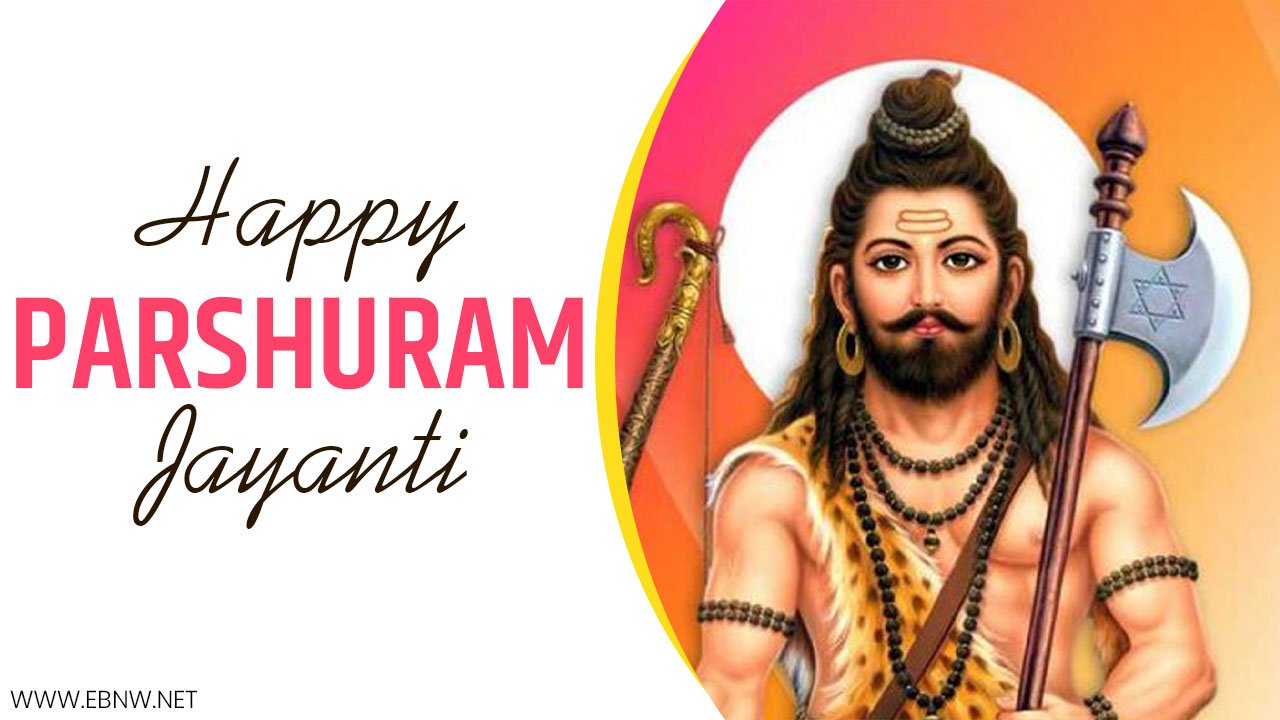
Parshuram Jayanti: Know Facts, Significance and History…

0

Parshuram Jayanti is celebrated on the Tritiya (third day) of the Shukla Paksha in the month of Vaishakh. This day often coincides with Akshaya Tritiya. As per the scriptures, Lord Parashurama, regarded as the sixth incarnation of Lord Vishnu, was born during the Pradosh Kaal (evening twilight) on this Tritiya Tithi.

It is believed that Lord Parashurama was sent to earth to eradicate the sins and injustices committed by corrupt kings. Devotees also strongly believe that Lord Parashurama is a Chiranjeevi — an immortal being — and that he is still present on earth.

Parshuram Jayanti Rituals

Devotees often observe fasts, perform special pujas, and seek blessings for courage, protection, and righteousness on this sacred day.

On Tritiya Tithi, devotees begin their worship of Lord Parshuram by waking up early during Brahma Muhurta (around 4:00 AM to 6:00 AM). After completing morning rituals and taking a bath, they wear clean clothes and prepare for the puja.

Parshuram Jayanti: Step-by-step method for worshipping Lord Parshuram:

  1. Preparation:
    • Set up a clean altar in your home temple or a purified corner.
    • Spread a clean cloth and install a picture or idol of Lord Parshuram.
  2. Offerings:
    • Offer water, sandalwood paste, gulal (red powder), flowers, and Tulsi leaves to the deity.
    • Place sweets and fruits as offerings.
  3. Puja and Aarti:
    • Perform an aarti using a ghee lamp and incense sticks.
    • Chant mantras or recite prayers dedicated to Lord Parshuram.
  4. Fasting Rules:
    • Those observing a fast should refrain from consuming grains and remain on a fruit or milk diet throughout the day.

Special Note:
It is said that Lord Parshuram undertook severe penance to please Lord Shiva, from whom he received his divine weapon — the Parshu (axe).

Who is Lord Parshuram?

  • Devotion to Lord Shiva: Lord Parshuram is considered one of the greatest devotees of Shiva.
  • Gift of the Parshu: Due to his pure devotion, he received a divine axe (Parshu) and unparalleled knowledge of warfare from Lord Shiva himself.
  • Invincible Warrior: With Shiva’s blessings, Parshuram became undefeatable in battles.
  • Teacher of Warriors: He trained legendary Mahabharata figures like Bhishma, Dronacharya, and Karna in the art of warfare.
  • Birth and Origin:
    • Born to Rishi Jamadagni and Mata Renuka.
    • It is believed he was born in the Janapav Hills near Indore, where a Shiva temple stands today.
  • Immortal Being: Lord Parshuram is believed to be a Chiranjeevi (immortal) and is said to still live among us.

Philosophical Significance:
Legends about Parshuram highlight the dangers of uncontrolled anger and the consequences of human emotions like violence and rage.

Significance of Parshuram Jayanti

Parshuram Jayanti celebrates the birth of the warrior-sage who was born to eradicate injustice and protect dharma (righteousness) on earth.
He is revered as the only disciple of Lord Shiva who was gifted divine weaponry and unmatched martial skills.
This day reminds devotees of the importance of righteousness, humility, and discipline in life.