Home Blog Page 300

The Life and Legacy of Swami Chinmayananda Saraswati

0

Swami Chinmayananda Saraswati (1916–1993) stands as one of the most influential spiritual teachers of the 20th century. Revered for his revival and popularization of Advaita Vedanta—the non-dualistic philosophy rooted in the Upanishads—he made timeless wisdom accessible to millions around the globe. Through his eloquence, intellectual clarity, and profound insight, he founded the Chinmaya Mission, a worldwide organization dedicated to spiritual education and service.

Early Life and Transformation

Born on May 8, 1916, in Ernakulam, Kerala, as Balakrishnan Menon, he hailed from a respected family steeped in culture and tradition. His father, Vadakke Kurupath Menon, was a judge, and his mother, Parukutty Amma, a devout and nurturing influence.

Balakrishnan, affectionately called Balan, was far from spiritual in his youth. Energetic, inquisitive, and modern in outlook, he pursued English literature at St. Thomas College, Thrissur, and later at Madras University. His interest in journalism led him to a postgraduate degree from Lucknow University. As a nationalist, he wrote revolutionary articles against British colonialism, landing him in jail for his activism.

As a journalist with The National Herald in Delhi, he quickly rose in prominence. Yet beneath his success, he harbored deep existential questions about life’s meaning, happiness, and India’s spiritual heritage. Initially skeptical of religious life, he set out to investigate it with a critical eye.

A Spiritual Awakening

In 1947, a visit to Swami Sivananda’s ashram in Rishikesh marked a turning point. Expecting to expose hypocrisy, Balakrishnan instead encountered genuine wisdom and compassion. Deeply moved, he began studying the Upanishads and the Bhagavad Gita under Swami Sivananda’s guidance.

In 1949, he embraced monastic life and was initiated as Swami Chinmayananda Saraswati—“one who revels in the bliss of pure consciousness.” To further his spiritual training, he studied in solitude under Swami Tapovan Maharaj in the Himalayas, dedicating eight years to intensive Vedantic study and meditation.

Spreading the Light of Vedanta

In the early 1950s, Swami Chinmayananda resolved to bring the teachings of Advaita Vedanta out of monasteries and into the public sphere. At the time, spiritual texts were largely inaccessible to the general public, especially the youth. Determined to change this, he began delivering public lectures—Jnana Yagnas—starting in Pune in 1951.

These talks, delivered in English, were revolutionary. He explained Vedantic concepts with clarity, humor, and relevance to everyday life, drawing diverse audiences—students, homemakers, professionals, and scholars alike.

His central message was that Vedanta is not a philosophy of renunciation, but a practical path to living with awareness, compassion, and purpose. He emphasized the Advaitic truth: the individual self (Atman) is identical with the universal consciousness (Brahman).

Founding the Chinmaya Mission

In 1953, to support his growing work, Swami Chinmayananda founded the Chinmaya Mission in Madras (now Chennai). Its goal: to spread Vedantic wisdom and promote Indian culture through education, service, and spiritual practice.

The Mission rapidly expanded across India and then globally, establishing study groups, youth wings (Chinmaya Yuva Kendra), children’s programs (Bala Vihar), and women’s groups (Devi Forums). The Mission also created schools, colleges, hospitals, and rural development programs, embodying Swami Chinmayananda’s vision of service-oriented spirituality.

He authored over 95 books, including widely respected commentaries on the Upanishads and the Bhagavad Gita. His Holy Gita and Kindle Life remain seminal texts for spiritual seekers.

Global Impact and Enduring Legacy

Swami Chinmayananda began global tours in the 1960s, taking the message of Vedanta to audiences in the U.S., Europe, Australia, and beyond. His engaging presence and relatable teachings earned him international admiration.

He strongly believed in empowering women and youth. Through various mission initiatives, he inspired a new generation to embrace spiritual values and contribute to society. His Chinmaya Vidyalayas—schools that combine academic excellence with cultural education—continue this legacy.

Despite health challenges later in life, Swami Chinmayananda remained active, delivering thousands of discourses and training disciples. He attained Mahasamadhi (left his physical body) on August 3, 1993, in San Diego, California.

Core Teachings

Swami Chinmayananda’s teachings distilled the essence of Advaita Vedanta:

  • Self-Realization: Realizing the Atman is the highest goal of life.
  • Practical Spirituality: Live in the world with wisdom and detachment.
  • Mind Management: Control of the mind leads to freedom and peace.
  • Selfless Service: Spiritual growth manifests through love and service.
  • Scriptural Study: The Gita and Upanishads are timeless guides for life.

Lasting Influence

Today, the Chinmaya Mission operates over 300 centers worldwide. Its educational institutions, social initiatives, and spiritual programs continue Swami Chinmayananda’s mission of inner transformation and societal upliftment.

His life is a shining example of how spiritual insight can illuminate not just individual lives, but entire communities. From a skeptic to a sage, his journey inspires millions to seek the truth within.

Key Dates in the Life of Swami Chinmayananda

  • May 8, 1916 – Born as Balakrishnan Menon in Ernakulam, Kerala
  • 1947 – Visit to Swami Sivananda in Rishikesh; spiritual turning point
  • 1949 – Initiated as Swami Chinmayananda Saraswati
  • 1951 – First Jnana Yagna held in Pune
  • 1953 – Chinmaya Mission founded in Madras
  • 1960s–70s – Began global Vedanta tours
  • August 3, 1993 – Attained Mahasamadhi in San Diego, USA

Swami Chinmayananda’s vision of a spiritually awakened world lives on through the countless hearts he touched and the mission he inspired. His legacy remains a guiding force for seekers everywhere.

The Epic Rise of Coca-Cola: A Fizz That Changed the World

0

On May 8, 1886, in a small Atlanta pharmacy, Dr. John Stith Pemberton created a unique carbonated drink that would later become Coca-Cola, the world’s most recognised soft drink. What started as a medicinal tonic transformed into a symbol of refreshment, joy, and American ingenuity.

The Origins of Coca-Cola: A Pharmacist’s Dream

Dr. Pemberton blended a caramel-colored syrup with carbonated water and extracts from coca leaves and kola nuts. This fizzy concoction was first served at Jacob’s Pharmacy and quickly caught the public’s imagination. Each glass cost just five cents, but it carried the potential to revolutionise the beverage industry.

Early Marketing Magic

Enter Asa Candler, a shrewd businessman who acquired full control of Coca-Cola by 1891. He launched aggressive marketing campaigns, standardized bottling, and turned the soda fountain drink into a national brand.

The Game-Changer: The Contour Bottle

In 1915, Coca-Cola faced imitation threats. To protect the brand’s identity, the company introduced the now-iconic contour bottle, designed by the Root Glass Company. This curvy, grippable bottle could be identified by touch, even in the dark, and became a branding masterpiece.

A Cultural Symbol

The unique bottle soon appeared in advertising, movies, pop art, and was embraced as a symbol of American culture. From World War II to global peace campaigns, Coca-Cola became more than a beverage—it was a statement.

Coca-Cola’s Global Expansion: From Local Favorite to Worldwide Phenomenon

By the mid-20th century, Coca-Cola had expanded to over 200 countries. During World War II, the company supplied U.S. troops with Coca-Cola, further cementing its patriotic and global identity. Its reach extended from bustling urban centers to remote villages.

Marketing that Connects

Legendary advertising campaigns featuring Santa Claus, polar bears, and the catchy “Open Happiness” and “Share a Coke” slogans have built emotional connections with generations of consumers. These campaigns made Coca-Cola not just a drink but an emotional brand experience.

Coca-Cola Today: Innovation and Legacy

With more than 1.9 billion servings consumed daily, Coca-Cola has become a leader in the global beverage industry. Yet, the essence of the brand remains unchanged—a symbol of joy, refreshment, and unity.

Sustainability and Social Impact

Modern Coca-Cola focuses on sustainability, recycling, and community initiatives, aiming to reduce its environmental impact while maintaining its position as a household name.

Conclusion: Coca-Cola—The Fizz That Changed the World

From its humble beginnings in an Atlanta pharmacy to becoming a global powerhouse, Coca-Cola’s story is one of innovation, strategic branding, and emotional connection. As we celebrate May 8 – Coca-Cola Day, we honor not just a drink, but a legacy that has refreshed the world for over a century.

Order Food in Train: Why Train food app is savior for Travelers

0

Train trips become an integral part of the long train journey. as it connects millions of rail networks on a daily basis. if you are solo travelers or visiting for a business purpose or for a comfort and convenience and ease for a train journey. One of the major problems and concerns of the  train travelers is hygienic, fresh and tasty meals on wheels, so the train food delivery app fulfils all your craving and caters all the taste. That is why digital innovations like RailRestro and RailMitra come in and transform the way people order food in train and manage their travel needs.

In this article, we explore how these two platforms are leading the charge of food delivery in train, and how apps like these are setting a new standard for travel convenience in India.

The Growing Demand for Food Delivery in Train

The days are gone when travellers relied solely on pantry cars or local vendors for meals during train journeys. With changing lifestyles, hygiene concerns, and the growing demand for variety, passengers now expect better options like they do at home or while flying. Today’s train traveler looks for quality food, timely service, and the ability to customize their order without hassle.

The requirement of food inside the train increases so food delivery in train fulfil the demand of travellers. Train food delivery app become an integral part of the journey as they become a partner with top fssai certified restaurants across the country. RailMitra delivers meals right to your train seat. With the click of a button, travellers can now browse menus, place orders, and enjoy their favorite meals whether it’s a thali, biryani, pizza, or even a regional specialty.

Order Food on Train: The Digital Shift in Indian Railways

Order food on train is no longer a problem. It is a standard feature of a smart travel experience. Thanks to smartphone penetration and increased internet accessibility across India, travellers can use mobile apps or official websites to get meals on wheels delivered to them at their desired station.

But what really makes the experience seamless is the coordination between technology and logistics. Travel platforms like RailRestro are doing exactly that, bridging the gap between the food industry and railway travellers by leveraging current time train tracking, fssai certified restaurant partnerships, and customer support to ensure every delivery is successful.

RailRestro: India’s Leading Food Delivery in Train App

At the heart of this transformation is RailRestro, one of India’s most trusted platforms and best app to order food in train. Designed specifically for Indian railway travellers, RailRestro allows users to browse menus from fssai certified restaurants and place orders in advance or even during the journey. Whether you are craving a light breakfast, a full lunch combo, or a sweet treat with tea, RailRestro has you covered.

Key features of RailRestro:

  • Best app to order food in train via official website or user friendly mobile app
  • PAN India coverage across 450+ stations
  • Partnered with 2500+ fssai certified restaurants
  • Pre booking and customise group order
  • Free delivery in train without any hidden charges at all stations
  • 24/7 customer support
  • Multiple payment options including UPI, net banking, and cash on delivery (COD)

Using RailRestro, travellers simply need to enter their PNR number or train details, choose a desired station where they want the food delivered, and select their preferred meal. The platform automatically tracks the train in current time and ensures the meals on wheel reaches the traveller at the train seat and on time.

As a best app to order food in train, RailRestro has not only improved the quality of train travel but also supported local fssai certified restaurant partners by connecting them to thousands of new customers daily.

RailMitra: More Than Just a Food Partner

While RailRestro focuses on food, RailMitra steps in as a broader travel utility app for train travellers. Think of it as your digital travel assistant. From checking live train running status to PNR status check and tracking coach positions, RailMitra offers it all in one place.

Key features of RailMitra:

  • Live train running status
  • PNR status check & confirmation chances
  • Train schedule & seat availability
  • Train between stations
  • Order food on train

Together, RailRestro and RailMitra form a powerful ecosystem for modern railway travelers in India. While RailRestro handles your food cravings, RailMitra ensures you stay updated with train related information, helping you make informed travel decisions throughout your journey.

Why Every Train Traveler Needs These Apps

The modern Indian traveler values time, convenience, and quality and rightly so. With apps like RailRestro and RailMitra, travellers no longer need to compromise on hygiene and taste of train food delivery, worry about finding their train platform, or stand in long queues to check their ticket status.

Here is why you should consider using these apps:

  • Save time and avoid platform rush
  • Enjoy restaurant style food delivered to your train seat
  • Plan your journey better with real time updates
  • Pre book or order food on train even while traveling
  • Avoid unreliable food vendors at unknown stations

Whether you are traveling for business, vacation, or a quick family visit, these apps add tremendous value to your journey and take the stress out of train travel.

Conclusion: Travel Smarter, Eat Better

As the Indian railway ecosystem modernizes, platforms like RailRestro, best app to order food in train and RailMitra, all in one railway app are leading the charge in making train travel more enjoyable and efficient. By offering reliable services and features all in one place, they have transformed the way we experience train journeys.

So next time you pack your bags, and do not forget to download the RailRestro and RailMitra mobile apps or visit their official websites to ensure you travel smart and eat well on the move.

Start your journey right and Order food on train with RailRestro and travel with confidence using RailMitra!

World Red Cross Day: Know Why We Celebrate It With Compassion, Resilience, and Global Impact…

0

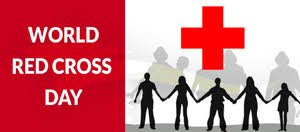
World Red Cross Day, observed every year on May 8, is not just a day of remembrance—it’s a global call to action. Rooted in compassion and humanitarian values, the day honors the birth anniversary of Henry Dunant, the founder of the International Red Cross and the first Nobel Peace Prize laureate. As we commemorate this day, we recognize the incredible contributions of the International Red Cross and Red Crescent Movement and encourage individuals to join in building a more empathetic, resilient, and inclusive world.

Why World Red Cross Day Matters: A Celebration of Humanitarian Spirit

World Red Cross Day is a powerful reminder of our shared responsibility to support those in need. It highlights the core values of the Red Cross: humanity, impartiality, neutrality, independence, voluntary service, unity, and universality. These guiding principles not only inspire global humanitarian work but also urge individuals to act with kindness in everyday life.

To make this day impactful, it’s essential to share personal stories, visuals, and actionable steps that resonate with readers emotionally and inspire them to participate in meaningful ways.

Historical Significance: The Birth of a Humanitarian Vision

The Red Cross movement began in 1859, when Henry Dunant witnessed the horrific aftermath of the Battle of Solferino. His 1862 book, A Memory of Solferino, proposed the creation of neutral organizations to aid wounded soldiers, which led to the founding of the International Committee of the Red Cross (ICRC) in 1863.

This humanitarian vision soon gained international recognition. The First Geneva Convention of 1864, largely influenced by Dunant’s advocacy, laid the foundation for protecting war victims and medical personnel. World Red Cross Day celebrates this legacy, reminding us of the global commitment to alleviating human suffering, regardless of borders or conflict.

Global Impact: How the Red Cross Has Transformed Lives Worldwide

Over the decades, the Red Cross has played a vital role in responding to global crises. From world wars to natural disasters, and public health emergencies to refugee aid, its humanitarian footprint spans across nations and cultures.

Key Contributions:

  • World Wars: Offered critical medical aid, facilitated communication between POWs, and supported displaced families.
  • Disaster Relief: From the 1906 San Francisco earthquake to recent hurricanes and earthquakes, the Red Cross has been a first responder in emergencies worldwide.
  • Public Health: Initiated life-saving programs like blood donation drives, vaccination campaigns, first-aid training, and mental health support.

These milestones, celebrated on World Red Cross Day, underscore the organization’s lifesaving mission and its unwavering commitment to humanitarian service.

Modern Challenges: Evolving Humanitarian Needs in a Changing World

As global crises grow more complex, the Red Cross faces new challenges that require adaptive strategies, innovation, and sustained global cooperation.

1. Climate Change & Natural Disasters

Rising temperatures and extreme weather events are increasing the demand for emergency preparedness. Coastal areas and small island nations face heightened risks from floods and sea-level rise, demanding localized and sustainable response strategies.

2. Armed Conflict & Displacement

Crises in countries like Ukraine, Syria, and Yemen have displaced millions. The Red Cross must maintain its neutrality while delivering aid in conflict zones, often under threat to staff and infrastructure.

3. Public Health Crises

From COVID-19 to emerging diseases, public health remains a top priority. The Red Cross continues to support vaccination efforts, mental health initiatives, and community health education—especially in low-income or underserved regions.

4. Digital Ethics & Misinformation

While technology offers new tools for outreach, it also introduces risks—such as misinformation, cyber threats, and data privacy issues. The Red Cross must balance digital innovation with ethical responsibility.

5. Funding & Volunteer Mobilization

With growing global needs, securing funding and engaging volunteers are critical. The organization must rethink traditional models and connect with younger generations through digital campaigns, storytelling, and flexible volunteering opportunities.

6. Urbanization & Inequality

Rapid urban growth increases vulnerability to disasters in cities, especially in underserved neighborhoods. The Red Cross must tailor its services to urban risks, address health disparities, and advocate for inclusive public policy.

Call to Action: How You Can Support the Red Cross Today

World Red Cross Day is more than a celebration—it’s a call for collective action. Every individual has the power to make a difference.

Here’s how you can contribute:

  • Donate to support ongoing humanitarian projects.
  • Volunteer your time and skills in local Red Cross initiatives.
  • Share the Red Cross mission on social media to raise awareness.
  • Participate in blood donation drives and first-aid training.
  • Educate others about the history and importance of humanitarian values.

Conclusion: Honoring Humanity, One Act at a Time

This May 8, let’s come together to honor the legacy of Henry Dunant and the enduring work of the Red Cross. By embracing compassion, supporting those in crisis, and promoting humanitarian principles, we can help keep humanity alive in the face of adversity

Mockdrill Awareness: Community Programme on Blackout Precautions Conducted in Jaipur by IPS Officer Pankaj Chaudhary

0

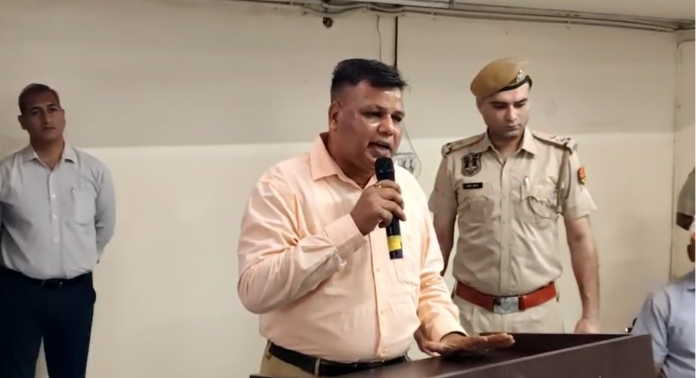
A mockdrill awareness programme was conducted in Jaipur on May 7, 2025 by Pankaj Chaudhary, IPS, Superintendent of Police and Nodal Officer at The Cambridge School, Mahesh Nagar, Jaipur, at 9:30 AM as part of a citizen awareness campaign.

The event began with the National Anthem and saw the participation of the entire school staff, local business association leaders, social workers, media personnel, and the Mahesh Nagar Police Station team. Shri Chaudhary delivered a detailed presentation on the use of sirens and blackout procedures, educating students and citizens on how to respond effectively during enemy attacks.

Awareness Campaign Continues in Kathputli Nagar

At 10:00 AM, the campaign moved to Kathputli Nagar’s Kacchi Basti, where Shri Chaudhary demonstrated the alert process using sirens and mock drills. Residents were informed about protective measures during wartime situations and how to stay safe during potential enemy airstrikes.

Session at Central Sanskrit University, Triveni Nagar

Later, at 11:00 AM, a session was held at the Central Sanskrit University, Triveni Nagar, where hundreds of students gathered. The event commenced with the National Anthem, followed by sirens and video demonstrations. In his address, Shri Pankaj Chaudhary expressed pride in the recently executed “Operation Sindoor” and emphasized the importance of national unity and readiness in times of conflict.

Also present was Professor Sudesh Kumar Sharma, Director of the university, along with faculty members, Shiprapath Police Station officials, and other dignitaries. Shri Chaudhary stressed that India’s unity and integrity stand as a global example, and detailed knowledge about sirens and blackouts is crucial for student preparedness.

Professor Sharma also shared his experiences from Jammu and Kashmir, elaborating on the importance of alert systems and civil readiness during emergencies.

Colonel Sophia Qureshi: This First Woman To Lead An Indian Army Contingent Abroad Is Now The Face Of Operation Sindoor…

0

By Anjali Solanki

Colonel Sophia Qureshi, a name synonymous with courage, leadership, and breaking barriers, has once again etched her name in the annals of Indian military history.

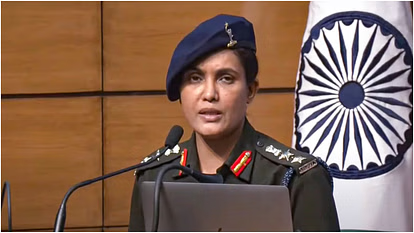
Addressing the nation at a high-level press briefing in New Delhi alongside the Foreign Secretary, Col. Qureshi detailed the success of Operation Sindoor, a daring cross-border strike that has captured global attention. Her poised and commanding presence at the briefing was not merely a procedural appearance it was a testament to the evolving face of India’s military leadership and the indelible mark of a woman who has consistently defied the odds.


In 2016, at the age of 36, Col. Qureshi made history as the first Indian woman officer to lead an Army contingent in a multinational military exercise. Commanding a 40-member Indian team during Exercise Force 18 in Pune, she stood out as The First Woman To Lead An Indian Army Contingent Abroad. She also stood out as a leader who earned universal respect for her strategic acumen and unflinching resolve. The exercise, a complex coordination of military prowess and diplomacy, showcased her ability to navigate high-stakes environments with finesse. Her leadership during the event was a defining moment, proving that gender is no barrier to excellence in the Indian Armed Forces

An officer of the Corps of Signals, Col. Qureshi’s career has been marked by her ability to thrive in challenging and high-pressure settings. From managing critical communication networks to leading troops in volatile regions, she has commanded both men and missions with a rare blend of precision and empathy. Her journey in the Indian Army reflects a relentless pursuit of excellence, earning her decorations and admiration from peers and superiors alike. Yet, it is her ability to lead by example whether in the field or at the podium that sets her apart as a role model for aspiring officers, particularly women.
The recent Operation Sindoor, a meticulously executed cross-border strike, has further cemented Col. Qureshi’s reputation as a trailblazer. While details of the operation remain classified, her address to the nation underscored its strategic importance and the Indian Army’s unwavering commitment to national security. Standing alongside the Foreign Secretary, she articulated the operation’s objectives with clarity and authority, embodying the synergy between military precision and diplomatic finesse. Her presence at such a high-profile briefing was a powerful reminder of how far India’s military leadership has progressed in embracing diversity and meritocracy.

Col. Qureshi’s journey is not just a personal triumph but a beacon of change in a traditionally male-dominated institution. Her rise through the ranks challenges stereotypes and inspires a new generation of women to pursue careers in the armed forces. Beyond her tactical expertise, she represents a shift in the perception of leadership—one where competence, courage, and compassion take precedence over convention. Her story resonates far beyond the barracks, serving as a clarion call for gender equality and empowerment across all spheres.
As India celebrates the success of Operation Sindoor, Col. Sophia Qureshi stands tall as a symbol of progress. Decorated, battle-ready, and unrelenting, she is redefining what it means to lead in uniform.

From the multinational stage in 2016 to the national spotlight in 2025, her legacy is one of breaking barriers and building bridges. Col. Qureshi is not just a commander she is a visionary, a trailblazer, and an enduring role model for a nation on the rise.

What Is the Meaning Behind Operation Sindoor? 26 Tourists Killed by Terrorists — Why the Army Chose This Name for Its Retaliation

0

Operation Sindoor…Wanna know what it stands for and why an army operation has been named after the name ‘Sindoor.’ On April 22, a brutal terrorist attack in the Baisaran Valley of Pahalgam claimed the lives of 26 innocent tourists. Just 15 days later, the Indian Army launched a precise and powerful airstrike targeting nine terrorist camps located in Pakistan’s Punjab and Pakistan-occupied Kashmir (PoK). These camps were the very locations where plots against India were being hatched and executed.

The name of the retaliation — Operation Sindoor — carries deep emotional and symbolic significance. Here’s why.

The Pain Behind the Name

During the Pahalgam attack, terrorists specifically targeted Hindu tourists. According to eyewitness accounts and survivors, the terrorists separated people based on their religion — asking Muslims to recite the Kalma and killing those who failed to do so and who were Hindus.

One such victim was Shubham, who married Aishwarya just two months back. Second casualty was Lt Vinay Narwal who tied the knot just seven days back to this gruesome incident.

So with this name, a strong message has been given which symbalosis ‘Sindoor Against Sindoor.’

Who Are Colonel Sophia and Wing Commander Vyomika? Know the Stories of These Two Brave Officers

0

Colonel Sophia Qureshi of the Indian Army and Wing Commander Vyomika Singh of the Indian Air Force recently addressed the press, revealing details of India’s successful military action against Pakistan under Operation Sindoor. Their briefing showcased not just the tactical success of the mission but also the incredible capabilities of these two distinguished officers.

Colonel Sophia Qureshi – Army Communications Expert

Colonel Qureshi serves in the Indian Army’s Signal Corps, specializing in military communications. She has a long and distinguished service record:

  1. UN Peacekeeping in Congo (2006): Served as a military instructor under the United Nations mission, playing a key role in protecting women and children from violence.
  2. Operation Parakram (2001–2002): Posted on the Punjab border, she was awarded a citation by the General Officer Commanding-in-Chief for her dedicated service.
  3. Northeast India Flood Relief: Received a citation from the Signal Officer-in-Chief for exceptional communication work during disaster relief operations.

Her strategic role in Operation Sindoor ensured seamless communication between ground and air units during the mission.

Wing Commander Vyomika Singh – Specialist Helicopter Pilot

Wing Commander Vyomika Singh is a veteran helicopter pilot in the Indian Air Force with over 21 years of service. She operates advanced helicopters such as the Chetak and Cheetah in some of the most challenging terrains in the country.

A Childhood Dream to Fly

Vyomika’s journey began in school when her classmates asked the meaning of her name. She discovered that “Vyomika” means “sky traveler” or “one who flies.” That moment ignited a lifelong passion to become a pilot. She joined the NCC and later entered the IAF through the Short Service Commission.

Today, she has logged more than 2,500 flight hours, often in tough conditions like those in Jammu & Kashmir and the Northeast.

  • Arunachal Pradesh Rescue (2020): Led a critical relief operation in mountainous terrain, successfully evacuating stranded civilians.
  • Mount Manirang Expedition (2021): Participated in a tri-service all-women mountaineering mission, scaling the 21,650-feet peak.

Together, Colonel Sophia and Wing Commander Vyomika symbolize the courage, skill, and leadership of India’s armed forces. Their presence in the spotlight is not just a testament to India’s military success but also a powerful statement on the evolving role of women in national defense.

Operation Sindoor: Know What Sindoor Symbolises in India

0

Sindoor: A Symbol of Power, Devotion, and Protection

In Hindu culture, sindoor is not merely a mark of beauty—it symbolises power, devotion, and protection. When the nation launched an operation bearing this name, it sent a clear message: this was not a symbolic act, but a solemn vow of righteousness against evil. On the night the Indian Armed Forces carried out precise strikes on terrorist hideouts, the skies were aligned with the Purva Phalguni Nakshatra—associated with the divine feminine energy, Shakti.

The spirit of the mission was deeply inspired by Goddess Durga, revered as the destroyer of demons. Her grace seemed to guide and empower the operation. This alignment was not mere coincidence, but a spiritual sign—when adharma (unrighteousness) rises, divine power manifests to protect the nation.

When the Stars Aligned: Operation Sindoor as a Symbol of Dharma

Operation Sindoor was not just an exhibition of India’s military strength and strategic prowess—it reflected the depth of the nation’s faith and cultural consciousness. When the spirit of national duty awakens, every weapon becomes a sacred offering, and every soldier fights with the spirit of a divine warrior.

This operation proved that India doesn’t merely defend its borders—it safeguards its soul, its culture, and its dharma with unwavering devotion. It was more than a military triumph; it was a confluence of strength and spirituality—an act of sacred retribution that future generations will remember as a defining moment of spiritual resolve.

Mockdrill: Know What It Is and What Directions Have Been Issued About It and Why…?

0

Mockdrill exercise will be performed in different districts of India on May 7. The ministry of Home’ order comes following the deadly terror attack in Pahalgam on April 22. The government of India is preparing to execute one of the most extensive nationwide civil defence mock exercises in recent history. The exercise, set for May 7, intends to evaluate the nation’s readiness for hostile attacks through various emergency simulations. Let’ know details of this exercise…

Question 1: What directive has the Government of India issued regarding the civil defense mock drill?


Ans: On May 5, the Ministry of Home Affairs issued a directive to conduct civil defense mock drills in 244 designated districts across the country.

The nationwide drill, scheduled for May 7, will train citizens on how to protect themselves during an attack. These drills will be conducted in both urban and rural areas of all states and Union Territories.

Participants will include District Collectors, Civil Defense Volunteers, Home Guards, National Cadet Corps (NCC), National Service Scheme (NSS), Nehru Yuva Kendra Sangathan (NYKS), and students from schools and colleges.

The exercise will focus on teaching people how to stay safe during an attack, testing the effectiveness of warning systems, and assessing the coordination and response of control rooms.

The directive was issued under Section 19 of the Civil Defence Act, 1968, which empowers the central government to enforce civil defense training during times of attack or disaster. The Act also mandates that citizens must comply with civil defense rules during emergencies. Violation of these rules can result in imprisonment for up to three months, a fine of up to ₹500, or both.

Question 2: Which 244 districts will have the mock drill?

Answer: In March 2010, the Directorate General of Civil Defence under the Ministry of Home Affairs classified 259 districts into three categories based on sensitivity.

Due to the current tensions between India and Pakistan, mock drills will be conducted in 244 of these sensitive districts. Although the official list has not yet been released by the government, the following regions are likely to be included:

  • Border states such as Jammu & Kashmir, Rajasthan, Gujarat, and Punjab, which share boundaries with Pakistan.
  • Strategic zones including areas with critical defense installations, power grids, ports, refineries, and essential industries, which could be potential targets.
  • Coastal districts where enemy ships could launch attacks and densely populated urban areas that could suffer heavy damage in the event of an attack.

What is a civil defense mock drill?

Answer: A civil defense mock drill is a simulated emergency preparedness exercise designed to train citizens on how to respond during war, air raids, natural disasters, or other emergencies.

In simple terms, it is a rehearsal. Participants—including civilians, students, volunteers, home guards, police, and local officials—practice what actions to take during a real crisis.

For example: If the drill simulates an air raid, sirens will sound, electricity may be cut, people will move to safer areas, and volunteers will assist the “injured.” While the scenario is not real, it helps participants learn exactly what to do in an actual emergency.

There is no single organization that conducts the drill; rather, around 12 government and non-government organizations work together:

  • Ministry of Home Affairs: The central authority responsible for planning, funding, and issuing orders for the drill.
  • DGFS & CDHG (Directorate General of Fire Services, Civil Defence, and Home Guards): Assist with on-ground implementation and manage treatment of mock casualties.
  • Home Guards: Trained to assist the police and administration in emergencies; they help manage crowds and guide people to safety.
  • Police and Fire Services: Local police oversee the drill’s management, while fire personnel simulate rescue operations like evacuating people from debris.
  • NCC (National Cadet Corps): Student cadets actively participate in the drill, help guide people to safety, and support other drill activities.
  • NSS (National Service Scheme): Primarily composed of college students who raise awareness and assist with crowd control.
  • NYKS (Nehru Yuva Kendra Sangathan): Mobilizes youth participation in the drills.
  • Red Cross Society: Provides first aid and medical assistance to mock casualties; trained to deliver emergency medical services.
  • Schools and Colleges: Students and teachers play a crucial role. Children participate in evacuation and blackout drills, while teachers guide and supervise them.
  • NGOs: Non-governmental organizations help spread awareness and mobilize local communities, especially in rural areas.