Home Blog Page 28

The Most Stressful Aspects of Being a Sole Trader (And Their Solutions)

0

Pexels – CC0 Licence

Being a sole trader can be an extremely exciting and rewarding experience, but it’s not always as straightforward as we’d like it to be. While it can look like a dream from the outside, the fact is that operating as a sole trader can throw up a long list of stressful challenges that regular employees simply don’t have to deal with.

That’s the bad news. The good news is that the stressful aspects of being a sole trader are well-known and common, and as such, there are nearly always solutions. In this post, we’ll take a closer look at the headache-inducing aspects of being a sole trader in more detail, as well as outline what you can do to overcome them. 

The Admin Tasks Can Pile Up

You can overlook some sole trader tasks, and they’ll simply go away. Admin tasks are not like that. Not only will they not go away, but they’ll accumulate, and it doesn’t take long before there’s a long, time-consuming list of jobs waiting to be taken care of. Having an endless, messy list of admin duties creates background stress that can be hard to ignore. 

You can’t get rid of admin tasks, but you can optimise your approach to them. Spending a day finding the right tools for each job — one exists, trust us! — and committing to one hour per week to take care of business can keep your admin pile manageable. 

Tax Season Can Be a Headache 

The pressure of having to submit taxes correctly is one of the few times when sole traders will get nostalgic about the days when they were regular employees. The fact that many sole traders leave it late until they start to get organised makes the task even more challenging. 

Sole traders think of tax-related stress as inevitable, but it’s one of those things that’s easily avoidable, provided you have the right tools in place. There are Making Tax Digital for Self Assessment tools that are easy to use, fully automated, and involve no ongoing admin. All you need to do is sign up, connect your business bank account, and then let the software’s auto accountant do the work. It’s an effective way to not only reduce tax-related stress but to eliminate it entirely. 

Cash Flow Troubles

Dealing with cash flow troubles isn’t just a stressful part of being a sole trader — it also puts your business’s existence at risk. Even sole traders who are profitable on paper can find themselves in real trouble if their cash flow isn’t as solid as it could be.

Getting a handle on cash flow really can make a big difference not just to your business’s ability to function, but to eliminating the stress that comes from having less cash to hand than you need to feel secure. The tip we mentioned above about using the right tax software can play a role here, helping to limit your tax obligations by claiming every available expense. Prompt invoicing, subtly raising prices, and auditing expenses can also all help. 
Blue Pottery of Rajasthan: A Timeless Craft in Shades of Blue

0

An Introduction to Blue Pottery

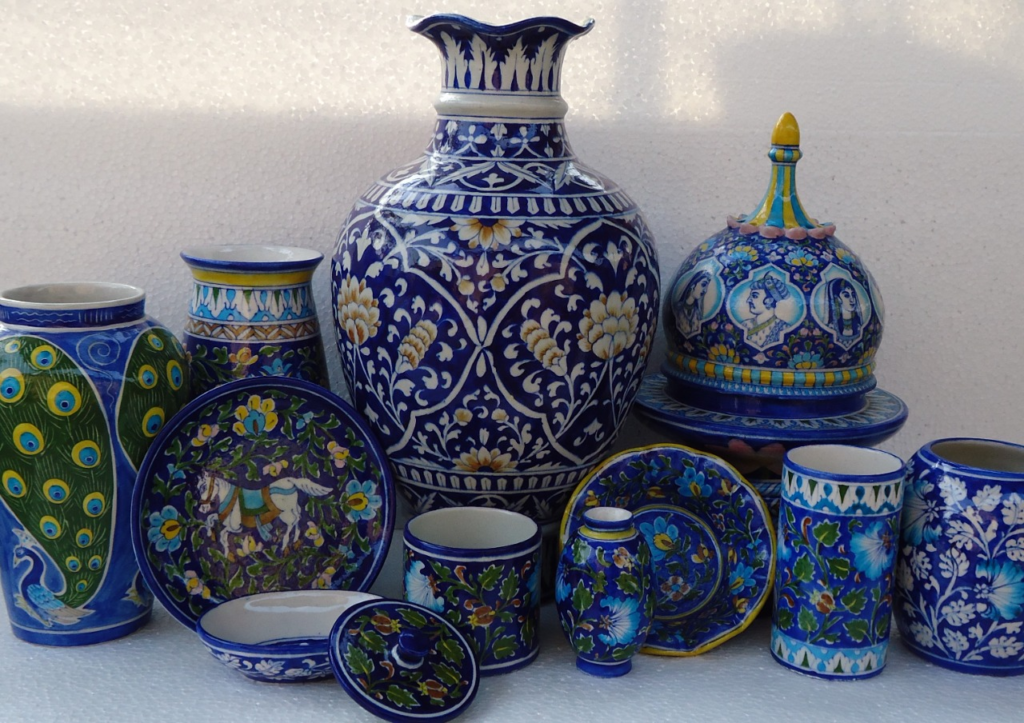
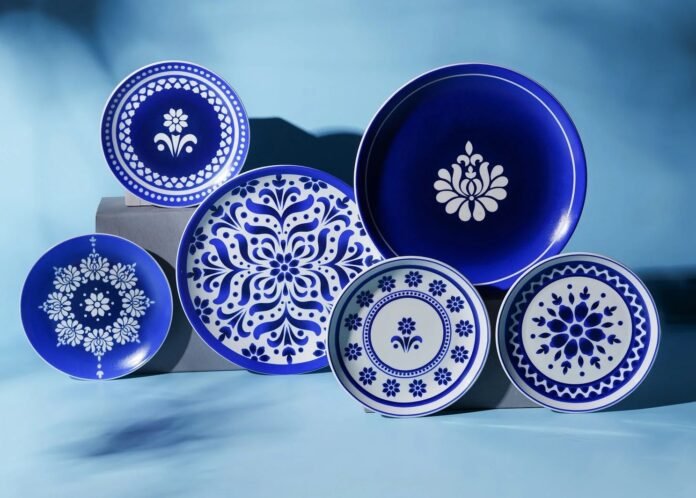
Blue Pottery is one of Rajasthan’s most distinctive and visually striking handicrafts, celebrated for its luminous blue designs set against a pristine white base. Despite being called “pottery,” it is not made from clay, which sets it apart from conventional ceramic traditions. Instead, it belongs to a unique category of quartz-based ceramic art, known for its smooth texture and delicate finish.

Characterised by intricate hand-painted motifs—ranging from flowers and birds to geometric and arabesque patterns—Blue Pottery reflects a refined aesthetic that is both traditional and timeless. The dominant hues of cobalt blue and turquoise, often accented with green, yellow, or brown, lend it an unmistakable identity.

Tracing Its Origins: From Persia to Jaipur

Blue Pottery of Rajasthan: A Timeless Craft in Shades of Blue

The origins of Blue Pottery can be traced back to Persia (modern-day Iran), from where the technique travelled across Central Asia to India. It was introduced during the Mughal era, when artistic exchanges brought Persian designs and glazing techniques into the subcontinent, further enriched by influences from Chinese ceramic traditions.

In India, the craft found a nurturing ground in Jaipur, where it flourished under royal patronage. Over time, however, the tradition declined and nearly faded into obscurity by the early 20th century.

The revival of Blue Pottery is largely credited to the visionary artist Kripal Singh Shekhawa, who, along with cultural patrons, reintroduced and refined the craft, ensuring its survival and global recognition.

Centres of Craftsmanship in Rajasthan

Blue Pottery is most prominently practiced in and around:
●Jaipur – the principal hub and cultural heart of the craft
●Sanganer – known for artisan workshops and production units
●Smaller clusters such as Neota and nearby villages

These regions host skilled artisan communities who continue to preserve and innovate within this traditional art form.

Materials: The Science Behind the Beauty

Blue Pottery of Rajasthan: A Timeless Craft in Shades of Blue

What makes Blue Pottery truly unique is its composition. Instead of clay, a special dough is prepared using:
●Finely ground quartz stone powder
●Powdered glass
●Multani Mitti (Fuller’s Earth)
●Borax and other binding agents
●Natural gum (katira gond) and water

The colours are derived from natural mineral oxides:
●Cobalt oxide for the signature blue
●Copper oxide for green

This combination results in a surface that is smooth, low in porosity, and visually refined, though relatively delicate compared to traditional clay pottery.

The Crafting Process: From Dough to Design

Blue Pottery of Rajasthan: A Timeless Craft in Shades of Blue

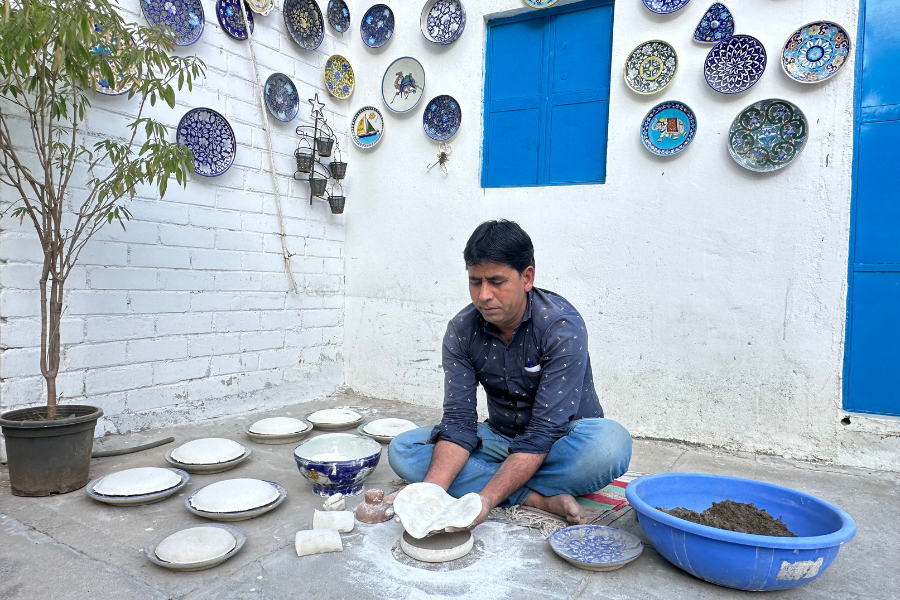
The creation of Blue Pottery is a meticulous, multi-stage process requiring both technical skill and artistic precision:
1. Preparation of the Dough
Raw materials are blended into a soft, pliable dough.
2. Moulding
The dough is pressed into Plaster of Paris (POP) moulds to achieve the desired shapes.
3. Drying and Smoothing
The formed pieces are dried and carefully finished to remove imperfections.
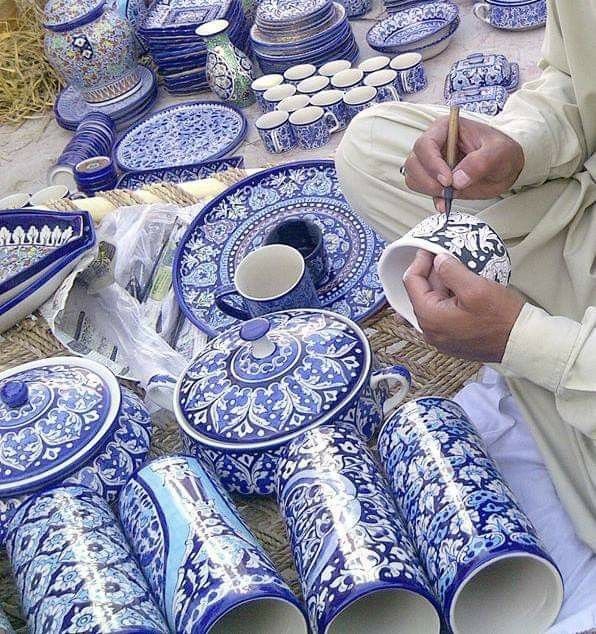
4. Designing and Painting
Artisans sketch patterns and hand-paint them using oxide-based pigments.
5. Glazing
A transparent glaze is applied, giving the piece its characteristic shine.
6. Firing
The pieces are fired in kilns at relatively low temperatures, typically around 800–850°C, which helps set the glaze and colours.

Products and Their Uses

Blue Pottery of Rajasthan: A Timeless Craft in Shades of Blue

Blue Pottery finds expression in a wide variety of products, including:
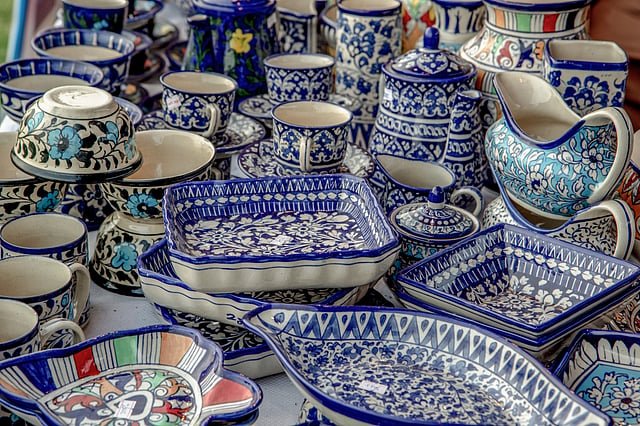
●Decorative plates, bowls, and vases
●Tiles used in architecture and interior décor
●Tea sets, cups, and utility items
●Coasters, trays, soap dishes, and door knobs

While traditionally ornamental, many contemporary items are now designed for functional use, with several artisans adopting lead-free glazing techniques to enhance safety.

The Artisans: Keepers of a Living Tradition

At the heart of Blue Pottery lies the dedication of its artisans—skilled craftspeople who often inherit their knowledge through generations. Working in small workshops, particularly around Jaipur, they combine traditional methods with evolving designs to meet modern tastes.

The revival and continued promotion of this craft have not only preserved cultural heritage but also created sustainable livelihoods for artisan communities.

Cultural Importance and Enduring Appeal

Blue Pottery stands as a remarkable example of cultural fusion—blending Persian elegance, Mughal sophistication, and Rajasthani creativity. Its significance lies in:
●Heritage Value: A centuries-old tradition rooted in cross-cultural exchange
●Artistic Excellence: Intricate hand-painted craftsmanship
●Economic Role: Supporting local artisans and craft industries
●Global Recognition: Widely admired and exported across the world

Conclusion

Blue Pottery is more than a decorative art—it is a narrative of history, resilience, and artistic brilliance. From its journey across continents to its revival in the workshops of Jaipur, it continues to enchant with its serene blues and intricate designs.

In every piece lies not just beauty, but a legacy—one that reflects the enduring spirit of Rajasthan’s artisans and the timeless charm of handcrafted art.

Ram Navami 2026 in Ayodhya: Where Faith, Tradition and Devotion Converge

0

As Ram Navami is observed this year, the sacred city of Ayodhya is once again at the heart of grand spiritual celebrations. On 27 March 2026, lakhs of devotees are expected to gather in the city believed to be the birthplace of Lord Ram, transforming Ayodhya into a vibrant centre of faith, devotion, and cultural splendour.

While the Navami tithi spans 26–27 March, the main public celebrations and arrangements in Ayodhya are aligned for 27 March, ensuring that devotees can participate in the festivities in an organised and accessible manner.

Ayodhya Prepares: A City Immersed in Devotion

In the days leading up to the festival, Ayodhya has been beautifully adorned with lights, flowers, and saffron flags. Temples resonate with continuous recitations of the Ramayan, along with bhajans and chants of “Jai Shri Ram,” creating an atmosphere charged with spiritual energy.

Extensive preparations have been undertaken to manage the massive influx of pilgrims. Authorities have installed large LED screens across key locations, allowing devotees to witness the main rituals even from a distance. Security arrangements have been strengthened, and crowd movement is being carefully regulated through designated routes and queue systems to ensure a smooth and safe experience.

Ram Mandir: The Spiritual Epicentre
At the centre of all celebrations stands the grand Ram Mandir, built at the revered site believed to mark the exact birthplace of Lord Ram.

The temple, a symbol of deep faith and centuries of devotion, will host the most significant rituals of the day. For Ram Navami, special arrangements have been made, including extended darshan hours, continuous pooja, and multiple aarti ceremonies to accommodate the large number of devotees.

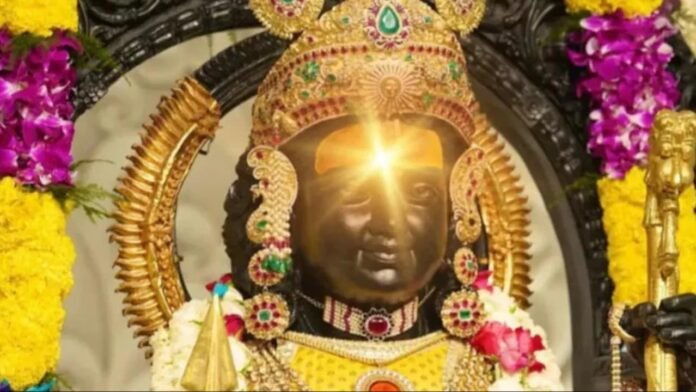
The Divine Highlight: Surya Tilak at Madhyahna

One of the most extraordinary moments of the celebration is the Surya Tilak, a unique blend of devotion and scientific precision.

During the sacred Madhyahna Muhurat (around noon), a carefully engineered system of mirrors and lenses channels a beam of sunlight onto the forehead of the Ram Lalla idol, forming a radiant tilak. This phenomenon, lasting a few minutes, symbolically marks the divine birth of Lord Rama and is among the most anticipated events of the day.

Sacred Rituals and Festive Offerings

The day begins early with Mangala Aarti, followed by a series of rituals including abhishekam, Vedic chanting, and continuous recitations. As the day progresses, the atmosphere builds toward the celebration of Ram Janmotsav at midday.

A grand Chhappan Bhog—an offering of 56 traditional dishes—is prepared for the deity, along with large quantities of prasad such as panjiri, which is distributed among devotees.

The moment of Lord Rama’s birth is marked by the sound of conch shells, ringing bells, and collective chants, creating a deeply emotional and spiritually uplifting experience.

Darshan Arrangements and Crowd Management

With lakhs of devotees expected, special measures have been implemented to ensure accessibility and safety. Notably, VIP darshan has been suspended, allowing equal opportunity for all pilgrims to participate.

Multiple darshan slots, extended temple hours, and public viewing arrangements across the city have been organised. Live telecasts and screens ensure that the divine moments can be witnessed by everyone, even amid the large crowds.

A Brief Sacred Legacy: Birth of Lord Rama in Ayodhya

Ayodhya holds unparalleled significance in Hindu tradition as the birthplace of Lord Rama, as described in the Ramayana. It was here that King Dasharatha ruled and where Rama was born during the auspicious Madhyahna period in the Treta Yuga.

This sacred association has made Ayodhya a timeless centre of pilgrimage, where mythology, history, and faith intertwine seamlessly.

A Living Celebration of Faith

Ram Navami in Ayodhya is not merely observed—it is experienced. From the ghats of the Sarayu River to the sanctum of the Ram Mandir, every corner of the city reflects devotion and unity.

As the rays of the sun form the sacred tilak on Ram Lalla’s forehead, the moment becomes a powerful reminder of the enduring presence of dharma and the timeless relevance of Lord Rama’s life and ideals.

Conclusion

On this auspicious occasion, Ayodhya stands as a beacon of faith, drawing millions into a shared celebration of devotion and spirituality. Ram Navami 2026 is not just about commemorating a divine birth—it is about reconnecting with values that continue to guide humanity.

In the city where Lord Ram was born, the festival becomes a profound experience—one that lives not just in rituals, but in the hearts of all who gather to witness it.

PM Modi to Attend G7 Summit in France: Know Agenda of Meeting and Other Facts…

0

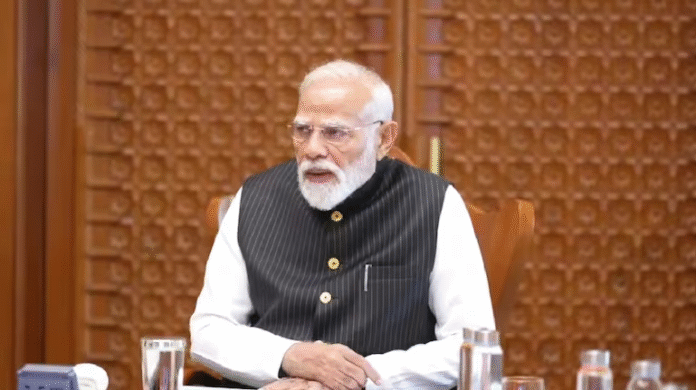
Prime Minister Narendra Modi is set to participate in the upcoming G7 Summit in France from June 15 to 17, marking India’s continued engagement with major global economies. The confirmation came during high-level diplomatic discussions held alongside the G7 Foreign Ministers’ Meeting. India’s participation reflects its growing influence in global governance and economic coordination amid evolving geopolitical challenges.

Diplomatic Engagements and Confirmation

External Affairs Minister S Jaishankar held bilateral talks with his French counterpart, Jean-Noël Barrot, where both sides welcomed the Prime Minister’s participation in the summit. The meeting took place at Abbaye des Vaux-de-Cernay, highlighting strong India-France strategic ties. The Évian Summit is expected to bring together leaders of the world’s largest economies to deliberate on pressing global issues.

Focus on Global Economic Stability

India’s role at the summit is expected to centre on addressing macroeconomic imbalances and strengthening international partnerships. Discussions are likely to include global supply chains, inflation management, and sustainable economic growth. India’s emphasis on inclusive development and digital public infrastructure is anticipated to contribute to broader G7 deliberations.

Security Concerns in the Strait of Hormuz

A key agenda item will be the evolving situation in West Asia, particularly the security of the Strait of Hormuz. This strategic maritime corridor is crucial for global energy supplies. Both India and France stressed the importance of maintaining stability and ensuring uninterrupted energy flows, especially amid rising regional tensions.

Important Facts

  • The G7 is an informal grouping of seven advanced economies: USA, UK, France, Germany, Italy, Canada, and Japan.
  • The Strait of Hormuz connects the Persian Gulf to the Arabian Sea and handles nearly one-fifth of global oil trade.
  • India is not a G7 member but is frequently invited as an outreach partner.
  • France will host the 2026 G7 Summit at Évian, a historic resort town.

India’s Expanding Global Role

India’s participation underscores its increasing relevance in global diplomacy and crisis management. The country continues to balance strategic autonomy with active engagement in multilateral forums. The summit provides an opportunity to enhance cooperation on economic resilience, energy security, and geopolitical stability.

Indian Institute of Management Kozhikode (IIM-K) Enters Top 100 in the QS World University Rankings

0

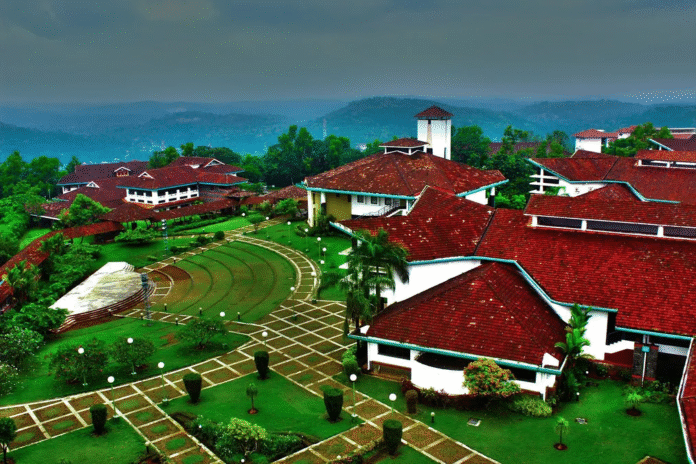
The Indian Institute of Management Kozhikode (IIM-K) has achieved a significant global milestone by entering the top 100 in the QS World University Rankings by Subject 2026 for the first time. This reflects India’s growing academic reputation and strengthening presence in global higher education rankings, particularly in management and technical disciplines.

About QS World University Rankings

The QS World University Rankings are published annually by Quacquarelli Symonds, a global higher education consultancy. These rankings assess universities worldwide based on parameters such as academic reputation, employer reputation, research output, and employment outcomes. The system adopts a structured methodology to evaluate diverse aspects of institutional performance.

Framework and evaluation criteria

The QS rankings are organised into five broad “lenses”: Research and Discovery, Employability and Outcomes, Global Engagement, Learning Experience, and Sustainability. Each lens consists of specific indicators such as citations per faculty and employer reputation. These indicators are further supported by detailed metrics that generate precise scores, ensuring a comprehensive assessment of universities.

India’s performance in 2026 rankings

India has shown strong progress, with 120 new institutions entering the rankings, placing it fourth globally after the United States, China, and the United Kingdom. The country now has the fourth-largest institutional presence overall. Six Indian institutions feature in the global top 100 for computer science, all showing improvement compared to the previous year.

Important Facts

  • QS World University Rankings are published by Quacquarelli Symonds.
  • The rankings evaluate institutions using parameters like academic and employer reputation.
  • Five lenses include Research, Employability, Global Engagement, Learning Experience, and Sustainability.
  • India ranks among the top countries in terms of new entries in QS rankings.

Top Indian institutional achievements Indian Institute of Technology (ISM) Dhanbad and the Indian Institute of Management Ahmedabad have secured the highest global rank among Indian institutions at 21. IIT-ISM Dhanbad continues to excel in mineral and mining engineering, while IIM Ahmedabad has entered the global top 25 in business and management studies and marketing. These achievements highlight India’s growing competitiveness in specialised academic fields.

Apple Introduces Mandatory Age Checks in UK; Sparks Privacy vs Safety Debate

0

Apple has begun rolling out mandatory age verification checks for iPhone and iPad users in the United Kingdom, requiring them to confirm they are adults before accessing certain services, including 18+ apps.

The feature comes with the latest iOS 26.4 update, after which users will be prompted to verify their age. According to Apple, this can be done by submitting a credit card detail or scanning a valid ID. Users who fail to verify their age—or are identified as underage—will automatically have web content restrictions enabled on their devices.

Upon updating, users will see a notification stating: “UK law requires you to confirm you are an adult to change content restrictions.”

The move has drawn mixed reactions. UK regulator Ofcom welcomed the step, calling it a “real win for children and families,” as it strengthens safeguards against inappropriate content. The development aligns with the broader push under the Online Safety Act, where new rules introduced in 2025 require tech platforms to enhance protections for minors.

However, critics have raised concerns over privacy and digital freedom. Silkie Carlo, director of campaign group Big Brother Watch, criticised the decision, saying it places a “chokehold on Britons’ freedom to search the internet.”

While current regulations do not explicitly mandate device-level age checks, Ofcom clarified that it has been working with Apple and other tech firms to ensure safety rules can be applied more broadly to protect users.

The rollout highlights a growing global debate: how to balance child safety online with user privacy and open internet access.

International Whiskey Day: Know History and Ways People Celebrate it

0

Every year on March 27th, whiskey fans from around the world come together to celebrate their favorite distilled alcoholic beverage. International Whisk(e)y Day uses the parentheses to indicate support of the Scots, Canadians, and Japanese who spell it without an e. The Irish and Americans include the letter e when writing out the word whiskey.

Whiskey Making Process

Whiskey is made from fermented grain mash. Corn, wheat, rye, and barley are the most common grains used to make whiskey. Besides drinking whiskey for pleasure, many people drink it for their health. Whiskey contains a powerful antioxidant called ellagic acid, which helps prevent cancer. Some people mix whisky with warm water and honey to soothe their sore throats. Others claim that drinking whiskey will prolong their life.

Whiskeys are broken down by the following nationalities:

  • American whiskey – tends to be sweeter than other whiskeys and includes bourbon, rye, and Tennessee
  • Scotch whisky – tends to have an earthy flavor and includes blended Scotch and single malt Scotch.
  • Irish whiskey – tends to be light-bodied but more robust than Canadian whisky and includes Irish blend, single malt Irish, and single grain Irish.
  • Canadian whisky – tends to be light-bodied and fruity and includes Canadian rye whisky.

These whiskeys get distilled in their respective country. The Irish are credited for being the first whiskey distillers. The word whiskey comes from the Irish phrase, uisce beatha, or “water of life.” Each kind of whiskey has a specific alcohol content, which is indicated by proof. If a whiskey is 100 proof, it means it contains 50% alcohol by volume.

HOW TO OBSERVE #InternationalWhiskeyDay

People around the world are encouraged to drink whiskey on this day. There are a variety of whiskey brands from which to choose. Some of the most popular include:

  • Johnnie Walker
  • Dewar’s
  • Jim Beam
  • Jack Daniels
  • Wild Turkey
  • The Dubliner
  • Caribou Crossing
  • Lark

Some of people’s favorites include mint julep, whiskey sour, or a Manhattan. You can either make your own concoction at home or go to a bar, where they will most likely have drink specials to celebrate the day. Don’t forget to share your favorite whiskey brand or cocktail on social media with #InternationalWhiskeyDay.

INTERNATIONAL WHISK(E)Y DAY HISTORY

International Whisk(e)y Day was launched in 2009 during the Whiskey Day Festival in the northern Netherlands. The date of March 27th commemorates the birthday of Michael Jackson, a famous British writer. Jackson has written many influential books about whiskey and beer. Whiskey fans around the world organize and run this fun day.

Why Helium Supply Concerns Loom Over India’s Semiconductor Sector

0

India’s semiconductor and electronics industry is facing potential disruption following Iran’s reported attack on Qatar’s Ras Laffan LNG hub on 19 March. The incident has raised concerns over helium availability, a critical byproduct of liquefied natural gas essential for semiconductor manufacturing. The development comes at a crucial time when India is expanding its ambitions to become a global hub for electronics and chip production.

Helium as a critical semiconductor input
Helium plays a vital and largely non-substitutable role in semiconductor fabrication, including cooling systems, testing environments, and high-precision manufacturing processes. Industry leaders have indicated that while there is no immediate halt in production, the situation is becoming a strategic concern. Companies are shifting towards precautionary planning to mitigate potential risks in supply chains.

Rising prices and supply tightening
The disruption has already triggered significant price volatility in global helium markets. Reports indicate price increases ranging from 35% to 100% in spot markets within a short period. Supply constraints have led to allocation-based distribution in some regions. Indian firms are closely monitoring the situation as early signs of tightening availability emerge, though the immediate impact remains largely price-driven rather than supply-led.

Impact on electronics manufacturing ecosystem
Short-term disruptions could affect semiconductor fabrication, testing facilities, and other precision-driven operations. While helium is not extensively used in PCB assembly in India due to its high cost, indirect effects are becoming visible. Project timelines, equipment commissioning, and procurement cycles are experiencing pressure. Additionally, there has been a slowdown in fresh orders for raw materials, signalling cautious industry sentiment.

Important Facts
1. Helium is a noble gas and a byproduct of natural gas processing, especially liquefied natural gas.
2. Ras Laffan in Qatar is one of the world’s largest LNG export hubs.
3. Semiconductor manufacturing requires ultra-clean and controlled environments where helium is widely used.
4. India aims to develop a domestic semiconductor ecosystem under initiatives like “Make in India”.

Additional strain from ceramic supply disruption

The electronics sector is also facing challenges due to a shortage of specialised ceramic materials. The shutdown of over 550 ceramic units in Morbi, which accounts for nearly 80% of India’s ceramic supply, has disrupted the availability of key components such as multilayer ceramic capacitors. These components are essential for devices like smartphones, laptops, and automotive electronics. Initial price increases of around 5% have been observed, with projections of further rises between 10% and 20% if disruptions continue, potentially creating broader supply bottlenecks in the electronics value chain.

Grand Chaitra Navratri Celebrations: The Art of Living Enlivens India’s Vedic Heritage

0

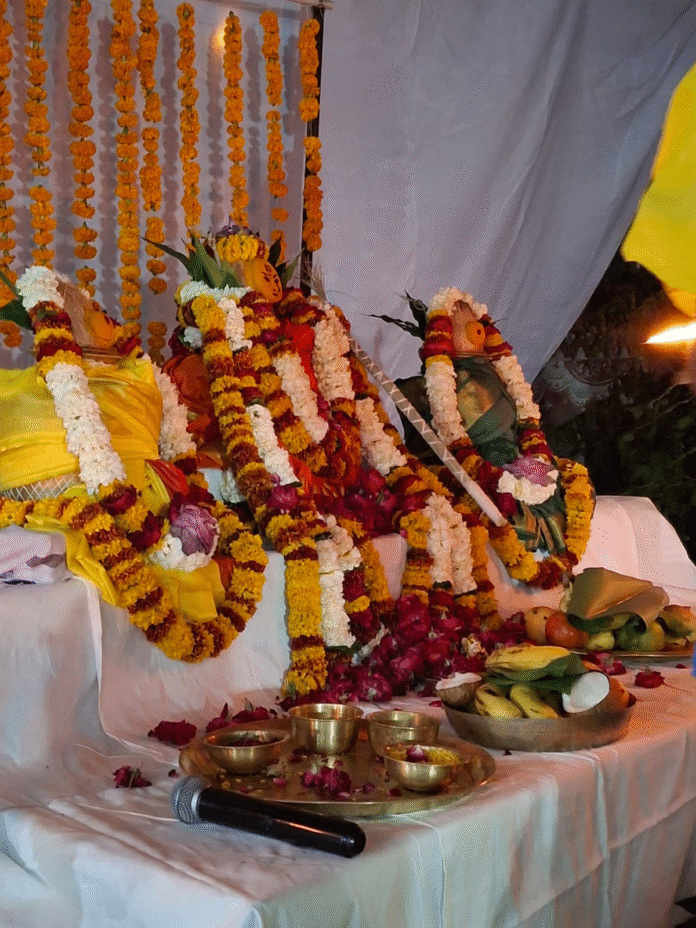
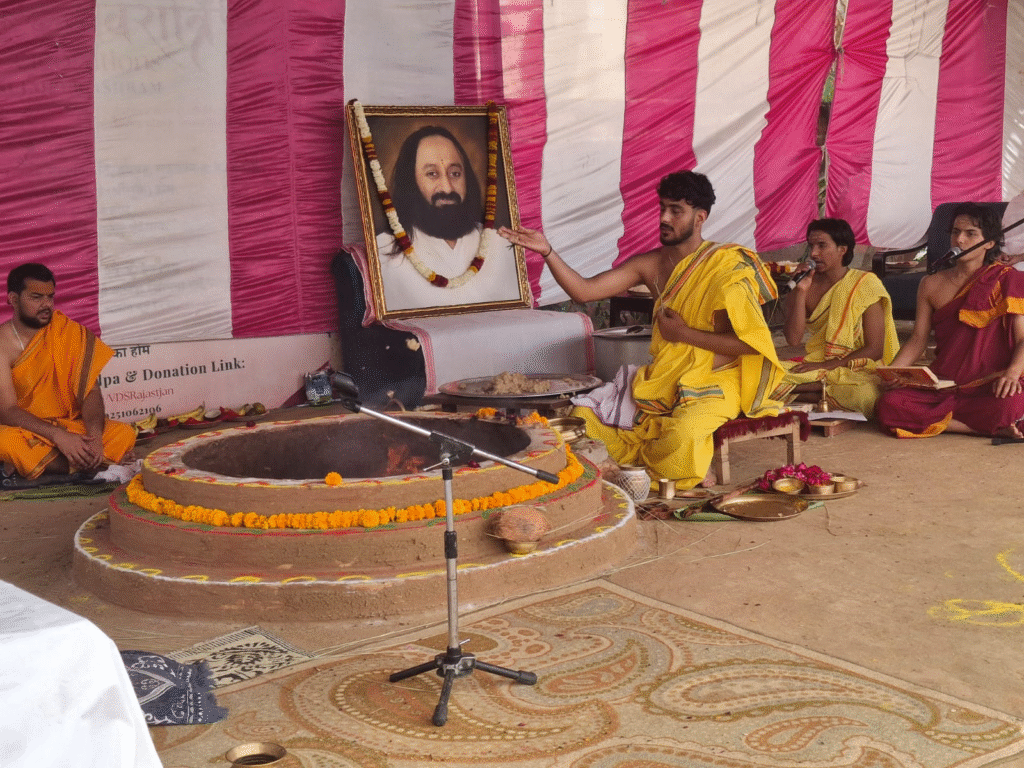
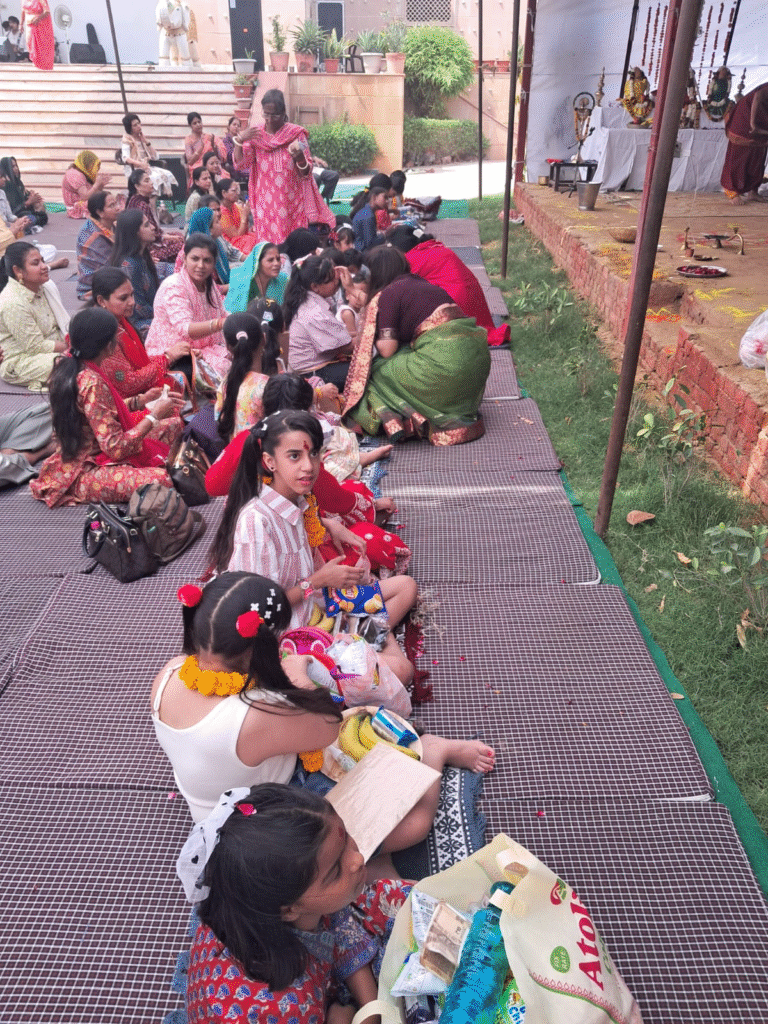
Hundreds of devotees soaked in the powerful and sacred vibrations of Chandi Homa, honouring the myriad forms of Mother Divine in all her glory, organized at the Sri Sri Ravi Shankar Ashram here in the city between March 25 and 26, 2026.

Grand Chaitra Navratri Celebrations: The Art of Living Enlivens India’s Vedic Heritage

Organised by the Vedic Dharma Sansthan, the two-day festival brought together devotees from all over the state who participated in traditional homa, invoking the divine feminine energy through Vedic chants, meditation, and prayer. The ceremonies were conducted by four Vedic priests, three of whom were trained at the Vedic Gurukul in Ved Vignan Maha Vidya Peeth, Bengaluru, and had travelled specially to Jaipur for the occasion, along with a local priest.

The celebrations were marked by soulful satsang and the distribution of prasadam, creating an atmosphere of joy, devotion, and collective spiritual elevation.

Gurudev Sri Sri Ravi Shankar, the global spiritual master and humanitarian leader, shares about the significance of this Navratri, “Chaitra signifies the dawn of a New Year- a time for inner reflection, prayer, meditation, and chanting. It is a moment to recognise the Divinity that pervades all of creation and to awaken that sacred presence within and around us.”

At The Art of Living International Center, Bengaluru, the sacred period of Chaitra Navratri was observed with a series of powerful homas including Maha Ganapati Homa, Navagraha Homa, and Maha Lakshmi Homa on March 25, followed by the Nav Chandi Homa on March 26. These rituals further elevated the spiritual fervour, invoking peace, prosperity, and divine grace for all.

Grand Chaitra Navratri Celebrations: The Art of Living Enlivens India’s Vedic Heritage

Ram Tarak Homas were also conducted at multiple locations, amplifying prayers for peace, prosperity, and well-being, on the auspicious occasion of Ram Navami.

The celebrations left every attendee contented, joyous, and steeped in devotion.

IPL 2026: Second Phase Schedule Announced. Here Comes List of Dates and Venues…

0

The schedule for the second phase of the Indian Premier League (IPL) has been released. The IPL Committee shared this information on its social media handles at 6:00 PM. A total of 50 matches will be played across 12 venues from April 13 to May 24. This includes 8 double-headers.

Defending champions Royal Challengers Bangalore have adopted Raipur as their second home ground; the team will play two matches there. In the first phase, 34 matches are scheduled to take place between March 28 and April 12. The schedule for the playoffs has not yet been announced, but the final will be played in Bangalore on May 31.

Here’s the IPL 2026 opening matches schedule from your image, translated into English:

Indian Premier League 2026 – Opening Matches Schedule

MatchDateDayTimeVenue
RCB vs SRHMarch 28Saturday7:30 PMBengaluru
MI vs KKRMarch 29Sunday7:30 PMMumbai
RR vs CSKMarch 30Monday7:30 PMGuwahati
PBKS vs GTMarch 31Tuesday7:30 PMNew Chandigarh
LSG vs DCApril 1Wednesday7:30 PMLucknow
KKR vs SRHApril 2Thursday7:30 PMKolkata
CSK vs PBKSApril 3Friday7:30 PMChennai
DC vs MIApril 4Saturday3:30 PMDelhi
GT vs RRApril 4Saturday7:30 PMAhmedabad
SRH vs LSGApril 5Sunday3:30 PMHyderabad
RCB vs CSKApril 5Sunday7:30 PMBengaluru
KKR vs PBKSApril 6Monday7:30 PMKolkata
RR vs MIApril 7Tuesday7:30 PMGuwahati
DC vs GTApril 8Wednesday7:30 PMDelhi
KKR vs LSGApril 9Thursday7:30 PMKolkata
RR vs RCBApril 10Friday7:30 PMGuwahati
PBKS vs SRHApril 11Saturday3:30 PMNew Chandigarh
CSK vs DCApril 11Saturday7:30 PMChennai
LSG vs GTApril 12Sunday3:30 PMLucknow
MI vs RCBApril 12Sunday7:30 PMMumbai

If you want, I can also turn this into a clean graphic, calendar file, or team-wise schedule.