Home Blog Page 257

Celebrating Lionel Messi: The Legend Who Defied the Odds

0

Today marks the birthday of one of the greatest footballers the world has ever seen – Lionel Andrés Messi, born on June 24, 1987 in Rosario, Argentina. As fans and admirers across the globe celebrate his 38th birthday, it’s the perfect moment to reflect on the incredible journey of a boy who once faced daunting medical challenges and rose to become a global icon in the world of football and beyond.

Humble Beginnings and a Battle with Illness

Lionel Messi’s story is one of resilience, talent, and unwavering support from his family. At the age of 10, Messi was diagnosed with a growth hormone deficiency—a condition that stunted his physical development. The treatment was expensive and required daily hormone injections. Despite his obvious talent, no local club in Argentina could afford the cost of his treatment.

That’s when destiny intervened. FC Barcelona saw his potential and offered to pay for his medical treatment if he moved to Spain and joined their youth academy, La Masia. At just 13, Messi and his father moved to Barcelona, and the rest, as they say, is history.

An Illustrious Career: Breaking Records and Making History

Over the years, Lionel Messi has redefined excellence in football. His vision, dribbling, goal-scoring ability, and sheer consistency have earned him a place among the greatest athletes of all time. Here are some of his most notable achievements:

  • 8 Ballon d’Or wins (most in history)
  • Over 800 career goals for club and country
  • All-time top scorer for Barcelona and Argentina
  • FIFA World Cup winner in 2022, solidifying his legacy on the global stage
  • 4 Champions League titles, 10 La Liga titles, and numerous domestic trophies with Barcelona
  • Recent success with Inter Miami and continuing to inspire the next generation of players

Messi’s playing style is often described as magical – combining creativity, intelligence, and a calm demeanor that commands respect both on and off the field.

Giving Back: Messi’s Charitable Work

Beyond football, Messi has used his influence for good. In 2007, he founded the Leo Messi Foundation, a charity focused on providing access to health care and education for vulnerable children around the world.

Some key highlights of his philanthropic work include:

  • Funding projects for children with medical needs in Argentina and Spain
  • Donating to UNICEF (for which he is a goodwill ambassador)
  • Supporting children’s hospitals and building medical facilities in underprivileged areas
  • Assisting with COVID-19 relief efforts and donating millions to hospitals

Messi’s charitable efforts reflect the same quiet strength and humility that define his character as a player.

A Living Legend

As Lionel Messi celebrates his 38th birthday, his story continues to inspire millions. From a young boy fighting a medical condition to a football icon and humanitarian, Messi’s journey is a testament to perseverance, family support, and the power of dreams.

Whether you’re a die-hard football fan or simply someone who admires greatness, Messi’s story reminds us that even the toughest challenges can be overcome with passion and purpose.

Happy Birthday, Leo! The world thanks you – not just for the goals, but for the heart behind them.

Climate Change Could Slash Global Crop Yields and Cut Calorie Availability by 2100, Warns A Study

0

Climate change poses a growing threat to global food security, with recent research indicating that rising temperatures could reduce per capita calorie availability by up to 4% by the end of the century. Staple crops like rice, wheat, and maize are expected to suffer significant yield declines due to heat stress and disrupted rainfall patterns—challenging the resilience of food systems worldwide.

Recent studies underscore the growing threat of climate change to global food production. By 2100, rising global temperatures could reduce per capita calorie availability by up to 4%, with major staple crops—such as rice, wheat, and maize—facing significant yield declines. This trend poses a critical risk to food security worldwide.

Crop Yields and Rising Temperatures

Higher temperatures directly impact crop productivity. For every 1°C rise in temperature, yields of essential crops diminish, largely due to heat stress and altered precipitation patterns. These changes disrupt flowering and growth phases, especially in temperature-sensitive crops like rice and wheat.

Adaptation Strategies in Agriculture

Farmers are increasingly adopting climate-resilient practices, including the use of heat-tolerant crop varieties and adjustments in sowing and irrigation schedules. These strategies are crucial in projecting more realistic future yield scenarios. While adaptation can alleviate some climate-related losses, it cannot fully eliminate them.

Key Research and Findings

A recent study published in Nature analyzed one of the largest global datasets on crop production, covering 13,500 political units across 54 countries and six staple crops. Findings suggest that optimal adaptation could reduce potential global yield losses by 23% by 2050. However, notable losses—particularly in wheat—are still expected.

Regional Disparities in Impact

The study also highlighted significant regional variations. Under high-emission scenarios, wheat yields could drop by 30–40% in major producers like China and the U.S. Northern India is projected to experience some of the world’s most severe losses. Meanwhile, rice yields in India and Southeast Asia show mixed trends, with some areas facing moderate impacts and others more severe declines.

Netherlands Yogasana Sports Association Hosts Yoga & Meditation Workshop at Sewa Dham Temple for International Day of Yoga Celebrations

0

The Netherlands Yogasana Sports Association (NYSA) proudly hosted a successful “Yoga & Mindfulness” workshop at the Hindoecentrum Sewadhaam, located at Alberdingk Thijmplein 34, 2524 HV The Hague, as part of the International Day of Yoga (IDY) celebrations. The session, which ran from 11:00 AM to 1:00 PM, brought together participants for a journey of peace, health, and unity.

The workshop commenced with a traditional lamp-lighting ceremony, setting a serene and spiritual tone for the day. Under the expert guidance of NYSA’s dedicated yoga coaches – Vandana Vyas, Laura Dostanbayeva, Ashwini Pathak, Felicia Arjuna, Lakshmi Menon, Ambika Vaidya, and Puja Bhutoria – attendees experienced a deeply enriching yoga and meditation session.
These coaches are rigorously trained by esteemed mentors, Dr. Yudhweer Rewari and Ms. Indu Maturia ji, yoga coaches of World Yogasana.

NYSA was truly honored by the gracious presence of Pandit Surein Tiwari ji, who kindly felicitated the yoga coaches for their unwavering dedication and significant contribution to promoting wellness through yoga. His heartfelt words and blessings added profound value to the event.

NYSA extends its heartfelt thanks to the entire Sewa Dham Temple team for their warm hospitality and seamless organization. Appreciation is also conveyed to all participants for their enthusiastic presence and engagement, making the event a truly collective celebration.

The Netherlands Yogasana Sports Association is tirelessly working as an affiliate of World Yogasana, striving to develop and promote Yogasana as a competitive sport. This endeavor is greatly bolstered by the invaluable guidance of Dr. Jaideep Arya, Secretary General of World Yogasana.

NYSA’s board, including President Pranita Deshpande, Secretary General Manasi Mohril, and Mayur Muley, PRO remains committed to spreading the profound message of peace, health, and unity through yoga across the Netherlands and beyond.

About The Netherlands Yogasana Sports Association (NYSA):
The Netherlands Yogasana Sports Association (NYSA) is dedicated to advancing Yogasana as both a competitive sport and a path to holistic well-being in the Netherlands. As an affiliate of World Yogasana, NYSA works to foster a vibrant community of practitioners, uphold yoga’s traditions, and explore its modern athletic potential.

Netherlands Yogasana Sports Association and Sparta Cricket Club Celebrate International Day of Yoga 2025

0

The Netherlands Yogasana Sports Association (NYSA) proudly celebrated the International Day of Yoga (IDY) 2025 in collaboration with Sparta Cricket Club, bringing the spirit of yoga and community engagement to life at the Sparta Rotterdam Spartans Cricket Academy, located at Bermweg 141, 2907 LE Capelle aan den IJssel.

Netherlands Yogasana Sports Association and Sparta Cricket Club Celebrate International Day of Yoga 2025

The event witnessed enthusiastic participation from community members, athletes, and yoga practitioners. A key highlight of the celebration was the exclusive Yoga Stand organized by NYSA, aimed at promoting Yogasana as a competitive sport while showcasing its holistic physical and mental health benefits.

The session was expertly moderated by Adv. Pranita Deshpande, President of NYSA, who ensured a vibrant and engaging atmosphere throughout the event.

Netherlands Yogasana Sports Association and Sparta Cricket Club Celebrate International Day of Yoga 2025

The celebration was graced by the Guest of Honor, Mr. Leo de Jong, Chairman of Sparta Cricket Club, whose encouraging words added great value to the occasion.

NYSA extends special thanks to the distinguished Guests of Honor for their gracious presence and ongoing support:

  • Mr. Peter van den Burg, former Chairman, Sparta Cricket Club
  • Mr. Shivam Joshi, Founder and President, Voice NL
  • Mr. Akbal Mohammad, Board Member, Sparta
  • Mr. George Kameerbeek, Board Member, Sparta

A sincere note of appreciation is also extended to the international cricket team for their enthusiastic collaboration, which played a vital role in making the event a memorable success.

“Together, we celebrated yoga, unity, and well-being in the true spirit of community and sportsmanship,” said Adv. Pranita Deshpande, President of NYSA.

Yoga for All: A Unifying Experience

This successful collaboration emphasized the universal appeal of yoga and its powerful ability to bring diverse communities together through shared practice and meaningful engagement.

About the Netherlands Yogasana Sports Association (NYSA)

The Netherlands Yogasana Sports Association (NYSA) is committed to promoting Yogasana as a competitive sport and a path to holistic health across the Netherlands. NYSA aims to nurture a growing network of practitioners, coaches, and youth, while honoring yoga’s traditional roots and modern athletic potential.
Website: www.thenysa.nl

About Sparta Cricket Club

Sparta Cricket Club, also known as the Sparta Rotterdam Spartans Cricket Academy, is a leading cricket institution in Capelle aan den IJssel. The club is dedicated to fostering sportsmanship, community involvement, and athletic excellence across all age groups.

Monsoon Wellness: 15 Diet Tips to Stay Healthy This Rainy Season

0

As the skies open up and the cool breeze replaces the scorching heat, monsoon brings much-needed relief — but also an increased risk of infections and digestion issues. The damp, humid weather creates a breeding ground for harmful bacteria and viruses, making it a season of frequent illnesses like dengue, malaria, typhoid, gastroenteritis, and skin infections.

To stay strong and healthy during this season, it’s essential to follow a mindful diet that supports immunity and digestion.

Here’s a story-driven guide with 15 effective diet tips for monsoon health, inspired by traditional wisdom and modern nutrition science:

Listen to Your Body: Eat Only When Hungry

“Never eat if you’re not hungry — especially during the rains.” Overeating or forced meals during monsoon can lead to indigestion, acidity, and fatigue. Let your natural appetite guide your intake.

Choose the Right Fruits

Fruits are your best friends — they replenish energy and are loaded with antioxidants. Eat apples, pears, bananas, mangoes, and pomegranates. Avoid watermelons and muskmelons, as they are too watery and may cause bloating. Don’t overeat mangoes — they may lead to acne breakouts.

Control Salt Intake

Too much salt causes water retention and bloating. Stick to medium or low salt meals and avoid heavy salty snacks or pickles. This is especially important if you suffer from high blood pressure.

Avoid Watery Foods

Foods like lassi, watermelon, rice, and muskmelon can cause swelling in the body. Opt instead for drying foods such as corn, chickpeas (chana), and gram flour (besan) to maintain balance.

Switch to Healthy Grains

Replace white rice with brown rice, barley (jau), and oats. These grains are easier to digest, help with weight control, and are rich in fibre and minerals.

Spice Up for Immunity

Add immunity-boosting ingredients like garlic, turmeric, ginger, and black pepper to your daily meals. These keep infections at bay and improve digestion.

Say Yes to Curd, No to Milk

Milk can be hard to digest in monsoon. Instead, consume curd or yogurt to improve gut health. Add soaked almonds to your breakfast — they boost energy and immunity.

Drink Clean, Boiled Water

Contaminated water is a major cause of diarrhoea and dysentery. Always drink boiled or purified water. Avoid roadside juices and cut fruits.

Eat Bitter Veggies and Herbs

Vegetables like bitter gourd (karela) and herbs like neem, turmeric, and fenugreek (methi) help cleanse the system and fight infections naturally.

Avoid Heavy and Greasy Oils

Use light, dry oils like corn oil or sunflower oil for cooking. Avoid sesame, mustard, and peanut oil, as they trap heat and worsen humidity-related problems.

Limit Spices If You Have Skin Issues

If you suffer from rashes, boils, or acne, skip spicy food. Spices increase body heat, which worsens skin allergies and irritation during humid weather.

Stick to Light Meat Preparations

Avoid heavy curries, fish, and red meat. Instead, go for light stews, soups, or grilled preparations. Non-vegetarians should also reduce intake of oily meats during this season.

Go Herbal, Not Caffeinated

Enjoy herbal teas made with ginger, basil (tulsi), mint, and honey — they have antibacterial and anti-inflammatory properties. Avoid too much coffee and tea, as they dehydrate the body.

Avoid Raw Veggies – Steam Your Salads

Monsoon vegetables may contain active bacteria. Avoid raw salads. Instead, lightly steam or sauté vegetables like okra, potatoes, and beans before eating.

Trust Seasonal Produce Only

Non-seasonal fruits are often infested with worms in monsoon. Choose seasonal, local fruits like bananas, apples, pomegranates, and lychees for better digestion and fewer risks.

Bonus Tip for Arthritis Sufferers:

Drink warm water infused with tulsi and cinnamon (dalchini) on an empty stomach. It reduces joint pain and improves digestion, especially during damp, cold mornings.

Final Thought

Monsoon is a time of joy, but also vulnerability. Follow these natural and simple monsoon diet tips to keep your immunity strong, your digestion smooth, and your energy high. After all, health is the real comfort in any season.

Srinagar’s Berry Magic: Once Silent and Sullen Gasu Khimber Village Now Speaks Strawberry Stories…

0

A Valley That Breathes in Crimson

As the summer sun scorches the plains of India, the serene valleys of Srinagar exhale a breath of cool and sweet air. Nestled within this emerald embrace lies Gasu Khimber—a modest village with a tale so rich, it could leave you in awe and surprise. Here, amidst the misty mornings and melodious call of bulbuls, rows of ruby-red strawberries glisten beneath the early light, casting a spell on every gaze that beholds them.

From Barren Dust to Blossoming Dreams

Not long ago, the lands of Gasu Khimber were silent and sullen, stitched with nothing but the hope of something better. The soil was dry, and the future looked uncertain. But hope has a strange way of finding its roots—and it found them in the hands of men like Basheer Ahmad, a farmer with fire in his heart and faith in his soil. With relentless effort, innovative methods, and unwavering dedication, Basheer transformed lifeless dust into a garden that now feeds not just mouths, but spirits.

The Strawberry Capital of Kashmir

Today, Gasu Khimber isn’t just a village—it’s the crowned strawberry capital of Kashmir. Each day, before the sun can warm the peaks of the Zabarwan range, the fields are already abuzz. Thousands of kilos of strawberries are handpicked with care, packed gently into baskets, and sent down winding roads to markets across the region. Each berry is plump with flavor, sun-kissed, and infused with the soul of its planter.

Harvesting Hope: The Real Fruit of Labor

Behind every luscious fruit is a story of struggle, sweat, and silent perseverance. The farmers of this village, many of whom have weathered harsh winters and political unrest, now wear their achievements like medals. Their fingers, stained with red, speak more of pride than labor. For them, the strawberry isn’t just a crop—it’s a symbol of revival, of reclaiming dignity through honest work.

A Symphony of Soil, Sun, and Spirit

Walk through Gasu Khimber during harvest season and you’ll feel it—a rhythm in the air, a pulse that binds community, nature, and ambition into one living story. Children run between rows laughing, elders supervise with smiles, and the fragrance of strawberries clings to everything like a blessing. The village doesn’t just grow strawberries—it breathes them.

Redefining Rural India, One Berry at a Time

Gasu Khimber’s story is a reminder that greatness can bloom in the quietest of corners. It teaches us that even the smallest seed, if nurtured with love and courage, can paint an entire valley red. It’s not just the tale of a fruit—it’s the saga of people who dared to believe.

KashmirStrawberries #StrawberryFarming #SrinagarValley #FarmersLife #AgricultureStories #EBNWStory #HardWorkPaysOf

Master Tara Singh: The Architect of Sikh Identity and Autonomy

0

A Champion of Sikh Rights

Master Tara Singh, born on June 24, 1885, in Haryal near Rawalpindi (now in Pakistan), was a towering figure in Sikh history, renowned for his relentless advocacy for a distinct Sikh identity and an autonomous Punjab. His contributions during British rule and post-independence India shaped the political and religious landscape of the Sikh community, earning him a lasting legacy as a dedicated leader.

Advocating for Sikh Identity Under British Rule

Master Tara Singh played a pivotal role in distinguishing Sikhism from the broader Hindu fold during the British era. His efforts ensured that Sikhs were recognized as a separate community under the Government of India Act 1919, granting them distinct communal representation akin to Muslims. To strengthen the community’s position, he encouraged Sikh recruitment into the British Indian Army, aligning strategic collaboration with the assertion of Sikh identity. His leadership in the Shiromani Akali Dal (SAD), the premier Sikh political organization, and the Shiromani Gurdwara Parbandhak Committee (SGPC), which oversees Sikh gurdwaras, solidified his influence in preserving Sikh religious and political traditions.

Master Tara Singh: The Architect of Sikh Identity and Autonomy


A Life of Resistance and Leadership

Tara Singh’s commitment to Sikh rights often put him at odds with civil authorities, leading to his arrest 14 times between 1930 and 1966 for acts of civil disobedience. Deeply inspired by Mahatma Gandhi’s philosophy, he became a key figure in the Civil Disobedience Movement of the 1930s, leading with unwavering resolve. His advocacy extended beyond religious reforms to the political sphere, where he championed the creation of a Punjabi-speaking state as a means to safeguard Sikh heritage and autonomy.

The Azad Punjab Movement and the Struggle for Reorganization

In 1942, alongside leaders like Giani Kartar Singh, Joginder Singh, Mohan Singh, and Ujjal Singh, Tara Singh launched the Azad Punjab Movement, proposing a restructured Punjab that excluded Muslim-majority districts to ensure no single community held dominance. Though this plan did not materialize, his vision persisted. Post-independence, as noted by historian S. Ajmer Singh in Twentieth Century Sikh Politics: From One Slavery to Another, Tara Singh tirelessly campaigned for the reorganization of Punjab on linguistic lines. At the time, Punjab’s demographic composition included 60% Hindus and 35% Sikhs. His decade-long struggle culminated in the Punjab Reorganization Act of 1966, passed on September 7, which led to the creation of the modern state of Punjab, alongside Haryana and Himachal Pradesh, on November 1, 1966. This marked the realization of Tara Singh’s dream of a Punjabi-speaking state.

Legacy of a Visionary Leader

Master Tara Singh passed away on November 22, 1967, at the age of 82, leaving behind a legacy of resilience and dedication to Sikh interests. His contributions were instrumental in securing a distinct identity and a separate state for the Sikh community. In recognition of his indomitable spirit, a portrait of Master Tara Singh was unveiled in the Parliament House on August 21, 2003, honoring his enduring struggle for Sikh rights and autonomy.

A Day to Honor Women Diplomats : Recognizing Contributions and Advancing Gender Equality

0

On June 24, the world observes International Day of Women in Diplomacy, a day dedicated to recognizing the invaluable contributions of women in diplomacy and decision-making processes globally. Established by the United Nations General Assembly through Resolution 76/269 on June 20, 2022, this day celebrates the achievements of women diplomats while highlighting the challenges that hinder their equal participation at all levels of diplomacy. It serves as a call to action for member states, international organizations, civil society, academic institutions, and other stakeholders to promote women’s full and equal participation through education and awareness-raising initiatives.

The Global Impact of Women in Diplomacy

Women have historically been underrepresented in diplomatic roles, yet their contributions are critical to fostering peace and sustainable development. Between 1992 and 2019, women accounted for only 13% of negotiators, 6% of mediators, and 6% of signatories in global peace processes. These statistics underscore the need for greater inclusion, as emphasized by the 2030 Agenda for Sustainable Development, particularly Sustainable Development Goal 5, which calls for women’s equal participation in decision-making. By mainstreaming a gender perspective, the international community can address systemic barriers and create a more equitable diplomatic landscape.

India’s Legacy of Women in Diplomacy

India, a nation rooted in the philosophy of “Vasudhaiva Kutumbakam” (the world is one family), has long championed women’s leadership in diplomacy. The country proudly co-sponsored the UN resolution to establish the International Day of Women in Diplomacy, reflecting its commitment to gender equality and inclusion.

India boasts a rich tradition of trailblazing women diplomats who have made significant contributions on the global stage:

Chonira Gazala Mehta: India’s first woman ambassador, paving the way for future generations.
Nirmala Deshpande: A prominent figure in peace diplomacy at the international level.

These women, among others, have exemplified India’s commitment to fostering diverse and inclusive leadership in global diplomacy.
A Call for Gender Equality and Inclusion .The International Day of Women in Diplomacy is more than a celebration—it is an opportunity to address the structural barriers that limit women’s participation in decision-making roles. By promoting education, awareness, and advocacy, this day encourages global efforts to strengthen gender equality, diversity, and inclusion in diplomacy. For nations like India, which embrace a vision of global unity, this occasion serves as a platform to amplify women’s leadership and inspire future generations to contribute to international peace and cooperation.

A Step Toward a More Inclusive Future

The International Day of Women in Diplomacy underscores the importance of recognizing and empowering women in shaping global policies and fostering peace. As India continues to lead by example, supporting women diplomats and advocating for gender equality, the world moves closer to a future where diverse voices are equitably represented at every level of decision-making. This day is a reminder that inclusive diplomacy is not just a goal but a necessity for a sustainable and harmonious global community.

Dangeti Jahnavi Becomes First Indian to Complete NASA Space Program, Set to Travel to Space in 2029

0

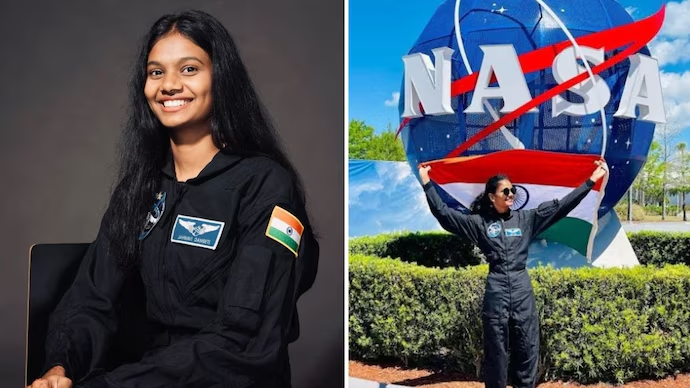
Dangeti Jahnavi, a young aerospace enthusiast from Palakollu in Andhra Pradesh’s West Godavari district, has become the first Indian to successfully complete NASA’s International Air and Space Program (IASP). In a historic development, she has been selected to travel to space in 2029, marking a significant milestone for India’s representation in global space missions.

Jahnavi will be part of a mission to the Titan’s Orbital Port Space Station, a U.S.-based space project expected to be operational within the next four years. Her participation makes her one of the few civilians — and the first Indian — chosen for this futuristic space initiative.

India’s First Woman to Join Titan’s Orbital Port Mission

A graduate in Electronics and Communication Engineering from Lovely Professional University (LPU), Punjab, Dangeti Jahnavi completed her early education in Palakollu. Her parents, Srinivas and Padmasri, are currently based in Kuwait for work.

Jahnavi has long been an active voice in STEM education, frequently addressing students at National Institutes of Technology (NITs) and taking part in ISRO’s science and outreach programs. Her influence extends beyond Indian borders through participation in analog astronaut simulations, deep-sea diving exercises, and international conferences focusing on planetary science, astrobiology, and long-duration space sustainability.

NASA Program Graduate and Asteroid Discoverer

Her passion for space science earned her a place in the International Astronomical Search Collaboration (IASC), where she was involved in a provisional asteroid discovery, analyzing data from the Pan-STARRS (Panoramic Survey Telescope and Rapid Response System). This achievement added to her growing reputation as one of India’s brightest emerging minds in space research.

In another landmark, Jahnavi became the youngest foreign analog astronaut and the first Indian selected for Space Iceland’s geology training, a program designed to simulate the challenges of exploring extraterrestrial terrains like the Moon and Mars.

Inspiring the Next Generation of Indian Space Scientists

Dangeti Jahnavi’s accomplishments are more than personal milestones—they serve as an inspiration to millions of young Indians, especially women, aspiring to enter the space and science sectors. As she prepares to represent India on an international space mission in 2029, her journey continues to break barriers and shatter stereotypes.

With her selection for the Titan’s Orbital Port Space Station mission, India has yet another name to celebrate in its growing legacy of space pioneers. Jahnavi’s story is not just about reaching for the stars — it’s about making space accessible, inclusive, and inspiring for generations to come.

Varun Dhawan Trains with Cadets, Nails 50 Knuckle Push-Ups for Border 2

0

Bollywood actor Varun Dhawan is currently immersed in intense preparation for his upcoming film Border 2. A recent video circulating on social media captures him training rigorously alongside young cadets, showcasing both his dedication and discipline. What’s grabbing everyone’s attention is a moment from the video where he drops down and performs 50 flawless knuckle push-ups, impressing not only fans but also fitness enthusiasts.

The actor’s commitment to authentically portraying his role is evident, and this glimpse behind the scenes is only fueling excitement for the film. With such grit and hard work on display, Border 2 is shaping up to be more than just a film—it’s becoming a mission.