Home Blog Page 255

Mujhko Ram Wala Hindustan Chahiye: Azhar Hashmi’s Dream-to-Reality Journey in His Own Words…

0

Professor Azhar Hashmi, a renowned poet, writer, educator, and visionary whose words have resonated across India and beyond. Hailing from Ratlam, a city once known primarily for its railway junction, Hashmi has elevated its name to global recognition through his literary contributions and unwavering commitment to social ideals.

The Genesis of “Mujhko Ram Wala Hindustan Chahiye”

When asked about the inspiration behind his seminal poem, Professor Hashmi’s response was profound yet simple. “Ram is not just a name, a lineage, or a sect. Ram is an eternal truth, a timeless consciousness, a universal value rooted in nature and divinity,” he said. Drawing from the elements of nature, the environment, and the divine, Hashmi believes that his poetry is a medium through which the eternal speaks. “It was as if Ram himself wrote this poem through me,” he added with humility.

The poem, written years ago, envisioned a Hindustan where the values of Ram—truth, justice, and harmony—would prevail. At the time, it was a bold demand, a dream that seemed distant in a nation grappling with challenges. Yet, Hashmi’s vision persisted. Reflecting on the consecration of the Ram Mandir on January 22, he described it as a milestone in a larger journey. “The temple is a golden milestone, a step toward our goal. But the dream of a true Ram Rajya—a society free from corruption and injustice—requires more work. We’ve crossed two stages, but the final stage is yet to come.”

A Voice for Daughters: “Betiyan Shubhkamnaein Hain”

Professor Hashmi’s poetry extends beyond spiritual ideals to address pressing social issues. His poem “Betiyan Shubhkamnaein Hain” (Daughters Are Blessings) emerged at a time when female feticide was rampant, challenging societal attitudes toward girls. The inspiration, he revealed, stemmed from the divine feminine energy—Shakti—that complements creation itself. “The mother is the first presence in creation. Without Shakti, even Shiva is incomplete. A mother embodies love, compassion, and sacrifice, and daughters carry this divine legacy forward,” he explained.

Quoting scriptures, Hashmi invoked the reverence for the feminine divine: “Devi Sarvabhuteshu Matru Rupena Samsthita—the goddess resides in all beings as the mother.” His poem celebrates daughters as embodiments of hope and blessings, urging society to cherish and protect them. This work not only earned him global acclaim but also cemented his place on the world literary map, transforming perceptions and inspiring change.

The Ratlam Connection: A Bond of Love and Legacy

Ratlam, a modest city in Madhya Pradesh’s Malwa region, holds a special place in Hashmi’s heart. “Ratlam was once synonymous with railways, but today, it stands for something greater,” he said proudly. His contributions, including a national literary award, have put Ratlam on the cultural map. Hashmi’s connection to his hometown is deeply emotional, rooted in the love and support of its people. “The roads of affection that had broken, the bridges of harmony that had crumbled—I’ve tried to rebuild them through my work,” he shared.

He credited the city’s youth, particularly the interviewer, for amplifying Ratlam’s identity through media and storytelling. “Connectivity is everything—between hearts, ideas, and communities. Ratlam has taught me that love and unity can transform a place,” he said, emphasizing the role of collective effort in his journey.

The Divine Feminine and the Power of Words

Hashmi’s reverence for the feminine extends to his philosophy of life. Citing the poet Mahadevi Verma, he spoke of the five pillars a mother represents: love, equality, responsibility, completeness, and the sanctity of words. “A mother is a master key that unlocks any heart with her affection,” he said. He believes that words, when wielded with care, have the power to protect and uplift. “If you honor your words, they will honor you,” he advised, echoing Verma’s wisdom.

Reflections on a Literary Journey

As we delved into his decades-long literary career, Hashmi shared a poignant memory from his college days in Ratlam’s Bago College. As a BA student and literature secretary, he had the chance to meet the legendary poet Harivansh Rai Bachchan. Reciting a poem he had written in the tenth grade—“Ambar ke anand ko dekho, kitne iske taare toote” (Look at the joy of the sky, how many of its stars have fallen)—Hashmi recalled Bachchan’s affectionate encouragement. “He called me his student and friend, saying we shared not just poetry but also meals in the hostel,” Hashmi reminisced, his voice tinged with nostalgia.

Another untold story was his vision of Ram Roti Yojana, a dream to ensure food and medicine for all. “As a young student, I was surrounded by diverse ideologies, but my goal was simple: no one should go hungry or lack medicine,” he said. This vision, initially embraced by nationalist organizations, reflects his commitment to blending poetry with social good.

A Message for the Future

For aspiring writers and the younger generation, Hashmi’s message was clear and uplifting. Quoting a line that has inspired judges and poets alike, he said, “Hai Agar vishwas, toh manzil milegi, shart yeh hai bin ruke chalna padega—If you have faith, you will find your goal, but you must keep walking without pause.” He urged the youth to remain steadfast in their dreams, to light a lamp of hope even in the darkest times, and to stay rooted in humility and respect for their parents.

In closing, Hashmi paid tribute to his parents, Khurshid Hashmi and his mother, whose sacrifices shaped his path. “My father gave everything for my dreams, and my mother’s love was my strength. Stay cultured, thoughtful, and devoted to your parents, whether they are with you or not. A child who honors their parents earns the devotion of the nation,” he said, leaving listeners with a timeless lesson in gratitude and purpose.

International Day Against Drug Abuse and Illicit Trafficking 2025: Breaking the Chains in India

0

Every year on June 26, the global community observes the International Day Against Drug Abuse and Illicit Trafficking, also known as World Drug Day. This day is designated by the United Nations to raise awareness about the major problem that illicit drugs represent to society, especially to young people, and to promote stronger action against drug trafficking.

In 2025, the campaign takes on renewed urgency and purpose under the powerful theme:

Theme 2025: “Breaking the Chains: Prevention, Treatment, and Recovery for All!”

What the Theme Means

The 2025 theme emphasizes three pillars that are crucial to combating drug abuse:

1. Prevention

Focus on education, awareness, and empowering communities – especially youth – to make informed and healthy choices.

2. Treatment

Push for accessible, evidence-based, and voluntary treatment options for those battling substance use disorders.

3. Recovery

Support systems must be in place to help individuals reintegrate into society with dignity – free from stigma and discrimination.

This year’s message is clear: drug use is a health issue, not a moral failing. It’s time to break the cycle of punishment and replace it with compassion and care.

India’s Role in the Global Fight

India, with its vast population and socio-cultural diversity, faces unique challenges in addressing substance use. However, it has also made significant strides in policy, prevention, and public participation.

Key Initiatives in India

Nasha Mukt Bharat Abhiyaan (Drug-Free India Campaign)

Launched by the Ministry of Social Justice and Empowerment, this flagship campaign is operational across 372 districts and involves:

  • 20,000+ trained volunteers
  • Sensitization of over 15 crore people
  • Active participation from schools, colleges, panchayats, and civil society

Awareness Drives on June 26

Every year, India observes International Day Against Drug Abuse with:

  • Street plays, rallies, seminars
  • Workshops and digital campaigns
  • Collaborations with rehab centers, NGOs, and healthcare workers

Youth-Focused Programs

Special programs in schools, colleges, and NSS units are organized to educate youth, who are most vulnerable to drug exposure.

Why It Matters

According to recent data:

  • Over 300 million people worldwide use drugs.
  • Only 1 in 8 people who need drug-related treatment actually receive it.
  • India has seen a concerning rise in synthetic drug use and opioid addiction in both urban and rural areas.

Efforts must focus not just on stopping supply but also on healing individuals, building resilience, and eliminating the stigma around addiction.

How You Can Participate

Here are some ways readers and community can contribute on and beyond June 26:

  • Share on Social Media: Use hashtags like #BreakingTheChains, #WorldDrugDay, #NashaMuktBharat.
  • Host or Attend Webinars: Local colleges, NGOs, and government agencies often hold online awareness programs.
  • Organize Poster or Essay Competitions: Especially in schools and youth clubs.
  • Support Recovery Centers: Volunteer, donate, or help organize vocational training.
  • Talk Openly: Start conversations that challenge myths and promote mental health and recovery.

A Future of Freedom and Hope

The International Day Against Drug Abuse and Illicit Trafficking 2025 isn’t just a one-day event – it’s a call to action for a healthier, more compassionate world. By “breaking the chains” of addiction and marginalization, we create space for healing, empowerment, and dignity.

India has shown that when government, citizens, and youth work together, real change is possible. Let this year be another step toward a drug-free, stigma-free, and empowered India.

India In Space After 41 Years: Shubhanshu Shukla Became The First Indian To Reach The ISS And Only The Second Indian Ever In Space.

0

It’s a proud moment for India as Shubhanshu Shuka has become the first Indian to reach the ISS and is the second Indian ever in space. We bring you all the developments about the mission…

All astronauts aboard the Dragon spacecraft are en route and are scheduled to reach the International Space Station (ISS) on June 26 at 4:30 PM IST.

Indian Air Force Group Captain Shubhanshu Shukla embarked on a historic journey to the International Space Station (ISS) as part of Axiom Mission 4.

On June 25, 2025, Indian Air Force Group Captain Shubhanshu Shukla embarked on a historic journey to the International Space Station (ISS) as part of Axiom Mission 4. He became the first Indian to reach the ISS and only the second Indian ever in space, following Rakesh Sharma’s 1984 mission with the Soviet Union.

India In Space After 41 Years: Shubhanshu Shukla Became The First Indian To Reach The ISS And Only The Second Indian Ever In Space.

The SpaceX Falcon 9 rocket carrying Shukla and three crewmates launched from NASA’s Kennedy Space Center in Florida at noon IST. After six prior delays due to technical issues, the mission finally soared, with Shukla proudly declaring, “What a ride! The tricolor on my shoulder shows I carry my nation with me.

”His emotional parents, Asha and Shambhu Dayal Shukla, celebrated their son’s achievement with pride. The spacecraft is scheduled to dock with the ISS on June 26 at 4:30 PM IST.This mission, under a NASA-ISRO agreement, will also contribute to India’s upcoming Gaganyaan mission—the country’s first indigenous human spaceflight program, expected in 2027.

India In Space After 41 Years: Shubhanshu Shukla Became The First Indian To Reach The ISS And Only The Second Indian Ever In Space.

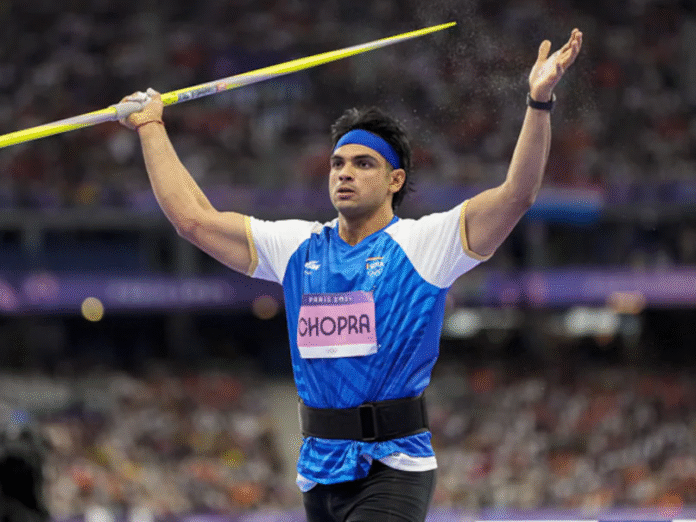
Neeraj Chopra Clinches Gold at Ostrava Golden Spike with 85.29m Throw

0

Indian javelin star Neeraj Chopra added another golden feather to his already illustrious cap by winning the top prize at the Ostrava Golden Spike 2025, held in the Czech Republic. The reigning Olympic champion secured gold with a throw of 85.29 meters, marking yet another impressive performance in the international athletics circuit.

Dominance Continues on the Global Stage

Competing against a world-class field of javelin throwers, Neeraj once again showcased his consistency and composure. His gold-winning throw of 85.29m came in the third round, standing out as the best of the evening. While it wasn’t his personal best (which remains at 89.94m), the performance was enough to leave behind a competitive field and reaffirm his status as one of the best in the world.

The Ostrava Golden Spike is part of the prestigious World Athletics Continental Tour, attracting elite athletes from around the globe.

A Steady Build-Up to Bigger Goals

Speaking after the event, Neeraj expressed satisfaction with his throw and indicated that he’s gradually working towards peaking at the right time.

“I’m happy with the win today. Every competition is a step forward. My focus is on maintaining rhythm and staying injury-free,” said Chopra.

His coach, Klaus Bartonietz, also remarked that the season is being carefully planned to allow Neeraj to peak during the major championships later this year.

India’s Sporting Icon

Neeraj Chopra has emerged not just as an athlete, but as a national icon and global ambassador for Indian athletics. Since his historic gold at the Tokyo 2020 Olympics, he has inspired a new generation of sports enthusiasts across the country. His discipline, humility, and hunger for excellence continue to win hearts both on and off the field.

What’s Next?

Neeraj is expected to participate in a few more competitive meets leading up to the World Athletics Championships, scheduled later this year. Fans and sports analysts alike will be keeping a close watch on his performance trajectory as he sharpens his form for even greater distances.

Final Thoughts

Neeraj Chopra’s win at the Ostrava Golden Spike reaffirms his elite status in global javelin throwing. With the season heating up and bigger events on the horizon, the golden boy of Indian athletics seems right on track. As always, the nation will be cheering him on every step of the way.

FICCI’ FLO Smart Soch Empowers Women with Future-Ready Tech Insights; Dr Ajay Data Shares Smart Tips

0


The FICCI FLO Jaipur Chapter, led by Chairperson Dr. Rimmi Shekhawat (2025–26), successfully organized an inspiring and forward-thinking AI workshop titled “FLO Smart Soch: Decode the Future. Think Smart”. Held at Hotel Rajputana ITC, Jaipur, the session brought together women entrepreneurs, professionals, and thought leaders to explore how Artificial Intelligence (AI) is reshaping the world of work, innovation, and creativity.

The keynote speaker for the event was Dr. Ajay Data, Managing Director of Data Group of Industries and a globally recognised tech innovator.

In his engaging session, Dr. Data demystified AI for the audience, likening it to a personal assistant that boosts efficiency, sharpens creativity, and unlocks new opportunities across industries.

He also sparked a thought-provoking discussion on emerging roles like AI Lawyer, AI Chef, and AI Software Engineer—emphasizing that keyboard-based and digital roles are rapidly evolving and will increasingly rely on AI integration.

Dr. Rimmi Shekhawat, in her address, stated:
“FLO Jaipur is committed to helping our members stay future-ready. Through ‘FLO Smart Soch’, we’ve taken a vital step toward making AI accessible and useful for every woman entrepreneur and professional in our community.”

The session concluded with an interactive Q&A followed by networking over Hi-Tea. The success of “FLO Smart Soch” reaffirmed FLO Jaipur’s mission to empower its members through knowledge, innovation, and technology-led growth.

Axiom-4 Mission Blasts Off Today: India’s Shubhanshu Shukla Joins Historic Spaceflight

0

In a landmark moment for global space collaboration, the Axiom Mission 4 (Ax-4) successfully launched today at 12:01 PM IST from NASA’s Kennedy Space Center in Florida. The mission, operated by Axiom Space in partnership with NASA, SpaceX, and international space agencies, carries astronauts from India, Poland, Hungary, and the United States to the International Space Station (ISS).

https://twitter.com/IndiaInSky/status/1937763883206299813

Leading the mission is veteran astronaut Peggy Whitson, joined by Group Captain Shubhanshu Shukla of ISRO, Sławosz Uznański-Wiśniewski from Poland, and Tibor Kapu from Hungary. This marks a historic milestone as Shukla becomes the first ISRO astronaut to reach the ISS, fulfilling a long-standing Indo-U.S. space collaboration promise.

The crew will spend two weeks aboard the ISS, conducting over 60 scientific experiments ranging from microgravity biology to mental health research and crop resilience studies.

India Responds: Air Force Evacuates Nationals Amid West Asia Crisis…

0

In a swift response to mounting tensions in conflict-affected regions of West Asia, the Indian Air Force (IAF) has initiated large-scale evacuation missions to bring back stranded Indian nationals and citizens of friendly nations. The operations are being carried out using the IAF’s heavy-lift C-17 Globemaster aircraft, strategically deployed from airbases in Jordan and Egypt.

Confirming the initiative through an official social media statement, the IAF announced, “In response to heightened tensions in conflict-affected areas in West Asia, IAF C-17 aircraft commenced missions from Jordan and Egypt to extricate Indian nationals, and citizens of friendly countries.”

India Responds: Air Force Evacuates Nationals Amid West Asia Crisis...

This evacuation effort underscores India’s commitment to safeguarding its citizens abroad, particularly in times of geopolitical instability. Sources indicate that the missions are being coordinated closely with the Ministry of External Affairs (MEA), with Indian embassies in the affected regions working round-the-clock to identify and assist those in need of repatriation.

As part of the contingency plans, medical teams and logistical support units have been deployed to ensure safe and seamless transit. The Ministry of Defence emphasized that every measure is being taken to ensure the well-being of evacuees during their return journey.The government is expected to provide regular updates as the situation evolves. In the meantime, families of those stranded have been urged to remain in contact with local embassies and follow official advisories.

The Enigmatic Chor Bawdi: A Hidden Marvel of Ahilyabai Holkar’s Reign

0

The Chor Bawdi, an architectural gem from the 18th century, is a testament to the ingenuity and foresight of Rani Ahilyabai Holkar, the revered queen of Malwa. Located in Maheshwar, Madhya Pradesh, this stepwell is not only a feat of engineering but also a symbol of strategic water conservation. Contrary to its intriguing name, Chor Bawdi has nothing to do with thieves; instead, it represents a “hidden” or “secret” water source designed for times of crisis. This article explores the history, significance, and current state of this remarkable structure.

Unveiling the Mystery Behind the Name

The term “Chor” in Chor Bawdi often sparks curiosity, leading many to initially associate it with theft or bandits. However, the word is symbolic, meaning “hidden” or “secret” in this context. The bawdi was constructed as a covert water reservoir, ensuring a secure water supply to the palace and the public during emergencies, such as wars or droughts. Its concealed design allowed it to serve as a clandestine lifeline, making it an essential component of Maheshwar’s water management system.

A Legacy of Rani Ahilyabai Holkar

Built during the reign of Rani Ahilyabai Holkar in the 18th century, Chor Bawdi reflects the queen’s commitment to public welfare and urban planning. Under her rule, Maheshwar transformed into a prosperous, well-organized, and spiritually significant city. Ahilyabai, known for her contributions to infrastructure, commissioned numerous ghats, temples, stepwells, and water conservation structures across her kingdom. Chor Bawdi stands as a shining example of her vision for sustainable water management.
Crafted from locally abundant sandstone, the bawdi showcases the architectural prowess of the era. Its intricate design not only served a functional purpose but also blended seamlessly with the aesthetic sensibilities of Maheshwar’s heritage.

The Enigmatic Chor Bawdi: A Hidden Marvel of Ahilyabai Holkar’s Reign


Architectural and Functional Brilliance

Chor Bawdi was ingeniously designed to collect and store rainwater, ensuring a reliable water supply in times of scarcity. Its strategic location allowed water to be discreetly channeled to the palace and nearby communities. The stepwell’s robust construction, using durable sandstone from the Narmada region, has enabled it to withstand the test of time. The bawdi’s subterranean structure also kept water cool and protected from contamination, a hallmark of traditional Indian stepwells.

Chor Bawdi Today: A Historical Treasure

Located near the bus stand on Polkhada Road in Maheshwar, just a short distance from the Narmada River, Chor Bawdi remains a significant historical and architectural attraction. It continues to function as a rainwater harvesting structure, contributing to local water conservation efforts. However, the site suffers from inadequate maintenance, which threatens its long-term preservation.
Despite these challenges, Chor Bawdi draws history enthusiasts, architecture lovers, and tourists eager to explore Maheshwar’s rich heritage. As one of the city’s many water conservation structures, it stands as a reminder of the region’s sustainable past and its potential to inspire modern conservation practices.

Preserving a Hidden Legacy

Chor Bawdi is more than just a stepwell; it is a symbol of Rani Ahilyabai Holkar’s visionary leadership and the architectural brilliance of 18th-century India. Its unique name and covert purpose add an air of intrigue, making it a must-visit site in Maheshwar. To ensure that this historical marvel continues to inspire future generations, concerted efforts are needed to restore and maintain it. Chor Bawdi remains a hidden treasure, waiting to be fully appreciated for its historical, cultural, and environmental significance.

Celebrating International Seafarers’ Day: Honoring the Backbone of Global Trade

0

Recognizing the Unsung Heroes of the Seas
Every year on June 25, the world celebrates International Seafarers’ Day to honor the invaluable contributions of seafarers to international trade and the global economy. These dedicated individuals ensure the smooth flow of goods across the globe, facilitating the import and export of essential commodities. This day not only promotes the importance of maritime trade but also acknowledges the sacrifices and challenges faced by seafarers who spend months at sea to keep the world connected.

The Vital Role of Seafarers in Global Trade

Seafarers are the backbone of the shipping industry, which is responsible for transporting approximately 90% of the world’s trade. From food and fuel to raw materials and manufactured goods, seafarers ensure that essential supplies reach their destinations. Their tireless efforts keep economies running and enable consumers to access goods from every corner of the globe. Without their dedication, the global supply chain would come to a standstill.

Celebrating International Seafarers’ Day: Honoring the Backbone of Global Trade


Challenges Faced by Seafarers

The life of a seafarer is far from easy. They navigate through harsh weather conditions, including towering waves and storms, to deliver goods safely. Beyond natural challenges, seafarers often face significant risks, such as traveling through war zones, combating piracy, and exposure to health hazards. In some cases, seafarers are denied basic rights, working under exploitative conditions in certain countries. Despite these adversities, their resilience and commitment keep the wheels of global trade turning.

The Origin of International Seafarers’ Day

International Seafarers’ Day was established in 2010 by the International Maritime Organization (IMO) to recognize the critical role of seafarers. The date of June 25 was chosen to commemorate the anniversary of the STCW Convention (Standards of Training, Certification, and Watchkeeping for Seafarers), a significant milestone in maritime safety and training standards adopted in 2010. The first official celebration took place on June 25, 2011, and the event is now recognized by the United Nations and administered by the IMO.

A Call to Support and Celebrate Seafarers

International Seafarers’ Day serves as a reminder of the extraordinary contributions and sacrifices made by seafarers worldwide. It is an opportunity to advocate for their rights, improve their working conditions, and express gratitude for their role in sustaining the global economy. By celebrating this day, we honor the courage and dedication of those who brave the seas to keep the world moving forward….
Something went wrong, please refresh to reconnect or try again.

Global Beatles Day: Celebrating the Music and Legacy of a Cultural Revolution

0

Honoring the Timeless Impact of The Beatles

Every year on June 25, music lovers worldwide celebrate Global Beatles Day, a tribute to the legendary band that transformed music and pop culture forever. The Beatles, comprised of John Lennon, Paul McCartney, George Harrison, and Ringo Starr, are hailed as one of the most influential bands in history. This day commemorates their groundbreaking contributions, reminding us how their music transcended borders, united people, and showcased the transformative power of art.


The Significance of June 25

Global Beatles Day is observed on June 25 to mark the historic moment when The Beatles performed their iconic song “All You Need Is Love” on a BBC broadcast in 1967, reaching an international audience and cementing their global influence. Established in 2009, this day aims to celebrate the band’s ideals, promote their music, and share their timeless messages of love, peace, and unity.
The Beatles’ Revolutionary Influence

In the 1960s, The Beatles sparked a revolution in rock and pop music, creating a sound that resonated across generations and continents. Their innovative songwriting and genre-blending style captivated millions, making them a cultural phenomenon. Beyond music, their messages of peace and love inspired social change, uniting diverse audiences and leaving an indelible mark on the world.

Global Beatles Day: Celebrating the Music and Legacy of a Cultural Revolution


The Beatles and India: A Spiritual Connection

George Harrison, deeply influenced by Indian music and spirituality, played a pivotal role in bridging Eastern and Western cultures. He learned the sitar from Pandit Ravi Shankar, incorporating its sounds into songs like “Within You Without You”, which was rooted in Indian classical Indian classical music. The Beatles’ fascination with Indian yoga, meditation, and culture in the 1960s and 70s inspired millions in the West to explore India’s spiritual heritage, significantly elevating its global identity.

Celebrating Global Beatles Day

Fans celebrate Global Beatles Day by listening to their songs, watching their films, and sharing their messages of hope and harmony. Social media buzzes with the hashtag #GlobalBeatlesDay, while some communities host music concerts, tribute shows, and art exhibitions to honor the band’s legacy. These events keep the spirit of The Beatles alive, inspiring new generations to embrace their vision of a united world.

Global Beatles Day: Celebrating the Music and Legacy of a Cultural Revolution

A Legacy That Lives On

Global Beatles Day is more than a celebration of music—it’s a recognition of The Beatles’ enduring impact on culture, spirituality, and global unity. Their songs continue to resonate, reminding us of the power of art to inspire change and bring people together. On June 25, let’s join the world in celebrating the band that changed history with their unforgettable melodies and timeless ideals.