Home Blog Page 244

Guru Poornima 2025: Here Comes The Date, Significance, Quotes and Wishes…

0

Guru Purnima, celebrated on the full moon day of the Hindu month of Ashadh, is considered highly auspicious. This sacred occasion is dedicated to honoring and expressing gratitude to one’s guru or spiritual teacher. It also commemorates the birth anniversary of Maharishi Ved Vyas, the revered sage who compiled the Vedas. For this reason, the day is also known as Vyas Purnima or Ashadhi Purnima.

This year, Guru Purnima will be celebrated on Thursday, July 10, 2025.
The day serves as a powerful reminder of the vital role a guru plays in shaping an individual’s life. As Saint Kabir beautifully expressed in his famous couplet:

“Guru Govind dou khade, kaake laagun paay;
Balihaari Guru aapne, Govind diyo batay.”

“If both God and Guru were to appear before me, whose feet should I touch first?
I would bow to my Guru first, for he is the one who led me to God.”

Why Is a Guru Considered Above God?

In spiritual traditions, the guru holds a place even above God, for it is the guru who illuminates the path to the divine. By dispelling ignorance and imparting wisdom, the guru becomes the guiding light that leads one toward knowledge, success, and inner awakening.

Thus, Guru Purnima is not just a festival—it’s a heartfelt acknowledgment of the transformative power of a teacher’s guidance in one’s spiritual and worldly journey.

गुरुर्ब्रह्मा गुरुर्विष्णुः गुरुर्देवो महेश्वरः।

गुरुः साक्षात् परं ब्रह्म तस्मै श्री गुरवे नमः॥

गुरु ब्रह्मा, विष्णु और महेश हैं, वह साक्षात् परब्रह्म हैं, उन श्री गुरु को प्रणाम।-गुरु पूर्णिमा की शुभकामनाएं

Happy Guru Purnima wishes

Guru Purnima holds significance in many cultures, including Hinduism, Buddhism, and Jainism. You can use some meaningful wishes for Guru Purnima to post stories or reels for the festival. Check out these Guru Purnima wishes that you can use:

  1. Happy Guru Purnima! May you always be blessed with the guidance and wisdom of your guru.
  2. On this auspicious day, I bow to the divine teacher who lights up our path. Happy Guru Purnima!
  3. Wishing you a blessed and joyful Guru Purnima. May your guru’s blessings always be with you.
  4. Happy Guru Purnima! May your life be filled with wisdom and enlightenment.
  5. Gratitude and respect to all the gurus who inspire and guide us. Happy Guru Purnima!
  6. May the blessings of your guru lead you to success and happiness.
  7. Happy Guru Purnima! Thank you for being a guiding light and a source of wisdom.
  8. May your guru’s teachings always guide you on the right path. Happy Guru Purnima!
  9. Wishing you a day filled with joy and spiritual growth. Happy Guru Purnima!
  10. On this sacred day, may you find peace and enlightenment. Happy Guru Purnima!
  11. Happy Guru Purnima! May your guru’s blessings always shower upon you.
  12. May you always be blessed with the wisdom of your guru. Happy Guru Purnima!
  13. Happy Guru Purnima! Thank you for guiding me and helping me grow.
  14. On this auspicious day, may your heart be filled with gratitude and respect. Happy Guru Purnima!
  15. Wishing you a blessed Guru Purnima filled with love, light, and wisdom.
Guru Poornima 2025: Here Comes The Date, Significance, Quotes and Wishes...

Guru Poornima 2025: Here Comes The Date, Significance, Quotes and Wishes...

Celebrity Attendance at Wimbledon 2025 – Week 1 Highlights

0
Celebrity Attendance at Wimbledon 2025 – Week 1 Highlights

The first week of Wimbledon 2025 has seen a vibrant turnout of global celebrities, adding glamour and excitement to the All England Club:

  • Notable Celebrity Couples spotted include Anushka Sharma–Virat Kohli and Priyanka Chopra–Nick Jonas, representing both Bollywood and Hollywood fame.
  • John Cena, the WWE icon and actor, was also among the star-studded attendees.
  • Celebrities from sports, fashion, music, and film have been present since Monday, enjoying both the world-class tennis and the sunny London weather.
  • This tradition continues Wimbledon’s reputation not just as a premier sporting event, but also as a social hotspot for high-profile personalities.
Celebrity Attendance at Wimbledon 2025 – Week 1 Highlights

India’s Daughters in Uniform: Astha Poonia’s Historic Flight into Fighter Stream, She Becomes India’s First Woman Navy Fighter Pilot…

0

India’s skies thunder with pride as Sub Lieutenant Astha Poonia marks an extraordinary milestone in the annals of naval aviation. In a field once dominated by men, she has emerged as the first woman fighter pilot of the Indian Navy, a trailblazer whose wings bear the strength of a billion dreams. Her achievement is not just a personal victory—it’s a powerful symbol of Nari Shakti, resilience, and the unstoppable rise of women in every battlefield, every cockpit, and every command post across the nation. Astha’s journey redefines not only what it means to serve but what it means to lead. She doesn’t just represent the future—she commands it.

In the heart of Meerut, Uttar Pradesh, a young girl once looked skyward—not just to dream, but to conquer. That girl, Astha Poonia, has now etched her name into Indian naval history as the first woman to be trained as a fighter pilot in the Indian Navy. Her journey is not just a personal triumph—it’s a blazing trail for every woman who dares to defy gravity and convention.

Early Life & Roots

  • Hometown: Meerut, Uttar Pradesh—a city known for its military heritage, but Astha didn’t hail from a defense background.
  • Education: She pursued a Bachelor of Technology (BTech), laying the foundation for her technical prowess and discipline.
  • Inspiration: Her passion wasn’t inherited—it was cultivated. With no military lineage, her ambition was born from sheer willpower and a desire to serve the nation in the skies.

Flight Toward DestinyEntry into the Navy:

After completing her BTech, Astha joined the Indian Naval Academy in Ezhimala through the Short Service Commission route.

  • Training Path:
    • Phase 1: Basic flying on Pilatus PC-7 Mk II at the Air Force Academy, Dundigal.
    • Phase 2: Advanced jet training on Hawk AJT at INS Dega, Visakhapatnam, culminating in the Second Basic Hawk Conversion Course.
  • Milestone Moment: On July 3, 2025, she received the prestigious “Wings of Gold” from Rear Admiral Janak Bevli, officially entering the fighter stream of naval aviation.
India’s Daughters in Uniform: Astha Poonia’s Historic Flight into Fighter Stream, She Becomes India’s First Woman Navy Fighter Pilot...

Why She’s Perfect for This Role

  • Trailblazer: Astha shattered a long-standing barrier, becoming the first woman in a domain previously reserved for men.
  • Symbol of Nari Shakti: Her induction reflects the Navy’s commitment to gender inclusivity and the empowerment of women in combat roles.
  • Future Missions: She is now set to train on MiG-29K and possibly the naval variant of the Rafale, flying from aircraft carriers like INS Vikrant and INS Vikramaditya.

A Message to the Nation

Astha’s story is a thunderous declaration: “Women can fly, fight, and lead.” Her ascent is not just about aviation—it’s about elevation. She’s a living testament that passion, perseverance, and purpose can rewrite the rules. So to every girl who’s ever been told “you can’t”—Astha Poonia just proved you absolutely can.

Where Not Only oil, but tradition drips—on a 25-year-old Story Of Oil in Ratlam.

0

In the winding alleys of Ratlam, where buildings whisper stories and the air carries the scent of turmeric and spices, one shop still breathes tradition—Jagdish Ji Rathore’s J.P. Traders nestled in the historic Char Chabutra. For 25 years, this humble oil shop has stood strong—not with flashy machines or chemicals, but with a creaking wooden ghani and the legacy of generations. According to him, Kachi Ghani oil is far more nourishing than refined oils—beneficial for heart health, immunity, skin, and hair. That’s why people from Ratlam and nearby villages still flock to his shop, seeking the same pungent taste that reminds them of their grandmother’s kitchen.

Historical Significance of Kachi Ghani

The art of Kachi Ghani, meaning “raw crusher” in Hindi, stretches back millennia. Archaeological finds from the Harappan civilization (circa 2000 BC) reveal metal frying pans, hinting at the use of oils like mustard or sesame. By 500 BC, Sanskrit texts mentioned oil presses, though their designs were not detailed. The ghani, a mortar-and-pestle system powered by animals or humans, became central to Indian oil production, with a 13th-century South Indian temple carving depicting its use. This cold-pressing method, free of heat or chemicals, preserved the oil’s natural nutrients, antioxidants, and bold flavor, making Kachi Ghani a staple in Indian cooking and Ayurvedic practices for centuries.

Where Not Only oil, but tradition drips—on a 25-year-old Story Of Oil in Ratlam.

Health in Every Drop: Why Kachi Ghani Tel Still Reigns Supreme

Unlike refined oils that undergo chemical processing, Kachi Ghani Tel is extracted cold from mustard seeds, preserving essential nutrients. Rich in omega-3, antioxidants, and natural pungency, it aids digestion, heart health, and even skin therapy.

Jagdish ji, now in his sixties, smiles through the creases of time. “I don’t sell oil. I sell tradition,”

“Kachi Ghani Tel is not just oil— but our farmer’s pride, and our immunity’s shield.” – Jagdish Rathore

Structure of the Ghani Machine

The ghani at Sharma Ji’s shop is a marvel of traditional engineering, built to last generations. Made primarily of wood, with some metal components, it consists of the following parts:

  • Mortar (Kolhu): A cylindrical wooden or stone bowl, about 2-3 feet in diameter, fixed into the ground. This is where the mustard seeds are placed for crushing.
  • Pestle (Ulakkai): A heavy, rounded wooden or metal pestle, often made from a hard wood like teak, that fits snugly inside the mortar. The pestle is designed to rotate and crush the seeds against the mortar’s inner walls.
  • Central Shaft: A vertical wooden or metal shaft connects the pestle to a horizontal beam. This shaft is anchored to the mortar’s base, allowing the pestle to rotate smoothly.
  • Horizontal Beam (Dandi): A long wooden or metal beam attached to the shaft, traditionally pulled by a bullock or, in modern setups, powered by a small electric motor. In Ramesh’s shop, a low-power motor (1-2 horsepower) has replaced the bullock to maintain efficiency while keeping the process heat-free.
  • Wooden Frame: The entire setup is supported by a sturdy wooden or metal frame, often elevated slightly to ease oil collection and cleaning.

Kachi Ghani mustard oil isn’t just a regional treasure—it’s a global wellness warrior. From Indian kitchens to international skincare routines, its cold-pressed purity is winning hearts and healing bodies. Here’s a full-spectrum look at its benefits across the world:

3,500-Year-Old Trading Center Discovered in Peru: A Window into Ancient Civilization

0

Archaeologists have uncovered a 3,500-year-old city named Peñico in Peru’s northern Barranca province, revealing what is believed to be a significant ancient trading center. The discovery offers new insights into pre-Columbian civilizations that once thrived across South America.

Situated around 200 kilometers north of Lima and 600 meters above sea level, Peñico is thought to have been inhabited between 1800 and 1500 BC — the same period when early civilizations were emerging in the Middle East and Asia.

Researchers believe Peñico played a crucial role as a trading hub connecting communities from three distinct regions: the Pacific coast, the Andes mountains, and the Amazon basin.

Link to Caral Civilization

Peñico is located near Caral, the oldest known civilization in the Americas, established around 3000 BC. Caral is renowned for its monumental architecture, including 32 major structures such as pyramids, irrigated fields, and organized urban settlements. Scholars believe the Caral civilization developed independently of ancient cultures like those in India, Egypt, Sumer, and China.

According to Dr. Ruth Shady, the pioneering archaeologist who excavated Caral in the 1990s and now leads the Peñico research, this new site provides crucial evidence about the continuity and eventual decline of the Caral civilization, likely caused by climate change.

“Peñico was strategically located to facilitate contact and trade with diverse regions—coastal, highland, and jungle,” Dr. Shady noted.

Archaeological Findings

Excavations over the past eight years have revealed 18 structures at Peñico, including ceremonial spaces and residential buildings. Drone imagery captured a prominent circular structure atop a hill, encircled by ruins of stone-and-clay constructions.

Among the artifacts recovered are:

  • Ritual objects
  • Clay figurines of humans and animals
  • Necklaces made from seashells and beads

These findings suggest a sophisticated society with religious, economic, and cultural systems.

Cultural Significance

Archaeologist Marco Machacuay from Peru’s Ministry of Culture emphasized the site’s importance: “Peñico shows how the Caral society evolved and continued its legacy in the region.”

Peru remains one of the richest archaeological landscapes in the Americas, home to iconic sites such as Machu Picchu and the enigmatic Nazca Lines — each testament to the country’s deep historical and cultural heritage.

AI-Powered Name Generators Vs. Human Creativity: A Comparison

0

Naming a business is a critical part of branding. It requires a balance of strategy, emotion, and market understanding. In recent years, AI-powered name generators have emerged as powerful tools that help streamline the naming process. But can algorithms truly replace human creativity? Or do they serve best as a complement? In this article, we’ll compare machine-driven generation with human naming approaches, looking at when to use each and how they perform under different conditions. 

How AI name generators work

AI name generators rely on natural language processing models trained on massive text datasets. These systems analyze word combinations, phonetic structures, business categories, and even brand tone to suggest names that fit your criteria. Some tools let users input keywords or themes, while others use predictive algorithms to generate completely new ideas.

These tools—such as a modern business name generator—also assess domain name availability, filter out duplicates, and present options in seconds. They’re designed for efficiency—producing dozens or even hundreds of ideas in one session. Their goal is to reduce manual brainstorming time and deliver ready-to-use brand names with minimal input.

Strengths and limitations of human creativity

Human creativity in naming is driven by experience, cultural awareness, intuition, and context. A professional namer or branding expert doesn’t just invent a word—they consider narrative, emotional tone, market positioning, audience psychology, and linguistic nuance.

Humans can understand double meanings, metaphors, subtle humor, or cultural relevance in ways AI still struggles with. They can also adapt names to visual identity or future growth strategies. However, the human process takes longer, is costlier, and heavily depends on subjective interpretation. It may require multiple rounds of revision and testing before results are finalized.

Comparing key factors

AI-Powered Name Generators Vs. Human Creativity: A Comparison

Side-by-side strengths and differences:

  • Speed and scalability: AI generates names instantly, while humans need more time for ideation and review.
  • Depth and insight: Humans bring market knowledge and emotional context; AI follows patterns and structure.
  • Originality and legal safety: Human-created names are often more nuanced, but AI can explore vast name spaces quickly—with caveats about legal checks.
  • Visual and tone alignment: AI tools that include branding features can pair names with logos, but humans tend to build with long-term brand evolution in mind.
  • Affordability and access: AI is more budget-friendly and accessible to early-stage founders. Human services come with a higher price tag but often higher precision.

Each approach excels in different scenarios. While AI delivers volume and speed, human naming brings emotion and brand storytelling into the process.

When to use AI and when to choose creative input

For startup founders who need fast, scalable solutions to test MVPs or domain concepts, AI name generators are extremely effective. They offer inspiration and variation without requiring a full branding budget.

Human-led naming is better suited for personal brands, cultural projects, or premium identities where storytelling and emotional tone are essential. If the brand will rely on deep audience connection or subtle messaging, creative input brings an edge.

That said, a hybrid approach is often the best option. Use AI to generate a broad pool of options, then refine, combine, and test the best ones using human intuition and brand expertise.

Common mistakes when choosing a naming method

Many users expect AI to deliver a perfect name without context. The reality is that inputs still matter—clear keywords, desired tone, and industry filters are essential for quality results. Another mistake is failing to review AI-generated names for legal and cultural implications.

On the human side, relying solely on subjective opinion without testing or validation can lead to unclear or confusing names. Personal taste should always be balanced with market insight.

Another overlooked step is adapting the name to fit brand visuals. Whether it’s an AI-generated word or a handcrafted title, alignment with logo, typography, and tone of voice is key to brand cohesion.

Frequently asked questions

Are AI-generated names truly original?
They can be, especially structurally or phonetically. But they still require checks for trademarks, domain availability, and brand conflicts.

Can a human name a brand faster than AI?
Rarely. AI is significantly faster, especially when large volumes of ideas are needed quickly.

Which method is better for international branding?
AI can generate ideas in multiple languages, but human input is crucial for cultural nuance and regional sensitivity.

Is it possible to combine both approaches?
Yes, and it’s often the most effective strategy. Use AI for idea generation, and refine the shortlist through human review, market testing, and brand adaptation.

Exploring Dhubela : The Heart of Bundelkhand’s History and Heritage

0

Nestled in the heart of Bundelkhand, Madhya Pradesh, Dhubela is more than just a city—it is a living museum of history, valor, and culture. Located in Chhatarpur district, approximately 60 kilometers from the world-famous Khajuraho, Dhubela is a treasure trove of majestic palaces, forts, and museums that reflect the rich heritage of the region. As the land of the legendary Maharaja Chhatrasal, this destination is a must-visit for those seeking to immerse themselves in the vibrant legacy of Bundelkhand. With its proximity to renowned tourist spots like Khajuraho and Orchha, Dhubela offers a captivating blend of history, culture, and natural beauty.

The Dhubela Museum: A Glimpse into the Past

One of the most prominent attractions in Dhubela is the Dhubela Museum, housed in the historic court building of Maharaja Chhatrasal. Established in 1955 and inaugurated by India’s first Prime Minister, Jawaharlal Nehru, this museum showcases an impressive collection of sculptures, inscriptions, and artifacts from the region. Spread across eight galleries, the museum offers a deep dive into Dhubela’s storied past, making it a perfect starting point for visitors eager to explore the area’s history.

Exploring Dhubela : The Heart of Bundelkhand’s History and Heritage

Mastani Mahal: A Tribute to a Legendary

PrincessAdjacent to the Dhubela Museum lies the elegant Mastani Mahal, built by Maharaja Chhatrasal for his daughter, Mastani, who later became the wife of Bajirao Peshwa. This palace is a testament to the architectural finesse of the era and stands as a symbol of the region’s royal legacy. Visitors can marvel at its historical significance and the stories of valor and romance that echo within its walls.

Kamalapati Mahal: A Masterpiece of Art and Architecture

Another gem in Dhubela is the Kamalapati Mahal, located on the opposite side of a serene lake, nestled in the embrace of hills. This palace, built for Chhatrasal’s first queen, Kamalapati, is a stunning example of Bundelkhand’s architectural brilliance. Adorned with 180 intricate paintings that are over 300 years old, the walls of this mahal narrate tales of a bygone era, captivating art and history enthusiasts alike.

Exploring Dhubela : The Heart of Bundelkhand’s History and Heritage

Sheetalgarhi Fort: A Window to Scenic Splendor

Perched atop a hill, the Sheetalgarhi Fort offers a breathtaking view of the surrounding landscape. The fort’s pillars and courtyards are a testament to the region’s architectural grandeur, while its elevated position provides panoramic vistas that stretch far into the horizon. A visit to this fort is a perfect way to soak in both the history and natural beauty of Dhubela. The scorching summers of Bundelkhand make it advisable to avoid visiting Dhubela during the hot months. Instead, plan your trip during the winter season, from December to February, when the weather is pleasant, allowing you to explore the region comfortably. While Dhubela offers limited accommodation options, visitors can find more choices in nearby Chhatarpur, ensuring a convenient and enjoyable stay.

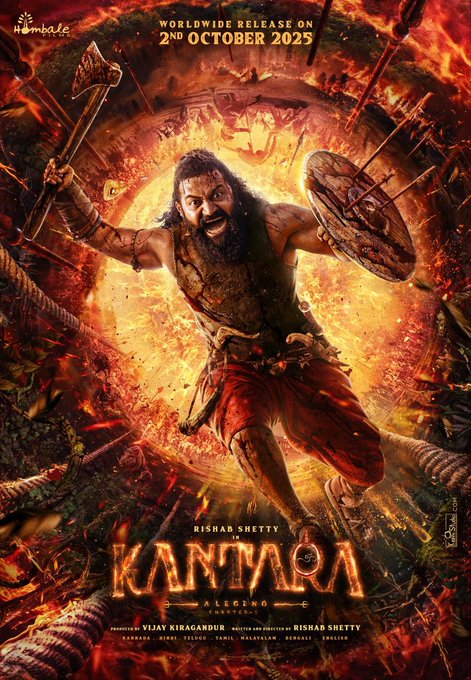
The skies crackled. The earth trembled. And on October 2, 2025, a new legend begins—Kantara: Chapter 1…

0

Rishab Shetty returns not as a man, but as a myth incarnate. The poster alone feels like a divine premonition—he floats mid-air, brandishing a battle axe kissed by fire, a shield etched in ancestral fury. His eyes? Ablaze with the power of a thousand spirits. This isn’t just cinema. This is a spiritual storm that will consume screens and souls alike.

The Roar of the Wild Returns

Forget subtlety. Fans have unleashed their madness in full form.

  • “I’m ready to surrender my sanity to this saga!”
  • “This is not a teaser. It’s divine possession on a poster.”
  • “If Kantara was a temple, Chapter 1 is its deity.”

From memes to murals, reels to rituals, the frenzy is unlike anything cinema has seen. 500 fighters, 25-acre sets, and chants that feel older than time itself—Kantara: Chapter 1 is shaping into the mythological megaton fans prayed for.

Why This Chapter Could Shake Indian Cinema

  • Ancient deities awaken during the Kadamba reign Cinematography that feels like gods whispering through shadows Music that reverberates through your chest like temple bells With Amazon Prime Video securing the digital rights, this legend is set to roar across continents.

When Gods Gleamed in Gold: A Dazzling Night on the Wheels of Divinity

0

On Sunday, Lord Jagannath, along with his brother Balabhadra and sister Subhadra, was adorned in Suna Besha (golden attire) atop their chariots. As part of this sacred tradition, the deities were embellished with approximately 208 kilograms of gold ornaments. This ritual forms a grand segment of the Rath Yatra festival. According to the Shri Jagannath Temple Administration (SJTA), devotees were allowed to witness this dazzling spectacle from 6:30 PM to 11:00 PM. Temple sources confirm that the divine trio wore around 30 types of ornaments, crafted from gold, silver, diamonds, and other precious metals

As twilight draped the coastal town in a silken hush, the sacred boulevard of Grand Road lit up with celestial grandeur. In a spectacle that fused devotion with royal opulence, Lord Jagannath, Lord Balabhadra, and Devi Subhadra emerged cloaked in shimmering glory—each seated upon their colossal chariots, transformed into moving thrones of gold.

When Gods Gleamed in Gold: A Dazzling Night on the Wheels of Divinity

The occasion? The legendary Suna Besha, where the deities don a radiant ensemble of 208 kilograms of pure gold, silver, diamonds, and dazzling jewels. But this wasn’t just ornamentation—it was a cultural crescendo, echoing centuries of faith and tradition. As the Rath Yatra procession paused, the trio was adorned with over 30 unique ornaments, from majestic crowns and layered necklaces to armlets sculpted with intricate mythology. Each piece not only sparkled—it told stories of divine protection, cosmic energy, and eternal grace.

By evening, the Grand Road had become a sanctuary of awe and emotion. Thousands of devotees, eyes moist with reverence, stood in silence from 6:30 PM till 11 PM, absorbing the magnanimous darshan that only happens once a year. Pilgrims described the sight as “a glimpse into Vaikuntha itself,” while temple priests whispered ancient mantras in harmony with the glittering divine gaze. The gold may glitter, but in Puri that night, it was faith that truly shone.

San Fermín Unleashed: Spain’s Wildest Week of Faith, Fireworks & Fearless Runners

0

Every July, the city of Pamplona in northern Spain erupts into a whirlwind of tradition, adrenaline, and celebration. The San Fermín Festival, held from July 6 to 14, is one of the world’s most iconic cultural events—where devotion to a saint meets daring bull runs and nonstop revelry.

A History Etched in Faith and Folklore

  • The festival honors Saint Fermín, Pamplona’s first bishop and patron saint, believed to have been martyred in the 3rd century. Originally celebrated on September 25, the feast was moved to July 7 in 1591 to coincide with summer fairs and better weather. Over centuries, secular cattle fairs merged with religious processions, giving birth to the modern San Fermín spectacle. The festival gained global fame thanks to Ernest Hemingway’s 1926 novel The Sun Also Rises, which romanticized the bull runs and bohemian spirit.

Purpose and Spirit

  • The festival is a tribute to Saint Fermín’s courage and sacrifice, blending Catholic devotion with Basque and Spanish traditions. It’s also a celebration of community, bravery, and cultural pride, where locals and tourists unite in a shared ritual of risk and joy.

How It’s Celebrated Today

  • The festival kicks off with the Chupinazo, a firework launched from Pamplona’s City Hall on July 6, igniting nine days of festivities.
  • Each morning from July 7 to 14, the Encierro (Running of the Bulls) sees thousands sprint ahead of six charging bulls through cobbled streets. Afternoons feature bullfights, while evenings bring folk dances, concerts, giant puppet parades, and fireworks. Participants wear white outfits with red neckerchiefs, symbolizing purity and martyrdom.
San Fermín Unleashed: Spain’s Wildest Week of Faith, Fireworks & Fearless Runners

Massive Global Appeal

  • In 2025, the festival is expected to draw over 1.7 million attendees from around the world.
  • More than 25,000 people packed Pamplona’s square for this year’s Chupinazo alone.
  • The event is covered by 140 media outlets from 13 countries, highlighting its international allure.

A Festival with a Voice

  • This year’s opening ceremony included a powerful message of solidarity with Palestine, showing that San Fermín is not just about tradition—it’s also a platform for global awareness.
San Fermín Unleashed: Spain’s Wildest Week of Faith, Fireworks & Fearless Runners