Home Blog Page 237

Surprising! BBC Counts Pak’s Gilgit-Baltistan region Among 25 Best Places in World to Travel, But India Missing in List..

0

Even at a time when world geopolitical equations seem changing, the travel lists being issued by BBC also seems changing in wake of newer trends being emerging across the globe. In the same reference, BBC recently released a new list of 25 best places in the world to travel, however much to travellers’ surprise, not even a single city from India has found a place in this comprehensive list. 

BBC, in its story says, that BBC Travel journalists and some of the world’s leading sustainable travel authorities, such as the United Nations World Travel OrganizationSustainable Travel International, the Black Travel Alliance and the World Travel & Tourism Council have helped comprise the list. 

This list has Sri Lanka, Naoshima from Japan, Pakistan’s Gilgi-Baltistan region among these 25 best places in world to travel. Besides these Asian countries and regions, the list has Wales, Arizona in US, The Dolomites Italy, Dominica, Labrador, Canada, Western Australia, Panama, Morocco among others.

Pak in this article has been referred to as one of the great surprises for travellers. It says that the country is hoping a slew of responsible tourism initiatives and new sustainable efforts will lure eco-conscious visitors to explore its breathtaking northern regions; home to five of the planet’s 14 peaks towering over 8,000m – including the world’s second highest, K2. 

Salam Pakistan (Pakistan’s first-ever national tourism brand, which launched in 2023) allows travellers to easily apply for e-visas and make bookings on the digital platform, including the coveted mountaineering and trekking visa. It only takes a quick glance at the list of mountain peaks and treks to see the scale of Pakistan’s unmatched adrenaline opportunities., says this BBC article.

The article refers Gilgit Baltistan region as heaven’s gate however the heaven of earth Kashmir finds no place in this article. 

As per the article, “Pakistan is much more than staggering mountain trails. The scenic Gilgit-Baltistan region – dubbed “heaven’s gate” – is brimming with lush valleys, pristine lakes and glacial waterfalls. Cradled between trails are the Hunza Valley’s fragrant cherry blossoms and apricot orchards, undulating Unesco-listed Deosai plains and Shangri-La-esque mirrored lakes. Venture towards the Pakistan-China border to find the Khunjerab Pass, which will be operational year-round starting in 2025.

From Tardigrades to Algae Fuel—Inside Shubhanshu’s Bold Scientific Experiments on the ISS..

0

In a landmark moment for Indian space exploration, Group Captain Shubhanshu Shukla etched his name into history as the first Indian to conduct scientific research aboard the International Space Station (ISS). As part of the Axiom-4 mission, Shukla spent 18 transformative days in microgravity, leading seven pioneering experiments designed by Indian institutions. These ranged from studying muscle regeneration and seed sprouting to exploring the resilience of tardigrades, the oxygen-producing potential of cyanobacteria, and the viability of microalgae as food and fuel sources.

His work not only deepens our understanding of life in space but also lays the groundwork for India’s future human spaceflight programs, including Gaganyaan and lunar missions. From testing screen interaction in zero gravity to cultivating methi and moong seeds in orbit, Shukla’s mission blended scientific rigor with cultural pride—echoing Rakesh Sharma’s iconic “Saare Jahan Se Achha” as he floated among the stars.

From Tardigrades to Algae Fuel—Inside Shubhanshu's Bold Scientific Experiments on the ISS..

Scientific Experiments Conducted in Space

Myogenesis (Muscle Regeneration)

  • Studied the impact of microgravity on muscles
  • Aimed at developing future treatments for elderly individuals and astronauts

Experiments on Tardigrades

  • Research on the world’s most resilient organism
  • Discovered how they survive and reproduce in microgravity

Microalgae

  • Research on algae for nutrition and oxygen recycling
  • Alternative source of food and air in space missions

Sprouting of Moong and Fenugreek Seeds

  • Sprouting seeds in microgravity
  • Analysis of genetics and nutritional quality

Seed Germination Research

  • Tested the behavior of seeds from 6 different crop varieties in space
  • Preparation for space farming and sustainable food production

Cyanobacteria Studies

  • Focused on oxygen-producing bacteria
  • Effort to create habitable environments for humans in space

Impact of Screens on Eyes

  • Analyzed how computer screens affect eye health
  • Studied visual focus and movement in microgravity conditions

Technical and Cultural Harmony

The experiments conducted in space embodied not just scientific depth, but also a strong sense of Indian cultural pride. While representing India’s diversity and scientific spirit aboard the ISS, Shubhanshu Shukla tested screen interaction in zero gravity and germinated native food seeds—bringing the concept of “Swadeshi Experiments” to life beyond Earth. One especially emotional moment came when Shukla paid tribute to Rakesh Sharma by evoking the spirit of “Saare Jahan Se Achha” in space—an iconic and heartwarming gesture that resonated deeply in the annals of India’s space history.

Foundation for India’s Future

This mission was not merely a set of scientific trials—it acted as a blueprint for India’s upcoming human spaceflight endeavors, such as Gaganyaan. Its success established that India is not just present in space, but capable of leading scientific advancements there.
Shubhanshu Shukla’s space journey is a testament to India’s scientific potential, curiosity, and self-reliance. It inspires every Indian by proving that space is now an extension of our national laboratory—and a canvas for our ambitions.

Shrikhand Mahadev Standing at 18,570 feet With 72-feet Tall Shiva Lingam Speaks of Many Divine Stories…

0

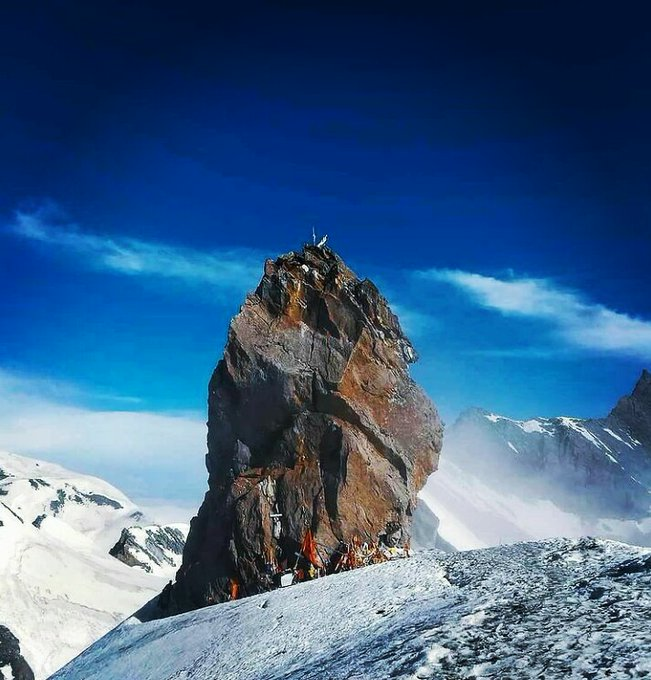
Shrikhand Mahadev, nestled near Shimla in Himachal Pradesh, stands as one of the most spiritually powerful abodes of Lord Shiva at an awe-inspiring altitude of 18,570 feet. This makes the site a mystical place of Lord Shiva where devotees can have darshan of a naturally formed 72-feet-tall Shiva Lingam, which is believed to be a manifestation of the divine himself. Reaching this sacred peak is far from ordinary—it is a soul-awakening quest undertaken by those guided by devotion.

The Sacred Trek of 35 Kilometers

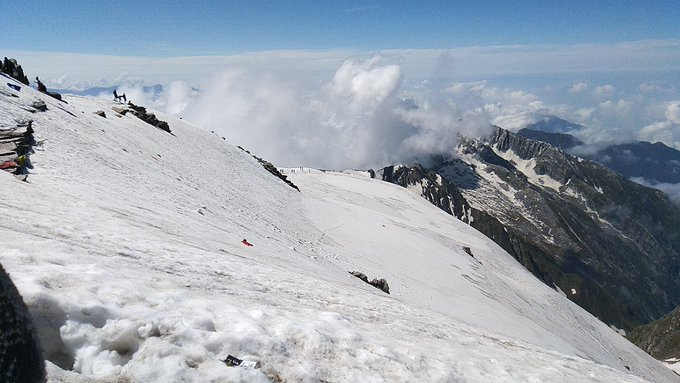
Unlike other spiritual pilgrimages, the journey to Shrikhand Mahadev demands immense physical and mental strength. Pilgrims must undertake a steep 35-kilometer trek on foot, with no horses, mules, or palanquins allowed—making it a test of pure endurance and faith. With frozen trails, deep ravines, and treacherous ice-covered passes, this pilgrimage surpasses even Amarnath in difficulty. And yet, each step is infused with divine energy that uplifts the spirit.

A Divine Experience Only Once in a Lifetime

Due to its elevation and extreme conditions, the path to Shrikhand remains snow-covered most of the year, opening only in July for a limited period. Many pilgrims believe this journey is meant to be completed once in a lifetime—as if the soul is summoned just once by Mahadev for this meeting beyond the clouds.

Legend of Bhasmasura and Mahadev’s Sacred Refuge

According to ancient lore, the Shrikhand Mahadev range was where Lord Shiva took refuge in a cave to escape the asura Bhasmasura, who had been granted a powerful boon to incinerate anyone he touched. Vishnu, in the form of Mohini, led Bhasmasura to self-destruction through divine dance, saving Mahadev and sanctifying this mountain as a site of deep cosmic importance. Locals of Kullu believe that Lord Shiva still resides here in his ethereal form, blessing those who brave the divine path.

How to Reach Shrikhand Mahadev

The journey begins at Rampur in Shimla, from where devotees proceed to Nirmand in Kullu district. From there, one can travel to Bagipul and Jaon village by road, after which the actual trek begins. The pilgrimage includes three main stops: Singhgad, Thachdu, and Bhim Dwar. Along the way, travelers encounter sacred spots like the temples of Parvati, Parshuram, Dakshineshwar Mahadev, and the legendary site of Bakasura’s slaying.

Shrikhand Mahadev Standing at 18,570 feet With 72-feet Tall Shiva Lingam Speaks of Many Divine Stories...

A Pilgrimage of Transformation

Shrikhand Mahadev is not just a destination—it’s a spiritual transformation. With each step, devotees shed fear, ego, and doubt, embracing surrender and grace. It’s a journey that connects heaven and earth through devotion, where even the snow whispers the name of the divine.

Sidhu Moosewala’s Groundbreaking Posthumous World Tour ‘Signed to God’ Set for 2026, First Ever Artist To Do Concert After death…

0

A Historic First in Music History

In an unprecedented move, the late Punjabi rapper Sidhu Moosewala, who was tragically assassinated in May 2022, will become the first Indian artist to “perform” a posthumous concert tour. The ‘Signed to God’ world tour, announced for 2026, blends cutting-edge technology with Moosewala’s iconic legacy, redefining how fans experience their beloved artists.

The Technology Behind the Performance

The tour will feature an AI-generated avatar and 3D holographic projections to recreate Moosewala’s electrifying stage presence. His original vocals, synced with advanced visuals, will bring hits like So High, 295, and Mera Na to life. This innovative approach, pioneered by Platinum Events, uses augmented reality to deliver an immersive concert experience, making it feel as though Moosewala is performing live.

A Cryptic Announcement Sparks Global Buzz

On July 16, 2025, a mysterious video on Moosewala’s official Instagram account unveiled the ‘Signed to God’ tour, igniting a viral frenzy across social media. Fans expressed a mix of excitement and emotion, with many curious about how the concerts would unfold. The tour’s website hints at performances in cities like Punjab, Toronto, London, and Los Angeles, with details on dates and tickets still forthcoming.

Sidhu Moosewala’s Enduring Legacy

Born Shubhdeep Singh Sidhu in 1993, Moosewala rose from a small Punjabi village to global stardom, blending Punjabi folk with hip-hop and trap. His raw, socially charged lyrics in songs like SYL and The Last Ride resonated with millions, particularly the youth. Even after his death at 28, his music continues to dominate charts, cementing his status as a cultural icon.

A Spiritual Comeback for Fans

The ‘Signed to God’ tour is more than a concert series—it’s a movement to honor Moosewala’s impact. Fans have flooded social media with emotional tributes, calling the tour a “spiritual comeback” and a “game-changer” for preserving musical legacies. The project has drawn praise from artists like Raja Kumari and Badshah, who credit Moosewala with globalizing Punjabi music.

What to Expect from the Tour

While no human performer will take the stage, the AI-driven avatar will deliver a visually stunning experience, complete with cinematic effects. The tour promises to bring Moosewala’s music to both new listeners and devoted fans, with stops planned in key cities worldwide. As anticipation grows, the ‘Signed to God’ tour is set to redefine how we celebrate and remember musical legends.

The War of Words Ends Here—Emojis Speak Where Languages Divide

0

No translator needed. No grammar battles to fight. In a world torn by linguistic boundaries and cultural silos, emojis rise as the silent peacemakers of the digital age. A single 🔥 can express passion in Tokyo or New York, and a humble 😢 can echo heartbreak from Delhi to Rio. Where words falter, emojis triumph—universal, emotional, and instant. This isn’t just communication. It’s connection. The emoji isn’t typed. It’s felt.

On July 17, the digital world bursts into color, emotion, and expression as we celebrate World Emoji Day—a day dedicated to the tiny symbols that have revolutionized how we communicate. From a simple 😊 to a dramatic 😱, emojis have become the heartbeat of online conversations, adding depth, clarity, and joy to every message we send.

A Universal Language of Emotion

In a world where words often fall short, emojis step in as emotion-packed ambassadors. They transcend language barriers, cultural differences, and even generational gaps. Whether you’re texting a friend, posting on social media, or reacting to a meme, emojis help you say what words sometimes can’t.

  • A ❤️ says “I care” without a paragraph.
  • A 😂 turns a dull reply into shared laughter.
  • A 🙏 conveys gratitude, hope, or even a silent prayer.

These tiny icons are not just decorations—they’re punctuation marks of the soul.

The Drama of Digital Expression

Imagine a conversation without emojis. It’s like watching a play with no actors, reading poetry without rhythm. Emojis inject tone, mood, and personality into our texts. They soften criticism, amplify excitement, and even deliver sarcasm with a wink .

They’ve become essential in:

  • Social media storytelling
  • Marketing campaigns
  • Mental health awareness
  • Youth activism and cultural movements

In short, emojis are the emotional glue of the internet.

Who Dreamed Up World Emoji Day?

The credit goes to Jeremy Burge, the founder of Emojipedia, who launched World Emoji Day in 2014. Why July 17? Because that’s the date shown on the calendar emoji on Apple devices. Clever, right?

Since then, World Emoji Day has grown into a global celebration, with tech giants unveiling new emoji sets, brands launching emoji-themed products, and fans sharing their favorite icons with pride.

Joy in Every Pixel

Emojis don’t just complete conversations—they elevate them. They bring joy, humor, empathy, and connection to our digital lives. They remind us that even in a world of screens, we’re still human—feeling, laughing, loving. So today, let your messages sparkle with 🎉, your replies glow with 😍, and your posts dance with 💃. Because on World Emoji Day, every pixel has a purpose—and every emoji tells a story.

Hemant Rupani to Lead as CEO of Hindustan Coca‑Cola Beverages: A New Chapter for India’s Largest Bottler

0

Hindustan Coca‑Cola Beverages Pvt. Ltd (HCCB), the country’s largest bottling partner of Coca‑Cola, has officially appointed Hemant Rupani as its new Chief Executive Officer. Rupani, who brings nearly a decade of leadership experience from Mondelez, will succeed Juan Pablo Rodriguez, who is transitioning to a new role within the Coca‑Cola organization.

A Leader with FMCG Expertise

Hemant Rupani has amassed over 28 years of experience across top-tier FMCG, tech, and telecom sectors:

  • Began his journey in 1997 with ICI India (paints)
  • Transitioned to PepsiCo India in 1999, then Infosys in 2002, and returned to PepsiCo in 2004 as Senior VP, Customer Marketing, India Beverages.
  • Moved to Vodafone (2010) and Britannia Industries (2014) in key leadership roles.
  • Joined Mondelez in 2016 as Director of Sales for India, later elevated to MD for Vietnam, and ultimately President of Southeast Asia (2022–2025), overseeing operations in six countries.

He holds a Mechanical Engineering degree from REC Jaipur and an MBA (Marketing) from FMS, University of Delhi.

What This Means for HCCB

HCCB operates 13 bottling plants serving 236 districts across India’s south and west. The role is strategic, especially after the Jubilant Bhartia Group acquired a 40% stake in its parent company in late 2024, a significant ₹12,500 crore investment.

In fiscal year 2024, HCCB reported robust revenue growth (10% YoY to ₹14,021.5 crore) and a staggering 246% surge in net profit to ₹2,808.3 crore.

The company’s portfolio includes key brands like Coca‑Cola, Thums Up, Sprite, Fanta, and Minute Maid. With Rupani at the helm, HCCB looks to deepen its foothold in the Indian beverage market.

Strategic Vision: Why Rupani

In announcing the appointment, HCCB emphasized Rupani’s track record in delivering commercial growth and leading cross-border teams:

“Hemant is a highly accomplished business leader who has delivered impressive results and driven commercial success over his career… HCCB looks forward to him helping deliver on the bottler’s considerable investment in India”.

His diverse background – from paints and telecom to leading Southeast Asian markets – positions him uniquely to tackle India’s dynamic beverage landscape.

What Lies Ahead

Starting September 8, Rupani will report directly to the HCCB board. Expectations include:

  • Accelerating growth across existing regions and exploring new markets
  • Strengthening operational efficiency across HCCB’s 13 factories
  • Integrating strategies alongside Jubilant Bhartia’s partnership to align on long-term brand and infrastructure goals

Rodriguez’s transition within Coca‑Cola suggests a smooth leadership handover, maintaining continuity while ushering in fresh FMCG management expertise.

Final Take

Hemant Rupani’s selection as CEO signals Coca‑Cola’s intent to leverage seasoned FMCG leadership to bolster its bottling strengths in India. With a tested résumé spanning emerging markets, plus robust backing from the Jubilant consortium, he is poised to steer HCCB into its next growth phase – starting 8 September 2025.

U Tirot Sing Day: Honouring the Brave Khasi Chief and Protector of Sovereignty

0

Every year on July 17, the people of Meghalaya pause to honor U Tirot Sing Syiem, the fearless Khasi chief whose valorous struggle against British colonialism shaped the destiny of the Khasi Hills. This date marks his death in 1835 at Dhaka jail, and his enduring legacy as a symbol of resistance and cultural pride.

From Cooperation to Confrontation

Born into the Syiemlieh clan around 1802, U Tirot Sing became the constitutional chief (Syiem) of Nongkhlaw in the Khasi Hills. In the wake of the 1826 Treaty of Yandabo, the British aimed to build a trade route linking the Brahmaputra Valley to Sylhet, traversing Khasi territory. Initially, Tirot Sing allowed the project, hopeful it would bring prosperity and ensure autonomy.

However, trepidation grew when British troopers reinforced the route and hinted at expanding control. Alarmed, he convened his traditional durbar, politely demanding their exit, but Britain refused .

The Anglo‑Khasi War: Resistance in the Hills

On 4 April 1829, Tirot Sing led his warriors in a daring attack on a British garrison at Nongkhlaw, killing two officers and igniting the Anglo‑Khasi War. With only traditional weaponry at their disposal – swords, shields, bows, and arrows – the Khasi adopted guerrilla tactics, bravely resisting superior firepower for nearly four years.

Despite their courage and strategic retreat into caves like the now-famous Tirot Sing Caves near Mairang, the British ultimately prevailed. On 9 January 1833, he was betrayed – his location revealed for a bribe – and captured.

Martyrdom and Memorialization

Deported to Dhaka Central Jail, Tirot Sing spent his final years in custody. He died there on 17 July 1835 – a date that would later become an annual day of remembrance in Meghalaya.

In 1954, the Meghalaya government erected a memorial at the crossroads near Shillong–Mairang–Nongstoin, near the district of his reign. Today, each 17 July, officials and locals gather there, laying wreaths to pay homage.

U Tirot Sing Day Today

Declared a regional public holiday, U Tirot Sing Day sees banks, government offices, educational institutions, and many businesses in Meghalaya close their doors. The day is marked by:

  • Wreath-laying ceremonies at memorials and caves.
  • Cultural performances, involving traditional Khasi music, dance, and community gatherings.
  • Educational activities – schools organize discussions on Khasi history, turning local legend into compelling lessons.

The Tirot Sing Caves each year attract tourists and history enthusiasts eager to walk the same paths of refuge that once sheltered the Khasi warriors.

Why His Story Still Matters

  1. A Fight for Sovereignty: Tirot Sing’s defiance – “Better to die an independent king than reign as a vassal” – echoes through the hills, reminding Meghalayan citizens of the importance of self-rule.
  2. Guerrilla Warfare Pioneer: His use of non-conventional tactics exemplified early resistance strategies against stronger foes.
  3. Symbol of Cultural Legacy: As a Khasi leader, U Tirot Sing upheld balanced, council-based governance—before democracy was a formal concept in the region.
  4. Inspiration Across Generations: He was the subject of Meghalaya’s first animated film, “U Syiem”, aimed at embedding his tale in younger minds.

Conclusion

U Tirot Sing Day stands as a vital tribute to a chief who refused subjugation and defended his people’s autonomy. His legacy – rooted in courage, communal governance, and an undeterred spirit – continues to inspire Meghalaya. Every July 17, the state arches its back with pride, honoring a martyr whose voice remains woven into the very fabric of Khasi identity.

Crash Gambling Explained: What Is It and Why Is It Trending?

0

Crash gambling is transforming the online casino landscape with its real-time gameplay and instant risk-reward mechanics. Inspired by rapid multipliers and quick decision-making, this format has become one of the most played categories across crypto and mobile casinos. Similar to how games like tower x game challenge players to balance timing and risk, crash gambling pushes users to think fast and act with precision — making it both thrilling and highly addictive.

What Is Crash Gambling?

Crash gambling is a type of casino game where players place a bet and watch a multiplier increase in real-time. At a random moment, the multiplier crashes to zero. If the player cashes out before that point, they win their stake multiplied by the current value.

This game has no reels, cards, or spinning wheels. Instead, it’s based on timing and risk assessment. The concept is inspired by market graphs or flight trajectories — clean visualizations of a rising curve followed by a sudden drop.

How Does a Crash Game Work?

Crash games follow a simple loop:

  1. Players place a bet before the round starts.
  2. A multiplier begins to increase from 1.00x upward.
  3. At any time, a player can click “cash out” to lock in their multiplier.
  4. If the crash happens before cashing out, the bet is lost.

For example, if you bet $10 and cash out at 2.5x, you win $25. But if the multiplier crashes at 2.4x and you waited too long, you lose the entire bet.

The crash point is randomly generated and provably fair on licensed platforms, ensuring transparency.

Why Are Crash Games So Popular?

Crash gambling combines speed, simplicity, and strategy. Here’s why it’s gaining momentum:

  • Instant rounds — Each game lasts only a few seconds, keeping engagement high.
  • Straightforward mechanics — Easy for beginners to understand.
  • High payout potential — Multipliers can exceed x1000 in some rounds.
  • Live interaction — Many games include real-time chat, bet history, and visible wins/losses from other players.
  • Optimized for mobile — Perfect for short sessions on smartphones or tablets.

Players who enjoy quick decisions and high stakes are drawn to crash games for the thrill they deliver with minimal setup.

Top Crash Gambling Games to Try

Crash gambling has inspired multiple popular titles across leading platforms. Each offers a slightly different experience, but all follow the same core principle: cash out before the multiplier crashes.

Game NameProviderMax MultiplierKey Features
AviatorSpribex10,000+Auto-bet, live chat, provably fair
JetXSmartSoft Gamingx5,000+Futuristic UI, animated flight
SpacemanPragmatic Playx5,000Space theme, interactive design
CrashStake Originalsx1,000+Fast rounds, BTC support

These games are widely available on crypto casinos, mobile-first betting sites, and regulated platforms with high RTPs and clear transparency policies.

Crash Gambling vs. Traditional Casino Games

Crash games differ significantly from classic casino formats like slots, roulette, or blackjack. Here’s how:

FeatureCrash GamblingTraditional Games
PaceExtremely fastModerate to slow
Skill InvolvementTiming & disciplineMostly luck (slots), strategy (table games)
Game Length5–10 seconds per round30 seconds to several minutes
VisualsMinimalist, real-timeHigh animation, complex graphics
RTPOften 95–98%Varies by game
Player InteractionReal-time, social chatMostly solo or table-based

Crash games reward sharp reflexes and quick thinking, whereas most traditional games rely on luck or longer-term strategy.

Can You Win Consistently at Crash Games?

Crash games are unpredictable by design. While some strategies exist, no method guarantees a win. However, disciplined play can improve outcomes:

– Low-Risk Strategy

Cash out early (e.g., at 1.5x–2x) to maintain steady, smaller profits with reduced risk.

– Martingale Variation

Increase your bet slightly after a loss to recover, but this method requires a strict stop-loss limit.

– Avoid Pattern Assumptions

Each round is random. Previous crash points don’t affect future outcomes. Avoid the gambler’s fallacy.

– Use Auto-Cashout

Set a target multiplier before the round starts to avoid emotional decisions mid-game.

Crash games are designed for volatility. Play them with the mindset of entertainment, not guaranteed profit.

US-India Trade Deal Nears Finalization: Trump Credits Tariff Strategy for Market Access Gains Trump Highlights Progress in Trade Talks, Signals Low-Tariff Agreement with India

0

US President Donald Trump announced on Tuesday that the United States is making significant strides in securing access to Indian markets, attributing the progress to his aggressive tariff strategy. Speaking on the ongoing trade negotiations, Trump expressed optimism about a potential breakthrough, stating, “India doesn’t let anybody in, but it looks like India is going to do it, and if they do, we’re going to have a very low-tariff deal.”

Trade Deal in Final Stages, Deadline Looms

The trade talks between India and the United States have reportedly reached their final phase, with an announcement expected by July 8, 2025, just before the expiration of tariff relief measures on July 9. Trump emphasized that the heavy duties set to take effect from August 1 have been instrumental in opening up previously inaccessible markets for the US. He also highlighted a recently concluded “good deal” with Indonesia, which imposes a 19 percent tariff, as a testament to his strategy’s success.

Key Demands in the Proposed Bilateral Trade Agreement

The United States is pushing for tariff concessions on a range of products, including industrial goods, electric vehicles, wine, petrochemicals, dairy, and agricultural products such as apples, tree nuts, and genetically modified crops. Meanwhile, India is seeking exemptions for labor-intensive sectors like textiles, gems and jewelry, leather goods, apparel, plastics, chemicals, shrimp, oilseeds, grapes, and bananas. Notably, India remains firm on not granting tariff concessions in the agriculture and dairy sectors, as dairy has never been opened up in any free trade agreement.India is also requesting an exemption from an additional 26 percent tariff that the US may impose if the deal falls through. Both nations aim to complete the first phase of negotiations for the Bilateral Trade Agreement (BTA) by September-October 2025, with an ambitious goal of scaling bilateral trade from $191 billion to $500 billion by 2030.

High Stakes as Tariff Deadline

Approaches with the clock ticking, the outcome of these negotiations will determine whether the US and India can finalize a mutually beneficial trade deal or face the imposition of a 26 percent tariff. Trump’s confidence in securing market access reflects the strategic leverage of his tariff policies, while India remains focused on protecting its key sectors while expanding opportunities for its labor-intensive industries. As both countries work toward a landmark agreement, the global trade community watches closely for the next steps in this high-stakes negotiation.

Van Mahotsav Themed ‘Each One Plant One’ Marks a Success in Jaipur

0

Sapta Shakti Command celebrated Van Mahotsav 2025 with the inspiring theme ‘Each One Plant One’ truly exemplifying the spirit of ‘Service Before Self’and reinforcing the commitment of Armed Forces to environmental sustainability, said Lt Col Nikhil Dhawan, PRO Defence, Rajasthan.

Van Mahotsav Themed 'Each One Plant One' Marks a Success in Jaipur

The week-long campaign witnessed enthusiastic participation from all ranks, families, schoolchildren and NCC Cadets. A wide array of events was organised, including innovative lectures and demonstration on tree plantation and upkeep by the Forest Department & NGOs, engaging puppet shows by Aadhar Shodh Sansthan and vibrant Nukkad Nataks by the enthusiastic students of Kendriya Vidyalaya. Poster and essay competitions at Army Public School and awareness programmes conducted by NCC Cadets further ignited a sense of environmental responsibility amongst the youth, added Lt Col Dhavnn.

The campaign culminated with the large scale plantation of 35,000 saplings at key locations, symbolising a collective pledge towards a greener, healthier and more sustainable future. The drive was led by General Officer Commanding-in-Chief, Sapta Shakti Command, Lieutenant General Manjinder Singh, who actively participated and motivated everyone to contribute towards providing ‘Sustainable Environment’ to the next generation.