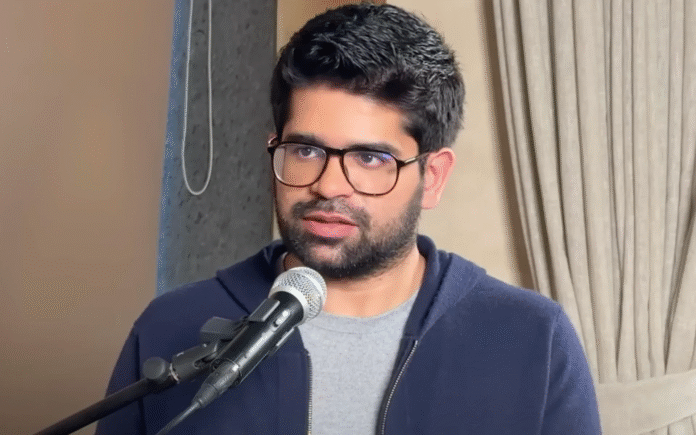
In a seismic twist that’s shaking Silicon Valley to its core, the audacious three-year-old startup Perplexity AI, helmed by Indian-origin disruptor Aravind Srinivas, has hurled a ₹3 lakh crore thunderbolt at tech titan Alphabet Inc.—offering to buy none other than its crown jewel: Google Chrome
A Bold Bid to Reshape the Internet
Perplexity AI, just three years old, has reportedly secured ₹70,000 crore in funding from major investors including Nvidia and SoftBank, among others. The startup aims to capitalize on a rare opportunity created by legal turbulence surrounding Alphabet’s dominance in online search. Last year, a U.S. court ruled that Alphabet’s monopoly in search was unlawful, prompting the Department of Justice to demand divestment of key assets—most notably, Google Chrome. While Alphabet has not officially agreed to sell Chrome, Perplexity’s offer is seen as a strategic attempt to preempt regulatory pressure.
Legal Storm and Strategic Moves
Alphabet is currently preparing to appeal the court’s decision, but if forced to divest, Chrome could become the most significant tech asset ever put on sale. Perplexity’s valuation would need to skyrocket to meet the financial demands of such a deal. This isn’t the first time Perplexity has made headlines with bold proposals. In January, the company offered to acquire TikTok’s U.S. operations, suggesting a merger with its own platform to counter rising regulatory scrutiny.
The Srinivas Strategy
Aravind Srinivas, the visionary behind Perplexity, is known for his aggressive and unconventional tactics. His latest move signals a desire to redefine how users interact with the internet—by owning the gateway itself. Whether Alphabet accepts the offer or not, one thing is clear: Perplexity AI is no longer just a startup—it’s a disruptor with global ambitions.
Kerala, often celebrated for its lush landscapes and high literacy rates, is now making waves as a hub for innovation and entrepreneurship. The state government’s proactive initiatives, particularly through the Innovation and Entrepreneurship Development Centres (IEDCs), are fostering a vibrant startup ecosystem that empowers students and young entrepreneurs. According to the World Economic Forum, these efforts have created a diverse and inclusive platform, enabling individuals from urban, semi-urban, and rural areas to transform their ideas into successful ventures. This article explores how Kerala is nurturing a culture of innovation and entrepreneurship, paving the way for a startup boom that is reshaping the state’s economic landscape.
Building a Robust Foundation for Innovation
The backbone of Kerala’s startup revolution lies in its network of over 530 IEDCs established across colleges statewide. These centres serve as incubators for creativity, providing students with the tools, resources, and mentorship needed to explore their ideas, develop products, and launch businesses. By offering a structured platform, IEDCs encourage students to think beyond traditional career paths and embrace entrepreneurship as a viable avenue for success.The state government’s commitment to fostering innovation is evident in its inclusive approach. Unlike many startup ecosystems that focus solely on urban hubs, Kerala’s model extends to rural and semi-urban areas, ensuring equitable opportunities for all. This inclusivity has democratized access to resources, enabling young innovators from diverse backgrounds to contribute to the state’s entrepreneurial landscape.
KSUM: Catalyzing Startup Growth
At the heart of Kerala’s startup ecosystem is the Kerala Startup Mission (KSUM), which plays a pivotal role in planning, establishing, and managing technology business incubators and accelerators. KSUM’s initiatives provide startups with critical support, including funding, mentorship, and access to co-working spaces. Programs like LEAP Co-works have been instrumental in empowering young entrepreneurs in smaller towns and villages by offering affordable workspaces, financial assistance, and guidance.By bridging the gap between academic institutions and the startup ecosystem, KSUM ensures that students gain hands-on experience and practical knowledge. This collaboration allows aspiring entrepreneurs to learn from industry experts, refine their ideas, and navigate the challenges of building a business. The result is a dynamic environment where innovation thrives, and young minds are equipped to turn their visions into reality.
Empowering Youth and Boosting the Economy
Kerala’s startup ecosystem is not just about fostering innovation; it’s also a significant driver of economic growth. Startups in the state are creating jobs, stimulating local economies, and introducing groundbreaking products and services. By encouraging students and young professionals to pursue entrepreneurship, Kerala is cultivating a generation of problem-solvers who are addressing real-world challenges through innovative solutions.The state’s emphasis on inclusivity ensures that opportunities are not limited to a privileged few. From tech-driven startups in urban centers to agro-based ventures in rural areas, Kerala’s ecosystem supports a wide range of industries. This diversity strengthens the state’s economy and positions it as a leader in India’s startup landscape.
A Vision for the Future
Kerala’s startup revolution is a testament to the power of vision, collaboration, and perseverance. By investing in its youth and creating an environment where ideas can flourish, the state is building a sustainable future driven by innovation. The government’s efforts, coupled with the enthusiasm of young entrepreneurs, are transforming Kerala into a global hub for startups. As the state continues to expand its IEDC network and strengthen initiatives like KSUM and LEAP Co-works, the possibilities for growth are limitless. Kerala is not just nurturing startups; it is inspiring a movement where dreams are turned into reality, and challenges are met with creative solutions. In the words of a popular Hindi proverb, “Jahaan chah wahan raah” (Where there is a will, there is a way). Kerala’s startup ecosystem embodies this spirit, proving that with determination and support, young innovators can achieve extraordinary success. As the state continues to promote entrepreneurship, it is paving the way for a brighter, more innovative future for all.
In the world of Muay Thai, victory is often celebrated in bright lights while losses fade into quiet corners. Yet for those who watch closely, each match—whether a triumph or a defeat—tells a richer story. It is not only about who had the better strikes or stamina, but also about the lessons carried out of the ring. The most inspiring part is how fighters turn setbacks into motivation for their next challenge.
That is where tools like https://www.thsport.live/muay-analyst/ come into play. They give fans a deeper look at the technical side of matches, showing how every fight is an opportunity to grow. By breaking down moves, timing, and strategies, such analysis highlights the resilience that lives in both winners and those who walk away without the trophy.
A Muay Thai fighter’s corner is more than a physical space. It is where strategy meets encouragement, where voices remind fighters that the next round is a new chance. In life, our own “corners” can be family, friends, or mentors who see potential even when we stumble.
Fight analysis often shows moments when a boxer adjusts mid-bout after hearing their corner’s advice. It is a reminder that setbacks do not need to be permanent. They can be a signal to tweak our approach, just like a fighter changes stance or tempo to shift momentum.
How analysis turns mistakes into tools
When a fighter misses a strike or fails to defend a kick, it is captured and studied. Analysts look at what went wrong, but also at the opportunity it creates. Was the timing off? Did the opponent read the move? By asking these questions, fighters get a roadmap for improvement.
In everyday life, reviewing our own “missed strikes” can do the same. Maybe it was a job interview that did not go as planned, or a goal that stayed out of reach. If we can step back and look at what happened without judgment, we can find small but powerful adjustments for next time.
Resilience is built in rounds
Muay Thai is fought in rounds, and each one is a fresh start. Even if the first round goes badly, the second can be a turning point. This structure naturally builds resilience because fighters know they have more chances ahead.
Life, too, gives us rounds. We have days, weeks, and months to shift our pace. A setback in one project does not mean the entire year is lost. Fight analysis helps reinforce this mindset, showing that momentum can swing and that recovery is part of the journey.
The emotional side of comebacks
Watching a fighter rally after a tough round is one of the most uplifting sights in sports. Analysts often highlight the small wins that lead to these comebacks: a well-placed strike, a shift in footwork, a more focused guard. These moments build confidence and create a ripple effect that can change the match’s outcome.
In our own lives, celebrating small wins matters just as much. Maybe it is making a difficult phone call, finishing a tough workout, or speaking up in a meeting. Each small success after a setback is a personal comeback that builds momentum.
Break challenges into rounds so you can focus on small, manageable steps.
Review your performance like an analyst would, looking for patterns and areas to improve.
Listen to your corner, whether that is advice from friends, colleagues, or mentors.
Celebrate the small victories that help you move forward.
By approaching obstacles with the same curiosity and discipline as fighters use in the ring, setbacks become valuable feedback instead of dead ends.
Stories worth telling
The most compelling fight stories are rarely about the scorecards. They are about perseverance, adaptability, and the spirit to keep going. A fighter who returns stronger after a loss is often remembered more fondly than one who wins easily every time.
This is why post-fight analysis is so powerful. It reminds us that every struggle has a backstory. It shows how dedication, self-awareness, and resilience can turn a difficult moment into a future strength.
More than a sport
While Muay Thai is rooted in physical skill and competition, it also reflects universal truths about growth. Everyone faces their own “opponents” in life, whether they are personal challenges, career obstacles, or moments of doubt.
By seeing how fighters and their teams approach setbacks, we can find strategies to help us in our own battles. We learn to focus on progress, not perfection, and to view every misstep as a step toward something greater.
In the ring, the final bell signals the end of a match. But for fighters, it is just one chapter. They return to the gym, review the footage, and prepare for the next bout. Losses are not full stops; they are commas in a longer story.
The same is true for us. When a plan does not work out, we can pause, reflect, and keep going. With the right mindset, every setback can be the start of a comeback story worth telling.
Heeramandi, a recently released OTT series, captured audiences with its vibrant portrayal of courtesans’ lives, love stories, and struggles. While the on-screen world was rich in music, poetry, and drama, history holds real-life tales where courtesans stepped far beyond the world of entertainment—taking up the mantle of resistance and fighting for the nation’s freedom. Among them stands one name that continues to inspire generations: Begum Hazrat Mahal, the courtesan-turned-rebel queen who challenged the British Empire and etched her place in India’s struggle for independence.
In the dusty lanes of 19th-century Faizabad, few could have imagined that a girl born into poverty, abandoned by her parents, and sold into the courtesan quarters of Lucknow would one day stand as one of India’s fiercest freedom fighters. Yet, Muhammadi Khanam—later known as Begum Hazrat Mahal—did exactly that. She not only defied the British during the First War of Independence in 1857 but also became a rare voice calling for unity between Hindus and Muslims in the fight for freedom.
From Courtesan Quarters to Royal Court
Born in 1820, Muhammadi’s life began in hardship. Orphaned by the age of 12, she was taken in by relatives struggling to make ends meet. One day, a palanquin arrived at her uncle’s home, and with a handful of rupees, she was taken to Chowk—the courtesan district of Lucknow.
There, under strict training in music, dance, Persian, and courtly manners, Muhammadi grew into a graceful and skilled performer. Her beauty and talent eventually caught the attention of Nawab Wajid Ali Shah, ruler of Awadh. Entering his ‘Parikhana’ (royal harem), she rose in favor, earning the name Mehak Pari. The Nawab later married her in a contract marriage, granting her the title Iftikhar-un-Nisha. History would remember her as Begum Hazrat Mahal.
When the British Took Awadh
In 1856, the British East India Company annexed Awadh and exiled Wajid Ali Shah to Calcutta. Before leaving, the Nawab divorced nine of his wives, including Hazrat Mahal. While staying behind in Lucknow, she focused on raising their young son, Birjis Qadr—until 1857 changed everything.
The Woman Who Defied an Empire
When revolt swept across India in 1857, Begum Hazrat Mahal emerged as the leader in Awadh. She declared Birjis Qadr as Nawab and took command of the resistance. Her forces dealt the British stinging defeats in Chinhat and Dilkusha, freeing Lucknow and surrounding districts.
Rulers like Nana Saheb, Raja Jailal, and Raja Mansingh rallied to her side, united under her banner of Hindu-Muslim solidarity. She openly accused the British of dividing communities to weaken India and instead forged a united front that fought shoulder to shoulder.
Her leadership was not confined to palaces—she traveled into rural Awadh and forest strongholds, rallying peasants and soldiers alike. Guerrilla warfare, strategic alliances, and unwavering resolve kept the British at bay for months.
The Last Stand and Exile
Eventually, with key allies like Maulvi Ahmad Shah dead and the British regaining ground, Begum Hazrat Mahal was forced to retreat. Refusing to surrender, she crossed into Nepal, where King Rana Jung Bahadur granted her asylum. She lived quietly until her death in 1879, far from the city she once liberated.
Today, Begum Hazrat Mahal’s story stands as a reminder that the fight for freedom was not only fought by men in uniform but also by women who broke every boundary society set for them. She was a courtesan, a queen, a warrior, and above all, a patriot who dared to dream of an India united beyond religion.
India’s youth are becoming financially smarter and more investment-savvy, a trend that gained momentum during the COVID-19 pandemic. When market valuations fell sharply, young Indians rushed into the stock market, leading to a surge in retail participation in indices like Sensex and Nifty. Stock market data shows a significant rise in investors since then — and now, mutual funds are also seeing a youth-led boom.
According to a Share.Market report released on International Youth Day, analysing over 6 lakh mutual fund investors between August 1, 2024, and July 31, 2025, 48% of mutual fund investors are aged 18–30. This reflects a generational shift towards long-term wealth creation rather than short-term savings.
Youth Investment Trends The data reveals that 95% of Gen Z investors start their mutual fund journey with equity funds, showing a clear preference for high-risk, high-reward opportunities. Most young investors display disciplined and consistent investment habits.
State-wise, Maharashtra (16%), Uttar Pradesh (11%), and Karnataka (8%) lead in youth participation. Notably, 81% of these investors come from B30 (Beyond Top 30) cities such as Jodhpur, Raipur, Visakhapatnam, Gorakhpur, Mysore, Jamshedpur, and Kolhapur — proving that this financial shift is not limited to metro cities.
Investment Patterns
92% of young investors prefer Systematic Investment Plans (SIPs) for long-term wealth building. The average SIP transaction value is ₹1,000 — 18% less than that of investors over 30.
21% opt for lump-sum investments, averaging ₹8,000 per transaction — 30% less than older investors.
70% of under-30 investors hold diversified equity categories like value/contra funds and flexicap funds, while midcap and smallcap funds are also highly popular.
Expert View Nilesh D Naik, Head of Investment Products at Share.Market (PhonePe Wealth), said, “It is inspiring to see the youth of India taking charge of their finances at such a young age. Healthy investment habits will strengthen their long-term journey and help them become confident, financially literate investors.”
With disciplined SIP contributions and a focus on diversification, India’s youth are laying the foundation for a financially secure future — making them the driving force behind the country’s mutual fund growth
Sikkim recently celebrated Tendong Lho Rum Faat, a centuries-old festival of the Lepcha tribe, honouring the legend of Tendong Hill that saved their ancestors from an ancient flood. The state-level celebration, held at Manan Kendra in Gangtok, was attended by Chief Minister Prem Singh Tamang, who urged citizens to respect nature and protect Sikkim’s environment. The festival remains a vibrant reminder of the Lepcha community’s deep spiritual bond with nature and their rich cultural heritage.
Mythological Origins
According to Lepcha oral tradition, a catastrophic flood once engulfed their land, threatening to wipe out their people. Tendong Hill rose above the waters, offering refuge to the survivors. Believed to have volcanic origins, the hill is tied to a legend in which it emerged from the horns of a divine being, symbolising divine protection. This story underscores the Lepchas’ deep reverence for their natural surroundings.
Cultural and Spiritual Significance
Tendong Hill, meaning “The Hill of the Raised Horn” in the Lepcha language, is considered sacred. The Lepcha community gathers at and around the hill during the festival to offer prayers to Idburum, their god, and honour the landmark that ensured their survival. The celebration serves as both a thanksgiving ritual and a reaffirmation of their cultural identity.
Rituals and Celebrations
During Tendong Lho Rum Faat, Lepcha families build miniature models of Tendong Hill using nine stones outside their homes. Traditional dances, mask performances, folk songs, and heritage exhibitions highlight the festival’s cultural richness. These rituals not only preserve ancient traditions but also strengthen community bonds across generations.
Environmental Message
The festival carries a strong ecological message, reminding people of nature’s role in human survival. Chief Minister Tamang’s address emphasised safeguarding Sikkim’s natural resources, aligning with the Lepcha belief that harmony with nature ensures prosperity.
Geographical and Cultural Context
Located in South Sikkim, Tendong Hill remains a sacred site for the Lepcha people. Today, the festival attracts participation from cultural groups, government officials, and local communities, showcasing the unique traditions of Sikkim’s indigenous heritage.
The ongoing India–U.S. trade dispute has intensified after Washington announced a 25% penalty tariff on Indian goods in response to New Delhi’s continued imports of Russian crude oil. The move follows the collapse of Free Trade Agreement (FTA) talks and earlier reciprocal tariffs imposed by the United States. The penalty tariffs are set to take effect from August 27.
Background
On August 6, the U.S. declared new tariffs targeting Indian exports linked to Russian oil purchases. This came after a 25% reciprocal tariff on Indian goods from August 7, following failed FTA negotiations. Washington aims to pressure India into cutting Russian oil imports amid Western sanctions on Moscow.
India’s Reaction
The Ministry of External Affairs condemned the U.S. action as unfair and selective, pointing out that both the U.S. and European Union continue certain trade activities with Russia. Prime Minister Narendra Modi vowed to protect national interests, even at personal political cost, and assured support for farmers and exporters affected by the dispute. India has not yet announced retaliatory tariffs.
India’s Reliance on Russian Oil
Since the Ukraine conflict in 2022, Russian oil has become crucial for India, supplying over 35% of its crude by mid-2023. Indian refiners benefit from discounted prices, saving billions annually. Investments also tie Indian firms to Russian oil production and refining, making a sudden reduction economically and politically challenging.
Diplomatic Path Ahead
U.S. President Donald Trump is scheduled to meet Russian President Vladimir Putin on August 15, a development that could influence tariff decisions. American negotiators are also due to visit India later this month to explore a possible mini-trade agreement. India faces a strategic choice between maintaining Russian oil imports or offering trade concessions to retain U.S. market access.
Impact and Implications
The dispute is straining decades of cooperation in defence, technology, and strategic affairs. U.S. tariffs threaten key Indian export sectors like garments and textiles, as buyers may shift to tariff-free suppliers. The standoff underscores India’s challenge in balancing relations with both Washington and Moscow while safeguarding energy security and strategic autonomy in a volatile geopolitical environment.
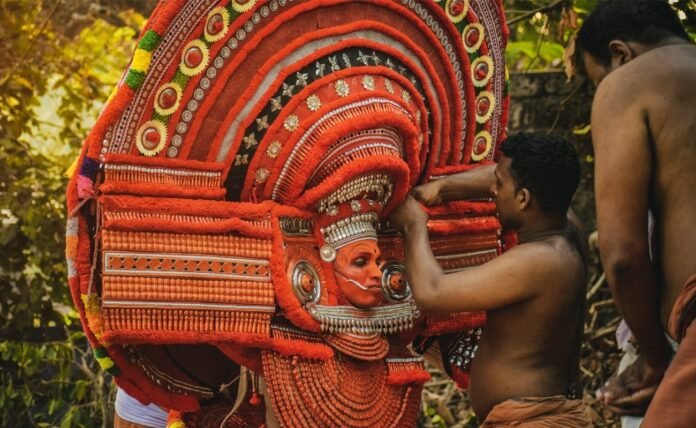
The Sacred Dance of Adi Vedan Theyyam: A Monsoon Legacy of kerala’s malabar In the heart of Kerala, the vibrant cultural tapestry of Malabar comes alive during the monsoon month of Karkadakam (July-August) with the mesmerizing ritual of Adi Vedan Theyyam. Far beyond its vivid colors, elaborate costumes, and dramatic performances, this sacred art form carries profound spiritual and symbolic significance, rooted in Hindu mythology. Celebrated for its ability to usher in prosperity and ward off malevolent forces, Adi Vedan Theyyam is a cherished tradition that resonates deeply with the agrarian communities of northern Kerala during the challenging monsoon season.
A Mythological Tapestry The Origins of Adi Vedan Theyyam
The essence of Adi Vedan Theyyam is drawn from the Van Parva of the Mahabharata, a timeless epic that weaves tales of devotion, valor, and divine intervention. In this narrative, Lord Shiva and Goddess Parvati disguise themselves as a tribal couple to test the unwavering devotion of Arjuna, one of the Pandava brothers. The story unfolds with a demon named Mookasura, who, taking the form of a wild boar, attacks Arjuna. Both Arjuna and Shiva, in his hunter guise, simultaneously strike the beast, leading to a fierce confrontation between the two.Unable to overpower the mysterious hunter, Arjuna, in an act of humility and devotion, worships a clay idol of Shiva. This act reveals the divine identity of his opponent. Moved by Arjuna’s piety and bravery, Lord Shiva blesses him with the powerful Pashupatastra, a celestial weapon. In the ritual of Adi Vedan Theyyam, Shiva and Parvati manifest as Vedan and Adi, respectively, embodying the divine couple’s sacred bond and their role as protectors and benefactors.
The Ritual in Monsoon’s Embrace
Performed during Karkadakam, the final month of the Malayalam calendar, Adi Vedan Theyyam holds special significance for Malabar’s agrarian communities. This period, marked by heavy rains and economic hardship, is transformed by the ritual’s promise of abundance and protection. The performers, often children aged five to twelve from the Malaya and Vannan communities, take on the roles of Vedan (Shiva) and Adi (Parvati). In Kasaragod, a third character, Galinjan, representing Arjuna, may also appear, adding depth to the performance.The ritual unfolds in the rain-soaked courtyards of northern Kerala, where these young performers, adorned in vibrant costumes and intricate makeup, embody divine figures. The performance can take the form of a solo act, symbolizing Ardhanarishwara (the composite form of Shiva and Parvati), or a paired performance, with Vedan followed by Adi. As they visit households, their movements and chants weave ancient stories into the present, invoking blessings and reinforcing cultural continuity.
Symbolism and Cultural Significance
Adi Vedan Theyyam is more than a performance; it is a living bridge between mythology and modern life. The involvement of children as performers underscores purity and innocence, amplifying the ritual’s sanctity. Their portrayal of divine figures symbolizes the transmission of tradition across generations, ensuring that the stories of devotion, courage, and divine grace endure.The ritual’s vibrant costumes, rhythmic movements, and evocative music create an immersive experience that transcends mere spectacle. It is a celebration of resilience, community, and faith, offering solace during the monsoon’s trials. By invoking Shiva and Parvati, the ritual reaffirms the belief in divine protection and the triumph of good over evil, resonating with the spiritual aspirations of Malabar’s people.
Preserving a Sacred Legacy
In the lush, rain-drenched landscapes of northern Kerala, Adi Vedan Theyyam stands as a testament to the region’s rich cultural heritage. It is a reminder of the power of storytelling, where ancient myths are not merely recounted but brought to life through ritual and performance. As young performers don their sacred roles, they carry forward a tradition that binds communities, invokes divine blessings, and celebrates the enduring spirit of Malabar.For those seeking to experience the magic of Adi Vedan Theyyam, it is an invitation to delve into the heart of Hindu mythology, where every gesture, color, and chant tells a story of devotion and divinity. Through this sacred dance, Malabar’s monsoon becomes a season not just of rain but of renewal, hope, and timeless tradition.
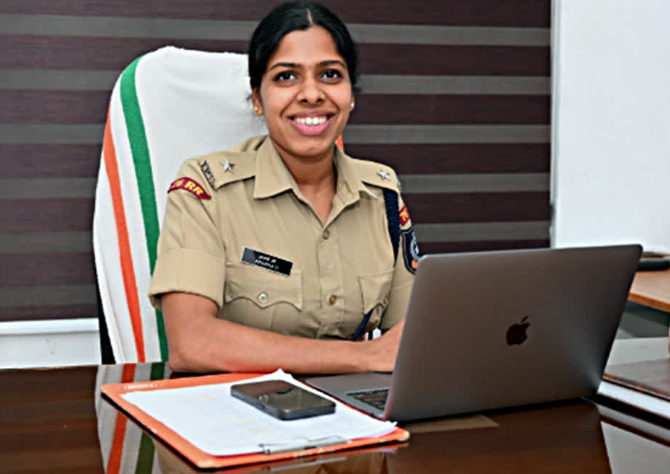
In the thick of the COVID-19 crisis, Aparna was saving lives as a government doctor at Malappuram District Hospital. But beneath the stethoscope beat the heart of a dreamer—one who had long envisioned herself in khaki. While most of her peers pursued MD degrees, Aparna chose a radically different path: the Indian Police Service.
Her decision was met with skepticism. Friends and relatives questioned her choice. But Aparna didn’t flinch. She began preparing for the UPSC exam from home, relying solely on online resources. No coaching centers. No shortcuts. Just sheer determination.
Cracking UPSC Without Coaching: A First Attempt Victory
Aparna’s dedication paid off when she secured an impressive 475th rank in her very first attempt. Her success wasn’t just personal—it was historic. She became the first woman IPS officer from Malappuram, a district known more for its conservative leanings than for producing female officers. Her training at the Sardar Vallabhbhai Patel National Police Academy in Hyderabad was rigorous, but Aparna thrived. She emerged not just as a competent officer, but as a symbol of resilience and quiet revolution.
Leading with Empathy: Station House Officer at Bekal
Today, Aparna serves as the Station House Officer (SHO) at Bekal, in Kasaragod district. Her leadership style is marked by empathy, especially toward women. She believes that female officers bring a unique sensitivity to policing, particularly in cases involving domestic abuse, harassment, and gender-based violence. Her presence has already made a difference—locals praise her for being approachable, decisive, and deeply committed to justice.
A Role Model for Young Women Across India
Aparna’s journey—from a hospital ward to the police station—is more than a career switch. It’s a clarion call to young women across India: dream boldly, defy expectations, and serve with courage. She continues to advocate for more women in the police force, emphasizing that representation matters—not just in numbers, but in impact.
Guwahati’s Lokpriya Gopinath Bordoloi International Airport has brought international acclaim to India by winning the International Architectural Award 2025 in the Transport category. The newly unveiled Terminal 2 is not just an architectural achievement—it’s a soulful blend of sustainability, innovation, and Assamese cultural expression. Designed by NUDES, led by architect Nuru Karim, with landscape design by Hemali Landscape Design Studio, the terminal reflects a deep reverence for nature and tradition.
Inspired by Assam’s Natural Beauty
Terminal 2’s design draws inspiration from the foxtail orchid, Assam’s state flower, and bamboo, a symbol of strength and eco-conscious living. These elements are not merely decorative—they shape the terminal’s identity. Traditional Assamese motifs like the Jaapi and Gamocha are subtly embedded into the architecture, creating a space that feels both futuristic and familiar. The terminal stands as a tribute to Assam’s rich heritage, offering travelers a visual and emotional connection to the land.
A Green Gateway with Smart Features
Terminal 2 is a benchmark in sustainable airport design. Its open layouts and skylights allow natural light to flood the interiors, reducing energy consumption and enhancing passenger comfort. The ‘arrival forest’, a lush landscaped zone, welcomes travelers with tranquility and a sense of place. Inside, green walls, indoor gardens, and eco-friendly systems like solar panels, rainwater harvesting, and water recycling make the terminal one of India’s most environmentally conscious transport hubs.
Technologically, the terminal is future-ready. It features Digi Yatra e-gates, CT baggage scanners, and Fast Track Immigration, ensuring a seamless and efficient travel experience. With the capacity to handle 13.1 million passengers annually, it includes 42 check-in counters, 10 contact gates, 5 baggage belts, and can manage up to 34 air traffic movements per hour.
More Than a Terminal : A Cultural Landmark
Terminal 2 is not just a gateway to Northeast India—it’s a civic landmark that celebrates regional identity on a global stage. By blending ecological design with cultural storytelling, it sets a new standard for how infrastructure can reflect the soul of a place. For Assam and the entire Northeast, this terminal promises enhanced tourism, trade, and connectivity, while offering travelers a sensory introduction to the region’s spirit. With every arrival, passengers are greeted by the fragrance of Assam’s forests and the grace of its flowers. With every departure, they carry a piece of its soul. Guwahati’s Terminal 2 is where architecture meets emotion—and where travel becomes a celebration of heritage