Home Blog Page 220

No Maps Can Hold Them—Rajasthan’s Forgotten Corners Steal the Spotlight, Border Villages Rewrite India’s Tourism Script..

0

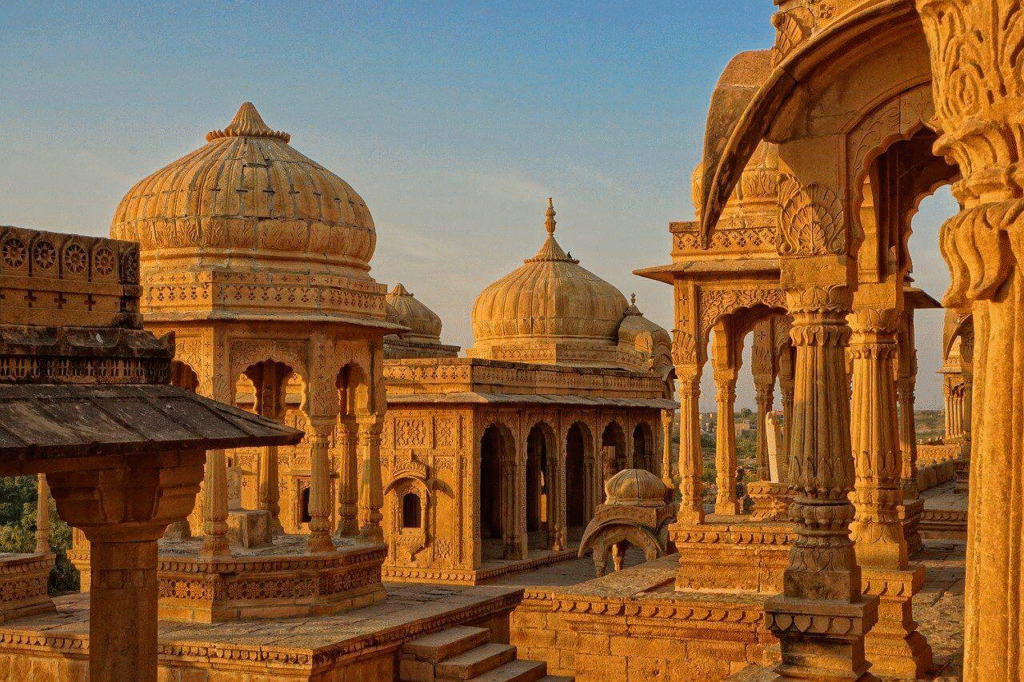
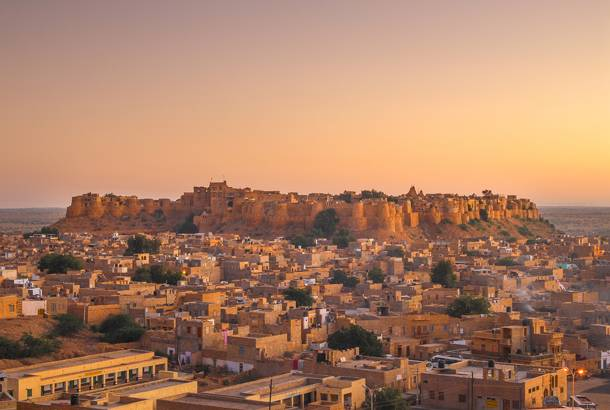
In the vast expanse of Western Rajasthan, where the desert meets the horizon and tradition dances with time, a quiet revolution is unfolding. Far from the bustling cities and iconic forts, small villages nestled in the border districts of Jodhpur, Barmer, Jaisalmer, and Bikaner are stepping into the spotlight. These rural gems are not just preserving Rajasthan’s cultural heritage—they’re redefining it for the world.

Mapping the Cultural Crown Jewels

According to Mr. Dalip Singh Rathore, Joint Director of the Tourism Department, these villages are the “crown jewels” of Rajasthan’s cultural tourism. Each one offers a unique flavor of desert life, artistry, and hospitality:

Jodhpur District

  • Salawas: Famous for dhurrie weaving, where artisans create vibrant rugs using age-old techniques.
  • Chopasni: A hub for pottery and traditional crafts.
  • Phalodi: Known for its heritage architecture and salt production, offering a blend of culture and industry.

Barmer District

  • Barnawa Jagir & Pataudi: Rich in folk music traditions, home to Langas and Manganiyars.
  • Shiv: A village that exemplifies desert resilience and warm hospitality.

Jaisalmer District

  • Jarana & Barna: Villages that echo with the rhythms of Kalbelia dance and puppet arts.
  • Pokhran: Not just a historical site, but a cultural hub with miniature painting and leatherwork.

Bikaner District

  • Rural belts around Bikaner are known for Usta art, camel breeding, and vibrant fairs that celebrate desert life. These villages are more than scenic stops—they are immersive experiences where tourists can live the culture, not just observe it.
No Maps Can Hold Them—Rajasthan’s Forgotten Corners Steal the Spotlight, Border Villages Rewrite India’s Tourism Script..

From Local to Global: The Rise of Rural Tourism

What makes these villages stand out is their authenticity. Unlike urban centers that often cater to commercial tourism, these rural destinations offer unfiltered glimpses into Rajasthan’s soul. Visitors can:

  • Stay in traditional mud houses or eco-lodges.
  • Participate in craft workshops and folk performances.
  • Share meals with local families and learn about desert farming.
  • Explore heritage walks guided by villagers themselves.

This grassroots approach to tourism is gaining international attention. Travelers today seek meaningful experiences, and these villages deliver just that—culture with connection.
No Maps Can Hold Them—Rajasthan’s Forgotten Corners Steal the Spotlight, Border Villages Rewrite India’s Tourism Script..

Infrastructure Meets Tradition

The Rajasthan government has been instrumental in transforming these villages into tourism-ready destinations. Roads, signage, homestay programs, and training for local guides have been introduced to ensure comfort without compromising authenticity. Mr. Rathore emphasizes that this development is not just about attracting tourists—it’s about empowering communities. Tourism here creates livelihoods, revives dying art forms, and fosters pride in local heritage.

Culture in Every Corner

From the rhythmic beats of desert drums to the intricate embroidery on camel leather, every corner of these villages tells a story. The artisans are not performers—they are custodians of centuries-old traditions. Tourists often leave not just with souvenirs, but with friendships and memories that last a lifetime.

No Maps Can Hold Them—Rajasthan’s Forgotten Corners Steal the Spotlight, Border Villages Rewrite India’s Tourism Script..

A Model for Sustainable Tourism

These border villages are setting an example for sustainable and inclusive tourism. By focusing on community participation, cultural preservation, and environmental sensitivity, Rajasthan is crafting a tourism model that others can emulate.

Where the Desert Meets the Heart

In the end, what makes these villages truly special is their spirit. Despite being located in harsh terrains and near international borders, they radiate warmth, resilience, and creativity. They remind us that sometimes, the most profound travel experiences come not from monuments, but from moments—shared over folk songs, handmade crafts, and desert sunsets. Western Rajasthan’s border districts are no longer just remote outposts—they are vibrant cultural tourism hubs, inviting the world to discover the magic of rural India.

Shah Rukh Khan Releases a Video on X After Winning National Award. See What He says Here…

0

Bollywood star Shah Rukh Khan has shared a video on X platform rendering an emotional thanks to his family members, film producer, director and government of India.

In the video, Shah Rukh Khan, seen wearing a cling, sling, “Thank you for honouring me with the National Award. Thanks to the jury, the I&B ministry… Iss samman ke liye Bharat Sarkar ka dhanyawaad. Overwhelmed with the love showered upon me. Half a hug to everyone today.”

NJIT Researchers Use AI to Accelerate Breakthrough in Next-Gen Battery Technology

0

Researchers at the New Jersey Institute of Technology (NJIT) have achieved a significant breakthrough in the search for sustainable alternatives to lithium-ion batteries by harnessing the power of artificial intelligence. In a study published in Cell Reports Physical Science, the team led by Professor Dibakar Datta used advanced generative AI techniques to identify new porous materials ideally suited for use in multivalent-ion batteries — a potential game-changer for the future of energy storage.

Multivalent-ion batteries, which utilize abundant and cost-effective elements such as magnesium, calcium, aluminum, and zinc, present a promising alternative to lithium-based systems. These ions carry multiple positive charges (unlike lithium’s single charge), enabling the batteries to store substantially more energy. However, the bulky size and higher charge of multivalent ions have historically posed major challenges in designing suitable battery materials.

“While promising chemistries have existed for some time, the real bottleneck was the overwhelming number of possible material combinations,” explained Prof. Datta. “Manually testing them all would be virtually impossible — that’s where AI came in.”

To tackle this, the NJIT team devised a dual-AI strategy: a Crystal Diffusion Variational Autoencoder (CDVAE) and a custom-tuned Large Language Model (LLM). The CDVAE, trained on extensive databases of known crystal structures, could generate entirely new porous material blueprints, while the LLM was used to identify those structures most likely to be thermodynamically stable and practically synthesizable.

The approach led to the discovery of five novel porous transition metal oxide structures with large, open channels — ideal for efficiently transporting multivalent ions. These AI-generated materials were validated through quantum mechanical simulations and stability testing, confirming their feasibility for real-world applications.

“This is a breakthrough not just in battery research but in how we approach material discovery as a whole,” said Datta. “By using AI, we’ve created a powerful and scalable way to accelerate innovation across multiple fields, from clean energy to electronics.”

Moving forward, the team intends to collaborate with experimental labs to synthesize and further test these materials, potentially paving the way for more affordable and sustainable energy storage solutions.

300 million people suffers from Asthma worldwide including America

0

By Dr Yash Goyal

 There are approximately 300 million people with asthma worldwide including America, a latest research paper in the International journal “Lancet” reports. Despite a current plateau, the burden of this disease is likely to increase due to population growth, urbanisation, and ageing. Disease onset is associated with low birth weight, preterm birth, viral infections, in-utero passive smoke exposure, urbanisation, and occupational exposures. 

      It is disclosed in a joint research paper, July 15 issue, titled “Asthma: epidemiology, risk factors, and opportunities for prevention and treatment”  by Asthma specialists across Europe, Asia (including India covering Jaipur), Africa, America, Middle East, and Oceania. Author cum researchers’ panel comprises Shamathi M Jayasooriya, Graham Devereux, Prof Joan B Soriano, Nishta Singh (Jaipur in India), Prof Refiloe Masekela, Prof Kevin Mortimer, and Prof Peter Burney. This is the second in a Series of four papers about the global epidemiology of chronic respiratory disease. 

       Asthma is characterised by variable airflow obstruction and is associated with symptoms of cough, wheeze, and dyspnoea, and with airway inflammation and hyper-responsiveness.

       Asthma prevalence (unadjusted for age) varies by country, ranging from 1% to 18%, with particularly high rates in the USA, the UK, and Portugal. In contrast, mortality rates from asthma are the highest in Nepal, India, Bangladesh, Myanmar, and Indonesia. Although mortality rates in sub-Saharan Africa are lower than in south and southeast Asia, they remain high relative to the region’s low prevalence rates. Differences in the within-country asthma prevalence distribution are even greater than the differences between countries.

      Obesity is associated with increased incidence and severity of asthma, whereas exposure to small allergen particles leads to severe disease. In adults and adolescents, inhaled corticosteroids in combination with formoterol (as anti-inflammatory reliever or as maintenance and anti-inflammatory reliever therapy) are widely recommended to control the symptoms of asthma.

  For children, low-dose inhaled corticosteroid is the preferred first-line treatment. Monotherapy with short-acting β-agonists is strongly discouraged.  The WHO Global Action Plan for the Prevention and Control of Non-communicable Diseases includes availability of affordable combination inhalers for asthma. Co-ordinated national asthma policies, ensuring access to inhalers, have resulted in fewer hospitalisations and school and work absences. Future asthma prevalence could be reduced by good maternal and infant care, with reduction in premature births and reduction in infant respiratory infections, and by reduction in obesity at all ages.

America

 The US Centers for Disease Control and Prevention reports that more than 27 million people in the USA have asthma.24 Although this figure has remained stable over the last decade, great statal and county disparities exist among different ethnic groups. African Americans and Hispanic populations have higher rates of asthma and asthma-related mortality compared with non-Hispanic white Americans. In Latin America, both in adults and children, a high burden of symptoms and use of health services have been identified by GAN and ISAAC, with prevalences of asthma ranging from 5% to 15% in different countries; Chile, Argentina, Cuba, and Costa Rica report some of the highest prevalence rates of the condition in the region. Socioeconomic disparities, urbanisation, and environmental pollution contribute to the high burden of asthma from Mexico to the tip of South America. Additionally, less than ideal access to health care and medications exacerbates the effect of asthma on quality of life and increases health-care costs.

Asia 

Asia presents a diverse picture of asthma prevalence. In countries such as Japan and South Korea, asthma prevalence is relatively low, at about 2–5%. In contrast, urban areas of China and India report very high prevalence rates, particularly among children. According to Nishtha Singh CeO of JAIPUR’s Asthma Bhawan, in India, between ISAAC (International Study of Asthma and Allergies in Childhood)  phase 3 and GAN (Global Asthma Network) phase 1, there was a substantial decrease in the prevalence of current wheeze among both children and adolescents between 2009 and 2022. Of people with current wheeze, 75–82% remained clinically undiagnosed. Among individuals with current wheeze who had no diagnosis, less than 1% took a daily inhaled corticosteroid. In people with current wheeze who were clinically diagnosed with asthma, use of daily inhaled corticosteroid increased to 2–8% in different age groups. 

        In South-East Asia, mortality rates have been consistently high at about 13 in 100 000 per year; this high rate might reflect low access to inhaled corticosteroids in some areas. Late Onset of Asthma arises due to increasing multimorbidity and people often developing multiple age-related conditions, the differential for breathlessness often broadens in later life. 

       Globally, approximately one in ten children and one in 20 adults have asthma. Between one in eight and one in ten adults and children have rhinoconjunctivitis or eczema. Approximately 300 million people worldwide have asthma—a burden that is expected to increase in the 21st century due to population growth, increased urbanisation, and ageing of the population. 

Navigating the Trade Storm: India’s Response to US Tariff of 25%

0

In a move that has stirred both economic and political circles, the United States recently imposed new tariffs on several Indian exports, including steel, aluminum, and certain manufactured goods. Citing national security and protection of domestic industries, the US decision signals a growing strain in its trade relationship with India, one of its key partners in the Indo-Pacific region.

The immediate impact is hard to ignore. Indian exporters now face higher costs to access the US market, making their products less competitive compared to those from other countries. This could lead to a drop in demand, job losses in key sectors like textiles and engineering, and a hit to India’s foreign exchange earnings. For a country that depends significantly on trade with the U.S., the stakes are high.

But this is more than just an economic issue. It’s a signal. While strategic ties between India and the US have deepened in areas like defense and technology, unresolved trade tensions have remained in the background. The US has often raised concerns about India’s tariff policies, market access restrictions, and intellectual property rules. These new tariffs might be part of a broader strategy to push India into making policy concessions.

So, how should India respond? The first step is diplomatic engagement. India can raise the issue formally at the World Trade Organization or initiate bilateral talks with Washington. These conversations must be backed by solid data showing how the tariffs disproportionately harm Indian businesses and consumers on both sides. Quiet diplomacy, combined with public signaling, can create pressure for a fairer resolution.

However, focusing only on the US would be short-sighted. India needs to diversify its export destinations. Greater engagement with the European Union, ASEAN nations, and African economies can reduce over-reliance on any single market. Trade agreements, such as the long-pending India-EU Free Trade Agreement, should be accelerated to create new pathways for Indian goods.

At the same time, India must aim higher in what it exports. Rather than depending on low-margin, labor-intensive products, the country should invest in high-value sectors like green technologies, electronics, and precision manufacturing. Enhancing product quality, building brand value, and upgrading supply chains will make Indian exports more resilient and competitive, regardless of tariff fluctuations.

Finally, India’s domestic economy must become more agile. Simplifying regulations, improving logistics, and supporting innovation through policy and investment will not only benefit exporters but also attract global investors looking for stable and scalable markets.

In many ways, these tariffs are a wake-up call. They highlight the fragility of global trade relationships and the need for long-term strategic planning. For India, this is both a challenge to be addressed and an opportunity to rethink its position in the global trade system. With the right mix of diplomacy, diversification, and domestic reform, India can turn today’s setbacks into tomorrow’s successes.

Navigating the Trade Storm: India’s Response to US Tariff of 25%

(The writer of the article is Vaishnavi Mishra from Kanoria P.G Mahila Mahavidhyalaya, She is pursuing M.A Political Science)

National Film Awards: Shah Rukh Khan & Vikrant Massey Best Actor in Jawan & 12th Fail, Rani Mukerji Best Actress for Mrs. Chatterjee V/s Norway

0

Award for Best Non-Feature Film bagged by Flowering Man; God Vulture and Human gets the award for Best Documentary

Hanu-Man adjudged as Best Film in AVGC (Animation, Visual Effects Gaming & Comic)

The winners of the 71st National Film Awards for the year 2023 were announced today by the respective juries. This year, the awards saw 332 entries in the feature film category, 115 in non-feature films, 27 books, and 16 critics’ submissions.

12th Fail has been honoured with the Best Feature Film award at the 71st National Film Awards.

Flowering Man won the Best Non-Feature Film award, while God Vulture and Human was recognised as the Best Documentary. Both films earned their first National Film Award.

Shah Rukh Khan (Jawan) and Vikrant Massey (12th Fail) have been awarded the Best Actor award. This is the first National Film Award of Sharukh Khan in his career.

Rani Mukerji was honoured with the Best Actress award for her powerful performance in Mrs. Chatterjee Vs Norway. This is also her first-ever National Film Award.

Veteran actor Vijayaraghavan and Muthupettai Somu Bhaskar were awarded Best Supporting Actor.

The announcement was made by Ashutosh Gowariker (Feature Film Jury Chairperson), P. Sheshadri (Non-Feature Film Jury Chairperson), and Dr. Ajay Nagabhushan MN, Joint Secretary (Films). Ms. Mattu J. P. Singh, Director General, PIB, was also present on the occasion.

National Film Awards: Shah Rukh Khan & Vikrant Massey Best Actor in Jawan & 12th Fail, Rani Mukerji Best Actress for Mrs. Chatterjee V/s Norway

71st National Film Awards, 2023 Non-Feature Films Section

S. No.Category of AwardTitle of the FilmAwardeeMedal & Cash Prize
 1. Best Non-Feature Film  Flowering Man(Hindi)Producer: Film and Television Institute of India
Director: Soumyajit Ghosh Dastidar
Swarna KamalRs. 3,00,000/- (each)
2.Best Debut Film of A DirectorMau: The Spirit Dreams of Cheraw(Mizo)Director: Shilpika BordoloiSwarna  Kamal Rs. 3,00,000/-
3.Best Biographical / Historical Reconstruction / Compilation FilmMo Bou, Mo Gaan (Odia)Producer: Kicksy Wicksy Films                 RNV 1820 FilmsDirector: Subash Sahoo  Rajat  Kamal Rs 2,00,000/-(Shared)
Lentina Ao – A Light on the Eastern Horizon(English)Producer: NFDCDirector: Sanjib Parasar
4.Best Arts / Culture FilmTimeless Tamil Nadu(English)Producer: Celebrities Management Private LimitedDirector: Kamakhya Narayan SinghRajat  Kamal Rs 2,00,000/- (each)
5.Best DocumentaryGod Vulture and Human(English, Hindi & Telugu)Producer: Studio Lichi                 Dr. Rajesh ChandwaniDirector: Rishiraj AgarwalRajat  Kamal Rs 2,00,000/- (each)
6.Best Non-Feature Film Promoting Social and Environmental ValuesThe Silent Epidemic(Hindi)Producer: Cinema4good Pvt Ltd                 Raahgiri FoundationDirector: Akshat GuptaRajat  Kamal Rs 2,00,000/- (each)
7.Best Short Film (Up to 30 Min)Giddh The Scavenger(Hindi)Producer: Ellanar FilmsDirector: Manish SainiRajat  Kamal Rs 2,00,000/- (each)
8.Best DirectionThe First Film(Hindi)Director: Piyush ThakurSwarna  Kamal Rs 3,00,000/- 
9.Best Cinematography Little Wings(Tamil)  Cinematographer: SaravanamaruthuSoundarapandi & Meenakshi Soman Rajat  Kamal Rs 2,00,000/-  (shared)
10.Best Sound DesignDhundhgiri Ke Phool(Hindi)Sound Designer: Shubharun SenguptaRajat Kamal Rs 2,00,000/- 
11.Best EditingMoving Focus(English)Editor: Niladri RoyRajat  Kamal Rs 2,00,000/- 
12.Best Music Direction The First Film(Hindi)Music Director: Pranil DesaiRajat  Kamal Rs 2,00,000/- 
13.Best Narration/ Voice OverThe Sacred Jack – Exploring The Tree of Wishes(English)Narrator: Harikrishnan SRajat  KamalRs 2,00,000/-
14.Best ScriptSunflowers Were The First Ones To Know… (Kannada)Script Writer: Chidananda NaikRajat Kamal Rs. 2,00,000/-
15.Special MentionNekal – Chronicle of The Paddy Man (Malayalam)Director & Producer: M K RamadasCertificate (each)
The Sea And Seven Villages (Odia)Producer: Kadambini Media Pvt. Ltd.Director: Himansu Sekhar KhatuaCertificate (each)

71st National Film Awards, 2023 Feature Films Section

S. No.Category of AwardTitle of  The FilmAwardeeMedal & Cash Prize
1.Best Feature Film12th Fail(Hindi)Producer: VC Films LLPDirector: Vidhu Vinod ChopraSwarna Kamal Rs. 3,00,000/- (each)
2.Best Debut Film of a DirectorAatmapamphlet (Marathi) Director: Ashish BendeSwarna Kamal Rs. 3,00,000/-
3.Award for Best Popular Film Providing Wholesome EntertainmentRocky Aur Rani Kii Prem Kahaani (Hindi)Producer: Dharma Productions Pvt. Ltd.Director: Karan JoharSwarna Kamal Rs. 3,00,000/- (each)
4.Best Feature Film Promoting National, Social, and Environmental ValuesSam Bahadur (Hindi)Producer: Unilazer Ventures Private LimitedDirector: Meghna GulzarRajat Kamal Rs. 2,00,000/- (each)
5.Best Children’s FilmNaal 2 (Marathi)Producer: Zee Entertainment Enterprises Ltd.                Aatpat ProductionsDirector: Sudhakar Reddy YakkantiSwarna Kamal Rs. 3,00,000/- (each)
6.Best Film in AVGC(Animation, Visual Effects, Gaming & Comic)Hanu-Man (Telugu)Producer: Primeshow Entertainment Pvt LtdDirector: Prasanth VarmaSwarna Kamal Rs. 3,00,000/- (each)
Animator: Jetty Venkat KumarSwarna KamalRs. 3,00,000/-
VFX Supervisor:  Jetty Venkat KumarRajat KamalRs. 2,00,000/-
7.Best DirectionThe Kerala Story (Hindi)Director: Sudipto SenSwarna Kamal Rs. 3,00,000/-
8.Best Actor in a Leading Role Jawan (Hindi)Actor: Shah Rukh KhanRajat Kamal Rs. 2,00,000/-(Shared) 
12th Fail (Hindi)Actor: Vikrant Massey
9.Best Actress in a Leading RoleMrs. Chatterjee V/s Norway (Hindi)Actress:  Rani MukerjiRajat Kamal Rs. 2,00,000/-
10.Best Actor in a Supporting Role Pookkaalam (Malayalam)Supporting Actor: Vijayaraghavan Rajat Kamal Rs. 2,00,000/-(Shared)
Parking (Tamil)Supporting Actor: Muthupettai Somu Bhaskar
11.Best Actress in a Supporting RoleUllozhukku(Malayalam)Supporting Actress: Urvashi Rajat Kamal Rs. 2,00,000/- (Shared)
Vash(Gujarati)Supporting Actress: Janki Bodiwala
12.Best Child ArtistGandhi Tatha Chettu (Telugu)Child Artist: Sukriti Veni Bandreddi  Rajat Kamal Rs. 2,00,000/- (Shared) 
Gypsy (Marathi)Child Artist: Kabir Khandare
Naal 2 (Marathi)Child Artist: Treesha Thosar, Shrinivas Pokale & Bhargav Jagtap
13.Best Male Playback SingerBaby (Premisthunna)(Telugu)Singer: PVN S RohitRajat Kamal Rs. 2,00,000/-
14.Best Female Playback SingerJawan (Chaliya) (Hindi)Singer: Shilpa RaoRajat Kamal Rs. 2,00,000/-
15.Best Cinematography The Kerala Story (Hindi)Cinematographer: Prasantanu MohapatraRajat Kamal Rs. 2,00,000/-
16.Best Screenplay Baby (Telugu)Screenplay Writer (Original): Sai Rajesh Neelam  Rajat Kamal Rs. 2,00,000/- (Shared)
Parking (Tamil)Screenplay Writer (Original): Ramkumar Balakrishnan 
Sirf Ek Bandaa Kaafi Hai (Hindi)Dialogue Writer: Deepak KingraniRajat Kamal Rs. 2,00,000/-
17.Best Sound DesignAnimal (Hindi)Sound Designer: Sachin Sudhakaran                            Hariharan Muralidharan  Rajat Kamal Rs. 2,00,000/- (Shared)
18.Best EditingPookkaalam(Malayalam)Editor: Midhun MuraliRajat KamalRs. 2,00,000/-
19.Best Production Design2018-Everyone Is A Hero(Malayalam)Production Designer: MohandasRajat Kamal Rs. 2,00,000/-
20.Best Costume DesignerSam Bahadur (Hindi)Costume Designer: Sachin Lovalekar, Divvya Gambhir, and Nidhhi GambhirRajat Kamal Rs. 2,00,000/- (Shared)
21.Best Make-upSam Bahadur (Hindi)Make-up Artist: Shrikant DesaiRajat Kamal Rs. 2,00,000/-
22.Best Music Direction Vaathi (Tamil) Music Director (Songs): G V Prakash Kumar Rajat Kamal Rs. 2,00,000/- 
 Animal (Hindi)Music Director (Background Music): Harshavardhan RameshwarRajat Kamal Rs. 2,00,000/-
23.Best LyricsBalagam (Ooru Palleturu) (Telugu)Lyricist: Kasarla ShyamRajat Kamal Rs. 2,00,000/- 
24.Best ChoreographyRocky Aur Rani Kii Prem Kahaani (Dhindhora Baje Re) (Hindi)Choreographer: Vaibhavi MerchantRajat Kamal Rs. 2,00,000/- 
25.Best Action Direction Award (Stunt Choreography)Hanu-Man (Telugu)Stunt Choreographer: Nandu PrudhviRajat Kamal Rs. 2,00,000/- (Shared)
Best Feature Film in each of thelanguage specified in theSchedule VIII of the Constitution
26.Best Assamese Film Rongatapu 1982Producer: BRC Cine Production Director: Adityam SaikiaRajat Kamal Rs. 2,00,000/- (each)
27.Best Bengali Film Deep FridgeProducer: Colors of Dream Entertainment Director:  Arjun DuttaRajat Kamal Rs. 2,00,000/- (each)
28.Best Gujarati FilmVashProducer: Big Box Series Pvt Ltd                  K S Entertainment LLP Director:  Krishnadev YagnikRajat Kamal Rs. 2,00,000/- (each)
29.Best Hindi Film Kathal: A Jackfruit MysteryProducer: Netflix Entertainment Services Pvt. Ltd.Balaji Telefilms LtdSikhya Entertainment Pvt. Ltd. Director: Yashowardhan Mishra Rajat Kamal Rs. 2,00,000/- (each)
30.Best Kannada Film Kandeelu – The Ray of HopeProducer: Swastik Entertainment Director:  K Yashoda PrakashRajat Kamal Rs. 2,00,000/- (each)
31.Best Malayalam Film Ullozhukku (Undercurrent)Producer: Unnilazer Ventures Pvt Ltd                  Macguffin Pictures Director:  Christo TomyRajat Kamal Rs. 2,00,000/- (each)
32Best Marathi FilmShyamchi AaiProducer: Amruta Films Director:  Sujay Sunil DahakeRajat Kamal Rs. 2,00,000/- (each)
33.Best Odia Film PushkaraProducer: Tarang Cine Productions Director:  Subhransu DasRajat Kamal Rs. 2,00,000/- (each)
34.Best Punjabi Film Godday Godday ChaaProducer: VH Entertainment                  Zee Studios Director:  Vijay Kumar AroraRajat Kamal Rs. 2,00,000/- (each)
35.Best Tamil Film ParkingProducer: Soldiers Factory                  Passion Studio  Director: Ramkumar BalakrishnanRajat Kamal Rs. 2,00,000/- (each)
36.Best Telugu Film Bhagavanth Kesari (I Don’t Care)Producer: Shine Screens (India) LLP Director:  Anil RavipudiRajat Kamal Rs. 2,00,000/- (each)
Best Feature Film in each of theLanguages other than those specified inSchedule VIII of the Constitution
37.Best Garo FilmRimdogittangaProducer: Anna Films                 Uncombed Buddha                 Joicy Studio Director: Dominic Megam SangmaRajat Kamal Rs. 2,00,000/- (each)
39.Best Tai Phake FilmPai TangStep Of HopeProducer: Naba Kumar Bhuyan Director:  Prabal KhaundRajat Kamal Rs. 2,00,000/- (each)
40.Special MentionAnimal (Re-Recording Mixer) (Hindi)M R RajakrishnanCertificate

71st National Film Awards, 2023 Jury

FEATURE FILMS JURY

CENTRAL PANEL
S. No.Name of the Jury
 Sh. Ashutosh Gowariker (Chairperson)
 Sh. M N Swamy (Member)
 Ms. Geeta M. Gurappa (Member)
 Dr. V N Aditya (Member)
 Sh. Aneesh Basu (Member)
     Sh. Paresh Vora (Member)
 Sh. Sushil Rajpal (Member)
 Sh. Vivek Pratap (Member)
 Sh. Pradeep Nair (Member)
 Sh. Maniram Singh (Member)
 Ms. Prakruti Mishra (Member)

Regional Jury

NORTH PANEL
S. No.Name of the Jury
  Sh. Jose Antony Palackapillil (Chairperson)
  Sh. Chethan Mundadi (Member)
  Sh. Kamlesh Kumar Mishra (Member)
  Sh. Niraj Kumar Mishra (Member)
  Sh. Pramod Kumar (Member)
EAST PANEL
S. No.Name of the Jury
  Sh. Shivadhvaj Shetty (Chairperson)
  Dr. Bobby Sarma Baruah (Member)
  Sh. Oinam Doren (Member)
  Sh. Sukumar Nandlal Jatania (Member)
5 Sh. Tushar Kanti Bandyopadhyay (Member)
WEST PANEL
S.No.Name of the Jury
  Sh. Tushar Hiranandani (Chairperson)
  Ms. Chirantana Bhatt (Member)
  Sh. Mandar Talauliker (Member)
  Sh. Praveen Morchhale (Member)
  Sh. Shivaji Lotan Patil (Member)
SOUTH I PANEL                 

Use of Artificial Intelligence and Data Analytics in Political Campaigns

0

By Pahal Verma

We use AI on a day-to-day basis these days. Its as if we have made Artificail Intelligence a part of our lives. It helps us write articles, do homework, make assignments, create artificially generated images, audios, videos and much more. But do you know political parties around the world use artificial intelligence software and tools to get important information regarding pole booth data, post-election predictions, voter list data and even election results.  

For example, visuals of candidates smiling or interacting with the public often create positive associations and strengthen voter connections. Images that emphasize trustworthiness and energy can enhance a candidate’s appeal. Nowadays, it has become extremely difficult to catch an artificially generated image with the naked eye. Politicians can use AI generated imagery to manipulate people and fool them to create a positive image for themselves. This might help them attract more votes and support than they actually could.

I conducted a small research survey to find out what type of AI software do people use the most. Here are the results with a sample size of 100 people: –

Use of Artificial Intelligence and Data Analytics in Political Campaigns

The results showed a clear majority of people using ChatGPT and Google Gemini with a 21 % use. But when I asked Can we trust AI chatbots to provide correct information about elections a whopping 71% responded with “No”.

Use of Artificial Intelligence and Data Analytics in Political Campaigns

So, the point I am trying to make is that even though ChatGPT (OpenAI) and Google Gemini could have an impact on the electoral process. These digital innovations can be easily misused. AI can be used to get big data to influence voter decisions.

Here is a list of advantages and disadvantages of use of AI and data analytics in political campaigns: –

Advantages

  • AI has the power to boost human progress, but it can also be dangerous if used with harmful intentions. AI can provide real time information about polling locations, candidate platforms and voting procedures. This helps make the electoral process more accessible and transparent.  
  • AI improves data management, accurate collection, storage, analysis of extensive electoral data, enabling officials to make quick decisions. It also helps then identify trends effectively.
  • There are very few chances of human error while using AI. Automated systems make elections management more effective by managing large data with speed and accuracy. I also reinforce public trust in the electoral process.

Disadvantages

  • With growing sophistication of AI content, it makes disinformation more convincing and emotionally impactful. As we see advancements in AI technologies, difference between authentic information and false information becomes very complex.
  • One of the most influential risks posed by AI is disinformation. Disinformation in today’s day and age can cause multiple problems and even become the cause of somebody’s death.
  • For example, a fake news for a popular politician’s arrival at a place is spread through social media and it causes a stampede leading to multiple deaths, and all we get to know later is that the news was fake or AI generated. What solution do we have now? No solution the lives of those people can never come back. Right?
  • Another disadvantage of AI-enabled cyberattacks is on critical infrastructure. It could seriously affect global peace and security. As we do not have the technical and financial barriers to access AI tools.

Way Forward and Solutions

The participants in my research project shared the following possible solutions.

Use of Artificial Intelligence and Data Analytics in Political Campaigns

To elaborate this further. According to 63% of the respondents, the most practical solution is improving education and media literacy. Followed by issuing Model Code of Conduct (MCC)(62%), Enhanced Fact Checking (52%), Ethical AI development (47%), Counter narratives and debunking Campaigns (28%), and International Cooperation.

AI and data analytics can help political campaigns understand voters better. By studying data like age, location, and interests, campaigns can send the right messages to the right people. This helps in saving time and money while reaching more voters in a smarter way.

Social media listening tools can show what people are thinking or feeling. This helps leaders respond to public needs quickly and change their plans if needed. AI can also be used to plan rallies, manage volunteers, and predict election results more accurately.

But using AI also brings risks like fake news, data misuse, and unfair targeting. To stop this, rules must be made to protect people’s data and make AI use clear and honest. Campaigns should tell people how their data is being used.

Moving forward, political teams should be trained to use AI in fair and safe ways. Working with experts, watchdog groups, and tech companies can also improve how AI is used. If done right, AI and data analytics can make campaigns more effective and democratic while keeping voter trust strong.

Youth Guide to Online Gaming: Making Smart Decisions

0

I wish someone had given me honest advice about online gaming when I started college. Not the “don’t do it” lecture, but honest guidance from someone who’d made the mistakes already.

Here’s what I wish I’d known at 19.

Learn Before You Play

My biggest mistake was jumping into games without understanding them. I’d see something popular, deposit money, and figure it out while losing.

Different games work completely differently. Casino games, sports betting, and crash games like the plane gambling game format all have different speeds and risks. I treated them all the same and lost money faster than necessary.

Use demo versions first. Those few dollars you save learning can prevent much bigger losses later.

Simple Money Rules

Only use money you truly don’t need. Rent, food, and school costs come first, always. Gaming money comes from what’s left over.

Put your monthly gaming budget in a separate account. When it’s gone, you’re done. No exceptions, no borrowing from next month.

Start with less than you think you want to spend. You can always increase later, but it’s hard to go back down.

Watch for Warning Signs

Nobody plans to develop problems, but small issues can grow quickly. I caught mine early by paying attention to these red flags: lying about time spent gaming, borrowing money to play, thinking about gaming constantly, chasing losses with bigger bets, and feeling anxious when you can’t play.

Playing with friends doesn’t make it safer. Group sessions often lead to bigger spending as everyone tries to keep up.

Social Media Lies

Instagram and TikTok make gaming look way more profitable than it is. People share wins but hide losses. Streamers get paid to play, so their results aren’t real.

I followed influencers posting huge wins daily until I realized I was seeing highlights, not typical results. Your actual experience will be very different from social media.

Stay Safe

Not all gaming sites are legit. Stick to known, licensed platforms with good reviews. If something seems too good to be true, it probably is.

Understand the legal rules in your area. Age restrictions exist for good reasons, and breaking them creates serious problems.

Keep It Simple

Set time limits, not just money limits. Gaming can eat up time even when you’re not losing money.

Never play when you’re stressed, upset, or trying to solve money problems. Gaming is entertainment, not therapy or a business plan.

When You Lose Money

You’re going to lose sometimes. That’s how these games work. How you handle those losses determines whether gaming stays fun or becomes a problem.

When you lose, take a break. Close the app, go do something else, and wait at least a few hours before playing again. Your emotional brain wants revenge against the game, but games don’t care about your feelings.

Set a “stop loss” amount before you start playing. If you lose that much, you’re done for the day, no matter what. I learned this rule after several expensive nights where “just one more game” turned into disaster.

* * *

Here’s what took me months to accept: you can’t beat the system. Every game is designed to make money for the house, not players. That’s not a secret—it’s basic business.

Gaming should be like going to movies or buying coffee—something fun that costs money. If it starts causing stress, relationship problems, or financial issues, step back immediately.

71st National Film Awards: Complete List of Who Gets What…

0

The 71st National Film Awards have been officially announced. Films that received certification from the Central Board of Film Certification (CBFC) between January 1, 2023, and December 31, 2023, were eligible for consideration this year.

The Jury of the 71st National Film Awards had officially submitted the list of awardees to Union Minister Ashwini Vaishnaw in the
presence of Union Minister of State Dr L Murugan and Secretary Ministry of Information and Broadcasting Sanjay Jaju.


Here is the list of winners for the National Film Awards announced on Friday.
Feature Film category:


Best actress
: Rani Mukerji
Best actor: Shah Rukh Khan, Vikrant Massey
Best direction: Kerala story
Best popular film: Rocky aur Rani ki Prem Kahani
Best Feature film: 12th Fail
Best actress supporting role: Ullozhokku (Urvashi), Vash (Janaki)
Best actor supporting role: Pookalam (Vijayaraghavan), Parking
(Muthupettai)
Special mention: Animal (Re-recording mixer) – M R Radhakrishnan

Best Telugu film: Bhagavanth Kesari
Best Tamil film: Parking
Best Punjabi film: Godday Godday Chaa
Best Odia film: Pushkara
Best Marathi film: Shyamchi Aai
Best Malayalam film: Ullozhokku
Best Kannada film: Kandeelu: The ray of hope
Best Hindi film: Kathal: A jackfruit of mystery
th
Advertisement
AdvertisementX
8/1/25, 6:56 PM 71st National Film Awards announced | Who won Best Actor, Best Film, and more?
https://english.mathrubhumi.com/movies-music/news/71st-national-film-awards-announced-bb9jti7e 4/7
Best Gujarati film: Vash
Best Bengali film: Deep Fridge
Best Assameese film: Rangatapu 1982
Best Action Direction: Hanu-man(Telugu)
Best Choreography: Rocky aur Rani ki prem kahani
Best lyrics: Balagam
Best music direction: Vaathi (Tamil)- songs
Best make-up, Costume designer: Sam Bahadur
Best production designer: 2018- Everyone is a hero (Malayalam)
Best editing: Pookalam (Malayalam)
Best sound design: Animal
Best screenplay: Baby (Telugu), Parking (Tamil)
Best cinematography: The Kerala story (Hindi)
Best female playback singer: Jawan
Best male playback singer: Baby
Non-feature films:
Best Film Critic: Utpal Datta
Nekal:Chronicle of the paddy man (Malayalam)
The sea and seven villages (Odia)
Best script: Sun flowers were the first ones to know (Kannada)
8/1/25, 6:56 PM 71st National Film Awards announced | Who won Best Actor, Best Film, and more?
https://english.mathrubhumi.com/movies-music/news/71st-national-film-awards-announced-bb9jti7e 5/7
Best music direction: The first film (Hindi)
Best editing: Moving focus (English)

Here is the list of winners for the  National Film Awards announced on Friday. 

Feature Film catego… Read more at: https://english.mathrubhumi.com/movies-music/news/71st-national-film-awards-announced-bb9jti7e

Feature Film category:

Best actress: Rani Mukerji

Best actor: Shah Rukh Khan, Vikrant Massey

Best… Read more at: https://english.mathrubhumi.com/movies-music/news/71st-national-film-awards-announced-bb9jti7e

Shah Rukh Khan Wins Best Actor at 71st National Film Awards for Jawan

0

Shah Rukh Khan has been honoured with the Best Actor award at the 71st National Film Awards for his powerful performance in Jawan. This prestigious recognition marks a significant milestone in Khan’s illustrious three-decade career, as it is his first-ever National Film Award.

Sharing the spotlight, actor Vikrant Massey has also received the Best Actor award for his remarkable role in Vidhu Vinod Chopra’s critically acclaimed film 12th Fail.

The award adds another high point to Shah Rukh Khan’s spectacular comeback year. In 2023, he returned to the big screen with a hat-trick of blockbusters—Pathaan, Jawan, and Dunki. Collectively, these films attracted over 7 crore viewers in Indian theatres and amassed more than ₹1,300 crore at the domestic box office, with global earnings crossing ₹2,500 crore.

Khan’s win not only celebrates his performance in Jawan but also cements his legacy as one of Indian cinema’s most enduring and influential icons.