Home Blog Page 218

Pan Shop To Published Author: Pintu Pohan’s Inspiring Journey of Resilience and Creativity A Dream Forged in Adversity

0

In the bustling lanes of Kolkata’s Behala, where the aroma of betel leaves mingles with the city’s vibrant chaos, Pintu Pohan, a 47-year-old pan shop owner, has crafted an extraordinary tale of grit and passion. Proving the age-old adage, “Jahan chah hai, wahan raah hai” (Where there is a will, there is a way), Pohan has transformed his modest pan shop into a desk of dreams, authoring over 12 Bengali novels, 200 short stories, and numerous poems. His story is a testament to the indomitable human spirit, showing that even the humblest circumstances can nurture remarkable achievements.

The Pan Shop That Became a Literary Hub

Pintu Pohan’s journey began in 1998 with a meager savings of ₹1,500, which he used to set up his small pan shop. Far from being just a place to sell betel leaves, this tiny stall became the cradle of his literary aspirations. Amidst the clatter of customers and the demands of his trade, Pohan penned his stories, using the counter of his shop as both a workspace and an inspiration. His works, rich with the textures of everyday life, have found a place in some of Bengal’s most prestigious literary magazines, earning him recognition as a published author.

Defying Odds with Determination

Pohan’s path was far from easy. Battling poverty, physical ailments like chronic back and neck pain, and the relentless demands of running a small business, he refused to let adversity dim his dreams. Alongside managing his shop, Pohan pursued computer classes and a language diploma, showcasing his relentless drive for self-improvement. His writings reflect the world around him—stories of ordinary people, their struggles, and their resilience, drawn from the vibrant tapestry of Kolkata’s streets. For Pohan, writing is not just an art; it’s a way to immortalize the human experience.

A Philosophy of Perseverance

“Poverty is not a crime; giving up on life is,” Pohan firmly believes. His life embodies this philosophy, as he continues to balance his dual roles as a shopkeeper and a writer with unwavering determination. Each novel, story, and poem is a triumph over the odds, a reminder that passion can illuminate even the darkest of nights. Pohan’s journey inspires countless others, proving that dreams are not bound by circumstance but fueled by the courage to pursue them.

A Beacon of Hope

Pintu Pohan’s story is more than just a literary success; it is a powerful narrative of hope, resilience, and the transformative power of perseverance. From the confines of a small pan shop in Behala, he has woven tales that resonate far beyond, reminding us that where there is a will, there is indeed a way. His life and work stand as an inspiration to dreamers everywhere, showing that no obstacle is too big when the heart is set on creating something extraordinary.


Revolutionary AI Innovation Unveiled at Solar & Storage Expo 2025: Kerala Students Introduce ‘Talk to Write’s

0

A Breakthrough in Accessibility and Automation, Blending AI, Robotics, and Creativity In a remarkable display of innovation, a team of students from Kerala has captured the spotlight at the Solar & Storage Expo 2025, held in Kerala, with their groundbreaking invention, Talk to Write. Led by Ajay, the team—comprising Aparna Hari, Roobak Hari Nair, and Akash G Nair—has developed an AI-powered system that seamlessly converts spoken words into handwritten text, leaving audiences in awe. This fusion of cutting-edge software, hardware, and creative ingenuity is poised to transform education, accessibility, and note-taking automation.

The Genesis of Talk to Write

The Talk to Write system, built on Raspberry Pi and Arduino platforms, represents a pioneering leap in voice recognition and mechanical handwriting technology. The system listens to a user’s spoken words, converts them into digital text using advanced speech-to-text algorithms, and then transcribes them into handwritten form through a robotic mechanism. Essentially, it acts as a “robotic writer,” mimicking human handwriting with precision and efficiency.Ajay credits the brilliance and collaborative spirit of his team for bringing this visionary idea to life. Their project not only showcases technical prowess but also highlights the potential for technology to bridge gaps in accessibility and productivity. The system’s applications are vast, with the team emphasizing its utility in education, professional settings, and assistive technology for individuals with hearing or writing challenges.

Platform for Innovation: Solar & Storage Expo 2025

The Solar & Storage Expo 2025, Kerala’s largest gathering of solar and storage professionals, provided the perfect stage for the unveiling of Talk to Write. This year’s event, which includes the co-hosted State Leadership Meet, brought together over 175 conference attendees, including key policymakers, government officials, project investors, developers, EPC and system integrators, equipment manufacturers, financial advisors, and consulting firms. The expo highlighted advancements in solar-hybrid systems, floating solar, open-access projects, and commercial and industrial (C&I) applications, making it an ideal venue for showcasing innovative technologies like Talk to Write.The event underscored Kerala’s growing prominence as a hub for renewable energy and technological innovation, with stakeholders from across the solar and storage sectors engaging in meaningful discussions about the future of sustainable technology. The inclusion of Talk to Write in this prestigious forum highlights the synergy between renewable energy and cutting-edge AI solutions, signaling a bright future for interdisciplinary innovation.

The Future of Talk to Write

The potential applications of Talk to Write are as diverse as they are impactful. In educational settings, it could revolutionize how students take notes, allowing them to focus on learning rather than writing. In professional environments, it offers a streamlined approach to documentation, enabling users to dictate reports, annotate data, or create handwritten records effortlessly. For individuals with disabilities, the system promises greater independence, making communication and documentation more accessible than ever before.As the Talk to Write team continues to refine their invention, the possibilities for scalability and integration into everyday devices are endless. With its foundation in affordable, open-source platforms like Raspberry Pi and Arduino, the system is both cost-effective and adaptable, paving the way for widespread adoption.

A Glimpse into the Future

The Talk to Write system is more than just a technological marvel; it’s a testament to the power of young minds to address real-world challenges through innovation. By blending AI, robotics, and a commitment to accessibility, Ajay and his team have created a tool that could reshape how we interact with written language. As the Solar & Storage Expo 2025 continues to spotlight groundbreaking ideas, Talk to Write stands out as a beacon of creativity and progress, inspiring a new generation of innovators to push the boundaries of what’s possible.

End of an Era: India Post Retires Registered Post After 50 Years, Merges with Speed Post

0

In a historic move that marks the end of a trusted legacy, the Indian Postal Department has announced the discontinuation of its iconic Registered Post service, effective September 1, 2025. After more than five decades of dependable service, Registered Post will now be merged with Speed Post, ushering in a new chapter of faster, tech-driven mail delivery.

A Legacy Etched in Ink and Trust

Introduced in the early 1970s, Registered Post quickly became the backbone of secure communication in India. From appointment letters and legal notices to heartfelt messages from loved ones, it carried not just documents—but emotions. Its hallmark features included:

  • Proof of delivery with recipient signatures
  • Legal validity in courts
  • Affordable pricing, starting at ₹25.96 plus ₹5 per 20 grams

For rural India, where 89% of the 1.56 lakh post offices are located, Registered Post was more than a service—it was a lifeline.

Why the Shift?

The decision to phase out Registered Post stems from:

  • A 25% drop in usage between 2011 and 2020, attributed to digital communication and private courier competition,The need to modernize operations and streamline services,Rising demand for faster, trackable deliveries. Speed Post, launched in 1986, will now serve as the unified platform for secure and time-bound mail. It offers:

Real-time tracking, Delivery to over 230 countries, Faster timelines, with most deliveries completed within 1–3 days

Concerns and Reactions

While the merger promises efficiency, it has sparked concerns over affordability: Speed Post starts at ₹41 for up to 50 grams—20–25% costlier than Registered Post, Consumer groups urge tariff revisions to protect low-income and rural users, Postal officials assure that features like proof of delivery and specific addressee delivery will continue as value-added services under Speed Post.

From Pigeons to Pixels: A Glimpse into India Post’s Journey

India’s postal history dates back to 321 BCE, with Emperor Chandragupta Maurya’s pigeon-based communication system. Over centuries, it evolved through:

  • Horse and foot runners during the Delhi Sultanate
  • Dak Chowkis under Sher Shah Suri
  • Company Mail by the British East India Company in 1727
  • The formation of India Post in 1854 under Lord Dalhousie

Speed Post itself was a revolutionary leap in 1986, bringing jet-age efficiency to a centuries-old institution.

What Lies Ahead?

As India Post embraces digitization and automation, integrated mail centres are being set up in cities like Chennai to support the transition. The department promises a simplified booking experience, enhanced tracking, and faster delivery—but whether Speed Post can match the emotional resonance of Registered Post remains to be seen

A New Era Dawns with the Anderson–Tendulkar Trophy

0

In June 2025, the England–India Test rivalry received a symbolic refresh as the Anderson–Tendulkar Trophy was unveiled, replacing both the Pataudi and Anthony de Mello awards. Named after England’s veteran seamer James Anderson and India’s batting legend Sachin Tendulkar, the trophy marks the start of a unified award for all future India–England Test series, regardless of venue.

The inaugural contest under this legacy banner ran from 20 June to 4 August 2025, spanning five Tests across Headingley, Edgbaston, Lord’s, Old Trafford, and The Oval. It ended electrifyingly in a 2–2 draw, meaning India shared the trophy with England (the host side retains it in the event of a tie).

Replacing Legends, Welcoming a New Phase

The 2024–25 season marked a generational shift in Indian cricket. With Virat Kohli and Rohit Sharma retiring from Test cricket in May 2025, the side entered a rebuilding phase under fresh leadership. At just 25 years old, Shubman Gill was named India’s 37th Test captain, with keeper-batter Rishabh Pant his deputy.

Gill’s mantra in the build-up was clear: “Won’t think about pressure – want to bat, dominate, be best batter in the series.” He took the captaincy mantle with poise, confident in his own game and his spice-based IPL leadership experience.

Gill’s Captaincy: Immersed in Records

Despite several low scores in London, Gill’s campaign was jaw‑dropping:

  • He amassed 754 runs at an average of 75.4, with four Test centuries (every time he crossed 50, he converted it to 100).
  • That tally surpassed Sunil Gavaskar’s 732 (1978–79) to become the most ever by an Indian Test captain in a single series.
  • He joined Don Bradman and Gavaskar as the only captains to score four centuries in their debut series as skipper – and Gill was the first to do so overseas.
  • In Test No. 2 at Edgbaston, Gill made 269 runs from 387 balls – the highest Test score ever by an Indian captain and one of the biggest overseas scores by an Indian batter. His 161 in the second innings gave a match aggregate of 430, the second-highest ever in Test history.
  • The series shattered aggregate records: over 7,000 total runs, nine batters crossing 400 (India trio Gill, KL Rahul, Ravindra Jadeja all exceeded 500), 21 centuries, and 19 hundred‑plus partnerships – all among the highest recorded in any Test series ever.
    Gill led from the front with respect to responsibility, composure, and clarity – never losing composure under ferocious Baz-ball style onslaughts from England; even rowdy exchanges at Lord’s (occasionally involving stump mic clips) didn’t rattle him.

    The Oval Finale: Nerve of Steel and Siraj’s Bravery
    Mohammed Siraj led India’s bowling with 23 wickets (most in the series), including a fiery five-for in the final session of the fifth Test. His last spell saw India bowl out England from 339/6 to 367, sparking thunderous celebrations. “A captain’s dream,” Gill said, describing Siraj – who’d earlier dropped Harry Brook on 19 only to return with deadly convictions at crunch time.
    When England needed only 35 runs with four wickets in hand on Day 5 (after a 339/6 rain-affected finish to Day 4), an unlikely drama ensued: seven wickets fell for just 66 runs. Chris Woakes walked out with a dislocated shoulder, batted one-handed left-handed, and epitomised the series’ heroism. Ultimately, England fell six runs short – India’s narrowest Test win ever, giving them a final 2–2 draw and shared trophy honours.
    Gill acknowledged the narrow escape as improbable but also meaningful: “Once you’re sorted mentally, technique comes automatically. This series has shown we never give up.”.

    Legacy Laid, Future Focused
    India’s 2025 England tour under the Anderson–Tendulkar Trophy cemented a bold new narrative arc:
    A fresh leadership era with Shubman Gill as captain, defining a young, fearless Indian Test side.
    A series hammered rhythm and intensity: record‑breaking runs, towering individual performances, and Test cricket played at fierce margins.
    Moments of team character and strategic growth: gutsy inclusive batting from Jadeja, Sundar, Akash or Rahul; spirited fielding; and ability to handle both momentum swings and toxicity in pressure situations.
    Gill’s captaincy and batting have raised global expectations. This wasn’t simply an impressive debut – it was an emphatic declaration of a new era: composed yet aggressive, youthful yet grounded. For Indian cricket fans, it may just be the start of an even greater chapter.

Runway Meets Railway: Gisborne Airport’s One-of-a-Kind Wonder, Where Rails Meet Wings

0

For those with a hunger for the extraordinary, few places surprise quite like Gisborne Airport. Tucked along New Zealand’s eastern coastline, this airport breaks the mold — welcoming not just planes, but trains onto its runway. Yes, a railway track slices right through its airstrip, offering an experience so surreal it feels like a movie set.

Where Vintage Steam Meets Modern Sky: The Marvel of Gisborne Airport

For the thrill-seeking traveller and the culturally curious, Gisborne Airport in New Zealand offers more than just a boarding gate — it’s a stage where the past and present elegantly collide. Nestled in the Elgin neighbour hood and occupying 160 hectares, this unassuming airport hosts a phenomenon that feels straight out of a travel fantasy.

The Railway Runway Riddle

What sets Gisborne apart? A railway track bisects its main runway — not just any railway, but the charming Gisborne City Vintage Railway, where nostalgic steam locomotives journey between Muriwai and Gisborne. These graceful machines make about 15 crossings a year, mostly timed with cruise ship arrivals in the warmer months, turning each passage into a whimsical tourist moment.

Runway Meets Railway: Gisborne Airport’s One-of-a-Kind Wonder, Where Rails Meet Wings

Masterful Coordination

Behind the scenes, airport staff execute a delicate waltz. With over 1.5 lakh passengers annually and more than 60 domestic flights per week, the team choreographs a seamless ballet of air and rail traffic. Signals are controlled by the airport itself — pausing trains for planes and vice versa, with meticulous precision to avoid overlap.

A Symphony of Space and Speed

Beyond the main runway, Gisborne Airport boasts three additional subsidiary runways, adding flexibility to its operations and amplifying its status as one of New Zealand’s 62 airports. It’s not just an infrastructure feat — it’s a tribute to harmony between engineering and heritage.

Sunil Chhetri: The Relentless Rise of India’s Football Icon

0

From the dusty lanes of Secunderabad to the roaring stadiums of international football, Sunil Chhetri’s journey is a masterclass in grit, grace, and greatness.

Humble Beginnings, Fierce Dreams

Born on August 3, 1984, into a middle-class family with military roots, Sunil’s childhood was shaped by discipline and quiet resilience. His father, an army officer, and his mother, a former Nepal women’s footballer, unknowingly sowed the seeds of a sporting legend. With limited resources but unlimited passion, Sunil kicked makeshift balls in narrow alleys, dreaming of stadium lights.

Early Struggles and Breakthroughs

  • At just 17, he was signed by Mohun Bagan, one of India’s oldest football clubs. The contract came with a cheque of ₹90,000—a fortune for his family.
  • But fame didn’t come easy. He faced brutal criticism, public abuse, and even threats when matches didn’t go well. Fans hurled insults, some targeting his family. Yet, he never retaliated. He trained harder.
  • His first international match came at age 20—against Pakistan. India won. That moment, he said, was his “I’ve done it” moment.

The Rise of a Legend

  • Chhetri’s career soared as he played for clubs like JCT, East Bengal, and Bengaluru FC, and even had stints abroad with Kansas City Wizards and Sporting CP B.
  • He led India to victories in the Nehru Cup, SAFF Championship, and the AFC Challenge Cup, becoming the nation’s top scorer and most-capped player.
  • With 93 international goals, he ranks among the world’s top scorers, alongside legends like Messi and Ronaldo.

Philosophy of Perseverance

Sunil once said, “If I wanted to study only for 30 minutes, that was fine—as long as I did it wholeheartedly.” That mindset shaped his approach to football and life.

Legacy Beyond Goals

Sunil Chhetri isn’t just a footballer. He’s a symbol of what relentless effort, humility, and heart can achieve. His story reminds every young dreamer that even in a cricket-crazy nation, a footballer can rise, roar, and rewrite history.

Trump’s Presidency Marked by 34 Reversals in 194 Days: 28 on Tariffs Alone

0

Just 194 days into his presidency, Donald Trump’s tenure has been marked by a whirlwind of policy U-turns—most notably on trade tariffs. The U.S. President has reversed 34 of his own decisions, with 28 involving tariff announcements, sparking confusion across industries and weakening market confidence.

Daily Orders, Frequent Reversals

The Trump administration has issued a record 178 executive orders, averaging nearly one per day. Yet over 30 of these directives were later reversed or walked back by Trump himself.

  • The halt on research funding was reversed within 3 days.
  • A decision to withdraw energy sector relief was scrapped just two weeks later.
  • On issues like illegal immigration, LGBTQ rights, and environmental protections, Trump’s stance has frequently shifted.

Tariff Chaos: Announcements and U-turns

Trump announced tariffs on trade partners like Canada and China, but mounting market volatility and diplomatic backlash forced him to retreat repeatedly.

  • The tariff deadline shifted three times: first July 9, then August 1, and was postponed again.
  • Exemptions on key goods like pharmaceuticals and copper were added, removed, and re-added.

Mounting Legal Battles

The flurry of inconsistent policies has led to a surge of legal challenges. Over 200 executive actions have been stayed by U.S. federal courts, often citing constitutional concerns or lack of due process.

  • A notable example: Trump’s bid to revoke Birthright Citizenship was blocked as a violation of the 14th Amendment.
  • Even Trump-appointed judges have ruled against several of his directives, including those targeting equity contracts.

Shifting Positions on Key Global Issues

  • Ukraine: Aid was cut on July 9, then reinstated with Patriot missiles soon after.
  • Gaza War: Trump claimed he’d end the conflict in 24 hours. Six months later, the war continues. His statements about Gaza’s rehabilitation changed multiple times between February and March.
  • Deportation: A January 22 deportation order was scrapped under legal threat, only to be reissued with modifications.

Here are some of his most notable U-turns:

1. Abortion: From Pro-Choice to Pro-Life
In 1999, Trump declared, “I am very pro-choice,” opposing any abortion ban. But during the 2016 campaign, seeking support from evangelical Christians, he adopted a hardline anti-abortion stance—at one point suggesting “some form of punishment” for women who undergo the procedure. As president, he backed restrictions on abortion rights.

2. TikTok: From Ban to Embrace
Near the end of his first term, Trump sought to ban TikTok, citing national security concerns over its Chinese ownership. Fast forward to 2024—courting Gen Z voters—he declared, “I like TikTok,” and claimed he would “save” the platform. Trump now says he’s brokering a deal for a U.S.-based buyer to take over TikTok from ByteDance.

3. Russia: From Friendship to Frustration
In 2016, Trump campaigned on building closer ties with Moscow. However, that stance faded amid allegations of Russian interference in his favor. Since returning to the White House, he has again reached out to the Kremlin, including a call with Vladimir Putin in February aimed at resolving the Ukraine conflict. Yet recently, he expressed being “very angry” over Putin’s ceasefire tactics.

4. Appointments: Praise, Then Purge
Trump frequently praises his appointees—until he turns on them. Rex Tillerson, former ExxonMobil CEO, was lauded before being fired as Secretary of State in 2018. National Security Advisor John Bolton met a similar fate in 2019, later calling Trump “unfit” to lead.

5. China: The Trade War Whiplash
In 2016, Trump vowed to hold China accountable, branding it a “currency manipulator.” His administration launched a bruising trade war—only for him to shift rhetoric depending on political and economic calculations.

Conclusion
Trump’s rapid reversals and mixed messaging have created administrative uncertainty, market instability, and mounting pressure on U.S. courts, leaving experts questioning the sustainability of his leadership under the “Make America Great Again” banner.

Indian-Origin Lawyer Mathura Sridharan, Appointed Ohio’s Solicitor General, Is A Trained Dancer Too Who Loves Cooking. Know Her Qualification…

0

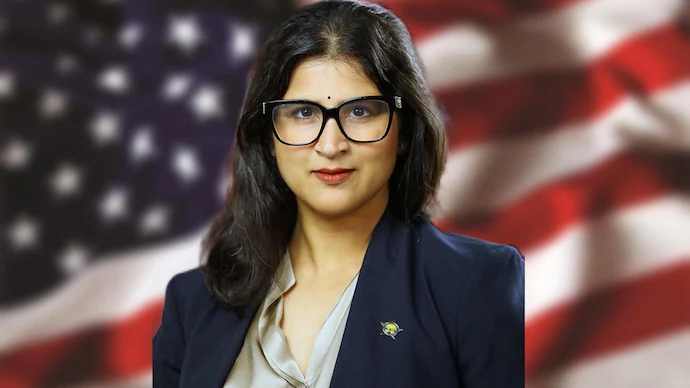
Indian-origin American lawyer Mathura Sridharan has been appointed as the Solicitor General of the U.S. state of Ohio. As Solicitor General, Mathura will represent the state of Ohio in the U.S. Supreme Court, advise the Attorney General on complex constitutional issues, develop legal strategies, and provide counsel in appellate matters. She will also review key legal documents and offer recommendations on high-stakes cases.

Mathura Sridharan Qualifications

Mathura holds a Bachelor of Science in Electrical Engineering, Computer Science, and Economics from the Massachusetts Institute of Technology (MIT). She later earned a master’s degree in Electrical Engineering and Computer Science, also from MIT, followed by a Juris Doctor (JD) from New York University School of Law in 2010.

Mathura Sridharan Hobbies

Outside her legal career, Mathura is passionate about travel and cooking. She regularly shares food recipes on social media and is also a trained classical singer. She married Ashwin Suresh in 2015.

However, following her appointment, Mathura faced a wave of online trolling, with some individuals questioning her Indian heritage and the presence of a bindi in her profile photo. Critics even asked why a “non-American” was appointed to such a high legal position.

Responding firmly to the backlash, Ohio Attorney General Dave Yost defended Mathura, stating:
“Some people are wrongly claiming that Mathura is not American. She is a U.S. citizen, married to a U.S. citizen, and both her parents are American citizens as well. If her name or skin color bothers you, the problem lies with you—not with her or her appointment.”

Yost praised Mathura’s legal acumen and performance, noting that she successfully argued a case before the U.S. Supreme Court last year. Her appointment was also backed by two former Solicitor Generals of Ohio, Benjamin Flowers and Elliot Gaiser.

“She’s incredibly smart, articulate, and confident in the courtroom. I told her I wanted a lawyer who argues, and she certainly delivers. I’m proud to appoint her,” said Yost.

Karkoot Nag’s Divine Secrets- 1400-Year-Old Shivlings Unearthed in Kashmir’s Sacred Spring

0

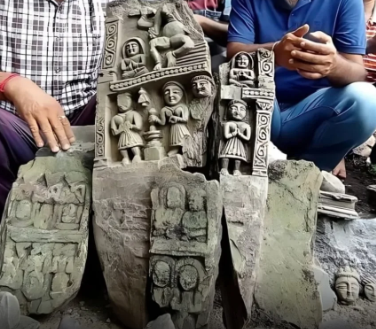
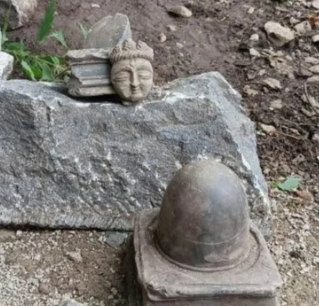
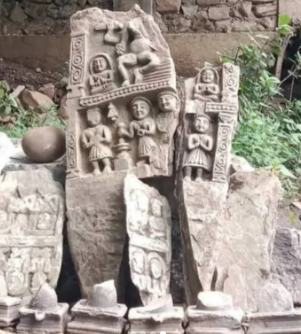
In a discovery that has stirred both reverence and curiosity, ancient Hindu relics—believed to be over 1400 years old—have been unearthed during a spring restoration project in Karkoot Nag, located in the Salia area of Aishmuqam, Anantnag district, Jammu and Kashmir.

A Glimpse into the Karkota Dynasty

The site is historically linked to the Karkota dynasty, which ruled Kashmir between 625 and 855 CE. Labourers working under the Public Works Department (PWD) stumbled upon multiple Shivlings, deity sculptures, and carved stone fragments—suggesting the remnants of a once-thriving temple.

Karkoot Nag’s Divine Secrets- 1400-Year-Old Shivlings Unearthed in Kashmir’s Sacred Spring

Archaeological Significance

Officials from the Department of Archives, Archaeology and Museums swiftly arrived at the site and took custody of the relics. These artifacts will be transferred to the SPS Museum in Srinagar for carbon dating and scholarly analysis to determine their precise age and historical context.

Local Sentiments and Cultural Reverence

For the Kashmiri Pandit community, the discovery is deeply emotional. Many locals believe the site was once a sacred pilgrimage center. A Kashmiri Pandit shared, “We’ve always heard that a temple stood here. Now that the idols have resurfaced, we hope a new temple will be built to honor them”.

Karkoot Nag’s Divine Secrets- 1400-Year-Old Shivlings Unearthed in Kashmir’s Sacred Spring

Preservation and Future Prospects

While no official plans for religious or heritage tourism have been announced, the discovery has sparked calls for conservation efforts and the reinstatement of the Shivlings at the original site. Heritage activists are urging authorities to recognize the location’s sanctity and historical value.

Nalanda Reborn: Ancient Wisdom Lighting the Path to a Sustainable Tomorrow

0

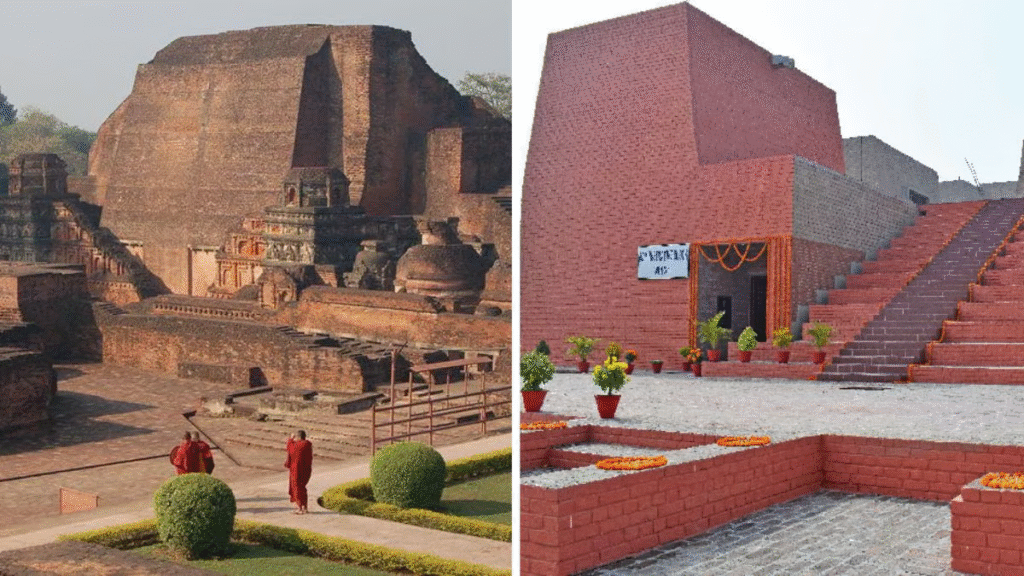
After 1600 years, the silent ruins stir once more. Nalanda—once reduced to ashes by tyranny—now rises as a phoenix of intellect and innovation. No longer just a citadel of ancient wisdom, it emerges as a beacon of sustainable living, zero-carbon ambitions, and global harmony. This isn’t history repeating—it’s history reinventing the future.
It’s a place where ancient wisdom meets modern sustainability, where tradition fuels innovation, and where the future is shaped by harmony—with nature, with knowledge, and with humanity Legacy of Nalanda The World’s First Residential University. Founded in 427 CE by Kumargupta I of the Gupta dynasty, Nalanda was more than a university—it was a beacon of intellectual brilliance.

Nalanda Reborn: Ancient Wisdom Lighting the Path to a Sustainable Tomorrow
  • Hosted 10,000 students and 2,000 teachers from across Asia.
  • Specialized in Buddhist philosophy, mathematics, astronomy, medicine, and logic.
  • Scholars like Xuanzang and Yijing documented its grandeur and carried hundreds of manuscripts to China.
  • Destroyed in 1193 CE by Bakhtiyar Khilji, leading to the loss of priceless knowledge and cultural heritage.

Revival of Nalanda: A Global Vision

The idea to resurrect Nalanda was proposed by Dr. A.P.J. Abdul Kalam in 2006 and endorsed by 16 East Asia Summit nations in 2007. Nalanda University Act, 2010 passed by Indian Parliament. First academic session began in September 2014. Supported by countries like Japan, China, Singapore, Australia, and more. Nobel Laureate Amartya Sen served as the first Chancellor.

Nalanda Reborn: Ancient Wisdom Lighting the Path to a Sustainable Tomorrow

Zero Carbon Campus: A Model for Sustainable Education

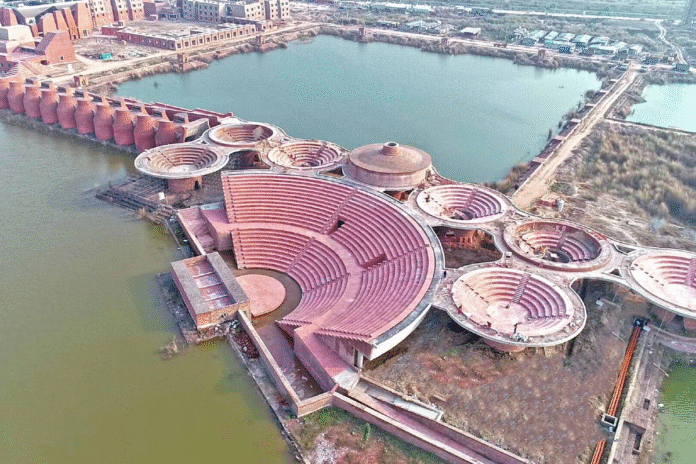
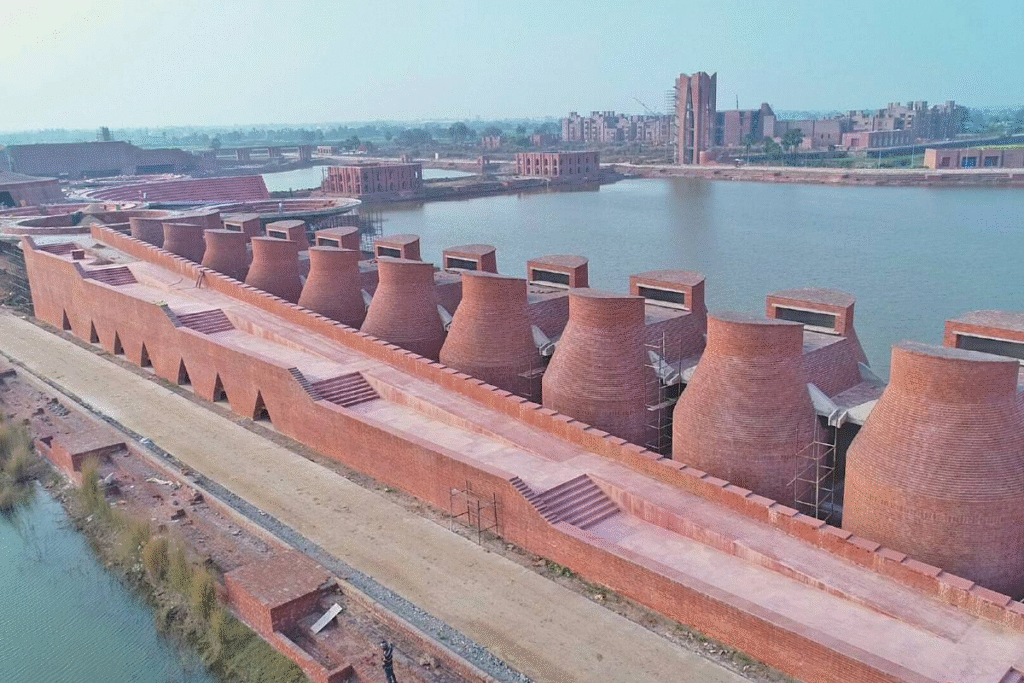
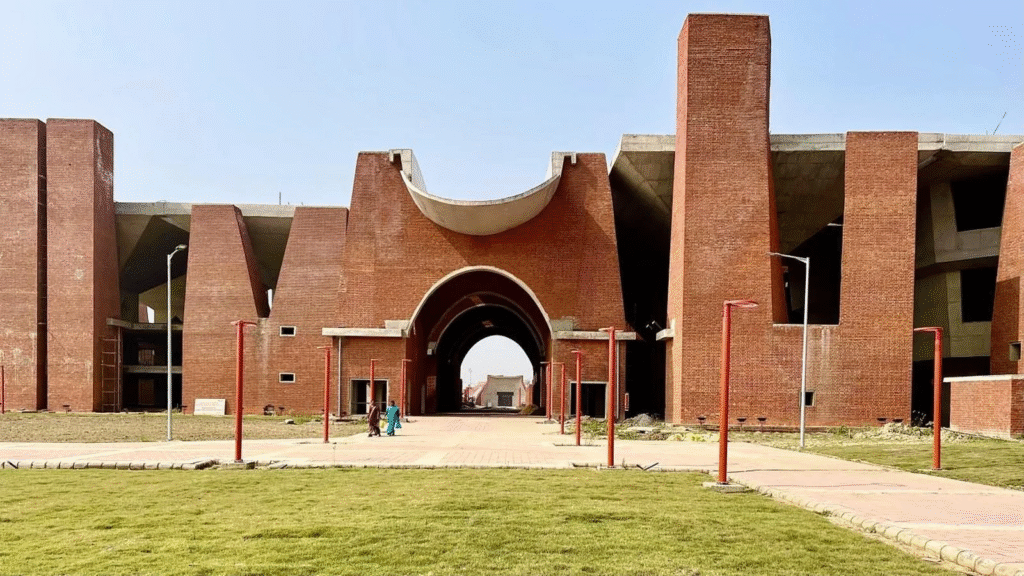
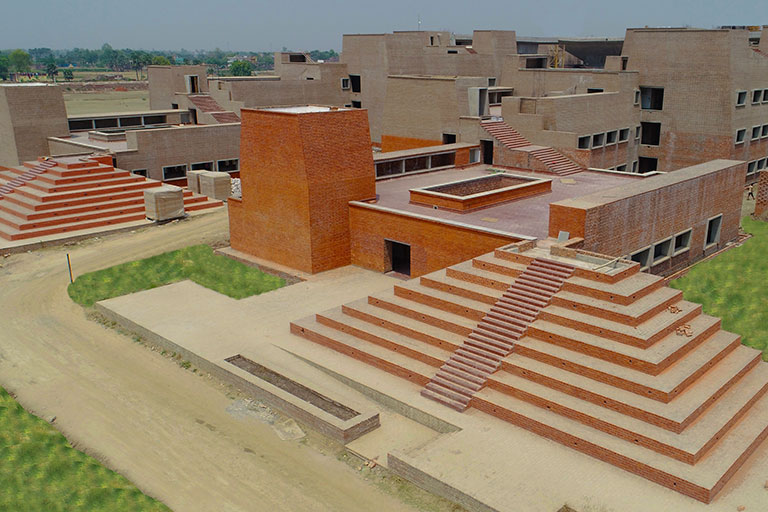
Located in Rajgir, Bihar, the new Nalanda campus spans 455 acres and is India’s first Net-Zero Energy, Water, and Waste university. 6.5 MW Solar Farm and 1.5 MW Biogas Plant power the campus sustainably.

No Air Conditioning– Uses Desiccant Evaporative (DEVAP) cooling technology.

Water Management- Indigenous Ahar-Pyne system and DeWAT waste treatment.

Eco-friendly Materials– Compressed Stabilized Earth Blocks (CSEB) instead of burnt bricks.

Recognized with GRIHA 5-Star Rating and multiple international awards.

Nalanda Reborn: Ancient Wisdom Lighting the Path to a Sustainable Tomorrow

Academic Excellence: Bridging Tradition and Innovation

Nalanda offers postgraduate and doctoral programs across diverse disciplines:

Programs Offered: Historical Studies | MA & PhD in Asian, Global & Comparative History | | Ecology & Environment | MSc & PhD in Sustainability & Climate Action | | Buddhist Studies & Comparative Religion | MA in Buddhist Philosophy & World Religions | | Management Studies | MBA in Sustainable Development | | Languages & Literature | MA in World Literature, Diplomas in Sanskrit, Pali, Korean, Japanese | | Hindu Studies | MA in Sanatana Dharma & Indian Knowledge Systems |

Students engage in interdisciplinary research, experiential learning, and global collaborations with institutions like Peking University, Deakin University, and Otani University.

Nalanda Reborn: Ancient Wisdom Lighting the Path to a Sustainable Tomorrow

Nalanda’s New Role: Guiding the Future

  • Aligns with UN Sustainable Development Goals (SDGs)—especially SDG 7, 12, and 13.
  • Promotes peacebuilding, conflict resolution, and Bay of Bengal cooperation through dedicated centers.
  • Embodies the spirit of inclusive learning, cultural revival, and ecological responsibility.