The upcoming Vice-Presidential election on September 9, 2025, promises to be a gripping contest, with both candidates hailing from South India. The opposition INDIA Alliance has announced former Supreme Court Justice B. Sudarshan Reddy as its candidate, a decision finalized during a meeting at Congress President Mallikarjun Kharge’s residence. The alliance, aiming for a unified front, deliberated extensively to select a consensus candidate who embodies neutrality and stature.
Storied Legal Career
Born on July 8, 1946, in Akula Maylaram village, Ibrahimpatnam taluka (now Ranga Reddy district, Telangana), Justice B. Sudarshan Reddy hails from a humble farming family. He graduated with a law degree from Osmania University, Hyderabad, in 1971 and enrolled as an advocate with the Andhra Pradesh Bar Council. His legal journey began with practicing writ and civil cases at the Andhra Pradesh High Court. Reddy’s illustrious career includes serving as a government advocate in the Andhra Pradesh High Court from 1988 to 1990 and briefly as Additional Standing Counsel for the Central Government in 1990. He also acted as legal advisor and standing counsel for Osmania University. In 1995, he was appointed a permanent judge of the Andhra Pradesh High Court, later becoming Chief Justice of the Gauhati High Court in 2005. His judicial ascent culminated in his appointment as a Supreme Court judge in 2007, serving until his retirement in 2011. In March 2013, Reddy took on the role of Goa’s first Lokayukta but resigned in September of the same year for personal reasons.
A Strategic Choice for the Opposition
The selection of Justice Reddy reflects a calculated move by the INDIA Alliance. The Dravida Munnetra Kazhagam (DMK) pushed for a South Indian candidate, while the Trinamool Congress (TMC) advocated for a non-political figure. Congress and other alliance partners sought a universally respected name, making Reddy’s nomination a perfect fit. His four-decade-long legal career and impeccable reputation as a jurist make him a formidable candidate in this high-stakes electoral battle.As the election approaches, all eyes are on this clash of Southern titans, with Justice Reddy’s candidacy adding a layer of gravitas to the contest.
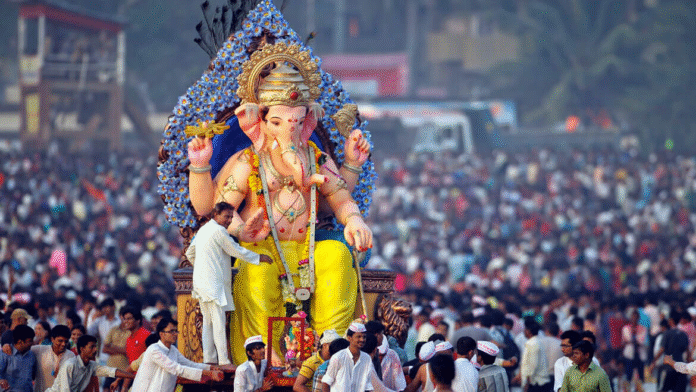
He is the deity of beginnings, the remover of obstacles, and the embodiment of wisdom—Lord Ganesha, with his elephant head and gentle gaze, is one of the most beloved figures in Hinduism. But his influence stretches far beyond India’s temples and festivals. Across Asia and into the hearts of global communities, Ganesha is not just worshipped—he is embraced, adapted, and honored in ways that reflect the unique cultural soul of each land. This is a journey through countries where Ganesha’s presence is not only spiritual but symbolic of unity, creativity, and divine protection.
Nepal: The Himalayan Devotion
In Nepal, Lord Ganesha is revered by both Hindus and Buddhists, seamlessly woven into the spiritual fabric of the nation. Among the Newar community, he is invoked during rituals and festivals, especially before embarking on new ventures. Temples like Ashok Binayak in Kathmandu stand as sacred spaces where devotees seek his blessings for wisdom and success. His presence here is not just religious—it’s deeply cultural, a guardian of tradition and transformation.
Thailand: Patron of the Arts and Success
Thailand offers a unique interpretation of Ganesha, known locally as Phra Phikanet. Here, he is celebrated as the god of arts, intellect, and prosperity. His statues grace royal palaces, art schools, and bustling street shrines, especially in Bangkok. Artists, performers, and entrepreneurs often begin their creative journeys by paying homage to him, believing that his divine energy fuels inspiration and clears the path to success. The Ganesha Shrine near CentralWorld is a vibrant testament to this devotion.
Indonesia (Bali): Sacred Guardian of the Island
In Bali, where Hinduism thrives amidst Indonesia’s Muslim majority, Ganesha is a cherished guardian. His statues are placed at the entrances of homes and temples, believed to ward off evil and invite auspiciousness. Balinese artisans carve his image into wood and stone with exquisite detail, blending traditional Hindu iconography with local aesthetics. Ganesha here is not just a deity—he is a protector of sacred space and spiritual harmony.
Sri Lanka: Pillaiyar, the Beloved Elder
Sri Lanka’s devotion to Ganesha spans both Hindu and Buddhist traditions. Known affectionately as Pillaiyar, he is invoked at the start of prayers, journeys, and new endeavors. His statues are found in homes, roadside shrines, and grand temples like the Sri Ponnambalam Vaneswarar Temple in Colombo. For many Sri Lankans, Ganesha represents wisdom, humility, and the quiet strength needed to overcome life’s challenges.
Malaysia: Tamil Traditions and Urban Temples
Malaysia’s vibrant Tamil Hindu community keeps Ganesha’s worship alive through festivals like Vinayagar Chaturthi, celebrated with music, rituals, and colorful processions. Temples such as the Sri Maha Mariamman Temple in Kuala Lumpur house beautifully adorned Ganesha idols, drawing devotees from all walks of life. His image also appears in homes and businesses, symbolizing protection and prosperity in a multicultural landscape.
Singapore: Divine Presence in a Modern Metropolis
In Singapore, Ganesha is a spiritual anchor for the Indian diaspora and beyond. Temples like Sri Srinivasa Perumal and Sri Veeramakaliamman are hubs of devotion, especially during major festivals. But his influence extends into modern spaces too—yoga studios, wellness centers, and even art galleries feature his image, reflecting a blend of tradition and contemporary spirituality. Ganesha here is a bridge between heritage and modernity.
Wait—meat as prasad? Fish offered at a temple altar? For many, this sounds like sacrilege. After all, isn’t prasad supposed to be pure, sattvic, and strictly vegetarian? Not always.
Across India, from the blood-soaked rituals of Kamakhya in Assam to the fish-laced offerings at Kalighat in Bengal, sacred food takes on forms that defy mainstream expectations. These temples don’t just serve devotion—they serve culture, history, and fierce regional identity. Here, prasad isn’t limited to laddoos and bananas. It can be spicy, smoky, and even animal-based—and still deeply sacred. This story isn’t just about food. It’s about belief systems that refuse to be boxed in. It’s about temples that honor the divine in forms both fierce and tender. And it’s about breaking the myth that holy must mean homogenous.
Redefining the Concept of Prasad
When we think of prasad, the sacred offering in Hindu temples, our minds often conjure images of sweets, laddoos, or vegetarian delicacies shared with devotion. However, in a country as diverse as India, prasad transcends these conventional boundaries. Some temples across the nation serve non-vegetarian dishes and even fast food as divine offerings, reflecting the rich cultural and spiritual tapestry of the land. These unique practices show that prasad is not merely about what’s on the plate but about the love, faith, and community it fosters.
Rajrappa Temple: Mutton as a Sacred Offering
Nestled in Jharkhand, the Rajrappa Temple, also known as the Maa Chhinnamastika Temple, stands out for its unconventional prasad. Unlike most Hindu temples that strictly adhere to vegetarian offerings, this revered site includes mutton as part of its sacred offerings. Devotees visiting this ancient temple, dedicated to Goddess Chhinnamastika, partake in this unique prasad, which symbolizes the temple’s distinct traditions and its deep connection to local practices.
Muniyandi Temple: Mutton Biryani as a Divine Tradition
In Vadakkampatti village near Madurai, Tamil Nadu, the Muniyandi Temple, dedicated to Lord Muniyandi (an incarnation of Lord Shiva), has upheld a remarkable tradition for over 83 years. During its annual festival, devotees are served mutton biryani as prasad. This flavorful dish, far from the usual vegetarian fare, is prepared with devotion and shared among the community, reinforcing the temple’s role as a unifying force that celebrates faith through food.
Kamakhya Temple: A Blend of Offerings and Tantric Traditions
Located on the Nilachal hills in Guwahati, Assam, the Kamakhya Temple is one of the 51 Shakti Peethas and a major center for Tantric worship. Dedicated to Goddess Kamakhya, a form of Shakti, this temple is known for its diverse prasad offerings, which range from coconuts, red hibiscus flowers, sindoor, and saris to animal sacrifices like goats. The inclusion of non-vegetarian offerings reflects the temple’s deep-rooted Tantric practices, where the act of offering is a profound expression of devotion.
Chinese Kali Temple: A Fusion of Cultures in Prasa
In the heart of Kolkata’s Tangra area, the Chinese Kali Temple offers a fascinating blend of Indian and Chinese traditions. Dedicated to Goddess Kali, this temple serves an unusual prasad that includes Chinese dishes like noodles, chow mein, and fried rice alongside traditional vegetarian offerings. This unique fusion reflects the temple’s history, rooted in the Chinese-Indian community, and showcases how prasad can bridge cultural divides while honoring spiritual devotion.
Prasad: A Symbol of Love and Community
The diverse offerings at these temples highlight a universal truth: prasad is far more than the food itself. Whether it’s mutton biryani, goat offerings, or Chinese noodles, the essence of prasad lies in the love, faith, and sense of community it fosters. These temples remind us that devotion is not bound by culinary norms but is expressed through the shared act of offering and receiving, uniting people across traditions and cultures.
Celebrating Diversity in Devotion
The practice of serving non-vegetarian and fast-food prasad in temples like Rajrappa, Muniyandi, Kamakhya, and Chinese Kali challenges conventional notions of sacred offerings. These unique traditions reflect India’s incredible diversity and the myriad ways in which faith is expressed. As we explore these temples, we are reminded that prasad is not just about what’s served on the plate—it’s about the shared experience of devotion, community, and the celebration of life’s spiritual connections.
In a groundbreaking stride towards sustainability, 26-year-old Pritesh Mistry from Mumbai has transformed tomato waste into a revolutionary material called “Bioleather.” Through his startup, The Bio Company (TBC), Mistry is redefining the leather industry by creating a vegan, biodegradable alternative that reduces reliance on animal leather and tackles food waste simultaneously.
The Genesis of Bioleather
India, the world’s second-largest tomato producer, generates approximately 44 million tons of tomatoes annually, with 30-35% going to waste, primarily as peels and seeds. Recognizing this as an opportunity, Mistry set out to convert this overlooked byproduct into a valuable resource. “Tomato waste, mainly skins and seeds, provides a sustainable raw material for Bioleather,” Mistry explains. After months of experimentation with formulations, textures, and durability, he developed a product that mimics leather’s look and feel while being entirely eco-friendly and biodegradable.
The Making of a Green Material
At TBC’s facility in Surat, Bioleather is crafted by blending tomato byproducts with biopolymers, plant-based binders, and natural fibers. The mixture undergoes non-toxic treatments to create a durable, leather-like texture. Unlike traditional synthetic leathers, Bioleather is free from polyurethane (PU) and polyvinyl chloride (PVC), making it a standout in sustainable innovation. This process not only repurposes food waste but also minimizes environmental pollution.
A Game-Changer for Fashion and Beyond
Bioleather is gaining traction across industries, with early adopters in fashion, accessories, and automotive sectors. Sustainable brands are transforming this material into jackets, bags, and shoes, embracing its unique origin and eco-conscious appeal. Natasha Mangwani, founder and CEO of Toronto-based plant-based handbag brand Satuhaati, praises the innovation: “Bioleather is PU/PVC-free, setting it apart from conventional synthetic leather. It’s a remarkable innovation, and its plant-based leather is distinctive due to its unique origin: rejected tomatoes.”
A Vision for a Sustainable Future
Mistry’s mission goes beyond creating a novel material. By addressing both food waste and pollution, The Bio Company aims to set a new standard for sustainability in the leather industry. “Our goal is to reduce food waste and pollution while turning a neglected byproduct into a valuable, eco-friendly material,” Mistry says. With Bioleather, he is not only offering a viable alternative to animal and synthetic leather but also inspiring a shift towards a circular economy.As the world seeks greener solutions, Pritesh Mistry’s Bioleather proves that innovation can turn even the humblest of waste—tomato peels—into a stylish, sustainable future.
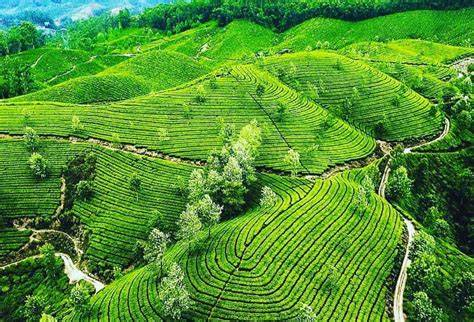
Beyond Munnar, Kerala hides a tale of abundance and awe. The village of Kappur Akhada rises like a green amphitheater, its terraced farms cascading down the slopes, feeding the state with vibrant vegetables and fruits. But just as the soil tells a story of toil and triumph, the nearby hills of Vavavada prepare for a spectacle that happens only once every twelve years—a bloom so rare, it turns the landscape into a living painting.
Farming with Legacy and Diversity
Local farmers in Kappur Akhada don’t just grow vegetables—they cultivate heritage. While traditional crops dominate, the village also experiments with high-value produce like strawberries and exotic greens. This blend of tradition and innovation has made the region a model for sustainable hill farming, with nearly 20% of the population engaged in agriculture.
Neelakurinji Park Survey Completed in Vavavada
In nearby Vavavada village, a major ecological milestone has been reached. A government-backed survey has been completed on plots 56 and 62 in Bardbarda and Kotakambur villages to develop a Neelakurinji Park—dedicated to the rare flower that blooms once every 12 years, turning the hills into a surreal ocean of blue.
A Bloom That Transforms Tourism
The Neelakurinji bloom isn’t just a botanical wonder—it’s a tourism magnet. With the park’s development, the region is expected to attract nature lovers, photographers, and spiritual seekers. Locals hope this initiative will bring fresh recognition to the area and boost eco-tourism, giving Kerala’s highlands a new identity beyond agriculture.
Where Nature and Livelihoods Unite
Together, Kappur Akhada’s farming legacy and Vavavada’s blooming future tell a story of harmony—between soil and soul, tradition and transformation. As Kerala nurtures both crops and flowers, it also cultivates pride, sustainability, and a deeper connection to its land
Manika Vishwakarma is Miss Universe India 2025 who will now represent India in Thailand in 2025.
For the final round, Manika was asked a challenging question: “If you had to choose between advocating for women’s education or immediate economic aid for impoverished families, which one would you prioritise and why? How would you address the counterarguments?”
It was a tricky balance of education versus urgent economic relief and all eyes were on Manika as she delivered her answer.
With confidence and clarity, the Miss Universe India 2025 stated: “Two sides of the coin. On one side, where we have seen that women have been deprived of basic rights, such as education, for as long as we can remember. On the other side, we see the result of this deprivation: impoverished families. Fifty percent of our population has been denied the basic amenity that could change their lives. If I have to, I would choose the option of women’s education.”
Defending her stance, Manika added, “I would advocate for it because it would not just change the life of one person; it would change the entire strata of the future of this country, of this world. While both issues are important, it is about taking actions that can help in the long run.”
Recently, Paytm CEO Vijay Shekhar Sharma claimed that AI could read WhatsApp messages and warned users to be cautious if they were part of certain groups. He urged WhatsApp users to enable the “Advanced Chat Privacy” feature to prevent AI from accessing their messages.
Sharma shared a message online suggesting that WhatsApp would allow artificial intelligence to read chats and potentially send warnings to users who are part of so-called “bad groups.” According to him, the Meta-owned messaging platform—which uses end-to-end encryption—was allegedly on the verge of giving AI access to private messages in such groups.
In his post, Sharma shared a screenshot and advised users to activate the “Advanced Chat Privacy” setting to stop the platform from reading group messages. He wrote:
“IMP: If you are part of a WhatsApp group, from today onwards WhatsApp is allowing AI to read chats! So enable this setting to block it.”
India will develop a ‘Sudarshan Chakra’—a multi-layered defence framework that integrates advanced surveillance, cyber protection, and physical safeguards to protect citizens and critical infrastructure from enemy attacks, including terrorism and missile strikes, Prime Minister Narendra Modi announced Friday.
This new national defence system will function similarly to Israel’s Iron Dome and the proposed Golden Dome in the United States, acting as a comprehensive missile defence shield.
India already operates the Integrated Air Command and Control System (IACCS), which successfully neutralised threats during Operation Sindoor, when Pakistani missiles failed to breach Indian airspace for nearly 100 hours. However, Mission Sudarshan Chakra—named after the legendary weapon Lord Krishna used to shield Arjuna—aims to go far beyond just missile interception.
“By 2035, I want to expand, strengthen, and modernise this shield. Drawing inspiration from Lord Krishna, we have chosen the path of the Sudarshan Chakra. The entire system should be researched, developed, and manufactured in India,” the Prime Minister declared in his Independence Day speech.
“Every citizen must feel protected.”
While operational details are still under wraps, sources told media the system will likely include precision counterstrike capabilities and anti-cyber warfare measures to neutralise digital threats such as hacking and phishing.
Mission Sudarshan Chakra will reportedly involve close collaboration between India’s premier scientific institutions, defence agencies, the armed forces, and private sector innovators, in line with the government’s ‘Aatmanirbhar Bharat’ (self-reliant India) vision, particularly in defence and infrastructure.
Context: Lessons from Operation Sindoor
The Sudarshan Chakra initiative follows the April Pahalgam terror attack and Operation Sindoor in May, during which Pakistan attempted to target Indian military bases, shoot down fighter jets, and damage urban centres. Over a tense 100-hour window starting May 7, India’s armed forces and missile defence systems held firm.
From Pakistan’s failed offensive, India drew a clear lesson: defence must be proactive, integrated, and future-ready.
In a historic milestone, India has emerged as the leading country for patent filings within its borders in 2023, surpassing all other foreign nations. This breakthrough signals a significant shift as India transforms from a technology consumer into a global technology creator. Fueled by progressive government policies, rising research capabilities, and a dynamic innovation ecosystem, India’s patent landscape is rapidly evolving, positioning the nation at the forefront of intellectual property generation worldwide.
Rising Patent Filings by Indian Applicants
Indian applicants accounted for 57% of all patent filings in 2023, a significant rise from the early 2000s when domestic institutions filed less than 20%. India also became the second-largest recipient of granted patents, overtaking the US in 2021. This growing share underscores India’s expanding role in the global intellectual property ecosystem.
Government Initiatives Driving Innovation
Several government initiatives have fostered innovation and patenting activity. The National Intellectual Property Rights (IPR) Policy and the Atal Innovation Mission promote startups, researchers, and students to innovate and protect their ideas. Key reforms include expedited patent examinations, an 80% fee reduction for educational institutions and startups, and full digitalisation of the patent process—simplifying filings and accelerating approvals.
Changing Patent Landscape by Sector
Patent trends reveal a shift from traditional mechanical and chemical engineering to technology-driven fields. Computer science patents rose from 1.27% in 2000 to 26.5% in 2023; electrical engineering patents grew from 8.27% to 16.41%. Biomedical patents surged from 0.6% to 10%, while physics-related patents doubled to 4%. This diversification highlights India’s growing emphasis on high-tech and interdisciplinary research.
Faster Patent Processing and Increased Approvals
Patent processing times have improved dramatically—from 8-10 years earlier to many approvals within 2-3 years today, with some granted in the same year as filing. Although nearly 80% of recent patents are still pending decisions, the system’s enhanced efficiency supports quicker commercialization and innovation cycles.
Shift in Patent Filers: Individuals and Institutions Lead
The profile of patent filers has evolved. Company filings declined from 43% in 2000 to under 17% in 2023, while individual filings rose from under 10% to around 32%. Educational institutions now contribute nearly 43% of filings. Government bodies and hospitals remain minor contributors. Programs like KAPILA and the Atal Innovation Mission have boosted IP awareness and entrepreneurship within academia.
Role of Universities and Research Institutes
Universities have emerged as innovation hubs. IIT Madras doubled its granted patents from 156 in 2022 to 300 in 2023, while IIT Bombay led with 421 patents granted in 2023–24. Dedicated IP cells and legal support help researchers file patents and commercialize technologies, crucial for nurturing early-stage research and startups.
Need for Increased Research and Development Investment
India’s R&D expenditure stands at 0.67% of GDP, trailing the US (3.5%) and China (2.5%). To sustain innovation momentum, investment should increase to around 2% of GDP. Greater funding will support foundational research and advanced technology development, vital for India’s self-reliance amid global trade uncertainties and for enhancing its global knowledge leadership.
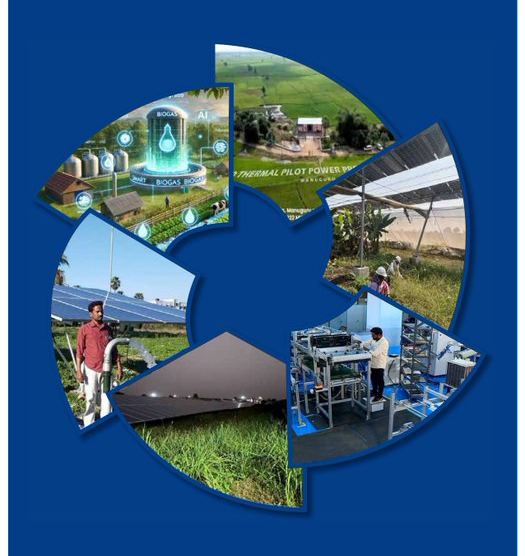
Akshay Urja Day is celebrated every year on 20th August to raise awareness about the importance and benefits of renewable energy. The day underscores the need for the efficient use of energy resources in India and promotes a more sustainable and environmentally conscious approach to energy consumption.
The occasion also commemorates the birth anniversary of former Prime Minister Rajiv Gandhi, and is therefore also known as Rajiv Gandhi Akshay Urja Diwas.
History of Akshay Urja Day
Akshay Urja Day was established in 2004 by the Ministry of New and Renewable Energy (MNRE) to address growing environmental concerns and promote sustainable energy solutions across the country.
The inaugural event was held in New Delhi in the presence of former Prime Minister Dr. Manmohan Singh. On that day, approximately 12,000 schoolchildren from across India formed a human chain to promote the use of renewable energy sources such as solar, wind, and hydro power, as alternatives to conventional fossil fuels like coal, oil, and natural gas.
Since then, the day has served as a national platform to highlight government initiatives, technological advancements, and public-private collaborations in the renewable energy sector.
Significance of Akshay Urja Day
Akshay Urja Day plays a pivotal role in:
Advocating the adoption of renewable energy sources such as solar, wind, and biomass.
Educating the public on the environmental, economic, and health benefits of sustainable energy.
Inspiring action at both individual and community levels to reduce carbon emissions and embrace green technologies.
Celebrating progress and innovation in the renewable energy sector across India.
By promoting energy awareness, the day helps steer the country towards energy independence and environmental sustainability.
Akshay Urja Day 2024 Celebrations
The 2024 celebrations focus on youth engagement and education. Schools, colleges, and universities across India organize a variety of awareness activities, including:
Quiz and painting competitions
Debates and cultural programs
Slogan-writing contests
Awareness rallies with informative posters and banners