Home Blog Page 216

Kiran Bedi: India’s First Woman IPS Officer and a Beacon of Courage

0

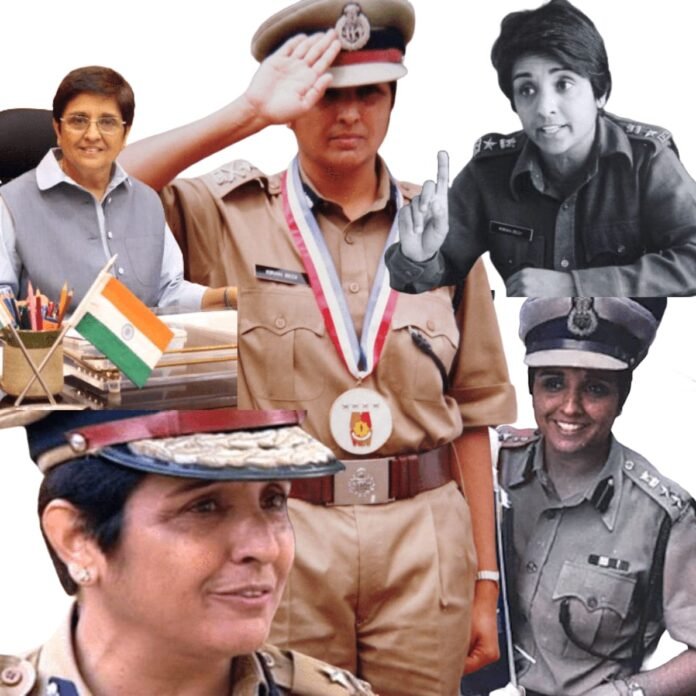
Kiran Bedi is a name synonymous with breaking barriers and setting new benchmarks for women in India. As the country’s first female Indian Police Service (IPS) officer, she not only carved a niche for herself in a male-dominated police force but also emerged as a relentless social reformer. Her journey is a powerful testament to perseverance, grit, and unwavering dedication to public service.

Early Life and Education

Born on June 9, 1949, in Amritsar, Punjab, Kiran Bedi hails from a prosperous Punjabi family. Her father, Prakash Lal Peshawaria, and mother, Prem Lata Peshawaria, were instrumental in nurturing her aspirations from a young age.

Kiran completed her early education in Amritsar and pursued her higher studies at Punjab University, Chandigarh. Before stepping into the police force, she served as a lecturer at Khalsa College for Women in Amritsar. However, destiny had bigger plans for her. In 1972, at a time when very few women even dreamt of entering the civil services, Kiran Bedi broke societal stereotypes and was selected into the Indian Police Service, becoming the first woman in India to achieve this milestone.

During the early 1970s, the idea of women serving in high-ranking positions within the police force was almost unthinkable. Women were largely confined to domestic roles, with limited opportunities in competitive examinations and administrative services. Kiran Bedi’s entry into the IPS marked a significant turning point in Indian society, shattering age-old gender biases and inspiring countless women to dream beyond traditional roles. Throughout her career, Bedi took on challenging assignments and consistently pushed boundaries to prove that leadership knows no gender. Her fearless attitude, fairness in law enforcement, and commitment to public service became hallmarks of her professional journey.

A Champion Tennis Player

Long before she wore the police uniform, Kiran Bedi was already making headlines as a talented tennis player. She started playing tennis at the tender age of nine and soon rose to national prominence. In 1964, she won the National Junior Lawn Tennis Championship, a significant feat that laid the foundation for her sports career. Bedi represented India in several prestigious tournaments, including the Asian Lawn Tennis Championship. She also clinched gold medals at the National Sports Festival for Women, adding numerous accolades to her name. Her experience in competitive sports instilled in her the discipline and determination that would later define her approach as a police officer.

Awards and Honors: Recognizing a Life of Service

Kiran Bedi’s exemplary service in law enforcement and her contributions to social reform have been recognized globally. She has been the recipient of several prestigious awards, including:

Ramon Magsaysay Award for Government Service (1994)

Nehru Fellowship

President’s Gallantry Award

United Nations Medal for Outstanding Service
These accolades are not just honors but reflect her relentless efforts in bringing about meaningful change in society. Her tenure as Inspector General of Prisons, where she introduced path-breaking reforms in Tihar Jail, remains one of her most lauded contributions.

A Lifelong Inspiration for Women

Kiran Bedi continues to be an enduring source of inspiration for millions. Her trailblazing journey from a young girl in Amritsar to India’s first woman IPS officer is a story of courage, determination, and social commitment. Beyond her policing career, she has been a relentless advocate for women’s empowerment, education, prison reforms, and public service integrity.
Her life teaches us that societal change begins with individuals who dare to challenge the status quo. Kiran Bedi is not just a name; she is a movement that continues to inspire generations.

Zupee Ludo Leads Skill-Based Gaming in Rajasthan with 10 Million Users and Over 1.2 Billion Gameplays

0

Rajasthan emerges as a category-shaper in India’s digital gaming revolution

Zupee, India’s leading online skill-based gaming platform, has announced a major user milestone in Rajasthan, with over 10 million users and 1.2 billion gameplays on its platform. Notably, Jaipur alone accounts for nearly 1 billion gameplays, underscoring the state’s deep engagement with culturally rooted games reimagined for the mobile-first generation.

Zupee, the pioneer of the skill-based casual gaming category in India, continues to expand its footprint across Tier 1, 2, and 3 cities, with Rajasthan emerging as a key contributor. The platform’s success in the state reflects its broader appeal—driven by intuitive formats, culturally relevant gameplay, a secure environment, and a strong commitment to responsible and skill-based entertainment.

From 2024 to date, Zupee’s user base in Rajasthan has grown by over 15%, with games like Ludo—transformed into competitive skill-based formats—playing a significant role in that growth.

Inclusive, Mobile-First and Fair

The rise in Zupee Ludo’s adoption mirrors a nationwide shift in entertainment preferences, especially in Bharat. Shorter, quicker, and skill-oriented gaming formats are gaining traction among mobile-first users who demand fairness and transparency. The platform has also seen remarkable progress in inclusivity, with a 60% year-on-year increase in female players in Rajasthan, steadily moving towards a balanced gender ratio.

“Designed for Digital Bharat” – Zupee’s Vision

India’s Game. Reimagined.

Zupee has redefined one of India’s most iconic board games—Ludo—into a skill-based digital experience. With over 150 million registered users and 12.5 billion gameplays nationwide, Zupee hasn’t just participated in the skill-gaming category—it has built and led it.

The company introduced India’s first skill-based Ludo formats, including:

  • Ludo Supreme
  • Ludo Turbo
  • Ludo Supreme League

These formats offer fast-paced gameplay under 10 minutes, ideal for mobile-first audiences. By eliminating dependence on luck—through innovations like Dice-less Mode and Move-based Scoring—Zupee reinforces the game’s skill-oriented nature.

Real Bharat Fuels Real Growth

The platform’s sustained growth in Rajasthan, especially in cities like Jaipur, signals a larger shift in India’s gaming ecosystem—from download numbers to deep user engagement and retention.

As Bharat increasingly goes digital, Zupee is building games that are easy to play, culturally relevant, and inclusive—unlocking the full potential of India’s gaming economy. Rajasthan’s engagement stands as a powerful validation of Zupee’s vision for a skill-based, fair-play-driven gaming future.

The Unfinished Wonder of Devotion — Bhojpur Temple’s Timeless Story

0

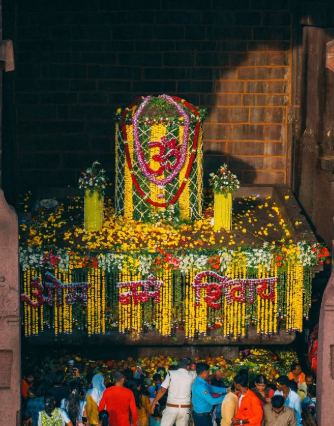
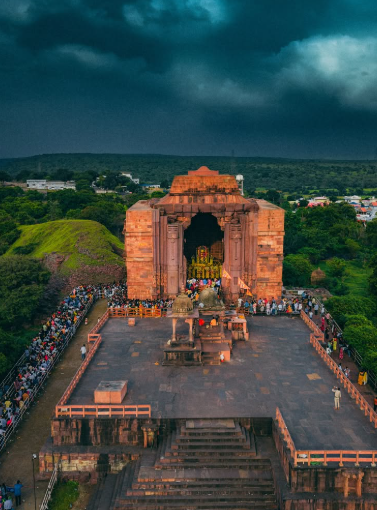
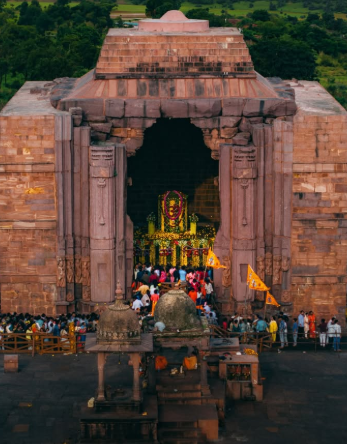
As India rediscovers its spiritual roots and Sanatan Dharma finds new hearts across generations, ancient sanctuaries whisper tales of faith carved into stone. One such tale stands quietly just 28 kilometers from Bhopal—majestic, mysterious, and magnificent. This is Bhojpur Temple, or Bhojeshwar Mandir, a creation born in the 11th century under the patronage of King Bhoj. Though time never allowed its completion, the temple stands unapologetically incomplete—yet spiritually whole.

The Unfinished Wonder of Devotion — Bhojpur Temple's Timeless Story

Walk through its gates and you’ll meet awe itself: an 18-foot tall Shivling, sculpted from a single massive stone, soaring into the sky. It is one of India’s largest, resting under open skies, bathed in sun and prayers. On Mondays in Sawan, the air reverberates with chants of “Har Har Mahadev,” as crowds surge in devotion, offering milk, water, and bel leaves.

The Unfinished Wonder of Devotion — Bhojpur Temple's Timeless Story

The temple’s grand stone blocks and intricate carvings speak of an ancient craftsmanship that defies centuries. Gods, guardians, and celestial figures gaze silently from its walls, inviting every visitor into their timeless vigil. Though unfinished in form, Bhojpur Temple is complete in spirit—a sacred symphony of stone and soul. During the monsoon months, it transforms into a living tapestry of devotion, heritage, and cosmic love. Each prayer here doesn’t just echo—it becomes part of a legacy.

Security and Hospitality: How Western Rajasthan’s Border Security Enhances Tourist Confidence and Charm

0

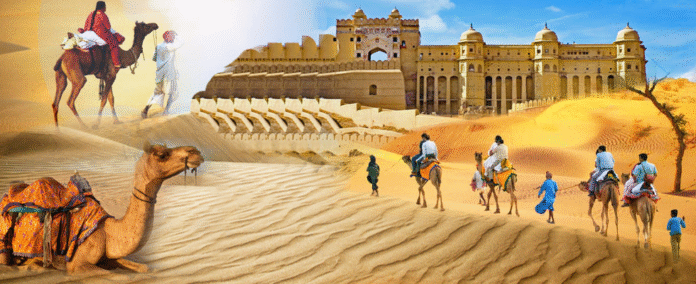
In the vast desert expanse of Western Rajasthan, where the horizon stretches endlessly and the air carries centuries of tradition, lies a unique promise—not just of beauty, but of safety. This region, bordering Pakistan and home to some of India’s most iconic cultural destinations, has quietly built a reputation that goes beyond its golden dunes and soulful music. It is a place where vigilance meets warmth, and where the border itself becomes a symbol of trust.

A Trusted Host in Times of Uncertainty

When national events face disruption, few places rise to the occasion with the grace and preparedness of Rajasthan. A striking example came during a recent national crisis when the Indian Premier League (IPL)—one of the country’s most high-profile sporting events—was postponed across the nation. Yet, as conditions improved, Rajasthan was swiftly chosen to host three IPL matches. This wasn’t just a logistical decision—it was a vote of confidence. The state’s infrastructure, security protocols, and administrative coordination stood out as reliable and resilient. In a world where safety is paramount for travelers and event organizers alike, Rajasthan proved it could deliver.

Security and Hospitality: How Western Rajasthan’s Border Security Enhances Tourist Confidence and Charm

Border Vigilance: A Silent Guardian

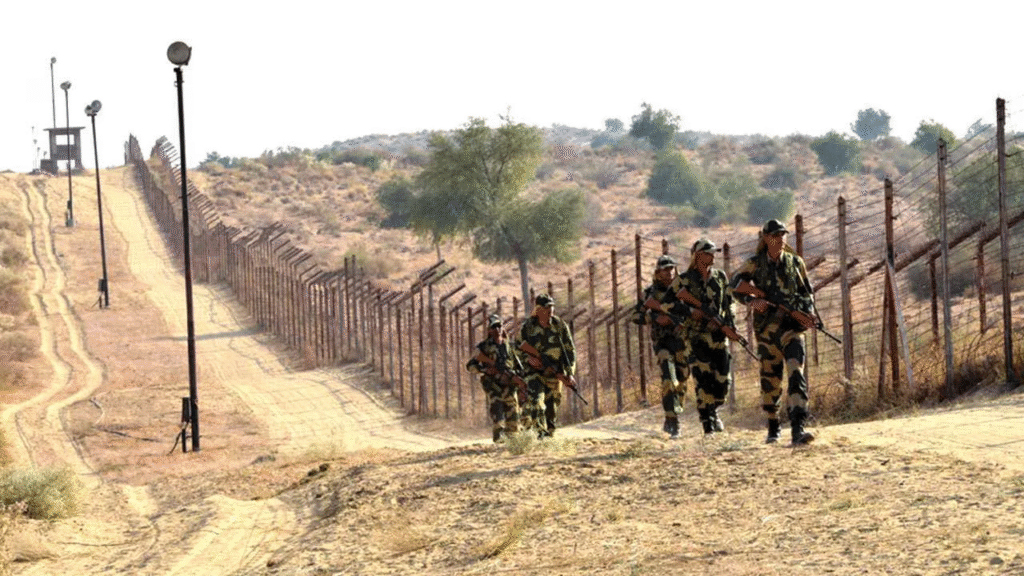
Western Rajasthan’s border districts—Jaisalmer, Barmer, Bikaner, and Jodhpur—carry a heightened sense of awareness. The presence of armed forces, vigilant police, and responsive local administration creates an environment of security that is both visible and reassuring.But this vigilance isn’t intrusive—it’s protective. Tourists often remark on the seamless blend of freedom and safety they experience here. Whether exploring remote villages or attending cultural festivals, visitors feel cared for without feeling constrained.

Hospitality Rooted in Responsibility

What truly sets Western Rajasthan apart is how this sense of security translates into hospitality. In border regions, there’s a deep-rooted culture of responsibility. Locals understand the importance of presenting their land with pride and care. This consciousness manifests in:

  • Attentive service in homestays and hotels.
  • Respectful and informative local guides.
  • Community-driven tourism initiatives that prioritize guest experience.

Visitors are not just welcomed—they’re embraced. The warmth of a desert family, the smile of a camel herder, the song of a folk musician—all carry an undertone of sincerity and safety.

A Model for Responsible Tourism

In an era where travelers seek not just adventure but assurance, Western Rajasthan offers a compelling model. It proves that border regions, often perceived as sensitive or remote, can be paragons of responsible tourism. The synergy between security and hospitality here is not accidental—it’s cultural. Government initiatives have further strengthened this balance. Training programs for tourism professionals, infrastructure upgrades, and community awareness campaigns ensure that safety and service go hand in hand.

More Than a Destination—A Promise

To visit Western Rajasthan is to experience a rare duality: the thrill of exploring ancient forts and desert trails, paired with the comfort of knowing you’re in safe hands. It’s a region that doesn’t just open its doors—it guards them with care. As the world rediscovers travel with caution and curiosity, Western Rajasthan stands ready—not just with its beauty, but with its reliability. In the heart of the desert, the border isn’t a line—it’s a promise.

A Top Choice For Travelers Reflects Its Rich Tapestry Of Bihar’s Destination with Its Rich Heritage, Spiritual Legacy, and Cultural Revival…

0

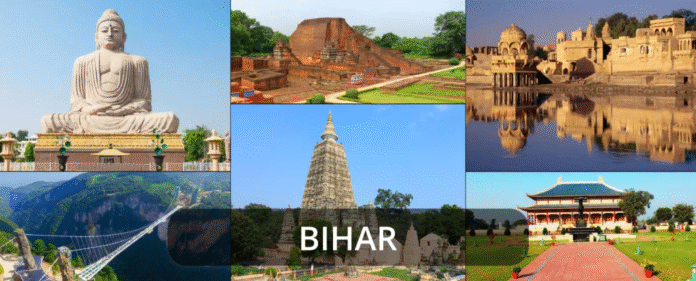
The Buddhist Samyak Darshan Museum‐cum‐Memorial Stupa being constructed in Vaishali, Bihar, will open its doors to the public in the last week of July. On this historic occasion, Buddhist monks from fifteen countries—China, Japan, Sri Lanka, Thailand, Nepal, Tibet, Myanmar, Malaysia, Bhutan, Vietnam, Cambodia, Mongolia, Laos, Bangladesh, and Indonesia—will convene in Vaishali to participate in the inauguration. Spanning 72 acres and built at a cost of ₹550.48 crore, this monument’s centerpiece will be the relic casket discovered during archaeological excavations between 1958 and 1962. With reverence, the casket will be installed on the museum’s ground floor as the focal point for visitors and worshippers alike.

Historical Significance of Bihar

Ancient Empires and the Cradle of Civilization

Bihar’s Magadha region was the powerhouse of early Indian empires. From the rise of the Nanda dynasty through the Maurya Empire—under Chandragupta and Ashoka—the capital at Pataliputra became the heart of politics, economy, and learning in ancient South Asia.

Birthplace of Major Religions

This land witnessed the dawn of two world religions. Gautama Buddha attained enlightenment under the Bodhi Tree in Bodh Gaya and delivered his first sermon nearby. Jainism’s 24th Tirthankara, Mahavira, also spent key years here, making Bihar the cradle of both Buddhism and Jainism.

Seat of Ancient Learning

Beyond empires and faiths, Bihar nurtured legendary centers of knowledge such as Nalanda and Vikramashila. Scholars from across Asia flocked here to study philosophy, astronomy, medicine, and linguistics, cementing Bihar’s legacy as an intellectual hub.

Bihar as a Japanese Buddhist Pilgrimage Hub

Nipponji Temple, Bodh Gaya

Built in traditional Japanese style, Nipponji (Japanese Temple) offers serene gardens, wooden prayer halls, and a tranquil Zen atmosphere. For Japanese visitors, it represents homeland architecture amid the very soil where Buddha’s enlightenment unfolded.

International Monastic Community

Adjacent to Bodh Gaya’s main stupa, the Indosan Nipponji Monastery houses monks and nuns from Japan and other Buddhist nations. Visitors often join guided meditation sessions, observe Japanese sutra-chanting rituals, and experience the blend of Indian and Japanese Buddhist traditions.

Lt Gen Sadhna Saxena Nair: India’s First Woman Director General Medical Services (Army) Sets a New Benchmark in Military Healthcare

0

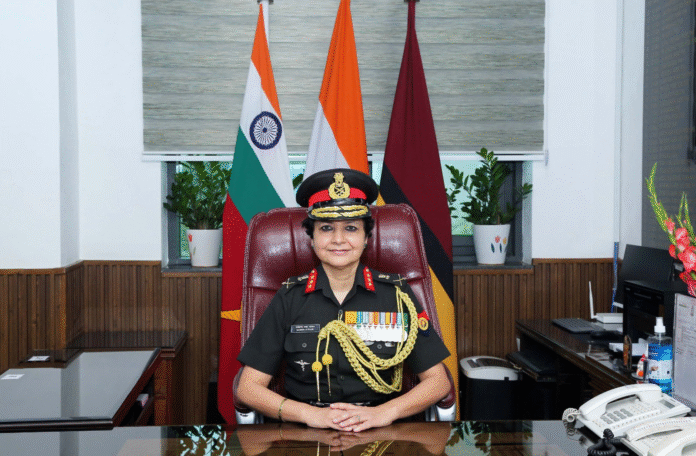
In 2025, Lieutenant General Sadhna Saxena Nair was conferred the Ati Vishisht Seva Medal (AVSM) by the President of India during the Defence Investiture Ceremony. This prestigious award recognizes her exceptional leadership, pioneering contributions to military medicine, and unwavering commitment to the welfare of soldiers across the Indian Armed Forces.

Early Life and Inspiration

Born in 1985 in Alwar, Rajasthan, Sadhna grew up witnessing her mother’s tireless work as a community health volunteer. Those early mornings spent alongside her mother’s mobile clinic instilled in her a deep sense of service and empathy. Encouraged by her family’s commitment to social welfare, she took every opportunity to tutor neighbourhood children and organise local health camps. By the time she finished high school, Sadhna was already charting a path toward public service.

Education and Formative Years

After topping her state board exams, Sadhna earned admission to the All India Institute of Medical Sciences in Delhi, graduating with an MBBS in 2008. She went on to specialise in Emergency Medicine, completing her MD in 2012. Driven by a desire to serve on the front lines, she joined the Army Medical Corps that same year. Advanced courses in disaster management, CBRN defence, and high‐altitude medicine further honed her skills for austere environments.

Military Career and Distinguished Service

Over the last decade, Colonel Nayar has held key positions across India’s most challenging terrains:

  • Medical Officer, Forward Surgical Team, 2014–2017, along India–China border. Commanding Officer, Field Medical Unit, 2018–2020, Leh and Ladakh sectors Lead Coordinator, Operation Megha Shakti (Uttarakhand floods), 2023 Medical Director, Regional Armed Forces Hospital, Pune, 2021–present. Her decisive actions in setting up makeshift hospitals on high‐altitude roads and coordinating helicopter evacuations saved hundreds of lives. She pioneered telemedicine links between remote posts and central hospitals, reducing mortality among injured soldiers by over 40 percent.

Special Service Medal: Recognition for Humanitarian Leadership

In June 2024, Sadhna Nayar was awarded the Special Service Medal by the President of India. The citation praised her “exceptional gallantry and organisational excellence” during the relentless Uttarakhand floods of 2023–24. Under her command, medical teams treated over 5,000 villagers and rescued more than 300 stranded civilians at altitudes above 3,000 metres. She became the first woman officer in her regiment to earn this honour for disaster relief operations

Family and Personal Journey

Service runs deep in the Nayar household:

  • Spouse: Major Rajesh Nayar, Infantry Regiment, veteran of counter-insurgency operations
  • Children: Aanya (10) and Arjun (7), both budding nature enthusiasts inspired by their mother’s mountain missions
  • Parents: Rekha and Harish Pratap Singh, retired teachers who fostered a love of learning and community outreach

Together, they balance postings across the country with home-schooling initiatives and local health awareness drives.

Legacy and Future Aspirations

Colonel Sadhna Nayar’s story continues to inspire young women across India to join the armed forces and pursue careers in military medicine. She is currently developing a mobile health application to deliver real-time battlefield analytics and patient tracking. Her long-term goal is to establish a network of remote telemedical outposts in India’s most inaccessible regions. As she prepares for her next deployment, her life stands as a testament to service before self and the transformative power of compassionate leadership.

“ChatGPT Cares: New Mental Health Features Aim to Help 500 Million Users Pause, Reflect, and Thrive”

0

OpenAI has introduced new mental health-focused features to its popular AI chatbot, ChatGPT. One of the notable additions is a break reminder, designed to prompt users to pause during extended sessions. If a user has been interacting with ChatGPT for over 30 minutes, the tool may suggest prompts like “Is it the right time to take a break?” The goal is to help users avoid burnout and promote healthier digital habits among its 500 million weekly users.

While OpenAI is preparing to launch its next major language model upgrade, GPT-5, the company is also placing strong emphasis on user well-being. In this spirit, ChatGPT will no longer provide simplistic yes or no answers to sensitive and emotionally complex questions related to relationships, career, or life decisions. Instead, it will offer thoughtful and balanced insights, outlining the pros and cons of different options in a calm and informative tone.

ChatGPT’s global usage has grown tremendously. The chatbot is now handling over 2.5 billion prompts every day, with 330 million of those coming from the United States alone. In December 2024, ChatGPT processed around 1 billion prompts daily, meaning usage has more than doubled in just six months. According to a report by Axios, this amounts to approximately 912.5 billion prompts annually. In comparison, Google processes around 5 trillion searches a year, or about 13.7 billion per day. These figures have been confirmed by OpenAI spokesperson Rob Friedlander.

India is one of ChatGPT’s fastest-growing markets, particularly among youth and students aged 25–34. Many are using the tool for academic assistance, homework, and simplifying complex concepts. As of now, ChatGPT has around 500 million weekly active users, up from 300 million in December 2024. Most users still rely on the free version of the platform.

India and the US each account for 16% of ChatGPT’s traffic, making them the largest user bases. Other top countries include Brazil, Canada, and France. With these new mental health features, OpenAI aims to create a safer and more supportive AI experience, while continuing to expand access and functionality across the globe.

Now, Nuclear Reactor on the Moon? Yes, NASA Plans it by 2030, says US Media

0

The United States space agency NASA is accelerating its plans to build a nuclear reactor on the Moon by 2030, as part of its broader vision to establish a permanent human base on the lunar surface. The move comes amid rising global interest in lunar exploration, with countries like China, Russia, India, and Japan also pursuing missions — some with plans for long-term settlements.

According to Politico, acting NASA Administrator Sean Duffy, appointed by President Donald Trump, cited potential geopolitical competition, warning that China and Russia could attempt to establish “keep-out zones” on the Moon. He emphasized the need to fast-track nuclear energy development for future lunar infrastructure, Mars missions, and national security in space.

In a letter to NASA, Duffy called for proposals from commercial firms to build a small reactor capable of generating at least 100 kilowatts of power — enough to support a small lunar habitat but modest compared to typical Earth-based power sources. A typical onshore wind turbine, for example, produces 2–3 megawatts.

The concept of lunar nuclear power is not new. In 2022, NASA awarded contracts to three companies to design reactor prototypes. In May 2025, China and Russia announced plans to build an automated nuclear power station on the Moon by 2035.

Many scientists argue nuclear power is essential for sustained lunar missions. The Moon experiences two-week cycles of daylight and darkness, making solar power unreliable for continuous energy needs. Dr. Sungwoo Lim from the University of Surrey said, “Nuclear energy is not just desirable, it is inevitable.”

Experts like Professor Lionel Wilson of Lancaster University believe placing reactors on the Moon by 2030 is technically feasible, provided there is adequate funding and enough Artemis launches to deploy necessary infrastructure.

However, the plan raises safety and political concerns. Transporting radioactive material into space requires strict licensing and safety protocols. Some scientists also fear the push is more political than scientific. Dr. Simeon Barber of the Open University warned that the current lunar race risks echoing the Cold War-era space race, prioritizing national interests over international cooperation and scientific discovery.

Duffy’s remarks regarding “keep-out zones” seem to reference the Artemis Accords — a 2020 international agreement signed by multiple nations to promote peaceful, cooperative exploration of the Moon, including the creation of safety zones around operational sites.

Despite recent budget cuts to NASA, including a proposed 24% reduction in 2026 affecting missions like the Mars Sample Return, the agency appears committed to advancing nuclear capabilities as a cornerstone of future space exploration.

Haat on Wheels: A New Wonder Launched on National Handloom Day…

0

Can you image a marketplace which remains on wheels, travelling from one place to another exhibiting the handmade weaves from across India leaving you spoiled for choice?

At times this might sound like a dream however this dream will turn into reality on National Handloom Day falling on August 7 as the Ministry of Textiles launched a unique mobile retail initiative — “Haat on Wheels” — at Handloom Haat, Janpath, New Delhi. 

“Haat on Wheels” is a traveling handloom marketplace showcasing 116 distinct weaves from across India, representing the country’s rich textile heritage. 

This innovative mobile haat will cover key public areas across Delhi-NCR — including markets, art zones, and residential societies — offering consumers direct access to high-quality, handmade, and sustainable handloom products. 

The initiative aligns with the government’s larger goal of empowering artisans, enhancing market access, and promoting sustainable economic growth under the theme “My Handloom, My Pride; My Product, My Pride.”

“Haat on Wheels” bridges the gap between weavers and buyers, promotes “vocal for local,” and fosters appreciation for indigenous craftsmanship in urban India, said Giriraj Singh, Union Minister of Textiles. 

Alongside the mobile initiative, an Exclusive Handloom Expo is also being held at Handloom Haat till 10 August, featuring live weaving demonstrations and retail stalls from master weavers across the country. 

The expo and mobile haat together aim to revive interest in traditional crafts, provide a boost to artisans, and ensure handloom heritage continues to thrive in modern retail and lifestyle spaces.

Hiroshima Day – August 6: Remembering and Reflecting

0

Hiroshima Day, observed annually on August 6, marks the anniversary of the first atomic bombing in human history. On that day in 1945, the United States dropped the uranium bomb nicknamed “Little Boy” on Hiroshima, instantly destroying the city and killing tens of thousands, while countless others succumbed to injuries and radiation in the following months.

The Day the World Changed Forever

At 8:15 a.m. local time, the bomb detonated approximately 600 meters overhead, unleashing the force of 12–15 kilotons of TNT. Five square miles of Hiroshima were leveled, roughly 80,000 lives were lost instantly, and by year’s end, the death toll had climbed to over 140,000.

A Ceremony of Peace and Reflection

Each year on this date, Hiroshima Peace Memorial Park hosts the official Peace Memorial Ceremony starting at 8 a.m., culminating with a one-minute silence at the exact moment of the blast – 8:15 a.m. The ceremony includes offerings of water and flowers, readings of victims’ names, and the Mayor’s Peace Declaration, followed by dove releases and children’s messages of hope.

In the evening, mourners, survivors, and visitors float paper lanterns down the Motoyasu River, echoing a tradition that began soon after the bombing: each lantern bears a message of peace or remembrance, casting a serene glow beneath the Atomic Bomb Dome.

Voices of the Hibakusha: Bearing Witness

With over 80 years passed, the number of surviving hibakusha – atomic bombing survivors – has dwindled to fewer than 100,000, with an average age in the mid‑80s. Many now speak out about their experiences, sharing first-hand sorrow, trauma, and hope for nuclear abolition. Their stories remain urgent and poignant, especially amid rising global tensions today.

One tragic example is Ayano Hirashima, a rare “double hibakusha” exposed to both Hiroshima and Nagasaki blasts. Now aged 88, she continues to bear witness and calls for a nuclear-free world.

Why This Day Remains Vital

  • Commemoration of Lives Lost
    August 6 honors the memory of those annihilated or disabled by nuclear warfare.
  • A Legacy of Warning and Peace
    The day reminds us of nuclear weapons’ immense destructive power and the moral responsibility to prevent future use.
  • A Global Call for Disarmament
    Civil society events worldwide – from school programs to NGO-led campaigns – reinforce the message: nuclear weapons must be abolished.

The 80th Anniversary: A Landmark Moment

In 2025, Hiroshima Day takes on deeper resonance as the world marks the 80th anniversary of the bombing. Hiroshima Prefecture and organisations like ICAN (International Campaign to Abolish Nuclear Weapons) are staging global educational forums and youth-focused peace programs, urging world leaders and citizens alike to confront the persistent threat of nuclear weapons