Home Blog Page 215

Rakshabandhan: Rig Veda and Vishnu Purana Also Refers to Celebrating This Sacred Bond of Social Security and Harmony

0

By Tripti Sharma

India is a land of festivals — a unique blend of tradition, culture, and values. Our festivals are not just celebrations; they are carriers of deep social and moral messages. Among them are those dedicated to sacred family bonds, which not only strengthen relationships but also nurture a sense of social security and harmony.

One such holy occasion is Rakshabandhan, the festival that celebrates the sacred relationship between a brother and a sister. It reinforces love, mutual duty, and the promise of protection.

The term Rakshabandhan literally means “the bond of protection.” On this day, a Raksha Sutra (protective thread) is tied to the wrist of someone we wish to safeguard, accompanied by heartfelt blessings. Celebrated on the full moon day of the month of Shravan, this festival is also called Shravani because the moon is in the Shravan Nakshatra.

The tradition has roots in ancient scriptures. The Rigveda describes how, during the Devasur war, Indra’s wife Shachi tied a medicinal, mantra-protected thread on Indra’s wrist, ensuring his victory and safe return to Indralok.

In its original form, Rakshabandhan symbolized mutual security and social responsibility. In the Rishi tradition, sages and Brahmins tied Raksha Sutras to their disciples. Kings going to war would receive them from their gurus for victory and safety. Even today, in some places, Brahmins wear new yagyopaveet and tie Raksha Sutras to their patrons on Shravani. The Mauli tied by priests during pujas is a continuation of this ancient custom.

The Vishnu Purana narrates another legend — Goddess Lakshmi tied a Raksha Sutra to King Bali, considering him her brother. In return, Bali released Lord Vishnu from his promise and sent him to Vaikunth with Lakshmi. This story further cemented the festival’s association with the safety, long life, and love between siblings.

Traditionally, sisters tied the Raksha Sutra not just to their biological brothers but also to men in their community, ensuring mutual respect and protection for all women. No gifts were exchanged — it was a pure celebration of love, duty, and trust.

However, over time, the festival has shifted away from its essence. Today, it is often reduced to a commercial exchange, with flashy, mass-produced rakhis and a focus on expensive gifts rather than blessings and protection. Conversations have changed from “May you be safe and blessed” to “What will you gift me this year?”. In this materialistic age, the emotional connection between brothers and sisters risks becoming a formality, weakening the sensitivity and security it once fostered.

In the present era, when society faces countless challenges, it is essential to return to the festival’s original spirit. Rakshabandhan should once again become a pledge of protection for all — the strong for the weak, the privileged for the vulnerable. It reminds us that safety is a shared responsibility of the entire community.

While celebrating, sisters must remember that the Raksha Sutra is not a mere thread — it is a priceless symbol of our glorious culture, trust, and emotional respect. It should be tied only to those who honor these values. On this day, we must vow to extend security, help, and respect not just to our family, but to every member of society. Only when every section is safe, and women everywhere are respected, can true security be achieved.

This Rakshabandhan, let us pledge to build an India where every citizen feels safe, valued, and empowered — an India that shines with the glory of its rich culture and unbreakable bonds of harmony.


Can You Switch Careers With a Data Science Course?

0

Are you wondering if it’s too late to switch your career to data science? Are you confused about starting a career in data science without a tech background? Are you tired of low growth in your current field and want to transition into the technical field? Can a data science certification course change your career path? Are you wondering why professionals are turning to data science to reignite their career growth? The data science training in Noida  is transforming careers across industries. Making a career change into data science is completely achievable.

What is the Necessity of Data Scientists Across Domains?

The need for skilled data scientists has expanded far beyond the tech sector. Data has become the backbone of decision-making. It is because businesses are now relying on data to operate as well as to compete. Here’s how data scientists add value across different domains:

  • Healthcare: Data science helps healthcare providers deliver faster and more accurate care. Hospitals and pharma companies rely heavily on analytics to streamline operations and improve patient outcomes.
  • Finance: Data helps in understanding the patterns of fraud detection, risk analysis, customer segmentation, and investment predictions. Data scientists help financial institutions make sense of massive volumes of transactions in real time. 
  • E-commerce: Data science drives critical functions in retail, such as understanding customer behavior, optimizing inventory, and forecasting demand.
  • Government sector: Data-driven insights help in policymaking, infrastructure planning, and public safety. During the pandemic, data scientists played a key role in modeling resource allocation. 
  • Media & Entertainment: Streaming platforms use data science to personalize content. It predicts viewer preferences and makes programming decisions that drive engagement.

Why Switch Careers With a Data Science Course?

Data Science Demand Is Growing Rapidly

Every sector is now driven by data-based decisions. Demand for data scientist roles remains high not only in India but also globally. Even non-technical professionals can switch if they gain skills in analysis, machine learning, and tools like Python or SQL. This trend is propelling students and mid-career professionals to opt for data science online training and roles.

A Good Data Science Training Provides Practical Foundations

A strong data science certification course includes hands-on projects and case studies. They also teach you essential data science tools like Pandas, scikit-learn, Power BI, and Tableau. This practical experience builds confidence and job readiness. The best IT training institute offers specializations and guided capstone projects tailored for career changers.

You Can Build a Portfolio That Speaks

Real projects demonstrate capability. These projects showcase skills effectively. One of the most powerful ways to break into data science, especially if you’re coming from a non-technical background, is by creating a hands-on portfolio that proves what you can do.

Start with small but meaningful projects that solve real-world problems with data science training. For example, you might analyze a company’s sales data to forecast future revenue, build a model that predicts customer churn, or create interactive dashboards using tools like Power BI or Tableau.

Switching is Possible at Any Age and Background

Professionals from HR, finance, and engineering have successfully switched to data science with the data science training. Their domain experience often gives them an analytical edge. Many learners report that age or prior career does not limit them.

Start With the Fundamentals and Stack Up

Begin with learning Python, statistics, and basic SQL with the data science certification course. Many entry-level courses help build data science fundamentals while gradually introducing techniques in machine learning and visualization. Start with Excel and Python, then advance to ML models and business language analytics

The Job Market Rewards Measurable Skills

Jobs in data science are performance-driven. Employers look for problem-solving, analytical thinking, and storytelling with data. Learning platforms are increasingly integrating professional articulation into their data science training programs. It helps learners stand out in real interviews.

Conclusion

You can switch careers into data science with the right data science course. You can qualify for junior or analyst roles with no prior data background required. Your analytical skills can shape your new career path. Ultimately, data scientists bring structure and strategy to data chaos. They not only make sense of vast, unstructured datasets but also convert them into insights that directly impact business goals. This cross-industry relevance makes data science an in-demand career path, making it one of the most strategic skills to acquire today.

Crossing New Horizons: The Rise of Innovative Casino Games and Player Strategies

0

The online casino world is evolving rapidly, introducing unique games that blend strategy, excitement, and cultural flair, much like the vibrant stories of global traditions. From narrative-driven slots to quirky crossing games, these innovations captivate players with fresh experiences. This article explores the latest trends in casino gaming, offers strategic tips for maximizing wins, and celebrates the creativity behind new formats. Whether you’re a seasoned gambler or a curious newcomer, these insights will guide you through the thrilling landscape of modern casinos.

Unique Game Formats: Redefining Casino Fun

Innovative casino games are breaking the mold, moving beyond traditional slots and table games to offer engaging mechanics like adventure-based challenges. These games combine luck with decision-making, creating dynamic experiences that keep players hooked. For instance, crossing-style games require strategic timing, much like navigating real-world obstacles.

One standout is chicken road, a game where players guide a character across a perilous path, earning multipliers with each successful move, blending casino thrills with arcade-like strategy. Try demo modes to master unique mechanics before betting real money, ensuring you understand the game’s flow.

Mobile Accessibility: Gaming on Your Terms

Mobile platforms have revolutionized casinos, with over 60% of players using smartphones for instant access to games. Apps now feature high-quality graphics, fast load times, and intuitive controls, perfect for quick sessions or immersive play. This accessibility mirrors the convenience of staying updated with global trends on the go.

Tip: Choose platforms with secure apps and test games in free mode to build confidence. Set session timers to maintain balance, ensuring your gaming remains as refreshing as discovering new cultural stories.

Gamification: Boosting Engagement with Rewards

Gamification transforms casinos by adding missions, leaderboards, and rewards, making every spin or bet feel like part of a larger quest. Players can unlock bonuses or compete in tournaments, increasing engagement by 25% according to industry data. This mirrors the excitement of celebrating milestones in vibrant communities.

Pro strategy: Focus on games with clear reward structures, like free spins or cashback, and set budgets to avoid overplaying. Explore platforms with loyalty programs to maximize value, keeping your experience fun and sustainable.

Responsible Gaming: Strategies for Sustainable Play

Responsible gaming is a growing focus, with platforms offering tools like deposit limits and self-exclusion to promote healthy habits. This trend aligns with global efforts to balance enjoyment with mindfulness, ensuring players stay in control while chasing wins.

For researchers or players, analyze how these tools impact long-term engagement. Use session trackers to monitor playtime and stick to pre-set limits, treating gaming as a joyful escape rather than a compulsion.

Top Innovative Casino Games to Explore

Here’s a table of trending games with strategic tips:

GameUnique FeaturePlayer Tips
Crossing GamesStrategy-based progressionTime moves for higher multipliers
Narrative SlotsStory-driven bonus roundsChase plot unlocks with small bets
Live PokerReal-time multiplayerStudy opponents’ patterns
Crash GamesDynamic risk-rewardCash out early to secure wins

Industry Statistics

  • Market Value: The online casino industry is worth $75 billion globally, growing at 10% annually.
  • Mobile Usage: Around 60% of players prefer mobile platforms.
  • Gamification Impact: Reward systems boost retention by 25%.
  • Responsible Tools: 30% of players use deposit limits for better control.

These stats highlight the industry’s innovative and responsible growth.

Conclusion

Innovative casino games, from crossing challenges to gamified slots, are redefining entertainment with strategic depth and accessibility. By embracing mobile platforms, reward systems, and responsible tools, players can enjoy thrilling experiences while staying in control. Whether navigating unique game mechanics or chasing big wins, approach with strategy and mindfulness for a rewarding adventure. Dive into the action and let the excitement unfold responsibly!

Dubai Rent a Car Solutions for Business and Travelers

0

When visiting a vibrant and sprawling city like Dubai, having your own mode of transportation isn’t just a luxury—it’s a practical necessity. Public transport is reliable but limited, and taxis can add up quickly if you’re staying for more than a few days. That’s where Dubai rent a car services shine. Whether you’re a tourist, a business traveler, or a resident, renting a car in Dubai gives you the freedom to explore on your own terms.

Why Renting a Car in Dubai Makes Sense

Dubai is known for its wide roads, luxurious lifestyle, and state-of-the-art infrastructure. Driving in the city is a smooth experience thanks to excellent road conditions and clear signboards in both Arabic and English. Whether you’re commuting to work, heading out to Jumeirah Beach, or planning a road trip to the mountains of Hatta, having your own vehicle provides unmatched convenience.

Moreover, fuel prices in the UAE are relatively affordable compared to many Western countries, which adds more value to renting a car in Dubai.

A Car for Every Budget and Need

Dubai’s rental market is incredibly diverse. You’ll find everything from affordable hatchbacks and sedans to high-end sports cars and luxury SUVs. This variety makes it easy to find a car that suits your budget and your purpose.

If you’re here for business meetings, a premium car like a Mercedes-Benz or Audi may reflect your professional image. For a more economical choice, compact models from Nissan or Toyota are perfect for daily commuting around the city.

Rent with Confidence from Trusted Platforms

Booking your rental car is now easier than ever. Reputable platforms like OneClickDrive allow users to compare prices and features from different car rental agencies across Dubai, all in one place. You can choose based on location, pricing, model availability, and even rental terms. Transparency and simplicity make the experience hassle-free.

Additionally, most rental services offer comprehensive insurance, 24/7 roadside assistance, and flexible pickup/drop-off options—including airport services.

Requirements for Renting a Car in Dubai

Renting a car in Dubai is straightforward, but there are some rules you’ll need to follow:

  • Age Limit: You must be at least 21 years old (some luxury cars require renters to be 25+).
  • Driving License: UAE residents need a valid UAE driving license. Tourists can use an International Driving Permit (IDP) with their home country’s license.
  • Documents: Emirates ID or Passport, Visa, and valid credit card are typically required.

Make sure you check with your rental company regarding deposits, insurance coverage, and mileage limits before signing the contract.

Rent a Car for a Day, a Week—or Longer

You can rent a car in Dubai for as little as one day or extend it for weeks or even months. Short-term rentals are ideal for tourists and business travelers, while long-term rentals provide excellent value for expats, seasonal workers, and residents.

In fact, Dubai car rental monthly plans are gaining popularity among residents who want the flexibility of a car without the commitment of ownership. These monthly plans often come with discounted rates, routine maintenance, and zero depreciation worries, making them a practical choice for many.

Enjoy the City at Your Own Pace

Whether you’re driving along the Sheikh Zayed Road, exploring the souks in Deira, or planning weekend escapes to Abu Dhabi or Ras Al Khaimah, renting a car gives you the freedom to move at your own pace. You’re not tied to public transport schedules or restricted by the availability of taxis.

Plus, you get to enjoy the privacy and comfort of your own vehicle—a real luxury in a bustling city.

Final Thoughts

Dubai rent a car services offer unmatched convenience, flexibility, and affordability. With options ranging from economy cars to luxury rides, and flexible daily, weekly, or Dubai car rental monthly packages, there’s a solution for every need. So whether you’re here for work, play, or an extended stay, renting a car in Dubai is the key to experiencing the city in full comfort and control.

No Wi-Fi, No Problem: This Incredible SECMOL School in Ladakh Teaches Through Living. Watch in Video

0
oplus_131072

By Lakshya Govani

Hello everyone!

Today, I’m excited to tell you about a very special school—one that’s far away from the noise of the city and the rush of modern life. Before I dive in, let’s think about the typical schools we all know. They usually teach us about technology, human behavior, and other academic subjects, right? But this school is quite different—and in a wonderful way!

I’m talking about the SECMOL campus in Ladakh, located miles away from the main city of Leh. It’s so remote that there’s barely any network coverage. But that’s what makes it unique! Here, students learn to live and work without relying on the internet or modern gadgets. Instead, they focus on learning through real-life experiences.

At SECMOL, every student follows a fixed routine and takes part in daily activities. It’s not just about studying and going home—it’s about living, learning, and growing together. Students are assigned different responsibilities like cooking, farming, laundry, managing storage, and even welcoming visitors. They learn by doing, and that makes all the difference.

And here’s a fun fact! The team behind the movie “3 Idiots” actually visited this school to request permission to shoot there—but the school politely said no. Why? To keep the environment natural and undisturbed. Pretty cool, right?

There’s also a stable with cows and horses, which the students take care of themselves. What really stood out to me was how dedicated and joyful the students were while doing their tasks. They truly enjoy what they do—and it shows!

No Wi-Fi, No Problem: This Incredible SECMOL School in Ladakh Teaches Through Living. Watch in Video
oplus_131104

The school was founded by Sonam Wangchuk, a visionary and the real-life inspiration behind the character “Rancho” in “3 Idiots”. His mission is to make learning fun, practical, and meaningful. You can even see his first car on display at the campus, along with traditional Ladakhi clothes and farming tools!

SECMOL is more than a school—it’s a way of life. It teaches students how to be self-reliant, confident, and curious, making education a part of everyday living. It’s truly a place where learning comes alive!

Quit India Movement – The Spark that Ignited India’s Final March to Freedom

0

On 8th August 1942, the Quit India Movement became one of the boldest chapters in India’s freedom struggle. Launched by Mahatma Gandhi in Mumbai during a meeting of the All India Congress Committee, it was not just a protest – it was a clarion call for complete and immediate independence from British colonial rule. This movement marked a turning point, as it united millions of Indians in a decisive push toward freedom.

Background – A Nation’s Patience Runs Out
Before 1942, India had already witnessed waves of protests, civil disobedience, and reformist struggles. However, World War II changed the political landscape. The British had dragged India into the war without consulting Indian leaders, promising little in return for Indian support. The failure of the Cripps Mission in March 1942 – sent by Britain to negotiate terms for self-governance – further deepened public frustration. People realized that partial reforms and promises were not enough; the time had come for a final, all-out demand for independence.

The Launch – Gandhi’s ‘Do or Die’ Call
On the evening of 8th August 1942 at Mumbai’s Gowalia Tank Maidan (now August Kranti Maidan), Gandhi gave his historic speech, famously urging Indians to “Do or Die” in the quest for freedom. The call was clear: the British must quit India immediately, and the people must be prepared for any sacrifice necessary to achieve this goal. The movement was to be non‑violent, but it demanded uncompromising determination.

Nationwide Uprising and Repression
Within hours of the announcement, British authorities arrested Gandhi, Jawaharlal Nehru, Sardar Patel, and other top Congress leaders to crush the movement at its roots. But the arrests had the opposite effect – they ignited a spontaneous wave of protests across the country. Students boycotted classes, workers went on strike, and rural communities disrupted railways and communication lines. Though Gandhi had called for non‑violence, in some places anger boiled over, leading to clashes, police firing, and destruction of government property.

Impact on the Freedom Struggle
The Quit India Movement may not have achieved immediate independence – British repression was swift and brutal – but it accomplished something equally significant: it broke the myth that British rule could last forever. The movement demonstrated the unity and resolve of Indians, cutting across regional, religious, and social lines. It also signaled to the world, especially to a war‑weary Britain, that India would not settle for anything less than complete freedom.

The Road to Independence
Although it took five more years for India to finally achieve independence on 15th August 1947, the Quit India Movement of 1942 acted as the final mass awakening. It weakened Britain’s grip politically, economically, and morally. When World War II ended in 1945, Britain faced immense pressure at home and abroad to decolonize. By then, the Quit India uprising had ensured that the demand for independence was irreversible.

Conclusion
The Quit India Movement was more than a protest—it was a mass awakening that transformed the independence struggle into an unstoppable force. Gandhi’s “Do or Die” call still echoes as a reminder of the power of collective action and the courage of ordinary people. It stands as one of the most inspiring episodes in India’s journey toward freedom.

Who Are the Top‑Paid Senior Executives in India in FY 25 as Highest Salary Hits ₹148 Crore?

0

Corporate India is continuing a trend of lavish compensation at the top, with FY 2025 seeing a select group of senior executives cross the ₹100‑crore mark. At the top stands Sandeep Kalra, the CEO & Executive Director of Persistent Systems, whose total compensation reached approximately ₹148.09 crore during FY 25.

Leading the Pack

  1. Sandeep Kalra (Persistent Systems) – ₹148.09 crore
    Under his leadership, Persistent Systems delivered remarkable stock performance in recent years. This pay package firmly places him as India’s highest‑paid corporate executive in FY 25.
  2. Pawan Munjal (Hero MotoCorp) – ₹109.41 crore
    The Executive Chairman of Hero MotoCorp earned over ₹109 crore in FY 25, consolidating his status as the best‑paid executive in India’s auto sector.
  3. Rajeev Jain (Bajaj Finance) – ₹102.10 crore
    As Executive Vice Chairman, Rajeev Jain crossed the ₹100 crore threshold for the second consecutive year, reflecting Bajaj Finance’s robust growth.
  4. C Vijayakumar (HCLTech) – ₹94.6 crore
    The highest‑paid executive in the Indian IT sector for FY 25, his package included base salary, performance bonuses, and RSUs. His total compensation rose from about ₹84 crore the previous year.
  5. Murali K Divi (Divi’s Laboratories) – ₹88.15 crore
    The MD of Hyderabad‑based API maker Divi’s Laboratories benefited from a sizeable profit‑linked bonus, resulting in a nearly 38% increase over the previous year.
  6. Salil Parekh (Infosys) – ₹80.62 crore
    Infosys CEO Salil Parekh saw a 21.7% rise in compensation, of which nearly ₹50 crore came through exercised stock options. His total reached approximately ₹80.6 crore in FY 25.
  7. S. N. Subrahmanyan (Larsen & Toubro) – ₹76.25 crore
    Since taking over in 2017, SN Subrahmanyan has steered L&T across infrastructure and technology domains. His FY 25 payout rose by nearly 50% over the prior year.

Broader Perspective

  • The average CEO compensation across listed Indian companies in FY 24 was just ₹7.2 crore. These top executives earn multiples of that average, reflecting corporate ambition and performance incentives.
  • While IT sector leaders like Vijayakumar and Parekh earn lavish packages, remarkable pay levels also come from financial services, automotive, pharmaceuticals, and engineering conglomerates.

What’s Behind These Astronomical Pay Packages?

  1. Performance‑Linked Bonuses and Stock Awards: A significant chunk of these packages comes from performance bonuses and long‑term stock-based incentives, rewarding value creation and shareholder returns.
  2. High‑Growth Businesses: These executives lead companies that have delivered strong financial performance, often expanding rapidly in global markets, be it in fintech, APIs, or engineering services.
  3. Board Governance and Peer Benchmarks: Compensation committees are benchmarking packages against global peers, especially in publicly listed firms, ensuring Indian CEOs stay competitive.
  4. Retention Strategy: With global demand for leadership talent rising, companies are using hefty packages to retain and motivate key executives.

Conclusion

In FY 25, Sandeep Kalra made headlines as the top‑paid executive in India with an astounding ₹148 crore package, far ahead of his peers. Close behind are top performers in consumer finance, IT, pharma, and infrastructure. These compensation figures reflect both individual leadership and the rapid growth dynamics of their industries. As boards increasingly tie pay to performance, it’s likely that next year’s list will feature similar high‑value packages as companies seek to reward and retain effective leadership.

Monsoon Session 2025: Why Are We Debating The Past Instead of Buiding The Future

0

By Teeshtha Bhavsar

This year’s Monsoon Session of Parliament has once again made me question—are we really focusing on the issues that matter to the common people?

The Parliament is supposed to be a place where the government and opposition work together to solve the country’s real problems. But in 2025, this precious time is being wasted in endless debates over Operation Sindoor—an operation that happened months ago and has already been explained in detail by the government.

The session started on 21st July 2025, with Prime Minister Narendra Modi’s address, where he proudly talked about Operation Sindoor as a national achievement. After that, Defence Minister Rajnath Singh, Home Minister Amit Shah, and External Affairs Minister S. Jaishankar gave detailed briefings on the operation’s objectives, execution, and outcomes. Jaishankar also clarified all the rumours regarding foreign involvement, including Trump’s ceasefire claims.

Still, the opposition kept insisting on more debates. As a result, on 28th July, the Lok Sabha spent 16 long hours discussing Operation Sindoor. The very next day, 29th July, the Rajya Sabha also wasted another 16 hours on the same topic. I wonder, how much more explanation do we need when the operation is already completed and the facts are on record?

Being a student and a literate citizen of India, I feel that Parliament’s time should be spent discussing the current challenges of the country, not reliving the past.

Do you know that in 2024, only three Parliament sessions were held? And now, in 2025, there are only two sessions—the Budget Session (which is necessary for financial policies) and this Monsoon Session, which is being spent on repetitive debates. Where is the discussion on inflation that’s rising every month? Why isn’t unemployment being discussed when thousands of youth are still waiting for job opportunities?

We should also be discussing the economic challenges India is facing due to international factors, like Donald Trump’s recent trade policies affecting India’s export sector. But instead, we are stuck in a loop debating over an operation that has already been concluded months ago.

It’s not that Operation Sindoor wasn’t important, but once the government has explained everything and ministers have been accountable, continuing the debate is nothing but a waste of precious Parliament time.

We only have limited days when Parliament can function. This time should be used to draft solutions, pass bills, and debate policies that can bring real change.

India’s Parliament should focus on issues like inflation, unemployment, education reforms, women’s safety, healthcare, and climate change. These are the topics that matter to the youth and the future of the nation.

In the end, I just want to say—Parliament sessions are not for reliving the past but for building the future. If we continue wasting time in repetitive political arguments, we are delaying progress and ignoring the real problems of society.

Monsoon Session 2025: Why Are We Debating The Past Instead of Buiding The Future

The Writer is Teeshtha Bhawsar, BA Economics Honours (Part 1), Kanoria PG Mahila Mahavidhyalaya, Jaipur

MP’s Golden Pulse: Sleemanabad Ignites a Mineral Revolution!” With copper, silver, and gold in its veins, Sleemanabad becomes the heartbeat of industrial growth.

0

In a landmark development set to reshape the economic and industrial landscape of Madhya Pradesh, a rich deposit of gold ore has been discovered across 6.51 hectares in Sleemanabad’s Imalia village. With an estimated yield of 3.4 tonnes of pure gold along with copper, lead-zinc, and silver, this revelation heralds a new chapter in India’s mineral legacy.

A Leap Toward Sustainable Mining

On September 21, 2020, the Madhya Pradesh Mineral Department granted a 50-year mining lease for the site, encompassing six key survey numbers. The project, entrusted to Mumbai-based Prospect Resources Private Limited, received its mining plan approval from the Central Ministry of Mines on August 23, 2023. Annual projections suggest production of over 33,000 tonnes of valuable ore, blending economic ambition with environmental responsibility.

Economic Ripple Effects

The implications for the state are both vast and promising:

  • Employment Surge: The project is expected to create direct and indirect job opportunities, uplifting local communities through industrial engagement.
  • Industrial Ecosystem: Ancillary industries centered around mineral processing and logistics are anticipated to bloom, attracting innovation and investment.
  • Infrastructure Boost: Economic activity will likely pave the way for upgraded roads, enhanced electricity access, and better community services.
  • GDP Growth: Madhya Pradesh’s contribution to national economic figures is poised for a noticeable surge, anchoring the state as a mineral powerhouse.

Adding to a Golden Legacy

Sleemanabad, already known for its diamond potential, now joins India’s prestigious mining timeline alongside Karnataka’s Kolar and Hatti Gold Fields. This discovery not only enriches the region’s natural wealth but also deepens its cultural and historical identity as a cradle of valuable resources.

Green Mining on the Horizon

Prospect Resources aims to integrate sustainable methodologies in its operations, ensuring minimal ecological impact and responsible extraction practices. From tech-driven safety measures to community inclusion, the project could set new standards for ethical mining across the country.

Not Just a Bodyguard: The Untold Story of India’s Elite Woman Protector

0

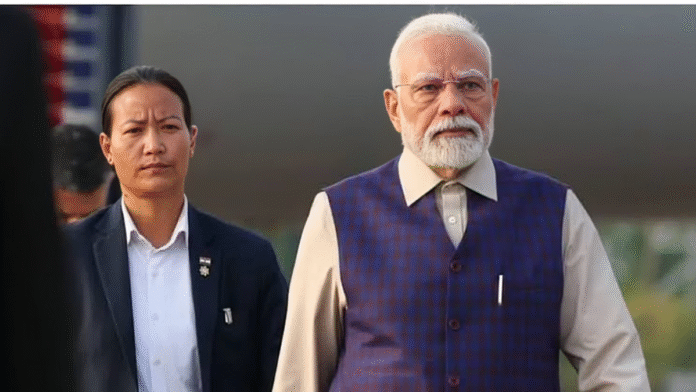
In the highlands of Manipur, where tradition meets quiet ambition, a young girl once watched border patrols through fog-laced mornings, dreaming not of princesses or podiums—but of purpose. That girl, Adaso Kapesa, would go on to guard one of the most powerful figures in the country, becoming India’s first female SPG bodyguard to the Prime Minister.

Roots of Resolve: The Girl from Kaibi

Born in Kaibi village, tucked within Senapati district, Adaso’s childhood was shaped by nature’s embrace and a deep sense of community. Her early days were far from the glitz of Delhi, yet her aspirations roared beneath her quiet demeanor. Discipline and service weren’t taught—they were lived.

Marching into the Forces: Her First Step Toward Legacy

Her journey into uniform began with the Sashastra Seema Bal (SSB), where she proved that leadership has no gender. Posted at the 55th Battalion in Pithoragarh, her sharpness in operations and deep focus quickly earned her respect—not as a woman in the force, but as a force herself.

Breaking Protocol: A Woman in the SPG

The Special Protection Group (SPG) demands elite precision. Entry is rare, retention rarer. Adaso rose through its rigorous training, its endless drills, and its mental tests with a calm so powerful it became her signature. She wasn’t just joining ranks—she was rewriting the rules. During PM Narendra Modi’s UK visit, her presence at his side made headlines, not for theatrics, but for her quiet composure. The nation saw a woman in black glasses and bulletproof gear—and saw strength without spectacle.

Power in Precision: What Made Her Different

What distinguished Adaso wasn’t just physical prowess. It was her emotional resilience, her quick reflexes, and her ability to stay poised when surrounded by chaos. In the SPG, strength isn’t just about muscle—it’s about mental clarity. And hers was crystalline.

Changing the Narrative: A Role Model in Action

Adaso’s story isn’t only hers. It’s for every girl in every remote village who’s told her dreams are too big, too bold. She didn’t ask for permission—she earned her place. And she became more than a bodyguard—she became a symbol of possibility.

Legacy in Motion: Not Just a Role, but a Message

Even today, as she quietly continues her duties, her presence speaks volumes. She’s become an unwritten chapter in India’s evolving story of women in uniform—living proof that duty, strength, and national service are not bound by gender.