The ongoing India–U.S. trade dispute has intensified after Washington announced a 25% penalty tariff on Indian goods in response to New Delhi’s continued imports of Russian crude oil. The move follows the collapse of Free Trade Agreement (FTA) talks and earlier reciprocal tariffs imposed by the United States. The penalty tariffs are set to take effect from August 27.
Background
On August 6, the U.S. declared new tariffs targeting Indian exports linked to Russian oil purchases. This came after a 25% reciprocal tariff on Indian goods from August 7, following failed FTA negotiations. Washington aims to pressure India into cutting Russian oil imports amid Western sanctions on Moscow.
India’s Reaction
The Ministry of External Affairs condemned the U.S. action as unfair and selective, pointing out that both the U.S. and European Union continue certain trade activities with Russia. Prime Minister Narendra Modi vowed to protect national interests, even at personal political cost, and assured support for farmers and exporters affected by the dispute. India has not yet announced retaliatory tariffs.
India’s Reliance on Russian Oil
Since the Ukraine conflict in 2022, Russian oil has become crucial for India, supplying over 35% of its crude by mid-2023. Indian refiners benefit from discounted prices, saving billions annually. Investments also tie Indian firms to Russian oil production and refining, making a sudden reduction economically and politically challenging.
Diplomatic Path Ahead
U.S. President Donald Trump is scheduled to meet Russian President Vladimir Putin on August 15, a development that could influence tariff decisions. American negotiators are also due to visit India later this month to explore a possible mini-trade agreement. India faces a strategic choice between maintaining Russian oil imports or offering trade concessions to retain U.S. market access.
Impact and Implications
The dispute is straining decades of cooperation in defence, technology, and strategic affairs. U.S. tariffs threaten key Indian export sectors like garments and textiles, as buyers may shift to tariff-free suppliers. The standoff underscores India’s challenge in balancing relations with both Washington and Moscow while safeguarding energy security and strategic autonomy in a volatile geopolitical environment.
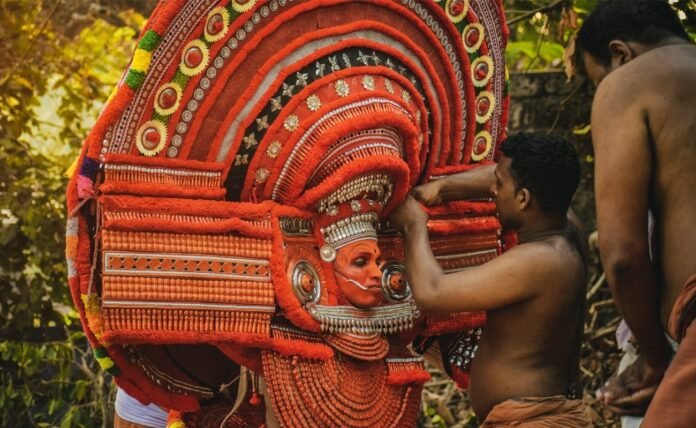
The Sacred Dance of Adi Vedan Theyyam: A Monsoon Legacy of kerala’s malabar In the heart of Kerala, the vibrant cultural tapestry of Malabar comes alive during the monsoon month of Karkadakam (July-August) with the mesmerizing ritual of Adi Vedan Theyyam. Far beyond its vivid colors, elaborate costumes, and dramatic performances, this sacred art form carries profound spiritual and symbolic significance, rooted in Hindu mythology. Celebrated for its ability to usher in prosperity and ward off malevolent forces, Adi Vedan Theyyam is a cherished tradition that resonates deeply with the agrarian communities of northern Kerala during the challenging monsoon season.
A Mythological Tapestry The Origins of Adi Vedan Theyyam
The essence of Adi Vedan Theyyam is drawn from the Van Parva of the Mahabharata, a timeless epic that weaves tales of devotion, valor, and divine intervention. In this narrative, Lord Shiva and Goddess Parvati disguise themselves as a tribal couple to test the unwavering devotion of Arjuna, one of the Pandava brothers. The story unfolds with a demon named Mookasura, who, taking the form of a wild boar, attacks Arjuna. Both Arjuna and Shiva, in his hunter guise, simultaneously strike the beast, leading to a fierce confrontation between the two.Unable to overpower the mysterious hunter, Arjuna, in an act of humility and devotion, worships a clay idol of Shiva. This act reveals the divine identity of his opponent. Moved by Arjuna’s piety and bravery, Lord Shiva blesses him with the powerful Pashupatastra, a celestial weapon. In the ritual of Adi Vedan Theyyam, Shiva and Parvati manifest as Vedan and Adi, respectively, embodying the divine couple’s sacred bond and their role as protectors and benefactors.
The Ritual in Monsoon’s Embrace
Performed during Karkadakam, the final month of the Malayalam calendar, Adi Vedan Theyyam holds special significance for Malabar’s agrarian communities. This period, marked by heavy rains and economic hardship, is transformed by the ritual’s promise of abundance and protection. The performers, often children aged five to twelve from the Malaya and Vannan communities, take on the roles of Vedan (Shiva) and Adi (Parvati). In Kasaragod, a third character, Galinjan, representing Arjuna, may also appear, adding depth to the performance.The ritual unfolds in the rain-soaked courtyards of northern Kerala, where these young performers, adorned in vibrant costumes and intricate makeup, embody divine figures. The performance can take the form of a solo act, symbolizing Ardhanarishwara (the composite form of Shiva and Parvati), or a paired performance, with Vedan followed by Adi. As they visit households, their movements and chants weave ancient stories into the present, invoking blessings and reinforcing cultural continuity.
Symbolism and Cultural Significance
Adi Vedan Theyyam is more than a performance; it is a living bridge between mythology and modern life. The involvement of children as performers underscores purity and innocence, amplifying the ritual’s sanctity. Their portrayal of divine figures symbolizes the transmission of tradition across generations, ensuring that the stories of devotion, courage, and divine grace endure.The ritual’s vibrant costumes, rhythmic movements, and evocative music create an immersive experience that transcends mere spectacle. It is a celebration of resilience, community, and faith, offering solace during the monsoon’s trials. By invoking Shiva and Parvati, the ritual reaffirms the belief in divine protection and the triumph of good over evil, resonating with the spiritual aspirations of Malabar’s people.
Preserving a Sacred Legacy
In the lush, rain-drenched landscapes of northern Kerala, Adi Vedan Theyyam stands as a testament to the region’s rich cultural heritage. It is a reminder of the power of storytelling, where ancient myths are not merely recounted but brought to life through ritual and performance. As young performers don their sacred roles, they carry forward a tradition that binds communities, invokes divine blessings, and celebrates the enduring spirit of Malabar.For those seeking to experience the magic of Adi Vedan Theyyam, it is an invitation to delve into the heart of Hindu mythology, where every gesture, color, and chant tells a story of devotion and divinity. Through this sacred dance, Malabar’s monsoon becomes a season not just of rain but of renewal, hope, and timeless tradition.
In the thick of the COVID-19 crisis, Aparna was saving lives as a government doctor at Malappuram District Hospital. But beneath the stethoscope beat the heart of a dreamer—one who had long envisioned herself in khaki. While most of her peers pursued MD degrees, Aparna chose a radically different path: the Indian Police Service.
Her decision was met with skepticism. Friends and relatives questioned her choice. But Aparna didn’t flinch. She began preparing for the UPSC exam from home, relying solely on online resources. No coaching centers. No shortcuts. Just sheer determination.
Cracking UPSC Without Coaching: A First Attempt Victory
Aparna’s dedication paid off when she secured an impressive 475th rank in her very first attempt. Her success wasn’t just personal—it was historic. She became the first woman IPS officer from Malappuram, a district known more for its conservative leanings than for producing female officers. Her training at the Sardar Vallabhbhai Patel National Police Academy in Hyderabad was rigorous, but Aparna thrived. She emerged not just as a competent officer, but as a symbol of resilience and quiet revolution.
Leading with Empathy: Station House Officer at Bekal
Today, Aparna serves as the Station House Officer (SHO) at Bekal, in Kasaragod district. Her leadership style is marked by empathy, especially toward women. She believes that female officers bring a unique sensitivity to policing, particularly in cases involving domestic abuse, harassment, and gender-based violence. Her presence has already made a difference—locals praise her for being approachable, decisive, and deeply committed to justice.
A Role Model for Young Women Across India
Aparna’s journey—from a hospital ward to the police station—is more than a career switch. It’s a clarion call to young women across India: dream boldly, defy expectations, and serve with courage. She continues to advocate for more women in the police force, emphasizing that representation matters—not just in numbers, but in impact.
Guwahati’s Lokpriya Gopinath Bordoloi International Airport has brought international acclaim to India by winning the International Architectural Award 2025 in the Transport category. The newly unveiled Terminal 2 is not just an architectural achievement—it’s a soulful blend of sustainability, innovation, and Assamese cultural expression. Designed by NUDES, led by architect Nuru Karim, with landscape design by Hemali Landscape Design Studio, the terminal reflects a deep reverence for nature and tradition.
Inspired by Assam’s Natural Beauty
Terminal 2’s design draws inspiration from the foxtail orchid, Assam’s state flower, and bamboo, a symbol of strength and eco-conscious living. These elements are not merely decorative—they shape the terminal’s identity. Traditional Assamese motifs like the Jaapi and Gamocha are subtly embedded into the architecture, creating a space that feels both futuristic and familiar. The terminal stands as a tribute to Assam’s rich heritage, offering travelers a visual and emotional connection to the land.
A Green Gateway with Smart Features
Terminal 2 is a benchmark in sustainable airport design. Its open layouts and skylights allow natural light to flood the interiors, reducing energy consumption and enhancing passenger comfort. The ‘arrival forest’, a lush landscaped zone, welcomes travelers with tranquility and a sense of place. Inside, green walls, indoor gardens, and eco-friendly systems like solar panels, rainwater harvesting, and water recycling make the terminal one of India’s most environmentally conscious transport hubs.
Technologically, the terminal is future-ready. It features Digi Yatra e-gates, CT baggage scanners, and Fast Track Immigration, ensuring a seamless and efficient travel experience. With the capacity to handle 13.1 million passengers annually, it includes 42 check-in counters, 10 contact gates, 5 baggage belts, and can manage up to 34 air traffic movements per hour.
More Than a Terminal : A Cultural Landmark
Terminal 2 is not just a gateway to Northeast India—it’s a civic landmark that celebrates regional identity on a global stage. By blending ecological design with cultural storytelling, it sets a new standard for how infrastructure can reflect the soul of a place. For Assam and the entire Northeast, this terminal promises enhanced tourism, trade, and connectivity, while offering travelers a sensory introduction to the region’s spirit. With every arrival, passengers are greeted by the fragrance of Assam’s forests and the grace of its flowers. With every departure, they carry a piece of its soul. Guwahati’s Terminal 2 is where architecture meets emotion—and where travel becomes a celebration of heritage
In a major push to modernize India’s rail infrastructure and boost domestic tourism, Prime Minister Narendra Modi today flagged off three new Vande Bharat Express trains, including a landmark route connecting Punjab to Jammu & Kashmir. Among the newly launched services, the Katra–Amritsar Vande Bharat Express stands out for linking two of India’s most revered pilgrimage destinations—Shri Mata Vaishno Devi in Katra and the Golden Temple in Amritsar.
Pilgrimage Meets Progress: Katra–Amritsar Route
The Katra–Amritsar Vande Bharat Express will operate six days a week, excluding Tuesdays, and promises a swift, comfortable journey with stops at Jammu, Pathankot Cantt, Jalandhar City, and Beas. The train departs from Katra at 6:40 AM and reaches Amritsar by 12:20 PM, while the return journey begins at 4:25 PM from Amritsar, arriving in Katra by 10 PM. This route is expected to benefit lakhs of pilgrims annually, making spiritual travel more accessible and efficient. As PM Modi noted, “The new Vande Bharat train services will benefit lakhs of devotees and promote tourism”
Tourism Transformation Across India
With 144 Vande Bharat trains now operational across India’s electrified broad-gauge network, the impact on tourism has been profound. These semi-high-speed trains offer: Faster travel with reduced journey times by up to 45% Enhanced safety features like the Kavach collision avoidance system Modern amenities including ergonomic seats, CCTV surveillance, and Divyangjan-friendly toilets. A smoother ride experience with automatic plug doors and sealed gangways. In 2024–25 alone, over 3 crore passengers traveled on Vande Bharat trains, with nearly 93 lakh using the service between April and June 2025—a testament to their growing popularity among tourists and pilgrims alike.
Connecting Culture, Commerce, and Communities
Beyond religious tourism, the new routes—such as Ajni (Nagpur)–Pune and Bengaluru–Belagavi—are opening up avenues for trade, education, and regional exploration. The Ajni–Pune service, India’s longest Vande Bharat route, spans 881 km and is expected to benefit students, professionals, and entrepreneurs.
Aatmanirbhar Bharat on Track
Designed and manufactured under the ‘Make in India’ initiative, Vande Bharat trains symbolize India’s engineering excellence and self-reliance. Their expansion reflects a broader vision of inclusive growth, connecting remote regions and cultural hubs with speed, safety, and style. As India’s railways race ahead, Vande Bharat is not just a train—it’s a movement. A movement that’s reshaping how India travels, discovers, and celebrates its rich heritage
In a historic stride toward maritime self-reliance, the Indian Navy is set to commission two advanced indigenous stealth frigates—INS Udaygiri and INS Himgiri—on August 26 at the Naval Dockyard in Visakhapatnam. This marks the first-ever simultaneous induction of major surface combatants built by two separate Indian shipyards, a proud moment under the banner of the ‘Aatmanirbhar Bharat’ initiative.
Meet the Frigates: INS Udaygiri and INS Himgiri
INS Udaygiri (F35): Built by Mazagon Dock Shipbuilders Limited (MDL), Mumbai, it is the second ship in the Project 17A series and the 100th vessel designed by the Navy’s Warship Design Bureau.
INS Himgiri (F34): Constructed by Garden Reach Shipbuilders & Engineers (GRSE), Kolkata, it is the first of the Project 17A ships from GRSE and a reincarnation of the original INS Himgiri, a Leander-class frigate decommissioned in 2005.
Project 17A: A Quantum Leap in Naval Engineering
These frigates are part of the Nilgiri-class under Project 17A, a follow-on to the Shivalik-class, but with significant upgrades.
These Nilgiri-class frigates, part of Project 17A, represent a significant upgrade over their predecessors. With a displacement of approximately 6,700 tonnes—about 5% larger than the Shivalik-class—they feature a sleeker hull design that enhances stealth by reducing radar cross-section. Powered by a Combined Diesel or Gas (CODOG) propulsion system, they utilize controllable-pitch propellers for improved maneuverability and efficiency. The ships are equipped with an Integrated Platform Management System (IPMS), allowing for advanced automation in machinery control and operational management. Their formidable weapon suite includes supersonic surface-to-surface missiles, medium-range surface-to-air missiles, a 76 mm medium-range gun, close-in weapon systems of 30 mm and 12.7 mm caliber, and state-of-the-art anti-submarine warfare capabilities. Together, these features make INS Udaygiri and INS Himgiri powerful, versatile assets in India’s naval arsenal.
Strategic Capabilities and Blue-Water Readiness
Designed for multi-mission operations in blue-water environments, these frigates are capable of countering both conventional and asymmetric threats. Their versatility makes them ideal for surveillance, escort duties, and combat operations across India’s maritime interests.
Built by India, for India
The construction of these warships involved over 200 MSMEs, generating approximately 4,000 direct and 10,000 indirect jobs. With 75% indigenous content, they stand as a testament to India’s growing defense manufacturing ecosystem.
A Ceremony Beyond Tradition
The commissioning ceremony will be more than a naval ritual—it will be a celebration of India’s engineering excellence, strategic foresight, and unwavering commitment to self-reliance. As the grey hulls of Udaygiri and Himgiri join the fleet, they send a clear message: India’s oceans are guarded by ships built in India, designed by Indians, and crewed by Indians.
Global electric vehicle giant Tesla is set to open its second showroom in India today, marking a significant step in its growing footprint across the country. Following the successful debut of its first showroom in Mumbai on July 15, Tesla will unveil its latest facility at 11 AM in the upscale Worldmark 3 complex, located in the bustling Aerocity district of New Delhi. The new showroom will serve as both a display hub and a customer interaction center, offering visitors a firsthand experience of Tesla’s cutting-edge technology and design. The highlight of the launch is the showcase of Tesla’s popular Model Y, which will be available in two distinct variants tailored for the Indian market.
Model Y Takes Center Stage
Tesla’s Model Y, known for its sleek design, long-range capabilities, and advanced autonomous features, will be the centerpiece of the New Delhi showroom. The two variants—Standard Range and Long Range—are expected to cater to both urban commuters and long-distance travelers, reflecting Tesla’s commitment to sustainable mobility.
Strategic Location for Broader Reach
Situated in Aerocity, one of New Delhi’s most prominent commercial hubs, the Worldmark 3 complex offers strategic proximity to the Indira Gandhi International Airport and major business districts. This location is expected to attract a diverse clientele, from tech-savvy professionals to environmentally conscious consumers.
Customer Engagement and Experience
Beyond vehicle display, the showroom is designed to function as an immersive customer engagement space. Visitors will have access to Tesla’s product specialists, interactive demos, and digital configurators to personalize their vehicles. The facility also aims to educate potential buyers about Tesla’s vision for clean energy and autonomous driving.
Tesla’s Growing Commitment to India
With the launch of its second showroom, Tesla signals a deeper commitment to the Indian market, which is witnessing a surge in demand for electric vehicles. Industry experts view this expansion as a precursor to broader initiatives, including potential manufacturing and R&D investments in the country. As the doors open in New Delhi, Tesla continues to drive forward its mission of accelerating the world’s transition to sustainable energy—one showroom at a time.
India proudly hosts the world-class beauty pageant in Jaipur
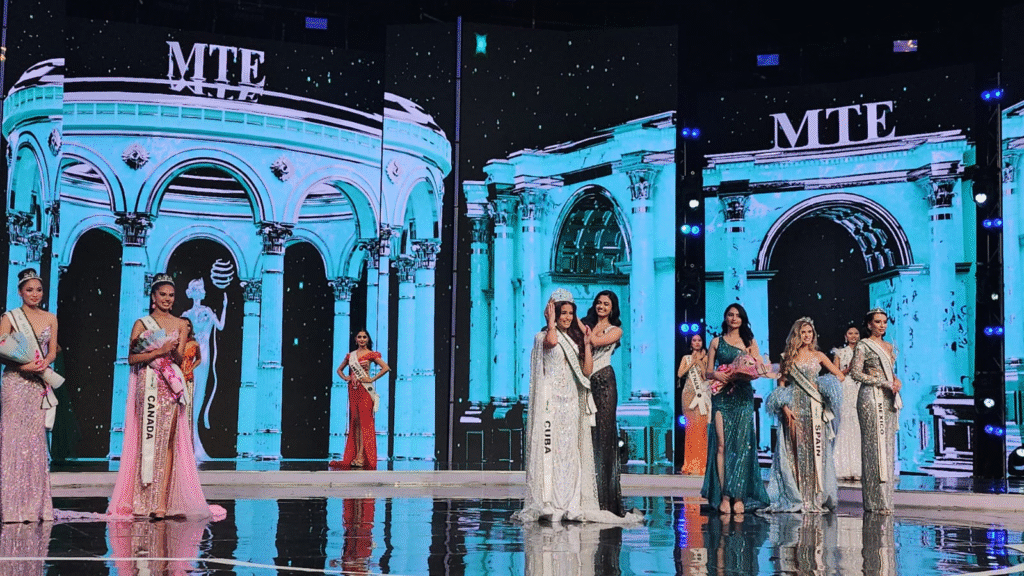
India played host to the prestigious Miss Teen Earth 2025 competition this year, with the grand finale held at Zee Studios, Jaipur. Contestants from 11 countries competed for the crown—India, Cambodia, Cuba, Nepal, Spain, Netherlands, Vietnam, Canada, Mexico, Philippines, and Sri Lanka.
Emerging victorious, Leah Reyes of Cuba claimed the coveted Miss Teen Earth 2025 title, outshining her fellow contestants through multiple rounds of intense competition.
The event opened with the National Costume Round, where participants showcased their country’s heritage, folk art, and cultural identity, blending themes of beauty, culture, and environmental awareness. This was followed by the opening round, Q&A sessions, and other competitive segments. Leah Reyes consistently impressed the judges with her grace, confidence, and performance across all rounds, ultimately securing the crown.
Visibly emotional during her crowning moment, Leah dedicated her victory to her country, saying, “I dedicate this trophy to my countrymen.”
Special Awards:
Miss Popular – Cuba
Best in Swim Shoot – India
Best Beautiful Skin – Vietnam
Top Model – Mexico
Best in Evening Gown – Nepal
Best in Ramp Walk – Philippines
Top 6 Finalists: Philippines, Nepal, Cuba, Mexico, Spain, and Canada.
1st Runner-up: Misha (Canada)
2nd Runner-up: Meredith Bobadilla (Philippines)
3rd Runner-up: Sophia Llorente (Spain)
4th Runner-up: Johanna Gonzalez (Mexico)
The glittering evening was attended by Glamanand Group Director Nishant Anand, Miss Universe India 2024 Riya Singha, Bharat 24 Director Dr. Jagdish Chandra, and over 500 delegates from around the world.
During the closing ceremony, it was announced that Jaipur will also host the grand finale of Miss Universe India 2025 next week.
Nikhil Anand, Chairman of Glamanand Group and owner of Miss Universe India, remarked: “Hosting Miss Teen Earth 2025 in India reflects our nation’s growing global influence. It’s a matter of pride for us to organize one of the world’s fastest-growing and most prestigious teen beauty pageants, known internationally for its grandeur and excellence.”
Sarvesh Kashyap, National PR Head of Glamanand Group, added: “Leah Reyes’s remarkable performance has brought pride to Cuba and will inspire young women across the globe.”
Raksha Bandhan is a celebration of the bitter-sweet bond between a brother and a sister — a relationship woven with habits, passion, humour, and selfless devotion. This cherished Hindu festival beautifully expresses the deep connection between siblings. On this day, sisters tie a sacred thread, known as a rakhi, on their brother’s wrist, symbolising their love and prayers for his well-being, while the brother silently pledges to protect her always.
Raksha Bandhan is filled with fun, laughter, and family traditions, all enriched by the sweetness of emotions. Even distance cannot weaken this bond — heartfelt words, blessings, and affection travel beyond borders. Here are some cute, funny, and touching messages, quotes, and wishes you can share to make Raksha Bandhan 2025 even more special.
Raksha Bandhan Quotes
“Brothers and sisters are as close as hands and feet.“
“Having a sister is like having a built-in best friend.“
“A thread of love tied with a knot of promise.”
“A brother is a friend given by nature.”
“You’re my forever protector and secret keeper.”
“Through childhood fights and adult laughter, our bond remains unbreakable.”
“We didn’t choose to be siblings, but we chose to be best friends.”
“In you, I find strength, silliness, and support.”
Raksha Bandhan 2025 wishes!
Happy Raksha Bandhan to the one who always had my back!
May our bond grow stronger each Rakhi we tie.
To my sibling, my strength – Happy Raksha Bandhan! Wishing you love, laughter, and endless joy today.
May this Rakhi bring you luck, success, and endless happiness.
You protect me in ways even you don’t know.To the best brother ever, Raksha Bandhan Mubarak!
You’re my hero, my guide, and my troublemaker – Happy Rakhi!
Here’s to the thread that ties our hearts forever.Distance means nothing when hearts are close – Happy Rakhi!
Thank you for the childhood memories and lifelong support.
The Pi Network started with a bold mission: to make cryptocurrency accessible to everyone through smartphone mining. What began as a grassroots experiment now involves tens of millions of users across the globe – and after years of development, PI is finally live on public exchanges.
This post dives into the latest Pi Network price predictions for 2025 through 2030, now with the added clarity of real market activity. We’ll explore expert forecasts, the factors shaping PI’s future, and what investors should watch as this once-speculative project transitions into a real player in the crypto market.
What Is Pi Network?
Pi Network launched in 2019 with a different vision for crypto. Instead of rewarding those with expensive mining rigs and technical know-how, Pi allowed users to mine coins on mobile phones, with little power consumption and no cost.
The idea caught fire. Millions joined. Community growth exploded. And after years in a closed mainnet phase, the project reached a major milestone: PI is now publicly traded on several exchanges.
It’s currently listed on platforms like MEXC, Bitget, Gate.io, and HTX, with prices hovering around $0.49 to $0.50 and daily trading volume exceeding $100 million across exchanges. This marks a turning point – price discovery is no longer theoretical. The market is now deciding what PI is worth.
What’s Driving Pi Network’s Price Potential?
1. Now Trading Publicly
Unlike earlier stages where PI only moved within a closed ecosystem, it’s now accessible to global traders. Leading platforms like MEXC have already added trading pairs such as PI/USDT and PI/USD1, offering secure access and competitive fees. MEXC was among the first to support the token and continues to see strong trading volumes.
This shift to open trading brings real liquidity, price charts, and market sentiment – all essential for understanding where PI could head next.
2. Ecosystem Development
A critical factor in Pi’s future valuation will be whether it can evolve from a popular app into a real blockchain economy. The project aims to support dApps, online marketplaces, and cross-border payments. The more real-world usage PI gains – beyond trading – the more support PI price could have.
If the team succeeds in launching useful apps, onboarding businesses, and making the coin spendable, it will create lasting demand. If not, market interest could fade.
3. Community Engagement
Pi’s strength has always been its massive, engaged community. With over 50 million users, the project has a built-in user base that most tokens can only dream of. If that community remains active, supports the coin’s rollout, and uses it for more than speculation, PI has a foundation to build on.
But as with any large following, engagement matters more than raw numbers. Will those users spend, stake, or build? Or simply hold and wait?
4. Exchange Access and Liquidity
While PI is now listed on several platforms, more listings could bring greater price stability and visibility. Access to top-tier exchanges (like Binance or Coinbase) could drive demand and institutional interest. For now, exchanges like MEXC serve as early hubs for PI liquidity and are helping to define the coin’s real market value.
Pi Network Price Prediction for 2025
Now that PI is trading publicly, 2025 is no longer a guessing game – it’s about observing how the coin performs in a real-world market. On exchanges like MEXC, the PI to USDT trading pair provides a clear benchmark for tracking its value in real time.
If Pi’s team rolls out major updates, expands utility, and builds on the momentum of its exchange listings, the price could move toward $1 to $2.50 by the end of the year. This would reflect growing confidence in the network, real demand, and a functioning ecosystem.
In a more cautious scenario – where user activity cools or adoption remains limited – the price may hover between $0.38 and $0.50, similar to where it is now.
Outlook for 2026–2027
Over the next few years, Pi Network will need to prove itself as more than just a social crypto experiment. If developers start building successful dApps, if real businesses accept PI, and if the token becomes useful in everyday transactions, its value could rise steadily.
A realistic price range for this stage could be between $2 and $5, assuming healthy growth and new partnerships. If major milestones are met, and Pi starts to feel like a real economy, prices above $5 aren’t out of the question.
The flip side? If momentum slows or innovation stalls, PI may struggle to break out of the $1–2 range – still respectable, but far from its most ambitious predictions.
Long-Term Forecast: Pi Network in 2030 (Stage-by-Stage)
Stage 1: $2 to $5 (Conservative)
If development stays modest and real-world use remains limited, PI may settle into a lower tier of the crypto ecosystem. Prices in the $2 to $5 range would reflect ongoing but contained interest.
Stage 2: $10 to $15 (Moderate Growth)
With consistent exchange activity, real usage, and solid developer contributions, PI could become a top mid-cap token. Prices between $10 and $15 would indicate a healthy network with global presence.
Stage 3: $20 to $30 (Optimistic)
If Pi achieves broad adoption in commerce, payments, and dApps – and attracts institutional backing – the price could realistically climb to $20 or even $30.
Stage 4: $50 to $100+ (Speculative High-End)
This ultra-bullish case assumes Pi becomes a global digital currency. Scarcity, heavy adoption, and a robust ecosystem would need to align perfectly. While not impossible, this stage should be considered highly speculative.
Final Thoughts: What’s Next for Pi Network?
Pi Network has entered a new phase. It’s no longer just a concept or a mining app – it’s a tradable asset, with live prices, volume, and a growing market presence.
But this is just the beginning. The next few years will determine whether Pi becomes a widely used digital currency or fades into crypto history. Price predictions range widely for good reason: everything depends on what happens next – development, adoption, partnerships, and continued community support.
If Pi can deliver on its original promise, it could shape up to be one of the most important crypto stories of the decade. For now, it remains a project full of energy, possibility, and big expectations.