Home Blog Page 210

Kerala’s Vegetable Crown: Kappur Akhada Feeds the State with Pride, From potatoes to strawberries, this highland haven grows more than crops—it cultivates legacy.

0

(PC:Keralatourismhub.com)

Beyond Munnar, Kerala hides a tale of abundance and awe. The village of Kappur Akhada rises like a green amphitheater, its terraced farms cascading down the slopes, feeding the state with vibrant vegetables and fruits. But just as the soil tells a story of toil and triumph, the nearby hills of Vavavada prepare for a spectacle that happens only once every twelve years—a bloom so rare, it turns the landscape into a living painting.

Farming with Legacy and Diversity

Local farmers in Kappur Akhada don’t just grow vegetables—they cultivate heritage. While traditional crops dominate, the village also experiments with high-value produce like strawberries and exotic greens. This blend of tradition and innovation has made the region a model for sustainable hill farming, with nearly 20% of the population engaged in agriculture.

Neelakurinji Park Survey Completed in Vavavada

In nearby Vavavada village, a major ecological milestone has been reached. A government-backed survey has been completed on plots 56 and 62 in Bardbarda and Kotakambur villages to develop a Neelakurinji Park—dedicated to the rare flower that blooms once every 12 years, turning the hills into a surreal ocean of blue.

A Bloom That Transforms Tourism

The Neelakurinji bloom isn’t just a botanical wonder—it’s a tourism magnet. With the park’s development, the region is expected to attract nature lovers, photographers, and spiritual seekers. Locals hope this initiative will bring fresh recognition to the area and boost eco-tourism, giving Kerala’s highlands a new identity beyond agriculture.

Where Nature and Livelihoods Unite

Together, Kappur Akhada’s farming legacy and Vavavada’s blooming future tell a story of harmony—between soil and soul, tradition and transformation. As Kerala nurtures both crops and flowers, it also cultivates pride, sustainability, and a deeper connection to its land

What was Manika Vishwakarma’s final question at Miss Universe India 2025?

0

Manika Vishwakarma is Miss Universe India 2025 who will now represent India in Thailand in 2025.

For the final round, Manika was asked a challenging question: “If you had to choose between advocating for women’s education or immediate economic aid for impoverished families, which one would you prioritise and why? How would you address the counterarguments?”

It was a tricky balance of education versus urgent economic relief and all eyes were on Manika as she delivered her answer.

With confidence and clarity, the Miss Universe India 2025 stated: “Two sides of the coin. On one side, where we have seen that women have been deprived of basic rights, such as education, for as long as we can remember. On the other side, we see the result of this deprivation: impoverished families. Fifty percent of our population has been denied the basic amenity that could change their lives. If I have to, I would choose the option of women’s education.”

Defending her stance, Manika added, “I would advocate for it because it would not just change the life of one person; it would change the entire strata of the future of this country, of this world. While both issues are important, it is about taking actions that can help in the long run.”

Is WhatsApp Allowing Meta AI to Read Your Group Chats? Paytm Founder Warns Users…

0

Recently, Paytm CEO Vijay Shekhar Sharma claimed that AI could read WhatsApp messages and warned users to be cautious if they were part of certain groups. He urged WhatsApp users to enable the “Advanced Chat Privacy” feature to prevent AI from accessing their messages.

Sharma shared a message online suggesting that WhatsApp would allow artificial intelligence to read chats and potentially send warnings to users who are part of so-called “bad groups.” According to him, the Meta-owned messaging platform—which uses end-to-end encryption—was allegedly on the verge of giving AI access to private messages in such groups.

In his post, Sharma shared a screenshot and advised users to activate the “Advanced Chat Privacy” setting to stop the platform from reading group messages. He wrote:

“IMP: If you are part of a WhatsApp group, from today onwards WhatsApp is allowing AI to read chats! So enable this setting to block it.”

Is WhatsApp Allowing Meta AI to Read Your Group Chats? Paytm Founder Warns Users...

What Is ‘Sudarshan Chakra’ Which India Aims to Build? It Is Defence Shield Inspired by Iron Dome, Golden Dome

0

India will develop a ‘Sudarshan Chakra’—a multi-layered defence framework that integrates advanced surveillance, cyber protection, and physical safeguards to protect citizens and critical infrastructure from enemy attacks, including terrorism and missile strikes, Prime Minister Narendra Modi announced Friday.

This new national defence system will function similarly to Israel’s Iron Dome and the proposed Golden Dome in the United States, acting as a comprehensive missile defence shield.

India already operates the Integrated Air Command and Control System (IACCS), which successfully neutralised threats during Operation Sindoor, when Pakistani missiles failed to breach Indian airspace for nearly 100 hours. However, Mission Sudarshan Chakra—named after the legendary weapon Lord Krishna used to shield Arjuna—aims to go far beyond just missile interception.

“By 2035, I want to expand, strengthen, and modernise this shield. Drawing inspiration from Lord Krishna, we have chosen the path of the Sudarshan Chakra. The entire system should be researched, developed, and manufactured in India,” the Prime Minister declared in his Independence Day speech.

“Every citizen must feel protected.”

While operational details are still under wraps, sources told media the system will likely include precision counterstrike capabilities and anti-cyber warfare measures to neutralise digital threats such as hacking and phishing.

Mission Sudarshan Chakra will reportedly involve close collaboration between India’s premier scientific institutions, defence agencies, the armed forces, and private sector innovators, in line with the government’s ‘Aatmanirbhar Bharat’ (self-reliant India) vision, particularly in defence and infrastructure.

Context: Lessons from Operation Sindoor

The Sudarshan Chakra initiative follows the April Pahalgam terror attack and Operation Sindoor in May, during which Pakistan attempted to target Indian military bases, shoot down fighter jets, and damage urban centres. Over a tense 100-hour window starting May 7, India’s armed forces and missile defence systems held firm.

From Pakistan’s failed offensive, India drew a clear lesson: defence must be proactive, integrated, and future-ready.

India Tops Patent Filings in 2023, Marking a New Era of Innovation Leadership

0

In a historic milestone, India has emerged as the leading country for patent filings within its borders in 2023, surpassing all other foreign nations. This breakthrough signals a significant shift as India transforms from a technology consumer into a global technology creator. Fueled by progressive government policies, rising research capabilities, and a dynamic innovation ecosystem, India’s patent landscape is rapidly evolving, positioning the nation at the forefront of intellectual property generation worldwide.

Rising Patent Filings by Indian Applicants

Indian applicants accounted for 57% of all patent filings in 2023, a significant rise from the early 2000s when domestic institutions filed less than 20%. India also became the second-largest recipient of granted patents, overtaking the US in 2021. This growing share underscores India’s expanding role in the global intellectual property ecosystem.

Government Initiatives Driving Innovation

Several government initiatives have fostered innovation and patenting activity. The National Intellectual Property Rights (IPR) Policy and the Atal Innovation Mission promote startups, researchers, and students to innovate and protect their ideas. Key reforms include expedited patent examinations, an 80% fee reduction for educational institutions and startups, and full digitalisation of the patent process—simplifying filings and accelerating approvals.

Changing Patent Landscape by Sector

Patent trends reveal a shift from traditional mechanical and chemical engineering to technology-driven fields. Computer science patents rose from 1.27% in 2000 to 26.5% in 2023; electrical engineering patents grew from 8.27% to 16.41%. Biomedical patents surged from 0.6% to 10%, while physics-related patents doubled to 4%. This diversification highlights India’s growing emphasis on high-tech and interdisciplinary research.

Faster Patent Processing and Increased Approvals

Patent processing times have improved dramatically—from 8-10 years earlier to many approvals within 2-3 years today, with some granted in the same year as filing. Although nearly 80% of recent patents are still pending decisions, the system’s enhanced efficiency supports quicker commercialization and innovation cycles.

Shift in Patent Filers: Individuals and Institutions Lead

The profile of patent filers has evolved. Company filings declined from 43% in 2000 to under 17% in 2023, while individual filings rose from under 10% to around 32%. Educational institutions now contribute nearly 43% of filings. Government bodies and hospitals remain minor contributors. Programs like KAPILA and the Atal Innovation Mission have boosted IP awareness and entrepreneurship within academia.

Role of Universities and Research Institutes

Universities have emerged as innovation hubs. IIT Madras doubled its granted patents from 156 in 2022 to 300 in 2023, while IIT Bombay led with 421 patents granted in 2023–24. Dedicated IP cells and legal support help researchers file patents and commercialize technologies, crucial for nurturing early-stage research and startups.

Need for Increased Research and Development Investment

India’s R&D expenditure stands at 0.67% of GDP, trailing the US (3.5%) and China (2.5%). To sustain innovation momentum, investment should increase to around 2% of GDP. Greater funding will support foundational research and advanced technology development, vital for India’s self-reliance amid global trade uncertainties and for enhancing its global knowledge leadership.

Akshay Urja Day 2025: History, Significance and Celebrations

0

Akshay Urja Day is celebrated every year on 20th August to raise awareness about the importance and benefits of renewable energy. The day underscores the need for the efficient use of energy resources in India and promotes a more sustainable and environmentally conscious approach to energy consumption.

The occasion also commemorates the birth anniversary of former Prime Minister Rajiv Gandhi, and is therefore also known as Rajiv Gandhi Akshay Urja Diwas.

History of Akshay Urja Day

Akshay Urja Day was established in 2004 by the Ministry of New and Renewable Energy (MNRE) to address growing environmental concerns and promote sustainable energy solutions across the country.

The inaugural event was held in New Delhi in the presence of former Prime Minister Dr. Manmohan Singh. On that day, approximately 12,000 schoolchildren from across India formed a human chain to promote the use of renewable energy sources such as solar, wind, and hydro power, as alternatives to conventional fossil fuels like coal, oil, and natural gas.

Since then, the day has served as a national platform to highlight government initiatives, technological advancements, and public-private collaborations in the renewable energy sector.

Significance of Akshay Urja Day

Akshay Urja Day plays a pivotal role in:

  • Advocating the adoption of renewable energy sources such as solar, wind, and biomass.
  • Educating the public on the environmental, economic, and health benefits of sustainable energy.
  • Inspiring action at both individual and community levels to reduce carbon emissions and embrace green technologies.
  • Celebrating progress and innovation in the renewable energy sector across India.

By promoting energy awareness, the day helps steer the country towards energy independence and environmental sustainability.

Akshay Urja Day 2024 Celebrations

The 2024 celebrations focus on youth engagement and education. Schools, colleges, and universities across India organize a variety of awareness activities, including:

  • Quiz and painting competitions
  • Debates and cultural programs
  • Slogan-writing contests
  • Awareness rallies with informative posters and banners

Seven Types of Rest: Recharge Your Mind, Body, and Soul Rest is essential for well-being, encompassing more than just sleep.

0

(PC:Drshivasna.com)

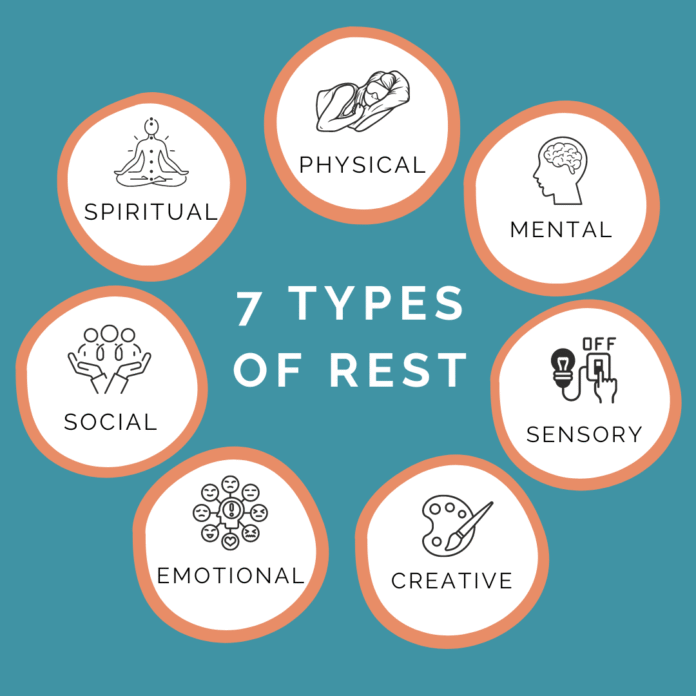
We often think of rest as simply getting a good night’s sleep—but true restoration goes far beyond closing your eyes. In our fast-paced, hyper-connected world, exhaustion can seep into every corner of our lives: physical, mental, emotional, even spiritual. That’s why understanding the seven distinct types of rest is a game-changer for anyone seeking balance, clarity, and vitality. This isn’t just about avoiding burnout—it’s about learning how to nourish every part of yourself. From calming your racing thoughts to rekindling your sense of wonder, each type of rest serves a unique purpose in helping you feel whole again.

Let’s explore how to recharge not just your body, but your mind and soul too.

Why It Matters

Balancing these seven types of rest prevents burnout and boosts energy, clarity, and joy. Identify what you need most and integrate small habits to feel refreshed and fulfilled. Rest is a necessity for a vibrant life.

1.Physical Rest: Restoring Your Body’s Energy

    Physical rest focuses on giving your body a break from exertion, allowing it to repair, regenerate, and recharge. This type of rest is essential for reducing fatigue, improving circulation, and promoting overall physical health.

    How to Practice Physical

    Rest:Prioritize Sleep: Quality sleep is the cornerstone of physical rest, allowing your body to repair tissues and conserve energy.Gentle Movement Engage in low-impact activities like stretching or yoga to release muscle tension and improve blood flow. TherapeuticTreatmentsConsider professional treatments like massage to relax muscles and promote deep relaxation.

    2.Mental Rest: Calming the Mind

    Mental rest involves stepping away from constant thinking, decision-making, and cognitive overload. It’s about creating space for your mind to relax, which enhances focus, memory, and mental clarity.

    How to Practice Mental Rest

    take Regular Breaks step away from mentally demanding tasks for a few minutes to reduce cognitive fatigue.Mindfulness and Meditation practice mindfulness techniques or meditation to quiet racing thoughts and promote camness.Connect with Nature Spending time outdoors can soothe the mind and restore mental energy.

    3.Emotional Rest: Nurturing Your Heart

      Emotional rest is about creating space to process and express emotions in a healthy way, rather than suppressing them. It allows you to release emotional burdens and find inner peace.

      How to practice

      Journaling: Write down your thoughts and feelings to process emotions and gain clarity.
      Nature Connection: Spend time in nature to find calm and restore emotional balance.
      Creative Outlets engage in activities like art or music to express emotions in a healthy way.
      Seek Support: Share your feelings with a trusted friend or therapist for emotional release and validation.

      4.Sensory Rest: Easing Overstimulation

      Sensory rest involves reducing sensory input to give your nervous system a break from constant stimulation. In our fast-paced, screen-filled world, this type of rest is crucial for calming the mind and body.

      How to practice

      Find Quiet Spaces seek out a peaceful environment, such as a quiet room or a serene park, to reduce noise and distractions.
      Dim the Lights lower bright lights to create a calming atmosphere and ease visual strain.
      Listen to Soothing Sounds play calming music or nature sounds to promote relaxation and reduce stress.

      5.Creative Rest

      Igniting Inspiration creative rest is about rekindling your sense of wonder and imagination without the pressure of analytical thinking. It’s about engaging in activities that spark joy and inspiration.

      How to practice

      Engage with Beauty: Spend time in nature, visit an art gallery, or listen to uplifting music to reconnect with the world’s beauty.
      Mindful Activities practice meditation or mindfulness to stay present and open to inspiration. Playful Hobbies try gardening, cooking, or other creative pursuits without focusing on performance or outcomes.

      6.Social Rest: Recharging Through Connection

      Social rest involves balancing your social interactions to avoid emotional drain while fostering meaningful connections. It’s about surrounding yourself with relationships that uplift and energize you.

      How to Practice Social Rest

      Choose Positive Interactions spend time with people who support and inspire you, while limiting draining social obligations.
      Take Time Alone allow yourself periods of solitude to recharge and reflect.
      Set Boundaries politely decline invitations or commitments that feel overwhelming to preserve your energy.

      7.Spiritual Rest: Finding Inner Peace

      Spiritual rest involves connecting with a sense of purpose, meaning, or something greater than yourself. It’s about finding moments of reflection and grounding to restore your soul.

      How to Practice Spiritual Rest

      Meditation and Prayer: Engage in practices that foster a sense of connection and inner calm.
      Reflect on Purpose: Take time to journal or reflect on your values and what brings you meaning.
      Spend Time in Nature: Nature can provide a profound sense of connection to the universe and promote spiritual renewal.


      From Fired CEO to AI Visionary: The Parag Agrawal Story

      0

      (PC: The India Info)

      Who Is Parag Agrawal?

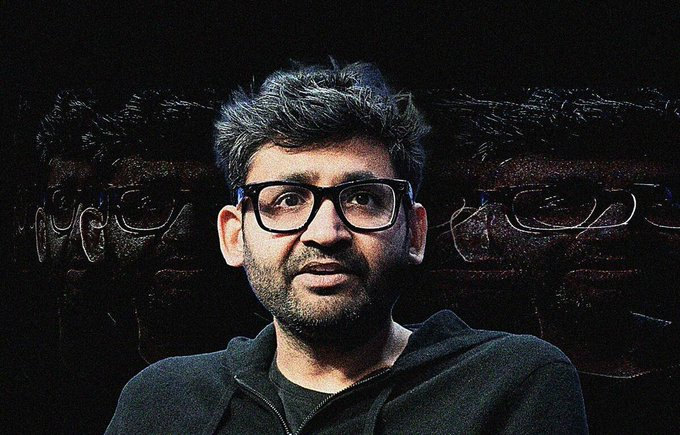
      Parag Agrawal is an Indian-born American technologist and software engineer. Born in Ajmer, Rajasthan, he was a gold medalist at the International Physics Olympiad and later earned a B.Tech in Computer Science from IIT Bombay. He pursued his PhD in Computer Science at Stanford University, specializing in data management and machine learning. Agrawal joined Twitter in 2011 as a software engineer and rose through the ranks to become Chief Technology Officer (CTO) in 2017. In November 2021, he was appointed CEO of Twitter, succeeding Jack Dorsey

      The Firing: Elon Musk’s Twitter Takeover

      In October 2022, Elon Musk completed his $44 billion acquisition of Twitter. Within hours of the deal closing, Musk fired Parag Agrawal along with other top executives. The dismissal was abrupt—Agrawal was reportedly escorted out of Twitter’s San Francisco office the same day.Musk had previously expressed dissatisfaction with Twitter’s leadership, and leaked messages revealed he felt Agrawal “got nothing done.” Despite the harsh exit, Agrawal walked away with a severance package estimated to be worth up to $50 million.

      The Comeback: Parallel Web Systems Inc.

      After keeping a low profile post-Twitter, Agrawal re-emerged in 2023 with a bold new venture: Parallel Web Systems Inc., a Palo Alto–based AI startup. The company has already raised $30 million (₹260 crore) from top investors like Khosla Ventures, Index Ventures, and First Round Capital. Parallel is building infrastructure for AI agents to conduct deep, real-time research across the web. Its flagship product, the Deep Research API, allows AI systems to:

      • Search the internet intelligently
      • Verify sources
      • Organize and contextualize information
      • Automate complex workflows

      The startup’s most advanced engine, Ultra8x, has reportedly outperformed OpenAI’s GPT-5 and even human researchers on benchmarks like BrowseComp and DeepResearch Bench.

      Why Parallel Matters

      Agrawal believes the internet was built for humans—but the future belongs to AI. Parallel aims to create a “programmatic web” designed for machines, not clicks and ads. Use cases include:

      • Coding assistants pulling live data from GitHub
      • Retailers tracking competitor catalogs
      • Analysts compiling market reports
      • Insurance firms automating claims with web-sourced verification

      Agrawal’s vision is to redefine how AI interacts with the web, making it faster, smarter, and more accurate.

      What’s Next?

      With Parallel, Parag Agrawal isn’t just building a company—he’s rewriting his legacy. From being fired in a corporate shake-up to leading one of Silicon Valley’s most promising AI startups, his journey is a testament to resilience, vision, and technical brilliance.

      Krishangi Meshram: Indian-Origin Prodigy Becomes England and Wales’ Youngest Solicitor at 21

      0

      (PC:DESIblitz)

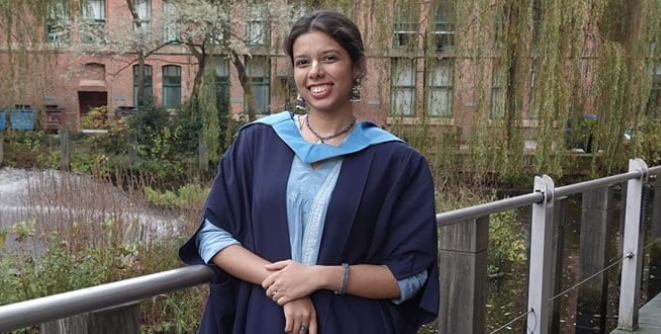
      Krishangi Meshram has etched her name in history as one of the youngest solicitors in England and Wales, a remarkable feat that showcases her extraordinary talent and dedication. Born in West Bengal and raised in the serene ISKCON Mayapur community, Krishangi now resides in the UAE, where her journey from a 15-year-old law student to a trailblazing legal professional has inspired many. Her story is a testament to perseverance, early ambition, and the power of flexible education, making her a proud symbol of Indian excellence on a global stage.

      A Prodigious Start: Law Studies at 15

      Krishangi’s legal journey began at an age when most are navigating high school. At 15, she completed her secondary education at an international school in Mayapur, West Bengal, and enrolled in a law degree program at The Open University (OU) in the UK. Her decision to pursue a British degree while staying close to her family in India highlights her determination to balance ambition with personal values. By 18, Krishangi graduated with a First-Class Honours Bachelor of Laws (LLB), becoming the youngest law graduate in OU’s history—a milestone that marked the beginning of her record-breaking path.Completed secondary education at 15 from an international school in Mayapur.Earned a First-Class Honours LLB from The Open University by 18.
      Became the youngest OU law graduate in 2022.

      From Passion to Profession: A Meteoric Rise

      Krishangi’s passion for law was sparked early, ignited by a short course at Harvard University that resonated with her values of justice and fairness. This early exposure, combined with the disciplined and nurturing environment of ISKCON Mayapur, shaped her focus and self-discipline, allowing her to excel in a competitive field. After her LLB, she pursued a Master’s degree and completed the Legal Practice Course (LPC), earning distinctions in both. In April 2025, at just 21 years and four months, Krishangi cleared the Solicitors Qualifying Examination (SQE), officially becoming one of the youngest solicitors in England and Wales.

      Her academic excellence was complemented by practical experience, as she secured a role at an international law firm in 2022, gaining valuable experience in Singapore. Her global perspective, shaped by travels to over 30 countries, has equipped her with cultural fluency and adaptability, enhancing her legal expertise.

      A Beacon of Inspiration Krishangi credits

      The Open University’s flexible learning model for her success, which allowed her to start her LLB at 15 and balance studies with family life and travel. She expressed gratitude, stating, “The Open University didn’t just help me start my studies; it helped me believe in my potential.” Her parents, Tapan and Indira Meshram, shared their pride, noting, “We encouraged her to give it her best, but we couldn’t have anticipated such a remarkable outcome.”

      Krishangi’s upbringing in the serene ISKCON Mayapur community, away from “toxic academic competition,” instilled discipline and introspection, which her father credits for her early success. Her story, celebrated by outlets like The Law Society Gazette and OU News, serves as an inspiration for young aspirants worldwide, proving that age is no barrier to achieving greatness with determination and opportunity.

      India’s First Solar Track Unveiled in Varanasi: A Leap Toward Sustainable Railways

      0

      (PC: Ministry Of Railways)

      In a landmark move toward green energy, Indian Railways has commissioned the nation’s first removable solar panel system installed between railway tracks at Banaras Locomotive Works (BLW), Varanasi. Inaugurated on Independence Day, this pioneering initiative marks a significant stride in the country’s journey toward net-zero carbon emissions by 2030.

      Project Highlights

      • Location: Line No. 19, Banaras Locomotive Works (BLW), Varanasi
      • Length of Installation: 70 meters
      • Number of Panels: 28
      • Installed Capacity: 15 kWp
      • Power Density: 220 kWp/km
      • Energy Output: 880 units/km/day (approx. 3.21 lakh units/year/km)

      Technical Breakdown In Simple Terms

      The solar panels installed between the railway tracks are pretty sleek and efficient. Each panel measures about 2.2 meters long and 1.1 meters wide, with a thickness of just 3 cm. They weigh around 32 kg each—not too heavy, considering their power. These panels use advanced monocrystalline PERC bifacial cells, which means they can absorb sunlight from both sides, boosting energy output. There are 144 half-cut cells in each panel, designed to improve performance even in low light or partial shading.

      In terms of efficiency, they’re top-notch—each panel converts sunlight into electricity at a rate of 21.31%, which is considered excellent in solar tech. To keep them firmly in place, engineers used a combination of epoxy adhesive and rubber pads. This setup helps absorb vibrations from passing trains and keeps the panels stable. Plus, they’re mounted with stainless steel Allen bolts, making them easy to remove for cleaning or maintenance. The system is built to handle high voltage—up to 1500 volts—and meets Class A safety standards, which ensures durability and protection against electrical hazards.

      Why It Matters

      • No Land Acquisition Needed: Utilizes space between tracks, avoiding costly land purchases.
      • Maintenance-Friendly: Removable design allows for easy cleaning and track upkeep without disrupting train operations.
      • Scalable Model: If expanded across India’s 1.2 lakh km rail network, it could revolutionize energy generation for stations, signaling systems, and grid support.

      A Step Toward Net-Zero

      This initiative complements Indian Railways’ broader renewable energy strategy, which includes rooftop solar installations and large-scale solar procurement. Developed indigenously by BLW engineers, the project showcases India’s capability to innovate sustainable infrastructure solutions. General Manager Naresh Pal Singh praised the team’s efforts, calling it “a new dimension in solar energy utilization” and a model for future green energy projects across the railway network.