Home Blog Page 209

Who Created Bitcoin Remains to Be A Mystery Even When It Crosses ₹1 Crore Mark. Know Its Origin and History…

0

Bitcoin has achieved a remarkable milestone—crossing ₹1.08 crore in value for the first time. Back in 2009, its value was practically zero. Since then, the cryptocurrency has not only revolutionized finance but also generated countless fascinating stories.

Perhaps the most intriguing is the mystery of its creator. To this day, no one knows who actually invented Bitcoin. The only clue is a name—Satoshi Nakamoto—a pseudonym used by the person or group behind it. Their identity remains unknown.

And then there’s the famous pizza story.

In 2010, a software engineer named Laszlo Hanyecz made the first real-world Bitcoin transaction by buying two pizzas. The price? 10,000 bitcoins—worth about $41 at the time.

Had he held onto those bitcoins, their current value would be over ₹10,000 crore. That means each slice of those two pizzas, assuming 6 slices per pizza, would now be worth around ₹833 crore per slice.

The Birth of Bitcoin

It was 2008. A global financial crisis was shaking the world. Confidence in banks and governments was at an all-time low. People were losing faith in the traditional financial system—many even lost their life savings due to poor decisions made by banks.

Amid this turmoil, someone using the name Satoshi Nakamoto released a concept paper online. It proposed a revolutionary idea: a digital currency that could work without the control of banks or governments.

On January 3, 2009, the first block of Bitcoin—the “Genesis Block”—was mined. Bitcoin was born. Its goal? To be decentralized—free from the control of any single institution.

The ₹10,000 Crore Pizza

Fast forward to May 22, 2010. Florida-based programmer Laszlo Hanyecz posted on a Bitcoin forum:

“I want to buy two pizzas for 10,000 bitcoins.”

At the time, Bitcoin was so new and obscure that 10,000 bitcoins were worth just about $41.

A man named Jeremy Sturdivant saw the post, accepted the offer, and ordered two Papa John’s pizzas for Laszlo. Laszlo sent him the 10,000 bitcoins in return.

This simple act became a landmark moment—the first time Bitcoin was used in a real-world transaction.

Today, those 10,000 bitcoins would be worth over ₹10,000 crore, making those arguably the most expensive pizzas in history. That day is now celebrated as Bitcoin Pizza Day.

The Anonymous Founder

Despite being one of the most valuable and talked-about creations in modern history, the identity of Bitcoin’s creator is still a mystery.

In October 2008, a whitepaper titled “Bitcoin: A Peer-to-Peer Electronic Cash System” appeared on a cryptography mailing list, authored by Satoshi Nakamoto. That was the world’s first introduction to the name.

Satoshi remained active for a few years, posting on forums, collaborating with developers, and even mining the first coins himself. But by 2011, he vanished.

In one of his final messages, he simply said:

“I am now working on other things. Bitcoin is in good hands.”

Since then, he has never been heard from again.

Some believe Satoshi was a lone genius, possibly from Japan. Others suggest it was a team of developers hiding behind a single name. What’s known is that his digital wallet contains around 1 million bitcoins—worth billions today. Yet, these bitcoins have never been moved or spent.

To this day, Bitcoin remains a symbol of financial innovation—and the enigma surrounding its origins only adds to its legend.
Shri Krishna Janmashtami 2025: 25 Lakh Devotees Visit Mathura, Thakur Ji Adorned in Golden Attire

0

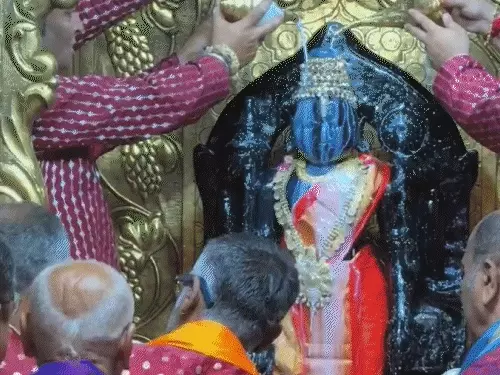
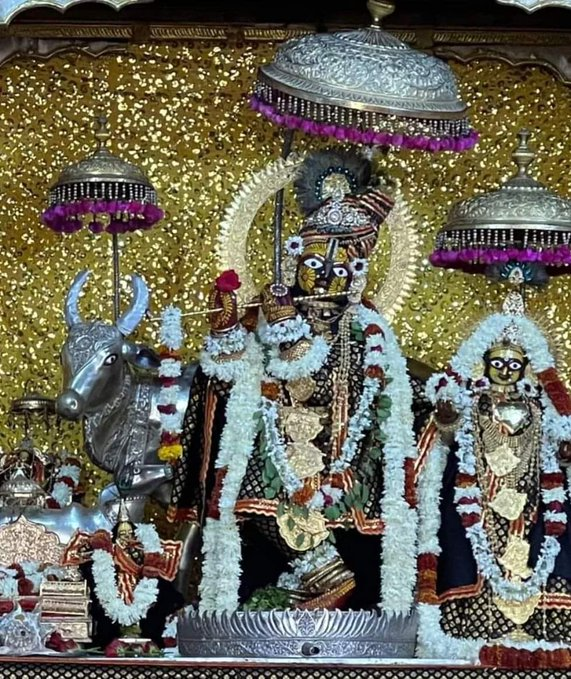
Shri Krishna Janmashtami is being celebrated with grandeur across the country today. Mathura-Vrindavan, the heart of Krishna devotion, witnessed an overwhelming influx of devotees. By evening, nearly 25 lakh pilgrims visited the Krishna Janmabhoomi temple in Mathura, while 10 lakh devotees thronged Vrindavan, forming long queues outside the famous Banke Bihari temple.

Thakur Ji’s Golden Attire and Special Decorations

The attire offered to Thakur Ji at Shri Krishna Janmabhoomi was meticulously crafted over six months by local artisans. The outfit, woven with gold and silver threads and adorned in the seven colors of the rainbow, reflects divine splendor.

The Janmabhoomi temple was decorated on the theme of “Operation Sindoor”, with a stunning flower bungalow made of vermilion-hued blossoms brought from Kolkata and Bengaluru. Illuminations lit up the temple complex, while a board honoring the valor of the armed forces with the words “Operation Sindoor” was prominently displayed.

Festivities Across India

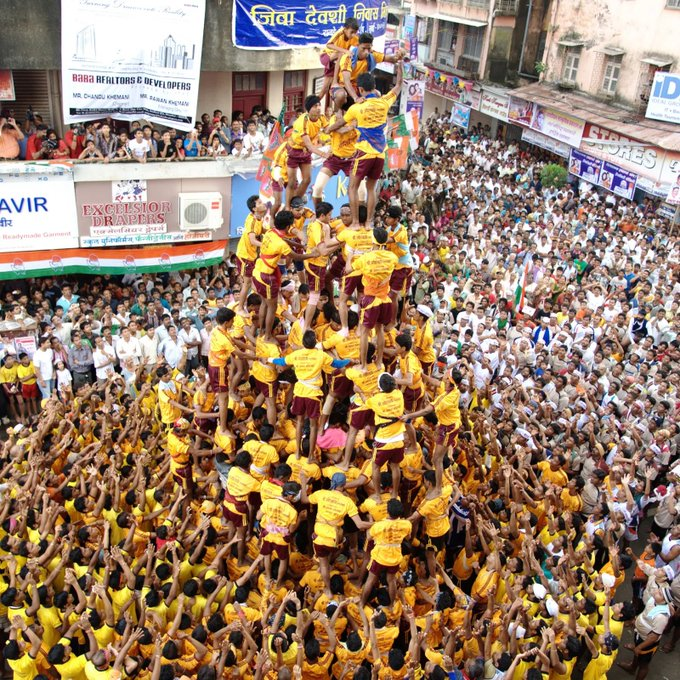
  • Pune: Govinda Mandali celebrated Dahi Handi with a grand “Operation Sindoor” banner, saluting the bravery of Indian soldiers.
Shri Krishna Janmashtami 2025: 25 Lakh Devotees Visit Mathura, Thakur Ji Adorned in Golden Attire
  • Jaipur: Devotees thronged the Govinddev Ji Temple since morning for special darshan.
Shri Krishna Janmashtami 2025: 25 Lakh Devotees Visit Mathura, Thakur Ji Adorned in Golden Attire
  • Nathdwara: At Shrinathji Temple, Janmashtami began with a Panchamrit abhishek. A 21-gun salute will mark the midnight birth of Lord Krishna.
  • Mumbai (Dadar): Dahi Handi celebrations were held with enthusiastic participation from youth.
  • Dwarka, Gujarat: Devotees enjoyed Shringar Aarti darshan of Lord Dwarikanath.
Shri Krishna Janmashtami 2025: 25 Lakh Devotees Visit Mathura, Thakur Ji Adorned in Golden Attire
  • Bengaluru: Huge crowds gathered at the ISKCON temple for Janmashtami celebrations.
  • Indore: Even prisoners in the Central Jail observed Janmashtami with devotion.
  • Srinagar, J&K: A Shobha Yatra was taken out at Lal Chowk.
  • Puri, Odisha: Traditional Nand Utsav rituals were performed at Jagannath Temple.
  • Badrinath, Uttarakhand: Special puja was performed in the sacred shrine.
  • Patna, Bihar: The ISKCON temple was decorated with 80 quintals of flowers sourced from Thailand, Kolkata, Bangalore, and Bangkok. The Lord will be anointed with 251 silver urns and conches, followed by a Mahabhog of 501 dishes.
Shri Krishna Janmashtami 2025: 25 Lakh Devotees Visit Mathura, Thakur Ji Adorned in Golden Attire
  • Raipur, Chhattisgarh: A 3-day festival began at the ISKCON temple, where devotees prepared 1,100 kg of Malpua as prasad.
  • Uttar Pradesh: Chief Minister Yogi Adityanath visited Mathura Janmabhoomi for darshan.
  • Rajgarh, Madhya Pradesh: A historic procession brought Shrinathji’s idol on a decorated elephant, continuing a centuries-old tradition of devotion.

A Festival of Faith and Heritage

From Mathura to Raipur, Jaipur to Puri, and from temples to prisons, Janmashtami 2026 is being celebrated with unmatched fervor. The festivities reflect not just devotion to Lord Krishna but also India’s deep cultural heritage, where traditions blend with patriotic pride and community spirit.

NYSA President Meets Maharashtra Chief Minister, Showcases Global Initiatives and Contributions

0

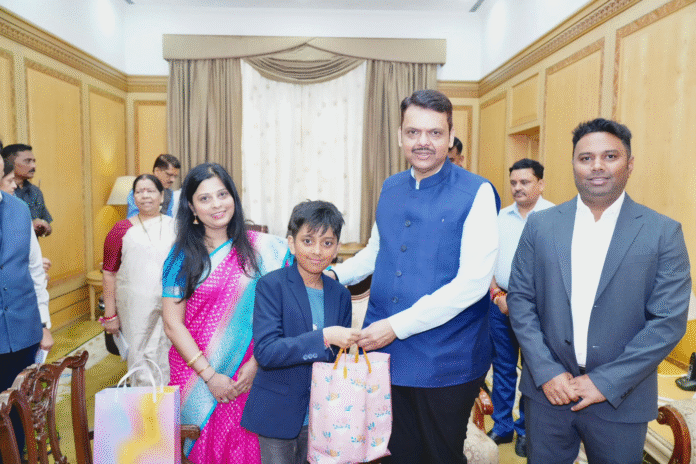
Adv. Pranita Adwait Deshpande, President of the Netherlands Yogasana Sports Association (NYSA), held a significant meeting with the Hon’ble Chief Minister of Maharashtra, Devendra Fadnavis, at Mantralaya, Mumbai. She was accompanied by her husband, Adwait Deshpande—an esteemed ICC/KNCB Umpire (ESPNCricinfo Profile)—and their son, Ansh Deshpande.

During the interaction, Adv. Deshpande presented the Chief Minister with her three published books, along with a replica of the iconic Dutch Golden Age painting “Girl with a Pearl Earring” by Johannes Vermeer (c. 1665), symbolizing her connection to the Netherlands. She also offered a special memento from NYSA, highlighting the association’s growing impact under her leadership.

Adv. Deshpande briefed the Chief Minister on NYSA’s initiatives in promoting Yogasana as a sport in the Netherlands. She emphasized her role in founding the association to propagate Yoga as an ancient Indian discipline on an international platform. The discussion also touched on her contributions to global justice and human rights through her work with the International Criminal Court (ICC).

In addition, she spoke about her entrepreneurial venture, Ansh Overseas B.V., an import-export company established in the Netherlands that represents Indian agricultural products across Europe. She shared her journey of building a life abroad since 2017, including her successful acquisition of the Dutch language and cultural integration.

On a personal note, Adv. Deshpande fondly recalled her grandfather, the Late Shri Vasudeorao Manbhekar, former Vidarbha Pramukh of the RSS, underscoring the cultural roots and traditional values that continue to inspire her global work and achievements.

Janmashtami 2025 in Pics: Watch Out Pretty Temples Decorated With Lights, Flowers and Amazing Decor…

0

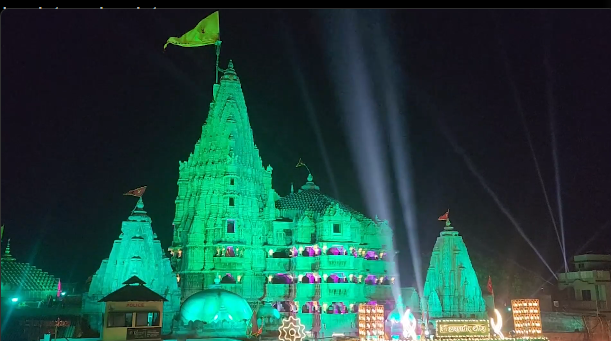
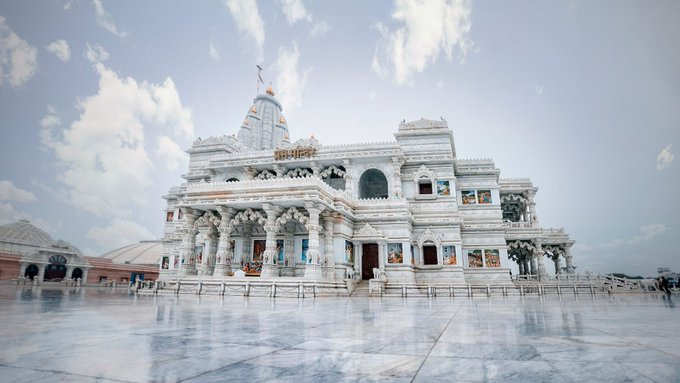
Janmashtami 2025: Temples across India have been beautifully decorated with lights, flowers, and vibrant decorations for the Janmashtami festival. Devotees are seen gathering in large numbers to celebrate, participate in midnight aartis, and offer prayers. Watch in pics how these temples are decked up to celebrate the birth of Kanha…

Janmashtami 2025 in Pics: Watch Out Pretty Temples Decorated With Lights, Flowers and Amazing Decor...

Mountains in Peril: Growing Climate and Geological Threats in the Indian Himalayas

0

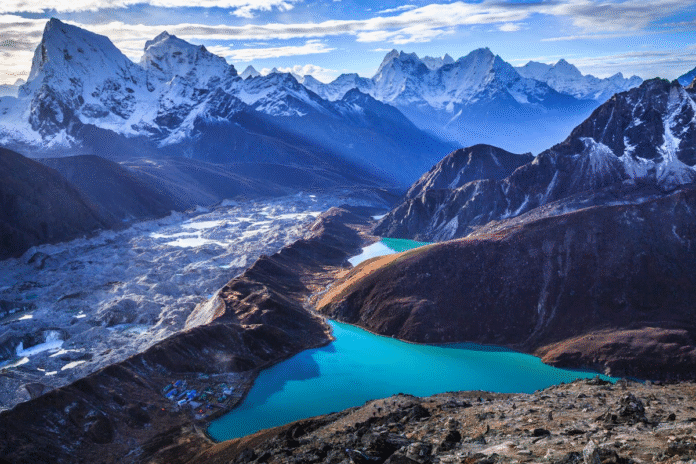
The Indian Himalayan region is witnessing an alarming increase in climatic and geological disasters, transforming once-rare events into frequent and devastating occurrences. From glacial lake outbursts and flash floods to landslides, avalanches, and cloudbursts, the Himalayan landscape is becoming increasingly unstable. The impact extends from Ladakh to Arunachal Pradesh, and beyond into Nepal, Bhutan, and Sikkim, raising serious concerns for infrastructure safety, local livelihoods, and national security.

Recent Disasters in the Himalayas: A Pattern Emerges

Since 2021, the Himalayas have experienced a series of destructive events:

  • February 2021 (Chamoli, Uttarakhand): A glacier fragment collapse triggered flash floods that destroyed a hydroelectric power project.
  • October 2023 (Sikkim): The South Lhonark glacial lake burst, severely damaging the Chungthang dam.
  • August 2025 (Harsil): Flash floods disrupted key military and civilian transit routes.

These disasters often set off chain reactions, such as secondary landslides, road collapses, and community isolation, compounding their impact and hampering emergency response.

Geographical and Geopolitical Fragility

The Himalayan region’s vulnerability spans both ecological and strategic dimensions:

  • Ladakh is grappling with glacier retreat and thawing permafrost.
  • Jammu & Kashmir face landslides that frequently block essential border highways.
  • Himachal Pradesh and Uttarakhand struggle with over-tourism and erratic weather patterns.
  • Nepal and Sikkim are exposed to cross-border glacial lake outburst floods (GLOFs).
  • Bhutan and Arunachal Pradesh endure flash floods exacerbated by limited early warning systems.

This regional fragility demands coordinated interstate and international collaboration to mitigate shared climate threats.

Development Pressures and Environmental Risks

Rapid infrastructure development often ignores the seismically active and geologically young nature of the Himalayas:

  • Roads, tunnels, and dams are sometimes built without thorough hazard assessments.
  • Construction destabilizes fragile slopes, increasing the risk of landslides and erosion.
  • For the Indian armed forces, disasters can disrupt supply chains and strategic connectivity along sensitive borders.

Balancing development with environmental safety is essential for long-term strategic and civilian resilience.

India’s Policy Shift Toward Climate Resilience

A key milestone was the 15th Finance Commission (2021–26), which embedded climate resilience into fiscal planning:

  • Introduced a Mitigation Fund under the State Disaster Risk Management Funds
  • Allocated ₹1.6 lakh crore for:
    • Hazard mapping
    • Early warning systems
    • Climate-proof infrastructure
  • States like Sikkim and Uttarakhand have already begun implementing these interventions.

The upcoming 16th Finance Commission (2026–31) is expected to further link fiscal transfers to resilience performance, incentivizing long-term disaster preparedness.

Empowering Local Governance and Innovation

Strengthening local governance is key to Himalayan resilience:

  • Direct access to mitigation funds by panchayats and municipalities is being considered.
  • Innovations include:
    • Green infrastructure incentives
    • Disaster insurance schemes
    • Climate-responsive budgeting

These tools aim to empower remote mountain communities to manage risks from glaciers, earthquakes, and monsoon floods.

Global Recognition and Cross-Border Cooperation

India’s G20 Presidency in 2023 elevated Disaster Risk Resilience as a global priority:

  • Advocated for financial tools like insurance pools
  • Emphasized cross-border data sharing
  • Proposed joint response drills and integrated early warning systems across national boundaries

Given the shared river basins and hazard zones, regional cooperation between India, Nepal, Bhutan, and China is critical to building a resilient Himalayan ecosystem.

Sustainable Development in the Himalayas: A Delicate Balance

Safeguarding the Himalayas requires an integrated approach that respects ecology, security, and cultural heritage:

  • Promote low-impact tourism and renewable energy
  • Mandate risk assessments before approving infrastructure
  • Strengthen community preparedness and scientific monitoring

The Himalayas are the source of major river systems, host to unique biodiversity, and crucial to regional stability. Protecting them is not only an environmental imperative but a strategic national priority.

US Supreme Court Allows Mississippi Social Media Age Verification Law to Take Effect

0

The U.S. Supreme Court has allowed a controversial Mississippi social media age verification law to remain in effect. The law requires age checks and parental consent for minors on social media platforms, aiming to protect children from harmful online content.

This ruling is a major development in the growing national debate over social media regulation for minors, particularly regarding online safety, mental health, and privacy rights.

What Is the Mississippi Social Media Law?

The Mississippi law regulating minors on social media includes several key requirements:

  • Age verification for all users
  • Parental consent for users under 18
  • Preventative measures by platforms to block harmful content for minors

Tech companies that fail to comply may face fines up to $10,000 per violation. The law focuses on protecting minors from online sexual abuse, trafficking, exploitation, and exposure to inappropriate content.

Tech Industry Legal Challenge

The law was challenged in court by NetChoice, a coalition representing major tech firms like:

  • Google
  • Meta (Facebook, Instagram)
  • Snap Inc. (Snapchat)

Their argument: the law violates the First Amendment, restricts free speech, and threatens user privacy. A federal judge initially blocked the law, but the 5th U.S. Circuit Court of Appeals allowed it to take effect pending further litigation.

On appeal, the U.S. Supreme Court declined to intervene, meaning the Mississippi age verification law is currently enforceable.

Other States with Similar Laws

Mississippi is part of a growing trend among U.S. states aiming to regulate social media use among minors. States with similar age verification and parental consent laws include:

  • California
  • Florida
  • Georgia
  • Texas (recently upheld its own law restricting minors’ access to online pornography)

These laws reflect increasing concern about the mental health impact of social media on teens, as well as online safety risks.

Impact on Social Media Platforms and Minors

If upheld, the Mississippi law could lead to major changes in how minors use social media in the U.S. Platforms may be required to implement:

  • Stricter identity and age checks
  • Parental approval systems
  • Stronger content filters

Supporters believe these steps are crucial to protect children’s mental health and online safety. However, critics warn of:

  • Government censorship risks
  • User privacy violations
  • Reduced access to digital resources

Why This Matters: The Future of Online Child Safety Laws

This decision by the Supreme Court is likely to influence future legislation and court cases surrounding social media safety for minors. It signals growing judicial support for child-focused internet regulations, despite concerns from the tech industry.

As more states pursue similar laws, the balance between digital freedom and child protection will remain a key issue in U.S. policy and public debate.

Janmashtami Special: In Jalore’s 750-Year-Old Temple, Villagers Still Accept Verdicts Given Before Radha-Krishna

0

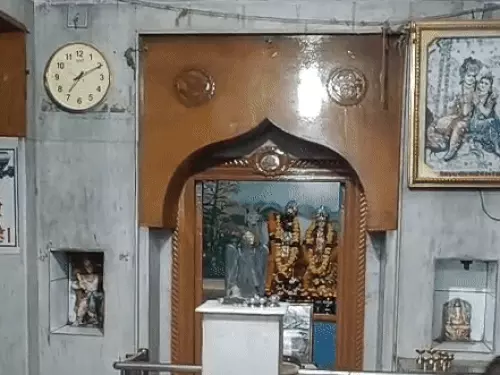
In the heart of Jalore lies a historic temple, believed to be around 750 years old, that has long served as a sacred center for social justice and unity. Located in Badi Pol area, the Radha-Krishna temple, also known as Thakur Dwara, is more than just a place of worship—it’s a pillar of tradition and collective decision-making for the Mali community of 48 villages.

A Temple That Decides Justice

For centuries, important social decisions affecting the community have been made here, with both parties in a dispute accepting the verdict given in the presence of the Radha-Krishna idol, considered a divine witness. Even today, many major societal issues and disputes are resolved within these temple premises, continuing a legacy of trust and consensus.

A Historic Legacy Without Documentation

While there are no inscriptions or documents detailing the temple’s origins, Bhomaram, President of the Mali Samaj Thakur Dwara Seva Sansthan Panch Patti, asserts that the temple dates back to the 15th century. The idol of Radha-Krishna housed within the temple is believed to be as old as the structure itself.

Despite the passage of time, the temple has retained its grandeur. Its thick 3.5-foot walls resemble those of the famed Jalore Fort, indicating its historical and architectural significance.

Center of Collective Identity

The temple serves as a central institution for the Mali community across 48 villages. In earlier times, any dispute within these villages was brought before a council of Panchs (elders), who deliberated and delivered verdicts inside the temple—always in front of the sacred idol. The decisions were binding and respected by all, reinforcing a strong sense of justice and accountability within the community.

Even though each of the 48 villages now has its own temple, collective decisions on matters of social policy, development, or major disputes are still taken at Thakur Dwara, preserving its role as the spiritual and social hub.

Janmashtami Celebrations

The temple takes on a particularly festive look during Krishna Janmashtami. The premises are beautifully decorated, and the celebrations include bhajan sandhyas (devotional music evenings) and a grand Janmotsav (celebration of Krishna’s birth). It’s a time when community members from all 48 villages come together in devotion and unity.

The Radha-Krishna temple of Jalore is not only a revered religious site but also a living testament to the community’s faith in tradition, justice, and collective wisdom. Its continued relevance across centuries makes it a unique example of how ancient institutions can still play a vital role in modern community life.

Alaska: The Cold Frontier Hosting a Hot Summit Between Trump and Putin

0


In a dramatic turn of global diplomacy, former U.S. President Donald Trump and Russian President Vladimir Putin met on Friday at a U.S. military base in Anchorage, Alaska, to discuss a potential ceasefire in the ongoing Russia-Ukraine war. The summit, held in one of America’s most remote and symbolic states, marks Putin’s first visit to U.S. soil in over a decade and the first face-to-face meeting between the two leaders since 2019.

Why Alaska?

Alaska’s selection as the summit venue is far from arbitrary. Geographically, it is the closest U.S. territory to Russia—just 55 miles across the Bering Strait. Historically, it was once a Russian colony before being sold to the United States in 1867. This layered past makes Alaska a poignant backdrop for a meeting aimed at resolving one of the most devastating conflicts of the 21st century.

Strategically, Alaska offers:

  • Neutral ground with deep historical ties to both nations.
  • Security advantages, given its remote location and military infrastructure.
  • Legal insulation, as Putin faces an ICC arrest warrant and cannot travel to most European countries.

The Stakes of the Summit

The summit was billed as a “feel-out meeting” by Trump, who has promised to broker peace within 24 hours of returning to office. However, the talks quickly hit a wall. Trump suggested Ukraine might need to cede territory to Russia—a proposal swiftly rejected by Ukrainian President Volodymyr Zelenskyy, who declared, “Ukrainians will not gift their land to the occupier”.

Putin, meanwhile, arrived in Alaska buoyed by recent battlefield gains and reiterated demands for international recognition of Russian control over Crimea and parts of eastern Ukraine.

Symbolism vs. Substance

While the summit carried immense symbolic weight, it yielded no concrete breakthroughs. Trump and Putin spoke for just over three hours, with Trump later admitting, “There’s no deal until there’s a deal.” A planned joint press conference was abruptly canceled, and both leaders departed without signing any formal agreement. Still, the meeting served as a potential reset in U.S.-Russia relations, with Trump stating he would consult NATO allies and Zelenskyy before any future negotiations.

What Comes Next?

  • A second summit may be held, possibly again in Alaska, depending on the outcome of follow-up diplomacy.
  • Ukraine remains excluded from direct talks, raising concerns among European leaders.
  • The international community watches closely, wary of any territorial concessions that could set dangerous precedents.
  • Alaska, once dismissed as “Seward’s Folly,” has become the unlikely stage for one of the most consequential diplomatic encounters in recent history. Whether it becomes the birthplace of peace or another frozen chapter in global tension remains to be seen.

Jhabua’s Tribal Dolls A Tapestry of Culture and Craftsmanship

0

By Nirjala Goud

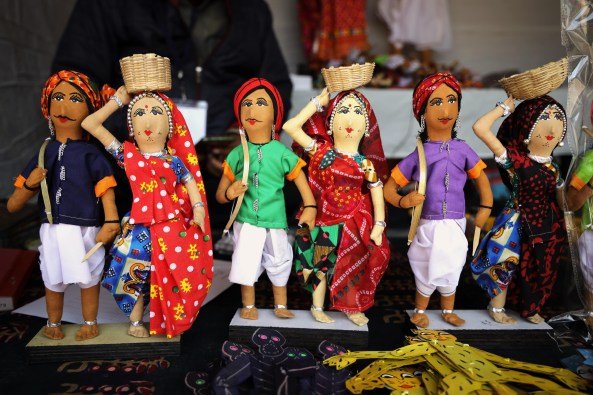
The Vibrant Bhil Culture of Jhabua district, nestled in Madhya Pradesh, is renowned for its rich Bhil tribal culture, vibrant art, and intricate handicrafts. Beyond its cultural heritage, the district is celebrated for its natural beauty and tourist attractions. However, one of its most distinctive claims to fame is its traditional art of crafting tribal dolls, locally known as Adivasi Gudiya Hastashilp (Tribal Doll Handicraft). This unique craft not only showcases the creativity of the region but also plays a significant role in supporting rural livelihoods through artistic expression.

The Art of Tribal Doll-Making

The dolls of Jhabua are more than mere handicrafts; they are cultural artifacts that reflect the identity and traditions of the tribal communities across the Indian subcontinent. Crafted from scraps of cloth and other affordable, locally sourced materials, these dolls are both decorative and functional, serving as souvenirs and reliable sources of income for artisans throughout the year. Ranging in size from 2 to 5 feet, they are adorned with vibrant colors and intricate designs, with prices typically ranging from ₹200 to ₹500.These dolls hold a special place in Indian traditions, often gifted to brides as tokens of goodwill in various parts of the country. For urban dwellers unfamiliar with tribal life, they serve as an informative window into India’s indigenous cultures. In educational settings, these dolls are valuable tools for teaching students about the intangible heritage of the Indian subcontinent, bridging the gap between modern and traditional worlds.

Namrata Batra: The Reluctant Fighter Who Rose to Rewrite History

0

In the quiet lanes of Mohali, where dreams often dissolve into routine, a young girl once stood at the crossroads of indifference and destiny. Namrata Batra wasn’t born with a medal in her hand or a burning ambition in her heart. In fact, she was a teenager who didn’t care much for academics, drifting through school with little direction. But fate, as it often does, had other plans.

The Accidental Beginning

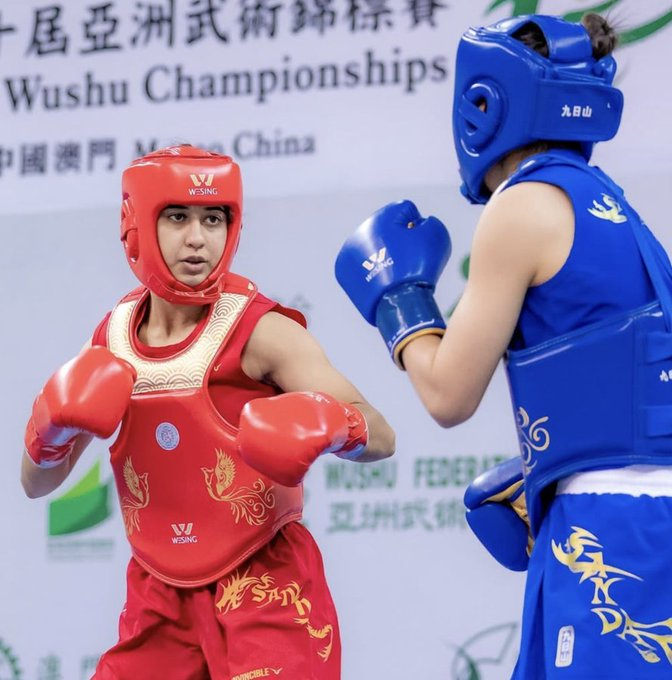
Namrata’s journey into Wushu—a full-contact martial art—began not with passion, but with parental concern. Worried about her lack of interest in studies, her father enrolled her in a local gym that offered a one-month Wushu training program. It was meant to be a distraction. Instead, it became her calling.

“I wasn’t really interested in academics back then,” Namrata recalls. “But my family stood by me and encouraged me to pursue sport.”

What started as a reluctant trial turned into a revelation. The rhythm of combat, the discipline of training, and the thrill of competition awakened something fierce within her.

Namrata Batra: The Reluctant Fighter Who Rose to Rewrite History

From Mohali to Madhya Pradesh: A Fighter Finds Her Ground

Namrata’s first taste of victory came in 2015, when she won gold at the Junior Nationals. By 2017, she had clinched silver at the Junior Asian Championship. Her talent was undeniable, but her path was anything but smooth. She chose to represent Madhya Pradesh, a state known for nurturing grassroots talent. Training at the Sports Authority of India’s National Centre of Excellence in Itanagar, she honed her skills in the Sanda 52kg category, mastering the art of kicks, punches, and psychological warfare.

Her mantra? “Chadh ke khelna hai”—play with aggression so your opponent never finds their footing.

The Setback That Nearly Broke Her

In 2023, just as she was preparing for the Asian Games trials, Namrata suffered a serious injury. It was a crushing blow. The dream she had nurtured for years slipped through her fingers. For many athletes, such moments mark the end. But for Namrata, it was the beginning of a comeback. She returned stronger in 2024, winning silver at the Asian Championship. In 2025, she bagged bronze at the Moscow Star International Wushu Championship. Each medal was a testament to her resilience, each fight a battle against not just opponents, but self-doubt.

Making History at the World Games

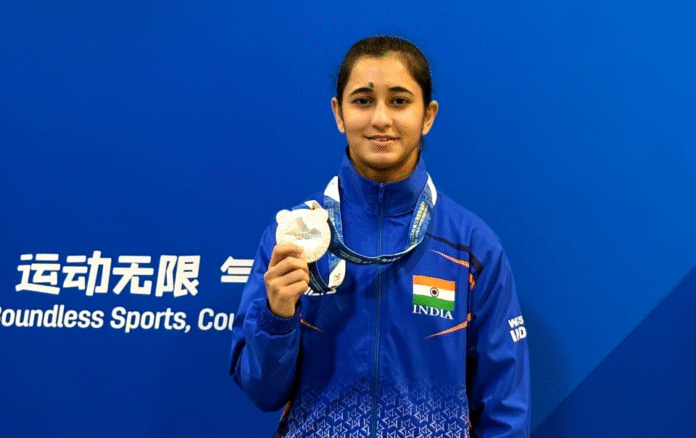
Then came Chengdu, China. The World Games 2025. Namrata faced Krizan Faith Collado of the Philippines in the semifinals. With precision and power, she defeated her 2-0, becoming India’s first-ever Wushu medallist at the World Games. Her performance wasn’t just technical—it was poetic. Every move spoke of years of struggle, every strike echoed the sacrifices of a girl who once didn’t know what she wanted.

“I have to stand like a wall,” she said before the match. And she did.

Legacy Beyond Medals

Namrata Batra’s story is more than a sporting achievement. It’s a narrative of transformation—of how a girl from Mohali, unsure of her path, became a symbol of grit for an entire nation. Her journey has inspired countless young athletes, especially girls who are told to stay quiet, stay safe, stay small. She received the State Award from Madhya Pradesh, but her real reward lies in the hearts she’s ignited.

The Fighter Who Never Gave Up

Namrata’s life reminds us that greatness doesn’t always begin with a dream. Sometimes, it begins with a detour. A nudge. A one-month trial. And then, with courage, it becomes a legacy.