Home Blog Page 207

From Fired CEO to AI Visionary: The Parag Agrawal Story

0

(PC: The India Info)

Who Is Parag Agrawal?

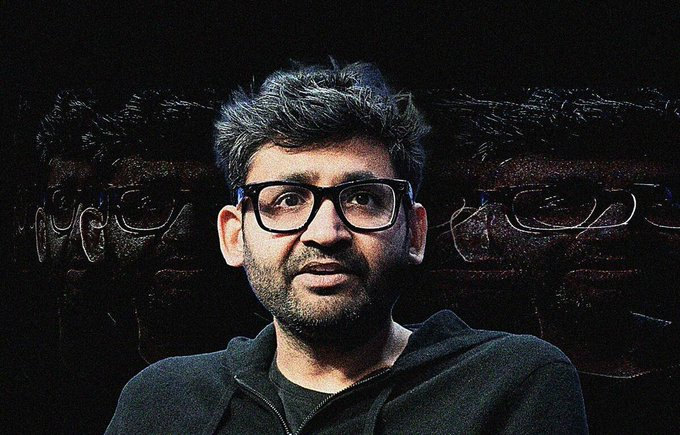
Parag Agrawal is an Indian-born American technologist and software engineer. Born in Ajmer, Rajasthan, he was a gold medalist at the International Physics Olympiad and later earned a B.Tech in Computer Science from IIT Bombay. He pursued his PhD in Computer Science at Stanford University, specializing in data management and machine learning. Agrawal joined Twitter in 2011 as a software engineer and rose through the ranks to become Chief Technology Officer (CTO) in 2017. In November 2021, he was appointed CEO of Twitter, succeeding Jack Dorsey

The Firing: Elon Musk’s Twitter Takeover

In October 2022, Elon Musk completed his $44 billion acquisition of Twitter. Within hours of the deal closing, Musk fired Parag Agrawal along with other top executives. The dismissal was abrupt—Agrawal was reportedly escorted out of Twitter’s San Francisco office the same day.Musk had previously expressed dissatisfaction with Twitter’s leadership, and leaked messages revealed he felt Agrawal “got nothing done.” Despite the harsh exit, Agrawal walked away with a severance package estimated to be worth up to $50 million.

The Comeback: Parallel Web Systems Inc.

After keeping a low profile post-Twitter, Agrawal re-emerged in 2023 with a bold new venture: Parallel Web Systems Inc., a Palo Alto–based AI startup. The company has already raised $30 million (₹260 crore) from top investors like Khosla Ventures, Index Ventures, and First Round Capital. Parallel is building infrastructure for AI agents to conduct deep, real-time research across the web. Its flagship product, the Deep Research API, allows AI systems to:

  • Search the internet intelligently
  • Verify sources
  • Organize and contextualize information
  • Automate complex workflows

The startup’s most advanced engine, Ultra8x, has reportedly outperformed OpenAI’s GPT-5 and even human researchers on benchmarks like BrowseComp and DeepResearch Bench.

Why Parallel Matters

Agrawal believes the internet was built for humans—but the future belongs to AI. Parallel aims to create a “programmatic web” designed for machines, not clicks and ads. Use cases include:

  • Coding assistants pulling live data from GitHub
  • Retailers tracking competitor catalogs
  • Analysts compiling market reports
  • Insurance firms automating claims with web-sourced verification

Agrawal’s vision is to redefine how AI interacts with the web, making it faster, smarter, and more accurate.

What’s Next?

With Parallel, Parag Agrawal isn’t just building a company—he’s rewriting his legacy. From being fired in a corporate shake-up to leading one of Silicon Valley’s most promising AI startups, his journey is a testament to resilience, vision, and technical brilliance.

Krishangi Meshram: Indian-Origin Prodigy Becomes England and Wales’ Youngest Solicitor at 21

0

(PC:DESIblitz)

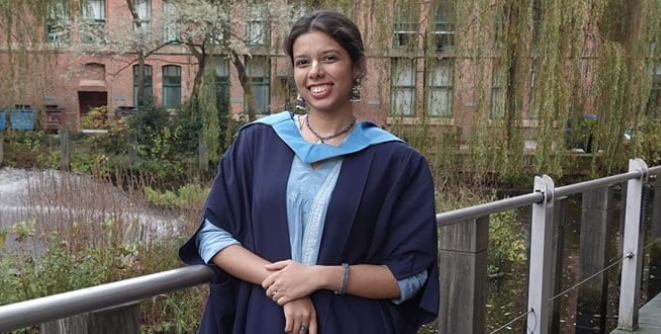
Krishangi Meshram has etched her name in history as one of the youngest solicitors in England and Wales, a remarkable feat that showcases her extraordinary talent and dedication. Born in West Bengal and raised in the serene ISKCON Mayapur community, Krishangi now resides in the UAE, where her journey from a 15-year-old law student to a trailblazing legal professional has inspired many. Her story is a testament to perseverance, early ambition, and the power of flexible education, making her a proud symbol of Indian excellence on a global stage.

A Prodigious Start: Law Studies at 15

Krishangi’s legal journey began at an age when most are navigating high school. At 15, she completed her secondary education at an international school in Mayapur, West Bengal, and enrolled in a law degree program at The Open University (OU) in the UK. Her decision to pursue a British degree while staying close to her family in India highlights her determination to balance ambition with personal values. By 18, Krishangi graduated with a First-Class Honours Bachelor of Laws (LLB), becoming the youngest law graduate in OU’s history—a milestone that marked the beginning of her record-breaking path.Completed secondary education at 15 from an international school in Mayapur.Earned a First-Class Honours LLB from The Open University by 18.
Became the youngest OU law graduate in 2022.

From Passion to Profession: A Meteoric Rise

Krishangi’s passion for law was sparked early, ignited by a short course at Harvard University that resonated with her values of justice and fairness. This early exposure, combined with the disciplined and nurturing environment of ISKCON Mayapur, shaped her focus and self-discipline, allowing her to excel in a competitive field. After her LLB, she pursued a Master’s degree and completed the Legal Practice Course (LPC), earning distinctions in both. In April 2025, at just 21 years and four months, Krishangi cleared the Solicitors Qualifying Examination (SQE), officially becoming one of the youngest solicitors in England and Wales.

Her academic excellence was complemented by practical experience, as she secured a role at an international law firm in 2022, gaining valuable experience in Singapore. Her global perspective, shaped by travels to over 30 countries, has equipped her with cultural fluency and adaptability, enhancing her legal expertise.

A Beacon of Inspiration Krishangi credits

The Open University’s flexible learning model for her success, which allowed her to start her LLB at 15 and balance studies with family life and travel. She expressed gratitude, stating, “The Open University didn’t just help me start my studies; it helped me believe in my potential.” Her parents, Tapan and Indira Meshram, shared their pride, noting, “We encouraged her to give it her best, but we couldn’t have anticipated such a remarkable outcome.”

Krishangi’s upbringing in the serene ISKCON Mayapur community, away from “toxic academic competition,” instilled discipline and introspection, which her father credits for her early success. Her story, celebrated by outlets like The Law Society Gazette and OU News, serves as an inspiration for young aspirants worldwide, proving that age is no barrier to achieving greatness with determination and opportunity.

India’s First Solar Track Unveiled in Varanasi: A Leap Toward Sustainable Railways

0

(PC: Ministry Of Railways)

In a landmark move toward green energy, Indian Railways has commissioned the nation’s first removable solar panel system installed between railway tracks at Banaras Locomotive Works (BLW), Varanasi. Inaugurated on Independence Day, this pioneering initiative marks a significant stride in the country’s journey toward net-zero carbon emissions by 2030.

Project Highlights

  • Location: Line No. 19, Banaras Locomotive Works (BLW), Varanasi
  • Length of Installation: 70 meters
  • Number of Panels: 28
  • Installed Capacity: 15 kWp
  • Power Density: 220 kWp/km
  • Energy Output: 880 units/km/day (approx. 3.21 lakh units/year/km)

Technical Breakdown In Simple Terms

The solar panels installed between the railway tracks are pretty sleek and efficient. Each panel measures about 2.2 meters long and 1.1 meters wide, with a thickness of just 3 cm. They weigh around 32 kg each—not too heavy, considering their power. These panels use advanced monocrystalline PERC bifacial cells, which means they can absorb sunlight from both sides, boosting energy output. There are 144 half-cut cells in each panel, designed to improve performance even in low light or partial shading.

In terms of efficiency, they’re top-notch—each panel converts sunlight into electricity at a rate of 21.31%, which is considered excellent in solar tech. To keep them firmly in place, engineers used a combination of epoxy adhesive and rubber pads. This setup helps absorb vibrations from passing trains and keeps the panels stable. Plus, they’re mounted with stainless steel Allen bolts, making them easy to remove for cleaning or maintenance. The system is built to handle high voltage—up to 1500 volts—and meets Class A safety standards, which ensures durability and protection against electrical hazards.

Why It Matters

  • No Land Acquisition Needed: Utilizes space between tracks, avoiding costly land purchases.
  • Maintenance-Friendly: Removable design allows for easy cleaning and track upkeep without disrupting train operations.
  • Scalable Model: If expanded across India’s 1.2 lakh km rail network, it could revolutionize energy generation for stations, signaling systems, and grid support.

A Step Toward Net-Zero

This initiative complements Indian Railways’ broader renewable energy strategy, which includes rooftop solar installations and large-scale solar procurement. Developed indigenously by BLW engineers, the project showcases India’s capability to innovate sustainable infrastructure solutions. General Manager Naresh Pal Singh praised the team’s efforts, calling it “a new dimension in solar energy utilization” and a model for future green energy projects across the railway network.

Cambridge Dictionary Adds Gen Z Slang: “Delulu,” “Trade Wife,” and More Join the Lexicon

0

(PC:currentpak),


In a move that reflects the ever-evolving nature of language and the cultural influence of younger generations, the Cambridge Dictionary has officially added several Gen Z slang terms to its online edition, including “delulu,” “trade wife,” “girl dinner,” and “situationship.” The update marks a significant shift in how mainstream institutions are recognizing the linguistic creativity of internet-born expressions.

From TikTok to Textbook
The newly added words have gained traction through social media platforms like TikTok, Instagram, and X (formerly Twitter), where Gen Z users have redefined communication with humor, irony, and emotional nuance. “Delulu,” short for “delusional,” is often used playfully to describe someone who indulges in unrealistic fantasies—especially in romantic contexts. “Trade wife,” meanwhile, refers to a woman who embraces traditional domestic roles, often with a modern twist of empowerment and aesthetic curation.

  • Delulu: A playful twist on the word “delusional.” It’s used to describe someone who indulges in unrealistic fantasies, often about love or success. For example, thinking your crush will propose after one smile? That’s peak delulu.
  • Skibidi: a playful, nonsensical slang term from Gen Alpha that can mean “cool,” “weird,” or simply be used for chaotic fun—originating from the surreal YouTube series Skibidi Toilet
  • Trade wife: Refers to a woman who embraces traditional domestic roles—like cooking, cleaning, and homemaking—but often with a modern, empowered flair. Think vintage aprons, sourdough starters, and a curated life that’s part aesthetic, part lifestyle choice.
  • Girl dinner: A quirky term for a meal made up of snacks or random bites, usually low-effort and high on comfort. It’s not about nutrition—it’s about freedom. Cheese, pickles, crackers, maybe a cookie? That’s a girl dinner.
  • Situationship: A romantic or sexual relationship that’s undefined—somewhere between friendship and dating, but without clear labels or commitment. It’s complicated, but also kind of the point.
  • Goblin mode: A state of unapologetic laziness or messiness. It’s about rejecting societal expectations and embracing your inner chaos—staying in bed all day, eating junk food, and not caring what anyone thinks.

Why It Matters
Cambridge’s editorial team emphasized that these additions reflect the dictionary’s commitment to documenting real-world usage. “Language is shaped by the people who use it,” said Wendalyn Nichols, Publishing Manager at Cambridge. “Gen Z has brought a fresh, playful energy to English, and we’re here to capture that.”

Who is Amreen Kaur marrying Himachal Pradesh Minister Vikramaditya Singh. She Is PhD in Psychology, Howard University Graduate, and Soon-to-Be Queen of Bushahr

0

Himachal Pradesh’s Public Works and Urban Development Minister and heir to the Bushahr royal family, Vikramaditya Singh, is set to marry for the second time. He will tie the knot with Dr. Amreen Kaur, a resident of Chandigarh, on September 22, 2025.

Wedding Details

The wedding ceremony will take place at Dr. Amreen’s residence — House No. 38, Sector-2, Chandigarh — with rituals beginning at 10 AM, followed by a lunch reception at 1 PM. The wedding card has been formally released, generating widespread curiosity about the soon-to-be bride.

Who is Dr. Amreen Kaur?

Dr. Amreen Kaur is currently an Assistant Professor of Psychology at Punjab University, Chandigarh. She holds a PhD in Psychology and has completed her Master’s degrees in English and Psychology. Amreen is a graduate of Howard University, USA.

She is the daughter of Sardar Jotindra Singh Sekho and Sardarni Opinder Kaur, residents of Sector-2, Chandigarh.

Vikramaditya’s First Marriage and Divorce

Vikramaditya Singh was previously married to Sudarshana Chundawat of the Amet royal family in Rajsamand, Rajasthan. The two were married in a grand ceremony on March 8, 2019, in Jaipur.

The couple lived together for about 1.5 to 2 years before tensions surfaced. In 2021, Sudarshana publicly alleged that Vikramaditya was involved with another woman from Chandigarh. Following growing estrangement, she moved back to her parental home in Jaipur.

In October 2022, Sudarshana filed a case under the Domestic Violence Act in the Udaipur court. She further alleged that after the death of her father-in-law, former Chief Minister Virbhadra Singh, she faced harassment from Vikramaditya and his family — including his mother Pratibha Singh, sister Aparajita, and brother Angad Singh.

Legal Proceedings and Divorce

Vikramaditya Singh later filed an application to dismiss the domestic violence petition. In an interim order, the Udaipur Family Court directed him to pay ₹4 lakh per month to Sudarshana as maintenance. The case continued for nearly two years before the court finalised the divorce just two months ago.

In Pics: Rajasthan Girl Manika is Miss Universe India 2025, Now Will Represent India in Thailand. Know Who She Is…

0

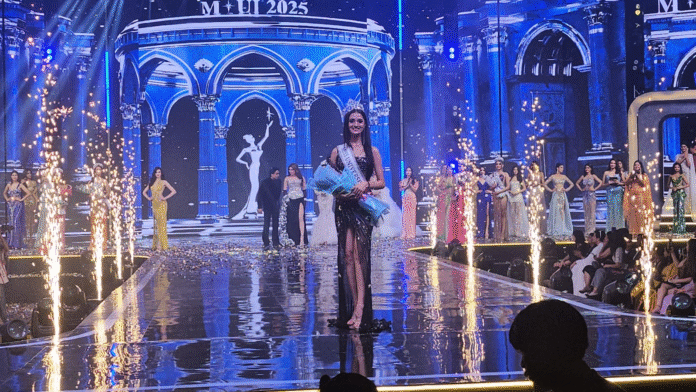
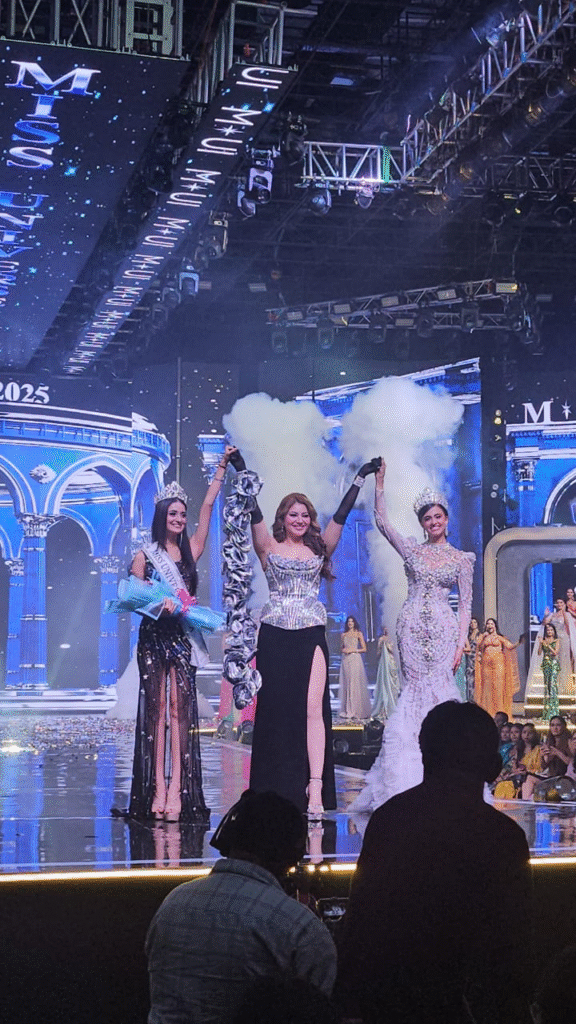
The grand finale of Miss Universe India 2025 lit up Jaipur on Monday night with dazzling lights, music, and glamour as 48 contestants from across the country competed for the coveted crown. Amid cheers, confidence, and talent on display, Rajasthan’s daughter Manika Vishwakarma emerged as the winner, securing the title of Miss Universe India 2025.

Manika outshone her fellow contestants with grace, elegance, and confidence. Tanya Sharma was declared the first runner-up. The glittering event took place in Sitapura, Jaipur, where thousands of spectators witnessed the vibrant celebration of beauty and culture.

The finale was judged by Miss Universe India owner Nikhil Anand, actress and Miss Universe India 2015 Urvashi Rautela, and filmmaker Farhad Samji. Speaking at the event, Anand said Jaipur was chosen as the venue to highlight the city’s rich art and culture. Bharat 24 CEO Jagdish Chandra also graced the occasion.

In Pics: Rajasthan Girl Manika is Miss Universe India 2025, Now Will Represent India in Thailand. Know Who She Is...

The evening was not only about competition but also entertainment. Contestants and performers enthralled the audience with superhit songs including “Dheere Dheere Se Meri Zindagi Mein Aana”, “Rahon Mein Unse Mulakat Ho Gayi”, and “Tujhe Dekha To Yeh Jaana Sanam”. The crowd came alive when “Saiyyara” and the evergreen “Dama Dam Mast Kalandar” were performed, with the audience singing and dancing along.

Manika Vishwakarma will now represent India at the prestigious Miss Universe 2025 competition, scheduled to be held in Thailand on November 21, 2025. Her victory has not only brought pride to Rajasthan but also raised hopes for India to shine on the global platform.

This year’s pageant saw participants from multiple states, including Madhya Pradesh, Chhattisgarh, Haryana, Odisha, West Bengal, Jammu and Kashmir, Gujarat, Uttar Pradesh, Punjab, Maharashtra, Jharkhand, and Delhi. Each contestant showcased her individuality, but it was Manika’s confidence, presence of mind, and elegance that ultimately impressed the jury.

With her triumph, Manika joins the league of Indian beauty queens who have gone on to make a mark internationally. The entire nation now looks forward to her performance at Miss Universe 2025 in Thailand, where she will carry the country’s pride and aspirations.

“Zakir Khan” Made Us Laugh, Then Made History: Zakir’s Hindi Stand-Up Shakes Madison Square Garden

0

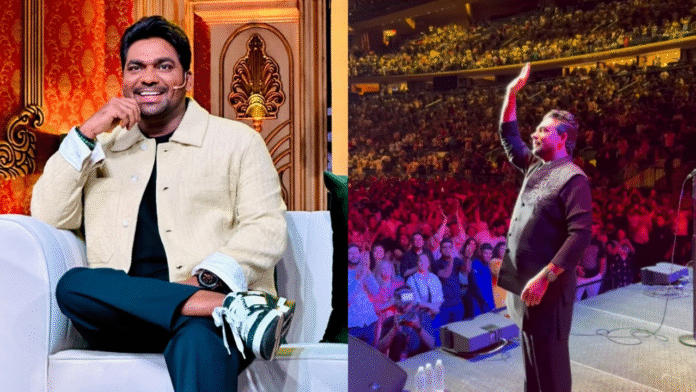
Zakir Khan isn’t just a comedian—he’s the voice of a generation. With his signature blend of humor, heartbreak, and honesty, he transformed everyday struggles into soulful stories that resonate deeply with Indian youth. Born in Indore and raised in a family of musicians, Zakir’s journey from small-town dreams to global recognition is nothing short of inspiring. He made history by becoming the first Indian to perform a full Hindi stand-up set at Madison Square Garden, proving that authenticity speaks louder than language barriers. His words don’t just make us laugh—they remind us that even the most ordinary lives are filled with extraordinary meaning

The Melody Before the Mic

Zakir Khan was born on August 20, 1987, in Indore, Madhya Pradesh, into a family steeped in music and culture. His father, Ismail Khan, is a classical musician, and Zakir himself trained as a sitar player. His grandfather, Ustad Moinuddin Khan, was a revered Sarangi maestro. Zakir’s childhood was filled with ragas, rhythms, and the rawness of middle-class life—where dreams were often too expensive to afford, but never too small to nurture. He wasn’t the class topper. He wasn’t the loudest in the room. But he was the quiet observer—the one who noticed the cracks in conversations, the unsaid emotions, and the comedy hidden in tragedy.

Struggles: The Unseen Chapters

Zakir moved to Delhi to pursue a diploma in Sitar, but life had other plans. He faced rejection after rejection, worked odd jobs, and even considered giving up. He was broke, heartbroken, and invisible in a city that didn’t care. But he kept writing. Kept observing. Kept believing. His breakthrough came when he joined On Air with AIB as a writer. His raw, relatable humor caught attention, and soon he was performing stand-up. But it wasn’t just jokes—it was storytelling. It was therapy. It was truth wrapped in punchlines.

The Turning Point: “Sakht Launda” & Beyond

In 2016, Zakir’s stand-up special Haq Se Single exploded across the internet. His persona of the “sakht launda”—a guy who’s been through heartbreak but doesn’t show it—became a cultural phenomenon. Young Indians saw themselves in him. He wasn’t just making them laugh; he was healing them.

From there, his rise was meteoric:

  • Multiple sold-out tours across India and abroad
  • Amazon Prime specials like Kaksha Gyarvi and Tathastu
  • Creator of Farzi Mushaira, a poetic show blending humor and emotion
  • Actor and writer in Chacha Vidhayak Hain Humare
  • And in 2022, the first Indian to perform a full Hindi set at Madison Square Garden—a moment that felt like every small-town dream had finally made it to the big city.

Why He More Than a Comedian

Zakir Khan is not just a performer. He’s a mirror to the Indian youth. His words speak of heartbreak, hustle, family pressure, failed dreams, and the beauty of resilience. He taught us that it’s okay to cry, okay to fail, and okay to laugh through it all. He made Hindi cool again. He made poetry relevant. He made vulnerability powerful.

And as he often says,
“Log kehte hain ki asli mard dard nahi dikhata… par asli mard dard mehsoos karta hai.”

Zakir Khan is every broken heart that learned to smile again. Every middle-class boy who dared to dream. Every Indian youth who now believes that their story matters.

Framed in Courage: The Untold Story of India’s First Female Photographer

0

A World Before the Click

Today, photography is everywhere. A swipe, a tap, a filter — and suddenly, a moment is immortalized. From selfies to sunsets, it’s a daily ritual, a creative outlet, a favorite pastime. But rewind a century, and photography was anything but casual. It was a craft wrapped in complexity, a pursuit reserved for the privileged few — and almost exclusively men.

Imagine a time when cameras were bulky contraptions, film had to be developed in darkrooms, and society frowned upon women stepping beyond the domestic threshold. In that world, one woman dared to lift the lens and point it toward history. Her name was Annapurna Dutta, and she didn’t just take photographs — she shattered norms.

Who Was Annapurna Dutta?

Born in 1894 in undivided Bengal, Annapurna Dutta grew up in a society where women were expected to remain behind the purdah, confined to domestic life. At just 12 years old, she was married to Upendranath Dutta, a lawyer and amateur photographer. It was through him that she first encountered the magic of the camera — not as a passive observer, but as a curious learner. By the age of 25, Annapurna had mastered the art of photography and turned it into her profession. But unlike her male counterparts who operated studios, she didn’t own one. Instead, she traveled to the homes of affluent families, often photographing women who lived in seclusion. Her subjects were captured in their natural domestic environments — surrounded by loved ones, heirlooms, and tradition.

She developed and printed the photographs herself, often working late into the night. Her lens didn’t discriminate — she photographed Hindu and Muslim elites, including notable figures like Hassan Suhrawardy, Jasimuddin, and Abbas Uddin Ahmed.

The title : Photographer Mashima

In an era when women were rarely seen in professional spaces, Annapurna became known as “Photographer Mashima” — a respectful title that blended familial warmth with professional admiration. Her work was more than portraiture; it was a quiet rebellion. She gained access to spaces where even male photographers were denied entry, photographing women in purdah with grace and sensitivity.

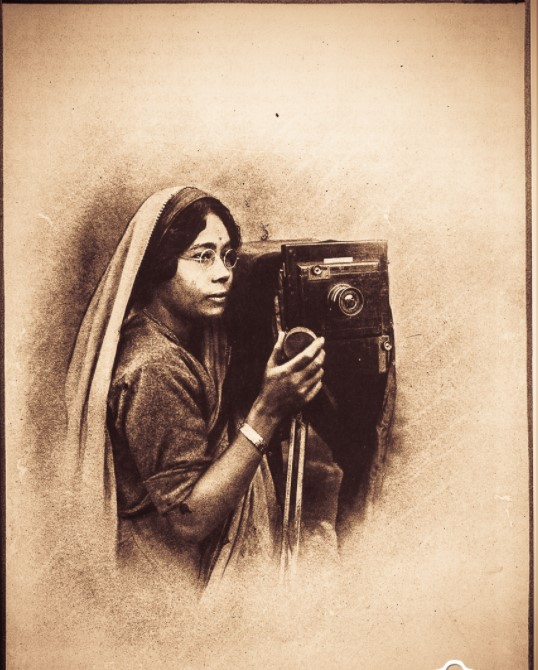
Her most iconic image? A self-portrait, standing beside her plate camera, dressed in traditional attire, holding the lens cap — a symbol of her dual identity as a homemaker and a pioneer.

The Landscape of Female Photographers Today

Fast forward to the present, and the scene has transformed. Women photographers are now celebrated across genres — from fashion and wildlife to war journalism and documentary. Names like Homai Vyarawalla, Dayanita Singh, and Rathika Ramasamy have carved their own legacies. Yet, challenges remain. Gender bias, safety concerns, and unequal opportunities still shadow the industry. But thanks to trailblazers like Annapurna, the path is clearer, the lens more inclusive.

Annapurna Dutta didn’t just take photographs — she captured courage. Her story is a reminder that creativity often blooms in resistance. In a time when photography was a male-dominated fortress, she built her own doorway — not with bricks, but with light, shadow, and vision. So the next time you snap a photo, remember: behind that simple click lies a century of struggle, artistry, and the quiet defiance of a woman who saw the world differently — and dared to show it.

World Photography Day: Capturing Memories, Emotions, Stories, and Moments That Last a Lifetime

0

A Picture Speaks a Thousand Words

They say a single photograph is worth a thousand words, and indeed, a picture captures far more than just a moment—it holds memories, emotions, and stories that connect us to the past. World Photography Day, celebrated annually on August 19, is a tribute to this timeless art form that preserves laughter, mistakes, and cherished moments. It’s a day to honor the passion for photography, which allows us to freeze time and relive the beauty of life’s fleeting moments.

The Origins of World Photography Day

World Photography Day commemorates the historic announcement by the French government in 1839, when the Daguerreotype process—the first publicly available form of photography—was introduced to the world. This groundbreaking moment marked the birth of photography as we know it. Today, this global event unites photographers and enthusiasts worldwide, who come together to share their creations and celebrate their love for capturing life through a lens.

World Photography Day: Capturing Memories, Emotions, Stories, and Moments That Last a Lifetime

The 2025 Theme: “My Favorite Photo”

The theme for World Photography Day 2025, “My Favorite Photo,” invites photographers to share not just their best shots but also the personal stories behind them. This theme emphasizes the deep emotional connection between a photographer and their work. Whether it’s a candid snapshot of a loved one, a breathtaking landscape, or a moment of raw emotion, every photo tells a unique story that resonates with the heart.

Photography: More Than Just a Picture

Photography is not merely about clicking a shutter; it’s about preserving emotions and moments that might otherwise fade. A photograph can transport us back to a time when we laughed until our sides hurt, made mistakes that taught us valuable lessons, or met someone we may never see again. It’s a medium that immortalizes the human experience, connecting us to our past and to each other.

The Evolution of Photography

The journey of photography began in 1826 when Joseph Nicéphore Niépce created the world’s first photograph using a camera obscura and a tin plate. From that rudimentary invention to the cutting-edge mirrorless cameras of 2025, the art of photography has been driven by a relentless passion for innovation. The desire to capture memories, express love for nature, or play with the interplay of light has led to the development of countless cameras and techniques over the centuries. Each advancement has made photography more accessible, allowing people to document their lives with unprecedented clarity and creativity.

India–UK Comprehensive Economic and Trade Agreement 2025: Digital Trade at the Core

0

The India–United Kingdom Comprehensive Economic and Trade Agreement (CETA) 2025 marks a significant step in bilateral economic relations, with a dedicated focus on digital trade. Chapter 12 of the pact outlines provisions that aim to expand digital cooperation while balancing regulatory oversight, opening fresh opportunities for businesses but also raising debates around digital sovereignty.

India–UK Digital Agreement

The digital trade chapter recognises electronic signatures and contracts, easing compliance for companies engaged in cross-border business. This is expected to streamline India’s $30 billion software export market by reducing paperwork and cutting transaction costs. Both countries also agreed to maintain zero customs duties on electronic transmissions, reinforcing the free flow of digital goods and services.

Importantly, the pact introduces regulatory sandboxes, encouraging experimentation by data-driven businesses and startups. This is being seen as a strategic move to integrate India more deeply into the global digital economy.

Key Digital Benefits

The agreement facilitates paperless documentation, e-invoicing, and smoother market access for SMEs. Indian IT companies will be able to participate in British public procurement, a sector that offers large opportunities. The inclusion of social security waivers for short-term assignments further reduces costs for employers and employees alike.

While the pact is primarily focused on services, Indian textile exports will also gain from tariff reductions, supporting regional economies. Together, these measures promise to create a more predictable and expansive trade corridor between India and the UK.

Concerns Over Digital Sovereignty

Despite the benefits, concerns remain. Critics argue that India has diluted its regulatory autonomy by restricting routine source-code inspections, allowing access only during investigations or legal proceedings. Although government procurement remains exempt, the limited scope for proactive oversight could hinder India’s ability to safeguard digital governance.

The agreement does include security exceptions to protect critical infrastructure, yet the absence of built-in monitoring mechanisms leaves questions about long-term digital sovereignty.

Strengthening Oversight

Experts suggest that India could mitigate risks by accrediting trusted laboratories to conduct sensitive code reviews under strict safeguards. Mandating audit trails for cross-border data flows would further enhance accountability. The agreement’s voluntary stance on open government data also requires a clearer policy framework to ensure transparency and reuse.

Currently, a formal review of digital trade rules is scheduled in five years. However, many experts recommend a shorter three-year cycle, allowing India and the UK to adapt to rapid technological advances, especially in fields such as artificial intelligence