Home Blog Page 205

Sustaining A Green Legacy With Guinness World Record-Breaking Idols, Tejukaya Mandal’s 22-Foot Eco-Friendly Paper Ganpati.

0

Mumbai’s Tejukaya Public Ganeshotsav Mandal is once again in the spotlight as it upholds its eco-conscious tradition with a stunning 22-foot paper Ganpati idol for Ganesh Chaturthi 2025. Renowned for its commitment to environmental sustainability, the mandal, led by artisan Rajan Zad and his dedicated team, has been crafting environmentally friendly idols since 2019. Their efforts earned them a Guinness World Record in 2019 for creating the world’s largest eco-friendly Ganpati, a legacy they proudly continue this year as they approach their Silver Jubilee.

A Tradition Rooted in Sustainability

Since 2019, Tejukaya Mandal has championed eco-friendly Ganesh Chaturthi celebrations by crafting idols made entirely from biodegradable materials. The 2025 idol, a towering 22-foot masterpiece, is constructed using paper pulp, clay, bamboo, and other natural, environmentally friendly materials. Designed by Rajan Zad and his team of 10-15 skilled artisans, the idol is a testament to the mandal’s dedication to preserving both cultural heritage and the environment.The use of natural, non-toxic colors ensures that the idol is safe for the environment, while its biodegradable composition allows it to dissolve easily in water during immersion, leaving no harmful residue. This thoughtful approach to idol-making reflects the mandal’s mission to promote sustainable practices during one of India’s most cherished festivals.

A Guinness World Record

In 2019, Tejukaya Mandal made history when its 22-foot paper Ganpati was recognized by the Guinness World Records as the largest eco-friendly Ganpati idol in the world. This achievement not only highlighted the mandal’s innovative craftsmanship but also brought global attention to the importance of eco-conscious celebrations. The 2025 idol continues this proud tradition, reinforcing the mandal’s commitment to environmental stewardship while maintaining the grandeur of the festival.Rajan Zad, whose family has long been associated with crafting the iconic Tejukaya Ganpati, leads the team in designing and constructing the idol. His vision blends tradition with sustainability, ensuring that each idol is both a work of art and a step toward a greener future.

Responsible Immersion at Chowpatty

The Tejukaya Mandal takes great care during the visarjan (immersion) process to minimize environmental impact. The massive 22-foot idol is carried by devotees to Chowpatty, where it is immersed with precision and respect. The biodegradable materials ensure that the idol dissolves responsibly in water, avoiding the pollution often associated with traditional idol immersions.

A Legacy of Devotion and Innovation

Established in 2002, Tejukaya Mandal is gearing up for its 24th year of celebrations in 2025, with its Silver Jubilee on the horizon. The mandal’s focus on eco-friendly practices has inspired countless others to adopt sustainable methods during Ganesh Chaturthi. By combining artistry, devotion, and environmental consciousness, Tejukaya Mandal sets a powerful example for communities across India.As Rajan Zad and his team continue to innovate, their 22-foot paper Ganpati stands as a symbol of devotion, creativity, and a commitment to preserving the planet for future generations. In 2025, Tejukaya Mandal’s eco-friendly Ganpati not only celebrates Lord Ganesha but also reinforces the importance of sustainability in cultural traditions.

What Is IADWS? Know All About It, Is Not A Single Weapon But A Networked Defence Ecosystem.

0

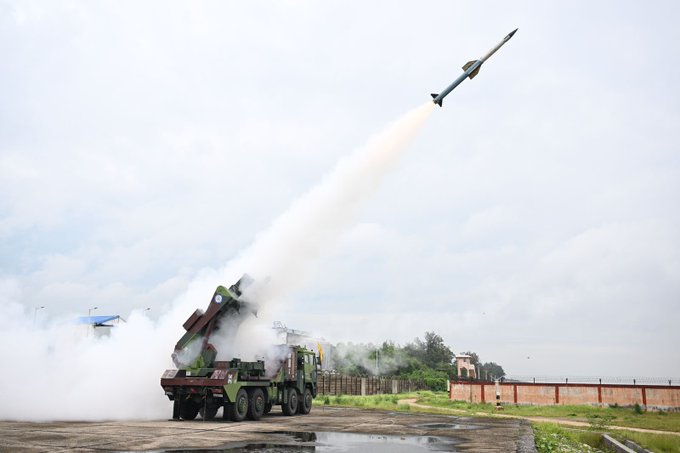
In an era where aerial warfare is evolving rapidly—from stealth aircraft to drone swarms—the need for a robust, responsive, and intelligent air defence system has never been greater. Enter the Integrated Air Defence Weapon System (IADWS), India’s multi-layered solution to counter airborne threats and safeguard its strategic assets.

What Is IADWS?

IADWS is not a single weapon but a networked system combining multiple technologies to detect, track, and neutralize airborne threats like aircraft, drones, and missiles. It includes:

  • QRSAM (Quick Reaction Surface-to-Air Missiles): Mobile missile systems designed to protect moving army units from aerial attacks.
  • VSHORADS (Very Short Range Air Defence System): Portable missile systems for close-range defence.
  • DEW (Directed Energy Weapon): High-powered laser weapon capable of disabling targets with precision.

Why Is It Important?

  • National Security: It forms a protective shield over vital areas like the National Capital Territory of Delhi.
  • Multi-Layered Defence: Offers layered protection by engaging threats at different ranges and altitudes.
  • Indigenous Capability: Developed by DRDO, showcasing India’s growing self-reliance in defence tech.
  • Strategic Deterrence: Sends a strong message to adversaries, especially amid rising tensions in the Indo-Pacific region.

How Does It Work?

An effective IADWS performs three core functions:

  1. Air Surveillance: Radar systems detect incoming threats.
  2. Battle Management: Centralized command decides how to respond.
  3. Weapons Control: Launches the appropriate missile or laser to neutralize the threat.

‘Blood Moon Festival’ to Debut in the Desert; Astronomers to Witness Live Lunar Eclipse in Jaisalmer

0

For the first time, Jaisalmer will host a unique confluence of astronomy, art, music, and culture under the desert sky. The ‘Blood Moon Festival’ will be organized from 6 to 8 September at the Shama Desert Camp in Lunar Village, Samjyajalar. The three-day event, curated by Starscape, is expected to draw over 100 participants from across the country, including astronomers, photographers, and art enthusiasts.

Starscape’s Chief Productivity Officer, Kunal, said this is the first event of its kind in the Golden City. “Since the moon takes on a bright red hue during a lunar eclipse, we decided to name it the ‘Blood Moon Festival.’ The lunar eclipse will occur on the night of 7 September, between 9:30 pm and midnight, and will be the highlight of the festival,” he explained.

According to organizers, the sandy dunes of Sam were chosen as the venue because of their clear skies and minimal light pollution, offering an ideal view of celestial events. High-powered telescopes will be installed to give visitors a close-up experience of the eclipse and the desert night sky.

In addition to sky-gazing, the festival will feature cultural performances, art exhibitions, and musical evenings, creating a blend of science and culture under the stars. “It will be a once-in-a-lifetime experience where people can connect with both the cosmos and the rich heritage of Rajasthan,” Kunal added.

The festival aims to popularize astronomy among the public while celebrating the desert’s natural beauty, making Jaisalmer not just a tourist destination but also a hub for stargazing enthusiasts.

Surprising: Logo Change Results in Billion Dollar Loss to Cracker Barrel’ Restaurant Chain

0

“Can you imagine a logo change causing a company to lose millions? Yes, it can — just ask Cracker Barrel.”

Cracker Barrel’s attempt to modernize its image backfired on Wall Street this week. The restaurant chain unveiled a new logo, stripping away its iconic man-and-barrel design, and almost immediately saw its stock plunge — wiping out close to $100 million in market value in a single day.

Surprising: Logo Change Results in Billion Dollar Loss to Cracker Barrel' Restaurant Chain

Cracker Barrel lost almost $100 million in market value on Thursday after its stock tumbled following the release of a controversial new logo.

The restaurant chain replaced its decades-old emblem — a sketch of a man in overalls leaning against a barrel — with a simplified design featuring only the company’s name. The change sparked strong reactions from investors and customers alike.

Shares of Cracker Barrel fell $4.22, or 7.2%, to $54.80 in Thursday trading, wiping out about $94 million in market capitalization. Earlier in the day, the stock briefly dipped as low as $50.27, at one point erasing nearly $200 million in value.

Although shares rebounded slightly in early trading Friday, the momentum didn’t last. The stock ended the session down another 40 cents, or less than 1%, closing at $54.40.

The market’s response highlights the risks companies face when altering iconic branding. Cracker Barrel has been seeking to modernize its image through updated menus and remodeled stores, moving away from its “old country store” aesthetic that defined the chain for more than five decades.

According to the company’s website, the original man-and-barrel logo symbolized the traditional country store experience where “folks would gather around and share stories.” The new minimalist branding is intended to align with the chain’s evolving strategy to attract a younger, more diverse customer base.

Industry analysts note that while brand refreshes can help companies stay relevant, they also risk alienating longtime loyal customers. For Cracker Barrel, the immediate sell-off underscores Wall Street’s skepticism about whether the new look will resonate with diners or hurt the chain’s identity.

How to Refresh with Mindful Digital Breaks

0

The modern world never stops buzzing. Notifications, meetings, and endless feeds make it hard to unplug. Yet, our minds and bodies need pauses as much as they need activity. Taking mindful digital breaks can be the difference between running on empty and feeling refreshed enough to face challenges with clarity.

Not every break has to involve a walk or a yoga session. Sometimes the right reset comes from a lighthearted diversion. Platforms like ko789 offer an easy way to enjoy a short, casual game session. Used thoughtfully, these micro-breaks add fun and balance to a busy day without pulling you too far away from your goals.

Photo by cottonbro studio

Why Breaks Matter More Than Ever

Breaks have always been part of human rhythm. Ancient cultures valued pauses through rituals, siestas, or time spent outdoors. Today, our version often involves screens, and while that gets a bad reputation, not all screen time is harmful. The key is how we engage with it.

Short breaks give the brain a reset. Studies show they can improve focus, reduce stress, and even boost creativity. A short digital escape lets the mind drift away from deadlines and decision-making, helping you come back sharper.

The Science Behind Mini Escapes

When we step away from tasks, our brains enter what psychologists call “default mode.” In this state, new ideas form and memories consolidate. Even a few minutes away can shift us into a more creative mindset.

Digital micro-breaks are uniquely effective because they demand minimal setup. Whether it’s a puzzle game, a quick online slot spin, or a calming video, the activity creates a mental boundary between tasks. That small shift can prevent burnout over long hours.

Choosing Breaks That Truly Refresh

Not all digital pauses are equal. Scrolling social feeds may feel like downtime, but it often adds to stress. The most refreshing breaks are intentional, short, and light.

Here are a few good options:

  • Play a short online game that doesn’t require deep focus.
  • Watch a calming video, like nature clips or travel snippets.
  • Listen to a podcast segment or a couple of songs.
  • Try a guided breathing app for a quick reset.

The trick is keeping breaks mindful. Decide what you’ll do before you start. That way, you avoid falling into endless scrolling and return to your tasks feeling lighter.

Gaming as a Healthy Pause

Gaming has long been painted as a distraction. But in the right context, it can be a tool for balance. Light games—like online slots, simple puzzles, or strategy challenges—offer fast bursts of play. These are different from long gaming sessions that consume hours.

Short gaming breaks give your mind something engaging but low-stakes. That small element of playfulness helps shift energy, ease stress, and restore motivation. The key is setting limits and treating games as a refresh button, not an escape hatch.

How to Avoid Turning Breaks into Distractions

The fine line between refreshing breaks and procrastination comes down to intention. Without limits, breaks can easily spill over. Here are a few ways to keep control:

  • Set a timer: Even five to ten minutes can be enough.
  • Choose simple activities: Pick games or media that you can drop without frustration.
  • Pair breaks with tasks: Use them as rewards after completing a project section.

By putting structure around your pauses, you protect productivity while still giving your mind the care it needs.

Real-Life Benefits of Mindful Digital Breaks

People who embrace intentional breaks often find their days feel smoother. For example, employees working long shifts report lower stress levels when they sprinkle in short gaming or media pauses. Creatives often turn to playful distractions as a way to spark new ideas.

On a personal level, you may notice that after a short digital reset, everyday problems feel less overwhelming. That’s the real power of choosing mindful breaks—they give space for perspective.

Balancing Leisure with Lifestyle

Digital breaks should complement, not replace, other forms of rest. Physical activity, social connections, and outdoor time are still vital. But there’s no need to ignore the value of digital pauses. When balanced with healthy habits, they can be a fun, guilt-free way to recharge.

Think of them as seasoning in a meal. A little adds flavor. Too much overwhelms. Used wisely, online platforms, short games, and digital content are tools for balance in a world that rarely slows down.

How to Refresh with Mindful Digital Breaks

Photo by KATRIN  BOLOVTSOVA

Final Thoughts

Finding your off-switch doesn’t always mean leaving screens behind. Sometimes it’s about reshaping how you use them. Intentional digital breaks—whether through a quick game, a short video, or mindful breathing—can transform the way you handle daily stress.

The goal isn’t to escape but to refresh. With the right habits, even five minutes online can give you the clarity to power through the rest of the day with focus and ease.

No Tik Tok, says Govt in India

0

(PC:pressmediaofindia.com)

The clarification comes after users reported being able to access TikTok’s website without a VPN, sparking widespread rumors of a potential unban. However, officials from the Ministry of Electronics and Information Technology stated unequivocally that no directive has been issued to lift the ban, calling the reports “false and misleading”. TikTok, along with 58 other Chinese apps, was banned in June 2020 under Section 69A of the IT Act, citing concerns over national security, data privacy, and sovereignty following the Galvan Valley clashes.

While the website’s brief accessibility was attributed to a network-level glitch, the app remains unavailable on both Google Play and Apple’s App Store in India. TikTok’s parent company, Byte Dance, confirmed it continues to comply with the government’s directive and has not restored access. Despite improving diplomatic ties between India and China, including resumed trade and upcoming bilateral talks at the SCO Summit, TikTok’s return remains off the table—for now.

Kerala Scripts History as India’s First Fully Digitally Literate State

0


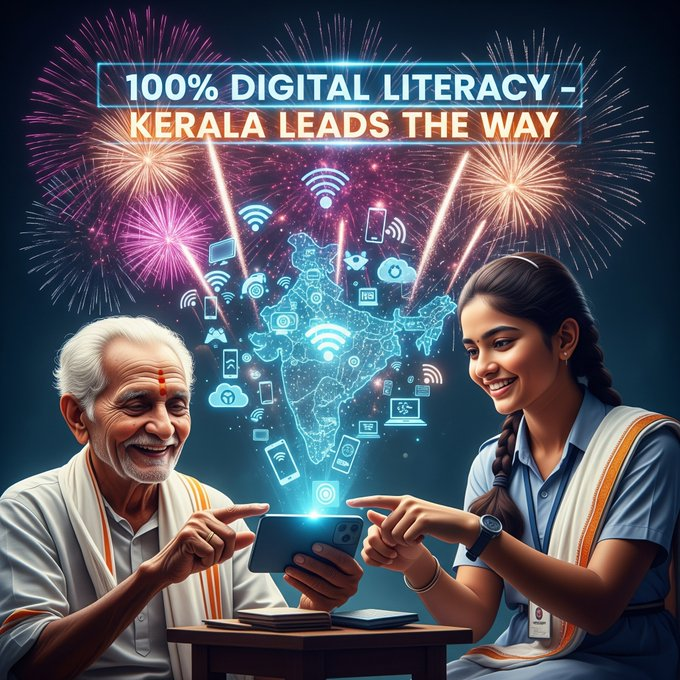
In a milestone moment for India’s digital revolution, Kerala has become the first state in the country to achieve 100% digital literacy. With the successful rollout of the Digi Kerala project, the state has empowered citizens across every age group—from schoolchildren to a 104-year-old learner—with essential digital skills. This landmark not only bridges the digital divide but also sets a replicable model for the rest of the nation, proving that inclusive governance and grassroots participation can truly power a digital future.

Survey and Training Coverage

The Digi Kerala project reached an impressive scale:

  • Surveys covered 1.5 crore people from 83.46 lakh families.
  • It identified 21.88 lakh digitally illiterate individuals.
  • Of these, 21.87 lakh (99.98%) successfully completed training and passed evaluations.

This massive coverage ensured that no demographic group was left behind in Kerala’s digital inclusion journey.

Inclusivity and Accessibility

The programme stood out for its inclusivity. People of all age groups, including senior citizens, were part of the training. A remarkable example was 104-year-old M.A. Abdullah Moulavi Baqavi from Ernakulam district, who completed digital literacy training. The initiative was delivered through local bodies, reflecting Kerala’s robust decentralized governance model. This grassroots approach ensured accessibility and active community participation.

Bridging the Digital Divide

Digital literacy has empowered citizens to access welfare schemes such as Ayushman Bharat, PM-Kisan, and Jan Dhan directly through online platforms, reducing dependency on intermediaries and enhancing financial inclusion. Marginalised groups, women, and rural communities have particularly benefited, breaking long-standing barriers to digital access.

Strengthening Digital Democracy

Equipped with digital skills, citizens can now engage more effectively with government services. From filing grievances and submitting RTI applications to participating in online civic activities, digital literacy is fostering transparency, accountability, and participatory governance.

Alignment with Digital India Mission

Kerala’s success offers a scalable model for other States. Unlike projects focused only on digital infrastructure, Digi Kerala prioritised grassroots-level training, ensuring that digital tools are not only available but also usable by all citizens. This approach resonates with the broader objectives of the Digital India Mission.

Socio-economic Empowerment

Enhanced digital skills are creating new livelihood opportunities, empowering self-help groups, and supporting small businesses and entrepreneurs. By expanding access to markets and financial services, digital literacy is fueling inclusive economic growth and social upliftment.

Building Resilience in Governance

A digitally literate population is better prepared to face crises such as pandemics or natural disasters. Wider access to e-learning platforms, telemedicine, and online public services strengthens governance and improves service delivery.

Kerala’s achievement underscores that digital empowerment is as critical as infrastructure in building a strong, inclusive, and future-ready society.

Haryana Defines Forests

0

The Haryana government issued a formal definition of forest in August 2025. This move follows directives from the Supreme Court of India, which required all states to clarify forest boundaries and conduct surveys. Haryana’s definition aims to align with judicial expectations but has drawn criticism from environmentalists for its narrow scope. The debate centres on the protection of ecologically sensitive areas like the Aravalli ridge.

SC Directive on Forest Definition

Recently, the Supreme Court mandated all states and Union Territories to define forest clearly. The court asked for expert committees to map forest areas using GIS-based tools. These mappings must include forest-like areas, unclassified forests, community forests, and eco-sensitive zones. The court warned that officials failing to comply would be held personally accountable.

Haryana’s Official Forest Definition

Haryana’s Environment, Forest and Wildlife Department defined a forest as land with a minimum size and canopy density. The criteria are

  • At least five hectares if isolated
  • At least two hectares if contiguous with notified forests
  • Minimum canopy density of 40% or more Linear plantations, orchards, and agro-forestry outside notified forests are excluded.

Legal Background

The Forest Conservation Act (FCA) 1980 restricts forest land diversion without central approval. The 1996 Godavarman case expanded the meaning of forest to include all forested lands, regardless of size or status. This broad definition aimed to protect even small forest patches. However, the 2023 FCA amendment narrowed it to only notified forests and government records, triggering legal challenges. The Supreme Court is currently hearing these challenges.

Controversy

Environmentalists argue Haryana’s definition is too restrictive. The 40% canopy density threshold excludes many dry and thorny forests, especially in the Aravalli region. These forests have adapted to low rainfall and poor soil, resulting in sparse vegetation. The minimum area limits of two and five hectares are also seen as too high for dry zones. Critics say this risks exposing sensitive areas to development and mining.

Impact

Haryana’s definition will guide forest surveys and protection measures under the FCA. Clear identification of forests is crucial to prevent illegal land use changes. However, a narrow definition may leave many ecologically important lands unprotected. Balancing environmental conservation with developmental needs remains a key challenge.

Ongoing Legal Process

Following Haryana’s notification, state and district committees can proceed with forest surveys. The Supreme Court will review reports from all states and UTs. The next hearing on the FCA amendment and related issues is scheduled for September 2025. The outcome will influence forest governance across India.

The Rise of the Eurasian Trinity: India, China, and Russia Forge a New Economic Axis

0

(PC:hindupost)

In a world rattled by trade wars and shifting alliances, a quiet but powerful convergence is taking shape across the vast corridors of Beijing, Moscow, and New Delhi. Despite ongoing tariff disputes and geopolitical tensions, India, China, and Russia are assembling a strategic triad that could redefine the global economic order.

A Multipolar World Emerges

What began as diplomatic overtures has evolved into a formidable economic alliance. Experts now refer to this triad as the “Dragon, Bear, and Tiger” coalition—a fusion of China’s manufacturing prowess, Russia’s energy dominance, and India’s booming service economy and untapped consumer base.

Together, these three nations command:

  • $53.9 trillion in GDP (PPP)—nearly one-third of global output
  • $5.09 trillion in exports, fueling innovation and industry across continents
  • $4.7 trillion in foreign reserves, forming a robust economic safety net
  • 3.1 billion citizens, representing 37.8% of the world’s population

Challenging Dollar Dominance

One of the most transformative aspects of this alliance is the push to reduce reliance on the US dollar. Bilateral trade settlements in national currencies—Rupee-Ruble, Yuan-Ruble, and Rupee-Yuan—are gaining traction, shielding these economies from Western sanctions and currency volatility. This shift is not just economic—it’s symbolic. It signals a move away from a unipolar, dollar-dominated system toward a multipolar financial landscape.

Strategic Infrastructure & Connectivity

The triad is also investing heavily in connectivity:

  • Chennai–Vladivostok Maritime Corridor: Slashing trade time between India and Russia
  • International North-South Transport Corridor (INSTC): Linking India to Europe via Iran and Central Asia
  • Northern Sea Route (NSR): A new Arctic trade path bypassing traditional Western-controlled routes

Energy & Technology Synergy

Russia’s energy exports, including discounted crude oil and coal, are powering India’s industrial growth, while China’s tech investments are revitalizing India’s digital infrastructure. Joint ventures in nuclear energy, space exploration, and AI are also accelerating. India’s External Affairs Minister S. Jaishankar recently reaffirmed the strength of the India-Russia strategic partnership, emphasizing cooperation in defense, fintech, and multilateral platforms like BRICS and SCO.

Diplomacy Amid Disputes

While border tensions and trade deficits persist—especially between India and China—leaders are choosing pragmatism over rivalry. Modi’s upcoming visit to China for the SCO Summit marks a seismic diplomatic shift, his first in seven years. Russia, meanwhile, is actively reviving the dormant RIC (Russia-India-China) troika, aiming to institutionalize trilateral cooperation across trade, security, and development.

This strategic triad is more than a geopolitical maneuver—it’s a beacon of economic resilience and regional unity. In an era of fragmentation, India, China, and Russia are proving that ancient civilizations can forge modern partnerships to shape a fairer, more balanced global future.

Can Trash Really Buy You a Hot Plate of Poha in Bhopal? Turning Plastic Bottles into Grocery Bags to Clean the City, One Plate Poha At A Time

0

(PC:Harubhuninews)

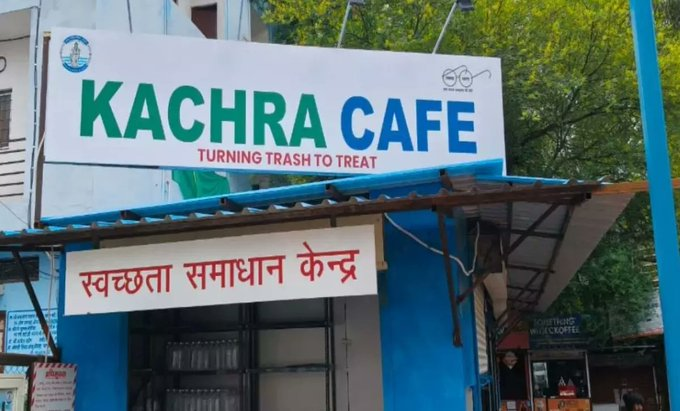
In a bold move that blends compassion with innovation, the Bhopal Municipal Corporation (BMC) has launched the city’s first-ever ‘Garbage Café’—a place where waste isn’t just dumped, it’s redeemed. Residents can now walk in with recyclable trash and walk out with a warm meal, essential groceries, or even cash rewards And here’s the twist:
These cafés aren’t run by corporations or tech giants. They’re powered by local women’s self-help groups, turning everyday citizens into eco-champions and hunger-fighters.

The Mission?
Clean the city.
Feed the people.
Empower the community.
All within a fortnight.

This isn’t just a campaign—it’s a quiet revolution. And it’s happening in the gullies and chowks of Bhopal, where every scrap of waste now holds the promise of change.

Waste as a Resource

Residents can bring recyclable items like plastic bottles, paper, cartons, old newspapers, e-waste, and clothes to the cafe. In return, they earn “Kachra Currency” points, redeemable for cooked meals, essential groceries such as dal, rice, flour, and oil, or even cash. A dedicated mobile app simplifies the process, enabling users to upload photos of their waste to earn points, arrange collections, or locate drop-off points.

Empowering Communities and Reducing Waste

The cafes serve as a creative solution to manage plastic and other recyclable waste, diverting it from landfills. By involving local women’s self-help groups in operations and the production of eco-friendly items sold at the cafes, the initiative empowers women economically. The collected waste is repurposed by the BMC, fostering sustainable practices and reducing environmental clutter.

Addressing Hunger with Sustainability

The ‘Kachra Cafe’ initiative not only promotes recycling but also provides a solution to hunger. By offering meals and groceries in exchange for waste, it supports those in need while encouraging community participation in keeping Bhopal clean. This dual-purpose approach makes the cafes a beacon of social and environmental responsibility.

A Model for Sustainable Change

Bhopal’s ‘Kachra Cafes’ represent a groundbreaking effort to merge waste management with social welfare. By incentivizing recycling and empowering local women, the initiative is paving the way for a cleaner, more inclusive city. As Bhopal embraces this model, it sets a powerful example of how innovation can address pressing urban challenges.