Home Blog Page 205

A Hunt for Writers: Green Gold Animation Seeks Fresh Talent for Next Kids’ Animation IP

0

Green Gold Animation, best known for creating the beloved Chhota Bheem, is now on the lookout for new writers across India. The studio has announced a nationwide writer hunt, offering aspiring storytellers a chance to shape the future of children’s entertainment.

The open call invites students, aspiring screenwriters, and creators from diverse backgrounds who understand the emotional depth and tone of children’s storytelling. No prior experience in animation is required, making the opportunity accessible to anyone passionate about writing for young audiences.

Selected writers will collaborate with Green Gold Animation’s development team on paid assignments. They will also receive mentorship from the studio’s seasoned professionals while working closely with writers, animators, producers, and directors to shape the new series.

Speaking on the initiative, Rajiv Chilaka, Founder & CEO of Green Gold Animation, said:

“For nearly two decades, we’ve had the privilege of bringing life to characters that children across India have grown up with. But storytelling evolves with each new generation. Today’s kids are more curious, expressive, and connected than ever before, and our stories must reflect that. With this initiative, we want to open doors for fresh voices—especially those who have never had access to the animation industry. We are looking for stories that make children laugh, think, and see themselves on screen.”

The writer hunt begins September 1, 2025, and will be conducted virtually. Interested participants can register by writing to careers@greengold.tv. Upon registration, they will receive a short creative brief aligned with the new series’ vision.

This marks a new chapter in Green Gold’s commitment to building inclusive storytelling pipelines and reimagining children’s animation for today’s audiences.

Who Is Vispi Kharadi, An Indian Who Conquered the Pillars of Hercules to Get Into Guinness Book of World Records

0

(PC:BSFIndia)

A Record-Breaking Feat in Surat

In a remarkable display of strength and endurance, Indian athlete Vispi Kharadi has etched his name in the Guinness World Records by holding the Pillars of Hercules for the longest duration. The awe-inspiring event took place in Surat, Gujarat, where Kharadi successfully held two massive pillars weighing 166.7 kg and 168.9 kg for an astounding 2 minutes and 10.75 seconds. This achievement surpassed the previous record set by Granada’s Mark Felix, who held the pillars for 1 minute and 32 seconds, by nearly 40 seconds.

Who Is Vispi Kharadi, An Indian Who Conquered the Pillars of Hercules to Get Into Guinness Book of World Records

From Banking to Breaking Records

Born on January 15, 1980, in Surat, Gujarat, into a Parsi family, Vispi Kharadi was instilled with values of discipline and determination from an early age. Initially, he pursued a career in banking, earning a postgraduate degree in Portfolio Management from the prestigious Indian Institute of Management, Bangalore (IIM Bangalore). However, his true passion lay in martial arts and fitness. In 2015, Kharadi made a bold decision to leave his stable banking career to fully dedicate himself to strength training and martial arts. This pivotal move marked the beginning of his journey to becoming a national icon.

A Multifaceted Talent

Kharadi’s prowess extends beyond the strongman arena. His expertise in martial arts and strength has earned him a place in Bollywood, where he has worked as a stunt choreographer for films like Brothers and Naam Shabana. Additionally, he has showcased his extraordinary skills on international platforms such as America’s Got Talent and Indian reality shows like Ab India Todega, captivating audiences with his feats of strength.

Other Monumental Achievements

The Pillars of Hercules record is just one of Kharadi’s many accomplishments. He has also set a record for sustaining the heaviest weight on the human body, enduring an astonishing 1,819 kg (approximately 4,010 pounds) on his frame. These feats highlight his exceptional physical capabilities and unwavering determination.

A Champion for Social Good

Beyond his athletic achievements, Vispi Kharadi is a dedicated social activist. He has organized numerous self-defense workshops for women, empowering them to protect themselves in challenging situations. Kharadi has also conducted training sessions in schools, colleges, and corporate institutions, spreading awareness about fitness and self-reliance

An Inspiration for All

Vispi Kharadi’s journey from a banker to a record-breaking strongman and social advocate is a testament to the power of perseverance and passion. His achievements not only bring pride to India but also inspire countless individuals to push their limits and pursue their dreams. Through his strength, skill, and commitment to social causes, Kharadi continues to be a beacon of inspiration for generations.

India Bolsters Air Force with 97 LCA Mark 1A Fighter Jets in Historic ₹62,000 Crore Deal

0

(PC:Livemint.com)

A Landmark Defense Contract

On Friday, the Indian government approved a monumental ₹62,000 crore defense contract, marking the largest of its kind in the country’s history. This deal greenlights the acquisition of 97 Light Combat Aircraft (LCA) Mark 1A fighter jets for the Indian Air Force, to be manufactured by Hindustan Aeronautics Limited (HAL). This significant step reinforces India’s commitment to the Atmanirbhar Bharat (Self-Reliant India) initiative, boosting indigenous defense production.

Building on Previous Success

This is the second order for LCA Mark 1A jets, following a previous ₹48,000 crore contract for 83 aircraft placed a few years ago. The LCA Mark 1A program gained further prominence when the Prime Minister of India made history by flying in the trainer version of the indigenous fighter jet, becoming the first Indian Prime Minister to undertake such a flight.

Advanced Features of the Tejas Mark 1A

The LCA Mark 1A, also known as Tejas, is a versatile multirole fighter designed for air defense, maritime reconnaissance, and strike missions. Equipped with cutting-edge avionics and radar systems, the aircraft is both highly effective and powerful. Capable of flying at altitudes up to 50,000 feet and covering a range of 3,000 kilometers, the Tejas Mark 1A also features mid-air refueling capabilities, significantly extending its operational range.

Boosting Self-Reliance and Employment

The production of these 97 LCA Mark 1A jets will be a game-changer for India’s defense sector, with over 65% of the aircraft’s components and technology being indigenously developed. This move not only strengthens India’s self-reliance in defense manufacturing but also creates substantial employment opportunities. By relying heavily on homegrown technology and production, the deal aligns seamlessly with the Atmanirbhar Bharat campaign.

A Bright Future for Indian Defense

The acquisition of these advanced fighter jets underscores India’s growing capabilities in defense innovation and manufacturing. With HAL at the helm of production, the LCA Mark 1A program is set to enhance the Indian Air Force’s operational strength while solidifying the nation’s position as a hub for indigenous defense technology. This historic contract is a proud milestone in India’s journey toward self-reliance and global defense prominence.

That crazy mobile phone—The one That Changed Selfies, Shook Up Tech, Yes, The iPhone 17, Apple’s latest Marvel. Is Now Proudly “Made In India”.

0

(PC:Financialexpress.com)

It was the phone that made people camp outside stores, crash websites, and flex their status with a bitten apple. It wasn’t just a gadget—it was a global obsession. And now? That crazy mobile phone, the iPhone, has crossed oceans and landed in India—not as a visitor, but as a native.” From Silicon Valley dreams to Bharat’s assembly lines, the iPhone 17 is now Made in India—crafted in the heart of Karnataka and Tamil Nadu, powered by Indian hands, and destined for global pockets. This isn’t just a tech update. It’s a moment of national pride, a manufacturing revolution, and a symbolic shift in how the world sees India—not just as a market, but as a maker.

Where Is the iPhone 17 Made in India?

  • Foxconn’s Devanahalli Plant (Bengaluru, Karnataka):
    A $2.8 billion mega facility, now Apple’s second-largest outside China.
  • Foxconn’s Chennai Unit (Tamil Nadu):
    Supporting parallel production of iPhone 17 models.
  • Tata Group’s Hosur Facility (Tamil Nadu):
    Rapidly emerging as Apple’s key partner, expected to handle nearly 50% of India’s iPhone output within two years.
  • Total: Five Indian factories are now involved in iPhone 17 production.

Why Did Apple Choose India?

Apple’s pivot to India is strategic, bold, and deeply intentional:

  • Reducing Reliance on China:
    Trade tensions, COVID disruptions, and rising tariffs made China risky. India offers stability.
  • Tariff Shielding for US Exports:
    With looming US tariffs on Chinese goods, India provides a safer export base. In fact, 78% of iPhones shipped from India in H1 2025 went to the US.
  • Government Incentives:
    India’s Production-Linked Incentive (PLI) scheme makes manufacturing financially attractive.
  • Skilled Workforce & Expanding Infrastructure:
    Tata and Foxconn have scaled up rapidly, with India now producing 60 million iPhones annually, up from 35–40 million last year.

Benefits to India: A Tech Renaissance

India isn’t just assembling phones—it’s rewriting its place in the global tech map:

  • Massive Job Creation:
    Thousands of new jobs across Karnataka and Tamil Nadu in high-tech manufacturing.
  • Export Boom:
    India exported $7.5 billion worth of iPhones between April–July 2025 alone.
  • Global Recognition:
    India has overtaken China as the top exporter of smartphones to the US.
  • Boost to Local Ecosystem:
    Strengthening of supply chains, component manufacturing, and tech R&D.
  • Brand India Upgrade:
    From “Make in India” to “Innovate in India”—Apple’s move signals trust in India’s capabilities.

What’s Inside the iPhone 17?

  • Models: iPhone 17, 17 Air, 17 Pro, 17 Pro Max
  • Chipset: A19 Bionic (or A17 for base models)
  • Camera: Upgraded 48MP telephoto, 24MP selfie cam
  • Display: ProMotion 120Hz, anti-reflective nano-texture
  • OS: Ships with iOS 17 and iOS 26 for Pro models
  • Launch Date: September 9, 2025
  • Starting Price in India: ₹79,999 (base model)

Apple’s decision to manufacture the iPhone 17 in India isn’t just a business move—it’s a cultural moment. It’s a signal that India is no longer just a consumer of global tech but a creator, a contributor, and a cornerstone of innovation.

Chief Election Commissioner Removal Process Explained

0

The Election Commission of India (ECI) is once again in focus as opposition parties move discussions on the possible removal of the Chief Election Commissioner (CEC). Allegations of electoral fraud have sparked renewed debate on the constitutional safeguards, legal provisions, and challenges surrounding the appointment and removal of the CEC. Understanding the removal process is crucial, as it is designed to ensure the independence and credibility of the ECI, which plays a central role in conducting free and fair elections in India.

The appointment of the Chief Election Commissioner and other Election Commissioners is made by the President of India based on recommendations from a three-member selection committee comprising the Prime Minister, the Leader of the Opposition in the Lok Sabha, and a Union Cabinet Minister. Candidates are usually senior civil servants with secretary-level experience, integrity, and expertise in election management. The CEC serves for a tenure of six years or until the age of 65, whichever is earlier, and enjoys salary and perks equivalent to a Supreme Court judge, underlining the constitutional importance of the office.

Article 324(5) of the Indian Constitution provides strong protection to maintain the autonomy of the CEC. It clearly states that the Chief Election Commissioner can only be removed “in like manner and on the like grounds” as a judge of the Supreme Court. This means removal is possible only in cases of proven misbehaviour or incapacity, following a motion in Parliament, an enquiry into the charges, and approval by a two-thirds majority in both Houses. Once these conditions are met, the President of India has no discretion but to order the removal. In contrast, other Election Commissioners can be removed only on the recommendation of the CEC, which creates an additional safeguard.

The process was further clarified under the Chief Election Commissioner and Other Election Commissioners Act, 2023, which replaced the 1991 law. The Act lays down qualifications, appointment procedures, tenure, salaries, and conditions for removal. It introduced a search committee headed by the Law Minister to shortlist candidates and prohibited the reappointment of commissioners. The Act also grants legal immunity to the CEC and ECs for actions taken in their official capacity. However, critics argue that the composition of the selection committee gives the government undue influence, and the Act does not prevent retired commissioners from taking up government posts, raising concerns about impartiality.

Beyond legal provisions, the Election Commission of India faces serious operational challenges. Issues such as duplicate voter rolls, voter exclusion, booth capturing, and low voter turnout due to migration continue to undermine electoral participation. Security concerns in sensitive regions add to the difficulties. In recent years, disinformation, fake news, and AI-generated deepfakes circulating on social media have emerged as new threats to electoral integrity.

Several reforms have been recommended to safeguard the autonomy of the Election Commission. The Supreme Court has suggested the introduction of a collegium system that includes the Chief Justice of India in the appointment process to enhance transparency. Experts have also called for equal removal procedures for all commissioners, a ban on post-retirement government appointments, and the creation of an independent ECI secretariat with its own permanent staff. Legal backing for the Model Code of Conduct and the adoption of modern technologies such as remote voting machines and AI-based misinformation detection tools are also seen as crucial steps for future elections.

In conclusion, the removal process of the Chief Election Commissioner is intentionally complex, reflecting the importance of protecting the independence of the Election Commission of India. While constitutional safeguards under Article 324 and the provisions of the 2023 Act provide a strong framework, operational challenges and concerns about political influence highlight the urgent need for reforms. Strengthening the autonomy of the ECI is essential to preserve public trust in India’s democratic process.

Government of India Introduces Regulation of Online Gaming Bill 2025

0

India to Become Global Hub for Creative & Responsible Gaming

The Government of India has introduced the Regulation of Online Gaming Bill, 2025 — a landmark legislation aimed at fostering innovation in e-sports and online social games while protecting citizens from the harms of online money gaming.

The Bill strikes a crucial balance: it promotes digital creativity, innovation, and youth engagement, while prohibiting harmful, addictive, and exploitative practices such as online betting and gambling.

Over the past 11 years, under the visionary leadership of Prime Minister Narendra Modi, India has witnessed a digital transformation — from UPI and 5G to the booming semiconductor ecosystem. However, along with rapid technological growth, new digital risks have emerged. The Government recognizes the need to protect youth and families from financial, psychological, and social harm arising from the misuse of technology.

The Bill promotes e-sports and social/educational games and bans all forms of online money games—including betting, gambling, fantasy sports, online card games, and lotteries. These real money games often prey on vulnerable users through misleading promises of financial returns, leading to addiction, debt, and in some tragic cases, suicide.

The legislation also addresses national security concerns, as many online money gaming platforms are misused for financial fraud, money laundering, terror financing, and illicit messaging. It aligns digital laws with India’s physical-world restrictions under the Bharatiya Nyaya Sanhita, 2023 and various state laws.

Key Highlights of the Bill

1. Promotion of e-Sports

  • e-Sports recognised as a legitimate competitive sport.
  • Ministry of Sports to set standards, develop training academies, and promote global participation.

2. Support for Social and Educational Games

  • Central Government to register and promote games with cultural, educational, and developmental value.
  • Encouragement for age-appropriate content promoting skill-building and digital literacy.

3. Complete Ban on Online Money Games

  • Prohibits operation, promotion, or facilitation of online money games (regardless of skill or chance).
  • Bars financial transactions and advertising related to such games.
  • Grants power to block unlawful platforms under the IT Act, 2000.

4. Online Gaming Authority

  • A national authority to regulate, categorise, and register online games.
  • Empowered to issue guidelines, handle complaints, and assess legality of games.

5. Offences and Penalties

  • Up to 3 years imprisonment and ₹1 crore fine for offering/facilitating money games.
  • Up to 2 years imprisonment and ₹50 lakh fine for advertising such games.
  • Repeat offences attract harsher penalties (up to 5 years imprisonment and ₹2 crore fine).
  • All major offences will be cognizable and non-bailable.

6. Corporate Accountability

  • Company executives liable unless they prove due diligence.
  • Protection for independent or non-executive directors uninvolved in daily operations.

7. Enforcement Powers

  • Authorised officers may search, seize, and arrest without warrant in certain cases.
  • Bharatiya Nagarik Suraksha Sanhita, 2023 applies to investigations under the Act.

8. Rule-Making Powers

  • Government empowered to make rules for game registration, Authority functions, enforcement, and promotion of e-sports/social gaming.

Positive Impacts of the Bill

  • Boost to Creative Economy: Enhances India’s role in global gaming exports, jobs, and innovation.
  • Youth Empowerment: Encourages constructive digital participation through e-sports and skill games.
  • Safe Digital Space: Shields families from predatory online money games and associated risks.
  • Global Leadership: Positions India as a pioneer in responsible digital gaming policy.

A Responsible Step Forward

The Promotion and Regulation of Online Gaming Bill, 2025 reflects the Government’s commitment to a secure, innovative, and values-driven Digital India. By encouraging positive digital engagement and firmly prohibiting harmful practices, this legislation lays the foundation for India to emerge as a global leader in responsible online gaming

1win in the Spotlight: Inspiring Digital Journeys Through Innovation and Culture

0

In today’s hyper-connected world, digital platforms are shaping how individuals engage with technology, culture, and innovation. Among these emerging players is 1winbangladesh.com, a digital ecosystem that’s redefining how people interact with content, entertainment, and lifestyle tools across global communities. More than a platform for interaction, 1win exemplifies how a brand can be integrated into wider cultural and inspirational narratives — aligning itself with values of progress, accessibility, and creative innovation.

Digital Culture in a Borderless World

As cultural boundaries dissolve through digital globalization, platforms like 1win reflect a new generation of cross-cultural engagement. Whether it’s through mobile-friendly interfaces or regionally adapted features, 1win shows how technology can become a unifying force. The platform doesn’t simply exist within its functional space; it evolves with the users — responding to their habits, values, and aspirations.

By promoting personalization and inclusivity, 1win taps into the lifestyle of modern digital natives who expect seamless integration between technology and daily life. This adaptability makes it not just a tool but part of a broader lifestyle trend where tech meets culture.

Innovation Beyond Utility

While most digital platforms focus strictly on functionality, 1win pushes into the space of innovation that inspires. Its architecture leverages intuitive design and gamification — encouraging not just user participation but meaningful engagement.

Modern users, particularly millennials and Gen Z, aren’t satisfied with static platforms. They seek interactivity, progression, and experiences that mirror the dynamism of their lives. 1win’s success lies in its ability to deliver all of this in a structured, scalable, and user-centric way.

By fostering an experience-rich environment, 1win contributes to digital well-being and creativity. The structure of its reward systems, interface design, and community features mirrors the kind of innovation seen in successful lifestyle and wellness apps, making it relevant even beyond its core offering.

Mindful Digital Engagement

A growing concern in the digital space today is how platforms impact mental health and productivity. Here, 1win differentiates itself by emphasizing healthy interaction patterns. It offers users tools to self-regulate, access content responsibly, and balance engagement time — something many tech leaders are now prioritizing.

As part of this mindful approach, features like personalized dashboards, usage summaries, and goal tracking align with current trends in digital wellness. This further anchors the brand into the evolving conversation about responsible technology.

Empowering Local Voices Through Global Infrastructure

What makes 1win particularly compelling is how it adapts its model to regional needs without compromising its global scalability. In regions like South Asia, where internet usage is growing exponentially, 1win provides a stable and familiar experience while respecting cultural nuances.

By enabling content in native languages, offering localized payment methods, and collaborating with regional partners, 1win fosters a sense of digital ownership among users. This decentralization of experience empowers more communities to participate in global innovation — a trend supported by the wider digital economy.

A Tool for the Modern Lifestyle

For the modern man or woman who lives a hybrid life of online and offline responsibilities, platforms like 1win are essential. They represent more than convenience — they symbolize adaptability, growth, and alignment with technological values.

Whether it’s used for entertainment, rewards, or connecting with digital culture, 1win finds its place in the modern lifestyle stack. Much like health apps, digital portfolios, or social platforms, it fulfills the need for smart, intuitive, and purposeful digital interaction.

Technological Positivity in a Noisy Online World

In an internet landscape often crowded with noise, misinformation, and low-value experiences, 1win offers a cleaner alternative — one rooted in design intelligence, transparency, and user respect. This shift toward quality digital environments is crucial as global users become more selective and discerning.

With user feedback loops, real-time optimization, and continuous updates, the platform exhibits a forward-thinking approach. These attributes speak to a more optimistic future of digital interaction — one where users feel seen, supported, and inspired.

Aligning With EBNW Values

It has long stood for stories that blend entrepreneurship, innovation, positive living, and culture. In many ways, 1win reflects these same pillars — demonstrating how digital services can be more than transactional. They can be transformational.

Through inclusive tech, adaptive features, and human-centered design, 1win positions itself as a contributor to a better digital future — one that respects values, cultivates curiosity, and encourages personal growth.

Conclusion: Redefining Engagement in the Digital Age

1win isn’t just part of the new digital economy — it’s helping shape it. By merging cultural sensitivity with innovative design, and pairing usability with inspiration, it carves a unique space in the digital ecosystem.

As digital journeys become more personal and nuanced, platforms like 1win will continue to gain relevance. Their focus on empowerment, wellbeing, and culture means they’re not just part of the tech story — they’re redefining what that story can be.


Raneh Falls: Mesmerizing Cascade of Nature’s Grandeur Near Khajuraho in MP

0

(PC:trawll.in)

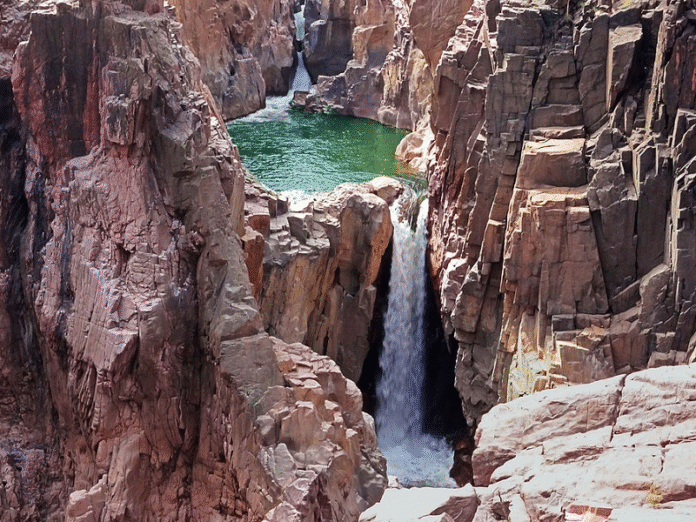
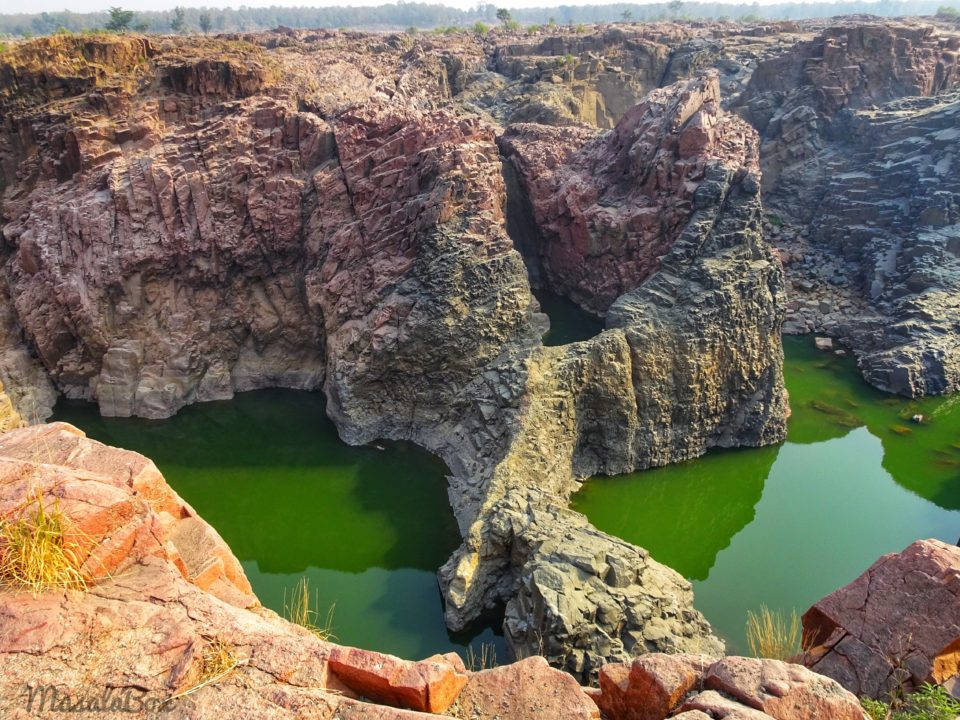
Nestled approximately 20 kilometers from the iconic Khajuraho and close to Chhatarpur city in Madhya Pradesh, Raneh Falls is a breathtaking waterfall on the Ken River, renowned for its vibrant granite rock formations. Often referred to as India’s “Grand Canyon” due to its 30-meter-deep gorge carved by the Ken River, this natural wonder is a must-visit for its geological marvels and scenic splendor.

A Symphony of Nature

Raneh Falls captivates visitors with its cascading waters and stunning rock formations, particularly during the monsoon season (July to September) when the Ken River is at its peak. The waterfall transforms into a spectacular display as water tumbles over the colorful granite cliffs, surrounded by lush greenery and seasonal streams. The site offers three distinct viewpoints—Ken Gharial, Granite Rocks, and Top Viewpoint—each providing a unique perspective of the falls’ beauty. Even post-monsoon, from September to November, the receding water levels reveal the intricate rock structures, making it an ideal time to appreciate the geological artistry.

Raneh Falls: Mesmerizing Cascade of Nature’s Grandeur Near Khajuraho in MP

Adventure and Wildlife Await

Beyond its scenic allure, Raneh Falls is a gateway to adventure and wildlife exploration. The nearby Ken Gharial Sanctuary, located at the confluence of the Ken and Khudar rivers, is a haven for the rare gharial reptile. While the sanctuary remains closed during the monsoon to protect the breeding season, it opens for the rest of the year, offering a fascinating glimpse into the region’s biodiversity. Situated about 50 kilometers from Raneh Falls, the sanctuary is easily accessible for a day trip, adding an exciting dimension to the visit.

A Sacred Journey on Wheels: Sweden’s 113-Year-Old Church Begins Its Historic Relocation

0

(PC:shutterstock)

In the icy expanse of Sweden’s northernmost city, Kiruna, a monumental chapter in architectural preservation is unfolding—one that blends reverence, engineering marvel, and the quiet resilience of heritage. Built in 1912, the Kiruna Church, a majestic red wooden structure towering 35 meters high and stretching 40 meters wide, has long stood as a spiritual and cultural beacon. But the very ground beneath it has begun to fracture—victim to decades of iron ore mining that now threatens the stability of the city itself. Rather than let this sacred monument fall to ruin, Sweden has embarked on a breathtaking mission: to relocate the entire 672-ton church five kilometers away to a safer location in the newly planned city center.

Engineering Faith: How the Church Is Being Moved

  • The church has been carefully lifted onto steel beams and placed atop specialized trailers designed to carry immense weight.
  • These trailers move at a cautious pace—just 500 meters per hour—ensuring every inch of the journey is secure. The relocation is expected to take two full days, a slow pilgrimage of preservation and pride. This isn’t just a logistical feat—it’s a symbolic act of devotion to history, community, and continuity. The church, often described as one of Sweden’s most beautiful buildings, is not merely being moved; it’s being honored.

Kiruna’s transformation is part of a broader urban shift, as the city adapts to the realities of mining-induced land instability. Yet, in the midst of this upheaval, the decision to preserve and relocate the church sends a powerful message: that heritage is not disposable, and that even in the face of industrial progress, sacred spaces deserve to endure

Vice-Presidential Election 2025: A Southern Showdown with Justice B. Sudarshan Reddy As INDIA Alliance Candidate A Distinguished Jurist from Telangana Takes Center Stag

0

The upcoming Vice-Presidential election on September 9, 2025, promises to be a gripping contest, with both candidates hailing from South India. The opposition INDIA Alliance has announced former Supreme Court Justice B. Sudarshan Reddy as its candidate, a decision finalized during a meeting at Congress President Mallikarjun Kharge’s residence. The alliance, aiming for a unified front, deliberated extensively to select a consensus candidate who embodies neutrality and stature.

Storied Legal Career

Born on July 8, 1946, in Akula Maylaram village, Ibrahimpatnam taluka (now Ranga Reddy district, Telangana), Justice B. Sudarshan Reddy hails from a humble farming family. He graduated with a law degree from Osmania University, Hyderabad, in 1971 and enrolled as an advocate with the Andhra Pradesh Bar Council. His legal journey began with practicing writ and civil cases at the Andhra Pradesh High Court. Reddy’s illustrious career includes serving as a government advocate in the Andhra Pradesh High Court from 1988 to 1990 and briefly as Additional Standing Counsel for the Central Government in 1990. He also acted as legal advisor and standing counsel for Osmania University. In 1995, he was appointed a permanent judge of the Andhra Pradesh High Court, later becoming Chief Justice of the Gauhati High Court in 2005. His judicial ascent culminated in his appointment as a Supreme Court judge in 2007, serving until his retirement in 2011. In March 2013, Reddy took on the role of Goa’s first Lokayukta but resigned in September of the same year for personal reasons.

A Strategic Choice for the Opposition

The selection of Justice Reddy reflects a calculated move by the INDIA Alliance. The Dravida Munnetra Kazhagam (DMK) pushed for a South Indian candidate, while the Trinamool Congress (TMC) advocated for a non-political figure. Congress and other alliance partners sought a universally respected name, making Reddy’s nomination a perfect fit. His four-decade-long legal career and impeccable reputation as a jurist make him a formidable candidate in this high-stakes electoral battle.As the election approaches, all eyes are on this clash of Southern titans, with Justice Reddy’s candidacy adding a layer of gravitas to the contest.