Home Blog Page 201

CFD Shares Explained: How to Trade Smart and Maximize Your Profits

0

No matter how long you have been in the world of fintech, blockchain, or even DeFi, we are sure that you have heard of the term CFD shares. And you are probably here because you want to understand more about them. This includes what they are, how to trade them, and more.

Well, first note that these are instruments that offer you a smart method to gain exposure to technology-driven markets. Therefore, they are not just another financial product. We can refer to them as a link between conventional stocks and cutting-edge resources such as digital asset exchanges and Web3-based trading platforms.

Allow us to dive deeper into CFD shares to help you understand exactly what they are.

CFD Shares Explained

Have you ever wondered what CFD shares are? To put it simply, these are agreements that allow you to trade on changes in the value of stock without really holding any. To profit from changes in the stock’s price, you don’t have to own it.

These days, you may trade CFD for stocks on user-friendly platforms driven by AI and blockchain. Isn’t it incredible how trading has become easier and safer for you thanks to modern technology?

The Smart Way to Trade CFDs

Knowing the fundamentals is the first step in how to trade CFDs. You open a transaction after selecting a share that you believe will rise or fall. You profit from the price change if your guess is correct. If it’s incorrect, you lose money. The good news is that tools like price notifications, automatic analysis, and even DeFi features on contemporary platforms make how to trade CFD simpler.

Now, let us use this CFD trading example. You invest in a popular tech stock, such as one from a blockchain-based business. You go ahead and open a CFD position rather than purchasing the shares. If the price increases, you profit from the rise. And you lose if it falls. In this manner, you can access fascinating sectors without really holding stock.

Frequent Trading on a CFD Account

Sometimes, you might wonder, can you frequently trade on CFD accounts? You can but only if you have a well-defined plan. Thanks to current apps and Web3 tools, trading has grown faster and smarter.

However, it can be dangerous to dive in without guidance. Blockchain data, AI, and machine learning are used by profitable traders to monitor market movements. In this manner, you can make decisions based on factual information rather than your feelings.

How Web3 and Fintech Are Linked to CFD Shares

CFD shares are well suited to the rapidly evolving fintech and Web3 landscape. Unlike the usual technique of buying stocks, which frequently demands more money and time, CFDs let you trade on market fluctuations nearly instantly. You now benefit from increased security, transparent records, and speedier transactions when blockchain technology is included.

Isn’t that what all contemporary investors desire? This combination seems thrilling to anyone who is enthusiastic about Web3 because it combines the new potential of digital innovation with the well-known concept of stock trading.

Conclusion

Sometimes, stock trading may seem complex. But with technology making everything easier to understand, you can enter the market with confidence. Do not forget that planning and having patience as well as using technology to optimize your gains are important also. 
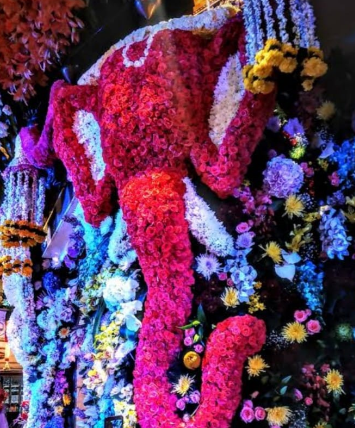
Navi Mumbai’s Icchapurti Ganpati Blooms with All-Flower Idol, Spreading Eco-Friendly Festive Spirit

0

InnovationDuring the Ganeshotsav of 2024–2025, the Ichchapurti Ganesh Mandal in Koparkhairane, Navi Mumbai, captured hearts and accolades with its stunning eco-friendly Ganesh idol crafted entirely from flowers and paper pulp. Winning the Navi Mumbai Municipal Corporation’s Eco-Friendly and Plastic-Free Ganesh Festival Competition, the mandal’s innovative approach underscores a growing movement toward sustainable and environmentally conscious celebrations across India. Led by skilled sculptor Rajan Jhad, the mandal’s efforts highlight how tradition and environmental stewardship can harmoniously coexist.

A Floral Masterpiece for a Greener Festival

The Ichchapurti Ganesh idol, a breathtaking creation made from paper pulp and flowers, represents the mandal’s commitment to sustainability. The flowers used in the idol were thoughtfully collected from nirmalya (floral offerings) at prominent temples across Maharashtra, transforming sacred offerings into a symbol of environmental responsibility. This biodegradable idol, free from harmful chemicals, dissolves naturally without polluting water bodies, setting a powerful example for eco-conscious worship.Crafted by sculptor Rajan Jhad, the idol not only showcases artistic brilliance but also aligns with the mandal’s mission to reduce plastic use and promote conservation. The mandal’s victory in the Navi Mumbai Municipal Corporation’s competition for 2024–2025 reflects its dedication to fostering greener practices during Ganeshotsav, proving that devotion to Lord Ganesha can go hand in hand with protecting the planet.

Part of a Broader Eco-Friendly Movement

The Ichchapurti Ganesh Mandal’s efforts are part of a larger trend sweeping across India, where communities and mandals are embracing sustainable practices to combat the environmental impact of traditional Ganesh Chaturthi celebrations. Conventional plaster of Paris (PoP) idols and non-biodegradable decorations have long contributed to water pollution, but innovative alternatives are gaining traction

Seed Ganeshas: Idols made from clay and embedded with plant seeds allow devotees to immerse them in pots, where the seeds sprout into new plants, symbolizing renewal and growth.

Clay Idols: Many mandals and households are opting for Ganesha idols made from natural clay (shadu mati), which dissolves easily and is free from toxic chemicals.

Eco-Friendly Decorations: Decorations crafted from recycled and natural materials like cloth, paper, and wood are replacing harmful thermocol and plastic, reducing waste and environmental harm.

Artificial Immersion Sites: Cities like Navi Mumbai are setting up artificial immersion ponds to protect natural water bodies, such as lakes and seas, from pollution during visarjan.

These initiatives reflect a collective shift toward celebrating Ganeshotsav in ways that honor both cultural traditions and the environment.

A Legacy of Sustainability and Community Impact

The Ichchapurti Ganesh Mandal, established in 2002, has been a pioneer in promoting eco-friendly festivities for the past five years. Its 2024–2025 floral and paper pulp idol not only won accolades but also inspired communities to rethink their approach to festivals. By using biodegradable materials and repurposing temple offerings, the mandal demonstrates how small changes can have a significant impact on reducing pollution and plastic waste.The mandal’s efforts extend beyond the competition, aiming to raise awareness about environmental conservation. By showcasing sustainable practices, Ichchapurti Ganesh Mandal encourages devotees to adopt greener methods, ensuring that the joy of Ganeshotsav does not come at the cost of the environment.

Kerala’s Village of Music: Where Every Soul Sings, A Navratri Celebration Like No Other

0

In Kerala’s Palakkad district lies Valmuttikk colony, a village that transforms into a musical haven during Navratri. For nine consecutive nights, the entire village gathers to sing and play traditional instruments without any formal training or music education. Every evening, residents assemble at the Vishnu Mokar temple, turning the celebration into a vibrant community concert.

Tradition Passed Down Through Generations

Music in Valmuttikk isn’t taught in classrooms—it’s inherited. Children learn by watching their elders sing and play. The village’s musical legacy spans centuries, kept alive through oral tradition. Instruments and folk songs from the Sangam era, nearly 2200 years old, are still performed today.

Grandmothers as Guardians of Folk Songs

Women, especially grandmothers, play a vital role in preserving folk music. Daughters are now becoming music teachers, inspired by their elders. For instance, 72-year-old Tatamma received the Kerala Folklore Academy State Award in 2020 for her dedication to folk song preservation. Another elder, 75-year-old Devnai, was honored in 2021 for similar contributions.

A Village of Award-Winning Artists

Despite being labeled a backward and Dalit village, Valmuttikk is home to several state-level award winners, folk musicians, music teachers, and even playback singers. Their talent has finally earned them official recognition.

Declared a “Sangeet Gram”

In a historic move, the Chittur-Thathamangalam Municipality officially declared Valmuttikk a “Pattu Gramam” (Music Village)—the first of its kind in Kerala. The title acknowledges the village’s deep-rooted musical heritage and its unique identity where every resident is either a singer or musician.

The Panar Community’s Musical Legacy

Most villagers belong to the Panar community, whose ancestors were traditionally musicians performing in royal courts and temples. Anthropologist Bhaktavatsala Bharati notes that music was their ancestral profession, passed down without written texts, purely through practice and memory.

Learning by Listening

Residents like 10-year-old children begin singing simply by listening to their uncles and elders. As one villager shared, “I started singing at the age of 10 after hearing my uncle perform.” This organic learning method continues to shape generations of musicians.

A Child Who Claims She Was Worth ₹60 Now Has A Worth of ₹30 Crore: Bharti Singh’s Journey from Survival to Stardom

0

In the narrow lanes of Amritsar, a little girl once clapped with joy as others burst crackers during Diwali. She had no sweets, no new clothes, and no firecrackers of her own—but she had dreams. That girl was Bharti Singh, now one of India’s most celebrated comedians, whose laughter echoes across millions of homes. But behind that infectious humor lies a story stitched together with hardship, heartbreak, and relentless hustle.

Born Into Struggle

Bharti was born on July 3, 1984, in Amritsar, Punjab, into a modest Punjabi household. Her father, of Nepali descent, passed away when she was just two years old. Left to raise three children alone, her mother Kamla Singh became a domestic worker, cleaning homes and washing dishes to make ends meet. Bharti often accompanied her mother to work, watching her mop floors and endure scoldings from employers. Leftover food—kofta, dal makhani—was a luxury. Clothes came from charity or hand-me-downs. Festivals were painful reminders of what they couldn’t afford: sweets, firecrackers, or new clothes.

An Unwanted Beginning

Bharti’s birth itself was a battle. Her mother, already overwhelmed with two children, tried multiple times to abort the pregnancy using herbal remedies and traditional methods. But fate had other plans. Bharti was born at home, with a midwife who charged ₹60 to cut the umbilical cord. “Main ₹60 mein hui hoon,” Bharti says with pride. “I am a ₹60 child”.

The Rise of Laughter

Despite the odds, Bharti pursued education, earning a BA and a post-graduate degree in History from Punjab Technical University. Her comic talent found its first spotlight in 2008 on The Great Indian Laughter Challenge, where her child character “Lalli” won hearts nationwide. From there, she became a regular on Comedy Circus, Jhalak Dikhhla Jaa, Nach Baliye, and The Kapil Sharma Show. Her humor—rooted in real-life struggles—resonated deeply with audiences. She broke barriers as one of the few women in Indian stand-up comedy and became a household name.

Today, Bharti lives in a lavish Mumbai home and drives luxury cars like Audi and Mercedes. She has gifted her mother a ₹1.6 crore house—a gesture that symbolizes how far she’s come. Her YouTube channel boasts over 7 million subscribers, and she reportedly earns ₹10–13 lakh per episode.

More Than a Comedian

Bharti Singh isn’t just a performer—she’s a symbol of resilience. From being nearly aborted to becoming one of India’s most beloved entertainers, her life is a testament to the power of grit, love, and laughter. She turned pain into punchlines, poverty into pride, and silence into a roar of applause. And in doing so, she gave millions a reason to smile—even when she had none hersel

Karnataka’s Forest Guardians: IFS Officers Lead the Charge to Reclaim and Restore Encroached Lands

0

Karnataka’s forests, long plagued by encroachment, are witnessing a remarkable revival thanks to the tireless efforts of Indian Forest Service (IFS) officers. While reports of a single “Demolition Man” reclaiming 3,500 acres of forest land may have been overstated, the collective work of Karnataka’s forest department, under the leadership of dedicated officers, is making significant strides in tackling the state’s encroachment crisis. With over 2.15 lakh acres of forest land affected, these officers are not only reclaiming lost territories but also restoring their ecological balance, ensuring a greener future for the state.

A Statewide Mission to Protect

ForestsKarnataka’s forest department has intensified its fight against encroachment, setting ambitious annual targets to reclaim at least 10,000 acres of land. This concerted effort involves meticulous surveys, legal proceedings, and strategic planning to evict illegal occupants while prioritizing environmental restoration. The state’s IFS officers, known for their resolve and innovative approaches, are at the forefront of this mission, transforming degraded lands into thriving ecosystems.

Karnataka’s Forest Guardians: IFS Officers Lead the Charge to Reclaim and Restore Encroached Lands

Vaanathi Murugesan: A Champion of Restoration

Among the standout contributors is Vaanathi Murugesan, a 2012-batch IFS officer who has made significant inroads in the Bidar division. In August 2024, Murugesan successfully reclaimed 1,905 acres of encroached land, including 104 acres of Reserve Forest near Bidar city. Her approach combines precision, determination, and a deep commitment to ecological restoration. Following evictions, Murugesan ensured that the reclaimed areas were immediately revitalized through extensive plantation drives. Pitting work for new trees began almost instantly, with the goal of restoring greenery with the arrival of the monsoon. Her efforts have turned barren lands into promising habitats, setting a powerful example for sustainable forest management.

Honoring a Legacy of Courage and Dedication

Karnataka’s forest department boasts a legacy of exceptional leaders who have faced formidable challenges to protect the state’s natural heritage. B. K. Singh, a former Principal Chief Conservator of Forests, is celebrated for his fearless efforts against notorious bandit Veerappan and his contributions to anti-encroachment initiatives. His work laid a strong foundation for the department’s ongoing mission to safeguard forests.Similarly, R. Gokul, another dedicated IFS officer, has been recognized for his proactive approach to eviction drives. Despite facing a temporary setback in July 2025, when his suspension was recommended for bypassing official channels, Gokul’s commitment to the cause remained unwavering. After submitting an apology, the forest minister recommended revoking his suspension, affirming his value to the department’s efforts.

Meenakshi Negi: Leading with Vision In

February 2025, Meenakshi Negi made history as the first woman to head the Karnataka Forest Department as Principal Chief Conservator of Forests. Under her leadership, the department has set bold targets to reclaim encroached lands and restore their ecological balance. Negi’s vision emphasizes sustainable practices and community engagement, ensuring that reclaimed forests are not only protected but also nurtured for future generations.

A Greener Future for Karnataka

The collective efforts of Karnataka’s IFS officers are a testament to their dedication to preserving the state’s natural heritage. From Vaanathi Murugesan’s swift restoration projects to the strategic leadership of Meenakshi Negi, these officers are transforming Karnataka’s forests into vibrant ecosystems. Their work goes beyond eviction, focusing on planting trees, fostering biodiversity, and creating sustainable models for forest conservation.As Karnataka continues its fight against encroachment, the state’s forest guardians are proving that with determination, innovation, and a shared vision, it is possible to reclaim and rejuvenate the land. Their efforts are not just restoring forests but also inspiring communities to join hands in building a greener, more sustainable future for Karnataka.

Sustaining A Green Legacy With Guinness World Record-Breaking Idols, Tejukaya Mandal’s 22-Foot Eco-Friendly Paper Ganpati.

0

Mumbai’s Tejukaya Public Ganeshotsav Mandal is once again in the spotlight as it upholds its eco-conscious tradition with a stunning 22-foot paper Ganpati idol for Ganesh Chaturthi 2025. Renowned for its commitment to environmental sustainability, the mandal, led by artisan Rajan Zad and his dedicated team, has been crafting environmentally friendly idols since 2019. Their efforts earned them a Guinness World Record in 2019 for creating the world’s largest eco-friendly Ganpati, a legacy they proudly continue this year as they approach their Silver Jubilee.

A Tradition Rooted in Sustainability

Since 2019, Tejukaya Mandal has championed eco-friendly Ganesh Chaturthi celebrations by crafting idols made entirely from biodegradable materials. The 2025 idol, a towering 22-foot masterpiece, is constructed using paper pulp, clay, bamboo, and other natural, environmentally friendly materials. Designed by Rajan Zad and his team of 10-15 skilled artisans, the idol is a testament to the mandal’s dedication to preserving both cultural heritage and the environment.The use of natural, non-toxic colors ensures that the idol is safe for the environment, while its biodegradable composition allows it to dissolve easily in water during immersion, leaving no harmful residue. This thoughtful approach to idol-making reflects the mandal’s mission to promote sustainable practices during one of India’s most cherished festivals.

A Guinness World Record

In 2019, Tejukaya Mandal made history when its 22-foot paper Ganpati was recognized by the Guinness World Records as the largest eco-friendly Ganpati idol in the world. This achievement not only highlighted the mandal’s innovative craftsmanship but also brought global attention to the importance of eco-conscious celebrations. The 2025 idol continues this proud tradition, reinforcing the mandal’s commitment to environmental stewardship while maintaining the grandeur of the festival.Rajan Zad, whose family has long been associated with crafting the iconic Tejukaya Ganpati, leads the team in designing and constructing the idol. His vision blends tradition with sustainability, ensuring that each idol is both a work of art and a step toward a greener future.

Responsible Immersion at Chowpatty

The Tejukaya Mandal takes great care during the visarjan (immersion) process to minimize environmental impact. The massive 22-foot idol is carried by devotees to Chowpatty, where it is immersed with precision and respect. The biodegradable materials ensure that the idol dissolves responsibly in water, avoiding the pollution often associated with traditional idol immersions.

A Legacy of Devotion and Innovation

Established in 2002, Tejukaya Mandal is gearing up for its 24th year of celebrations in 2025, with its Silver Jubilee on the horizon. The mandal’s focus on eco-friendly practices has inspired countless others to adopt sustainable methods during Ganesh Chaturthi. By combining artistry, devotion, and environmental consciousness, Tejukaya Mandal sets a powerful example for communities across India.As Rajan Zad and his team continue to innovate, their 22-foot paper Ganpati stands as a symbol of devotion, creativity, and a commitment to preserving the planet for future generations. In 2025, Tejukaya Mandal’s eco-friendly Ganpati not only celebrates Lord Ganesha but also reinforces the importance of sustainability in cultural traditions.

What Is IADWS? Know All About It, Is Not A Single Weapon But A Networked Defence Ecosystem.

0

In an era where aerial warfare is evolving rapidly—from stealth aircraft to drone swarms—the need for a robust, responsive, and intelligent air defence system has never been greater. Enter the Integrated Air Defence Weapon System (IADWS), India’s multi-layered solution to counter airborne threats and safeguard its strategic assets.

What Is IADWS?

IADWS is not a single weapon but a networked system combining multiple technologies to detect, track, and neutralize airborne threats like aircraft, drones, and missiles. It includes:

  • QRSAM (Quick Reaction Surface-to-Air Missiles): Mobile missile systems designed to protect moving army units from aerial attacks.
  • VSHORADS (Very Short Range Air Defence System): Portable missile systems for close-range defence.
  • DEW (Directed Energy Weapon): High-powered laser weapon capable of disabling targets with precision.

Why Is It Important?

  • National Security: It forms a protective shield over vital areas like the National Capital Territory of Delhi.
  • Multi-Layered Defence: Offers layered protection by engaging threats at different ranges and altitudes.
  • Indigenous Capability: Developed by DRDO, showcasing India’s growing self-reliance in defence tech.
  • Strategic Deterrence: Sends a strong message to adversaries, especially amid rising tensions in the Indo-Pacific region.

How Does It Work?

An effective IADWS performs three core functions:

  1. Air Surveillance: Radar systems detect incoming threats.
  2. Battle Management: Centralized command decides how to respond.
  3. Weapons Control: Launches the appropriate missile or laser to neutralize the threat.

‘Blood Moon Festival’ to Debut in the Desert; Astronomers to Witness Live Lunar Eclipse in Jaisalmer

0

For the first time, Jaisalmer will host a unique confluence of astronomy, art, music, and culture under the desert sky. The ‘Blood Moon Festival’ will be organized from 6 to 8 September at the Shama Desert Camp in Lunar Village, Samjyajalar. The three-day event, curated by Starscape, is expected to draw over 100 participants from across the country, including astronomers, photographers, and art enthusiasts.

Starscape’s Chief Productivity Officer, Kunal, said this is the first event of its kind in the Golden City. “Since the moon takes on a bright red hue during a lunar eclipse, we decided to name it the ‘Blood Moon Festival.’ The lunar eclipse will occur on the night of 7 September, between 9:30 pm and midnight, and will be the highlight of the festival,” he explained.

According to organizers, the sandy dunes of Sam were chosen as the venue because of their clear skies and minimal light pollution, offering an ideal view of celestial events. High-powered telescopes will be installed to give visitors a close-up experience of the eclipse and the desert night sky.

In addition to sky-gazing, the festival will feature cultural performances, art exhibitions, and musical evenings, creating a blend of science and culture under the stars. “It will be a once-in-a-lifetime experience where people can connect with both the cosmos and the rich heritage of Rajasthan,” Kunal added.

The festival aims to popularize astronomy among the public while celebrating the desert’s natural beauty, making Jaisalmer not just a tourist destination but also a hub for stargazing enthusiasts.

Surprising: Logo Change Results in Billion Dollar Loss to Cracker Barrel’ Restaurant Chain

0

“Can you imagine a logo change causing a company to lose millions? Yes, it can — just ask Cracker Barrel.”

Cracker Barrel’s attempt to modernize its image backfired on Wall Street this week. The restaurant chain unveiled a new logo, stripping away its iconic man-and-barrel design, and almost immediately saw its stock plunge — wiping out close to $100 million in market value in a single day.

Surprising: Logo Change Results in Billion Dollar Loss to Cracker Barrel' Restaurant Chain

Cracker Barrel lost almost $100 million in market value on Thursday after its stock tumbled following the release of a controversial new logo.

The restaurant chain replaced its decades-old emblem — a sketch of a man in overalls leaning against a barrel — with a simplified design featuring only the company’s name. The change sparked strong reactions from investors and customers alike.

Shares of Cracker Barrel fell $4.22, or 7.2%, to $54.80 in Thursday trading, wiping out about $94 million in market capitalization. Earlier in the day, the stock briefly dipped as low as $50.27, at one point erasing nearly $200 million in value.

Although shares rebounded slightly in early trading Friday, the momentum didn’t last. The stock ended the session down another 40 cents, or less than 1%, closing at $54.40.

The market’s response highlights the risks companies face when altering iconic branding. Cracker Barrel has been seeking to modernize its image through updated menus and remodeled stores, moving away from its “old country store” aesthetic that defined the chain for more than five decades.

According to the company’s website, the original man-and-barrel logo symbolized the traditional country store experience where “folks would gather around and share stories.” The new minimalist branding is intended to align with the chain’s evolving strategy to attract a younger, more diverse customer base.

Industry analysts note that while brand refreshes can help companies stay relevant, they also risk alienating longtime loyal customers. For Cracker Barrel, the immediate sell-off underscores Wall Street’s skepticism about whether the new look will resonate with diners or hurt the chain’s identity.

How to Refresh with Mindful Digital Breaks

0

The modern world never stops buzzing. Notifications, meetings, and endless feeds make it hard to unplug. Yet, our minds and bodies need pauses as much as they need activity. Taking mindful digital breaks can be the difference between running on empty and feeling refreshed enough to face challenges with clarity.

Not every break has to involve a walk or a yoga session. Sometimes the right reset comes from a lighthearted diversion. Platforms like ko789 offer an easy way to enjoy a short, casual game session. Used thoughtfully, these micro-breaks add fun and balance to a busy day without pulling you too far away from your goals.

Photo by cottonbro studio

Why Breaks Matter More Than Ever

Breaks have always been part of human rhythm. Ancient cultures valued pauses through rituals, siestas, or time spent outdoors. Today, our version often involves screens, and while that gets a bad reputation, not all screen time is harmful. The key is how we engage with it.

Short breaks give the brain a reset. Studies show they can improve focus, reduce stress, and even boost creativity. A short digital escape lets the mind drift away from deadlines and decision-making, helping you come back sharper.

The Science Behind Mini Escapes

When we step away from tasks, our brains enter what psychologists call “default mode.” In this state, new ideas form and memories consolidate. Even a few minutes away can shift us into a more creative mindset.

Digital micro-breaks are uniquely effective because they demand minimal setup. Whether it’s a puzzle game, a quick online slot spin, or a calming video, the activity creates a mental boundary between tasks. That small shift can prevent burnout over long hours.

Choosing Breaks That Truly Refresh

Not all digital pauses are equal. Scrolling social feeds may feel like downtime, but it often adds to stress. The most refreshing breaks are intentional, short, and light.

Here are a few good options:

  • Play a short online game that doesn’t require deep focus.
  • Watch a calming video, like nature clips or travel snippets.
  • Listen to a podcast segment or a couple of songs.
  • Try a guided breathing app for a quick reset.

The trick is keeping breaks mindful. Decide what you’ll do before you start. That way, you avoid falling into endless scrolling and return to your tasks feeling lighter.

Gaming as a Healthy Pause

Gaming has long been painted as a distraction. But in the right context, it can be a tool for balance. Light games—like online slots, simple puzzles, or strategy challenges—offer fast bursts of play. These are different from long gaming sessions that consume hours.

Short gaming breaks give your mind something engaging but low-stakes. That small element of playfulness helps shift energy, ease stress, and restore motivation. The key is setting limits and treating games as a refresh button, not an escape hatch.

How to Avoid Turning Breaks into Distractions

The fine line between refreshing breaks and procrastination comes down to intention. Without limits, breaks can easily spill over. Here are a few ways to keep control:

  • Set a timer: Even five to ten minutes can be enough.
  • Choose simple activities: Pick games or media that you can drop without frustration.
  • Pair breaks with tasks: Use them as rewards after completing a project section.

By putting structure around your pauses, you protect productivity while still giving your mind the care it needs.

Real-Life Benefits of Mindful Digital Breaks

People who embrace intentional breaks often find their days feel smoother. For example, employees working long shifts report lower stress levels when they sprinkle in short gaming or media pauses. Creatives often turn to playful distractions as a way to spark new ideas.

On a personal level, you may notice that after a short digital reset, everyday problems feel less overwhelming. That’s the real power of choosing mindful breaks—they give space for perspective.

Balancing Leisure with Lifestyle

Digital breaks should complement, not replace, other forms of rest. Physical activity, social connections, and outdoor time are still vital. But there’s no need to ignore the value of digital pauses. When balanced with healthy habits, they can be a fun, guilt-free way to recharge.

Think of them as seasoning in a meal. A little adds flavor. Too much overwhelms. Used wisely, online platforms, short games, and digital content are tools for balance in a world that rarely slows down.

How to Refresh with Mindful Digital Breaks

Photo by KATRIN  BOLOVTSOVA

Final Thoughts

Finding your off-switch doesn’t always mean leaving screens behind. Sometimes it’s about reshaping how you use them. Intentional digital breaks—whether through a quick game, a short video, or mindful breathing—can transform the way you handle daily stress.

The goal isn’t to escape but to refresh. With the right habits, even five minutes online can give you the clarity to power through the rest of the day with focus and ease.