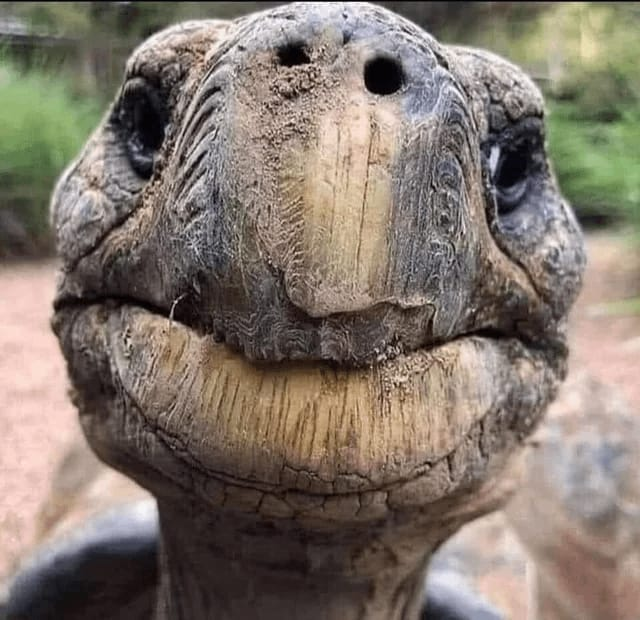
Jonathan, a majestic giant Seychelles tortoise residing on the remote island of Saint Helena, holds the distinguished title of the oldest living creature on Earth. Believed to have been born in 1832, Jonathan will reach an extraordinary age of approximately 192 years by 2025, earning him the status of the oldest known terrestrial animal. His remarkable longevity is officially recognized in the Guinness World Records.
Jonathan: The Timeless Tortoise – Part 2
Jonathan’s journey began when he was brought to Saint Helena in 1882 from the Seychelles as a prestigious gift to the then-governor, Sir William Grey-Wilson. Since that time, the island has seen 28 governors come and go. Historical evidence of his age includes rare photographs taken between 1882 and 1886, capturing him shortly after his arrival, as well as a cherished image of him alongside a young Queen Elizabeth II during her visit to the island. While no direct record of his birth exists, experts estimate his 1832 origin based on the fact that Seychelles giant tortoises reach full maturity around 50 years of age, aligning with his appearance upon arrival. Some speculate he could even be over 200 years old. In November 2022, Saint Helena Governor Nigel Phillips officially designated December 4, 1832, as Jonathan’s birthday, cementing his legacy.
Witness to History
Jonathan stands as a living testament to history, having witnessed the reigns of eight British monarchs. His life spans monumental events, including World War I, the construction of the Eiffel Tower, and countless other milestones. Now residing in the serene British Overseas Territory of Saint Helena in the South Atlantic Ocean, he embodies a living connection to the past.
Current Condition
Despite the toll of time, Jonathan remains a symbol of resilience. His advanced age has robbed him of his sense of smell and left him nearly blind due to cataracts. Yet, he continues to thrive in good health, captivating admirers and serving as an awe-inspiring example of longevity in the natural world. As of 10:57 AM IST on Saturday, August 30, 2025, Jonathan’s enduring spirit continues to inspire.
When Prime Minister Narendra Modi received a Daruma doll during his recent visit to Japan, the moment was more than a simple exchange of gifts. It was a reminder of how symbols travel across borders, evolve with cultures, and yet preserve their spiritual essence. The Daruma doll, often regarded in Japan as a charm for perseverance and good fortune, carries within it the echoes of India’s ancient philosophical traditions.
Origins Rooted in India
The Daruma doll is inspired by Bodhidharma, a 5th-century monk from Kancheepuram, India. Known in Japan as Daruma Daishi, he is credited with founding Zen Buddhism after traveling to China. His legendary nine years of meditation—sitting motionless, facing a wall—became the basis of the doll’s unique design: rounded, limbless, and unblinking. The very name “Daruma” comes from “Dharma,” Sanskrit for universal law, underlining its Indian spiritual foundation.
Symbolism of Resilience
Crafted from papier-mâché, Daruma dolls are designed with a weighted base so that they always return upright when tipped over. This feature embodies the Japanese proverb “Fall seven times, stand up eight”, a philosophy of persistence in adversity. The ritual of painting in one eye when setting a goal and the other upon achieving it transforms the doll into a living metaphor for human determination—progress is only complete when purpose is fulfilled.
Daruma-ji: The Temple of Perseverance
The Shorinzan Daruma-ji Temple in Takasaki, founded in 1697, is the spiritual home of the Daruma doll. It grew into a cultural and economic hub, producing dolls that emperors, shoguns, and commoners alike sought for blessings of victory and success. Even today, students and entrepreneurs flock to the temple to seek good fortune, illustrating how an ancient symbol continues to shape modern aspirations.
India–Japan Cultural Convergence
What makes the Daruma doll particularly fascinating is its dual identity. For Japan, it is a local icon of luck and resilience. For India, it is a reminder of Bodhidharma—the wandering monk whose teachings seeded Zen. In this sense, the Daruma is not merely a talisman but a cultural bridge, embodying shared philosophies of perseverance, discipline, and spiritual awakening.
At a time when global diplomacy often emphasizes economics and defense, the Daruma doll reminds us that cultural symbols can be just as powerful in binding nations together. A small figure with blank eyes, it urges us to envision our goals clearly—and to rise, again and again, until they are fulfilled.
A rifle shooter returns to play again after a rare thigh and shoulder reconstruction surgeries in small town of Kishangarh in Rajasthan recently.
In a remarkable blend of medical expertise and surgical precision, Dr. Rohil Singh Kakkar, Consultant Orthopaedic & Joint Replacement Surgeon at Eternal Hospital, Jaipur, has helped a 17-year-old rifle shooter from Kishangarh, Ajmer district, return to competitive sports after a devastating injury nearly halted his budding career.
In May 2023, Master Shiv Pratap Singh Rathore suffered multiple traumatic injuries: a Grade 3 compound wound to the right thigh, a displaced mid-shaft fracture of the clavicle, and a rotator cuff tear in the right shoulder – all on his dominant side. For a rifle shooter who relies on shoulder stability and precision, these injuries came close to shattering his sporting ambitions.
Shiv was admitted to Marble City Hospital, Kishangarh, where Dr. Kakkar undertook the challenging case. On 6 May 2023, he performed complex reconstructive surgeries on the young athlete’s right shoulder and thigh.
“Operating on an athlete’s dominant side is never easy. Beyond repairing the injury, the goal is to restore performance and confidence,” Dr. Kakkar explained.
Pic :Dr Rohil Singh Kakkar
Following surgery, Shiv underwent a rigorous rehabilitation protocol designed and supervised by Dr. Kakkar. This included early pain and swelling management, progressive range-of-motion exercises, targeted muscle strengthening, and eventually sports-specific training. Within months, Shiv regained full mobility and returned to competitive shooting.
His comeback has been nothing short of inspirational. Post-surgery, Shiv qualified for and competed in several prestigious tournaments, including the 67th National Shooting Championship in Bhopal, the 43rd North Zone Air Rifle Championship in New Delhi, the India Open Shooting Championship in Bhopal, and the 23rd Rajasthan State Rifle Pistol Championship in Jaipur.
“I had almost given up hope, but Dr. Kakkar assured me I could return stronger,” Shiv said. “Today, I am competing at state and national levels, and my dream is to represent India internationally.”
Dr. Kakkar, who has been internationally published for his innovative surgical techniques, believes this case underlines the growing importance of advanced sports medicine and orthopaedic reconstruction in Rajasthan. His intervention not only saved a career but also set an example of how timely surgery, scientific rehabilitation, and expert care can turn adversity into achievement.
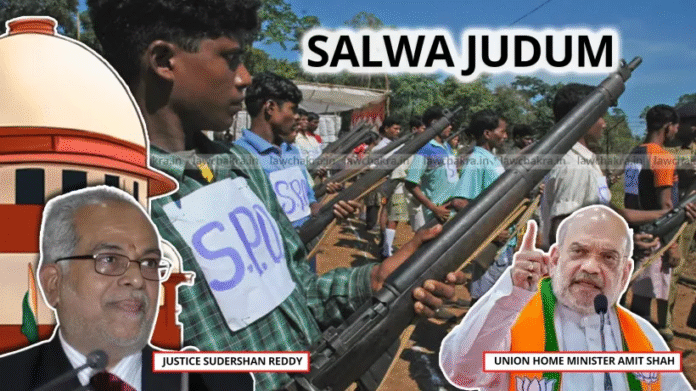
In 2011, the Supreme Court of India delivered a historic judgment in Nandini Sundar & Others vs State of Chhattisgarh, striking down the state-backed militia movement known as Salwa Judum. What seemed at the time like a decisive closure has resurfaced now, as political debates drag this verdict back into controversy.
This case was not just about one state or one conflict—it was about the very foundations of India’s constitutional democracy. At its heart lay a difficult question: how far can the state go in the name of security, and at what cost to fundamental rights?
Salwa Judum, initiated in 2005, was promoted as a “people’s movement” against Maoist insurgency in Chhattisgarh. Supporters claimed it was a grassroots uprising where tribal communities themselves had decided to fight back against Naxalite domination. However, the ground reality turned out to be very different.
Under this initiative, the state armed tribal youth by designating them as Special Police Officers (SPOs) and pushed them into direct conflict with the Maoists. With little to no training and minimal accountability, these young men became foot soldiers in a brutal war. Very soon, reports began to emerge of large-scale human rights violations: villages being burnt down, families being displaced, and innocents being caught in the crossfire.
Instead of providing protection, Salwa Judum left vulnerable communities trapped between two forces—on one side the violence of Naxal insurgents, and on the other the coercion of state-backed vigilantism. What was presented as empowerment soon turned into exploitation of tribal populations who were already among the most marginalized groups in the country.
The 2011 Supreme Court Verdict
On 5 July 2011, Justices B. Sudershan Reddy and S.S. Nijjar declared Salwa Judum unconstitutional. Their judgment was a landmark because it firmly reminded the state that in a democracy, the end can never justify the means.
The Court held that:
Arming untrained civilians violated the Right to Equality (Article 14) and the Right to Life (Article 21) guaranteed by the Constitution.
The state cannot outsource policing to civilians; the duty to protect citizens lies solely with the government and its trained institutions.
All weapons issued to SPOs must be withdrawn immediately, and the movement itself had to be disbanded.
This was not merely a technical legal ruling. It was a powerful reminder that constitutional morality cannot be sacrificed even in the name of fighting extremism. The verdict reaffirmed that in India, rule of law stands above expediency, and even the state cannot bend constitutional principles to serve short-term goals.
The Recent Controversy
The Salwa Judum verdict entered the spotlight again more than a decade later when Union Home Minister Amit Shah publicly criticised Justice B. Sudershan Reddy, one of the judges behind the ruling. Shah argued that the judgment had harmed India’s fight against Naxalism. His remarks came in the context of Justice Reddy’s nomination as the opposition’s Vice-Presidential candidate.
This statement reignited old debates and shifted the focus from the legal principles of the case to a political tug-of-war. What was once a judicial decision rooted in constitutional values was suddenly turned into a tool for political scoring. Instead of debating policy choices, the conversation became about questioning the wisdom of judges who upheld fundamental rights.
By criticising a decade-old judgment in this manner, the controversy blurred the boundary between judicial independence and political rivalry. It sent a message that constitutional decisions could be reopened, not through the judicial process, but through political attacks.
—
My View
To me, this controversy highlights an important principle: judicial judgments and political conflicts should never be mixed.
The Supreme Court’s verdict in 2011 was not about supporting Maoists or opposing the state—it was about protecting the Constitution. The judgment emphasised that even when the nation faces grave security threats, we cannot allow fear or politics to erode the rights and dignity of citizens.
When political leaders attack judicial rulings for short-term gains, it weakens both institutions—the judiciary and politics itself. Such statements risk creating a precedent where leaders may casually undermine judicial decisions, shaking public trust in the impartiality of the courts.
Amit Shah’s remarks may set a dangerous example, encouraging future leaders to exploit judicial decisions for partisan advantage. If judicial verdicts are dragged into political mudslinging, the very independence of justice is threatened. The judiciary is meant to be the guardian of the Constitution, not an arena for political battles. Mixing these two spheres endangers the balance of democracy itself.
Conclusion
The Salwa Judum verdict of 2011 remains a landmark in Indian constitutional history. It was not just about dismantling a controversial movement—it was about reaffirming that the Constitution stands above the state’s convenience. Even in the toughest of times, humanity, dignity, and rights cannot be compromised.
Today, as this judgment is once again drawn into political controversies, we must remember its deeper lesson. Democracy thrives when institutions respect their boundaries: politics may debate policies, but the judiciary must always stand above partisanship.
Ultimately, respecting judicial independence is not about protecting judges—it is about protecting democracy itself
(Written by Soniya Yadav, B.A pass course, Kanoriya College)
A ninth class student Padmanabh Chaudhary selected in the “CBSE West Zone” Under- 17 National cricket team.
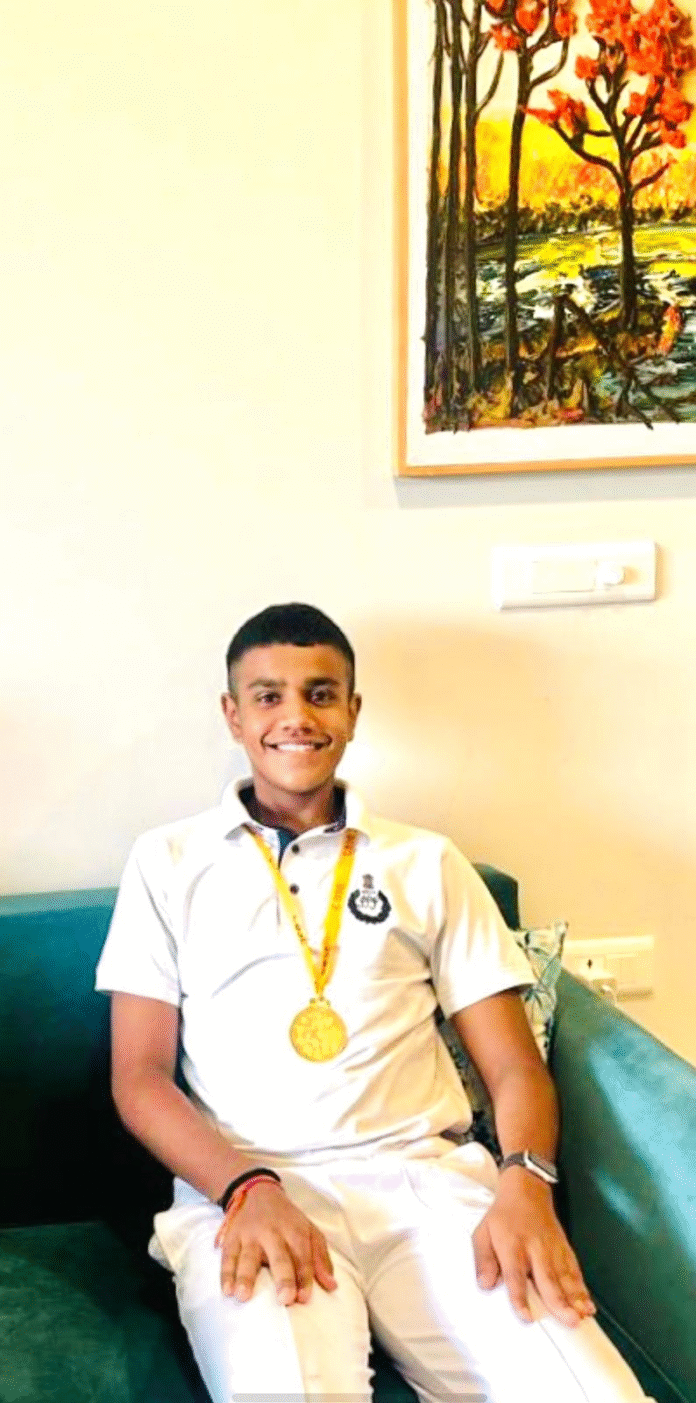
It is a matter of pride for Jaipur and Rajasthan. Padamnabh is son of Pankaj Choudhary IPS and student of the prestigious Saint Xavier’s School, Jaipur, is the only player in the history of cricket to have won a gold medal.
Padmanabh’s name emerged in the West Zone’s team in the selection competition held on 26, 27 and 28 August in Bhopal (Madhya Pradesh). He performs well as a right-hand batsman and a good fielder.
Padmanabh Chaudhary’s cricket enthusiast father developed an interest in cricket. Pankaj Chaudhary also led the national, state level and many universities. Next month he is participating in the CBSE national team.
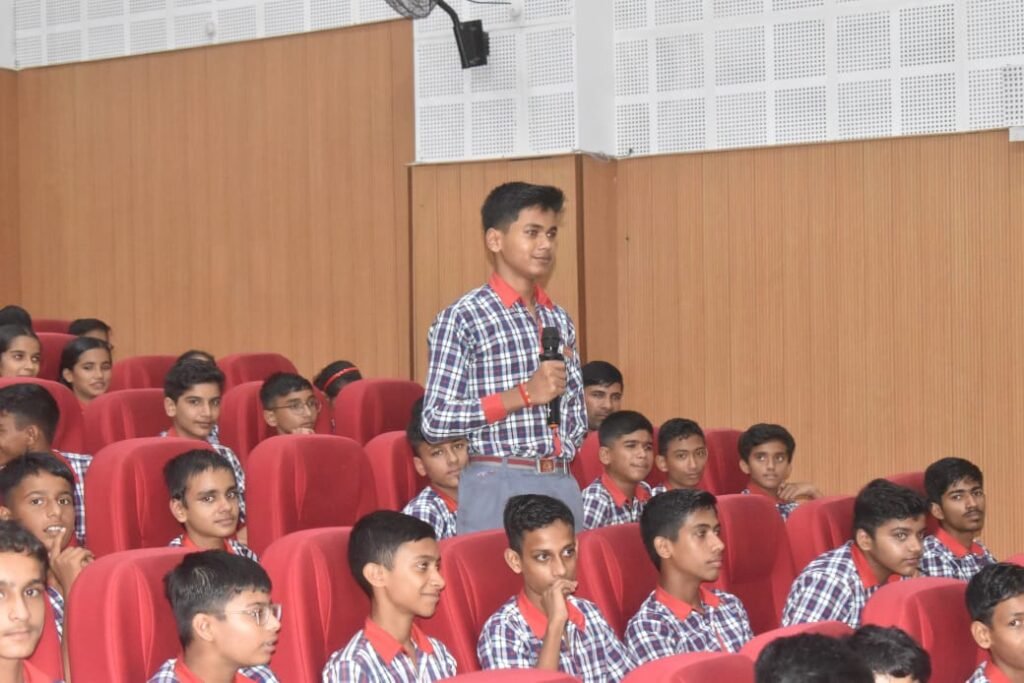
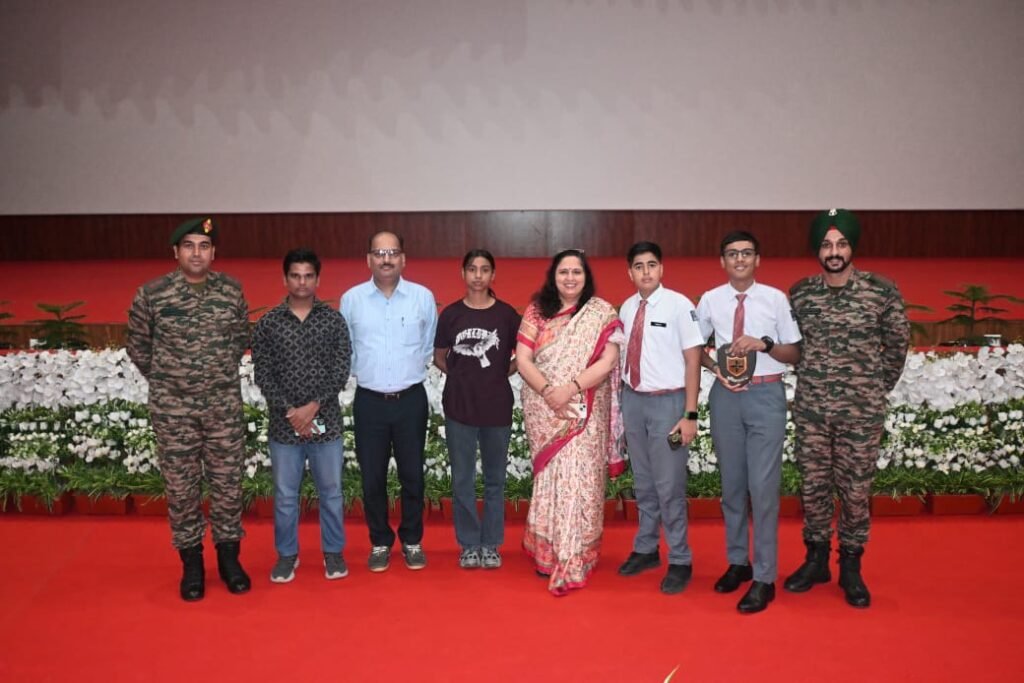
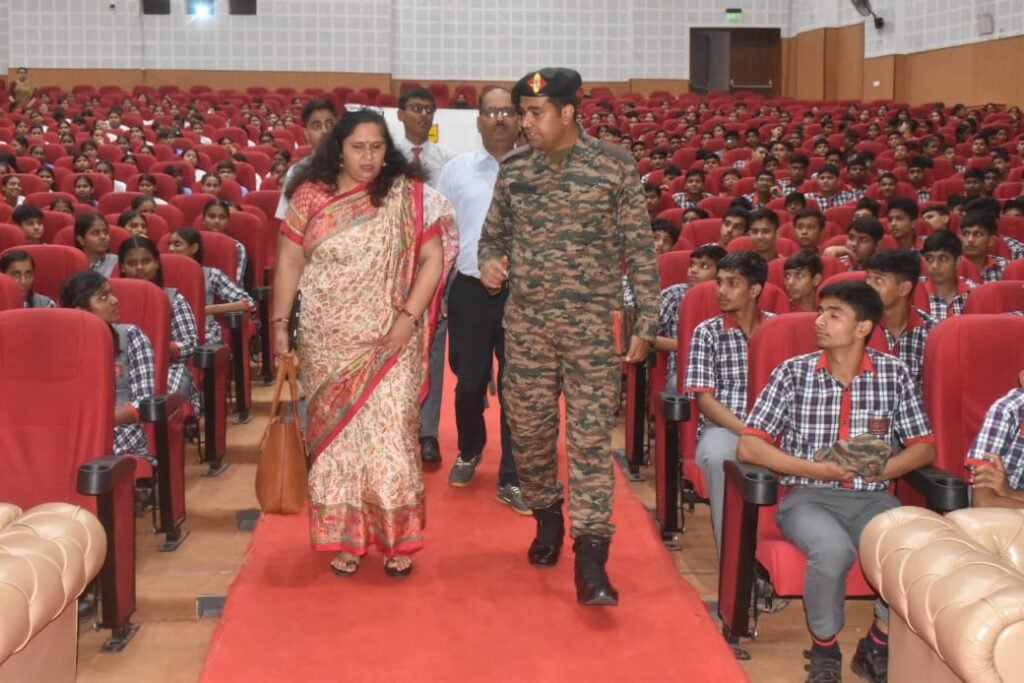
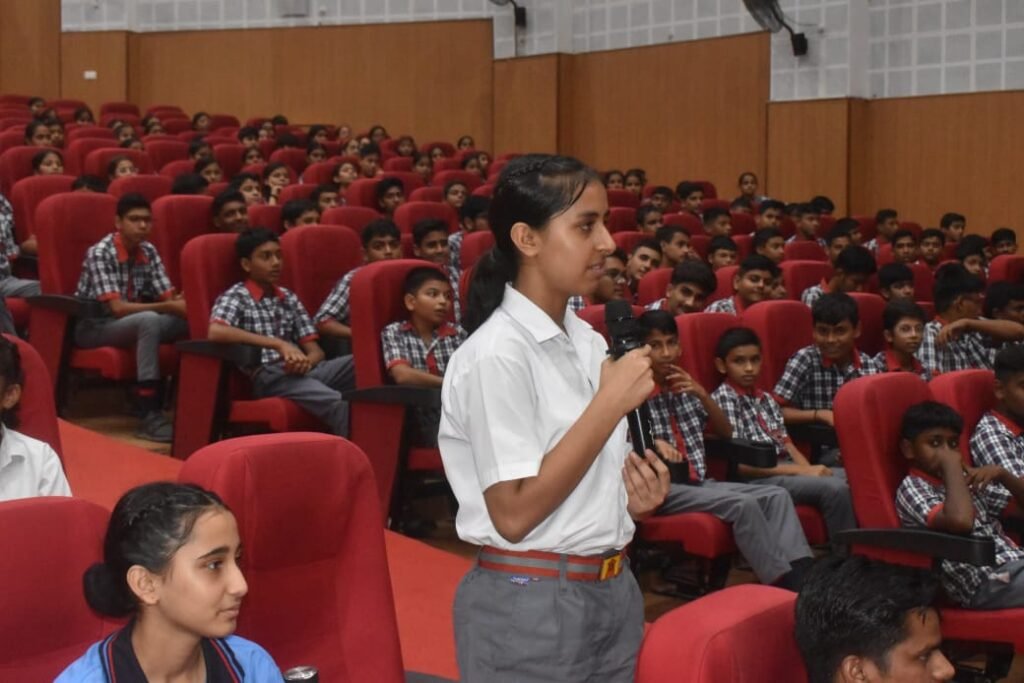
Some days leave an imprint on your heart forever—and for me, 28th August was one such day. As an intern with the Saksham Sanchar Foundation (SSF), I had the opportunity to visit Army Public School, Hisar, for the program “Innovating New Minds Towards Journalism.” What I experienced there was far beyond an event—it became a memory I will cherish for a lifetime.
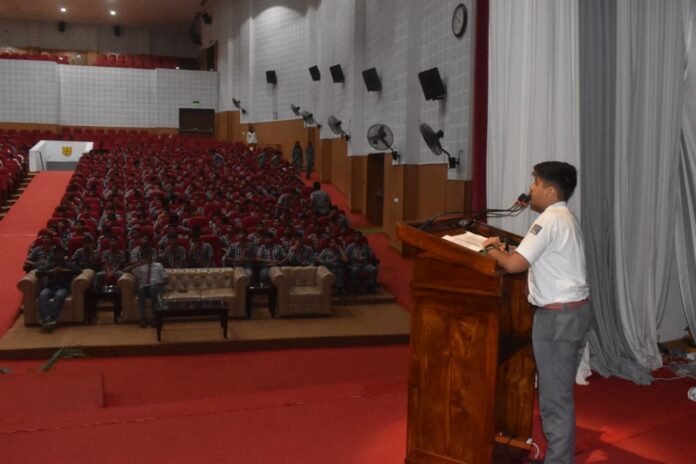
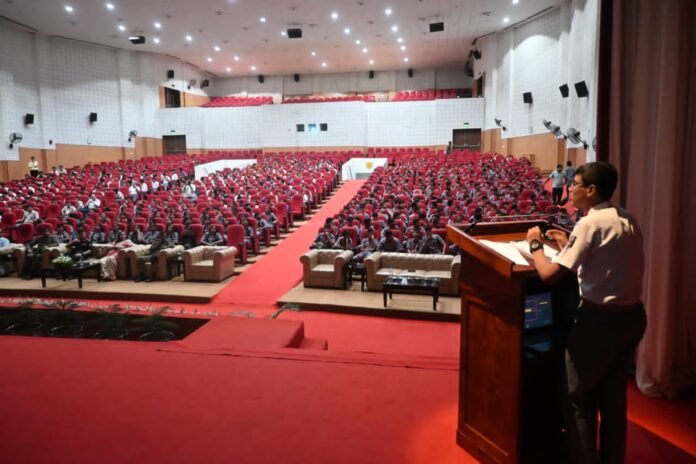
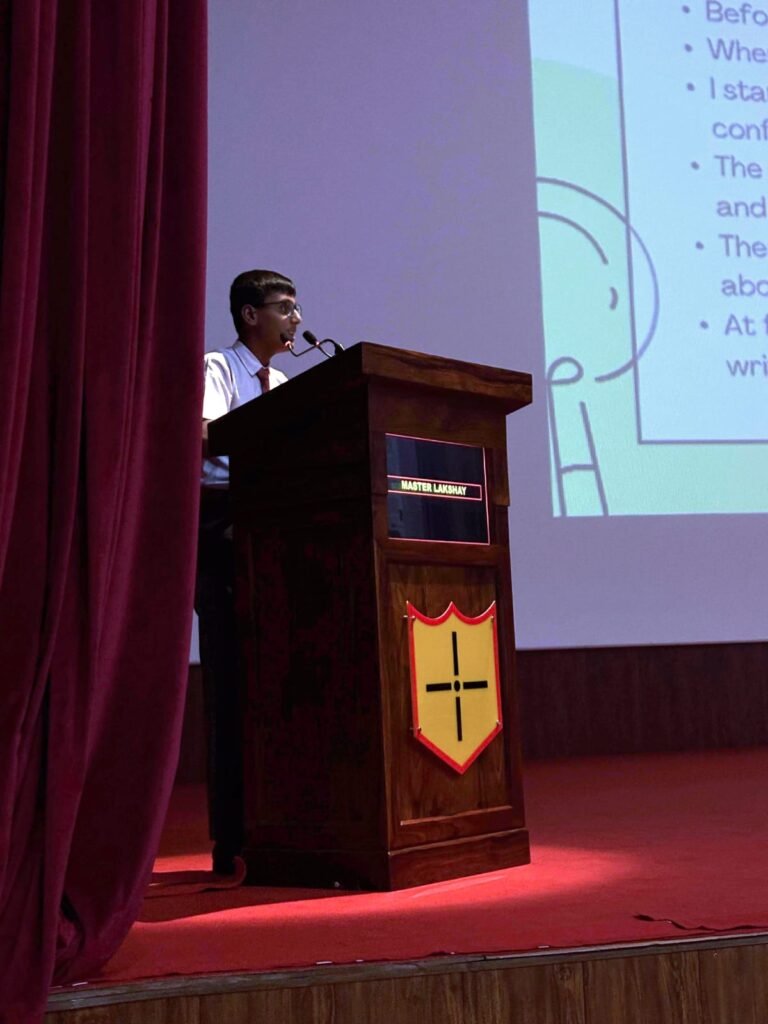
The programme was organised at the grand DOT Auditorium, where more than 400 people, including APS students, KV students, and Army officials, had gathered. As an SSF intern, I was both nervous and excited. The moment I stepped on stage to share my journey as a budding journalist, my nervousness turned into pride. Standing before such a large audience and expressing my thoughts was a moment that will stay with me forever.
Adding to my joy was the confidence of Lakshya, a Class 9 student, who also came forward to share his perspective. Watching him reminded me how journalism can spark courage at any age. The session became richer when experienced journalists joined us. Archna Sharma, senior journalist, and Manish Sir from DD Channel inspired us with their stories and even conducted engaging activities that filled the hall with excitement. Pankaj from First India shared his reporting journey.
What made the experience truly unforgettable was the way we were welcomed. From the VIP treatment to the encouragement we received, everything made me feel valued as an SSF intern. It wasn’t just respect—it was motivation to keep pursuing journalism with greater dedication.
For me, this visit wasn’t just about attending a program. It was about realizing the power of journalism, the importance of young voices, and the responsibility that comes with being a communicator. That’s why my visit to APS Hisar as an SSF intern will always remain a lifetime memory—one that shaped my perspective and strengthened my dream.
I’m Lakshya from APS JAIPUR and today, I feel truly honoured to share our incredible journey through the Saksham Sanchar course. This journey has not only transformed how we write but has also shaped how we see the world. It opened our eyes to a new way of thinking—through the lens of journalism. It changed our habits, our perspective, and even the way we express ourselves.
Through this course, we discovered that journalism is more than writing news—it’s about giving a voice to the unheard, turning silent moments into powerful stories, and bringing change through awareness. Whether through articles, photographs, or videos, we’ve learned how to express, engage, and impact.
How We Learned Writing and the Skills of Journalism
After joining this course, I didn’t just become a better writer—I became a storyteller, a photographer, and even a videographer. Our classroom sessions were never ordinary; every class brought something new, something eye-opening.
We started with the basics—how to frame a story, how to ask the right questions, and how to see things from a journalist’s point of view. Gradually, we moved beyond that. I wrote several articles on topics like the Pokhran Nuclear Test, the Jaipur Wax Museum, Operation Sindoor, and many insightful pieces about Ladakh.
Each article carried a message—sometimes inspiring, sometimes challenging—but always aiming to connect with the reader. Writing gave me a platform to express myself, to share stories that matter, and to be part of a larger mission—to serve the nation through truth and storytelling. These articles were not just assignments—they were small steps towards creating awareness and making a meaningful difference.
Places We Visited During the Course
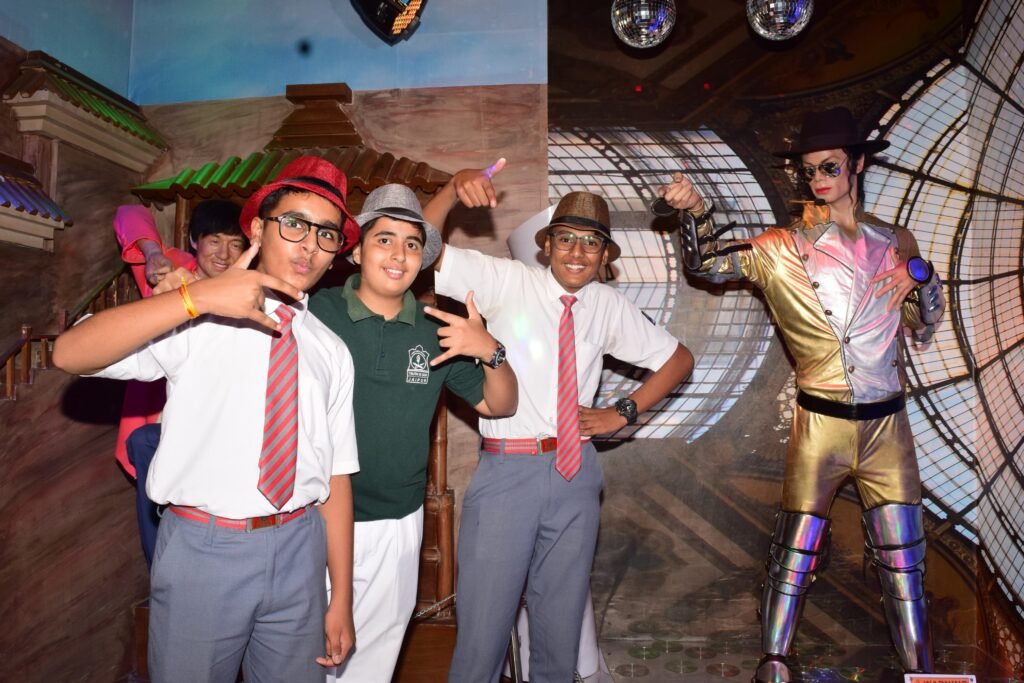
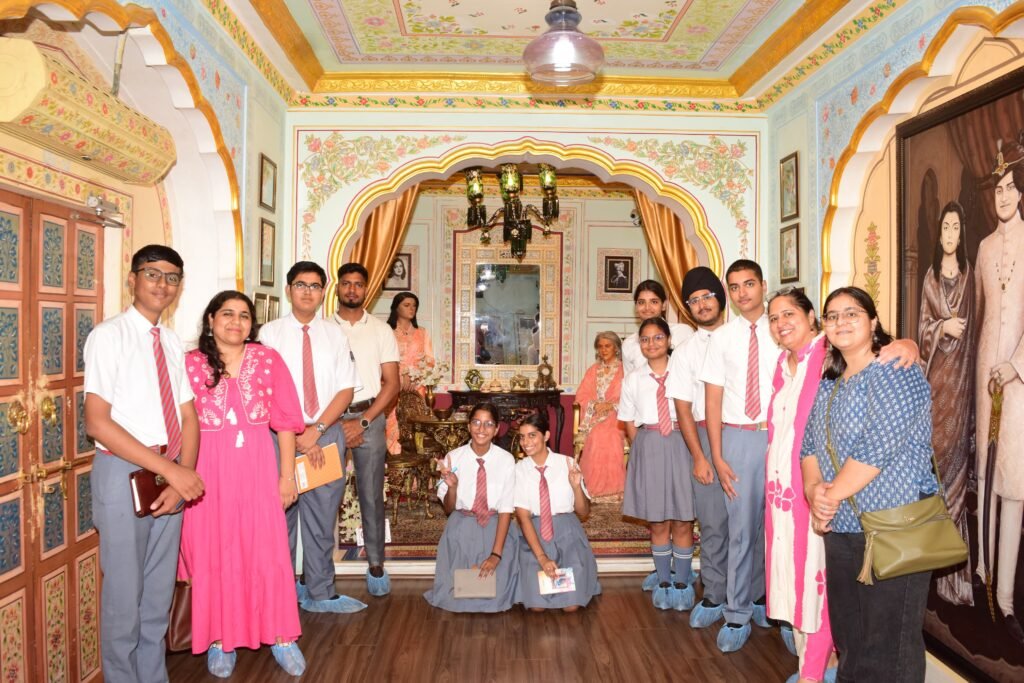
One of the most unforgettable experiences was our visit to the Jaipur Wax Museum. The statues were so lifelike that it felt as if history had come alive. Walking among these wax figures—leaders, legends, and icons—I felt a deep sense of pride. Each figure told a story of bravery, sacrifice, and greatness. That visit wasn’t just a trip—it was a powerful reminder of our heritage, responsibility, and the kind of leaders we can become. I also wrote a detailed article covering every aspect of that visit.
Another memorable visit was to the National Digital Museum inside the Rajasthan Assembly. The use of cutting-edge technology brought history, art, and culture to life in a way I had never experienced before. Every exhibit was interactive, immersive, and thought-provoking. It was more than just a museum—it was a living bridge between our past and our future.
We were also fortunate to interview Mr. Anup Shrivastava, the head of the museum. A man deeply inspired by Amitabh Bachchan, he left a strong impression on us with his knowledge and passion. If I ever built a wax museum, his statue would surely be in it. We even got the chance to interact with local artists there, which added even more depth to our experience.
My Field Reporting from Ladakh
My field reporting journey began during a family trip to Ladakh, and it changed everything for me. With encouragement from my teacher, I took the bold step of interviewing someone—and from there, a new chapter began.
I interviewed the inspiring owner of Alchi Kitchen, who shared stories that spoke of culture and strength. I recorded a video on the SECMOL campus—the real-life “Rancho School” from 3 Idiots. This campus is where students don’t just study—they live their lessons through creativity, sustainability, and innovation. Learning by doing—that’s the heart of SECMOL.
I also visited a government primary school, where I spoke with both teachers and students. Their stories were raw, real, and full of meaning. I didn’t just travel through Ladakh—I reported from there. I clicked hundreds of photos that captured untouched beauty, simplicity, and strength. I wasn’t a tourist anymore—I had become a journalist.
The videos I made of the Government Primary School, Alchi Kitchen, and SECMOL are very close to my heart. They don’t just show images—they carry messages. They reflect resilience, community values, and hope. From the smiles of schoolchildren to the innovations of SECMOL, every frame told a story worth sharing.
And all through that trip, I never stopped attending classes. Even from the mountains of Ladakh, I continued learning—because each session of Saksham Sanchar was so valuable. While being in Ladakh, I didn’t just see things—I saw them as a journalist.
The Hisar Presentation: A Day to Remember
Our journey to Hisar was another unforgettable experience. We began the day with breakfast at a restaurant where we ordered poha—but to be honest, we were completely confused about whether it was rice, khichdi, or upma! That confusion quickly turned into laughter and excitement.
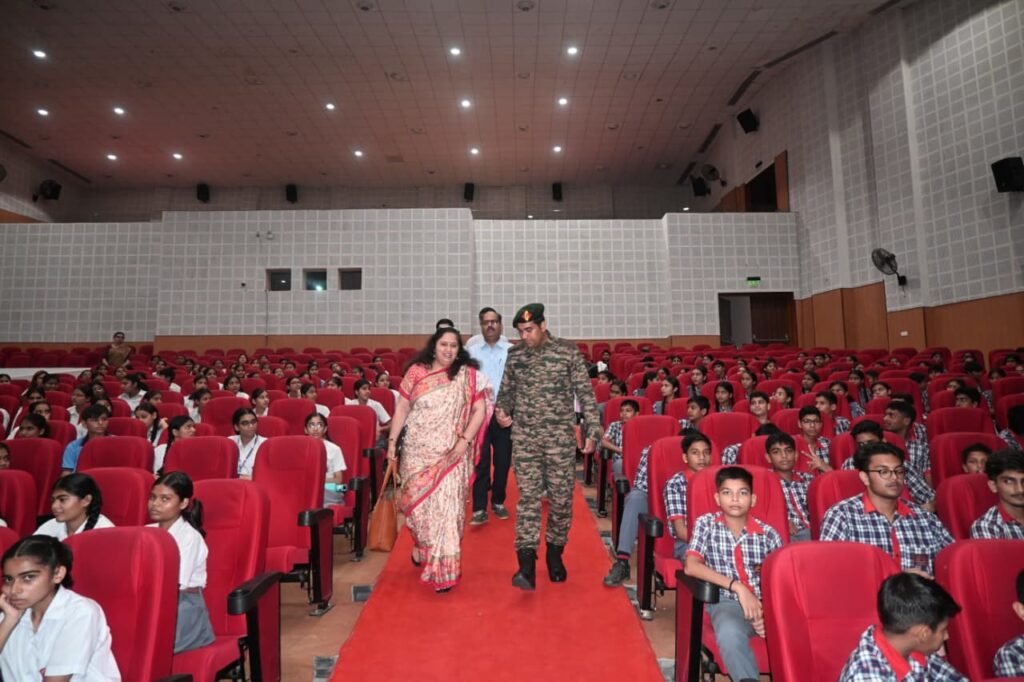
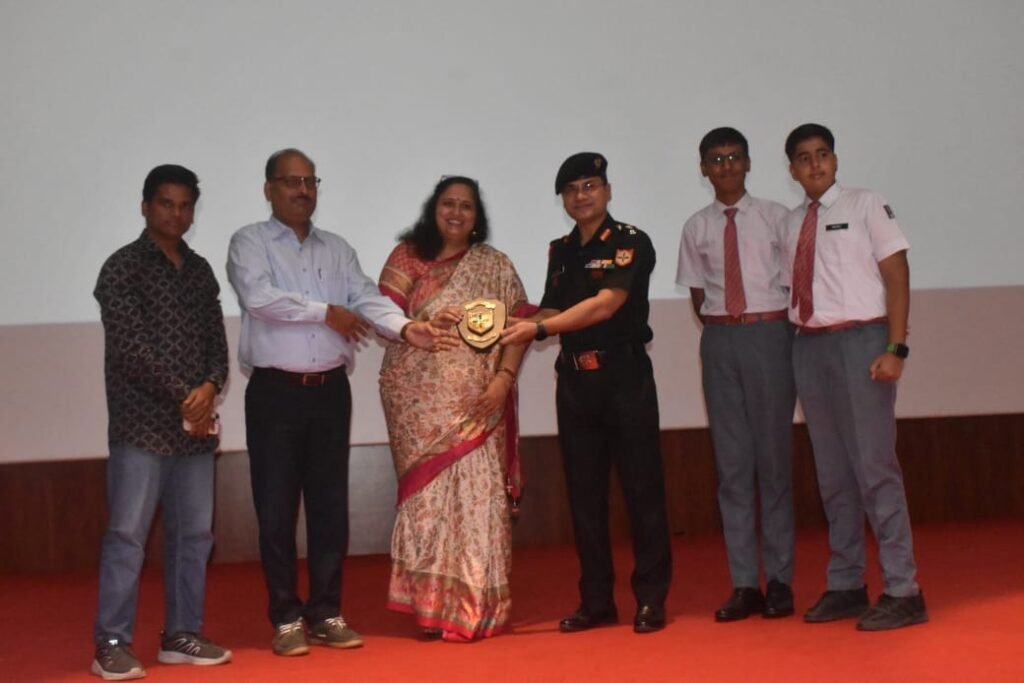
From there, we headed towards an Army Camp, where we were welcomed with incredible warmth and treated like VIPs. It was a proud and humbling moment. The respect, discipline, and honour we saw there left a deep impression on all of us.
The Hisar Presentation: A Day to Remember
Then came the highlight of our journey—our presentation in Hisar. And let me tell you honestly, it was the best part of the entire trip! From the moment we stepped onto the stage, we could feel the energy in the room. There was excitement, curiosity, and a warm eagerness to listen and learn.
What made this experience truly unforgettable was the way the students in Hisar responded. They didn’t just sit quietly—they interacted with full involvement. They answered our questions with clarity and confidence and asked us their own questions that showed genuine interest in journalism and our experiences. It felt more like a conversation than a presentation, and that’s what made it so special. There was a beautiful connection between us and them, and I could see in their eyes that they were truly inspired.
As I stood before the audience, I delivered my part of the speech with confidence and clarity. I spoke not just with words, but with passion. I made sure that every sentence I said had emotion, every pause had purpose, and every story I shared had impact. I looked into the eyes of the audience, spoke with expressive gestures, and made sure my voice carried meaning. I wasn’t nervous—I was proud. Because I was not just speaking, I was representing something bigger: my journey, my growth, and the purpose of Saksham Sanchar.
After the session, something happened that made me even prouder. An army officer, who was present during the entire session, came up to us and praised our performance. He appreciated the way we spoke, our discipline, and the confidence we displayed. Hearing such words from someone who serves our nation was deeply humbling and motivating.
The teachers there also appreciated my speech. They said that I spoke like a true journalist—with a calm but powerful voice, with the kind of confidence that connects with the audience. One of them even mentioned that my way of expressing ideas made it feel like I had years of experience in public speaking. Those words will stay with me forever.
To add to that, I took the opportunity to record student reviews after the presentation. Their feedback was amazing—many of them said that they felt inspired, and some even said they would now try writing their own stories or exploring photography and journalism. Watching their reactions made me realize the true impact of what we had shared.
On our way back home, it began to rain. Instead of getting annoyed, we enjoyed it wholeheartedly. That rain, the laughter, the shared stories—it all made the journey even more special. Sometimes, the best memories are in the little moments we share together.
My Overall Journey Through Saksham Sanchar
Looking back, my journey through the Saksham Sanchar course was nothing short of life-changing. We didn’t just learn how to write articles—we learned how to serve the nation through our words and visuals. Journalism, we realized, is a responsibility. It’s about being honest, being aware, and being a voice for truth.
Every article we wrote, every video we made, every photo we clicked—it all carried the power to create awareness, to heal, and to inspire.
I owe a lot of this journey to Archana Ma’am. She wasn’t just a teacher—she was a guide, a motivator, and a source of constant encouragement. Whenever I doubted myself, she reminded me of my strengths. It was her encouragement that pushed me to write the best articles during my Ladakh trip. She helped me refine my skills and bring out the best in every story I told. Her classes were always exciting, full of energy and new learning.
In Conclusion
Saksham Sanchar has been more than a course—it has been a journey of discovery, of growth, and of transformation. From classrooms to field trips, from notebooks to video edits, from being students to becoming storytellers—we’ve come a long way.
And this is just the beginning. Because now, we don’t just see the world—we observe it. We don’t just speak—we express. And we don’t just write—we inspire.
A Game-Changer for India’s Infrastructure, Fueled by India-Japan Partnership
In a significant update on India’s ambitious Mumbai-Ahmedabad High-Speed Rail (MAHSR) project, Sibi George, India’s Ambassador to Japan, has confirmed that the bullet train is set to commence operations by 2027. Speaking to CNN-News18 ahead of Prime Minister Narendra Modi’s visit to Japan for the annual India-Japan Summit, George emphasized the transformative role of Japan in India’s infrastructure development and the steady progress of this flagship project.
A Dream Taking Shape
The Mumbai-Ahmedabad bullet train, a hallmark of the India-Japan Special Strategic and Global Partnership established in 2014 by Prime Minister Modi and then-Japanese Prime Minister Shinzo Abe, is poised to revolutionize travel in India. Covering a distance of 508 kilometers, the high-speed rail will connect Mumbai’s Bandra to Ahmedabad’s Sabarmati station in just three hours, with trains capable of reaching speeds up to 350 km/h. George expressed confidence in the project’s timeline, stating, “I can assure you that by 2027, a train will run on that corridor. I stand by my words.” He highlighted that the bullet train’s operations hinge on Japan supplying its advanced E5 and E3 Shinkansen trains, with discussions on their delivery likely to advance during PM Modi’s upcoming visit.
Progress on the Ground
The Mumbai-Ahmedabad corridor is in an advanced stage of construction, particularly in Gujarat, where work between Surat and Bilimora is nearing completion. This stretch is expected to host trial runs soon. Of the 25 river bridges planned for the corridor, 21 are in Gujarat, with 17 already completed, while four are under construction in Maharashtra. Notably, a 7-kilometer section of the route will pass through an undersea tunnel, showcasing the project’s engineering marvel.Railway Minister Ashwini Vaishnaw has been closely monitoring the project, conducting multiple inspections to ensure its timely execution. The MAHSR project, often referred to as PM Modi’s “dream project,” is a testament to India’s push for cutting-edge infrastructure and sustainable connectivity.
A Symbol of India-Japan Collaboration
The bullet train project underscores the deepening ties between India and Japan, with Japan playing a pivotal role in providing technology, expertise, and financial support. As Ambassador George noted, Japan’s contribution is central to India’s infrastructure transformation, making the Mumbai-Ahmedabad bullet train a landmark achievement in bilateral cooperation. With construction progressing rapidly and the 2027 deadline in sight, the bullet train is set to redefine travel between two of India’s key economic hubs, bringing the dream of high-speed rail travel closer to reality.
In a remarkable stride for wildlife conservation, the turtle pond established in Delhi’s Asola Bhatti Wildlife Sanctuary has emerged as a safe haven for over 250 turtles, including 20 newborns, since its inception in January 2022. This transit camp, designed with smart habitats and natural food sources, is nurturing four rare turtle species, offering a model for successful conservation and breeding efforts in India.A Sanctuary for Survival and Growth
The turtle pond at Asola Bhatti is more than just a refuge—it’s a thriving ecosystem where turtles are flourishing. Over 100 turtles rescued from illegal traffickers have found a new home here, alongside many others born within the facility. The carefully curated habitats, mimicking natural conditions, and a steady supply of natural food have created an ideal environment for these endangered creatures. This initiative underscores the sanctuary’s role as a critical hub for protecting biodiversity and fostering the recovery of vulnerable species.
A Sanctuary for Survival and Growth
The turtle pond at Asola Bhatti is more than just a refuge—it’s a thriving ecosystem where turtles are flourishing. Over 100 turtles rescued from illegal traffickers have found a new home here, alongside many others born within the facility. The carefully curated habitats, mimicking natural conditions, and a steady supply of natural food have created an ideal environment for these endangered creatures. This initiative underscores the sanctuary’s role as a critical hub for protecting biodiversity and fostering the recovery of vulnerable species.
Why Turtle Conservation Matters
Turtles play a vital role in maintaining healthy ecosystems. By grazing on seagrass beds and aiding nutrient cycling, they contribute significantly to ecological balance. However, turtle populations worldwide face severe threats, including habitat loss, pollution, poaching, and illegal trade. In India, the smuggling of turtles for use in medicines, jewelry, and the pet trade remains a pressing challenge. Despite efforts by agencies like the Wildlife Crime Control Bureau (WCCB) and Special Task Force (STF), illegal trafficking continues to endanger these species, making sanctuaries like Asola Bhatti indispensable.
Combating Threats Through Conservation
The decline in turtle populations is largely driven by habitat destruction and the illegal wildlife trade. The Asola Bhatti turtle pond stands as a powerful countermeasure, offering a safe space for rare species to recover and reproduce. The success of this transit camp, with its growing population of rescued and newborn turtles, highlights the potential of targeted conservation efforts to reverse the damage caused by human activities.
A Model for the Future
The Asola Bhatti Wildlife Sanctuary’s turtle pond is setting a benchmark for conservation initiatives across India. By rescuing turtles from smugglers, providing scientifically designed habitats, and enabling successful breeding, the facility demonstrates how dedicated efforts can protect endangered species and preserve biodiversity. As this sanctuary continues to thrive, it serves as a beacon of hope, proving that with commitment and innovation, India can safeguard its natural heritage for future generations.
Indian Badminton Star Shines in Paris, Eyes Record-Equalling Sixth Medal
In a stunning display of skill and determination, PV Sindhu secured her spot in the quarterfinals of the BWF World Championships 2025, defeating world No. 2 Wang Zhi Yi of China in straight sets on Thursday, August 28, in Paris. The Indian badminton ace triumphed with a score of 21-19, 21-15 in the Round of 16, marking her return to the World Championships quarterfinals for the first time since 2021.
A Commanding Performance
Five-time World Championships medalist Sindhu came out firing, launching sharp attacks to clinch the first game 21-19 as Wang struggled with her returns. Maintaining her aggressive momentum, Sindhu dominated the second game, sealing the match with a commanding performance. Her trademark intensity and victorious roars echoed through the arena, underscoring her focus and resilience. With this win, Sindhu not only strengthened her head-to-head record against Wang to 3-2 but also extended her flawless 8-0 record against Chinese shuttlers in World Championships history.
Silencing the Critics
On paper, Sindhu appeared to be the underdog, with her recent form and early-round exits in previous tournaments raising doubts about her ability to challenge top players. However, her performance against Wang was a resounding response to her critics. Displaying relentless aggression and tactical brilliance, Sindhu proved she remains a formidable force on the global stage.
One Step from History
Now just one victory away from a record-equalling sixth World Championships medal, Sindhu’s Paris campaign is a testament to her enduring talent and determination. As she advances in the tournament, the Indian star continues to inspire, carrying the hopes of a nation and reinforcing her legacy as one of badminton’s all-time greats.