Home Blog Page 193

From Tribal Walls to Puja Pandals: How Sora Paintings Bring Durga’s Power to Life

0

(PC:newsd.in)

What Are Sora Paintings?

Sora (or Saura) paintings are a tribal art form from the Saura tribe of Odisha, known for their ritualistic and symbolic storytelling. These paintings are traditionally created on walls using natural dyes and are deeply spiritual, often linked to ancestor worship and nature deities.

Key Features:

  • Geometric motifs: Circles, triangles, and squares dominate the visual language.
  • Stick-like human figures: Often shown dancing, hunting, or in ritual poses.
  • Symbolic storytelling: Each element represents a myth, prayer, or offering.
From Tribal Walls to Puja Pandals: How Sora Paintings Bring Durga’s Power to Life

(PC:pintrest.com)

Origin & Spiritual Significance

Sora art isn’t just decorative—it’s sacred. The Saura people believe these paintings invite blessings from their deities and ancestors. They’re often created during festivals, births, marriages, and harvests.

  • Origin: Rooted in the ritualistic traditions of the Saura tribe, dating back centuries.
  • Medium: Originally painted on mud walls using rice paste, turmeric, and natural pigments.
  • Purpose: To communicate with the divine, mark auspicious occasions, and preserve oral history.

Connection to Durga Puja

While Sora paintings aren’t traditionally part of mainstream Durga Puja rituals like the ones in Bengal, they’ve found a powerful place in contemporary celebrations—especially in Odisha and among artists who blend tribal and devotional art.

Why They Matter:

  • Visual storytelling: Sora art’s symbolic style beautifully complements the myth of Durga slaying Mahishasura, representing cosmic balance and divine intervention.
  • Cultural fusion: Modern Durga Puja pandals and art installations often incorporate Sora motifs to celebrate indigenous heritage.
  • Empowerment narrative: Just like Durga, Sora art celebrates strength, protection, and the sacred feminine—making it a poetic fit.

The Temple Where Time Changes: A Story from Madhya Pradesh

0

(PC:panjabkesari)

In the heart of Madhya Pradesh, about 45 kilometers from Ujjain, nestled between Mahidpur and Unhel, lies a roadside shrine unlike any other. Known as the Ghadi Wale Baba Temple, this modest sanctuary has become a magnet for thousands who believe that here, time doesn’t just tick—it transforms.

A Temple of Time and Faith

The temple, dedicated to Sagas Bhairav, is located near the village of Guradia Sanga, close to the Shipra River. It’s not grand in size—just a small structure under a banyan tree—but its reputation is colossal. Devotees come here not to offer flowers or incense, but wall clocks. Yes, clocks. And not just a few—over 10,000 clocks now hang from trees, lie in nearby fields, and cover every inch of the temple’s surroundings.

The Tick-Tock of Hope

As you walk past the temple, the sound of ticking surrounds you—day and night. The clocks, donated by devotees whose wishes were fulfilled, have turned the temple into a surreal symphony of time. With no space left inside, clocks now hang from trees and even lie in the adjacent fields.

Unusual Offerings

While clocks are the primary offering, some devotees also leave behind cigarettes or chillums—symbols of personal vows or gratitude. But these are rare, and the temple’s identity remains firmly tied to its ticking treasures.

A Tree of Time

The banyan tree above the temple has become a clock tree, with thousands of timepieces tied to its branches. The sight is both mystical and moving—a visual metaphor for the hopes and prayers of countless visitors. This temple isn’t just a place of worship—it’s a living archive of transformation. In a world obsessed with time, the Ghadi Wale Baba Temple offers something deeper: the belief that time can be bent, healed, and even gifted.

Mexico’s Enigmatic Zone of Silence: Where Signals Vanish

0

(PC: http://Www.Servercreativo.com)

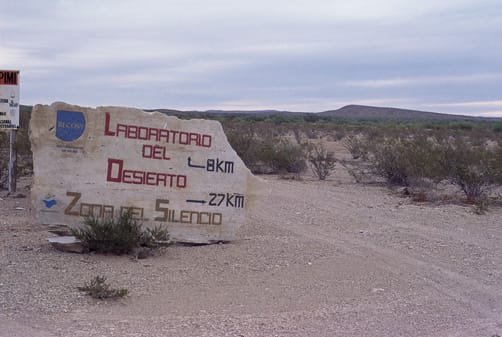
Deep in Mexico’s Chihuahua Desert lies the mysterious “Zone of Silence,” a barren region near the Bolsón de Mapimí where radio signals and electronic devices inexplicably fail. Just 25 miles away, phones, radios, and GPS function normally, but within this desolate expanse, visitors are cut off from the outside world. Despite decades of research, scientists have yet to fully unravel why signals disappear here. Shrouded in urban legends and fascination, this area gained global attention in 1970 after a U.S. missile crashed, sparking a mystery that continues to captivate. Let’s delve into the story, myths, and scientific reality of the Zone of Silence.

The Legend’s Origin: The 1970 Missile Incident

The Zone of Silence first gained notoriety on July 11, 1970, when a U.S. Nike-Ajax missile, launched from White Sands Missile Range, inexplicably crashed in this desert near the Bolsón de Mapimí. The U.S. Air Force recovery team sent to investigate encountered severe communication issues, with GPS systems and all electronic devices malfunctioning. Radio waves, television signals, and even satellite transmissions failed to penetrate the area, earning it the name “Zone of Silence” or “La Zona del Silencio” in Spanish. Since then, it has been classified as a “dark zone,” where no signals can pass through.

Legend vs. Reality The Legend

The Zone of Silence is rumored to be a “dark zone” where all forms of signals—radio, television, GPS, and other electronic transmissions—cease entirely. Tales of time-warping phenomena and encounters with mysterious strangers add to its mystique, with some even linking it to extraterrestrial activity or secret experiments.

Mexico’s Enigmatic Zone of Silence: Where Signals Vanish

The Reality

While signal disruptions occur, they are not a complete blackout. Scientists attribute these anomalies to the region’s unique geological and biological features. The area is rich in magnetic minerals like magnetite and possibly uranium, and it is a frequent landing site for meteorites. Combined with the unique topography of the surrounding mountains, these factors likely cause radio wave interference and compass anomalies. Additionally, the region boasts exceptional biodiversity, with species found nowhere else in the world.

The Name’s Origin

The term “Zone of Silence” emerged in 1966 when the oil company Pemex explored the area and noted the unusual signal disruptions. The 1970 missile incident further cemented its reputation, turning it into a global phenomenon.

Mapimi Biosphere Reserve

The Mexican government established a research laboratory in the Zone, now part of the Mapimí Biosphere Reserve, to study its unique environment. This facility analyzes the region’s distinctive flora, fauna, soil, and insect life, which have drawn significant scientific interest due to their rarity.

Ongoing Research

Scientists continue to investigate the precise causes of the signal disruptions, focusing on the area’s high magnetic activity, unusual soil composition, and geological makeup. Research also reveals that millions of years ago, this region was part of the ancient Tethys Sea, and its remnants may contribute to the Zone’s peculiar characteristics. Despite these efforts, the exact source of the anomalies remains elusive.

Myths and Rumors

While the laboratory’s official purpose is scientific, rumors persist that secret experiments exploit the Zone’s unique properties. Stories of extraterrestrial activity and time distortions further fuel its enigmatic reputation, making it a hotspot for speculation.

A Timeless Mystery

The Zone of Silence continues to captivate scientists, adventurers, and curious travelers alike. Its blend of scientific intrigue and enduring myths makes it a unique phenomenon, where fact and legend intertwine. Beneath the desert sands, the secrets of this mysterious region remain largely unveiled, ensuring its place as one of the world’s most intriguing enigmas.

Bollywood and Punjabi Stars Shine as Real-Life Heroes in Punjab Flood Relief

0

Widespread rainfall over the past week has pushed Punjab into a state of crisis, with overflowing rivers flooding several districts. Thousands remain displaced, cut off from basic necessities, as relief operations struggle to keep pace. Amid this chaos, Bollywood and Punjabi celebrities have stepped up, proving their heroism extends beyond the silver screen. From substantial financial contributions to hands-on relief work, these stars are making a tangible difference in the lives of flood-affected communities.

A Collective Outpouring of Support

The scale of the disaster has prompted an extraordinary response from some of India’s biggest names in entertainment. Combining financial aid, essential supplies, and direct involvement, these celebrities are leading by example in Punjab’s hour of need.

Akshay Kumar’s Generous Contribution
Akshay Kumar donated ₹5 crore to support flood relief and rehabilitation efforts. Describing his contribution as an act of “sewa” (service) rather than a mere donation, the actor emphasized his commitment to helping those in distress.

Salman Khan’s Rescue Mission
Through his Being Human Foundation, Salman Khan provided five rescue boats to evacuate stranded residents and deliver critical supplies. He has also pledged to adopt flood-hit villages near Husainiwala for long-term rehabilitation.

Diljit Dosanjh’s Village Adoption Initiative
Punjabi superstar Diljit Dosanjh has adopted 10 villages in Gurdaspur and Amritsar, ensuring they receive food, medical aid, and rehabilitation support to rebuild after the floods.

Sonu Sood’s Hands-On Approach
Known for his philanthropy, Sonu Sood has been actively involved on the ground, distributing essentials and launching a helpline through the Sood Foundation to assist flood victims.

Satinder Sartaaj’s Ration Drive
Satinder Sartaaj’s foundation has provided a month’s worth of rations for 500 families and continues to support ground-level relief efforts.

Gippy Grewal’s Support for Livestock
Recognizing the impact on rural livelihoods, Gippy Grewal supplied truckloads of silage to sustain cattle in flood-affected regions.

Karan Aujla’s Rescue and Relief Efforts
Karan Aujla arranged motorboats for rescue operations and organized the distribution of relief materials to those in need.

Mika Singh’s NGO Mobilization
Mika Singh’s NGO has been working tirelessly to deliver aid to flood victims, ensuring essential supplies reach those most affected.

Kapil Sharma’s Coordination and Solidarity
Comedian Kapil Sharma has supported relief coordination by Punjabi artists and used his social media platform to express solidarity with the affected communities.

Randeep Hooda’s Personal Involvement
Randeep Hooda has been hands-on in Gurdaspur, personally overseeing the distribution of food and water to flood victims.

Guru Randhawa’s Relief Camps
Guru Randhawa has set up relief camps to provide immediate assistance and support to those displaced by the floods.

A Beacon of Hope for Punjab

The collective efforts of these celebrities highlight a powerful commitment to both immediate relief and long-term rehabilitation. By combining financial contributions, essential supplies, and direct participation, they are not only aiding Punjab’s recovery but also inspiring others to contribute. As the state battles this crisis, these stars are proving that true heroism lies in stepping up when it matters most.

Anuparna Roy Quits IT, Conquers Venice: India’s First Woman to Win Best Director

0

In a cinematic twist worthy of its own screenplay, Anuparna Roy, a former IT sales executive from West Bengal, has become the first Indian woman to win the prestigious Best Director award in the Orizzonti section of the Venice International Film Festival for her debut film Songs of Forgotten Trees.

Primary Life: A Village Girl with a Silent Dream

Born in 1994 in Narayanpur, a small tribal village in Purulia district, West Bengal, Anuparna grew up far from the glitz of cinema. Her early life was steeped in simplicity—local schools, conservative expectations, and a family that hoped she’d land a government job. She studied at Ranipur Colliery High School and Naopara High School before earning a degree in English literature from Kulti College and later a Master’s in Mass Communication in Delhi. Her love for storytelling simmered quietly beneath the surface, unnoticed even by her family. “We never saw this coming,” her father Brahmananda Roy admitted. “She was studious, but never showed signs of wanting to make films”.

The IT Job She Left Behind

Before stepping into the world of cinema, Anuparna held a high-paying job in IT sales in Mumbai. But the cubicles couldn’t contain her creative fire. In 2022, she made the bold decision to quit her job and pursue filmmaking full-time—a move that shocked her family and community. Her mother, Manisha Roy, confessed she once scolded Anuparna for abandoning a stable career. “I thought she was being reckless,” she said. “But now, I see her courage was her greatest asset”.

The Film That Changed Everything

Her debut feature, Songs of Forgotten Trees, explores the emotional bond between a migrant actor and a corporate worker in Mumbai. Backed by Anurag Kashyap as executive producer, the film resonated deeply with international audiences and critics alike. With this win, Anuparna Roy not only shattered glass ceilings but also rewrote the script for what’s possible—especially for women from rural India.

A Moment of National Pride

As she stood on the Venice stage, trophy in hand, Anuparna became a symbol of transformation. From tribal Bengal to global cinema, her journey is a rallying cry for dreamers everywhere.

Crash Games As Character Builders

0

Okay so I’ve been deep in the crash gaming rabbit hole lately and I need to talk about something that’s been messing with my head. You know how these games work, right? Before each round starts, they generate this hash thing — basically a cryptographic fingerprint that proves what the crash point will be. They show you this hash before you even place your bet. After the round, you can check that everything matched up.

It’s actually pretty clever. They can’t cheat because the math literally won’t let them change the outcome after seeing your bet. But here’s the thing that nobody really talks about: knowing the game is fair makes it SO much worse psychologically.

Where Psychology Meets Probability

Last month I lost $80 in one sitting. Not my proudest moment. But what really got me wasn’t the money — it was watching my brain completely malfunction even though I KNEW the game was random.

See, when you understand that each round is predetermined and fair, something weird happens. Your brain starts doing these mental gymnastics trying to find patterns that don’t exist. That crash at 1.08x? “Oh, we were due for a low one.” That 500x moonshot immediately after? “The algorithm is compensating!” 

No. No it’s not. It’s just… random. But try explaining that to yourself at 3 AM when you’re down $500 and convinced you’ve finally cracked the pattern.

The worst part is that in a rigged game, you could at least blame the house. “They saw my big bet and crashed it early!” But with provably fair? Nope. That loss is entirely on you. Your greed, your fear, your terrible timing. The math is right there, mocking you.

The Prediction Game That Isn’t Really Prediction

Have you seen these Discord servers dedicated to “beating” crash games? It’s wild. There are people with actual computer science degrees building neural networks, running simulations, tracking tens of thousands of rounds in spreadsheets that would make an accountant weep.

I got sucked into one of these communities for a while. This one guy — called himself “CrashMaster” (I know, I know) — had logged something like 50,000 rounds. He had charts, graphs, probability distributions, the works. His final conclusion after months of analysis? The house edge was exactly what the site claimed it was. All that work just to prove the thing was doing what it said on the tin.

But here’s what’s actually interesting: the smart players aren’t trying to predict the crash point at all. They’ve accepted that’s impossible. Instead, they’re optimizing for survival. Think about it like this — you can’t predict a coin flip, but you can use aviator predictor apk and definitely develop a strategy that keeps you alive for 1000 flips. That’s what they’re really doing.

The Martingale Trap and Other Beautiful Disasters

Oh god, Martingale. If you don’t know, it’s this betting system where you double your bet after every loss. Eventually you win and recover everything, right? 

Wrong. So wrong.

I watched this streamer turn $100 into $1,500 using Martingale. Chat was going crazy. He was explaining his “foolproof system” to everyone. Fifteen minutes later? Eight low crashes in a row. EIGHT. He went from $1,500 to zero in about three minutes. The silence in his stream was deafening.

The math is brutally simple: Martingale works perfectly if you have infinite money and there are no betting limits. But guess what? Nobody has infinite money, and every site has maximum bets. Because they’re not stupid.

There’s also reverse Martingale (double after wins), the Fibonacci sequence, something called D’Alembert… I’ve tried them all. Every single one works great until suddenly it doesn’t, and when it stops working, you’re done.

What Actually Works (Spoiler: It’s Boring)

Want to know the actual secret? The players who consistently make money do the most boring thing imaginable. They pick a low multiplier — like 1.5x or 2x — and cash out there every. single. time.

At 1.5x, you win roughly 66% of the time. It’s not exciting. You’re not hitting those 100x moonshots. You’re just grinding out small, consistent profits like the world’s most boring robot.

I tried this strategy for exactly one day. By round 20, I wanted to scream. Everyone else is hitting 10x, 20x, occasionally some lucky bastard gets 100x, and you’re sitting there collecting your 50% profit like you’re picking up quarters off the sidewalk. But here’s the thing — those quarters add up, and the boring players are the ones still playing six months later.

Most of them use scripts to auto-cashout though, because doing this manually would drive anyone insane.

The Social Prediction Layer Nobody Talks About

This is where things get genuinely dark. Some players have realized the real game isn’t predicting the crash — it’s predicting other players.

Watch any crash game chat for five minutes. “HOLD THE LINE!” “Crash incoming, I can feel it!” “This is going to the moon!” It’s psychological warfare dressed up as friendly banter.

I knew this guy who would always type “everybody hold!” at exactly 3x, then immediately cash out. Half the lobby would panic-sell. It was brilliant and kind of evil. Is that ethical? Is it even part of the game? I honestly don’t know anymore.

There’s also this weird herd mentality thing. When one big player cashes out, everyone starts hammering the button. I’ve seen rounds where literally everyone bailed before 2x because one whale cashed out early. The multiplier went to 87x with nobody on it. The chat went absolutely nuclear.

Just Weird

New platforms are adding all sorts of features. Partial cash-outs where you can take half at 2x and let the rest ride. Group betting where you pool strategies. There’s even talk about AI assistants managing your bankroll across multiple games while you sleep.

Some sites are testing “social proof” features — you can see everyone’s full betting history. Imagine knowing that the guy screaming “HOLD!” has actually lost his last fifteen bets. Changes the whole dynamic.

But you know what all this technology really proves? That you can’t beat randomness. You can only manage your relationship with it. We’re adding all these layers of complexity just to arrive back at the same conclusion: the house always wins.

What This Actually Means for You

Look, if you’re reading this thinking you’ll find the secret formula to predict crash games, I’ve got bad news. The formula is already public — it’s in that hash they show you. The future is literally already determined before you place your bet.

What you’re really playing is a game against yourself. Against your own psychology. When it hits 3x and your target is 2x, can you resist? When you lose five in a row, can you stop yourself from rage-betting? When you’re up 200%, can you actually walk away?

The players who last aren’t geniuses who cracked the code. They’re people who figured out their own weaknesses and built systems to protect themselves from… themselves. They know they’ll get greedy at 5x, so they auto-cashout at 2x. They know they’ll chase losses, so they set daily limits.

The evolution from “provably fair” to “prediction” isn’t really about predicting the game. It’s about predicting when you’ll break your own rules. Because you will. Everyone does. The question is whether you’ve planned for it.

That’s what makes these games so fascinating and so dangerous. It’s not about math or patterns or secret strategies. It’s about staring at a number going up and fighting every instinct screaming at you to hold just a little longer. 

Charlie Kirk: Know More On This Conservative Influencer Who Drove a Youth Movement

0

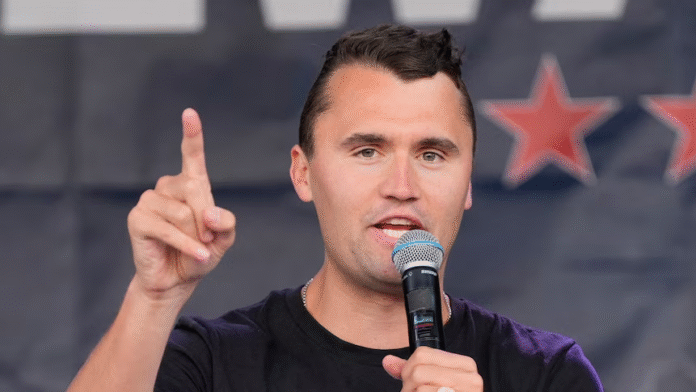
Charlie Kirk, a high-profile conservative activist and media personality, was tragically shot and killed on Wednesday at the age of 31 while hosting a college event for Turning Point USA, the organisation he co-founded. The incident, which authorities are calling a targeted shooting, took place at Utah Valley University during the launch of a multi-campus Turning Point tour.

Tributes and Legacy

President Donald Trump paid tribute to Kirk on Truth Social, calling him “The Great, and even Legendary, Charlie Kirk” and praising his deep understanding of the youth in America. Trump added, “No one understood or had the heart of the youth in the United States of America better than Charlie.”

Kirk was known for his commitment to spreading conservative ideals on college campuses, particularly at liberal-leaning institutions. Turning Point USA, which Kirk founded at the age of 18, became one of the most influential student organizations in the U.S., with chapters at over 850 colleges. The organisation’s mission centered on promoting fiscal responsibility, free markets, and limited government.

Kirk’s social media presence and his daily podcast often featured him engaging in debates on contentious issues like transgender identity, climate change, and family values. A clip of Trump praising Kirk plays at the start of his podcast: “I want to thank Charlie, he’s an incredible guy, his spirit, his love of this country, he’s done an amazing job building one of the most powerful youth organizations ever created.”

Turning Point USA and Political Influence

Turning Point USA played a significant role in rallying young voters for Donald Trump and other Republican candidates, particularly during the 2020 election. The group helped register tens of thousands of new voters and was instrumental in flipping Arizona for Trump. Kirk’s influence within conservative circles grew after Trump’s victory, with the two becoming close allies. Kirk attended Trump’s inauguration and became a regular visitor at the White House during both of Trump’s terms.

In addition to his work with Turning Point, Kirk’s public speaking engagements at Republican events—often popular with the Tea Party movement—further solidified his role as a key figure in conservative activism. He also hosted a popular conservative talk radio show, which garnered millions of followers on social media.

Personal Life and Political Views

Kirk, the son of an architect, grew up in Prospect Heights, a well-to-do suburb of Chicago. He attended a community college near Chicago before dropping out to focus on political activism. He also applied unsuccessfully to West Point, the prestigious U.S. military academy. Despite his lack of a college degree, he often joked about it when engaging in debates, particularly on complex topics like post-modernism.

An avid public speaker, Kirk toured the country, addressing conservative events and gaining popularity within right-wing circles. His conservative views were shaped by his evangelical Christianity and his family life. He married a former Miss Arizona, and they had two children together. He was often seen as the future of conservative activism, but he was also a highly polarizing figure due to his views on various social issues.

Controversial Views and Polarizing Politics

Kirk’s political stances often sparked controversy. He was a vocal advocate for the Second Amendment and, months before his death, controversially stated, “It’s worth it to have a cost of, unfortunately, some gun deaths every single year so that we can have the Second Amendment.” He also promoted anti-transgender views and expressed skepticism over the COVID-19 pandemic. Kirk was one of the prominent voices promoting the false claim that the 2020 election was stolen from Donald Trump.

However, those who knew him emphasized that Kirk believed in the power of debate and discourse, even when addressing contentious issues. “His entire project was built on reaching across the divide and using speech, not violence, to address and resolve the issues!” said William Wolfe, executive director of the Center for Baptist Leadership, on X (formerly Twitter).

A Polarizing Legacy

Charlie Kirk’s legacy as a conservative influencer will undoubtedly be debated. He was celebrated by many for his role in energizing the conservative youth movement, particularly through his work with Turning Point USA. However, his controversial views on key issues made him a divisive figure, particularly in the context of the culture wars that have defined much of American politics in recent years.

Despite the polarized nature of his politics, Kirk’s tragic death serves as a reminder of the risks associated with public advocacy, particularly in an increasingly polarized society. He was a complex and highly influential figure whose impact on conservative activism will be felt for years to come.

Who is Larry Ellison: The Brief Reign of the World’s Richest Man

0

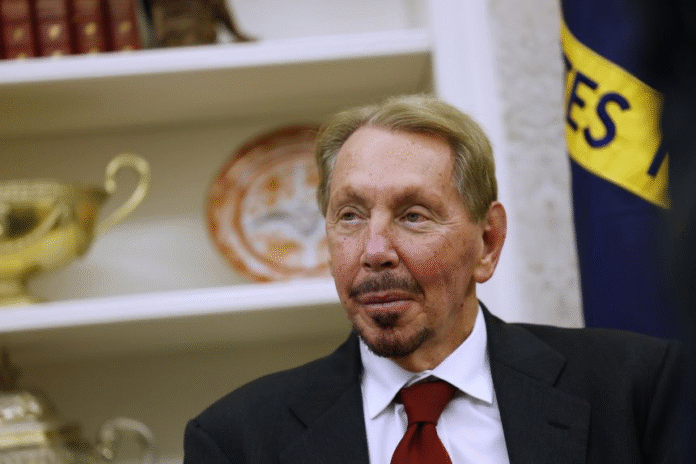
Larry Ellison, the co-founder of Oracle, is a tech mogul and one of the wealthiest individuals on the planet. Known for his larger-than-life persona and sharp business acumen, Ellison briefly surpassed Elon Musk as the world’s richest person in 2025. His wealth peaked at $393 billion, overtaking Musk’s fortune of $385 billion according to the Bloomberg Billionaires Index.

Oracle’s Surge: The Key to Ellison’s Wealth

Ellison’s rise to the top of the wealth charts came after Oracle’s stock price soared over 40%, fueled by impressive growth in its cloud infrastructure and AI business. This surge followed Oracle’s optimistic forecast for its cloud segment, which is expected to generate significant revenue in the coming years. The company also signed multibillion-dollar contracts with top AI firms, propelling its stock and Ellison’s fortune.

Oracle’s strength in providing data center infrastructure has played a key role in its recent success. Demand for AI-related services, particularly among tech companies, has driven Oracle’s revenue projections up, with the cloud division alone expected to hit $18 billion in revenue for 2025, a 77% increase from the previous year.

Ellison’s Legacy in Tech

Ellison, now 81, co-founded Oracle in 1977, building the company into a global leader in database software. He served as the company’s CEO until 2014, and now holds the titles of chairman and chief technology officer. Throughout his career, Ellison became known not just for his business prowess but also for his extravagant lifestyle—luxury yachts, private jets, and multiple homes. He has long been a public figure, frequently in the spotlight for his business and personal ventures.

Oracle’s focus on cloud computing and AI has been a game-changer in recent years, allowing Ellison’s wealth to climb. The company’s new push into AI infrastructure aligns with growing demand for data storage and computing power as artificial intelligence technology takes center stage in the tech world.

Political Ties and Media Ambitions

Beyond tech, Ellison has also made a name for himself as a prominent ally of former U.S. President Donald Trump. His political involvement has included backing initiatives like Stargate, a U.S.-based AI infrastructure project. Ellison’s strong ties to Trump are well-documented, and he has often been linked with the former president’s business and political ventures.

Ellison’s interest in media is another facet of his expansive empire. In addition to his role in Oracle, Ellison has funded his son David Ellison’s ventures in the entertainment industry. In 2025, his son completed an $8 billion deal to acquire Paramount, the parent company of CBS and MTV, through a partnership with the media company Skydance. This deal marked a significant shift in Ellison’s portfolio, adding to his media empire.

Ellison also eyed the acquisition of TikTok, a Chinese-owned app facing scrutiny in the U.S. Over the years, Ellison’s name has been linked to high-profile tech deals, positioning him as a key figure in both the tech and media industries.

The Battle with Musk

For a brief period, Ellison overtook Elon Musk as the richest person on Earth. Musk, whose fortune is tied to Tesla and SpaceX, had held the title of the world’s wealthiest individual for nearly a year before Ellison’s brief reign. Musk’s fortune fluctuates, with Tesla shares having seen a decline, partly due to investor concerns over Musk’s political involvement and regulatory changes in the electric vehicle market.

Ellison’s wealth, on the other hand, has remained more stable, buoyed by Oracle’s continued success in cloud computing and artificial intelligence. While Musk reclaimed the top spot after Oracle’s stock adjusted, Ellison’s brief stint at number one is a testament to the strength of his Oracle empire.

A Glimpse into Ellison’s Future

At 81, Ellison remains an active force in the tech industry. His company’s forward-thinking strategies in AI, cloud computing, and data centers have positioned him well for the future. Combined with his political alliances and media interests, Ellison’s influence on the world stage is far-reaching. As Oracle continues to thrive in the rapidly evolving tech landscape, Ellison’s fortune is likely to keep growing, ensuring his place among the wealthiest individuals on Earth for years to come

Who is Sushila Karki ‘Impressed with Modiji’. Know What Nepal’s Interim PM & BHU Alumna Thinks of India…

0

Sushila Karki, former Chief Justice of Nepal and a key figure chosen by Nepal’s Gen-Z protestors to lead the country’s interim government, reflects on her close ties with India and expresses gratitude for the youth’s trust. As she prepares to step into a pivotal leadership role during a historic moment in Nepal’s turbulent political landscape, she urges the public to approach the crisis with maturity.

Amid ongoing protests led by Nepal’s Gen-Z generation, former Chief Justice Sushila Karki, who is set to take over the interim government following the resignation of Prime Minister KP Sharma Oli, spoke about her enduring bond with India and shared insights into her career.

Karki, who describes herself as a “friend of India,” spoke fondly of her years at Banaras Hindu University (BHU) in Varanasi, where she completed her master’s in political science in 1975. She recalled the lasting impact those years had on her.

“I am very much impressed with Indian leaders… Indian friends treat me as a sister,” she told CNN-News18, adding, “Main Modi ji ko namaskar karti hoon. I have a good impression of Modi ji.”

Reflecting on her time at BHU, Karki shared that she made lifelong friendships in India and still remembers her teachers with fondness. “India has helped Nepal a lot. Indians always wish well for Nepal,” she remarked.

A Trailblazer in Nepal’s Judiciary

Sushila Karki made history in 2016 when she became Nepal’s first female Chief Justice, serving until 2017. Her appointment to the Supreme Court came in 2009 as an ad-hoc judge, and she was made a permanent judge in 2010. Karki’s groundbreaking role as a female leader in Nepal’s judiciary marked a significant milestone in the country’s legal history.

Karki’s selection to head the interim government follows the resignation of Prime Minister Oli, and her appointment comes on the heels of months of protests led by Nepal’s youth. These protests, spearheaded by Gen-Z activists, have demanded changes to the country’s governance and the removal of political corruption. As the youth’s chosen leader, Karki expressed deep gratitude for their trust, acknowledging the responsibility she now bears.

“I feel humbled by the trust placed in me by the youth. This is a challenging time in Nepal’s history, and I am committed to guiding the country through it,” Karki stated.

An Unprecedented Moment in Nepal’s History

The protests that have rocked Nepal since September 8, 2025, were triggered after the government imposed a ban on major social media platforms over concerns about tax revenue and cybersecurity. The protests quickly escalated into widespread demonstrations, with over 30 people reported dead and hundreds more injured in clashes with security forces.

Amid the turmoil, Kathmandu Metropolitan City Mayor Balendra Shah, often referred to as ‘Balen,’ voiced his support for Karki’s leadership, calling it a sign of the youth’s maturity and unity. In a Facebook post, Shah urged citizens to approach this unprecedented time with responsibility.

“I fully support your proposal to lead this interim/electoral government, Sushila Karki. This shows how mature you are,” Shah wrote.

The Role of Social Media & Public Frustration

The protests have been fueled by public frustration over issues such as institutionalized corruption and favoritism in governance. The recent rise of the “Nepo Babies” trend, which exposed the extravagant lifestyles of politicians’ children, has only intensified the divide between the elite and ordinary citizens. Protesters have called for more accountability and transparency from the government.

Prime Minister Modi, in a post on X, appealed for peace and order to be maintained in Nepal, while China also voiced hopes for stability in the region.

Karki, in her interview, condemned the violence and called for peace. “It is highly condemnable to kill and injure hundreds without addressing the genuine demands of the youth. This is against the values of the peace-loving Nepali society,” she said, reflecting on the gravity of the ongoing situation.

As she prepares to take on the mantle of leadership, Karki remains a figure of hope for those seeking change in Nepal’s political landscape.