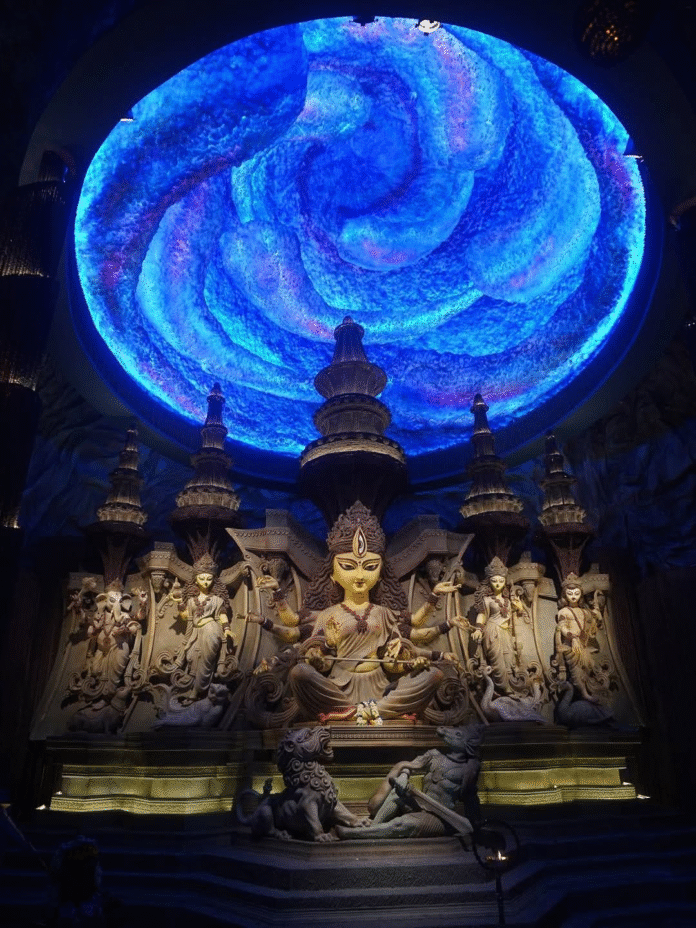
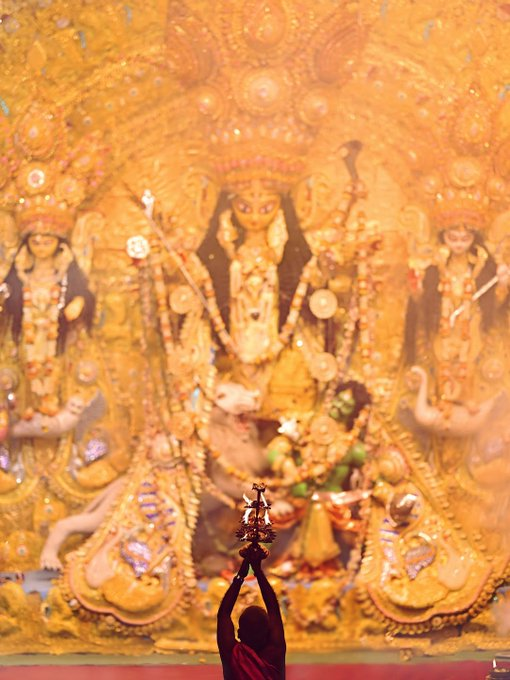
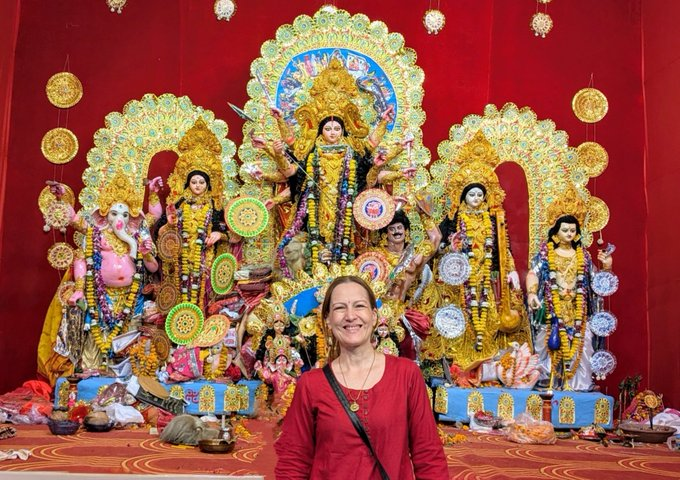
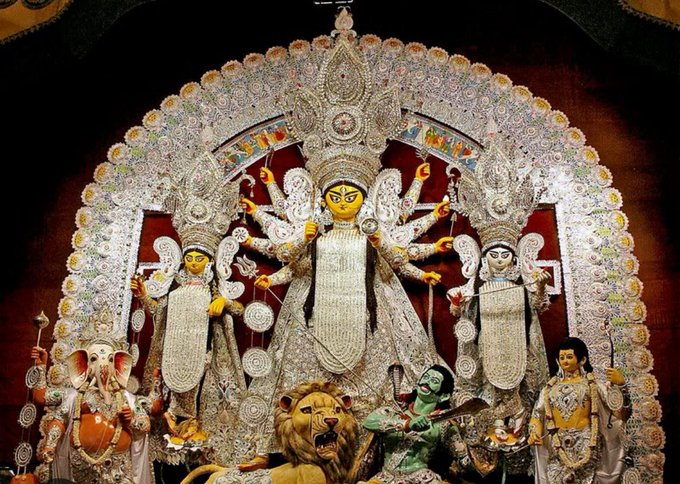
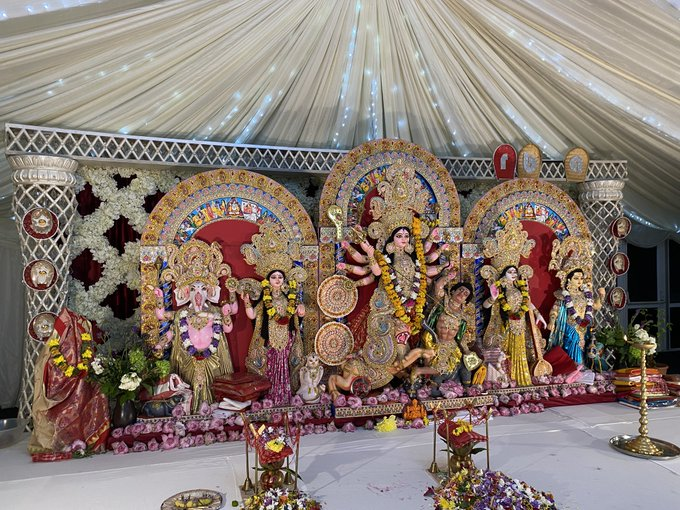
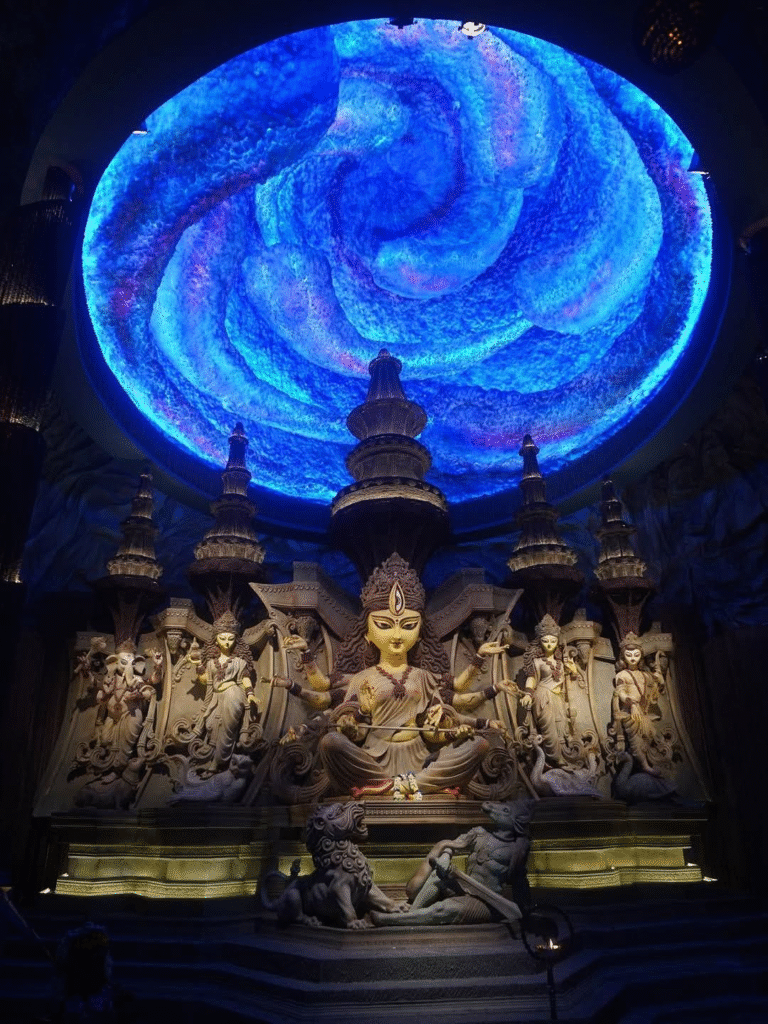
On September 30, 2025, India marks Maha Ashtami, the eighth day of Navratri, with devotees performing Pushpanjali, Sandhi Puja, and Kanya Pujan to honor Goddess Durga in her form as Mahagauri.
In West Bengal, over 40,000 pandals in Kolkata host Dhunuchi Naach and festivities, while Assam Chief Minister Himanta Biswa Sarma visits pandals and Odisha conducts grand aartis emphasizing peace.
Global celebrations in London, New York, and Berlin integrate local customs with Indian traditions, contributing to a ₹50,000 crore festival economy, amid forecasts of heavy rain in South Bengal on October 1.
Do you love festivals? Do you want your home to look pretty during celebrations? Wall lamps and candles can help you! Wall lamps hang on walls and give light. Candles are small and have flames. When you use both together, your home looks very beautiful.
This makes everyone feel happy. Your family and friends will love visiting your home during festivals.
Why Use Wall Lamps and Candles Together?
Wall lamps give steady light that stays on for hours. Candles give a dancing, flickering light that looks very pretty. Together, they make the perfect team for festival decorations.
Here are some reasons why this combination works so well:
Wall lamps provide main lighting for the room
Candles add a special glow and warmth
Both create different types of shadows on walls
They make the room smell nice when you use scented candles
The mix of steady and moving light looks beautiful
Easy Ideas for Different Festivals
Diwali Decorations
Diwali is the festival of lights. Wall lamps and candles work perfectly for this celebration.
Living Room Ideas:
Put small wall lamps near the main door
Place tea light candles on window sills
Use colorful wall lamps that match your rangoli colors
Light candles in brass diyas for a traditional look
Bedroom Ideas:
Install soft yellow wall lamps near the bed
Put scented candles on the side table
Create a corner with fairy lights and small candles
Use wall lamps with warm light to make the room cozy
Christmas Decorations
Christmas is all about creating a warm, happy feeling at home.
Dining Room Setup:
Put wall lamps with red or green shades
Place white candles on the dining table
Use wall lamps that look like stars or snowflakes
Light vanilla or cinnamon scented candles
Entrance Decoration:
Install wall lamps on both sides of the main door
Put large candles in glass holders near the entrance
The kitchen is where families gather during festivals.
Put wall lamps under kitchen cabinets
Use small candles on the counter (but keep them safe)
Choose wall lamps that give bright, clear light
Place candles away from the cooking area
Bathroom
Even bathrooms can look festive with the right lighting.
Install wall lamps on both sides of the mirror
Put floating candles in a bowl of water
Use wall lamps that are safe for bathrooms
Choose unscented candles for this space
Balcony or Terrace
Outdoor spaces need special care for decorations.
Use wall lamps that can handle weather
Put candles in glass covers to protect from wind
Choose wall lamps with warm, yellow light
Use citronella candles to keep insects away
Safety Tips to Remember
When using wall lamps and candles together, safety is very important.
For Wall Lamps:
Check that all wires are in good condition
Don’t overload electrical sockets
Keep wall lamps away from curtains
Turn them off when leaving the house
For Candles:
Never leave burning candles alone
Keep candles away from children and pets
Put candles on stable, flat surfaces
Have water nearby in case of emergency
Blow out candles before going to sleep
Money-Saving Tips
Festival decorations don’t have to cost a lot of money.
Buy wall lamps during off-season sales
Make your own candles at home
Use LED wall lamps to save electricity
Reuse candle holders from previous years
Share decoration items with neighbors and friends
Creating the Perfect Mood
The right combination of wall lamps and candles can change how your home feels.
For Happy Celebrations:
Use bright wall lamps with colorful shades
Light many small candles around the room
Choose fruity or floral scented candles
For Quiet Prayer Time:
Use dim wall lamps with soft light
Light just a few candles for gentle glow
Pick unscented or lightly scented candles
Conclusion
Wall lamps and candles make festivals more fun. They make your home look nice and bright. Everyone will feel happy when they see the pretty lights. Always be careful when using lights and candles. Ask grown-ups to help you.
Try these ideas at your home. Start with just a few wall lamps and candles. Your festival will be the best one ever!
Dussehra, also known as Vijayadashami, is one amongst India’s most vibrant festivals, symbolising the triumph of good over evil. Falling just after Navratri, the festival is celebrated with unique traditions in different regions of the country, each weaving its own cultural flavour into the larger narrative of victory, hope, and renewal.
North and West India: Ramlila and Ravana Dahana
In much of North and West India, the day is synonymous with the legendary Ramlila performances, where scenes from the Ramayana are enacted in open-air theatres. As dusk falls, towering effigies of Ravana, Meghnada, and Kumbhkarna are set aflame amid fireworks, drawing cheers from massive crowds. The fiery spectacle is a dramatic reminder of Lord Rama’s victory over Ravana and the destruction of evil.
West Bengal: Bijoya Dashami
In Bengal, Dussehra coincides with Bijoya Dashami, marking the conclusion of the grand Durga Puja festivities. On this day, elaborately crafted idols of Goddess Durga are taken out in processions and immersed in rivers and lakes. The immersion, though emotional, is also joyous—symbolising the goddess’s return to her celestial abode. Families exchange sweets and greetings, wishing each other prosperity and harmony.
South India: Golu and Shami Puja
In the South, Dussehra concludes the traditional display of dolls and figurines known as Golu. Homes are decorated with tiered arrangements of deities, mythological scenes, and cultural icons. Another important ritual is the Shami Puja, where people worship the Shami tree as a symbol of goodwill, friendship, and new beginnings. For many, it is also an auspicious time to start new ventures.
A Festival of Harvest and Renewal
Beyond its mythological significance, Dussehra also aligns with the harvest season in many regions. Farmers celebrate it as a festival of abundance, marking the start of prosperity and fresh cycles of life.
The Eternal Message
At its core, Dussehra celebrates the victory of dharma over adharma—whether through Lord Rama’s conquest of Ravana or Goddess Durga’s triumph over Mahishasura. Dussehra 2025 will once again stand as a vibrant reminder that, no matter the challenges, good ultimately prevails over evil.
Across rituals, worship, and cultural festivities, Vijayadashami continues to inspire faith, courage, and new beginnings for millions.
Celebrated annually on October 1, World Vegetarian Day continues to highlight the many benefits of vegetarianism in 2024. The observance was initiated in 1977 by the North American Vegetarian Society and formally endorsed by the International Vegetarian Union in 1978.
The day is dedicated to raising awareness of the ethical, environmental, and health advantages of a vegetarian lifestyle. It encourages people to explore plant-based diets and understand their positive impact on sustainability, animal welfare, and personal well-being. World Vegetarian Day also marks the beginning of Vegetarian Awareness Month, which runs throughout October and concludes on November 1 with World Vegan Day.
India – Paneer Butter Masala
India is a vegetarian paradise, and choosing just one dish feels unfair. Still, if I could only eat one curry forever, it would be Paneer Butter Masala.
This creamy North Indian classic is made with paneer (cottage cheese cubes) simmered in a buttery tomato-cashew gravy with aromatic spices. Paired with naan or rice, it’s mild, rich, and indulgent—a dish that never goes wrong (except when I attempt it at home!).
South Korea – Vegetarian Bibimbap
South Korea turned out to be far more vegetarian-friendly than I expected. The dish that won me over was Bibimbap, a colorful rice bowl topped with seasoned vegetables, a fried egg, and spicy gochujang sauce.
The version I tried in Jeju after hiking Mt. Hallasan came with tangy pickles and kimchi on the side, making it both nourishing and deeply satisfying. A true balance of health and flavor.
Thailand – Khao Soi & Som Tam
Thai street food is legendary, and choosing just one dish feels impossible—so here are two.
Khao Soi: A Northern Thai coconut curry noodle soup with chewy egg noodles, crisp fried noodles, cilantro, and shallots. Creamy, spicy, and hard to find outside Northern Thailand—it’s worth the trip.
Som Tam: A refreshing green papaya salad with peanuts, tomatoes, beans, lime, and chili. Bursting with spicy-sweet-salty-sour flavors, it’s the perfect antidote to the Thai heat.
Georgia – Khachapuri
Traveling through Georgia was a revelation. Khachapuri, the national dish, is a boat-shaped bread filled with gooey cheese, butter, and topped with a runny egg.
Another version is flatter, like a cheesy quesadilla, but equally divine. Soft, cloud-like dough and salty cheese make it impossible to resist—especially after a day of hiking in the Caucasus mountains.
Vietnam – Vegetarian Banh Mi
In Hanoi, I hunted down every shop offering vegetarian Banh Mi—Vietnam’s famous baguette sandwich.
The best was at Banh Mi 25, where tofu or fried egg replaced the usual meat, and toppings like cilantro, cucumber, pickled carrots, and chilies created a crunchy, spicy, and fresh explosion of flavors. Affordable, filling, and unforgettable.
Nepal – Dal Baht
Nepal’s Dal Baht is simple yet soul-satisfying. It pairs lentil soup with rice, potato curry, greens, and pickles.
Trekkers along the Annapurna Circuit swear by it—not just for the flavors, but because refills of both rice and dal are free. At $2–$10 a meal, it’s as generous as it is delicious.
Switzerland – Cheese Fondue
Few things compare to huddling in a Swiss chalet with a pot of bubbling cheese fondue. Born out of frugality—stale bread and cheese transformed into comfort food—it’s now a national treasure.
Dip bread into molten cheese, add wine if you like, and you’ve got the ultimate alpine indulgence.
Indonesia – Gado Gado
Indonesia gave the world tempeh, and one of the best ways to enjoy it is in Gado Gado.
A hearty mix of tempeh, vegetables, potatoes, and eggs tossed in peanut sauce, its name literally means “mix-mix.” Nutritious, protein-packed, and deliciously earthy, it’s vegetarian food at its most wholesome.
USA – Hopdoddy’s Veggie Burger
America may be known for meat-heavy fast food, but Hopdoddy Burger Bar (born in Austin, Texas) raises the bar for veggie burgers.
Their black bean patties come loaded with avocado, pesto, goat cheese, arugula, chipotle aioli, and tomato—best enjoyed with parmesan truffle fries. A messy, glorious, vegetarian indulgence.
Mexico – Street Tacos
Tacos in Mexico are unbeatable, and vegetarian versions shine too. In Tulum, I devoured grilled veggie tacos topped with lettuce, tomato, and fiery salsas.
Lesson learned: taste-test the mysterious green sauce before drenching your plate—it packed enough heat to last all night.
Belize – Fried Plantains
Belizean fried plantains are a simple yet addictive snack. Sweet, caramelized, and melt-in-your-mouth, they’re found everywhere from street stalls to beachside cafés. Sometimes the simplest dishes are the most comforting.
The Balkans – Borek
Throughout the Balkans, Borek (or Burek) kept me happily fueled. Flaky pastry spirals stuffed with spinach and cheese are a portable, savory snack found in every bakery.
Messy, yes—but worth every crumb.
Belgium – Frites
In Belgium, fries aren’t a side—they’re a meal. At local frituurs, piping hot frites come with dozens of sauces, from mayo to curry ketchup.
Crispy, golden perfection, best eaten out of a paper cone on a cobbled street.
Australia – Lamington
Australia’s iconic sweet treat, Lamington, is a cube of sponge cake coated in chocolate and rolled in coconut.
Soft, fluffy, and not too sweet, it’s the ultimate tea-time indulgence—especially around Australia Day.
Hungary – Kürtőskalács (Chimney Cake)
This Eastern European street snack is a hollow, spiral pastry dusted with sugar. Best eaten hot off the spit, Kürtőskalács can also be filled with ice cream, cream, or chocolate for extra decadence.
Netherlands – Stroopwafel
Last but not least, the Dutch Stroopwafel: two thin waffles sandwiching gooey caramel syrup.
Upgrade it with stroopwafel ice cream, and you’ve got a Dutch dessert to rival even Italian gelato.
Japan – Vegetarian Ramen
Japanese cuisine isn’t traditionally vegetarian-friendly, but the options are expanding. At the Shin-Yokohama Ramen Museum, the real highlight isn’t just learning about ramen history—it’s heading to the lower level, where a recreation of old Japan hosts ramen shops from across the country.
Here I tried the vegetarian Osama Ramen from Komurasaki (a shop from Kumamoto, Kyushu). While the soy-based mock meat was forgettable, the rich broth, springy noodles, and layered toppings made the dish unforgettable. Japan’s ramen scene is proof that even a traditionally meat-heavy dish can have a vegetarian star.
From hearty curries to sweet pastries, these vegetarian dishes prove that meat-free cuisine is anything but boring. Each bite tells the story of its culture—deliciously.
Paris Fashion Week 2025 wasn’t just a fashion spectacle—it was a cultural moment. And at its heart stood Aishwarya Rai Bachchan, who returned to the global runway with unmatched elegance and power.
Aishwarya’s Show-Stopping Moment
Walking for L’Oréal Paris in their public show titled “Liberty. Equality. Sisterhood. Because You’re Worth It,” Aishwarya stunned in a Manish Malhotra couture creation.
Her outfit: a regal black coat-style ensemble with 10-inch diamond-embroidered cuffs, a structured silhouette, and a bold diamond-and-emerald brooch. Signature red lips, radiant makeup, and her graceful gestures—flying kisses and folded hands—made her ramp walk unforgettable.
Viral Moments & Global Glamour
A behind-the-scenes selfie with Bridgerton star Simone Ashley went viral, capturing two South Asian icons in matching black outfits, radiating elegance and camaraderie She was also seen bonding with Eva Longoria, sharing laughs and selfies during rehearsals.
Aishwarya’s daughter Aaradhya Bachchan accompanied her, continuing their tradition of attending global fashion events together.
More Than Fashion: A Platform for Empowerment
Since its launch in 2017, Paris Fashion Week has evolved into a celebration of women’s empowerment, inclusivity, and cultural pride. Aishwarya’s presence—blending Indian heritage with global glamour—embodied that spirit perfectly.
In a darkened tent in Berlin, the crowd holds its breath. The spotlight hits center stage. But instead of a lion leaping through a flaming hoop or an elephant balancing on a stool, something extraordinary happens: a shimmering hologram of a tiger bursts into view, roaring silently, its stripes glowing with digital fire. This is Circus Roncalli, the world’s first animal-free circus powered by holograms. No cages. No whips. No forced tricks. Just pure magic.
The Vision Behind the Revolution
Founded in the 1970s, Circus Roncalli once featured live animals like every other European circus. But in 2018, they made a radical decision: to stop using animals altogether. Not because of pressure. Not because of scandal. But because they believed the future of entertainment should be cruelty-free and awe-inspiring.
Using 11 projectors, 360-degree holographic technology, and cinematic sound design, they now conjure life-sized horses galloping across the ring, elephants dancing in clouds of light, and birds soaring overhead—all without a single creature harmed. Germany’s move isn’t just a tech flex—it’s a moral stand. Across Europe, animal rights activists have long campaigned against the abuse behind the circus curtain: cramped cages, harsh training, and unnatural performances. Roncalli’s holograms prove that compassion can be spectacular.
And the audience? They’re loving it. Children gasp. Parents cheer. Even skeptics admit: the illusion is more thrilling than the old reality.
Have you heard of a beautiful game known as Dobble? If you’ve been looking for a fun game that you can easily learn, this is an amazing choice. This game will help you pass the time conveniently with swift gameplay and simple rules. Let’s learn more about it below.
What Is Dobble & Its Rules?
Dobble is a popular game that is easily available online and even at instant shopping apps where you can pick up same day delivery clothes and other essentials as well. Let us examine some major facts in this regard.:
Dobble comes with 55 cards in total, with each one having around 8 symbols (out of 50 in total).
There is one symbol that is identical in shape and colour from card to card.
The aim of the game is to identify the matching symbol between cards swiftly.
The fastest player who spots the matching symbol between two cards will win.
You have to shuffle the deck and deal the suitable number of cards as per the game variation that you select.
Cards or points are earned by identifying the symbols correctly. The player who has the highest points/cards at the end will win.
Dobble Game Variations
Here are some variations of the Dobble game that you can consider:
1. The Tower of Doom-
You have to place one card (face-up) in the centre of the table as the Tower
Deal the other cards evenly to all the players (face-down)
All players have to simultaneously flip their top cards
The first person who calls out the correct matching symbol will put the card on the top of the tower. The game will continue until and unless a player puts all his/her cards on this tower. Hence, this is the first player to get rid of all cards seamlessly.
2. The Well-
Put one card face down in front of every player as the draw pile
Put one card face up in the centre as the well
Players flip their top cards face up on the pile
The first one to call out the matching symbol correctly puts the card in the well and the game continues until the draw piles are fully empty
The player who has the most cards in the well will emerge victorious
3. Hot Potato-
You have to deal a single card to each player (face-down)
The first one to call the matching symbol gives the card to the other player
The round concludes when one player gathers all the cards, and the one with the fewest cards after multiple rounds will win. It’s a simple mechanism.
Enjoy Playing Dobble with Your Friends and Family
You can consider Dobble if you want to enjoy a fun time with your friends and family at gatherings and get-togethers. Speed is something that matters a lot in this game. Hence, the more you play it, the better you will get at quickly identifying symbols. On that note, here’s to enjoying this exciting yet simple game to the fullest!
What Is Dobble & Its Rules? Dobble is a popular game that is easily available online and even at instant shopping apps where you can pick up same day delivery clothes and other essentials as well. Let us examine some major facts in this regard.:
● Dobble comes with 55 cards in total, with each one having around 8 symbols (out of 50 in total). ● There is one symbol that is identical in shape and colour from card to card. ● The aim of the game is to identify the matching symbol between cards swiftly. ● The fastest player who spots the matching symbol between two cards will win. ● You have to shuffle the deck and deal the suitable number of cards as per the game variation that you select. ● Cards or points are earned by identifying the symbols correctly. The player who has the highest points/cards at the end will win.
Dobble Game Variations Here are some variations of the Dobble game that you can consider:
The Tower of Doom- ● You have to place one card (face-up) in the centre of the table as the Tower ● Deal the other cards evenly to all the players (face-down) ● All players have to simultaneously flip their top cards
● The first person who calls out the correct matching symbol will put the card on the top of the tower. The game will continue until and unless a player puts all his/her cards on this tower. Hence, this is the first player to get rid of all cards seamlessly.
The Well- ● Put one card face down in front of every player as the draw pile ● Put one card face up in the centre as the well ● Players flip their top cards face up on the pile ● The first one to call out the matching symbol correctly puts the card in the well and the game continues until the draw piles are fully empty ● The player who has the most cards in the well will emerge victoriou
Hot Potato ● You have to deal a single card to each player (face-down) ● The first one to call the matching symbol gives the card to the other player ● The round concludes when one player gathers all the cards, and the one with the fewest cards after multiple rounds will win. It’s a simple mechanism.
Enjoy Playing Dobble with Your Friends and Family You can consider Dobble if you want to enjoy a fun time with your friends and family at gatherings and get-togethers. Speed is something that matters a lot in this game. Hence, the more you play it, the better you will get at quickly identifying symbols. On that note, here’s to enjoying this exciting yet simple game to the fullest!
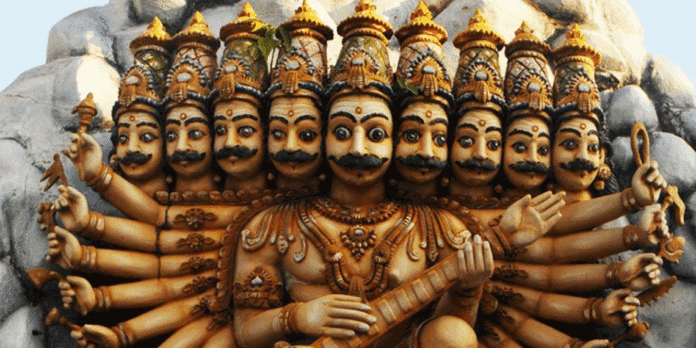
Every Dussehra, across India, flames rise and effigies fall — Ravan, the ten-headed villain, is vanquished again and again. But in the heart of Madhya Pradesh, a few defiant towns refuse to play along. No fire. No fury. No Ravan Dahan. Instead, they garland him. Pray to him. Protect his legacy.
Khanpura, Mandsaur
Rituals: Locals offer prayers and garlands to Ravan’s statue instead of burning it.
Reason: Mandsaur is believed to be the maika (maternal home) of Mandodari, Ravan’s wife. Hence, Ravan is considered a revered damaad (son-in-law). Burning his effigy would be culturally disrespectful.
Bhatkhedi, Rajgarh
Rituals: Special pujas are held for Ravan, Kumbhkaran, and Meghnad. A royal procession is organized, ending with blessings from local priests.
Reason: The village honors Ravan as a great devotee of Shiva and a learned scholar. The tradition promotes peace and brotherhood instead of destruction.
Ravan Gaon, Vidisha
Rituals: Worship at a temple housing a 10-foot reclining idol of Ravan. Locals perform aarti and chant mantras.
Reason: Ravan is seen as a symbol of intellect and Shiva devotion. The village name itself reflects pride in his legacy.
Sivda, Datia
Rituals: Quiet prayers and oil lamps are lit in Shiva temples. No effigy burning.
Reason: Deep-rooted belief that burning Ravan near a Shiv Mandir would anger Lord Shiva, who considered Ravan a devout follower.
Mandla, Mandla
Rituals: Tribal communities perform folk dances and rituals honoring Ravan as an ancestor.
Reason: Gond tribes in the region worship Ravan as a powerful king and spiritual figure, not a villain.
As we honor Shakti this Navratri, let’s remember that true strength is not man versus woman but the balance they create together. Shiv without Shakti is lifeless, and Shakti without Shiv is directionless — divinity lies in their union, just as in our daily lives where partners complete each other through love, support, and shared responsibilities.
As we celebrate Navratri, the festival of Shakti, its important to remember that true power does not lies in man vs woman but it is about them coming together and completing each other.
Then why does it always have to be this way “behind every successful man, there’s a woman when instead it can be: behind every successful person, is one’s partner whose constant love and support brought them here.
This is what ShivShakti symbolizes. Our scriptures remind us “Shiv bina Shakti ke shav hai, aur Shakti bina Shiv ke nishfal hai” – without Shakti, Shiv is lifeless, and without Shiv, Shakti is directionless.
Time is evolving and we might not notice but we are balancing each other in our day to day life-chores. How a man and a woman together as partners take care of their children and family, from packing their tiffins to preparing the dinner together, if she is googling the recipe, he is ordering ingredients on Blinkit. If he is bathing the kids, she is grooming them for the day, if she is on a meeting, he’ll serve the guests, if he forgot, she’d order a gift for their parents because true strength lies in working hand in hand.
Of course, it cannot always be a 50-50 effort but even if it’s a 10-90 it’s there, right ?
So, this Navratri, as we worship the many forms of the Goddess, let’s also celebrate the balance that sustains our lives. The divinity lies in togetherness, not separation.
As Adi Shankaracharya said in Soundarya Lahari: “Shivah shaktih yukto yadi bhavati shaktah prabhavitum” – Shiv becomes capable only when united with Shakti.
Even in our daily lives: when one falls short, the other completes. True strength is not measured in “his” role or “her” role, but in the rhythm they create together. So let’s go beyond worshipping Shakti in isolation and rather honor the spirit of ShivShakti that lives in every partnership, every bond of support, every hand that reaches out to complete another. Because only when they come together, the energy is divine.
The observance of Maha Ashtami during Sharadiya Navratri will last until 6:06 PM on September 30. Although Ashtami technically begins on September 29 at 4:31 PM, as per the Udaya Tithi (sunrise-based calculation), Maha Ashtami will be observed on September 30.
After 6:06 PM on Tuesday (September 30), the Maha Navami tithi will begin and continue until 7:02 PM on October 1. Therefore, Navami will be celebrated on October 1, followed by Dussehra on October 2.
Astrologer S.S. Nagpal explained that according to Udaya Tithi, Ashtami and Navami will be observed on Tuesday and Wednesday, respectively. As per the scriptures, during Navratri, it is considered auspicious to perform Kanya Pujan (worship of young girls) on either Ashtami or Navami. In this ritual, young girls are invited home and offered halwa, puri, and chana as prasad. They are then given gifts or dakshina, and elders seek their blessings by touching their feet.
After the young girls have their meal, devotees conclude their Navratri fast (Paran). Worshipping girls below the age of ten is considered especially auspicious. Each girl between the ages of two and ten is believed to embody a different form of the Goddess.
During Kanya Pujan, it is also customary to seat a young boy alongside the girls and offer him food. This boy is regarded as a representation of Batuk Bhairav.