Home Blog Page 169

Elon Musk: Meet First Person In World Whose Net Worth Is $500 Billion

0

Elon Musk achieved a net worth of $500 billion on October 1, 2025, according to Forbes’ Real-Time Billionaires List. He Surpassed Larry Ellison by $150 billion. The milestone resulted from a 3.3% rise in Tesla shares to $459.46, valuing his 13% stake at $191 billion, alongside contributions from his 42% ownership in SpaceX at $147 billion and xAI at $50 billion.

Musk’s wealth has increased by $245 billion since January 2025, driven by investor optimism in Tesla’s AI autonomy and robotics advancements. Know 10 points about this man who is redefining businesses across:

Accomplishments of Elon Musk

1. Co-Founding and Selling Zip2

In 1996, Elon Musk co-founded Zip2, an online business directory and mapping service launched during the early days of the internet. The company provided licensed city guides to newspapers, helping them integrate digital maps and business listings on their websites.

Zip2 brought digital convenience to traditional print media, which had yet to fully embrace the web. In 1999, Compaq acquired Zip2 for $307 million, marking Musk’s first major business success. He personally earned $22 million from the deal, giving him both the capital and credibility to pursue even more ambitious ventures.

2. Founding X.com (Later PayPal)

After selling Zip2, Musk founded X.com in 1999, a pioneering online payment platform aiming to disrupt traditional banking with secure digital transactions. Despite internal conflicts, X.com gained rapid popularity for its ease of use.

X.com later merged with Confinity, a rival company with its own payment service called PayPal. The merged entity adopted the PayPal brand and soon became the leader in online payments. In 2002, eBay acquired PayPal for $1.5 billion, with Musk receiving $180 million from the sale. This exit further shaped the digital finance landscape and established Musk as a major tech innovator.

3. Founding SpaceX

In 2002, Musk founded SpaceX (Space Exploration Technologies Corp.) with a vision to reduce the cost of space travel and ultimately establish a human settlement on Mars. Initially met with skepticism, the company faced repeated technical and financial setbacks.

Despite early failures, SpaceX achieved historic milestones:

  • In 2012, Dragon became the first private spacecraft to dock with the International Space Station (ISS).
  • In 2020, Crew Dragon became the first privately built spacecraft to carry astronauts to the ISS.

SpaceX continues to innovate with Starship, a fully reusable rocket designed for interplanetary travel and large-scale payload delivery.

4. Transforming Tesla into a Global EV Leader

Musk joined Tesla Motors in 2004 as an early investor and chairman, eventually becoming CEO in 2008. Tesla’s mission is to accelerate the world’s transition to sustainable energy through electric vehicles (EVs).

Under Musk’s leadership, Tesla introduced several groundbreaking EV models:

  • Roadster (2008): A high-performance electric sports car.
  • Model S (2012): A luxury sedan that redefined what EVs could do.
  • Model 3 (2017): An affordable, mass-market EV.

Despite production challenges and financial hurdles, Tesla emerged as the world’s most valuable carmaker, becoming a symbol of the global clean energy movement.

5. Launching Tesla Energy Products

In 2015, Musk expanded Tesla’s mission with Tesla Energy, launching products like:

  • Powerwall: A home battery system that stores solar energy for use during outages or at night.
  • Powerpack & Megapack: Scalable battery storage solutions for commercial and utility use.

These innovations aim to enable a full transition to renewable energy by integrating solar power with efficient storage solutions. Tesla Energy has helped position the company as a major player in the global shift toward sustainable energy infrastructure.

6. Founding The Boring Company

In 2016, Musk founded The Boring Company to tackle urban traffic congestion through underground tunnel systems. Frustrated by slow commutes, Musk proposed an innovative solution using cost-effective tunneling technologies.

The company’s first operational project, the Las Vegas Loop, transports passengers in Tesla vehicles through underground tunnels beneath the Las Vegas Convention Center. While other proposed tunnels are still in planning stages, the concept holds promise for revolutionizing urban transportation.

7. Founding Neuralink

Also in 2016, Musk co-founded Neuralink, a neurotechnology company developing brain-computer interface (BCI) devices.

Neuralink’s goals include:

  • Treating neurological disorders like paralysis and epilepsy.
  • Enabling direct communication between humans and machines.
  • Enhancing cognitive abilities, potentially merging humans with AI.

The company has shown promising results in animal trials and is working toward human testing. Neuralink’s work has sparked both excitement and ethical debate about the future of human-computer integration.


8. Developing the Hyperloop Concept

In 2013, Musk introduced the concept of the Hyperloop — a high-speed transportation system where pods travel through low-pressure tubes at speeds over 700 mph.

Instead of building it himself, Musk published an open-source white paper encouraging others to develop the technology. Several companies have since taken on the challenge. If realized, the Hyperloop could dramatically cut travel times and provide a sustainable alternative to air and rail travel.

9. Open-Sourcing Tesla Patents

In a bold move in 2014, Musk announced that Tesla would open-source its electric vehicle patents, allowing other companies to use them in good faith without fear of lawsuits.

Musk argued that accelerating the adoption of sustainable transport was more important than maintaining a competitive edge. This move fostered collaboration and innovation within the automotive industry and underscored Musk’s commitment to combating climate change on a global scale.

10. Acquisition and Transformation of Twitter (Now X)

In 2022, Musk acquired Twitter for $44 billion, motivated by concerns over free speech and content moderation. After taking ownership, he introduced major changes, including:

  • Rebranding Twitter to “X”
  • Implementing a subscription model
  • Expanding monetization for creators
  • Allowing long-form content

Musk’s long-term vision is to turn X into an “everything app” — integrating social media, messaging, payments, and more into a unified platform. While the changes have sparked controversy, they reflect Musk’s drive to rethink and disrupt established digital platforms.

Final Thoughts

Elon Musk’s accomplishments span multiple industries — from space and transportation to finance and neuroscience. His willingness to challenge conventions, take risks, and envision a radically different future has made him one of the most influential entrepreneurs of the 21st century.

UPI Transaction Stays Free As of Now…! See What RBI Governor Says…

0

RBI Transactions Remain Free — But For How Long?

Imagine this: you’re standing at a roadside tea stall, sipping your evening chai, and as you reach into your pocket—no cash. No worries, right? You just scan the QR code, and boom—payment done in a second. That’s UPI magic for you. It’s so seamless now, you probably haven’t carried physical money in months. Not just you—rickshaw pullers, fruit vendors, and even the guy selling momos down the lane, everyone has a scanner.

But here’s the twist in the tale: while we’ve been enjoying this convenience for free, the question that’s quietly looming in the background is—for how long?

So far, there’s no official proposal in front of the Reserve Bank of India (RBI) to charge users for UPI transactions. Which means, yes, UPI remains free… for now.

But here’s what RBI Governor Shaktikanta Das recently reminded us:

“I never said UPI can stay free forever. What I said was, there are costs—someone has to pay them.”

He didn’t say users will be charged, but he definitely hinted that the free ride might not last forever. His point? It’s not about who pays, but that someone must, for the model to be sustainable.

Let’s be honest—UPI has changed the game. It’s fast, easy, and cheap. In fact, in August 2025 alone, over 20 million UPI transactions were processed—a whopping 34% increase year-on-year! That’s not growth. That’s a revolution.

And it all began accelerating post-COVID, when everything from office work to classrooms moved online. That shift nudged even the most cash-loving folks toward digital payments. Today, we don’t even think twice before scanning a QR code—for anything from a ₹5 toffee to a ₹5,000 shopping spree.

But what makes all this possible? Subsidies. Yes, the government has been covering the cost of UPI transactions to keep it free for end users like us. Because let’s face it—start charging even ₹1 per transaction, and the impact could ripple through every corner of society. Many people rely on UPI exclusively, and even small charges could be a big deal.

Of course, if charges do come into play, there’s a silver lining for the “delayers”—you know, those friends who never pay you back on time. “UPI not working,” “Network issues,” “Next week pakka”—we might hear those excuses even more often.

But till then, let’s not overthink it.

Just enjoy the perks while they last.
Maybe treat yourself to a nice dessert—paid online, of course.
Because for now, UPI is still sweet and still free.

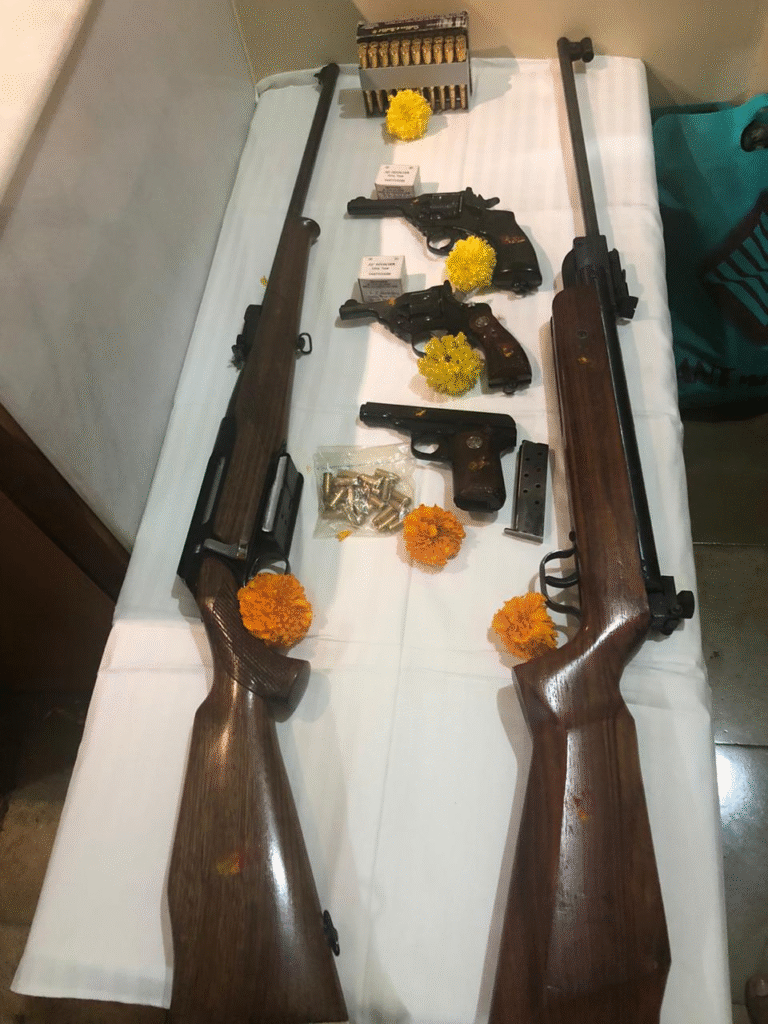
Ayudh Pooja: Know What It Is and What Is Its Modern Day Relevance of Ayudha Poojadh pooja

0

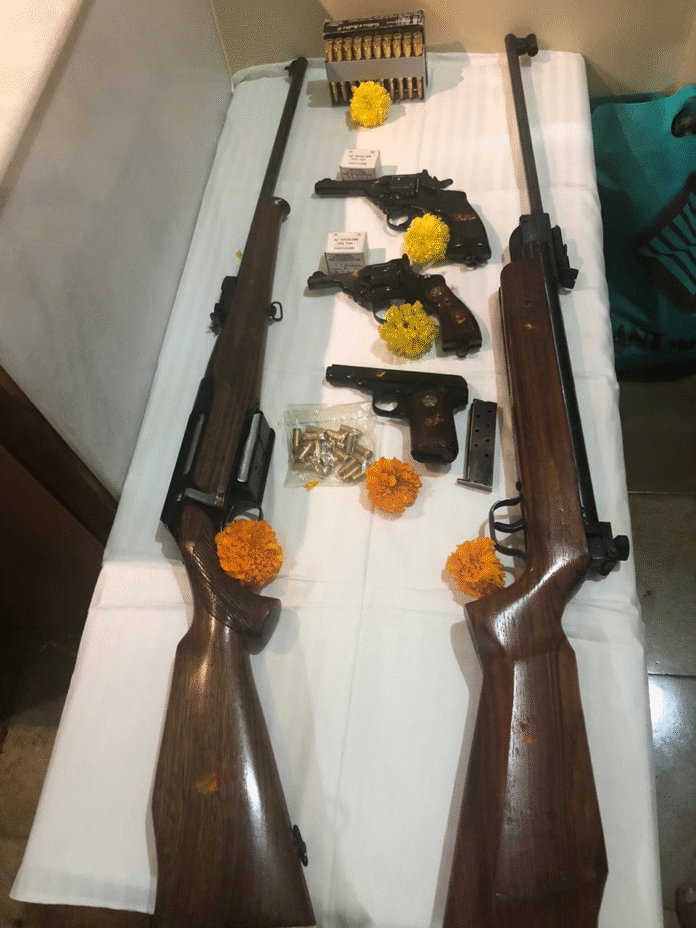
Ayudha Pooja is an integral part of the Navratri festival, especially celebrated with great enthusiasm in the southern states of Karnataka, Tamil Nadu, and Andhra Pradesh. Traditionally, this day marks the victory of good over evil—when Maa Durga defeated the demon Mahishasura after a fierce nine-day battle.

Ayudh Pooja: Know What It Is and What Is Its Modern Day Relevance of Ayudha Poojadh pooja

Beyond its mythological roots, Ayudha Pooja holds deep spiritual and philosophical significance. It teaches us to express gratitude and reverence toward the tools, instruments, and technologies that aid us in our daily lives—whether at work, in learning, or in creative expression.

Why is Ayudha Pooja still relevant today?

In today’s fast-paced, technology-driven world, we often take the tools and resources we use for granted. From computers and software to machines and mobile devices, we rely on them more than ever—but rarely pause to acknowledge their value.

Think back to your childhood—those times when resources were limited. Maybe your father refused to buy a new school bag because the old one still worked, or your mother didn’t give in to that one Barbie set you cried for. You may have felt upset then, but those small life lessons taught us to value what we have and use it wisely until it no longer serves its purpose.

Contrast that with today, where consumerism often leads us to constantly chase the newest upgrade. For example, someone might buy a new car, barely use it, and already start planning the next upgrade—forgetting the value of the previous one altogether. The moment a want is fulfilled, we move on, and the object often loses its significance.

Ayudha Pooja reminds us to pause and reflect—to respect and appreciate the tools that make our lives easier. This respect goes beyond material possessions—it extends to our intellect, skills, and the people who support us.

So this Navratri, whether or not you traditionally celebrate Ayudha Pooja, take a moment—just for yourself—to be grateful. Grateful for the resources you have, the tools you use, and the people who stand by you. Gratitude is timeless, and Ayudha Pooja is a beautiful reminder of that.

Yashasvi Jaiswal in TIME’s 100 Rising Stars List: The Only Cricketer to Feature

0

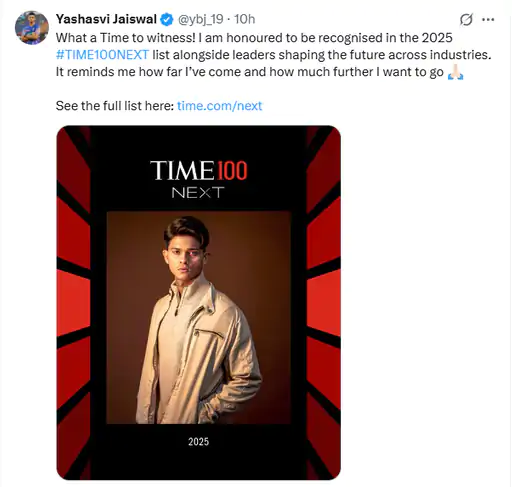
Indian opener Yashasvi Jaiswal has been named in TIME magazine’s prestigious ‘2025 TIME100 Next’ list, which recognizes 100 rising stars shaping the future across various fields globally. At just 23, Jaiswal is the only cricketer to feature in this year’s list.

Currently in Ahmedabad for the upcoming India vs West Indies Test series, Jaiswal expressed his pride and gratitude in a post on social media platform X (formerly Twitter).

“What a wonderful time! I’ve been included in the 2025 TIME100 Next list alongside leaders shaping the future. I’m proud of this. It reminds me of how far I’ve come—and how much further I want to go,” he wrote.

Jaiswal is part of India’s squad for the two-match Test series against the West Indies starting October 2. On Wednesday, he participated in Team India’s practice session at the Narendra Modi Stadium, where the first Test will be held.

Only Five Athletes Worldwide Featured

Out of the 100 names in this year’s TIME list, only five athletes were selected, highlighting Jaiswal’s inclusion as a major milestone. The other four sportspersons featured are:

  • Lamine Yamal (Spanish footballer)
  • Paige Bueckers (American basketball player)
  • Taylor Fritz (American tennis star)
  • Atthaya “Jino” Thitikul (Thai professional golfer)

Indian Athletes in TIME100 Next: A Brief History

Launched in 2019, the TIME100 Next list has previously featured Indian sprinter Dutee Chand, who became the first Indian to make the list. In the same year, Ben Stokes became the first cricketer ever included. In 2022, Indian women’s cricket captain Harmanpreet Kaur was also honored.

Hurun Rich List 2025: Mukesh Ambani Reclaims Top Spot, Shah Rukh Khan Joins Billionaire Club

0

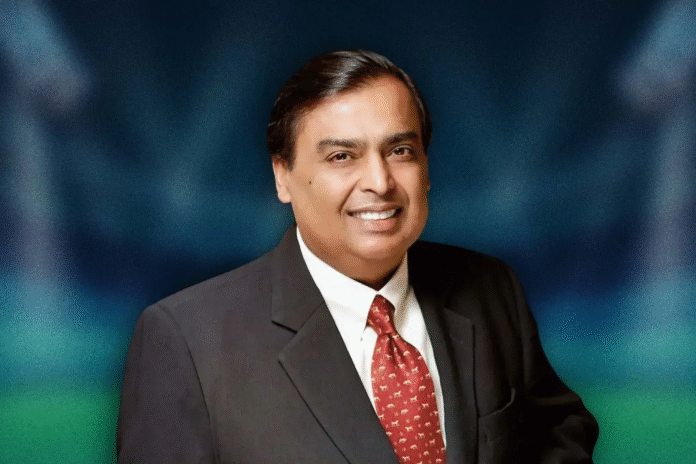
Mukesh Ambani has once again topped the M3M Hurun India Rich List 2025 with a staggering wealth of ₹9.55 lakh crore, regaining his position as India’s richest individual. He is followed by Gautam Adani, whose wealth stands at ₹8.14 lakh crore.

This year, India saw 358 billionaires, up by 24 from last year. The list features 1,687 individuals with wealth above ₹1,000 crore, spread across 91 cities. Notably, 284 new entrants joined the list, while 139 dropped off.

Among the biggest highlights is Bollywood superstar Shah Rukh Khan, who has officially entered the billionaire club with a net worth of ₹12,490 crore. This makes him the richest actor in the world, surpassing international celebrities such as Taylor Swift, Jerry Seinfeld, and Arnold Schwarzenegger.

Another standout is Chennai-born Aravind Srinivas (31), founder of AI-focused company Perplexity, who debuted with ₹21,190 crore, becoming the youngest billionaire on the list.

Roshni Nadar of the HCL Group remains the youngest person in the Top 10. Meanwhile, the Bajaj family’s wealth jumped by 43% to ₹2.33 lakh crore, moving them up four spots to sixth position.

According to Hurun, the Top 10 richest individuals now hold 27% of the list’s total wealth, with the base of wealthy individuals expanding rapidly. In the last five years, the number of people with wealth above ₹1,000 crore has more than doubled, and the list now spans 91 cities compared to just 10 at its inception.

The combined wealth of all individuals on the list is ₹167 lakh crore—nearly half of India’s GDP. The report also highlights the growing global footprint of Indian billionaires, with names emerging from Silicon Valley, London, Dubai, and the Gulf.

Mumbai leads with the most entries (451), followed by Bengaluru (116), Hyderabad (102), Chennai (94), and Pune (66). Sector-wise, pharmaceuticals top the list, followed by industrial products, chemicals, software, and a fast-growing biotech segment.

US Government Shuts Down Again; Know When It was Shut Down Last Time…

0

Do you know US Government shuts down yet again, but when was the last time it happened? Here we bring in special researched piece which speaks volumes on when was the last time when the US Government had shut down:

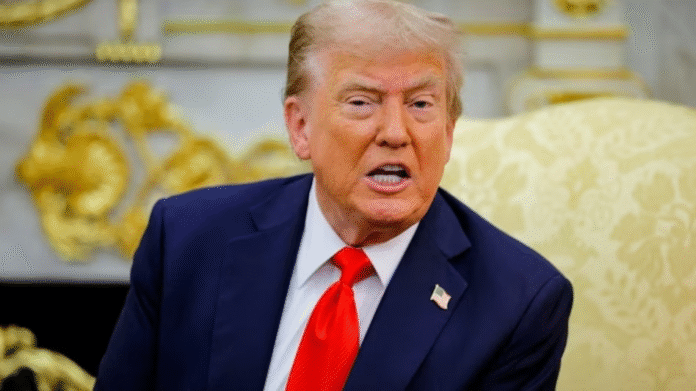
The US government has gone into shutdown mode yet again, as the lawmakers failed to agree on a new funding bill before the deadline. While essential services like public security, national security, and healthcare keeps going. Thousands of federal employees are now forced to see unpaid days or furloughs until Congress sort things out.


This time the fight is over budget cuts and subsidies. Democrats want to secure permanent funding while Republicans are pushing back. The deadlock has brought the world’s biggest economy to another halt. But when was the last time it happened? The most recent and the longest shutdown in the history of United States was from 22nd December, 2018 to 25th January, 2019, lasting 35 days.

Back then the issue was Trump’s demand for billions to build a wall on the US- Mexico border, this let down nearly 8 lakh federal workers unpaid and cost the economy in billions. Not mentioning the unimaginable chaos it caused to services like national parks, tax refunds and small business loans.
Today’s shutdown might have a different trigger but the history has repeat itself with the same leader creating the same drama yet again.

    International Coffee Day: A Cup Which Holds More Than Just Caffeine…

    0


    Let’s admit it, everyone has a different coffee personality

    Espresso for the workaholic

    Latte for the soft dreamer

    Cappuccino for the balanced soul

    Black coffee for the gym bra

    Mocha for the playful one

    Cold brew for the edgy, modern guy

    But beyond these preferences, coffee carries moments that become memories.

    Remember
    * That first coffee sip on a Monday morning when you literally try to survive the weekend party flashbacks.
    * That strong coffee shot one night before the exam when you are about to go through the syllabus for the first time, yes coffee helps.
    *That late night coffee dates with your friends, roasting each other on every sentence as well as on their taste in coffee and maybe ranting about your life all at once.
    *That barista duty at home when you are the little Raju in the house taking orders from “Chai na peene wale fufaji ka beta ordering: kum meethe ki banana”


    Those endless 3-4 coffees from the office coffee machine actually becomes your Chavanpraash at work.


    But most of all, coffee with parents and siblings at home feels different, that little joy and that little gossips from rounds the corners, hit differently


    Above all, the first coffee date with someone special which eventually decides if there’s a next date or never-again phase.
    Maybe that’s why coffee shops today are becoming third space after home and office – a place to connect, pause and simply be.
    Because in the end coffee is more than just caffeine, a comfort in a cup, a beautiful escape from the outside chaos, memories brewed and sometimes the beginning of a new chapter that starts with just four words “Lets grab a coffee.”

    Sangh@100 With People’s Support

    0

    -Dattatreya Hosabale

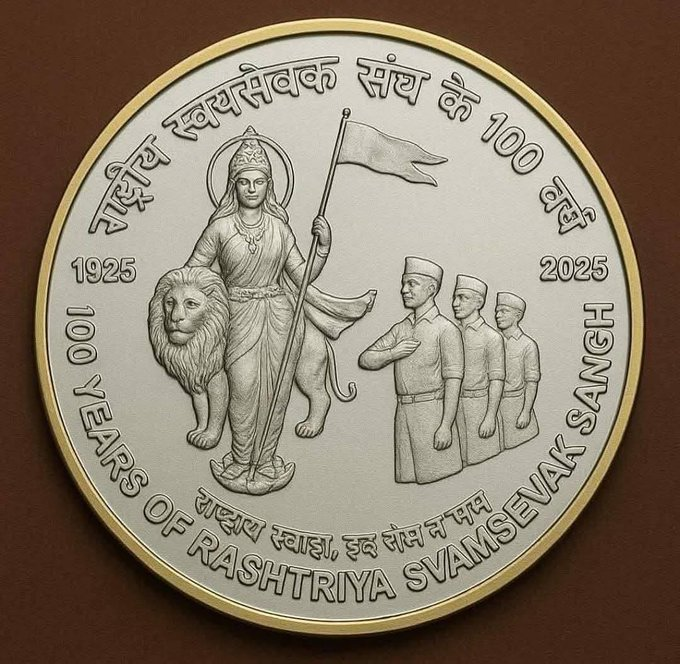
    The work of the Rashtriya Swayamsevak Sangh has now completed one hundred years. In this long journey, countless people have been companions, contributors, and well-wishers. This journey was full of hard work and challenges, but the unwavering support of ordinary citizens turned it into a fulfilling one. As we pause in the centenary year and look back, memories of many such moments and people come alive—those who devoted their everything to ensure the success of this mission.

    In the early years, young karyakartas set forth across the country like dedicated warriors, driven entirely by their love for the nation. Family man like Appaji Joshi or full-time pracharaks such as Dadarav Parmarth, Balasaheb and Bhaurao Deoras brothers, Yadavrao Joshi, Eknath Ranade—all of them, under the guidance of Dr. Hedgewar, took Sangh work as a sacred vow of lifelong service to the nation.

    The progress of the Sangh has always rested on society’s constant support. Because its work remained in tune with the spirit of the people, acceptance grew steadily over time. Once, Swami Vivekananda was asked during his foreign travels: “Most of your countrymen are uneducated, they don’t even know English, so how will they understand these profound things you talk about?” Swamiji had replied, “Just as ants do not need to learn English to find sugar, my people do not need foreign tongues to recognise a noble and spiritual cause. Their inner wisdom will guide them.” This statement turned out to be remarkably true. Similarly, despite the slow pace, society at large has continuously recognised and supported the Sangh’s sincere efforts.

    From the very beginning, Sangh Karyakartas received blessings, shelter, and encouragement from ordinary families. In fact, the households of swayamsevaks themselves became the foundational centres of the work. The contribution of mothers and sisters has been critical in giving completeness to this journey. Inspired figures like Dattopant Thengadi, Yashwantrao Kelkar, Balasaheb Deshpande, Eknath Ranade, Deendayal Upadhyaya, and Dadasaheb Apte drew strength from the Sangh and went on to build several organisations in different walks of social life. Today these organisations, with immense growth, have brought about constructive changes across many fields. Among women too, towering personalities like  Mausiji Kelkar and Pramila Tai Medhe, through the Rashtriya Sevika Samiti, have offered a motherly strength that has been central to this mission.

    Over the decades, the Sangh has raised several issues of national importance, always with society standing in support. At times even those publicly opposed have lent their voices for the larger Hindu cause. The Sangh consistently sought consensus and cooperation on matters of Hindu unity, national security, social harmony, democracy, and preservation of culture. Thousands of Swayamsevaks endured unimaginable hardships, and many laid down their lives. Through all this, society’s hand of support was always there.

    In 1981, when a few Hindus in Meenakshipuram, Tamil Nadu, were converted under misleading circumstances, a massive Hindu awakening movement followed. A conference attended by nearly half a million people was presided over by Dr. Karan Singh, then a senior Congress leader. In 1964, the Vishwa Hindu Parishad was founded with the active participation of renowned spiritual leaders like Swami Chinmayananda, Master Tara Singh, Jain muni Sushil Kumar, Buddhist bhikshu Kushok Bakula, and Namdhari Sikh Guru Jagjit Singh.  The initiative was inspired by Shri Guruji Golwalkar, with the purpose of reaffirming that untouchability had no place in Hindu scriptures.

    To uphold this principle a grand  World Hindu Conference was conveyed in Udupi where revered spiritual leaders, saints and mahants came together extending their blessings and support. The spirit voiced earlier at the Prayagraj conference—that Na Hindu patito bhavet (No Hindu can ever fall from grace) was echoed at this conference as Hindavah Sodara Sarve (All Hindus are brothers, children of Bharat Mata.)  From the campaign for cow protection, to the Ram Janmabhoomi movement, Sant-samaj (saintly fraternity) has always given blessings to the Sangh swayamsevaks.

    After Independence, when political reasons led to a ban on the Sangh’s activities, it was not only ordinary people but also highly respected figures who openly stood by it, giving courage in those difficult times. The same was experienced during the Emergency. That is why, despite so many obstacles, Sangh work has continued seamlessly and steadily. Through crises, it has often been the mothers and sisters who shouldered the responsibility of keeping Swayamsevaks and their work intact, becoming a constant source of inspiration.

    Looking ahead, in this centenary year, Sangh Swayamsevaks will make a special effort to reach every household—across big cities, remote villages, and among all sections of society—to invite wider cooperation and participation in the mission of national service. With the coordinated effort of all well-meaning forces of society, the next stage of our nation’s journey—towards holistic development—will certainly be smoother and more successful.

    (The writer is the Sarkaryavah of the Rashtriya Swayamsevak Sangh)

    Shah Rukh Khan Joins Billionaire Club, Becomes World’s Richest Actor — Check Net Worth

    0

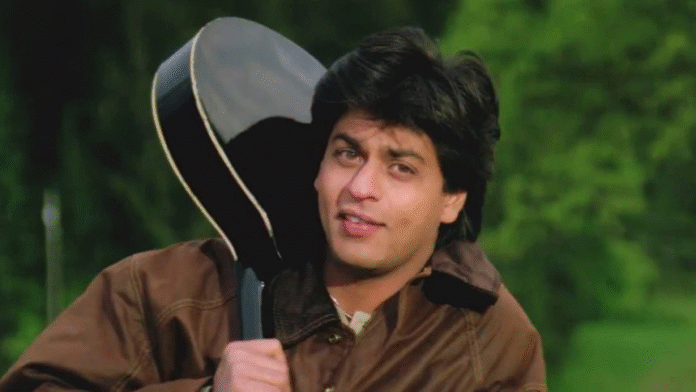
    Bollywood megastar Shah Rukh Khan has officially joined the global billionaire club, with the Hurun India Rich List 2025 estimating his net worth at an astounding $1.4 billion (₹12,490 crore). With this milestone, the 59-year-old superstar becomes the richest actor in the world, surpassing several top international celebrities.

    “Bollywood’s Badshah, Shah Rukh Khan, joins the billionaire club for the first time with a wealth of ₹12,490 crore,” Hurun announced on Wednesday.

    SRK’s new valuation places him ahead of global icons such as:

    • Taylor Swift ($1.3 billion)
    • Jerry Seinfeld ($1.2 billion)
    • Arnold Schwarzenegger ($1.2 billion)
    • Selena Gomez ($720 million)

    The Hurun report also highlighted the growing financial gap between SRK and other Indian film industry figures. His long-time friend and business partner Juhi Chawla ranks next with a net worth of ₹7,790 crore. Actor Hrithik Roshan stands at ₹2,160 crore, while Karan Johar and Amitabh Bachchan are listed with net worths of ₹1,880 crore and ₹1,630 crore respectively.

    While Shah Rukh has consistently topped the list of India’s richest actors over the years, this is the first time he has officially crossed into the billionaire category, a feat only a handful of entertainers worldwide have achieved.

    What Powers SRK’s Billion-Dollar Empire?

    Beyond his prolific film career, SRK’s wealth stems from a diversified portfolio of investments:

    • Red Chillies Entertainment (production house and VFX studio)
    • Ownership of IPL team Kolkata Knight Riders (KKR) and other Knight Riders franchises globally
    • Stake in the Indian arm of global indoor theme park KidZania
    • High-value real estate assets in India and the Middle East
    • Investments in tech ventures, including the Nourish health app and interactive platform MirrAR

    From the silver screen to the boardroom, Shah Rukh Khan’s journey is a testament to his business acumen, global appeal, and enduring star power.

    Online vs. Offline Screenwriting Courses: Which One Should You Take?

    0

    In the current generation, aspiring screenwriters are spoiled in terms of opportunities to practice their art. Since there are numerous options of screenwriting courses in the online and offline world, it is difficult to find the right format. Your decision can greatly influence your learning process, innovation and your career path. To make an effective choice, this guide will explore the advantages of online and offline courses.

    The Case for Online Screenwriting Courses

    There has been an explosion of online screenwriting course, with the benefit of being flexible and having access to international resources. They are best suited to those who are convenience-oriented and would rather learn at their own speed.

    Benefits of Learning Online

    • Flexible Schedule
      Great when one is busy at work, at school or in any other activity. Whenever you want to watch a lesson, you can do so at any time. You can also go through the study material whenever you want.
    • Global Access to Experts
      Online platforms feature courses taught by experienced screenwriters and film industry professionals from around the world.
    • Cost-Effective Options
      Online courses save you money since there’s no need to travel or pay for a venue. This makes them an affordable choice without sacrificing quality.
    • Self-Paced Learning
      If you prefer to absorb information at your own speed, online courses provide the freedom to pause and rewind lessons as needed.

    Ideal For –
    This path will be of greatest use to independent learners, low-income students, and those who live too distant to access film hubs.

    The Value of Offline Screenwriting Courses

    Face-to-face or offline classes offer practical experience that boosts your creativity. It also lets you build real, valuable connections with others.

    Advantages of In-Person Learning

    • Direct Interaction with Tutors
      Face-to-face discussions allow for immediate feedback and deeper engagement with mentors.
    • Networking Opportunities
      Being with like-minded people opens doors to collaborations. You can make industry connections that can jumpstart your career.
    • Structured Routine
      Scheduled classes promote discipline and consistency, ensuring steady progress in mastering the craft.
    • Immersive Environment
      Working alongside peers in workshops and live group projects nurtures collaboration and sparks inspiration.

    Ideal For –
    People requiring accountability, who work well in group environments or are seeking a network in the film industry.

    Key Considerations Before Choosing

    When choosing between an online and offline screenwriting course, think about your personal goals and circumstances.

    Questions to Consider

    1. What is My Learning Style?
      Do you excel in independent study or need a structured classroom environment?
    2. What Are My Career Aspirations?
      If networking and industry exposure are vital, an offline course may be advantageous.
    3. What Is My Budget and Schedule?
      Online courses are generally more flexible and affordable, while offline courses require time and travel commitments.
    4. What Is My Location?
      If you’re far from creative hubs, online options may offer access to otherwise unavailable resources.

    The Best Choice for You

    Screenwriting online and offline courses have their advantages. Online education is the most adaptable and available educational experience, which is best suited when you are only starting with your education or desire it to be economical. The offline courses are very environmentally friendly with a lot of interactivity. This is required by individuals who would like to experience the craft as a whole and mingle with other individuals in the industry.

    Lastly, the ideal course in screenwriting suits your style, lifestyle and long-term goals.