Home Blog Page 168

Here’s What You Should Know About HDFC and ICICI Banks New Update

0

Starting October 4, private sector giants HDFC Bank and ICICI Bank will roll out same-day cheque clearance, following the Reserve Bank of India’s (RBI) new settlement framework. The initiative is expected to make cheque-based transactions faster, smoother, and more secure for customers.

Until now, cheques deposited through ATMs or drop boxes under the Cheque Truncation System (CTS) could take up to two working days to clear, as scanned images were transmitted to the drawee bank. Under the new framework, cheques deposited on or after October 4 will be cleared within a few hours on the same day.

Customer Guidelines

To avoid delays and ensure seamless clearance, banks are advising customers to:

  1. Fill cheque details carefully and correctly.
  2. Maintain sufficient balance to prevent cheque bounce.
  3. Avoid overwriting and ensure signatures match bank records.

Positive Pay System (PPS)

For enhanced security, customers are urged to use the Positive Pay System (PPS). This involves pre-submission of cheque details—account number, cheque number, date, amount, and beneficiary name—at least 24 working hours in advance for cheques above ₹50,000.

  • Banks cross-verify these details during clearance.
  • If matched, the cheque is processed; if mismatched, it is rejected and requires resubmission.
  • Cheque details must be emailed to designated bank addresses, with an acknowledgment sent upon receipt.

The RBI has made Positive Pay mandatory for cheques above ₹5 lakh, while strongly recommending it for amounts above ₹50,000. Cheques validated under PPS will also fall under the RBI’s dispute resolution framework, offering additional protection to customers.

Implementation Timeline

This system is part of RBI’s phased settlement plan:

  • Phase 1: Launches October 4, 2025.
  • Phase 2: Expands on January 3, 2026.

For customers, the key takeaway is clear: double-check cheque details, maintain balance, and adopt Positive Pay for a secure and hassle-free banking experience.

Kerala’s Spice Route Tourism Circuits Unveiled: Explore Ancient Ports and Heritage

0

Kerala is set to launch up to 10 unique Spice Route-based tourism circuits within the next year, connecting ancient ports, heritage sites, and historic spice trade locations across the state. The initiative, led by Muziris Projects Limited, aims to offer travellers a rich cultural and historical experience distinct from existing heritage tours, while reviving Kerala’s intangible heritage linked to the spice trade.

The Spice Route Initiative is a comprehensive effort to develop tourism circuits centred on Kerala’s maritime history. It will link key ports, heritage structures, and cultural sites associated with the historic spice trade, integrating both tangible and intangible heritage. Unlike conventional heritage tourism, this project emphasises the historical and cultural significance of the spice trade, offering visitors a multidimensional experience of Kerala’s past.

A key focus of the project is the preservation of intangible heritage, including traditional knowledge, artisanal skills, and cultural practices. Communities willing to share their expertise will have their knowledge documented in museums and repositories, safeguarding traditions such as architecture, food, arts, and crafts tied to the spice era.

To promote educational tourism, Muziris Projects Limited plans collaborations with Mahatma Gandhi University and other academic institutions. Short-term courses will cover heritage interpretation, sustainability, and museum management, while partnerships with foreign universities connected historically through spice trade will foster knowledge exchange and international cultural ties.

The initiative also includes the creation of two specialised museums in Kozhikode – a traditional knowledge museum and a food museum. The former will archive Kerala’s artisanal and cultural heritage, while the latter will showcase the state’s diverse cuisine linked to its spice history, featuring innovative displays including 3D projections of traditional recipes.

The project will officially kick off with the Spice Route International Conference in January, bringing together experts and stakeholders to discuss Kerala’s maritime history, spice trade relations, and historic travel circuits. The event aims to boost awareness and strengthen Kerala’s position as a global hub for spice trade heritage tourism.

Tiwai Island: The Remote Isle Where Pygmy Hippos Roam

0

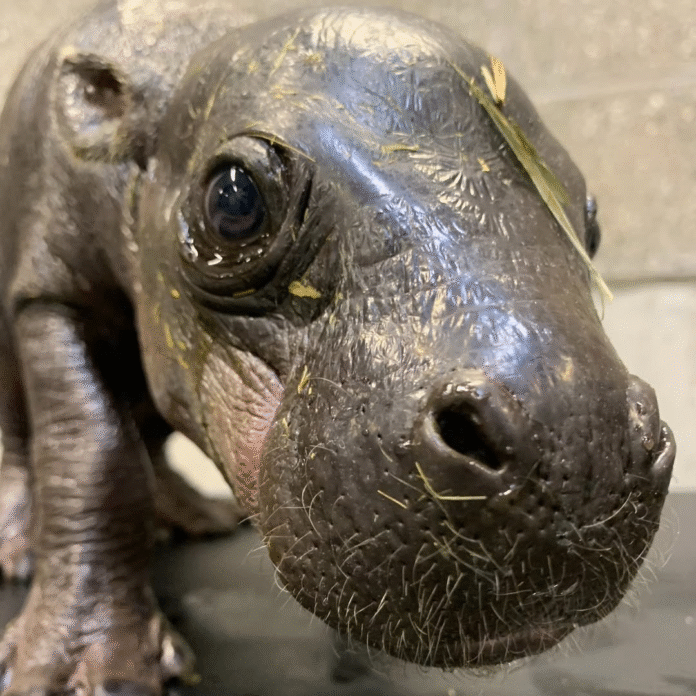
Tiwai, meaning “Big Island” in the Mende language, may cover just 11.9 sq km, but it shelters a treasure trove of biodiversity. Nestled in Sierra Leone’s Moa River, the island is home to rare pygmy hippos, endangered chimpanzees, and one of the densest primate populations in the world. Its recent recognition as Sierra Leone’s first Unesco World Heritage Site marks a new chapter for the country’s natural heritage.

Getting to Tiwai is not for the faint-hearted. From the bustling capital of Freetown, travellers first cover 240km on tarmac before spending hours jolting along rust-red dirt tracks, scarred with potholes, to reach the Moa River. The final leg is a dugout canoe crossing, often navigated by torchlight in the inky darkness of night. It is a journey that demands patience and grit – but the rewards are unmatched.

Upon arrival, visitors discover a hidden wilderness camp tucked among towering rainforest trees, curling liana vines, and bamboo that pierces the sky like spears. The camp itself is simple and off-grid: mesh-sided wooden huts fitted with mosquito-netted beds, a communal bandstand-style eating space, and a rustic shower block. There are no frills, no luxuries – but then, that is not what draws people here.

Instead, travellers come for the chance to experience an untamed corner of ancient West African rainforest. At night, the air fills with the symphony of insects, bird calls, and the occasional rustle of unseen wildlife. By day, guided treks reveal some of the island’s most elusive inhabitants – from shy pygmy hippos that slip silently through the riverbanks to the vibrant primate species that swing through the canopy overhead.

With Unesco’s recognition, Tiwai Island and the surrounding Gola Rainforest National Park now stand as symbols of Sierra Leone’s ecological richness and its commitment to conservation. For the adventurous traveller, this remote isle offers not just a rare glimpse of endangered wildlife, but also the chance to step back into a world where the rainforest still reigns supreme.


72,300 Charging Points Coming Soon FOR EV Charging: PM E-DRIVE Scheme to Boost EV Infrastructure

0

The Government of India has launched operational guidelines under the PM E-DRIVE scheme to set up more than 72,300 public electric vehicle (EV) charging stations across the country. This move, led by the Ministry of Heavy Industries, is aimed at accelerating EV adoption by making charging infrastructure more accessible and affordable, while also addressing the growing need for sustainable mobility.

PM E-Drive scheme subsidy model

Under the new framework, a tiered subsidy model has been introduced to encourage installations at critical public and commercial locations. Government offices, hospitals, schools, and residential colonies will receive a 100% subsidy on both upstream infrastructure and charging equipment, provided they allow free public access. High-traffic hubs such as airports, railway stations, metro hubs, bus depots, municipal parking lots, and toll plazas will be eligible for an 80% subsidy on upstream infrastructure and 70% on charging equipment. Commercial establishments like shopping malls, markets, and highway roadside facilities will qualify for an 80% subsidy on upstream infrastructure, while battery swapping stations will also receive 80% support on upstream costs.

PM E-Drive centres installation process

The scheme prioritises installations in cities with populations exceeding one million, as well as state capitals, smart cities, metro-linked satellite towns, and high-density transport corridors. This targeted approach ensures maximum impact on urban mobility while reducing “range anxiety” for EV users. By focusing on public transport hubs, commercial complexes, and residential zones, the government hopes to make EV charging more convenient and widespread.

To ensure smooth execution, eligible government agencies will appoint nodal bodies responsible for aggregating demand and identifying priority sites. These agencies will submit proposals through a dedicated online portal. Bharat Heavy Electricals Ltd (BHEL) has been designated as the Project Implementation Agency (PIA) and will oversee deployment. Subsidies will be disbursed in two tranches, linked to compliance and performance benchmarks, to guarantee both quality and timely implementation.

India’s EV Ecosystem to change

The rollout of more than 72,000 charging points is expected to be a game-changer for India’s EV ecosystem. By tackling one of the biggest barriers to electric mobility—the lack of charging infrastructure—the PM E-DRIVE scheme will boost consumer confidence and encourage more people to adopt EVs. The initiative also aligns with India’s broader goals of reducing vehicular emissions and promoting sustainable transport solutions. Once operational, this large-scale charging network is set to transform India’s EV landscape and bring the country closer to its clean energy and net-zero commitments.

Saree-Clad Men Perform Garba in Ahmedabad to Lift 200-Year-Old Curse, Video Is Viral

0

A unique Garba performance in Ahmedabad has taken social media by storm, where men dressed in sarees danced at Sadu Mata Ni Pol to honour a centuries-old tradition.

The ritual, rooted in a 200-year-old legend of Sadu Mata, is believed to be an act of penance. According to local folklore, Sadu Mata cursed the men of the community after they failed to protect her. To atone, her descendants perform Garba in sarees during Navratri, seeking forgiveness while paying homage to her spirit.

In the viral video, the saree-clad men are seen clapping, swaying, and moving rhythmically around the temple with devotion. Locals say the practice not only appeases Sadu Mata’s spirit but also celebrates the divine feminine.

“This ritual is both a prayer and a performance — a way of honouring Sadu Mata while embracing the essence of Navratri,” said a community elder.

The tradition, now widely known as Saree Garba, has become a distinctive cultural marker of Ahmedabad’s Navratri festivities. While Garba is typically performed in honour of Goddess Durga, this version symbolises repentance, reverence, and continuity of heritage.

The Instagram reel of the event, posted by @awesome.amdavad, has drawn admiration from thousands of users. Many praised the men for preserving tradition, while others highlighted how cultural rituals can evolve creatively yet remain deeply rooted in devotion.

As Navratri celebrations sweep across Gujarat, the viral Saree Garba performance stands as a reminder of how ritual, history, and faith intersect to keep age-old legends alive.

Aadhaar Updation Now Costlier: UIDAI Revises Charges After 5 Years

0

For the first time in five years, the Unique Identification Authority of India (UIDAI) has revised the charges for Aadhaar updation. The new rates will be applicable from October 1, 2025, to September 30, 2026.

Revised charges

  • Standard demographic updates (name, gender, date of birth, address, or contact details):

  • Earlier ₹50, now ₹75 (if done separately).
  • Free of cost if done along with biometric updates.
  • Biometric updates (fingerprints, iris, and photograph):
    • Free for children aged 5–7 years.
    • Free (one-time only) for teenagers aged 15–17 years.
    • For all other cases: ₹125 (earlier ₹100).
    • myAadhaar portal updates:
    • Uploading identity and address proof documents online will remain free until June 14, 2026.
    • However, if the same updates are done at an Aadhaar enrolment centre, a fee of ₹75 will apply (up from ₹50).

Home enrolment service fee

UIDAI has also formalised charges for Aadhaar home enrolment services:

  • ₹700 (inclusive of GST) per resident, in addition to the standard update fees.
  • If multiple residents at the same address (as per Aadhaar records) opt for the service:
    • The first resident will pay ₹700, and
    • Each additional resident will be charged ₹350 (inclusive of GST).

First hike in half a decade

This is the first revision in Aadhaar updation charges since 2020, and UIDAI has clarified that the changes are aimed at covering operational costs while continuing to provide digital updates at no cost for a limited period.

GOAT Tour 2025: How Messi’s Return Can Bring India’s Honour Back to Football

0

For decades, India has been described as a “sleeping giant” of world football—a country with passion but little global recognition in the beautiful game. Now, with Lionel Messi set to return to India for the GOAT Tour 2025, the nation has an opportunity to reclaim its honour, rekindle its footballing pride, and inspire a new generation of fans.

On Thursday, Messi confirmed his much-anticipated participation in the four-city tour, calling it an “honour” to revisit India. “It is such an honour for me to make this trip. India is a very special country, and I have good memories from my time there—the fans were fantastic. India is a passionate football nation, and I look forward to meeting a new generation of fans while sharing the love I have for this beautiful game,” Messi said in an official statement.

A comeback after 14 years

Messi last played on Indian soil on September 2, 2011, when he captained Argentina in a FIFA international friendly against Venezuela at Kolkata’s Salt Lake Stadium. That night, the city transformed into a footballing carnival, as over 85,000 fans witnessed history. Fourteen years later, the same venue will once again host the world champion—this time not just for a match but for a grand celebration of football, culture, and fandom.

On December 13, 2025, Messi will headline the “GOAT Concert” and “GOAT Cup” at the Salt Lake Stadium, where he is expected to share the stage with Indian sporting icons Sourav Ganguly, Bhaichung Bhutia, and Leander Paes. It will be the first stop of his whirlwind tour across Kolkata, Ahmedabad, Mumbai, and New Delhi.

Beyond football: A cultural spectacle

The GOAT Tour goes far beyond the sport itself. Organisers have designed it as a multi-layered cultural extravaganza—featuring concerts, fan meet-and-greets, football masterclasses, food and tea festivals, and even a padel exhibition at Mumbai’s Brabourne Stadium.

Tickets are expected to start from ₹3,500, ensuring accessibility to fans from all walks of life. A 25-foot-high mural and Messi’s biggest-ever statue are also set to be unveiled during Kolkata’s Durga Puja festivities, symbolising his larger-than-life impact on the sport.

In Mumbai, Messi will participate in the Padel GOAT Cup, where a star-studded line-up could feature Shah Rukh Khan, Sachin Tendulkar, MS Dhoni, and leading Bollywood actors. The blending of cinema, cricket, and football is expected to draw massive crowds and global media attention, turning the event into one of the biggest sporting spectacles ever staged in India.

Football’s revival in India

India once boasted a proud footballing tradition. Kolkata clubs like Mohun Bagan and East Bengal wrote glorious chapters in Asian football, while legends such as P.K. Banerjee, Chuni Goswami, and Bhaichung Bhutia carried the torch across generations. Yet in the modern era, cricket overshadowed football’s popularity, and India struggled to make its mark internationally.

Messi’s return comes at a crucial juncture. His presence could re-ignite passion among millions of young Indians, encourage grassroots participation, and restore pride in a sport where India still yearns for global recognition. Promoter Satadru Dutta, who secured the GOAT Tour rights earlier this year, emphasised that the event is not merely entertainment but an opportunity to rebrand India as a footballing hub.

“This is a once-in-a-lifetime moment where India can showcase its passion to the world. Messi’s presence will inspire the youth and prove that football has a home here,” Dutta said.

Kerala friendly adds to excitement

Adding to the buzz, the Argentina national team has included India in its November FIFA international window, with a friendly planned in Kerala between November 10–18. Though it is uncertain whether Messi himself will feature, the possibility of two visits within two months has electrified Indian fans.

“The Argentine national team, led by Lionel Scaloni, will have two FIFA friendly windows in the remainder of 2025,” the AFA confirmed. “The second, in November, will be played in Luanda, Angola, and Kerala, India.” Even if Messi skips the Kerala game, Argentina’s presence alone signals growing global recognition of India’s footballing potential.

Restoring honour through the GOAT

At 38, Messi remains the most celebrated footballer on the planet—an Olympic gold medallist, a 2022 World Cup-winning captain, and the symbol of footballing genius. His decision to return to India is more than just a commercial tour—it is a statement that India matters on the global football map.

The GOAT Tour 2025 could be the turning point for Indian football, uniting fans across regions, re-energising the domestic scene, and inspiring children to dream beyond cricket. If football is to regain its lost honour in India, Messi’s magic might just be the spark that lights the way.


World’s First Museum Dedicated to MF Husain to Open in Qatar

0

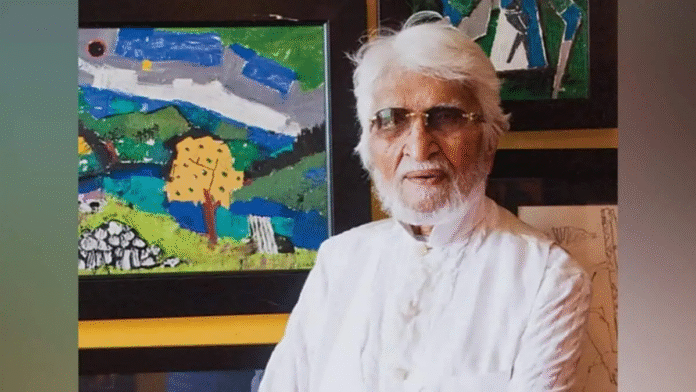
MF Husain (Photo: Instagram/@artindiamagazine)


The world’s first museum dedicated to legendary Indian painter Maqbool Fida Husain will open in Doha, Qatar, on November 28, the Qatar Foundation announced on Wednesday. Titled “Lawh Wa Qalam: M F Husain Museum”, the institution will trace Husain’s artistic journey from the 1950s until his death in 2011.

World’s First Museum Dedicated to MF Husain to Open in Qatar

Among the highlights will be “Seeroo fi al ardh”, Husain’s final masterpiece presented as a unique 20-minute installation show. The museum will showcase a permanent collection of his works, including paintings, films, tapestries, photography, poetry, and installations, presented through multimedia storytelling.

“Maqbool Fida Husain was one of the world’s most legendary modernists, an artist whose vision resonated across cultures, including here in Qatar, where he lived and worked during his life,” said Kholoud M Al-Ali, Executive Director of Community Engagement and Programming, Qatar Foundation.

The galleries will also display a series of paintings commissioned by Sheikha Moza bint Nasser, Chairperson of Qatar Foundation, inspired by Arab civilisation. Husain completed more than 35 of these works before his passing in 2011.

Covering over 3,000 square meters, the museum’s design mirrors a sketch made by Husain himself, reflecting his vision of the building as an artwork in its own right. The architecture embodies his lifelong pursuit of experimentation across disciplines.

“It is an honor to present his work within a dedicated museum of this scale — a space where audiences can engage deeply with his life, his art, and his enduring global legacy. Conceived as a space for inspiration and creativity, the Lawh Wa Qalam: M F Husain Museum reflects Qatar Foundation’s commitment to fostering art and culture,” Al-Ali said.

Husain, celebrated as India’s most prominent modernist painter, spent his later years in Qatar and London. In 2010, he was granted honorary nationality by Qatar, where he lived until his death in 2011.

Who Was Pandit Chhannulal Mishra, Padma Vibhushan Awardee and Eminent Classical Vocalist Passes Away at 89

0

Renowned Hindustani classical vocalist and Padma Vibhushan awardee Pandit Chhannulal Mishra passed away early Thursday morning at the age of 89. He breathed his last at 4:15 a.m. at the residence of his daughter, Namrata Mishra, in Mirzapur. His last rites will be performed today at Manikarnika Ghat in Kashi.

A Legend in Classical Music

Pandit Chhannulal Mishra was one of the foremost exponents of Hindustani classical music, celebrated for his mastery in Khayal, Thumri, Dadra, Bhajan, Kajri, and Chaiti. His iconic song, “Khele Masane Mein Holi…”, remains a favorite among classical music enthusiasts.

Born on August 3, 1936, in Hariharpur, Azamgarh, Uttar Pradesh, music was in his blood. His grandfather, Gudai Maharaj Shanta Prasad, was a noted tabla player. Chhannulal began learning music from his father Badri Prasad Mishra at the age of six and later trained under Ustad Abdul Ghani Khan of the Kirana Gharana and Thakur Jaidev Singh.

He studied classical music in Muzaffarpur, Bihar, before settling in Varanasi nearly four decades ago, where he became a revered name in Indian classical circles, both nationally and internationally.

A Personal Life Marked by Tragedy

Pandit Mishra is survived by four daughters and a son. His wife Manorama Mishra and elder daughter Sangeeta Mishra tragically passed away within four days of each other during the COVID-19 pandemic in April 2021.

He had been ailing for the past seven months and was recently hospitalized. Diagnosed with Acute Respiratory Distress Syndrome (ARDS) and suffering from diabetes, hypertension, osteoarthritis, and an enlarged prostate, he was discharged from BHU’s Sir Sundarlal Hospital on September 27 and had returned to his daughter’s home.

Honored by the Nation

Pandit Chhannulal Mishra was the recipient of some of India’s highest civilian honors:

  • Sangeet Natak Akademi Award (2000)
  • Padma Bhushan (2010)
  • Padma Vibhushan (2021)

He was a proposer for Prime Minister Narendra Modi during the 2014 Lok Sabha elections in Varanasi. It is said that he was initially reluctant, but was later persuaded by Amit Shah. Upon agreeing, he reportedly told Modi:

“Take care of the Ganga and music in my Kashi.”

Tributes Pour In

Prime Minister Narendra Modi

“I am deeply saddened by the passing of Pandit Chhannulal Mishra. He dedicated his life to Indian art and culture and brought classical music to the masses. It was my privilege to receive his blessings. Om Shanti.”

Uttar Pradesh Chief Minister Yogi Adityanath

“Pandit Chhannulal Mishra devoted his entire life to Indian classical music. He was an inspiration for generations of singers.”

Legacy

Pandit Chhannulal Mishra wasn’t just a classical singer — he was a cultural ambassador, a guru, and a custodian of Indian musical traditions. His contribution to preserving and popularizing Hindustani music has left an indelible mark on India’s cultural heritage.

Mahatma Gandhi’s Diet Schedule: Uncooked Food, Fresh Fruits, Milk, Yoghurt…

0

Born on October 2, 1869, in Porbandar, Gujarat, Mahatma Gandhi — the Father of the Nation — is globally admired not only for his philosophy of non-violence but also for his simple and disciplined lifestyle. Gandhiji was highly conscious of his health and well-being. A lifelong vegetarian, he followed a carefully balanced diet grounded in nature, ethics, and self-restraint.

In his 1949 book “Diet and Diet Reform,” Gandhiji emphasized that food is not merely a source of nutrition, but a vital part of one’s spiritual and physical discipline. He advocated for raw and natural foods, minimal cooking, and mindful eating. His diet primarily consisted of uncooked foods, fresh fruits, dried fruits, green vegetables, milk, and yogurt — all consumed in moderation.

In today’s fast-paced world, where fast food and processed snacks dominate, Gandhiji’s diet offers a timeless model for clean, conscious living. Following his dietary principles can aid in weight management, improved digestion, and stronger immunity, while lowering the risks of obesity, diabetes, and heart disease.

On the occasion of Gandhi Jayanti, let’s take a closer look at:

  • What Gandhiji ate on a daily basis
  • How his diet can benefit us today
  • Key considerations before adopting his approach

What Was Gandhiji’s Diet Plan?

A: Gandhiji followed a minimalist and plant-based diet. He believed that eating meat involved violence, and he practiced strict vegetarianism throughout his life. His daily schedule was highly disciplined — he would wake up at 4 a.m. and walk approximately 5 kilometers every morning.

His typical diet included:

  • Fruits: Bananas, apples, oranges
  • Dried fruits: Almonds, walnuts
  • Vegetables: Carrots, spinach, bottle gourd, pumpkin
  • Dairy: Milk or yogurt
  • Grains: Wheat, millet, and rice
  • Sweeteners: Jaggery or honey instead of refined sugar

He practiced weekly fasting, during which he would consume only fruits or a liquid diet. Gandhiji believed that fasting helped detoxify the body and bring mental clarity. Other principles he followed:

  • Eat slightly less than your appetite
  • Chew thoroughly and eat mindfully
  • Have dinner before sunset

Q: What Are the Benefits of Following Gandhiji’s Diet?

A: Gandhiji’s diet promotes simplicity, moderation, and natural nutrition, offering several science-backed health benefits:

  1. Detoxification: A clean, natural diet helps flush out toxins.
  2. Weight Loss: Calorie intake is naturally limited due to unprocessed foods.
  3. Immunity Boost: Fruits and vegetables are rich in vitamins A and C, which enhance immune function.
  4. Better Digestion: Whole, plant-based foods improve gut health.
  5. Cellular Cleansing: Fasting triggers autophagy, a process where the body removes damaged cells — reducing risks of cancer and diabetes.
  6. Mental Clarity: Eating light and natural keeps the mind sharp and focused.

Q: What Should You Keep in Mind Before Adopting Gandhiji’s Diet?

A: Gandhiji’s diet was aligned with circadian rhythms — the natural cycles of the body and environment. While it offers multiple benefits, it may not be suitable for everyone, especially those with existing conditions like diabetes or thyroid disorders. Here’s how to start safely:

  • Consult your doctor before making significant changes, especially if you have a medical condition.
  • Begin gradually: Start by increasing the quantity of fruits in one meal.
  • Slowly incorporate vegetables, whole grains, dairy, and dried fruits.
  • Replace sugar with jaggery or honey.
  • Try a 12–16-hour fast (e.g., stop eating after 7 p.m.) and observe how your body responds.

Final Thoughts

Mahatma Gandhi believed that self-restraint and mindful living are essential for personal and societal well-being. His diet was not just about food—it was about discipline, ethics, and harmony with nature. In an age of overconsumption, following Bapu’s principles can offer a healthier, more sustainable way of life.