Home Blog Page 161

Who is Sunil Amrith? Indian-Origin Historian Wins British Academy Book Prize 2025 for ‘The Burning Earth’

0

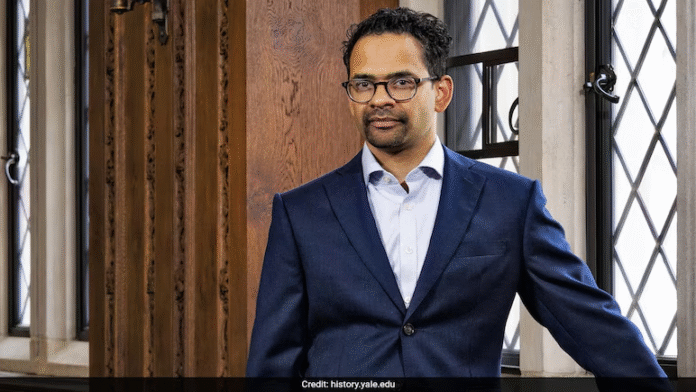
Renowned Indian-origin historian Sunil Amrith has been awarded the 2025 British Academy Book Prize for his pathbreaking work “The Burning Earth: An Environmental History of the Last 500 Years.” The £25,000 award celebrates outstanding non-fiction writing in the humanities and social sciences that deepens global understanding through exceptional research and storytelling.

A Global Scholar with Indian Roots

At 46, Sunil Amrith stands among the world’s most respected historians. Born in Kenya to South Indian parents and raised in Singapore, Amrith developed a keen interest in history and migration early in life. He graduated from the University of Cambridge, where his fascination with the environmental and social consequences of global movement and empire took shape.

Today, he serves as a Professor of History at Yale University (USA), where he continues his pioneering research connecting environment, empire, and migration.

The Burning Earth: A History of Human and Environmental Transformation

Amrith’s award-winning book, “The Burning Earth,” traces five centuries of environmental change — from the European conquests of the Americas and British gold mining in South Africa to the global industrial revolution and modern ecological crises.

The British Academy praised the book for reframing world history through an ecological lens, showing how colonisation, industrialisation, and human expansion have transformed the planet. It connects global events to the modern environmental emergency, making history urgently relevant to today’s world.

Honours and Recognitions

Sunil Amrith’s contribution to global history has earned him several international accolades:

  • MacArthur Fellowship (“Genius Grant”), 2017
  • Infosys Prize in Humanities (History), 2016
  • Fellow of the American Academy of Arts and Sciences
  • Author of acclaimed books such as
    • Crossing the Bay of Bengal: The Furies of Nature and the Fortunes of Migrants (2013)
    • Unruly Waters: How Rains, Rivers, Coasts, and Seas Have Shaped Asia’s History (2018)

British Academy Book Prize 2025: Celebrating Global Scholarship

The British Academy Book Prize, founded in 2013, honours excellence in non-fiction writing across the humanities and social sciences. This year’s shortlist reflected exceptional diversity, including authors like William Dalrymple (The Golden Road), Lucy Ash, Bronwen Everill, Sophie Harman, and Graeme Lawson.

In its citation, the Academy hailed The Burning Earth as “a powerful, deeply researched narrative that connects humanity’s past ambitions with the planet’s present peril.”

Legacy and Impact

Through his research and writing, Sunil Amrith urges readers to rethink the relationship between human progress and environmental degradation. His work bridges academic insight with global relevance, positioning him as a leading voice in understanding how history can guide solutions for our shared ecological future.

Kedarnath Temple Portals Close for Winter 2025; Lord Shiva’s Idol Begins Journey to Ukhimath

0

In a deeply symbolic and emotional ceremony, the portals of the sacred Kedarnath Temple in Rudraprayag district were officially closed for the winter season on the morning of Thursday, October 23, 2025 on Bhai Dooj, marking the end of this year’s Char Dham Yatra for thousands of devotees.

As per centuries-old tradition, the palanquin (doli) carrying Lord Kedarnath’s idol began its journey to the Omkareshwar Temple in Ukhimath, which serves as the deity’s winter abode.

Spiritual Rituals Before Closure

Devotees were permitted darshan from midnight until around 4 AM. Between 5 AM and 6 AM, the sacred “Samadhi Puja” was performed, during which the self-manifested Shivalinga was ceremonially covered with sacred ashes, grains, fruits, Rudraksha beads, and a white cloth, signifying the divine rest period.
The inner sanctum was closed at 6 AM, followed by the main gate at 8:30 AM, amid chants of “Om Namah Shivay” and the resonant sound of temple bells.

Journey of the Panchmukhi Doli

Following the closure, the five-faced (Panchmukhi) idol of Lord Kedarnath began its winter trek, halting first at Rampur, then Guptkashi, and finally reaching Ukhimath by October 25. Daily worship will continue at Omkareshwar Temple throughout the six-month winter period.

Significance and Seasonal Closure

Situated at an altitude of 3,584 meters in the Garhwal Himalayas, Kedarnath Temple experiences extreme cold and heavy snowfall during winter, making it unsafe and inaccessible for pilgrims. Therefore, the Utsava Murti (festival idol) is ceremonially relocated to Ukhimath to ensure uninterrupted worship.

Char Dham Yatra Update

Kedarnath, one of the four shrines in the revered Char Dham circuit, now joins Gangotri and Yamunotri, which have already closed for winter. Only Badrinath Temple remains open until its scheduled closure on November 25, 2025.

For Pilgrims and Devotees

Those planning a pilgrimage should note that Kedarnath Temple’s portals will reopen in late April or early May 2026, depending on weather conditions and the auspicious date declared by temple authorities.
In the meantime, devotees can seek blessings at Ukhimath’s Omkareshwar Temple, where the winter worship of Lord Kedarnath continues with full rituals and devotion.

Bhai Dooj 2025: Know The Story of Yamraj and Yamuna That Explains the Festival’s Significance

0

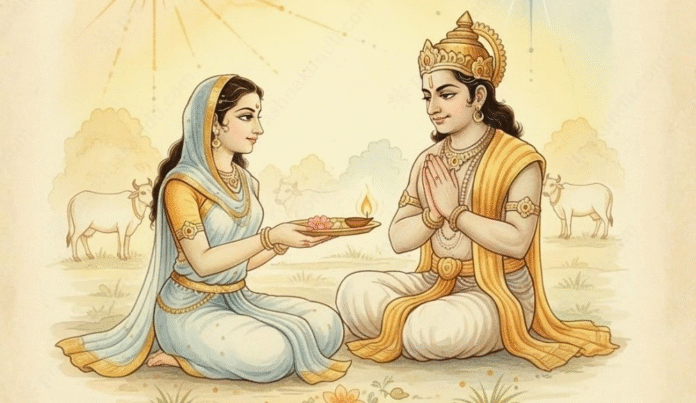
Bhai Dooj will be celebrated on October 23 across the country where sisters will apply tilak on the foreheads of their brothers praying for their long life and success. However do you know why this festival is celebrated? According to Hindu mythology, Lord Surya (the Sun God) had two children — Yamraj, the God of Death, and Yamuna, the river goddess. The siblings shared a deep bond of affection. Yamuna often invited her brother to visit her home, but Yamraj, burdened by his divine duties, could never find the time.

Bhai Dooj 2025: Know The Story of Yamraj and Yamuna That Explains the Festival’s Significance

Finally, on the second day of the bright fortnight (Shukla Paksha) in the month of Kartika, Yamraj decided to fulfill his promise and visit Yamuna. Though he initially hesitated — fearing that his role as the God of Death might bring unease to her home — his love for his sister overcame his doubts.

Yamuna joyfully welcomed her brother, performing his aarti and offering him a feast of delicious dishes she had lovingly prepared. Touched by her devotion, Yamraj asked Yamuna to request a boon. She wished that he would visit her home every year on this very day and bless all brothers and sisters who honor their bond with love and prayers.

Yamraj granted her wish, declaring that any brother who visits his sister on this day and receives her blessings shall be blessed with a long and prosperous life. From that day forward, this occasion has been celebrated as Bhai Dooj, a festival symbolizing the eternal bond between brothers and sisters.

What Is Kafala System Abolished After 50 Years in Saudi Arabia…

0

Kafala Syste: For more than half a century, one word shaped the destiny of millions of foreign workers in Saudi Arabia: Kafala, Arabic for “sponsorship.” It wasn’t just a policy; it was a power structure.

Under it, a worker’s entire life including job, visa, and even the right to leave the country was fixed with their employer, or kafeel. Without the employer’s consent, they couldn’t change jobs or leave the country.

The system began in the 1950s, when Gulf nations needed cheap labour to build their booming economies but didn’t want to grant residency or citizenship. Over time, it became one of the most criticised labour systems in the world. Human rights groups compared it to “modern-day slavery,” as employers often confiscated passports, withheld pay, and used threats of deportation to maintain control.

Saudi Arabia, where around 13 million migrant workers which is nearly 42% of the population, support sectors like construction, domestic work, and agriculture, finally announced the abolition of Kafala in June 2025.

The move is part of Crown Prince Mohammed bin Salman’s Vision 2030, a plan to modernise the economy, attract global investors, and improve the kingdom’s human-rights record.

The new contract-based system promises key freedoms: workers can now change employers, travel freely without exit visas, and access labour courts and complaint mechanisms. Officials say these changes will boost productivity and fairness.

Still, rights groups warn that implementation will be crucial. Some employers continue to demand permission for job changes, and domestic workers remain among the least protected.

For millions from India, Bangladesh, Nepal, and the Philippines, this reform means more than paperwork, it’s the beginning of dignity, safety, and self-determination. The end of Kafala marks not just a legal shift, but a historic step toward equality in the Gulf’s labour landscape.

President Droupadi Murmu Visit to Sabarimala: Why It Is a Historic Milestone in Faith and Equality

0

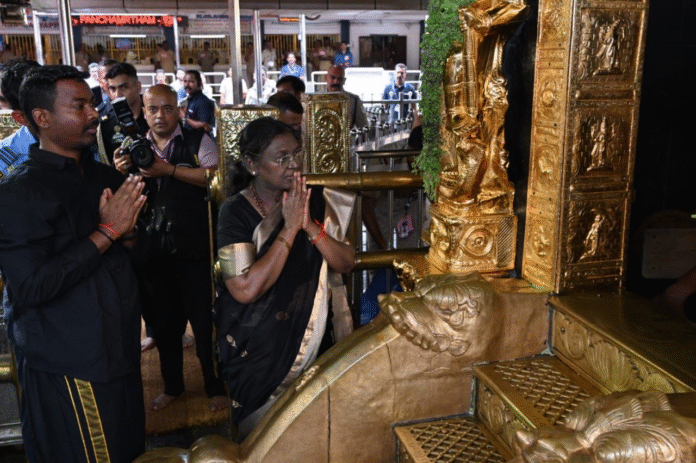
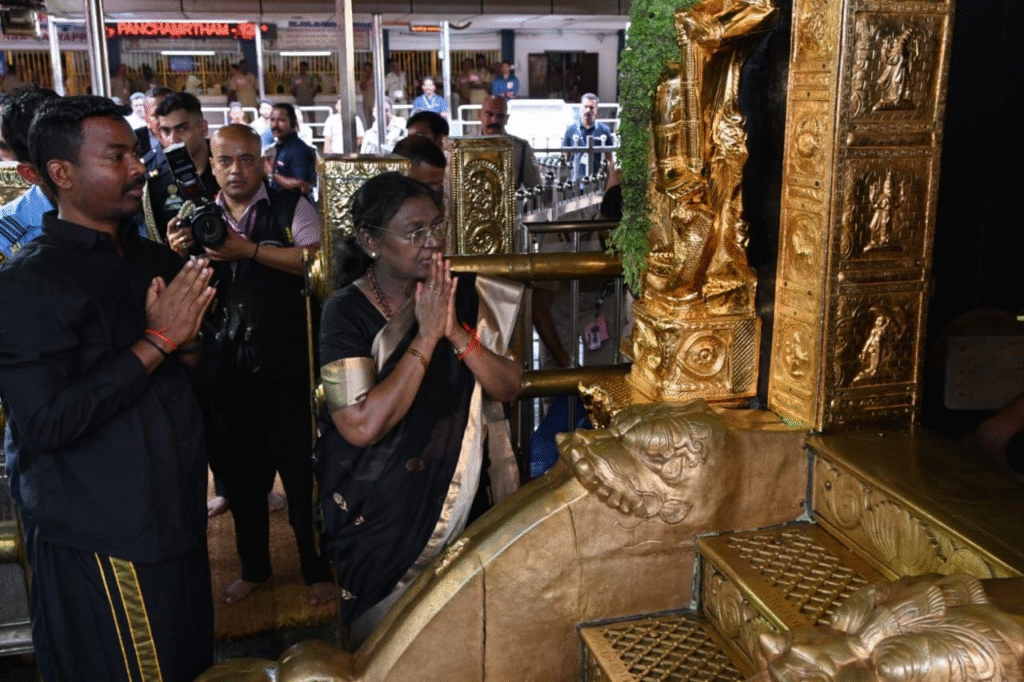
President Droupadi Murmu’s visit to the revered Lord Ayyappa Temple at Sabarimala on October 22, 2025, marks a moment of profound historical and social significance. She has become the first woman President of India to undertake this sacred pilgrimage and only the second Indian President—after V. V. Giri in the 1970s—to visit the hill shrine.

President Droupadi Murmu Visit to Sabarimala: Why It Is a Historic Milestone in Faith and Equality

A Symbol of Faith and Inclusion

Her visit is not just a personal act of devotion but a symbolic moment for India’s evolving dialogue between tradition and constitutional equality. In the wake of the 2018 Supreme Court verdict allowing women of all ages to enter the temple, President Murmu’s pilgrimage reaffirms faith’s inclusive essence within the framework of democratic rights and religious freedom.

Historic Significance

  • First Woman President at Sabarimala: President Murmu’s presence at the shrine represents a powerful statement of both devotion and equality, bridging faith with progressive constitutional ideals.
  • Renewing a 50-Year Gap: She is the first Indian President in five decades to visit the temple after President V. V. Giri’s pilgrimage in the 1970s.
  • Faith Meets Reform: Her traditional observance—carrying the sacred Irumudi, washing her feet in the Pampa River, and ascending the 18 holy steps—reflects respect for ritual while affirming women’s rightful place in sacred spaces.

Warm Reception at the Shrine

The President was received with full ceremonial honour by Kerala Devaswom Minister V. N. Vasavan and Travancore Devaswom Board (TDB) President P. S. Prasanth. The temple’s Tantri, Kandararu Mahesh Mohanaru, welcomed her with a poorna kumbha, symbolizing divine blessing and respect.

A Landmark Moment for Women’s Representation

President Murmu’s visit stands as a reminder that leadership and faith can coexist harmoniously. In a temple once emblematic of gender exclusion, her presence as the nation’s highest constitutional authority symbolizes a new era of inclusion, respect, and equality before both faith and law

What is UPI’s ‘Pay With Mutual Fund’ Feature?

0

India’s Unified Payments Interface (UPI) has introduced a new capability — Pay with Mutual Fund — allowing investors to make real-time payments directly from their liquid mutual fund holdings. This innovative feature, currently supported by ICICI Prudential Mutual Fund and Bajaj Finserv AMC in partnership with Curie Money, bridges the gap between investment and payment, effectively turning mutual funds into transaction-ready financial instruments.

What Is ‘Pay With Mutual Fund’?

The Pay with Mutual Fund feature enables investors to use UPI for payments directly sourced from their liquid mutual fund units. Instead of transferring money from a mutual fund to a bank account before making a transaction, the redemption and payment occur instantly in the background. This seamless integration allows mutual fund investors to enjoy both liquidity and market-linked returns while maintaining everyday payment flexibility.

How the System Works

Liquid mutual funds primarily invest in short-term money market instruments, offering stability and easy access to funds. Through this new feature, when a user makes a UPI payment, the required amount is automatically redeemed from their liquid fund, and the money is routed instantly to the recipient. This eliminates the need for manual redemption or inter-account transfers, providing a smooth payment experience similar to that of a savings account but with better yield potential.

Key Benefits for Investors

The feature offers multiple advantages for both individuals and businesses:

  • Instant Liquidity: Payments are executed directly from mutual fund holdings, ensuring real-time access to invested money.
  • Higher Potential Returns: Liquid funds generally provide 6–7% annualised returns, higher than traditional savings accounts, which often yield below 4%.
  • UPI Integration: The system aligns with the digital payment habits of Indian consumers, allowing investment accounts to double as payment wallets.
  • Efficient Cash Management: Users can keep idle funds productively invested, using them only when needed through UPI.

Considerations Before Using the Feature

While Pay with Mutual Fund brings unmatched flexibility, investors should remain mindful of certain factors. Liquid funds, though low-risk, are not insured like bank deposits and can experience minor value fluctuations. Taxation applies to redemptions based on an investor’s income slab, and transaction cut-off timings may affect instant redemptions. Financial planners advise retaining some savings in bank accounts for emergencies while using liquid funds for short-term investments and transactional convenience

2025 PN7: NASA Confirms Earth’s New Quasi-Moon

0

NASA has confirmed the presence of a new quasi-moon orbiting Earth. The object, officially named 2025 PN7, is a small asteroid that has been accompanying Earth on its journey around the Sun since the 1960s. Discovered by the Pan-STARRS observatory in Hawaii, this cosmic neighbour is expected to stay in Earth’s orbit until around 2038, before drifting away into space.

NASA’s Discovery and Observation

The quasi-moon, roughly 19 metres (62 feet) wide, is one of the smallest and least stable companions to Earth ever detected. Unlike the natural Moon, 2025 PN7 is not gravitationally bound to our planet. Instead, it follows a parallel orbit around the Sun, occasionally appearing to loop around Earth due to its unique trajectory. The object’s faintness makes it invisible to the naked eye and observable only through advanced telescopes.

What Makes a Quasi-Moon Different

A quasi-moon differs from a natural satellite as it does not orbit Earth directly. Instead, it shares Earth’s orbital path around the Sun in a synchronised pattern. Scientists classify such objects as part of the Arjuna asteroids, which mirror Earth’s motion through space. Over time, gravitational interactions cause these bodies to drift away, making them temporary visitors rather than permanent moons.

Previous Quasi-Moon Discoveries

The first quasi-satellite, 1991 VG, was discovered in 1991 and initially thought to be an artificial object. Since then, astronomers have identified several others, including Kamo‘oalewa, which has been orbiting Earth for centuries. These discoveries highlight the dynamic and ever-changing nature of Earth’s gravitational environment.

Significance of the Discovery

NASA’s identification of 2025 PN7 deepens our understanding of Earth’s celestial companions and the complexity of near-Earth space. These findings contribute to studies on orbital mechanics, asteroid behaviour, and planetary defence, revealing that Earth’s neighbourhood is far more dynamic than previously thought.

Bangladesh vs Netherlands Match Preview – 3rd T20I (03.09.2025)

0

Cricket remains the number one sport in Bangladesh, and the T20I series against the Netherlands has generated huge interest among local fans. Fans follow the games, analyze statistics, and place bets via the Linebet app, where they can find the latest odds and detailed analytics for upcoming matches, including the important clash against Afghanistan.

Where and when the match took place

The third and decisive T20I between Bangladesh and the Netherlands took place on September 3, 2025, at the Sher-Bangla Stadium in Dhaka. The atmosphere was truly festive – the stands were packed to capacity, and fans were hoping for their team to win the series.

Previous matches in the series

1st T20I: Bangladesh started the series with a confident victory, demonstrating strong bowling and consistent batting.

2nd T20I: The Netherlands responded with a brilliant performance and evened the series, taking advantage of mistakes by Bangladesh’s top order.

Thus, the third match became a real final – the winner would take the series.

Key moments of the match

Bangladesh won the toss and chose to bat first. The team’s top order played consistently: Liton Das scored 41 runs and Shakirul Hossain added 35, keeping the team on a good pace.

At the end of the innings, Mustafizur Rahman showed explosive play, securing a final score of 162/6 for 20 overs for the team. The Netherlands started their chase cautiously but quickly lost key wickets.

Bas de Lede made the maximum contribution (30 runs), but Bangladesh’s bowling was too strong.

Shoreful Islam and Taskin Ahmed took two wickets each, effectively deciding the outcome of the match.

Result: The Netherlands finished their innings at 139/8, and Bangladesh won the match by 23 runs and the series 2–1.

Best players

Liton Das (Bangladesh): consistent batting and aggressive play at the start of the innings.

Shakib al Hasan (Bangladesh): experience and tactical maturity, important runs in the middle of the innings.

Shoorful Islam: key wickets that stopped the opponent’s attack.

Betting on T20I and upcoming matches

T20I remains one of the most dynamic formats of cricket, making it attractive for betting. The Linebet app offers markets on the winner, best batter and bowler, number of sixes, as well as individual player statistics. Bangladesh’s next match is against Afghanistan, and bookmakers are already offering odds:

Bangladesh win – favorite (~1.65)

Afghanistan win – (~2.20)

Of particular interest are bets on Shakiab al Hasan as the best bowler and Liton Das as the top run scorer.

Conclusion

Bangladesh showed that it can pull itself together in decisive matches by winning the series against the Netherlands. The victory before the match against Afghanistan gives the team confidence, and fans are already preparing for new emotions and bets on upcoming matches.

Happy Bhai Dooj 2025: Best Wishes, Quotes, Images, Messages & Greetings to Share with Your Loved Ones

0

Across India, the festival is known by different names — Ningol Chakuba in Manipur, Bhau Beej in Maharashtra, Goa, and Karnataka, Bhai Tika in Nepal, and Bhai Phota in West Bengal — but the emotion remains universal: a celebration of love, trust, and lifelong protection between siblings.

On this special occasion, sisters pray for their brothers’ happiness, success, and long life, while brothers promise to protect and cherish their sisters forever. As Bhai Dooj 2025 approaches, here are heartfelt wishes, messages, quotes, and greetings you can share to make the day even more memorable.

  • Wishing you a blessed Bhai Dooj 2025 filled with love, prosperity, and happiness. May our bond grow stronger with each passing year.
  • May this Bhai Dooj bring joy, peace, and success to your life. Happy Bhai Dooj!
  • You’re not just my brother/sister — you’re my forever friend and protector. Happy Bhai Dooj!
  • No distance can weaken the bond we share. You’ll always be my pillar of strength. Happy Bhai Dooj!
  • Having you in my life makes me feel truly blessed. Thank you for always being there.
  • The bond between a brother and sister is priceless. May our love and friendship continue to grow.
  • “A brother is a friend given by nature, and a sister is a gift to the heart — together they make life beautiful.”
  • “The bond between a brother and sister is one of life’s greatest treasures — strong, pure, and eternal.”
  • “Brothers and sisters are like stars — you may not always see them, but you know they’re always there.”
  • “This Bhai Dooj, I celebrate not just a ritual, but a bond that deepens with every smile and every tear shared.”
  • “No matter where life takes us, the love and memories we share will always keep us connected.”

Celebrating the Bond

Bhai Dooj is more than just a festival — it’s a reminder of the unbreakable love and trust between siblings. So, whether near or far, take a moment to express your love through a heartfelt message, video call, or traditional tika ceremony.

Happy Bhai Dooj 2025: Best Wishes, Quotes, Images, Messages & Greetings to Share with Your Loved Ones

After Arattai, Zoho Pay UPI App to Take on PhonePe, Paytm, and Google Pay: Here’s What You Need to Know

0

After the success of its homegrown messaging app Arattai, Zoho Corporation—led by CEO Sridhar Vembu—is now gearing up to enter India’s booming digital payments space with its new UPI app, Zoho Pay. The upcoming platform aims to rival established players like Google Pay, PhonePe, Paytm, and WhatsApp Pay, positioning Zoho as a serious contender in India’s competitive fintech market.

Zoho Pay Launch and Rollout

Zoho Pay is currently in its internal testing phase and is expected to see a phased rollout across India in the coming months. Designed as a comprehensive peer-to-peer and merchant payments solution, it will be available both as a standalone app and as a built-in feature within Arattai.

With this integration, Zoho is set to make financial transactions as seamless as messaging—further strengthening its “Made in India, for India” ecosystem.

Seamless Payments Within Arattai

One of Zoho Pay’s biggest differentiators will be its deep integration within the Arattai chat platform. Users will be able to send and receive money, pay bills, and make secure UPI transactions without leaving their chat windows—similar to the experience offered by WhatsApp Pay.

This integration could transform Arattai into a feature-rich super app, combining communication and financial convenience under one platform. The move follows Arattai’s growing popularity, driven by its focus on privacy, data sovereignty, and endorsements from government and industry leaders.

Building a Full-Stack FinTech Ecosystem

Zoho Pay marks a pivotal step in Zoho’s larger fintech ambitions. Earlier this year, the company secured a Payment Aggregator (PA) license and already offers Zoho Payments for businesses—complete with Point-of-Sale (POS) devices for in-person transactions.

By entering the UPI segment, Zoho is bridging its B2B fintech expertise with consumer-facing innovation, aiming to create an integrated financial ecosystem that spans personal and business payments alike.

What to Expect Next

While Zoho has not announced an official release date, the testing and phased rollout strategy suggest a public launch could follow soon. With its strong brand credibility, privacy-first design, and existing Arattai user base, Zoho Pay could quickly emerge as a formidable alternative to India’s current UPI giants.