Home Blog Page 156

Rolls-Royce To Power the India’s First Electric Warship

0

In a groundbreaking move that merges luxury engineering with naval innovation, Rolls-Royce has announced plans to collaborate with the Indian Navy on the design and deployment of the country’s first electric warship.

The announcement comes as the United Kingdom’s Carrier Strike Group (CSG) — led by HMS Prince of Wales — docks in Mumbai during its Indo-Pacific mission this week. Interestingly, this massive aircraft carrier is powered by Rolls-Royce’s advanced MT30 marine gas turbine, the world’s most powerful marine gas turbine, capable of generating enough energy to light up a small town.

Abhishek Singh, Senior Vice President, India & South East Asia (Defence), Rolls-Royce, said the company is well-positioned to support India’s naval modernization efforts.

“Rolls-Royce is ready to contribute to India’s journey towards a future-ready, sustainable naval force with our hybrid-electric and full-electric propulsion systems,” he said.

Echoing the sentiment, Alex Zino, Executive Vice President – Business Development and Future Programmes, Rolls-Royce, described the visit as “a great opportunity” for India to experience first-hand the cutting-edge naval technology powering the UK’s latest warships.

“Rolls-Royce is deepening its partnerships in India through local manufacturing, engineering, and technology collaborations — aligning perfectly with India’s vision of defence self-reliance,” he added.

With a legacy of over 90 years in India, Rolls-Royce engines already power several Indian Air Force and Navy platforms. The company’s expansion into electric propulsion for naval vessels represents not just an evolution in technology, but a shared vision of efficiency, innovation, and sustainability.

If realised, this partnership could mark the dawn of a new era in naval engineering — one where India’s maritime power is both formidable and planet-friendly.

From the skies to the seas, Rolls-Royce continues to redefine engineering excellence — and now, it’s helping India chart a cleaner, electrified course across the oceans.

Inspector Bhawana Choudhary: Meet the First Woman Flight Engineer in BSF’s Air Wing

0

In a landmark moment for gender representation in India’s security forces, the Border Security Force (BSF) has welcomed its first-ever woman Flight Engineer in its 50-year history — Inspector Bhawana Choudhary.

After completing her rigorous in-house training, Inspector Choudhary was awarded the flying badge by BSF Director General Daljit Singh Chaudhary, alongside four of her male counterparts.

The BSF, which operates the aviation unit of the Ministry of Home Affairs (MHA), has been providing crucial air support to paramilitary operations and special units like the National Security Guard (NSG) and the National Disaster Response Force (NDRF) since 1969.

An official highlighted the significance of this achievement, saying,

“The BSF Air Wing has been facing a shortage of trained flight engineers for its Mi-17 helicopter fleet. While the Indian Air Force trained the first batch of subordinate officers, the next batch could not be accommodated due to scheduling constraints. The MHA then allowed BSF to conduct its own in-house training program, leading to the successful qualification of five personnel — including Inspector Bhawana Choudhary, who has now made history as the first woman Flight Engineer of the BSF Air Wing.”

The intensive training, which began in August, included 130 hours of advanced skill development and hands-on operational exposure. Trainees participated in real-time sorties during rescue and relief operations — including those conducted during the recent floods in Punjab and neighboring states.

The BSF Air Wing currently operates a fleet that includes Mi-17 IV, Mi-17 V5, Cheetah, and ALH Dhruv helicopters, along with a fixed-wing Embraer jet for VIP duties.

As India’s primary border guarding force, the BSF not only secures the nation’s frontiers with Pakistan and Bangladesh but also plays a crucial role in preventing cross-border crimes, smuggling, infiltration, and supporting internal security operations.

Inspector Bhawana Choudhary’s achievement stands as a powerful symbol of change — proving that with determination and skill, women are breaking new ground in every domain of national service.

The Inspiring Story of Sheikh Lalchand Who Built Bridge After Selling Wife’s Jewellery to Help Locals Commute…

0

In an age where bridges are often named after politicians or powerful figures, one bridge in West Bengal stands apart — the Lalchand Bridge, named not after a leader, but after a humble boatman who turned compassion into concrete action.

Sheikh Lalchand, a 48-year-old boatman from Kulla village in Howrah district, spent years ferrying villagers across the Mundeswari River. For students, the elderly, and expectant mothers, his small wooden boat was their only connection to schools, hospitals, and markets. But every monsoon, when the river swelled and currents turned dangerous, that lifeline became a risk to life itself.

Tired of waiting for government promises that never came, Lalchand decided to act. With no savings to fall back on, he sold his wife’s jewellery worth ₹3 lakh, borrowed money from friends, and hired 16 local workers. Together, they collected 3,500 bamboo poles and began building a bridge — one that would change the destiny of his village.

For 28 relentless days, Lalchand worked through doubt, mockery, and exhaustion. And when the bamboo bridge finally rose in 2014, it wasn’t just a structure over water — it was a bridge built on courage, hope, and selflessness.

Today, over 2,000 villagers use it daily, paying a small toll to keep it running: ₹2 for pedestrians, ₹5 for two-wheelers, ₹50 for Tata Magic vans, and ₹100 for Maruti vans. The funds sustain six maintenance workers, and four CCTV cameras ensure safety and order around the clock.

Though the bridge cost him part of his livelihood as a boatman, Lalchand never looked back. His next dream is to build a permanent concrete bridge, even if it means earning less himself.

“It was never about money. I just wanted people to cross safely,” he says simply.

Sheikh Lalchand’s story is a testament to what one person’s determination can achieve. When systems fail, ordinary citizens often rise — and sometimes, it takes just one man with a big heart to bridge an entire community together.

Who is Kaziranga’s Sonali Ghosh Becomes First Indian to Win IUCN Innovation Award

0

Sonali Ghosh, Director of Kaziranga National Park and Tiger Reserve, has made history by becoming the first Indian to receive the prestigious Kenton R. Miller Award for Innovation in Protected Area Management. The award, presented by the World Commission on Protected Areas (WCPA) under the International Union for Conservation of Nature (IUCN), was conferred at a ceremony in Abu Dhabi in October 2025.

Ghosh was recognised for her pioneering conservation efforts, which skillfully integrate community engagement, traditional ecological knowledge, and modern scientific practices — a model that has proven successful in managing the biodiversity-rich landscapes of Kaziranga and Manas.

About the Kenton R. Miller Award

Established in 2006, the Kenton R. Miller Award is one of the highest recognitions in the field of protected area management. It is presented biennially to individuals or teams who demonstrate innovative approaches in areas such as governance, finance, policy, capacity building, and on-ground management of protected areas.

Awardees must show significant impact, peer recognition, and originality in addressing key conservation challenges — including poaching, climate change, invasive species, and resource constraints — without having received major international awards in the past.

Role of the WCPA and IUCN

The World Commission on Protected Areas (WCPA) is one of six technical commissions of the IUCN, a global body founded in 1948 to promote nature conservation and sustainable use of natural resources. The WCPA focuses specifically on improving the management and governance of protected areas, including national parks, wildlife reserves, and marine sanctuaries, through expert guidance, strategic planning, and policy support.

Sonali Ghosh’s Conservation Model

Dr. Ghosh’s leadership in conservation has set a benchmark for protected area management in India. Her work emphasizes:

Community-led conservation

Public awareness programmes

Blending traditional ecological knowledge with modern science

Her model has been particularly effective in Kaziranga and Manas, helping safeguard critically endangered species like the one-horned rhinoceros, while also preserving lesser-known biodiversity such as native insect and spider populations.

Why Kaziranga Matters

A UNESCO World Heritage Site, Kaziranga National Park is globally known for its thriving population of one-horned rhinoceroses, along with tigers, elephants, and other rare species. However, the park faces threats from poaching, habitat loss, and climate impacts. Under Ghosh’s leadership, Kaziranga has seen strengthened conservation efforts, with a greater emphasis on sustainability, local involvement, and adaptive management.

Past Recipients and Global Context

The Kenton R. Miller Award has previously honoured conservation leaders from across the world, including:

Burung Indonesia – for avian conservation strategies

Nizar Youssef Hani (Lebanon) – for ecosystem restoration

Maria Del Carmen Garcia Rivas (Mexico) – for marine protected area governance

In 2025, Ghosh shares the honour with Roque Simón Sevilla Larrea of Ecuador, recognised for integrating environmental sustainability into business practices.

This milestone not only celebrates Dr. Sonali Ghosh’s individual achievements but also underscores India’s growing leadership in global conservation efforts.

Google Announces $15 Billion AI Hub in Visakhapatnam — Its Largest Investment Outside the U.S.

0

In a move set to redefine India’s position on the global technology map, Google has announced a landmark $15 billion investment to establish a gigawatt-scale AI data center campus in Visakhapatnam, Andhra Pradesh. This marks the company’s largest investment outside the United States and a significant boost to India’s digital and economic ambitions.

Developed in partnership with the Adani Group and the Government of Andhra Pradesh, the new AI hub will serve as a cornerstone for Google’s global compute and connectivity network. The facility will integrate cutting-edge Tensor Processing Units (TPUs), GPU-based AI compute clusters, and state-of-the-art subsea connectivity systems, enabling faster and more secure data flows across Asia and beyond.

The Visakhapatnam campus will also be powered by clean, renewable energy, aligning with Google’s global carbon-free operations target by 2030. With this, Andhra Pradesh will emerge as a model for sustainable tech infrastructure, combining economic growth with environmental responsibility.

“India’s digital momentum is unstoppable. With this investment, we aim to empower the next generation of AI innovation while supporting India’s data sovereignty and sustainability goals,” said a Google spokesperson.

The project will make Visakhapatnam Google’s third global connectivity gateway, after its hubs in the United States and Singapore. It will also play a crucial role in advancing India’s AI computing capacity, cloud infrastructure, and digital inclusion initiatives.

Here’s an interesting, media-friendly table highlighting the unique features and differentiators of Google’s new AI Hub in Visakhapatnam — perfect for inclusion in a press release, article, or infographic:


🌐 Unique Features of Google’s Visakhapatnam AI Hub

FeatureWhat Makes It UniqueImpact / Significance
🧠 Gigawatt-Scale AI Data CenterOne of the world’s largest AI compute campuses, with next-gen Tensor Processing Units (TPUs) and GPU clusters.Supercharges India’s AI research, language models, and digital innovation ecosystem.
Clean Energy InfrastructureFully powered by renewable and hybrid clean energy systems.Sets a new global benchmark for sustainable data centers; aligns with Google’s 2030 carbon-free goal.
🌊 Subsea Connectivity GatewayIndia’s first AI hub with direct subsea cable links to Asia-Pacific and the U.S.Makes Visakhapatnam Google’s 3rd global connectivity hub, boosting India’s global internet capacity.
🤝 Adani–Google–AP Government PartnershipUnique three-way collaboration between global tech, Indian enterprise, and state leadership.Blends innovation, infrastructure, and governance for inclusive digital growth.
🇮🇳 Focus on Data SovereigntyBuilt to store and process data within India’s borders.Strengthens national security and compliance with India’s data protection frameworks.
🌆 Job Creation & Skill DevelopmentThousands of direct and indirect tech jobs; AI and data center training initiatives.Fuels regional employment and builds India’s next-gen digital workforce.
🏗️ 6 GW State Vision AlignmentIntegrates with Andhra Pradesh’s 6 GW data center capacity plan by 2029.Positions the state as India’s digital powerhouse.
🔋 AI-Powered Energy OptimizationUses machine learning for dynamic cooling, load management, and energy reuse.Reduces energy waste and operational costs, boosting green efficiency.
💻 Global R&D Collaboration HubOpen platform for universities and startups to co-develop AI solutions.Drives innovation from India for global markets.

Andhra Pradesh Chief Minister [Name] welcomed the move, calling it a “transformational partnership” that will create thousands of high-skilled jobs, spur local innovation, and significantly boost the state’s GDP. The state government aims to develop 6 gigawatts of data center capacity by 2029, making Andhra Pradesh a national leader in next-generation digital infrastructure.

As India strengthens its role in the global AI ecosystem, Google’s Visakhapatnam hub stands as a testament to the nation’s growing technological prowess — where clean energy, connectivity, and computing power converge to shape the future.

Jaipur Literature Festival: Vishvanathan Anand Among Others Included in First Line-up Speakers

0

The Jaipur Literature Festival (JLF) returns for its 19th edition from 15–19 January 2026 at Hotel Clarks Amer, Jaipur. Widely hailed as the “greatest literary show on Earth,” JLF continues to serve as a vibrant confluence of ideas, stories, and global voices.

Presented by Vedanta and produced by Teamwork Arts, the 2026 edition will bring together over 350 speakers across six venues, offering an expansive programme covering fiction, poetry, history, science, mental health, climate action, cinema, geopolitics, race, identity, and more. The Festival also upholds its core mission: celebrating linguistic diversity and India’s rich literary heritage through inclusive, multilingual discourse.

This year’s first list of announced speakers features an impressive mix of global literary icons, award-winning authors, and thought leaders, including:

  • Olga Tokarczuk (Nobel Laureate),
  • Timothy Berners-Lee (Inventor of the World Wide Web),
  • Stephen Fry (Writer, actor, and broadcaster),
  • Anamika, Anand Neelakantan, Anuradha Roy, Shobhaa Dé,
  • Manu Joseph, Kate Mosse, Jon Lee Anderson, Hallie Rubenhold,
  • Jung Chang, Helen Molesworth, Gopalkrishna Gandhi,
  • Kim Ghattas, Edward Luce, Rashmi Narzary, Salma, and
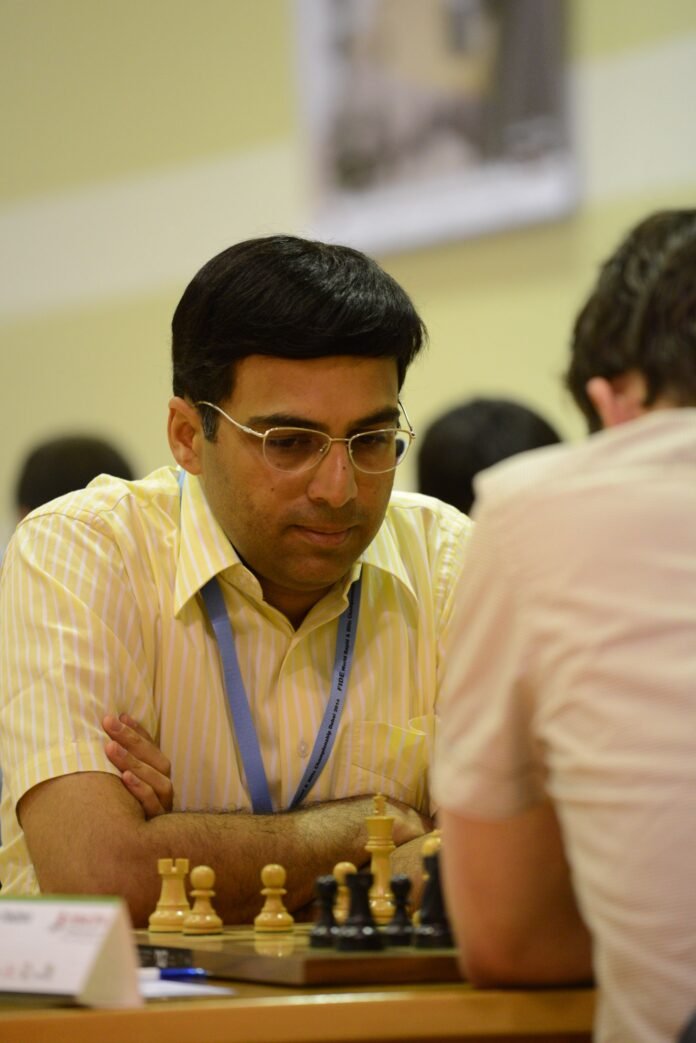
  • Vishwanathan Anand and others.

Festival Leaders Speak

Namita Gokhale, Festival Co-Director, noted:
“JLF 2026 promises a vintage edition. Our sessions traverse continents and cultures, with a strong focus on the diverse world of Indian languages and emerging global themes – from AI and publishing to shifting geopolitical realities. As always, January is when the world visits Jaipur, and Jaipur visits the world.”

William Dalrymple, Festival Co-Director, added:
“This festival is a celebration of stories—written and oral—and their power to inspire and connect. We’re thrilled to welcome another extraordinary lineup of thinkers, writers, and dreamers to the Pink City.”

Sanjoy K. Roy, Managing Director of Teamwork Arts, said:
“JLF has become a global platform for culture, creativity, and collaboration. In our 19th year, we continue to spotlight storytelling as a force for empathy, innovation, and shared understanding.”

Cultural Extensions

In addition to its core programming, JLF 2026 will host the 13th edition of Jaipur BookMark (JBM), a premier B2B platform for publishers, literary agents, translators, and writers that fosters industry collaboration.

The Festival also celebrates heritage and the arts with signature events:

  • Jaipur Music Stage: Evening performances by leading Indian and international musicians.
  • Amer Fort Evening: A cultural showcase set against the backdrop of the majestic fort.

For nearly two decades, the Jaipur Literature Festival has remained a democratic, inclusive, and non-aligned platform for meaningful dialogue and cultural exchange, uniting readers and writers from around the world.

Save the Dates:

15–19 January 2026
Hotel Clarks Amer, Jaipur

New Begonia Species ‘Chowna Buku Chulu’ Discovered in Arunachal Pradesh

0

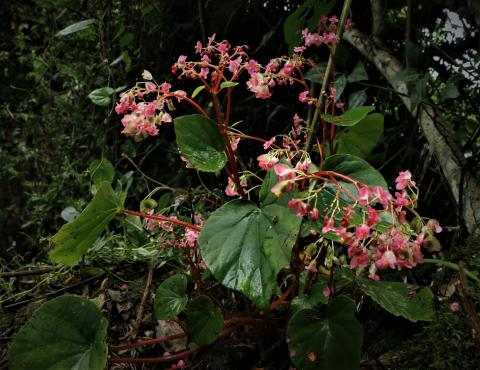
A new species of Begonia, named Chowna Buku Chulu, has been discovered in Basar, Laparada district of Arunachal Pradesh by researchers from the State Horticulture Research and Development Institute (SHRDI). Featuring sparkling red leaves, the plant is a remarkable addition to the state’s rich biodiversity and marks a new record for Arunachal Pradesh’s flora.

Discovery and Identification

The discovery was made by the SHRDI research team and later confirmed by experts from the Botanical Survey of India (BSI) — Dr. Dipoo Dipankar Borah, Dr. Momang Taram, and Dr. Krishna Chowlu. The Begonia’s vivid red foliage makes it both scientifically distinctive and visually striking, enriching the botanical diversity of the Eastern Himalayas.

Scientific and Commercial Potential

With its ornamental appeal and adaptability, the new Begonia species holds significant commercial potential. SHRDI plans to develop it as a commercial crop, which could enhance local horticulture and support farmers’ livelihoods. The initiative aligns with the state’s broader goals of sustainable agriculture and biodiversity conservation.

Cultural Significance and Naming

The species has been named ‘Chowna Buku Chulu’, meaning “noble red” in a local indigenous dialect, and ‘Aryarakta’ in Sanskrit. The name honors Deputy Chief Minister Chowna Mein for his contributions to horticultural development and research in the state. The naming also reflects SHRDI’s commitment to preserving indigenous linguistic heritage alongside scientific documentation.

Role of Deputy Chief Minister Chowna Mein

As the former Minister for Agriculture and Allied Departments, Chowna Mein was instrumental in establishing SHRDI in 2015 and promoting horticultural innovation. Under his leadership, Arunachal Pradesh secured eight Geographical Indication (GI) tags for unique agri-horti products — the highest in Northeast India. The Begonia’s name serves as a tribute to his enduring support for the state’s horticultural advancement.

Boost to Biodiversity and Research

The discovery reinforces Arunachal Pradesh’s position as a biodiversity hotspot and underscores the value of continued botanical research. It also highlights collaborative efforts between state and national institutions to document and conserve indigenous flora, promoting awareness of the region’s ecological and cultural wealth.

Driving Agricultural Innovation

This milestone encourages ongoing support for scientists, researchers, and farmers, strengthening the state’s vision to become a hub for agricultural innovation and sustainability. The discovery of Begonia Chowna Buku Chulu symbolizes both scientific curiosity and the spirit of discovery that drives Arunachal Pradesh’s growing horticultural sector.

Shri Ram Janmabhoomi Mandir: Watch Out Mesmerizing Visuals From First Floor in Pics

0

Shri Ram Janmabhoomi Mandir: As the grand Ram Janmabhoomi Temple in Ayodhya is set to be fully completed by November 25, marking a milestone in the temple’s long-awaited construction, all eyes are now awaiting the moment when they will see the historic event taking shape.

To mark the occasion, Prime Minister Narendra Modi is expected to attend the historic flag hoisting ceremony on the same day.

Shri Ram Janmabhoomi Mandir: Watch Out Mesmerizing Visuals From First Floor in Pics

October 14, 1994, When Nobel Peace Prize Was Awarded Jointly to Two Israelis and a Palestinian

0

At a time when discussions on Noble Peace Prize are doing rounds across the globe, here comes an interesting story.

In 1994, the Nobel Peace Prize was jointly awarded to Israeli Prime Minister Yitzhak Rabin, Foreign Minister Shimon Peres, and Palestinian National Authority Chairman Yasser Arafat on October 14. The trio was recognised for their pivotal roles in the Oslo Accords, a landmark agreement that marked the first official dialogue between Israel and the Palestine Liberation Organization (PLO).

October 14, 1994, When Nobel Peace Prize Was Awarded Jointly to Two Israelis and a Palestinian
Yasser Arafat

The Nobel Peace Prize 1994 was awarded jointly to Yasser Arafat, Shimon Peres and Yitzhak Rabin “for their efforts to create peace in the Middle East, said Nobel Prize officials


The Oslo Accords laid the foundation for mutual recognition between the two parties and led to the establishment of the Palestinian Authority, creating a framework for limited Palestinian self-governance in parts of the West Bank and Gaza. The Nobel Committee praised the leaders for taking bold steps toward peace in one of the world’s most intractable conflicts.

October 14, 1994, When Nobel Peace Prize Was Awarded Jointly to Two Israelis and a Palestinian

Shimon Peres

While the agreement was met with both hope and criticism, the award highlighted the global significance of diplomatic efforts in the Middle East and the courage required to pursue reconciliation.

October 14, 1994, When Nobel Peace Prize Was Awarded Jointly to Two Israelis and a Palestinian
.
Yitzhak Rabin

Trump Signs Gaza Peace Agreement at Egypt Summit; Hostage Releases Mark New Chapter

0

In a major diplomatic breakthrough, former U.S. President Donald Trump signed the Gaza Peace Agreement at a high-level international summit held in Sharm el-Sheikh, Egypt. The agreement, hailed by Trump as “very special,” was concluded during a conference co-chaired by Egyptian President Abdel Fattah al-Sisi and attended by leaders from over 20 countries.

While representatives from Israel and Hamas were notably absent, the summit focused on outlining a path to long-term peace, post-war reconstruction in Gaza, and the exchange of prisoners and hostages.

Trump Applauds Team, Promises Peace Push

Addressing the summit, Trump praised the efforts of his diplomatic team and the support from participating nations. “I thought this would be one of the most difficult tasks of my life. But with this incredible team and the cooperation of so many nations, we made it happen,” he said. Trump is expected to hold closed-door meetings with several leaders following his speech.

Egyptian President al-Sisi welcomed Trump to the “city of peace” and expressed confidence in his ability to “end this war and bring peace.” Al-Sisi emphasized the importance of international collaboration in enforcing a ceasefire and rebuilding Gaza, saying, “Enough of war — peace is needed now.”

Hamas Returns Bodies of Hostages, Israeli Prisoners Freed

In a parallel development, Hamas returned the bodies of four hostages to Israel, including Bipin Joshi, a Nepali student abducted from Kibbutz Alumim on October 7, 2023. Joshi had been in Israel under the “Learn and Earn” programme.

The remains of three other Israeli hostages — Gai Illouz, Yossi Sharabi, and Daniel Peres — were also repatriated.

Earlier the same day, Hamas released 20 living Israeli hostages, handing them over to the Red Cross in two groups of 7 and 13. In return, Israel has released 250 Palestinian prisoners so far. Among them, 154 prisoners were freed on Monday alone.

Emotional Reunions in Tel Aviv and Gaza

Scenes of emotional reunions played out across both regions. In Tel Aviv’s Hostage Square, crowds grew teary-eyed as they watched videos of hostages reuniting with their families. Among them were twin brothers Gali and Ziv Berman, who were held separately in Gaza for two years and reunited for the first time since their abduction.

Israeli hostage Matan Angrest was seen embracing his mother after his release, while Omri Miran was also reunited with his family.

On the other side, in Khan Younis, southern Gaza, released Palestinian prisoners were welcomed with celebrations as they returned home.

Trump Visits Israeli Parliament, Meets Hostages

Following the summit, Donald Trump traveled to Israel, where he addressed the Knesset (Israeli Parliament) in a 65-minute speech. Prime Minister Benjamin Netanyahu lauded Trump as “Israel’s best friend.”

During the session, Trump and Netanyahu met with the released hostages and their families, offering support and solidarity. However, the speech was briefly disrupted when an Israeli lawmaker called out, “Recognize Palestine!”, leading to his removal from the chamber.

North Star of Peace or Political Optics?

While the Gaza Peace Agreement marks a significant diplomatic moment, its long-term effectiveness remains to be seen. The absence of both Israel and Hamas from the negotiating table raises questions about the enforceability of the pact. Still, regional leaders expressed cautious optimism that this summit could signal the beginning of the end of one of the Middle East’s most protracted conflicts.

With international attention now fixed on implementation, reconstruction, and reconciliation, Trump’s role in brokering this deal may become a defining moment in his post-presidency global image.