Home Blog Page 149

Ryan Williams: The Australian Who Gave Up Everything to Wear India’s Colours

0

Ryan Williams, a name that now symbolizes passion, sacrifice, and belonging has taken one of the boldest steps in modern football. The 32-year-old midfielder, born in Perth, Australia, gave up his Australian citizenship to officially become an Indian and fulfil his dream of playing for the Indian national football team.

Williams’ journey is extraordinary not just because of what he achieved, but because of what he gave up. Leaving behind the privileges of an Australian passport, he chose to follow his heart and wear the tricolour, proving that identity is more about emotion than paperwork.

His Indian roots run deep. Williams’ mother was born in an Anglo-Indian family in Mumbai, and his grandfather, Lincoln “Linky” Grostate, represented Bombay in the Santosh Trophy in the 1950s.

Football runs in his blood and now, India runs in his heart.
After an impressive career across clubs in England and Australia including stints at Fulham, Barnsley, Oxford United, and Perth Glory Williams joined Bengaluru FC, where he found more than just a team. He found a home. Encouraged by Indian captain Sunil Chhetri, Williams decided to take the ultimate leap to renounce his Australian passport and become an Indian citizen.

His citizenship ceremony, conducted by Chhetri himself, was emotional and symbolic. Williams’ heartfelt message said it all: “Honoured to make official what’s long felt true… India, I’m one of your own!”

Ryan Williams’ decision isn’t just a personal milestone, it’s a statement. A statement of love, loyalty, and belief in Indian football’s future. In an era where players chase money and fame, Williams chose meaning. He didn’t just join a team; he joined a nation.

Starlink Takes Off in India: Maharashtra Becomes First State to Join Elon Musk’s Satellite Internet Revolution

0

India is set to enter a new era of digital connectivity and it’s beginning right from the heart of Maharashtra.
In a historic move, Elon Musk’s Starlink is officially rolling out its high-speed satellite internet service in India, starting with Maharashtra, marking a monumental leap in the country’s journey toward a truly connected future.

Chief Minister Devendra Fadnavis confirmed that Maharashtra will be the first Indian state to formally collaborate with Starlink, calling it a game-changing step in bringing satellite-enabled internet to even the most remote corners of the state.

“This collaboration will ensure Maharashtra leads India in satellite-enabled digital infrastructure,” Fadnavis announced on X.

Starlink, a venture by Musk’s SpaceX, uses a network of low-orbit satellites to deliver lightning-fast internet to areas where traditional networks fail to reach.
The initiative will be especially transformative for rural schools, healthcare centres, and underserved communities, ensuring digital equality across regions.

This development follows major telecom partnerships earlier this year: Jio Platforms and Bharti Airtel both struck deals with SpaceX to bring Starlink internet to their customer base, signalling the dawn of a new tech collaboration between Indian telecom giants and Musk’s space internet network.

Starlink’s Vice President of Business Operations, Lauren Dreyer, expressed excitement about the India launch, saying, “We’re looking forward to connecting schools, medical facilities and beyond in the most remote and unconnected areas once Starlink receives final approvals.”

The announcement aligns with a broader wave of global tech investments pouring into India. With Google investing $15 billion to build its largest AI hub outside the U.S. and companies like OpenAI, Anthropic, and Perplexity entering Indian markets, the country is fast becoming the world’s next digital powerhouse.

Starlink’s arrival is not just a tech milestone it’s a moment of national pride. India’s digital sky just got wider, faster, and limitless.

City of Dreams, City of Smiles: Mumbai Declared Asia’s Happiest City 2025

0

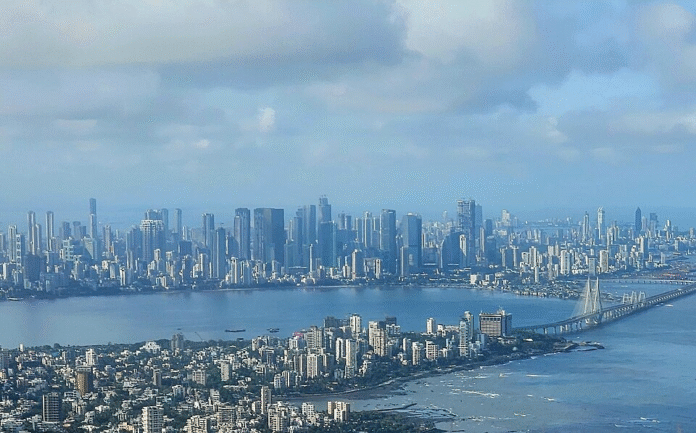
The heartbeat of India just got another reason to beam with pride Mumbai has officially been crowned the happiest city in Asia for 2025, according to Time Out’s latest global happiness survey. The poll, which gathered insights from over 18,000 urban residents across major Asian metros, highlights what every Mumbaikar already knows: happiness in this city isn’t found in silence, but in its beautiful chaos.

Why Mumbai Is Beaming with Joy

1. Happiness in the Hustle:
For 94% of Mumbai’s residents, the city itself sparks joy. From early morning train rushes to the glittering skyline at Marine Drive, happiness here isn’t about calmness, it’s about rhythm, resilience, and relentless hope.

2. A City That Feels Like Family:
Nearly 9 out of 10 people said they feel happier in Mumbai than anywhere else they’ve lived. It’s a place where neighbours become friends, where strangers lend a hand, and where community is not a concept, it’s a way of life.

3. The Happiness Curve Is Rising:
The survey revealed that 87% of Mumbaikars feel the city’s happiness levels have grown in recent years. From improved infrastructure to inclusive spaces and booming career opportunities, Mumbai continues to evolve and people are feeling the difference.

4. Where Dreams Fuel Joy:
It’s impossible to separate Mumbai from its dreamers. The pulse of Bollywood, the promise of possibilities, and the magnetic pull for ambition all give Mumbai an optimism that’s infectious.

5. Happiness Served Hot:
Ask any local: joy tastes like a plate of vada pav or bhel at a street corner. Mumbai’s iconic food culture keeps spirits high, one spicy bite at a time.

The Other Happy Hotspots of Asia

Following Mumbai on the 2025 happiness index are Beijing, Shanghai, Chiang Mai, Hanoi, Jakarta, Hong Kong, Bangkok, Singapore, and Seoul each city shining in its own unique way.

In the end, Mumbai’s win isn’t just about statistics, it’s about spirit. It’s proof that happiness doesn’t need perfection; it just needs people who keep smiling through the traffic, the chaos, and the dreams that never stop chasing the sunrise.

Zero Tolerance? Not quite – 8 Things You Rarely Do in Japan (and Why They Matter)

0
Zero Tolerance? Not quite - 8 Things You Rarely Do in Japan (and Why They Matter)

When you land in Japan, you’ll quickly realize it’s a world where *nobody says “No”, they simply live it. Beneath the neon lights of Tokyo and the calm of Kyoto lies a web of unwritten rules designed to preserve harmony, respect and social ease. Here are eight behaviours that may surprise you but follow them and you’ll fit right in.

1. No tipping.
In Japan, for service staff, tipping can come across as awkward or even insulting. Great service is considered standard; adding extra money is not expected.

2. No phone calls on public transport.
Buses, trains and especially subways are kept quiet. Talking on your phone is seen as disruptive to the community’s peace.

3. No eating while walking.
Stopping to eat is the norm; wandering the pavement with a snack marks you as outsider. Clean streets and respect for others explain why.

4. No shoes indoors.
From homes to certain restaurants and temples, you’ll find shoes left at the doorstep. It’s about cleanliness and minding your place.

5. No public displays of affection (PDA) like overt kissing or hugging.
While not illegal, physical intimacy in public spaces is rare and may feel out of place, the focus is on subtlety and group comfort.

6. No trash bins on every corner and no littering.
The streets stay clean because people carry their trash until they find a receptacle. It’s collective responsibility.

7. Roads and crossings follow order even when empty.
Jay-walking or ignoring crosswalks in Japan attracts notice. The white lines are respected even when no car is in sight.

8. No unnecessary chatter in elevators or other shared spaces.
Silence in elevators, trains or other close-quarters reflects mindfulness of others’ comfort. Even small talk is toned down.

These aren’t laws but the heartbeat of Japanese social life – quiet, considerate, seamless. For a visitor, the reward isn’t just avoiding faux-pas but glimpsing how a society thrives by putting others first. Respect the “Nos” and you’ll discover Japan not just as a destination but as an experience.

Why These 7 Indian Government Apps Are Total Game-Changers

0

India’s digital transformation is no longer just a vision, it’s happening right in our hands. From booking flights and filing taxes to storing essential documents and investing in government bonds, official apps launched by the Government of India are simplifying everyday life for citizens. Here’s a look at seven must-have government apps that bring convenience, transparency, and efficiency to your fingertips, a true reflection of a Digital India in motion.

1. DigiYatra
What it is: A digital travel credential app launched by the Digi Yatra Foundation under the Ministry of Civil Aviation (MoCA) that uses facial recognition so you can pass through airport entry, security and boarding with minimal document checks.
Why you should have it: If you fly domestically in India, this app can reduce queuing and speed up the process, your face becomes your boarding pass.

2. AIS for Taxpayers
What it is: A mobile application provided by the Income Tax Department that lets taxpayers view their Annual Information Statement (AIS), Taxpayer Information Summary (TIS) and provide feedback on the data.
Why you should have it: It gives you visibility into what the tax department has recorded (TDS, dividends, etc.), helping you verify before filing returns making your tax life simpler and less risky.

3. RBI Retail Direct
What it is: A platform from the Reserve Bank of India (RBI) enabling retail investors to open a “Retail Direct Gilt (RDG)” account and invest in government securities (G-Secs), Treasury Bills and Sovereign Gold Bonds.
Why you should have it: If you want a safe, direct route to invest in government bonds without brokers, this app/panel gives you access useful for savings and diversification.

4. RailOne
What it is: A “super app” launched by the Centre for Railway Information Systems (CRIS) on behalf of Indian Railways integrating ticket booking, live train tracking, grievances, e-catering and more.
Why you should have it: Travelling by train? This single app combines many services you’d otherwise use multiple apps or websites for simplifying your journey.

5. mParivahan
What it is: Official app for storing your driving licence (DL) and vehicle registration certificate (RC) digitally, recognized by Indian traffic authorities.
Why you should have it: Avoid carrying physical documents, and in case of checks or travelling, you’ll have digital credentials handy safer and more convenient.

6. DigiLocker
What it is: A government-approved cloud storage app/service under MeitY (Ministry of Electronics & IT) where you can store verified digital documents (like licence, certificates) and get them issued digitally by agencies.
Why you should have it: Helps you access important documents anytime, present them digitally for services, and reduce dependency on physical copies.

7. UMANG
What it is: Unified Mobile Application for New-age Governance (UMANG) – a mega app that provides multiple government services (Centre, States) on one platform: payments, certificates, schemes, etc.
Why you should have it: One stop shop for many government services instead of multiple apps; saves time and gives you access to both central and local services digitally.

IPL 2025 Champions RCB Put on Sale: Diageo to Complete Deal by March 2026

0

In a surprising turn of events, the newly crowned IPL 2025 champions Royal Challengers Bengaluru (RCB) have been officially put up for sale by their current owners, Diageo, the UK-based parent company of United Spirits Limited (USL). The announcement marks the beginning of a major ownership transition for one of the Indian Premier League’s most followed franchises.

Diageo confirmed through a disclosure to the Bombay Stock Exchange (BSE) that it has initiated a “strategic review of its investment” in Royal Challengers Sports Pvt. Ltd. (RCSPL), the wholly owned subsidiary that manages RCB’s IPL and Women’s Premier League (WPL) teams. The company aims to complete the sale process by March 31, 2026.

RCB’s rise to glory this year, after 18 long seasons, has made the news even more significant. Having clinched their first-ever IPL title in 2025, and the WPL championship in 2024, the franchise has cemented its position as one of India’s strongest cricketing brands.

According to reports, Diageo is seeking a valuation of around USD 2 billion for RCB. The franchise contributed 8.3% to United Spirits’ total profits in the financial year ending March 31, 2025. Business circles have also hinted that Adar Poonawalla, CEO of the Serum Institute of India, is among the interested buyers.

RCB’s current ownership traces back to 2015, when Diageo took control of Vijay Mallya’s UB Group assets and became the sole owner by 2016. Despite years of near misses, RCB’s fanbase and brand value estimated at USD 269 million by Houlihan Lokey have remained among the highest in the IPL.

With the player retention deadline set for November 15 and the WPL auction on November 27, the team will continue regular operations under Diageo until the sale is finalized.

As RCB steps into a new chapter, one thing is clear, the red and gold spirit that fuels the Chinnaswamy roar is here to stay.

Games, Technology, and Control: How Online Gambling Is Becoming Safer

0

resource

The development of digital technologies is changing many areas, and gambling is currently undergoing one of its most profound transformations. Many advanced tools are emerging that provide an unforgettable user experience. The transition of casinos to online platforms has not only expanded access to gambling but has also revolutionized its perception. A popular trend among trusted online casinos today is responsible gaming, which is ensured by modern technologies and prevents users from making uninformed decisions. In this article, we will talk about modern online gambling and its advantages, as well as share details about the principles of responsible gaming.

Why Is Modern Gambling Not Just About Excitement?

There is a widespread belief that casinos are something negative, and many people even associate them with addiction. However, in modern conditions, this is not the case at all. What is more, today’s generation of users gambles not to win, but rather to have fun and socialize with like-minded people. Some online platforms, such as Lucky Star Casino, offer a variety of bonuses, a user-friendly interface, and a huge number of gambling games that will interest even the most discerning users.

Modern online casinos are not just about excitement, and despite the risks, they also have their advantages. Gambling helps users relax and stay occupied in their free time. In addition, this activity helps expand social contacts through tournaments, chats, and live casinos. If you approach the gambling process responsibly, you can also improve your analytical skills and strategic thinking.

Modern technologies, such as Artificial Intelligence, machine learning, VR, and AR, are transforming online casinos into interactive platforms that provide users with an unforgettable experience. The most important aspects here are the possibility to play with live dealers and use mobile applications, which offer unlimited opportunities.

Modern Online Casinos and Their Advantages for Users

Modern technologies are developing rapidly, and the online casino industry is using this to its advantage. It quickly adapts to the times and is actively developing. Of course, as in any other field, there are a number of risks, especially when using unverified platforms, so it is important to take a very responsible approach to choosing an online casino. Nevertheless, verified online casinos are extremely popular due to the many advantages they offer.

Round-the-Clock Availability

Modern online casinos operate 24 hours a day, and users can play at any time convenient for them, even at night. This is ideal for those who have a very busy work schedule and want to enjoy the game at any time.

Numerous Promotions and Bonuses

This is one of the most significant advantages that attracts players. The bonus policy of online casinos allows beginners to increase their starting capital, and more experienced users have the opportunity to get additional winnings. In addition to bonuses and cashbacks, modern platforms offer personalized promotions that cater to a player’s specific preferences, making the gambling experience even more engaging.

Huge Selection of Games

In modern online casinos, users have access to hundreds of games, from classic slots to table games and sports betting. In addition, many online casinos use AR and VR technologies and offer their users the opportunity to experience all the advantages of a live casino with real dealers.

Responsible Gaming: a Trend That Leads to Positive Experiences

Responsible gambling is a very popular approach today, as it helps players make informed decisions and take a responsible attitude towards the gaming process. Responsible gaming means participating in gambling in a way that minimizes harm to yourself and others. Most often, this includes making informed choices, understanding the risks, and setting limits on time and money.

The main principles of responsible gaming

Setting limits. It is important to clearly define the amount of money and time you can afford to spend on gambling. This helps you control your gaming activity and prevents the risk of excessive spending. Sticking to financial and time limits will help you maintain a balance with your free time and not spend money from your budget

Understanding and accepting the randomness of games. It is no secret that a casino is primarily based on chance, and outcomes and results are impossible to predict. Players, who clearly understand this, approach the game realistically and avoid irrational expectations.

Self-analysis and self-control. It is important for every online casino user to regularly assess their condition and behavior in order to prevent possible risks. What is more, it is essential that the casino you choose provides tools for self-restriction, such as setting deposit limits or temporary self-isolation.

So, if you approach online casinos wisely, they can become part of your healthy digital culture. It’s not just about excitement, but also about socializing, developing important skills, and enjoying a pleasant user experience. Learn more about modern technologies and responsible gambling, and you will see that online casinos can be enjoyable and safe entertainment.


Gold Fever 2025: Where 10 Grams Shine the Brightest and the Cheapest!

0

They say gold has no borders but your wallet might disagree. In 2025, the price of 10 grams of gold paints a glittering picture of global economics, with each country revealing its own shade of sparkle.

At the very top of the golden ladder sits India, where 10 grams now cost a dazzling ₹1,22,510 making it one of the most expensive places in the world to buy the yellow metal. Despite high prices, Indian demand hasn’t dimmed; weddings, festivals, and family heirlooms continue to keep jewellers busier than ever.

Just behind is the United States at ₹1,16,633, proving that even in a dollar-driven economy, gold remains the ultimate hedge against uncertainty. Australia follows closely at ₹1,19,714, where investors are treating gold as both glamour and guarantee.

Across the Middle East, Dubai once the go-to destination for gold shoppers now lists its price at ₹1,12,818, still competitive but no longer dramatically cheaper than its global peers. Meanwhile, Switzerland, the world’s luxury hub, surprisingly offers one of the lowest rates at ₹1,07,439, thanks to its stable currency and refined bullion market.

Asian markets like China (₹1,13,615), Japan (₹1,13,920), and Hong Kong (₹1,13,758) show remarkable price parity, reflecting both regional demand and strong currency management.

So what’s driving these glittering gaps? Exchange rates, import duties, local taxes, and inflation all play their part. But beyond numbers, gold’s allure is emotional, a symbol of stability when everything else feels uncertain.
Whether it’s an Indian bride, an American investor, or a Swiss banker, 2025 proves one thing: gold is not just a metal.
It’s a mirror reflecting culture, confidence, and the timeless human urge to hold a little piece of forever.

A Towering Tribute: World’s Tallest Lord Murugan Statue Rising in the U.S

0

Faith is finding new horizons quite literally. In Moncure, North Carolina, the Hindu community is building one of the most ambitious spiritual landmarks outside India: the Carolina Murugan Temple, featuring a 155-foot-tall statue of Lord Murugan, the Hindu god of war.

Once placed atop its 35-foot pedestal, the statue’s total height will reach 190 feet, surpassing even the Statue of Liberty. It’s set to become the tallest Murugan statue in the world, symbolizing devotion, unity, and the growing cultural identity of the Indian diaspora in America.

Spread across 130 acres, the temple complex will blend traditional Dravidian-style architecture with modern infrastructure. Construction will unfold in phases, with the first phase costing an estimated $3 million. When completed, the site is expected to draw devotees not only from across the United States but also from around the world transforming North Carolina into a global pilgrimage destination for followers of Lord Murugan.

According to reports, the temple will serve more than just a religious purpose. It aims to foster community bonding, preserve Tamil and Hindu heritage, and offer a spiritual home for second-generation Indian-Americans seeking connection with their roots.

As spiritual architecture expands beyond India’s borders, projects like this highlight how traditions adapt and flourish across continents. The Carolina Murugan Temple stands as a reminder that faith doesn’t fade with distance, it grows taller, prouder, and more universal.

When the golden statue finally rises against the American sky, it will be more than a monument, it will be a message: that culture and devotion can cross oceans, yet remain deeply rooted in the soul.

Aadhaar 2.0: India’s Digital Heart Goes Quantum

0

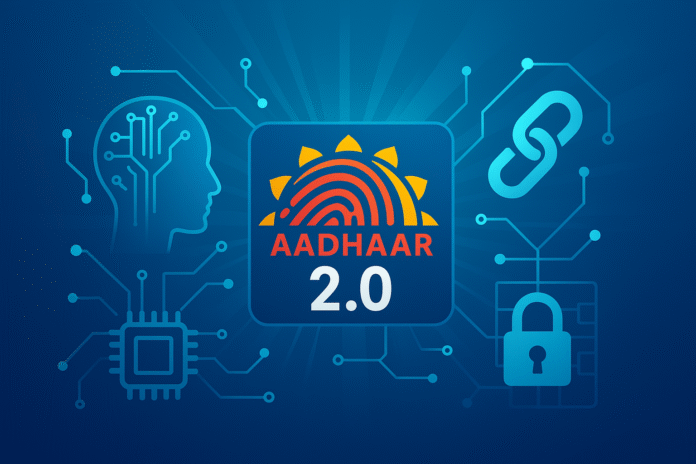
India’s most trusted 12-digit identity is about to step into the future and this time, it’s thinking, learning, and securing itself. With Aadhaar Vision 2032, the UIDAI is reimagining the very backbone of India’s digital existence, fusing artificial intelligence, blockchain, and quantum-resistant security to create the world’s most advanced identity ecosystem.

AI That Thinks, Blockchain That Guards
Aadhaar 2.0 isn’t just an upgrade it’s a transformation. Artificial Intelligence will continuously monitor patterns, detect fraud in real time, and adapt to emerging risks. Blockchain will ensure every identity transaction is traceable yet tamper-proof, a fortress built on transparency. And with quantum-grade encryption, even the cyberattacks of the future will find no way in.

UIDAI’s Vision Factory
Behind this revolution is a dream team of technologists, data scientists, and policy architects, working to future-proof a system used by over a billion Indians every day. Their goal: make Aadhaar faster, smarter, and almost impossible to break. It’s also designed to align seamlessly with the Digital Personal Data Protection Act, embedding privacy as its core principle, not an afterthought.

From Identity to Intelligence
For citizens, this means smoother verifications, stronger data shields, and zero authentication errors. But on a deeper level, Aadhaar 2.0 represents something bigger – India’s digital sovereignty.
It’s the moment where identity meets innovation; where every fingerprint, iris scan, or e-sign becomes part of a living, learning digital framework.

Aadhaar which began as a number, now it’s evolving into a quantum-smart, AI-powered guardian of trust, proof that India isn’t waiting for the future.
It’s coding it. 💻🇮🇳