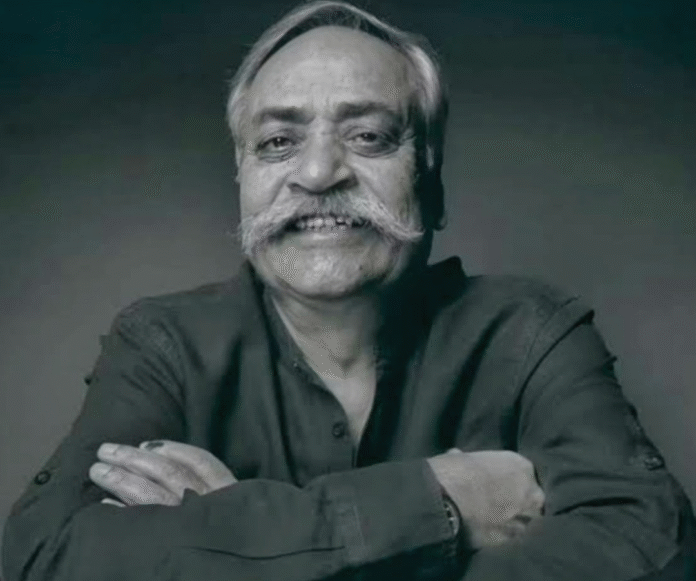
Creator of iconic ads like Hamara Bajaj, Kuch Khaas Hai Zindagi Mein, and Thanda Matlab Coca-Cola
Padma Shri awardee and legendary ad guru Piyush Pandey passed away on Thursday in Mumbai at the age of 70. Pandey was one of India’s most celebrated creative minds, known for shaping the language of Indian advertising through memorable campaigns such as Hamara Bajaj, Fevicol – The Ultimate Adhesive, Cadbury Dairy Milk’s Kuch Khaas Hai Zindagi Mein, and the political slogan Abki Baar Modi Sarkar.
According to early reports, the cause of his death remains unknown, though he was said to be battling a serious infection. His funeral will take place today in Mumbai.
Early Life and Family
Born in Jaipur, Rajasthan, in 1955, Piyush Pandey grew up in a large family with seven sisters and two brothers, including film director Prasoon Pandey and singer-actress Ila Arun. His father worked in a bank, and Piyush completed his schooling in Jaipur before earning a postgraduate degree in History from St. Stephen’s College, Delhi.
A sports enthusiast in his youth, Pandey represented Rajasthan in the Ranji Trophy before turning to advertising.
Journey in Advertising
Piyush Pandey entered the world of advertising at the age of 27, beginning his career alongside his brother Prasoon Pandey. The duo initially lent their voices to radio jingles for popular brands.
He joined Ogilvy & Mather (now Ogilvy India) in 1982, where he would go on to redefine the creative landscape of Indian advertising. In 1994, he was appointed to Ogilvy’s board, later becoming the agency’s Executive Chairman and Global Chief Creative Officer.
Pandey was honoured with the Padma Shri in 2016 and received the LIA Legend Award in 2024 for his global contribution to advertising.
Iconic Campaigns by Piyush Pandey
Fevicol’s “Truck Ad” (2007): A witty depiction of a truck overloaded with passengers who never fall off — symbolizing Fevicol’s unmatched strength. The ad became a pop-culture classic and made Fevicol a household name.
Cadbury Dairy Milk’s “Cricket Ad” (2007): A young woman dancing on a cricket field after a winning shot — a moment that redefined happiness. The line “Kuch khaas hai zindagi mein” struck an emotional chord across generations.
Asian Paints’ “Har Ghar Kuch Kehta Hai” (2002): A touching story of memories and home, showing how every wall tells a tale. The campaign made Asian Paints synonymous with emotion and trust.
Hutch (Vodafone)’s “Pug Ad” (2003): Featuring a loyal pug following a boy everywhere, the ad perfectly captured the essence of network reliability. The tagline “Wherever you go, our network follows” became iconic.
BJP’s “Abki Baar Modi Sarkar” (2014): A slogan that changed the course of political communication in India, giving the BJP’s 2014 campaign a decisive edge.
Pulse Polio’s “Do Boondein Zindagi Ki”: A socially powerful campaign that continues to echo in public health initiatives across the country.
Legacy
From Hamara Bajaj to Thanda Matlab Coca-Cola, Piyush Pandey’s creative genius redefined how India connected with brands — through emotion, simplicity, and storytelling rooted in Indian culture.
His work bridged the gap between commerce and creativity, making him not just an ad man, but a chronicler of Indian life. Piyush Pandey’s legacy will continue to live on — in jingles, slogans, and smiles that shaped a nation’s imagination
Telegram, the privacy-first messaging platform founded by Pavel Durov, has achieved a $30 billion valuation, redefining what a lean digital company can accomplish. Despite having over 1 billion monthly active users and annual revenues crossing $500 million from premium subscriptions, Telegram operates with a core team of just around 40 engineers, none of whom work from a physical office.
A Billion-User Empire Without an HQ
Telegram’s operations run entirely remotely. The small team manages over 100,000 servers and delivers monthly feature updates, all without conventional corporate structures such as HR departments or physical headquarters. Durov, who personally funds and fully owns Telegram, has championed this minimalist structure as the key to innovation and agility.
In a 2025 internal memo reportedly circulated among developers, Durov highlighted Telegram’s philosophy: “We optimize for talent, not headcount. Every line of code must matter.” This focus on efficiency has allowed Telegram to rival much larger competitors like WhatsApp and Signal, even as it remains independent and ad-free.
Premium Growth and Global Reach
Telegram introduced its Premium Subscription in 2022, offering enhanced upload limits, faster downloads, and exclusive features. The model has since become a major revenue driver, with over 50 million paying users worldwide. Analysts credit the app’s transparent privacy policies and frequent updates — including AI chatbots, channel monetization, and ad-sharing tools — for fueling steady global growth.
The company’s valuation surge reflects investor confidence in Telegram’s ability to scale sustainably without compromising its core values of privacy, speed, and freedom of expression.
Challenges on the Horizon
However, Telegram’s rise hasn’t been without controversy. Regulators in Vietnam, Brazil, and parts of Europe have criticized the platform for insufficient moderation of illegal content, prompting temporary bans and compliance demands. Durov continues to defend Telegram’s encryption and user autonomy, framing these as essential to digital freedom.
A New Blueprint for Tech Companies
Telegram’s success challenges conventional corporate wisdom — proving that a billion-user platform can thrive without sprawling offices or vast teams. As the app continues its global expansion, its lean, decentralized model stands as a blueprint for the next generation of tech startups aiming to balance privacy, performance, and profit.
The modern photo booth snap—or the group selfie—is a cultural ritual. It captures a moment of shared joy, laughter, and friendship. But let’s be honest: moments after the shutter clicks, the real fun begins. The inevitable, unspoken competition to see who looks best. While friendship is paramount, a little playful rivalry over who ‘won’ the photo booth session is part of the fun. Who has the best smile, the most striking features, or the most photogenic angle?
In the past, this debate was settled by subjective voting and sometimes, gentle flattery. Today, we have a fun, high-tech referee ready to step in. The pretty scale test, powered by Artificial Intelligence, can analyze a photo with an objective, algorithmic eye, turning a casual group picture into a lighthearted aesthetic competition. It’s time to move beyond biased opinions and let the data settle the score for the sake of digital entertainment.
Beyond the Selfie: AI as the Ultimate Photo Judge
The digital age has gifted us tools that allow us to interact with our appearance in ways previous generations could only imagine. We can filter, retouch, and now, we can measure. This playful analysis applies mathematical principles of aesthetics—symmetry, proportionality, and the Golden Ratio—to analyze a face. In a group photo, this technology can analyze each individual, simultaneously providing a fun, objective-sounding score for everyone involved. It turns the classic ‘who is the prettiest’ game into a quantifiable piece of social media content.
The best results for any AI analysis start with a perfect image. Before you even upload your group shot for the ultimate aesthetic challenge, ensure you have a clear, high-quality picture. For those spontaneous moments when you need a great, well-lit portrait quickly, using a free online camera feature ensures you capture a crisp, front-facing shot ideal for AI processing. This dual utility—perfect capture followed by objective analysis—makes the entire experience seamless and ready for sharing. It’s the ultimate digital icebreaker and social media fuel, injecting data and fun into every friendship group’s photo collection.
The Social Science of AI Scores
What is it about getting an AI score that is so compelling? It taps into a universal curiosity about our self-image, divorced from the human element of bias or affection. When the score is delivered, it’s not just a number; it’s a talking point, a playful challenge, and an opportunity for personalized insight. In a group setting, comparing these scores—and the detailed breakdown of features that accompany them—becomes a deeply engaging activity.
The technology behind this isn’t focused on narrow beauty standards; rather, it’s a mathematical tool designed to recognize patterns. It identifies your face shape, measures the distance between your features, and assesses the overall balance of your portrait. This breakdown can be surprisingly insightful, giving users a vocabulary to discuss their own unique traits. It turns an abstract concept (“you look great!”) into something concrete, making it a unique tool for both amusement and genuine feature discovery.
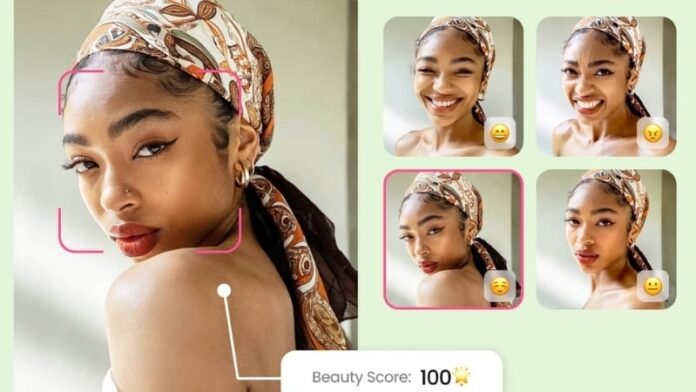
How does the Pretty Scale test work with BeautyPlus
To better understand how AI evaluates facial aesthetics, let’s explore how the Pretty Scale test, available through platforms like BeautyPlus, functions. This tool is built for ease of use and offers detailed insights into your facial proportions and estimated age. Here’s how it works:
1. Click the button marked “Upload Photo”. The AI will automatically start analysing your features; this will take a few seconds.
2. The system even attempts to estimate your age, drawing on algorithms that detect subtle facial cues linked to age ranges. It further assesses symmetry, proportions, and structure, generating a detailed evaluation of your appearance.
3. In just moments, you’ll receive your beauty score and age estimate, accompanied by a breakdown of your facial shape and specific features such as your eyes, eyebrows, lips, and nose. Most importantly, the report includes personalized beauty suggestions—from grooming and makeup tips to hairstyle recommendations—helping you enhance your natural charm beyond the numeric score.
Why Rate Your Beauty with Pretty Scale AI
Utilizing an AI-powered beauty analysis tool like Pretty Scale offers several compelling advantages, moving beyond mere curiosity to provide actionable insights for personal styling and self-understanding.
Firstly, you can instantly score your beauty. By simply uploading a photo to the Pretty Scale tool, you receive an immediate beauty score, typically ranging from 1 to 100, along with an estimated age. This quick feedback provides a novel perspective on how AI perceives your appearance. Secondly, the tool can analyze facial features and symmetry in detail. Pretty Scale evaluates facial symmetry and measures how closely your features align with the golden ratio, a mathematical proportion often associated with aesthetic harmony. It provides a detailed breakdown of various proportions, such as eye spacing, philtrum length, and more, offering a scientific look at your facial balance.
Thirdly, it helps you identify your face shape instantly. The AI can determine whether your face is round, oval, diamond, or another shape. It also meticulously analyzes the shape and size of your eyes, nose, lips, and other features, helping you make informed style choices that complement your unique structure. Based on this comprehensive analysis, you get personalized beauty tips. You’ll receive customized recommendations for makeup (including specific eye shadow and lip colors), eyebrow shaping, and hairstyle options that are designed to enhance your unique features and flatter your face shape.
Furthermore, the AI can assess your vibes and emotions. By analyzing your expressions, the tool can identify the mood or emotion you project in your photos, helping you understand the overall “vibe” your images give off. It’s also important to note that these tools are inclusive: men can also use the pretty face scale test. The tool provides accurate results for users of any gender, as it relies on universal measurements such as the golden ratio and symmetry to assign attractiveness scores and offer gender-neutral beauty recommendations. This ensures a broad applicability and objective analysis for all users.
Bottom Line
The digital showdown for the title of “Prettiest in the Photo Booth” is now open for playful, objective adjudication. By leveraging the pretty scale test, you turn a spontaneous snap into a captivating analysis. The power of AI brings fun, data-driven insights to social photography, ensuring that every group photo is not just a memory, but a memorable topic of conversation.
In a major move to strengthen India’s defence capabilities, the Defence Acquisition Council (DAC), chaired by Defence Minister Rajnath Singh, has approved capital acquisition proposals worth about ₹79,000 crore for the Army, Navy, and Air Force.
The council met at South Block in New Delhi on October 23, 2025, and gave the green light to a range of indigenous projects aimed at enhancing operational readiness across all three services.
For the Indian Army, the DAC granted Acceptance of Necessity (AoN) for the procurement of the Nag Missile System (Tracked) Mk-II (NAMIS), Ground-Based Mobile ELINT System (GBMES), and High Mobility Vehicles (HMVs) with material-handling cranes.
The NAMIS (Tracked) system will boost the Army’s ability to destroy enemy combat vehicles, bunkers, and fortifications, while the GBMES will strengthen real-time electronic intelligence capabilities. The HMVs, on the other hand, will improve logistics and mobility in challenging terrains.
The Indian Navy received AoN for several advanced systems, including Landing Platform Docks (LPD), 30mm Naval Surface Guns (NSG), Advanced Light Weight Torpedoes (ALWT), Electro-Optical Infra-Red Search and Track Systems, and Smart Ammunition for 76mm Super Rapid Gun Mounts. These additions will enhance the Navy’s maritime strike and defence capabilities, enabling it to conduct amphibious, peacekeeping, and humanitarian operations with greater efficiency.
The indigenously developed ALWT, capable of targeting conventional and nuclear submarines, marks another milestone in self-reliant defence technology.
For the Indian Air Force, the DAC approved the Collaborative Long Range Target Saturation/Destruction System (CLRTS/DS) a cutting-edge platform with autonomous take-off, landing, navigation, and payload delivery capabilities.
The ministry said these acquisitions align with the government’s focus on an “Aatmanirbhar Bharat” in defence and will significantly enhance India’s overall combat readiness across land, sea, and air.
After much speculation and denial, Stranger Things fans finally have confirmation: the long-awaited series finale will get a theatrical release. According to a report by Puck News, Netflix is partnering with AMC and other major theatre chains to screen the two-hour series finale on New Year’s Eve, the same day it arrives on the streaming platform.
The decision marks a surprising turn for Netflix, which has traditionally reserved its biggest titles for home viewing. Industry watchers suggest the move could be a way to give the globally popular series a send-off that feels more like a cultural event than a standard streaming drop.
The final season will roll out in three parts.
Volume 1: The first four episodes – premieres on November 26, followed by Volume 2 on December 25. The finale, labeled Volume 3, will close the saga on December 31. Each installment will go live at 5 p.m. PT globally.
For fans, the theatrical screenings will offer a communal way to experience the show’s conclusion, something closer to a film premiere than a binge session. While only select theatres are expected to participate, those who secure tickets will see Hawkins’ story reach its end on the big screen.
This marks the end of a television era that helped define Netflix’s original programming strategy. With Stranger Things closing its chapter both online and in theatres, it’s not just the characters saying goodbye but it’s a moment that signals how streaming and cinema might continue to overlap in the years ahead.
The government has taken a big step towards regulating the fast-growing world of artificial intelligence and synthetic media. The Ministry of Electronics and Information Technology (MeitY) has released draft amendments to the Information Technology (Intermediary Guidelines and Digital Media Ethics Code) Rules, 2021 aiming to bring AI-generated or synthetically-created information under stricter scrutiny.
The draft, open for public feedback till November 6, introduces a new term “synthetically generated information” defined as any data that’s artificially or algorithmically created or modified to appear “reasonably authentic.” In simpler terms, this means everything from AI-written text to deepfake videos could now fall under the same legal net as other online content.
One of the most talked-about provisions is mandatory labelling. Any image, video, or audio created using AI must clearly mention that it’s synthetic through a visible label or permanent metadata tag. For visuals, this label must cover at least 10% of the frame; for audio, it must play during the first 10% of the clip. Social media platforms and AI tool providers will also have to ensure these tags can’t be removed or hidden.
For big platforms like Meta, X, or YouTube, the rules get even tighter. They’ll need to ask users to declare whether their uploads are AI-generated and deploy automated tools to detect such content. Failing to do so could cost them their legal immunity under India’s IT laws.
MeitY says the move is about ensuring an “open, safe, and accountable Internet” especially as deepfakes and AI-driven misinformation grow rampant worldwide. Experts see it as India’s way of balancing transparency with innovation, setting early guardrails for an AI future that feels both exciting and risky.
After months of steady gains, gold and silver prices have started to cool off, triggering questions among investors about whether the rally has finally run out of steam. The recent dip follows one of the sharpest surges in years and while the correction has unsettled markets, analysts suggest it’s a normal phase after a prolonged climb rather than the start of a downturn
According to Puck News and market reports, spot gold prices recently saw their steepest one-day fall in over a decade, slipping by around 6.3% to $4,082 per ounce after hitting record highs above $4,380. Analysts attribute this decline to profit-taking, a firmer US dollar, and easing safe-haven demand amid renewed optimism in US-China trade talks.
Industry experts, however, remain largely optimistic. Rajesh Rokde, Chairman of the All India Gem and Jewellery Domestic Council, said the pullback was expected after an extraordinary rally. “Gold has seen a one-sided rise from about $3,300 to $4,400 per ounce in just four months. A brief correction like this is healthy,” he told ANI. Despite the fall, Rokde believes gold remains supported by strong global buying, central bank demand, and ongoing geopolitical tensions. Silver, too, has experienced a pause after nearly doubling in price over the past year.
Ajay Kedia, Director at Kedia Commodities, noted that “after an 85% rise, a 10-20% correction is natural.” He added that while some short-term pressure may persist, a major decline seems unlikely, as both metals are likely entering a consolidation phase.
Experts broadly agree that these price adjustments are temporary. With central banks continuing to stockpile gold and economic uncertainties still lingering, both gold and silver are expected to retain their shine in the longer term even if the immediate sparkle has dimmed for now.
Dr. Ashokkumar Veeramuthu from Tamil Nadu’s Nilgiris district has once again put India on the global research map for the third year in a row! The environmental scientist has been named among the World’s Top Scientists by Stanford University and Elsevier Publishers for 2023, 2024, and now 2025, a rare hat-trick that only a handful of Indian researchers have achieved.
But what makes his journey truly special is where it began, in the misty hills of Nilgiris, where he studied in a government school and saw firsthand how poor waste management and water scarcity affected daily life. Those early experiences shaped his curiosity about how science could offer real, everyday solutions.
After completing his PhD from the University of Madras in 2013 and postdoctoral research in Malaysia and Taiwan, Dr. Ashokkumar now heads the Centre for Waste Management and Renewable Energy at Saveetha University (SIMATS), Chennai. He’s also a visiting professor in Thailand and South Korea, collaborating with over a dozen global institutions.
His research focuses on turning “waste into wealth” from converting food waste into biofuels, using microalgae for renewable energy, to creating new ways to recycle plastic. In short, he’s proving that waste isn’t just a problem, it’s an opportunity waiting to be tapped.
Beyond the labs and papers, his work holds real meaning for local communities battling pollution and resource shortages. By linking innovation with social impact, Dr. Ashokkumar is inspiring a new generation of scientists especially those from small towns to believe that sustainable change can begin anywhere.
His story is a reminder that when science meets purpose, even waste can shine bright on the world stage.
Imagine a world where you don’t have to wait years for a kidney that matches your blood type, where a donor organ could fit anyone, anywhere. That future just came one giant step closer.
In a medical breakthrough that could transform organ transplantation forever, scientists from Canada and China have created the world’s first “universal” kidney – one that can be transplanted into patients of any blood type.
The achievement, published in Nature Biomedical Engineering, was the result of more than a decade of research led by the University of British Columbia (UBC) and Avivo Biomedical Inc.
Here’s how it works: researchers took a kidney from a type-A donor and used special enzymes to strip away the sugars that determine blood type. This process converted the organ into type-O, the universal blood type, meaning it can be accepted by anyone. The converted kidney was then transplanted into a brain-dead patient (with family consent) and functioned normally for several days without signs of severe rejection.
Dr. Stephen Withers, the UBC chemist who co-led the project, called it a “historic first” proof that the concept works in a human setting. The team had originally started out trying to make universal donor blood in the 2010s, but their enzyme technology evolved into something far more groundbreaking.
The potential impact is enormous. Today, type-O patients who make up over half of all kidney waitlists often wait 2–4 years longer for a compatible organ. This new approach could erase that inequality, speed up transplants, and reduce complications caused by immune rejection.
The next phase includes regulatory approvals and full clinical trials, but optimism is high. If successful, this could mean an end to the blood-type barrier and the beginning of a new era where every kidney could be the right one
A proud and emotional moment unfolded at the Jaipur Wax Museum, Nahargarh, as Rajasthan’s Deputy Chief Minister and Tourism Minister, Diya Kumari unveiled the wax figure of her father, Mahavir Chakra awardee Maharaja Brigadier Sawai Bhawani Singh Ji, the legendary warrior and former ruler of Jaipur.
The unveiling coincided with Maharaja Bhawani Singh Ji’s birth anniversary, making the occasion even more poignant and historic. The event celebrated not just the life of a royal warrior but also a national hero who exemplified courage, humility, and service to the nation.
Speaking at the ceremony, Diya Kumari said, “This is an extremely proud and emotional moment for me. My father was not only a symbol of valor but also of discipline and compassion. His life continues to inspire generations, and seeing his likeness here at Nahargarh fills my heart with pride.”
On this occasion, a special 8-minute documentary on Brigadier Bhawani Singh Ji’s life and military achievements was screened, moving everyone present. The film highlighted his heroic role in the 1971 Indo-Pak war, for which he was awarded the Mahavir Chakra, India’s second-highest gallantry award. On this occasion, Chairman of Amer Fort, Dr. Rakesh Cholak was also present.
Founder Director of Jaipur Wax Museum, Anoop Srivastava, expressed gratitude and pride, stating, “It is an honor to immortalize such a great son of India through art. Brigadier Bhawani Singh Ji was the first Maharaja from a royal family to join the Indian Army after Independence. His decision to trade royal luxury for military service represents true patriotism. His wax figure will continue to inspire countless visitors.”
Anoop also emphasized that Jaipur Wax Museum focuses on celebrating Rajasthan’s brave warriors and royal legacy, rather than just cinematic icons. The museum already houses life-size wax figures of Maharana Pratap, Sawai Jai Singh II, Sawai Ram Singh II, Sawai Madho Singh II, Maharani Gayatri Devi, among others. The addition of Brigadier Bhawani Singh Ji’s figure further enriches the museum’s “Royal Darbar” section.
The wax figure, meticulously crafted after months of research and modeling, stands as a symbol of valor, service, and Rajasthan’s royal pride. The unveiling ceremony concluded with attendees paying heartfelt tribute to the Maharaja, celebrating his life, legacy, and contribution to the Indian Army and the people of Jaipur.