Home Blog Page 148

King of Khan Announces Shah Rukh Khan Film Festival On Occasion of His Birthday: Relive SRK’s Iconic Cinematic Journey

0

Shah Rukh Khan, the undisputed King of Bollywood, is celebrating his birthday in true cinematic style by bringing his most beloved films back to theatres. The Shah Rukh Khan Film Festival promises fans a nostalgic journey through his illustrious career, featuring iconic titles like Kabhi Haan Kabhi Naa, Dil Se, Devdas, Main Hoon Na, Om Shanti Om, Chennai Express, and Jawan.

Instead of the usual glitzy parties or red-carpet events, SRK has announced a special Shah Rukh Khan Film Festival, beginning 31 October, inviting fans on a nostalgic journey across theatres in India and around the world.

Announcing the news on social media, Shah Rukh’s signature wit was on full display:

“Some of my previous films are coming back to the theatres. The man in them hasn’t changed much — just the hair… and a little more handsome. The Shah Rukh Khan Film Festival begins on 31st October! In select theatres across India, in association with PVR INOX. A YRF International release across the Middle East, North America, the UK, Europe, and Australia. T&C Apply.”

Audiences will get to experience every facet of SRK’s evolution — from the boy-next-door charm of Kabhi Haan Kabhi Naa, to the haunting intensity of Dil Se, the poetic grandeur of Devdas, and the patriotic energy of Main Hoon Na. Blockbusters like Om Shanti Om and Chennai Express highlight his flair for entertainment, while Jawan reaffirms his enduring box office dominance even after three decades.

This unique festival lets fans relive the magic of SRK’s cinematic journey, celebrating not just the films, but the actor who has defined generations of Bollywood storytelling.

Chhath Puja 2025: A Thanksgiving Festival Dedicated to Sun God With Faith and Fasting

0

As the post-Diwali glow fades, the ghats across Bihar, Jharkhand, and eastern Uttar Pradesh come alive with lamps, songs, and unwavering devotion. It’s time for Chhath Puja, one of India’s oldest and most soul-stirring festivals that celebrates the divine connection between humans and nature.


Observed this year from October 25 to 28, Chhath is more than a ritual, it’s a heartfelt thanksgiving to Surya Dev (the Sun God) and Chhathi Maiya, believed to be the Sun’s younger wife and the protector of families.

The festival honors the life-giving power of the sun, thanking it for nurturing the Earth and sustaining every living being. Spread across four spiritually charged days, the rituals carry a rare blend of simplicity, endurance, and purity.

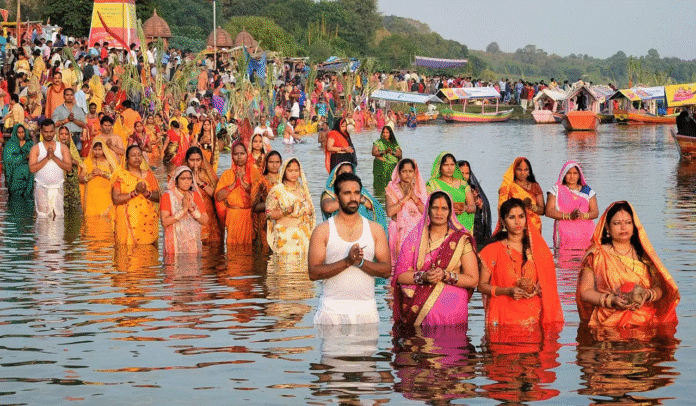
It begins with Nahay Khay, a sacred bath that symbolizes cleansing of the body and soul. The next day, Kharna, devotees observe a day-long fast and offer jaggery kheer as prasad before beginning a grueling 36-hour nirjala fast without even a sip of water. The evenings of Sandhya Arghya and mornings of Usha Arghya are the festival’s heart, as devotees stand knee-deep in rivers or ponds, offering prayers to the setting and rising sun with folded hands, songs, and unshaken faith.

Traditionally women-led, Chhath Puja isn’t bound by gender, it’s a festival of community, endurance, and gratitude. The scientific side isn’t lost either: the rituals align with sunrise and sunset when UV rays are weakest, believed to purify the mind and body.

As dawn breaks on October 28, the fast is gently broken with thekua (deep-fried sweet snack from the Indian subcontinent, popular in Bihar and Nepal, primarily made from whole wheat flour, jaggery, and ghee) and simple homemade prasad.
The chants fade, the sun rises again, and another chapter of devotion closes, a reminder that sometimes, the purest prayers are whispered to the first light of day.

Virat Kohli Equals Ishant Sharma on an Unwanted List, But the King Still Reigns

0

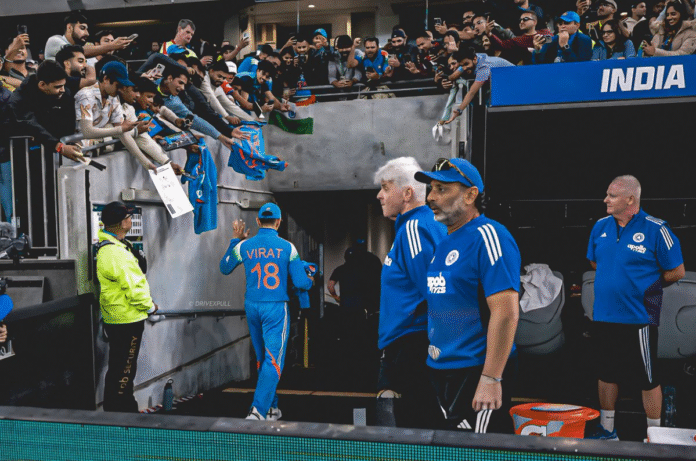
Even legends have off days and for Virat Kohli, this week brought one of those rare, humbling moments that remind fans cricket is as unpredictable as life itself.

In the second ODI against Australia in Adelaide, the Indian batting maestro was dismissed for a four-ball duck, his second in a row, marking a surprising first in his otherwise glittering career.

Kohli’s dismissal by debutant Xavier Bartlett, trapped LBW while attempting a flick, wasn’t just a blip on the scorecard. It was his 18th ODI duck and 40th overall across formats, drawing him level with his former Delhi teammate Ishant Sharma on the list of Indians with the most ducks. Only Zaheer Khan (43) sits above them, an unusual leaderboard no batter wants to top.

What makes this so striking is that Kohli, with his unmatched consistency, had never recorded back-to-back ODI ducks before. Until now. Fans who once cheered his heroic knocks at the very same Adelaide Oval, like his 107 against Pakistan in 2015 or 104 against Australia in 2019 were left stunned as their hero walked back early once again.

Across formats, Kohli now ranks third among Indians with the most ducks, and in ODIs, he’s climbed to joint-third just behind Sachin Tendulkar (20) and Javagal Srinath (19).

Yet, despite this unwanted milestone, his career numbers remain jaw-dropping: a 57.41 ODI average, 51 centuries, and 74 fifties, numbers most players could only dream of.

So yes, Kohli may have stumbled but legends aren’t defined by their lows; they’re remembered for how they rise again. And if cricket has taught us anything, it’s that a Virat comeback is never too far away.

The ‘Water Cremation’ Trend Everyone’s Talking About

0

A centuries-old ritual is quietly getting a modern, eco-conscious twist. It’s called Aquamation or as some call it, “water cremation.” The idea might sound futuristic, but it’s actually a gentle, science-backed process that’s starting to change how the world says goodbye.

So, what really happens? Instead of fire, aquamation uses a mix of 95% water and 5% potassium hydroxide. The body is placed in a stainless-steel vessel, warmed to around 150°C, and gently broken down over a few hours under pressure. What remains are soft ashes and a sterile liquid that can be safely returned to the earth with no smoke, no flame, no pollution.

Compared to traditional cremation, which releases about 1.5 tons of CO₂ and consumes hundreds of litres of fuel, aquamation cuts emissions by nearly 35% and uses 90% less energy. It’s faster than burial, completely chemical-free, and leaves no harmful residue.

Even Desmond Tutu, the South African Archbishop and Nobel laureate, chose aquamation for its environmental kindness and that decision turned global attention toward this “green goodbye.”

While countries like the US, Canada, and Australia are embracing it, India still hasn’t legalised the practice. Centuries of belief tie Hindu cremation to fire seen as the pathway to liberation and that makes water-based rituals a cultural challenge.
Yet, small sparks of change are visible: Kerala and Maharashtra have shown early interest in pilot projects for greener farewells.

Maybe the future of funerals isn’t about burning or burying but about returning gently to the elements, one drop at a time.

Digital Rupee: Know What It is And What Are Its Unique Features?

0

The Reserve Bank of India (RBI) has launched the offline Digital Rupee (e₹) — a revolutionary step toward making digital payments accessible to every citizen, even in areas without internet or mobile connectivity. The move places India among the first few countries in the world to operationalize a Central Bank Digital Currency (CBDC) with full offline capability.

What Is the Digital Rupee?

The Digital Rupee, or e₹, is India’s official digital currency issued by the Reserve Bank of India. It is the electronic equivalent of physical cash — having the same value and legal status as paper money and coins — but stored digitally in a secure wallet.

Unlike cryptocurrencies such as Bitcoin, the Digital Rupee is regulated by the RBI and backed by the Indian government, ensuring stability, legitimacy, and security. It is designed to complement existing digital payment systems like UPI and mobile banking, not replace them.

What Makes It Unique

The Digital Rupee stands apart from other payment systems due to its offline functionality and programmable features, making it a game-changer for India’s digital economy.

Here are its standout features:

1. Works Without Internet Access

The biggest innovation is that the offline Digital Rupee allows transactions without internet or mobile connectivity. Using Near Field Communication (NFC) and telecom-assisted payment technology, users can transfer money instantly by tapping NFC-enabled devices — ideal for rural and remote regions.

2. Wallet-to-Wallet Transfers

Unlike UPI, which depends on bank accounts, the Digital Rupee enables direct wallet-to-wallet transfers. Users can store, send, or receive digital currency without intermediaries, making it faster and more accessible.

3. Zero Commission and No Minimum Balance

Digital Rupee wallets — available through 15 partner banks including SBI, HDFC Bank, and ICICI Bank — carry no minimum balance requirement or transaction fees. Users can transact up to ₹50,000 daily and hold up to ₹1 lakh in their wallet.

4. Programmable and Traceable

One of its most futuristic features is programmable money. This means funds can be:

  • Geo-fenced: usable only within a specific area
  • Time-bound: valid for a limited duration
  • Purpose-restricted: designed for welfare schemes, salaries, or subsidies

This ensures that government and corporate disbursements are used exactly as intended, enhancing transparency and accountability.

5. Safe, Secure, and Recoverable

If a device is lost, users can safely recover their wallet and balance, thanks to built-in security and identity verification measures by the RBI.

Why It Matters

RBI Governor Sanjay Malhotra described the offline Digital Rupee as “a crucial link in India’s digital public infrastructure,” ensuring that every citizen — from cities to villages — can access secure, cashless transactions.

By combining the trust of cash with the convenience of technology, the Digital Rupee promises to reshape how India transacts — fast, inclusive, and future-ready.

Snack Tourism: The Delicious New Way to Explore the World, One Bite at a Time

0

Forget souvenirs — travellers in 2025 are packing their bags for a different kind of adventure: one led by taste buds. From Tokyo’s matcha KitKats to Sydney’s iconic Tim Tams, a new global travel trend called Snack Tourism is reshaping how people experience the world — one bite at a time.

Snack Tourism: The Delicious New Way to Explore the World, One Bite at a Time

Once driven by monuments, museums, and landmarks, modern travellers are now curating their itineraries around the world’s most irresistible local munchies. According to recent travel insights, food has become one of the top motivators for choosing a destination — and it’s not fine dining, but snacks that are stealing the spotlight.

What Is Snack Tourism?

Snack Tourism is the growing trend of travellers planning their holidays around local and regional snacks — the kind you’d find in corner stores and street stalls rather than five-star restaurants.

Instead of collecting souvenirs, tourists are filling their suitcases with cult-favourite treats that tell a story of place and culture: France’s buttery Petit Écolier biscuits, India’s spicy Lays Magic Masala, or Japan’s endless flavours of KitKat.

It’s a new form of cultural immersion — one where a candy wrapper or chip flavour can say as much about a destination as its art or architecture.

The Rise of the Snack Tourist

While older generations planned trips around sightseeing, younger travellers — especially Millennials and Gen Z — are swapping bucket lists for snack lists.

A Skyscanner survey reveals that 47% of UK travellers say local food influences their destination choices. Among Millennials, that figure jumps to 59%, with 70% admitting they budget separately for international snacks. Even Gen Z travellers are proving equally food-driven — with nearly 40% saying they’d rather eat French food than visit the Eiffel Tower.

In short, the world’s explorers are turning into snack connoisseurs.

Where to Taste the Trend: The Skysnacker Lounge

To celebrate this growing obsession, London is hosting The Skysnacker Lounge from October 31 to November 2, 2025 — the world’s first global snack experience.

Over 6,700 snacks from Europe, Asia, the Americas, and Australasia will be featured, offering visitors a global tasting journey.

  • Europe: Indulge in Daim Bites, Carambar Caramel, and Petit Écolier biscuits — timeless classics of continental comfort.
  • The Americas: Sample Cheetos Flamin’ Hot, Nerds Gummy Clusters, and Dr Pepper Strawberry & Cream Soda — the taste of pop culture in a packet.
  • Asia: Dive into the bold flavours of Samyang Buldak Ramen Carbonara, KitKat Birthday Cake, and Lays Magic Masala.
  • Australasia: Experience the sweet simplicity of Tim Tams, Caramello Koalas, and Violet Crumble — the flavour of Aussie joy.

How to Be a Pro Snack Tourist

If you’re ready to join the snack travel revolution, here’s how to do it right:

  • Research before you fly: Use TikTok and travel blogs to discover trending snacks.
  • Shop where locals shop: Skip airport stores — go to supermarkets and street vendors.
  • Check customs rules: Not all snacks can cross borders, so plan before you pack.
  • Leave luggage space: A true snack tourist knows to travel light and return heavy.
  • Host a tasting party: Share your snack haul — it’s the sweetest souvenir you can give.

The Future of Travel Is Flavoured

Snack Tourism isn’t just a passing fad — it’s transforming the global travel industry. Tour operators are introducing snack trails, street-food safaris, and culinary pop-ups, all inspired by the humble potato chip or chocolate bar.

Destinations, too, are realising that their snack culture is a gateway to authenticity. After all, a packet of chips often tells a deeper story of local taste, tradition, and innovation.

In this new era of travel, food isn’t just fuel — it’s storytelling. Whether it’s the crunch of a Tim Tam or the spice of a Magic Masala, every snack offers a taste of a nation’s soul.

So the next time you plan a trip, skip the souvenirs and pack for flavour — because in 2025, the world’s best adventures might just come in bite-sized form.

Chhath Puja: The Sole Festival that Worships Both the Rising and Setting Sun

0

Chhath Puja: Amidst chants, devotion, and the golden hues of dawn and dusk, Bihar and eastern Uttar Pradesh come alive every year with the celebration of Chhath Puja—a festival that glorifies the Sun God (Surya Dev) and his consort Usha. What makes Chhath truly unique among global traditions is its reverence for both the setting and rising sun—a symbol of life’s balance between endings and beginnings.

Chhath Puja Celebration Time

Observed on the sixth day (Shashti) of the Hindu month of Kartik, Chhath Puja—also called Surya Shashti—is not merely a ritual but an act of spiritual endurance, purity, and gratitude. The four-day festival embodies a deep ecological and emotional connection between humanity and nature, especially the life-giving power of the sun and water.

Chhath Puja Nahay Khay

The first day, known as Nahay-Khay, begins with devotees taking a sacred dip in a river or pond. They carry the holy water home to purify their surroundings and prepare for the fasting days ahead.

Chhath Puja: The Sole Festival that Worships Both the Rising and Setting Sun

Chhath Day: Day Two

On the second day, Kharna, devotees observe a strict fast, breaking it only after sunset with kheer (rice pudding), fruits, and offerings to Mother Earth. This meal marks the beginning of a 36-hour fast without water—an extraordinary feat of devotion.

Chhath Puja Day Three

The third day witnesses the most mesmerizing spectacle—Sanjhiya Arghya. Thousands gather along riverbanks, their faces aglow in the golden sunset, as they offer Arghya to the setting sun with bamboo baskets full of thekua, fruits, and sugarcane. Folk songs echo across the ghats, narrating tales of faith, gratitude, and Bihar’s rich heritage.

Chhath Puja Day Four: Bhorwa Arghya

The festival culminates with Bhorwa Arghya—the offering to the rising sun. As dawn breaks, rivers shimmer with devotion, symbolizing the eternal cycle of life and hope. After this ritual, families return home to share prasad and blessings.

Chhath Puja stands as a timeless reminder that in honoring nature, one honors life itself. In its simplicity, discipline, and devotion, this ancient festival reflects India’s enduring spiritual harmony—where the sun, river, and human soul meet in luminous reverence.

Bharat Taxi: India’s First Government-Run Cab Service to Rival Ola and Uber

0

Bharat Taxi: Drivers to Receive 100% of Fare Earnings; Pilot Project Begins in Delhi This November

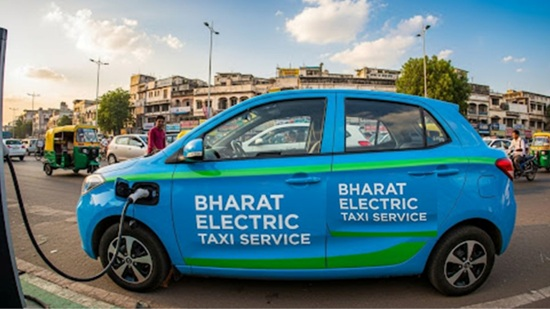
India is set to witness the launch of its first government-run ride-hailing platform, “Bharat Taxi,” a cooperative initiative developed jointly by the Ministry of Cooperation and the National e-Governance Division (NeGD). The service aims to offer a safe, transparent, and driver-centric alternative to private cab operators like Ola and Uber.

The pilot project will begin in Delhi in November with around 650 drivers, followed by an official nationwide launch in December 2025. Over 5,000 drivers, including a large number of women “Sarathi” (drivers), are expected to join the initiative by the end of the year.

Drivers as Co-Owners, Zero Commission Model

Unlike private platforms that charge up to 25% commission per ride, Bharat Taxi will allow drivers to retain 100% of their fare earnings. Instead, they will pay a nominal subscription fee—daily, weekly, or monthly—based on usage.

The service will operate under the Sahakar Taxi Cooperative Limited, established in June 2025 with a corpus of ₹300 crore. It functions as a subscription-based cooperative model, making drivers shareholders in the enterprise.

The Governing Council includes top cooperative figures such as Amul MD Jayen Mehta (Chairman) and NCDC Deputy MD Rohit Gupta (Vice Chairman), along with representatives from leading cooperatives nationwide. The council held its first meeting on October 16.

Key Features: Safety, Stability, and Inclusivity

The Bharat Taxi app—available in Hindi, Gujarati, Marathi, and English—will be launched on app stores in November. Key features include:

  • Direct police integration and a panic button for passenger safety.
  • Transparent and stable pricing, without surge fares.
  • Bonuses and dividends for cooperative members based on performance.
  • Dedicated insurance and free training for women drivers under the Mahila Sarathi initiative, starting November 15.

Expansion Roadmap

  • Dec 2025–Mar 2026: Launch in Rajkot, Mumbai, and Pune with 5,000 drivers.
  • Apr–Dec 2026: Expansion to Lucknow, Bhopal, and Jaipur; 15,000 drivers, 10,000 vehicles.
  • 2027–28: Pan-India coverage in 20 major cities, integrated with FASTag.
  • 2028–2030: Rollout to all district headquarters and rural areas with over 1 lakh drivers.

With Bharat Taxi, the government aims to create a cooperative-driven, safe, and equitable mobility ecosystem, giving India’s drivers both ownership and dignity in the gig economy.

India Ranks 9th in Forest Area and 5th in Carbon Sinks in GFRA 2025

0

India has achieved major progress in forest conservation and climate action, moving up to 9th place globally in total forest area and retaining its 3rd position in annual net forest area gain, according to the Global Forest Resources Assessment (GFRA) 2025 released by the Food and Agriculture Organization (FAO). The report also ranks India 5th among the world’s top carbon sink nations, with its forests removing 150 million tonnes of carbon dioxide (CO₂) annually during 2021–2025.

India’s Rise in Global Forest Rankings

The FAO report credits India’s systematic afforestation, reforestation, and conservation initiatives for its impressive gains. India’s total forest area stands at 72.7 million hectares, representing about 2% of the global total of 4.14 billion hectares, which covers 32% of the Earth’s land surface.

Globally, Europe holds the largest share of forest area, while South America has the highest proportion of land under forest cover. More than half of the world’s forests are concentrated in Russia, Brazil, Canada, the United States, and China.

Carbon Sink Performance and Global Context

India’s forests sequestered an estimated 150 million tonnes of CO₂ annually between 2021 and 2025, ranking 5th globally in carbon removal. Worldwide, forests acted as a net carbon sink, removing about 3.6 billion tonnes of CO₂ each year.

In Asia, led by India and China, forest carbon removals reached 0.9 billion tonnes of CO₂ annually, with a sharp reduction in deforestation-related emissions. Global forest loss has also declined—from 10.7 million hectares per year in the 1990s to just over 4 million hectares between 2015 and 2025.

Expansion in Planted Forests and Agroforestry

India’s leadership in planted forests and agroforestry is another highlight.

  • The country accounts for 11.8 million hectares of bamboo forests, about 40% of the global total.
  • It ranks 5th globally in rubber plantations with 831,000 hectares.
  • India and Indonesia together contribute nearly 70% of the global agroforestry area, totaling 55.4 million hectares.

These initiatives have supported rural livelihoods, enhanced biodiversity, and strengthened carbon sequestration.

Facts

  • India ranks 9th globally in total forest area.
  • India ranks 3rd in annual net forest area gain.
  • India ranks 5th in global carbon sinks (150 million tonnes of CO₂ per year).
  • Global forest area: 4.14 billion hectares (32% of Earth’s land area).
  • India has 11.8 million ha of bamboo forests and contributes 9% of global wood removals.

Policy Initiatives Strengthening Forest Cover

Government schemes such as the National Mission for a Green India (GIM) and the National Afforestation Programme (NAP) have been pivotal in expanding India’s forest cover. Under GIM, India aims to increase forest and tree cover by five million hectares and improve quality over another five million hectares.

In the 2025–26 Budget, ₹3,412.82 crore has been allocated to the Ministry of Environment, Forest and Climate Change, marking a 9% annual increase. Initiatives like Mission LiFE and “Ek Ped Ma Ke Naam” are fostering citizen participation and sustainable lifestyles.

India’s consistent rise in global forest rankings reflects the effectiveness of its environmental policies and its growing leadership in global climate stewardship

Chhath Puja 2025: 15 Heartfelt Wishes and Messages to Share with Your Loved Ones

0

Chhath Puja 2025 Wishes: Chhath Puja 2025, the grand festival of folk faith, will begin this year with Nahay-Khaay on October 25 and conclude with Usha Arghya on October 28.

This four-day rigorous fast is dedicated to the Sun God (Surya Dev) and Chhathi Maiya, and is believed to bring happiness, prosperity, long life, and good health for children. Devotees observe this sacred occasion with deep faith and discipline, offering prayers to the rising and setting Sun and expressing gratitude for life and sustenance.

The festival is celebrated with great devotion, especially in Bihar, Uttar Pradesh, Jharkhand, and parts of Nepal, with riversides and ghats illuminated by diyas and devotional songs echoing in the air.

During this sacred occasion, devotees observe rigorous fasts, offer arghya (water) to the rising and setting Sun, and pray for the health, happiness, and prosperity of their families. The four-day festival is marked by devotion, discipline, and purity.

The festival is celebrated with great devotion, especially in Bihar, Uttar Pradesh, Jharkhand, and parts of Nepal, with riversides and ghats illuminated by diyas and devotional songs echoing in the air.

Chhath Puja 2025 Wishes:

आपके घर-परिवार में सुख-समृद्धि बनी रहे, 

ऐसी मंगलकामना के साथ 

छठ पूजा की हार्दिक बधाई!

2. यह छठ पर्व आपके जीवन में नई ऊर्जा, 

सुख और समृद्धि लाए। 

आपको और आपके परिवार को 

छठ महापर्व 2025 की बहुत-बहुत शुभकामनाएं!

3. सात घोड़ों के रथ पर सवार, 

भगवान सूर्य आएं आपके द्वार। 

किरणों से भरे आपका घर-संसार, 

छठ आपके लिए बन जाए समृद्धि का त्योहार।

4. छठ से शक्ति मिले, 

सूर्यदेव दें तेज, इस छठ पर 

जीवन में नए उजाले का हो प्रवेश। 

शुभ छठ पूजा 2025!

5. नहाय-खाय से पावन हुई देह, 

सूर्य की भक्ति से 

मिटे हर क्लेश। 

छठ महापर्व की ढेरों शुभकामनाएं!

* सुंदर शायरी और कोट्स: 

1. ठेकुआ की खुशबू,

खरना का मीठा प्रसाद, 

छठी मैया की कृपा, रहे सबके साथ। 

छठ पूजा 2025 की शुभकामनाएं!

2. मंदिर की घंटी, आरती की थाली, 

नदी के किनारे सूरज की लाली। 

जिंदगी में आए खुशियों की बहार, 

बधाई हो छठ पूजा का त्योहार!

3. निसर्ग को वंदन करें, मन में श्रद्धा और स्नेह भरें। 

छठ पूजा के शुभ अवसर पर, 

आओ दिल से एक-दूसरे को याद करें। 

Happy Chhath Puja 2025!

4. जो है जगत का पालनहार, सात घोड़ों की जिनकी सवारी। 

उन सूर्य देव को करें हम नमन, 

पूरी हो आपकी हर मनोकामना। 

छठ पर्व की मंगलकामनाएं!

5. छठी मैया का आशीष 

सदा रहे संग, 

आपके जीवन में बजे खुशियों का रंग। 

शुभ छठ महापर्व 2025!

* जय छठी मैया!

1. छठ पूजा का पावन अवसर है, 

सूर्य देव को अर्घ्य 

देने का समय है। 

Happy Chhath!

2. छठ माता की कृपा से 

हर घर में सुख-समृद्धि का दीप जले। 

आपको और आपके परिवार को 

छठ पर्व की शुभकामनाएं। 

3. घाट किनारे खड़े होकर करेंगे 

हम सूर्य देव को नमन। 

दुखों का हो शमन। 

छठ पूजा मुबारक हो!

4. छठ व्रत देता संतान को दीर्घायु का वरदान। 

यह पर्व आपके जीवन में भी लाए 

खुशियां अपार। जय छठी मैया!

छठ पर्व मुबारक हो!

5. छठ पूजा… आस्था,
विश्वास और प्रकृति के 

पूजन का महापर्व। 

सूर्य देव की जय!