Home Blog Page 145

Who Is Odisha’s Preetismita Bhoi Who Won Gold at Asian Youth Games, Setting New Asian and World Records

0

India’s rising weightlifting sensation Preetismita Bhoi from Dhenkanal, Odisha, has brought immense pride to the nation by winning the gold medal in the 44 kg category at the 3rd Asian Youth Games held in Bahrain. The 16-year-old not only clinched the top podium finish but also created new Asian and World Youth records in the clean and jerk event.

Historic Performance in Bahrain

Preetismita delivered a remarkable performance, lifting a total of 158 kg, which included a record-breaking 92 kg in clean and jerk. Her phenomenal feat set both Asian and World Youth records, making her one of the youngest athletes to achieve such a milestone at this level. Her victory marks another golden moment in India’s growing weightlifting legacy on the international stage.

Training and Early Achievements

Currently training at the Weightlifting High Performance Centre at Kalinga Stadium, Bhubaneswar, Preetismita has been steadily rising through the global ranks. In 2024, she became the first Indian female lifter to win gold in the 40 kg category at the World Youth Championships in Peru, where she also set a world record in the clean and jerk event. Her consistency and composure at such a young age underline her potential to become one of India’s most celebrated athletes in the sport.

Nationwide Recognition

Union Education Minister Dharmendra Pradhan congratulated the young champion on her outstanding performance.

“Preetismita Bhoi from Dhenkanal, Odisha makes India proud at the 3rd Asian Youth Games 2025 in Bahrain. She bagged gold in the 44 kg category and scripted new Asian and World records with a massive 92 kg lift,”
he posted on X, wishing her continued success in representing the country.

A Symbol of Odisha’s Sporting Excellence

Preetismita’s triumph reinforces Odisha’s growing reputation as a powerhouse of sports talent. Backed by the state’s robust sports infrastructure and athlete development programs, her achievement showcases India’s expanding dominance in youth weightlifting. Turning 17 next month, Preetismita stands as an inspiration for young athletes nationwide — a shining example of discipline, strength, and determination


Kerala Rings the Bell on Overwork: Right to Disconnect Bill Lets You Log Off Guilt Free

0

Ever felt that 9-to-5 has quietly turned into a 24×7 affair? The endless calls, pings, and “urgent” emails that follow you even to dinner or vacation? Well, Kerala just said enough’s enough!

The state has become India’s first to propose the Right to Disconnect Bill 2025, a game-changer for private sector employees who’ve forgotten what “after hours” really means. The bill gives you a legal right to ignore work calls, emails, or meeting invites once your workday ends without the fear of getting scolded, demoted, or fired. Yes, you read that right. You can officially say “BRB, it’s me-time.”

Here’s why it’s huge ⬇️

  1. Protection for employees: No punishment, no pay cuts, no guilt for logging off.
  2. Defined boundaries: Companies must clearly outline official work hours and respect them.
  3. Redressal system: A Private Sector Employment Grievance Committee in every district will ensure the law isn’t just on paper.

But here’s the best part it’s not just about office desks and deadlines.

For travellers, this is pure bliss! Business travellers can focus on meetings during office hours, not midnight follow-ups.
Vacationers can finally switch off literally and soak in sunsets instead of Slack notifications.

Inspired by countries like France, Spain, Italy, Germany, and Belgium, this bill is Kerala’s bold move toward a healthier, happier workplace culture one that values rest as much as results.

So next time your phone buzzes at 10 p.m., remember your right to disconnect might just be the most powerful connection you make.

Kartik Purnima: Essential Rituals, Tips, and Booking Online Puja Services

0

Kartik Purnima is not merely a full moon; it is a celestial event overflowing with spiritual energy. The scriptures tell us that on this night, the Gods themselves descend to bathe in our holy rivers, and every act of devotion is magnified a thousandfold. Preparing your mind, body, and soul for the Kartik Poornima rituals is the first step toward receiving these immense blessings.

Purity and Intention
The true observance of Kartik Poornima begins within the heart. It begins with a sincere vow—your Sankalpa—to purify your body, mind, and spirit in devotion to Lord Vishnu.

  • The Sacred Resolve (Sankalpa): Begin your day with a formal vow, expressing your intention to observe the fast (Vrata) and follow the rituals for the Lord’s pleasure. Even the smallest act of devotion on this day, when performed with pure intention, brings immense spiritual benefits.
  • Restraint of the Senses: Kartik Poornima calls for self-discipline. On this auspicious day, consciously control anger, greed, and unrighteous thoughts, and focus your mind entirely on the divine.

Fasting and What to Avoid
The fast (Upavasa) is not about denying the body but about purifying the mind and spirit.

  • The Fast: Traditionally, devotees abstain from cultivated grains (especially rice) and foods containing salt. A common diet during this period is Phalahār—fruits and milk.
  • Foods to Avoid: Scriptures suggest avoiding meat, liquor, honey, brinjal, turnip, and radish during the month of Kartik, especially on Kartik Poornima. It is also advised not to consume food cooked by others (Parānna).
  • Other Disciplines: For deeper spiritual focus, it’s recommended to avoid oil on the body, maintain celibacy (Brahmacharya), and sleep on the ground to curb attachment to comfort.

The Heart of the Day: The Main Kartik Poornima Rituals

These are the essential rituals that are believed to destroy sins and bring blessings throughout the year. Devotees eagerly await this day to engage in these sacred acts.

The Holy Bath (Snan) and Water Offerings (Tarpana)

The most important ritual of Kartik Poornima is the early morning holy bath.

  • The Act: Taking a bath before sunrise purifies both the body and soul. Bathing in a holy river like the Ganga on this day is believed to bring immense spiritual benefits. After bathing, offerings of water (Tarpana) are made to the Gods, Sages, and Ancestors.

The Worship of Lord Vishnu (Puja) and Offering of Light (Deep Daan)

Lord Vishnu, especially in his form as Damodara, is the central deity of Kartik Poornima.

  • The Act: Devotees conduct a formal Puja, offering flowers, incense, and food (Naivedya). The highlight of the day’s worship is Deep Daan, the offering of light. Lighting ghee lamps for Lord Vishnu is believed to bring prosperity and illuminate your destiny.
  • Your Opportunity: The ghats of Varanasi are lit with millions of lamps on Kartik Poornima night.

The Act of Selfless Giving (Daan)

Charity on Kartik Poornima is considered a powerful act that guarantees eternal merit.

  • The Act: Giving food, clothing, gold, or money to Brahmins or the needy pleases the Gods and brings divine blessings.
  • Fulfill Your Duty: Distance should never prevent you from earning this merit.

Hari Om Tat Sat.

Nalanda ka Khandahar: Echoes of an Ancient Seat of Learning

0

Nalanda, one of the world’s oldest centers of higher learning, stands today in majestic ruins—its silent courtyards and crumbling monasteries whispering tales of India’s ancient intellectual glory. It is located about 90 km southeast of Patna, Bihar.

A Glorious Past

Although Nalanda’s roots trace back to the time of the Buddha, the renowned Nalanda University was formally established in the 5th century CE during the Gupta period. For nearly 700 years, it thrived as the greatest seat of Buddhist scholarship in Asia, attracting students and teachers from distant lands like China, Korea, Japan, Tibet, and Central Asia.

Subjects taught at Nalanda covered a wide range—from Buddhist scriptures (both Mahayana and Hinayana) and philosophy, to logic, grammar, medicine, astronomy, and metaphysics. The university housed thousands of monks and scholars within its extensive red-brick monasteries, lecture halls, libraries, and stupas.

Nalanda ka Khandahar: Echoes of an Ancient Seat of Learning

Visitors Who Chronicled Its Glory

The Chinese pilgrims Hiuen Tsang (Xuanzang) and I-Tsing (Yijing) visited Nalanda in the 7th century CE and left detailed accounts of its curriculum, discipline, and architectural brilliance. Their writings serve as invaluable records of the university’s organization and prestige.

Decline and Destruction

Nalanda’s decline began in the late Pala period, as royal patronage waned. The final devastation came around 1200 CE, when Bakhtiyar Khilji, a Turkish invader, attacked and set fire to the complex. The vast libraries—said to contain hundreds of thousands of manuscripts—burned for months, erasing centuries of accumulated knowledge.

A Living Heritage

Today, the Ruins of Nalanda—a UNESCO World Heritage Site—remain a powerful symbol of India’s ancient pursuit of wisdom. The layout of lecture halls, dormitories, temples, and stupas reveals a sophisticated architectural design, reflecting both academic rigor and spiritual devotion.

Archaeological excavations continue to uncover new layers of history, offering fresh insights into the world’s first great residential university.

Visitor Information

  • Best Time to Visit: September to April
  • Entry Regulations: Permission required from the Archaeological Survey of India (ASI) for electronic gadgets
  • Nearby Attractions: Nalanda Archaeological Museum, Rajgir, Pawapuri

East Timor Becomes ASEAN’s 11th Member

0

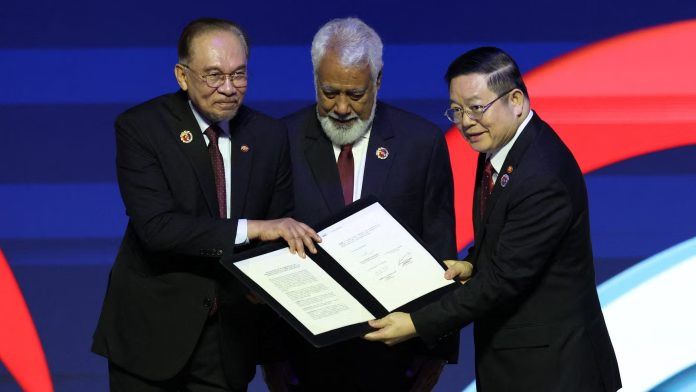
Kuala Lumpur: East Timor, officially known as Timor-Leste, has joined the Association of Southeast Asian Nations (ASEAN) as its 11th member, marking the culmination of a decades-long diplomatic journey. The announcement was formalised at the ASEAN annual summit in Kuala Lumpur, where East Timor’s national flag was ceremonially placed alongside those of its regional partners.

A Long-Awaited Accession

East Timor’s membership follows a 14-year wait since it first applied for ASEAN inclusion in 2011. The milestone carries deep symbolic significance for President José Ramos-Horta and Prime Minister Xanana Gusmão, both central figures in the nation’s independence struggle.

Despite being one of Asia’s smallest economies—with a GDP of around $2 billion compared to ASEAN’s $3.8 trillion—East Timor’s inclusion underscores the bloc’s commitment to regional solidarity and inclusivity.

Economic Aspirations and Regional Integration

Prime Minister Gusmão hailed the accession as the start of “a new chapter filled with immense opportunities” for trade, investment, and cooperation. For East Timor’s 1.4 million citizens, ASEAN membership opens doors to expanded economic partnerships, improved infrastructure, and access to regional initiatives in digital transformation and sustainable development.

The government aims to leverage ASEAN’s trade networks to boost sectors such as energy, education, and tourism, while attracting greater foreign investment.

Historical and Political Context

East Timor’s modern history has been one of resilience and determination. After centuries of Portuguese colonial rule, it declared independence in 1975, only to face occupation by Indonesia shortly thereafter. Full sovereignty was finally achieved in 2002, following a UN-administered referendum.

President Ramos-Horta, a 1996 Nobel Peace Prize laureate, has long advocated ASEAN membership as a pathway to lasting peace, stability, and prosperity for the young democracy.

Exam-Oriented Facts

  • East Timor (Timor-Leste) gained full independence in 2002.
  • It became ASEAN’s 11th member in October 2025.
  • President José Ramos-Horta received the Nobel Peace Prize in 1996.
  • ASEAN, founded in 1967, now comprises 11 member states.

Future Role Within ASEAN

As a full-fledged member, East Timor is expected to actively contribute to ASEAN’s efforts in dialogue, peacebuilding, and regional security. President Ramos-Horta highlighted that the nation’s own experience in conflict resolution can aid ASEAN in managing regional disputes, including those in the South China Sea.

East Timor’s accession not only enhances ASEAN’s geographical unity but also reinforces its broader vision of a cohesive, inclusive, and resilient Southeast Asian community.

Reliance and Meta Launch ₹855 Crore AI Joint Venture — Reliance Enterprise Intelligence Limited (REIL)

0

Reliance Industries Limited and Meta Platforms have announced a major joint venture to create Reliance Enterprise Intelligence Limited (REIL) — a new AI-focused company aimed at accelerating enterprise-grade artificial intelligence adoption across India. The venture represents one of the largest technology collaborations of 2025.

Joint Venture Structure and Investment

REIL will be jointly owned by Reliance (70%) and Meta’s subsidiary, Facebook Overseas, Inc. (30%), with a total investment of ₹855 crore. Reliance will contribute ₹2 crore towards the initial subscription of 20 million equity shares.
According to filings, the deal requires no government approvals and is not classified as a related-party transaction.

Enterprise AI Solutions for Businesses

The new company will deliver AI Platform-as-a-Service (AI PaaS) solutions, enabling businesses to develop and deploy customised generative AI models for sales, marketing, IT operations, finance, and customer service.
Meta will integrate its Llama open-source models, while Reliance will leverage its extensive reach across Indian enterprises and small businesses. The solutions will be available via cloud, on-premise, and hybrid setups.

Boosting India’s AI Capabilities

Industry experts say the partnership could play a transformative role in India’s AI ecosystem, combining Reliance’s digital infrastructure with Meta’s advanced AI research.
The venture is expected to make AI tools more affordable and accessible, accelerating digital transformation across sectors and reinforcing India’s ambitions to become a global AI hub.

Key Facts

  • Company Name: Reliance Enterprise Intelligence Limited (REIL)
  • Stake: Reliance 70%, Meta (Facebook Overseas, Inc.) 30%
  • Total Investment: ₹855 crore
  • Focus Areas: Generative AI and enterprise AI solutions
  • AI Model Base: Meta’s Llama open-source models
  • Regulatory Status: No approvals required

US–China Resume Trade Talks in Kuala Lumpur as 155% Tariff Threat Looms

0

Top US and Chinese officials met in Kuala Lumpur on Saturday in a last-ditch effort to prevent a major escalation in their trade dispute, as President Donald Trump threatens to impose 155% tariffs on Chinese imports starting November 1.

The talks, held on the sidelines of the ASEAN Summit, included US Treasury Secretary Scott Bessent, Trade Representative Jamieson Greer, China’s Vice Premier He Lifeng, and top negotiator Li Chenggang. Both sides are seeking to restore stability after recent tit-for-tat measures—China tightening rare earth export controls and Washington expanding its export blacklist to thousands of Chinese firms.

Trump–Xi Meeting on the Cards

The Kuala Lumpur dialogue is expected to pave the way for a Trump–Xi Jinping meeting at the upcoming APEC Summit in South Korea—their first encounter since mid-2024.
Discussions are likely to cover tariffs, technology restrictions, agricultural trade, and politically sensitive issues including Taiwan and the imprisonment of Hong Kong media tycoon Jimmy Lai.

Rare Earths and Tech Restrictions Key Flashpoints

Analysts say resolving disputes over rare earth minerals and US tech export bans will be critical. China’s new export licensing system, covering materials vital for electronics, EVs, and defense manufacturing, has become a major leverage point. Experts warn that failure to reach compromise could trigger another tariff spiral and disrupt global supply chains.

Trade Truce Nears Expiry

The current trade truce, extended earlier this year in London and Stockholm, expires on November 10. Its future is uncertain following Washington’s new probe into Beijing’s alleged violations of the 2020 trade deal and China’s suspension of US soybean purchases since September.

Economists caution that without progress in Kuala Lumpur, global markets could face fresh turbulence as the world’s two largest economies edge closer to another trade war.

Key Facts

  • US tariffs on Chinese goods: ~55% (temporary truce)
  • China’s rare earth exports: Now require special licenses
  • Next event: Trump–Xi may meet at APEC Summit, South Korea
  • Truce expiry: November 10, 2025
  • Rare earths: Crucial for electronics, EVs, and defense systems

Veteran Actor Satish Shah Passes Away at 74

0

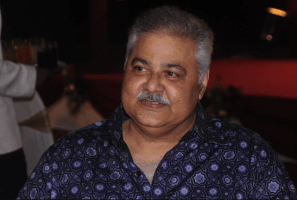
Veteran actor Satish Shah, celebrated for his impeccable comic timing and memorable roles in films and television, passed away on 25 October 2025 due to kidney failure. He was 74. His demise marks the end of an era in Indian comedy, leaving behind a legacy cherished by generations of audiences.

Early Career and Rise to Stardom

Satish Shah began his acting career in the 1970s and quickly gained recognition for his effortless humour and natural flair for comedy. His role in the cult classic “Jaane Bhi Do Yaaro” (1983) remains one of Indian cinema’s most loved performances. He went on to become a household name with the popular sitcom “Yeh Jo Hai Zindagi”, where he showcased remarkable versatility by portraying multiple characters.

Iconic Television Roles

Television brought Satish Shah closer to every Indian home, particularly through “Sarabhai vs Sarabhai”, where his portrayal of the witty and lovable Indravadhan Sarabhai became iconic. His comic timing and relatable portrayal of a middle-class patriarch made the show a timeless hit, often revisited by fans years after its original run.

Condolences and Tributes from the Industry

The film fraternity and fans across the nation expressed deep sorrow at the news. Industry peers and social media mourned his passing, highlighting his kindness off-camera as much as his talent on it. His long tenure and wide-ranging body of work earned him respect and admiration throughout the entertainment world.

=

Satish Shah was born on 25 June 1951 in Bombay (now Mumbai).

He studied at the Film and Television Institute of India (FTII) and later served as a member of its governing society in 2015.

In “Yeh Jo Hai Zindagi”, he portrayed 55 different characters across 55 episodes, a unique record in Indian television.

His role as Commissioner D’Mello in “Jaane Bhi Do Yaaro” is considered one of the finest comic performances in Indian cinema.

Notable Works and Lasting Influence

Beyond television, Shah made his mark in films such as “Main Hoon Na”, “Kal Ho Naa Ho”, “Fanaa” and “Om Shanti Om”. His ability to infuse humour into every role, while maintaining a genuine emotional core, set him apart in Indian cinema. He also co-judged “Comedy Circus” alongside Archana Puran Singh in 2008. As tributes continue to pour in, Satish Shah will be remembered as an actor who made millions laugh and as a symbol of heartfelt entertainment

What are Benefits of Mobile Journalism for Local News

0

Mobile journalism means using your smartphone to report news stories. 

With just a phone, journalists no longer need big cameras, microphones, and editing equipment.

In this article, we will discuss the benefits of mobile journalism for local news and how it helps communities stay informed.

Speed and Breaking News Coverage

When something important happens in your town, mobile journalists can report it right away. They don’t need to wait for a camera crew or go back to the office to edit their story. 

A mobile journalist can be at the scene in minutes, record what’s happening, and share it with the community immediately through social media or their news website. 

Traditional TV crews might take an hour to set up their equipment.​

For example, if there’s a car accident, a mobile journalist can arrive with just their smartphone, interview witnesses, record video of the scene, and post updates within minutes. 

Lower Costs for News Organizations

A professional camera setup can cost thousands of dollars, but a good smartphone costs much less. Even expensive iPhones are cheaper than traditional broadcast equipment. 

This means local news organizations with small budgets can still produce quality stories without spending lots of money on equipment.​

Local newsrooms can also save money on staff because they don’t need specialized camera operators or sound engineers. 

Easy Access to Stories

Smartphones are small and easy to carry, so mobile journalists can go anywhere to get stories. 

They can walk through crowded events, enter small spaces, or travel to remote areas where large camera equipment would be difficult to use. 

Also, an advanced browser like Google Chrome can help you upload photos and videos quickly from the field.

Better Coverage of Local Issues

Mobile journalism allows reporters to spend more time in the community and build relationships with local people. 

Because the equipment is so portable and easy to use, journalists can attend more local events, such as school board meetings, community festivals, and neighborhood gatherings.

Mobile journalists can easily drive to small communities and cover local news that might otherwise be ignored.​

Social Media Integration

Mobile journalism works very well with social media platforms like Facebook, Instagram, and Twitter. Journalists can instantly share updates, photos, and videos.

They can also go live on social media to show events as they unfold, helping residents stay informed in real time.​

If you stream live or edit on the go, consider downloading your browser from Microsoft’s site to ensure you have the latest security and speed optimizations.

Training and Skill Development

While mobile journalism uses simple technology, reporters still need training to produce quality content. 

Local news organizations need to teach their staff how to shoot steady video, record clear audio, and edit stories on their phones. 

However, this training is usually easier and less expensive than learning to use traditional broadcasting equipment.​

How Satellite Internet Keeps You Connected in Rural Areas

0

Rural areas around the world have always struggled with poor internet connectivity. People in cities enjoy fast fiber-optic connections, but many rural areas lack fast internet or none at all. 

In this article, we will talk about how satellite internet keeps you connected in rural areas.

What Is Satellite Internet

Satellite internet works by sending data between a satellite dish at your home and satellites orbiting in space. 

When you click on a website, your request travels from your computer to a satellite dish on your roof, then up to a satellite 22,300 miles above Earth, and finally down to a ground station connected to the internet. 

The ground station sends your website back through the same path. 

Unlike regular internet that needs cables underground or telephone poles, satellite internet can reach any location where you can install a satellite dish.

Benefits of Satellite Internet

Faster Speeds

New Low Earth Orbit (LEO) satellites, such as those used by Starlink, orbit much closer to Earth than traditional satellites. 

This reduces delay and delivers speeds of 25 to 220 Mbps, which is enough for streaming videos and video calls.​

Wide Availability

Satellite internet can reach virtually any location with a clear view of the sky. 

This universal reach makes it far more available in rural regions than fiber-optic or DSL services, which require costly infrastructure investments.​

Quick and Easy Installation

Unlike laying fiber that can take months, installing a satellite dish and modem can be done in just a few hours. This gives rural residents fast access without long delays.​

Improved Education and Healthcare

Students in remote areas can attend online classes and use virtual learning tools that require a fast internet connection. 

At the same time, patients can have video consultations with doctors without traveling long distances.​ 

If you prefer a challenging card game, try Freecell Solitaire and enjoy smooth gameplay even in the most remote rural locations.

Improved Agriculture

Farmers can use precision agriculture techniques and sell their products online. 

Also, satellite internet could bring billions of dollars to the agriculture industry.​

Reliable Service

Satellite internet does not rely on ground cables that storms or accidents can damage. 

Once set up, it remains operational even when local infrastructure fails.​ 

Challenges of Satellite Internet

Latency and Signal Delay

Signals must travel to space and back. This causes latency that can affect real-time applications like online gaming and video calls.​ 

However, if you prefer games that run even at slow speeds, you can play the solitaire online game without any interruptions.

Weather Interference

Heavy rain, snow, or thick clouds can weaken the satellite signal, leading to slower speeds or brief interruptions. 

These effects are usually temporary but can impact performance during severe weather.​

Cost Considerations

Satellite internet often involves high equipment costs and monthly fees that cost more than other home internet options. 

Prices are falling, but the initial setup remains expensive for some rural households.​