Home Blog Page 135

Akash Kumar Choudhary: The Meghalaya Marvel Who Smashed His Way Into Cricketing History

0

Records are meant to be broken, but Meghalaya’s Akash Kumar Choudhary didn’t just break one, he obliterated them all.
The 25-year-old right-hander set the cricketing world ablaze by scoring the fastest fifty in First-Class history, reaching the landmark in just 11 balls during a Ranji Trophy Plate Group match against Arunachal Pradesh.

Eight Sixes. One Dream. Eternal Glory.


Walking in at No. 8 with Meghalaya cruising at 576 for 6, Akash unleashed a storm that no one saw coming. Facing bowler Limar Dabi, he struck six consecutive sixes in a single over, followed by two more in the next rewriting what power-hitting means in red-ball cricket.
By the time Meghalaya declared at 628, Akash was unbeaten on 50 off just 14 balls, his innings glittering with pure audacity and confidence.

His feat shattered the previous record held by England’s Wayne White (12-ball fifty in 2012) and outpaced India’s fastest First-Class fifty (15 balls by Bandeep Singh). In doing so, Akash carved his name into cricket’s global folklore.

From Lean Patch to Lightning Strike


What makes his achievement even more inspiring is his journey. Having endured a string of low scores in recent games, Akash’s resurgence began with a fighting fifty against Bihar, a spark that turned into a wildfire in Surat.

Adding to the fairytale, Akash also struck early with the ball, proving his mettle as a complete cricketer.

A Star from the Hills Who Lit Up the Nation


In a season of extraordinary Ranji moments, Akash Kumar Choudhary’s 11-ball masterpiece stands apart, a reminder that dreams don’t just come true; sometimes, they soar beyond imagination.
From Meghalaya’s valleys to cricket’s record books, Akash has arrived to script many more success stories.

South–South Synergy 2.0: India’s Diplomatic Recalibration with Armenia and Argentina  

0

India’s contemporary foreign policy trajectory reflects a marked recalibration toward diversifying partnerships within the Global South. Against the backdrop of evolving global alignments, economic vulnerabilities, and emerging power centres, New Delhi’s outreach to strategically significant yet previously peripheral regions underscores its intent to expand its diplomatic spectrum. The strengthening of partnerships with Armenia in the South Caucasus and Argentina in Latin America reveals an integrated approach to advancing India’s geopolitical, economic, and energy security interests. Both relationships illustrate India’s strategic pursuit of multi-vector diplomacy, consolidating its position as a pivotal actor fostering South–South cooperation amid a shifting global order.  

Reframing India–Armenia Defence and Strategic Engagement  

India’s engagement with Armenia has deepened substantially in recent years, anchored in mutual security priorities and shared concerns about regional stability. The defence domain has become the linchpin of this partnership. India’s export of high-value military hardware, including multi-barrel rocket launch systems and advanced counter-drone technologies, aligns with Armenia’s defence modernization efforts and demonstrates India’s emergence as a credible supplier in the international defence market. These transactions are more than commercial exchanges; they signify a convergence of strategic interests and reinforce India’s readiness to support like-minded partners facing asymmetric security challenges.  

Beyond defence sales, New Delhi has institutionalized political consultations with Yerevan, seeking to establish a sustained dialogue on peace, connectivity, and stability across the South Caucasus. For India, strengthening relations with Armenia serves dual objectives—enhancing its geostrategic footprint in Eurasia and ensuring that its interests are represented in a region historically dominated by external powers. Through targeted diplomatic initiatives, capacity-building assistance, and defence cooperation agreements, India is positioning itself as a stabilizing force and credible stakeholder in Armenia’s security architecture. This alignment not only enhances bilateral trust but also introduces an additional vector for India’s engagement with Eurasian geopolitics, which aligns with its broader policy of counter-balancing regional rivalries and securing routes for trade and energy diversification.  

 Deepening India–Argentina Cooperation in Agriculture and Energy  

India’s expanding engagement with Argentina demonstrates its intent to build long-term economic partnerships rooted in complementarity and resilience. As one of Latin America’s leading agricultural producers, Argentina has emerged as a strategic contributor to India’s food security framework. Bilateral trade in essential agricultural commodities such as soy, sunflower oil, and animal feed has grown substantially, helping India to mitigate vulnerabilities in its domestic supply chain while enabling Argentina to diversify export markets. This cooperation represents a pragmatic dimension of India’s economic diplomacy—leveraging agricultural collaboration to secure essential resources while strengthening South–South interdependence.  

The energy component of the India–Argentina relationship is equally significant. With rising global demand for critical minerals, India’s collaboration with Argentina on lithium exploration and procurement represents a forward-looking dimension of its energy security strategy. Argentina’s prominence as a key member of the global “lithium triangle” provides India access to indispensable raw materials required for renewable energy technologies and electric vehicle production. Through investments in joint ventures, research collaborations, and supply chain development, India aims to establish long-term partnerships that can sustain its domestic manufacturing ecosystem and clean-energy transition. The synergy between food and energy trade exemplifies a comprehensive partnership model—one that addresses India’s domestic developmental priorities while reinforcing South–South industrial and technological cooperation.  

Connectivity, Multipolarity, and Strategic Autonomy  

The parallel development of India’s engagements with Armenia and Argentina aligns with its broader objective of creating a resilient and diversified network of partnerships across the Global South.

By engaging strategically with countries situated along distinct regional axes, India is reinforcing its vision of strategic autonomy while reducing dependency on traditional geopolitical blocs. In the case of Armenia, this involves deepening political and security ties within Eurasia to strengthen India’s connectivity alternatives beyond conventional supply routes. In Argentina’s case, it entails expanding India’s economic footprint across Latin America, contributing to diversified access to markets and critical resources.   These twin partnerships also symbolize India’s commitment to advancing a multipolar global order that gives greater agency to emerging economies.

By building sustainable relationships with partners across distinct continents, India reinforces the principle that global governance should reflect equitable participation and collective progress. This multipolarity-oriented diplomacy also strengthens India’s capacity to serve as a bridge between regions, facilitating cooperation, trade, and knowledge exchange among developing nations. The strategic complementarity of these relationships underscores India’s evolving role—not merely as a regional power, but as a global partner advocating inclusive development and shared stability.  

 Policy Implications and Forward Pathways  

The consolidation of India’s relations with Armenia and Argentina offers clear policy implications extending beyond bilateralism. For India’s policymakers, these partnerships represent experimental blueprints for broader South–South collaboration. The defence and strategic cooperation with Armenia sets a precedent for India’s role as a reliable security partner capable of contributing to regional equilibrium without direct intervention. Meanwhile, the agricultural and energy cooperation with Argentina illustrates the potential for interregional supply chains rooted in sustainable growth and technological collaboration.  

Going forward, expanding institutional engagement mechanisms such as joint commissions, business forums, and technology dialogues will be critical. India’s focus should remain on integrating these bilateral initiatives into a broader framework of South–South cooperation that enhances trade connectivity and facilitates knowledge exchange in sectors like renewable energy, defence manufacturing, and agri-tech. The sustained success of these relationships also depends on synchronized diplomatic outreach, alignment with domestic policy objectives such as “Make in India” and “Atmanirbhar Bharat,” and proactive engagement with regional organizations such as CELAC and the Eurasian Economic Union. These multilateral linkages can further amplify India’s strategic  visibility while offering platforms for policy synchronization and cross-regional cooperation.  

 Conclusion  

India’s evolving partnerships with Armenia and Argentina exemplify a deliberate strategic recalibration designed to advance South–South cooperation and reinforce India’s global stature as a pragmatic and reliable partner. Through defence cooperation with Armenia, India asserts its growing influence in Eurasian stability; through agricultural and lithium partnerships with Argentina, it strengthens its trade diversification and energy security. Together, these engagements mark a decisive transition in India’s foreign policy—from regional balancing to global bridge-building. As India continues to adapt to the complexities of the twenty-first-century order, its diplomacy with Armenia and Argentina will serve as pivotal instruments for both expanding strategic depth and fostering a more balanced and interconnected world economy.  

South–South Synergy 2.0: India’s Diplomatic Recalibration with Armenia and Argentina  

(This article has been written by Vanshika Chaudhary. She is a post graduate in Political Science and has been a college topper)

Thala Returns: MS Dhoni Set to Script One More Chapter in Yellow

0

The roar of “Thala! Thala!” is set to echo once again across Chepauk. The man, the myth, the heartbeat of Chennai, MS Dhoni is back! Just when fans had begun to wonder if the 2025 season was his last dance, Dhoni has silenced all speculation with one of the most heartwarming comebacks of the year confirming his return for IPL 2026 with Chennai Super Kings.

At 44, most would have hung up their boots, but Dhoni is built differently. For nearly two decades, he’s carried the hopes of millions, calm in chaos, fearless under fire. His decision to don the yellow jersey once again is more than just a sporting announcement; it’s an emotion.
It’s a promise that the man who built an empire of loyalty, discipline, and belief isn’t done yet.

For CSK fans, this is nothing short of a festival. After a tough 2025 season, the sight of Dhoni walking out at Chepauk that slow stride, the slight nod, the thunderous crowd chanting “Mahi! Mahi!” will be goosebump-worthy.
The legend who has given Chennai five IPL titles and countless memories is ready to take charge once again, not for records or glory, but for love- love for the game, the city, and the people who never stopped believing in him.

MS Dhoni’s comeback isn’t just a headline, it’s a heartbeat returning. The Captain Cool of Indian cricket is back in yellow, and once again, the IPL will shine brighter because Thala never leaves, he only returns.

Ryan Williams: The Australian Who Gave Up Everything to Wear India’s Colours

0

Ryan Williams, a name that now symbolizes passion, sacrifice, and belonging has taken one of the boldest steps in modern football. The 32-year-old midfielder, born in Perth, Australia, gave up his Australian citizenship to officially become an Indian and fulfil his dream of playing for the Indian national football team.

Williams’ journey is extraordinary not just because of what he achieved, but because of what he gave up. Leaving behind the privileges of an Australian passport, he chose to follow his heart and wear the tricolour, proving that identity is more about emotion than paperwork.

His Indian roots run deep. Williams’ mother was born in an Anglo-Indian family in Mumbai, and his grandfather, Lincoln “Linky” Grostate, represented Bombay in the Santosh Trophy in the 1950s.

Football runs in his blood and now, India runs in his heart.
After an impressive career across clubs in England and Australia including stints at Fulham, Barnsley, Oxford United, and Perth Glory Williams joined Bengaluru FC, where he found more than just a team. He found a home. Encouraged by Indian captain Sunil Chhetri, Williams decided to take the ultimate leap to renounce his Australian passport and become an Indian citizen.

His citizenship ceremony, conducted by Chhetri himself, was emotional and symbolic. Williams’ heartfelt message said it all: “Honoured to make official what’s long felt true… India, I’m one of your own!”

Ryan Williams’ decision isn’t just a personal milestone, it’s a statement. A statement of love, loyalty, and belief in Indian football’s future. In an era where players chase money and fame, Williams chose meaning. He didn’t just join a team; he joined a nation.

Starlink Takes Off in India: Maharashtra Becomes First State to Join Elon Musk’s Satellite Internet Revolution

0

India is set to enter a new era of digital connectivity and it’s beginning right from the heart of Maharashtra.
In a historic move, Elon Musk’s Starlink is officially rolling out its high-speed satellite internet service in India, starting with Maharashtra, marking a monumental leap in the country’s journey toward a truly connected future.

Chief Minister Devendra Fadnavis confirmed that Maharashtra will be the first Indian state to formally collaborate with Starlink, calling it a game-changing step in bringing satellite-enabled internet to even the most remote corners of the state.

“This collaboration will ensure Maharashtra leads India in satellite-enabled digital infrastructure,” Fadnavis announced on X.

Starlink, a venture by Musk’s SpaceX, uses a network of low-orbit satellites to deliver lightning-fast internet to areas where traditional networks fail to reach.
The initiative will be especially transformative for rural schools, healthcare centres, and underserved communities, ensuring digital equality across regions.

This development follows major telecom partnerships earlier this year: Jio Platforms and Bharti Airtel both struck deals with SpaceX to bring Starlink internet to their customer base, signalling the dawn of a new tech collaboration between Indian telecom giants and Musk’s space internet network.

Starlink’s Vice President of Business Operations, Lauren Dreyer, expressed excitement about the India launch, saying, “We’re looking forward to connecting schools, medical facilities and beyond in the most remote and unconnected areas once Starlink receives final approvals.”

The announcement aligns with a broader wave of global tech investments pouring into India. With Google investing $15 billion to build its largest AI hub outside the U.S. and companies like OpenAI, Anthropic, and Perplexity entering Indian markets, the country is fast becoming the world’s next digital powerhouse.

Starlink’s arrival is not just a tech milestone it’s a moment of national pride. India’s digital sky just got wider, faster, and limitless.

City of Dreams, City of Smiles: Mumbai Declared Asia’s Happiest City 2025

0

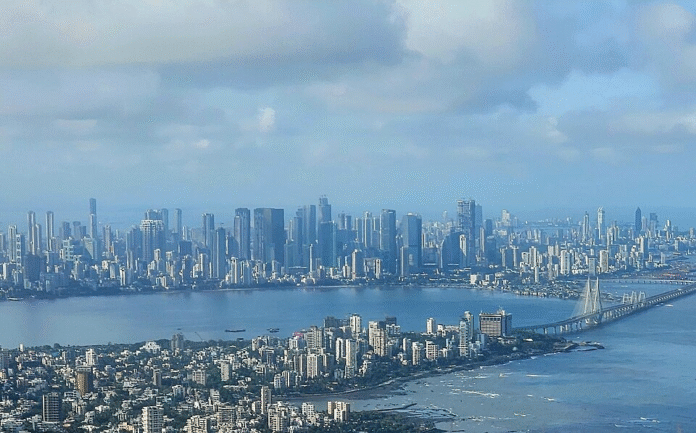
The heartbeat of India just got another reason to beam with pride Mumbai has officially been crowned the happiest city in Asia for 2025, according to Time Out’s latest global happiness survey. The poll, which gathered insights from over 18,000 urban residents across major Asian metros, highlights what every Mumbaikar already knows: happiness in this city isn’t found in silence, but in its beautiful chaos.

Why Mumbai Is Beaming with Joy

1. Happiness in the Hustle:
For 94% of Mumbai’s residents, the city itself sparks joy. From early morning train rushes to the glittering skyline at Marine Drive, happiness here isn’t about calmness, it’s about rhythm, resilience, and relentless hope.

2. A City That Feels Like Family:
Nearly 9 out of 10 people said they feel happier in Mumbai than anywhere else they’ve lived. It’s a place where neighbours become friends, where strangers lend a hand, and where community is not a concept, it’s a way of life.

3. The Happiness Curve Is Rising:
The survey revealed that 87% of Mumbaikars feel the city’s happiness levels have grown in recent years. From improved infrastructure to inclusive spaces and booming career opportunities, Mumbai continues to evolve and people are feeling the difference.

4. Where Dreams Fuel Joy:
It’s impossible to separate Mumbai from its dreamers. The pulse of Bollywood, the promise of possibilities, and the magnetic pull for ambition all give Mumbai an optimism that’s infectious.

5. Happiness Served Hot:
Ask any local: joy tastes like a plate of vada pav or bhel at a street corner. Mumbai’s iconic food culture keeps spirits high, one spicy bite at a time.

The Other Happy Hotspots of Asia

Following Mumbai on the 2025 happiness index are Beijing, Shanghai, Chiang Mai, Hanoi, Jakarta, Hong Kong, Bangkok, Singapore, and Seoul each city shining in its own unique way.

In the end, Mumbai’s win isn’t just about statistics, it’s about spirit. It’s proof that happiness doesn’t need perfection; it just needs people who keep smiling through the traffic, the chaos, and the dreams that never stop chasing the sunrise.

Zero Tolerance? Not quite – 8 Things You Rarely Do in Japan (and Why They Matter)

0
Zero Tolerance? Not quite - 8 Things You Rarely Do in Japan (and Why They Matter)

When you land in Japan, you’ll quickly realize it’s a world where *nobody says “No”, they simply live it. Beneath the neon lights of Tokyo and the calm of Kyoto lies a web of unwritten rules designed to preserve harmony, respect and social ease. Here are eight behaviours that may surprise you but follow them and you’ll fit right in.

1. No tipping.
In Japan, for service staff, tipping can come across as awkward or even insulting. Great service is considered standard; adding extra money is not expected.

2. No phone calls on public transport.
Buses, trains and especially subways are kept quiet. Talking on your phone is seen as disruptive to the community’s peace.

3. No eating while walking.
Stopping to eat is the norm; wandering the pavement with a snack marks you as outsider. Clean streets and respect for others explain why.

4. No shoes indoors.
From homes to certain restaurants and temples, you’ll find shoes left at the doorstep. It’s about cleanliness and minding your place.

5. No public displays of affection (PDA) like overt kissing or hugging.
While not illegal, physical intimacy in public spaces is rare and may feel out of place, the focus is on subtlety and group comfort.

6. No trash bins on every corner and no littering.
The streets stay clean because people carry their trash until they find a receptacle. It’s collective responsibility.

7. Roads and crossings follow order even when empty.
Jay-walking or ignoring crosswalks in Japan attracts notice. The white lines are respected even when no car is in sight.

8. No unnecessary chatter in elevators or other shared spaces.
Silence in elevators, trains or other close-quarters reflects mindfulness of others’ comfort. Even small talk is toned down.

These aren’t laws but the heartbeat of Japanese social life – quiet, considerate, seamless. For a visitor, the reward isn’t just avoiding faux-pas but glimpsing how a society thrives by putting others first. Respect the “Nos” and you’ll discover Japan not just as a destination but as an experience.

Why These 7 Indian Government Apps Are Total Game-Changers

0

India’s digital transformation is no longer just a vision, it’s happening right in our hands. From booking flights and filing taxes to storing essential documents and investing in government bonds, official apps launched by the Government of India are simplifying everyday life for citizens. Here’s a look at seven must-have government apps that bring convenience, transparency, and efficiency to your fingertips, a true reflection of a Digital India in motion.

1. DigiYatra
What it is: A digital travel credential app launched by the Digi Yatra Foundation under the Ministry of Civil Aviation (MoCA) that uses facial recognition so you can pass through airport entry, security and boarding with minimal document checks.
Why you should have it: If you fly domestically in India, this app can reduce queuing and speed up the process, your face becomes your boarding pass.

2. AIS for Taxpayers
What it is: A mobile application provided by the Income Tax Department that lets taxpayers view their Annual Information Statement (AIS), Taxpayer Information Summary (TIS) and provide feedback on the data.
Why you should have it: It gives you visibility into what the tax department has recorded (TDS, dividends, etc.), helping you verify before filing returns making your tax life simpler and less risky.

3. RBI Retail Direct
What it is: A platform from the Reserve Bank of India (RBI) enabling retail investors to open a “Retail Direct Gilt (RDG)” account and invest in government securities (G-Secs), Treasury Bills and Sovereign Gold Bonds.
Why you should have it: If you want a safe, direct route to invest in government bonds without brokers, this app/panel gives you access useful for savings and diversification.

4. RailOne
What it is: A “super app” launched by the Centre for Railway Information Systems (CRIS) on behalf of Indian Railways integrating ticket booking, live train tracking, grievances, e-catering and more.
Why you should have it: Travelling by train? This single app combines many services you’d otherwise use multiple apps or websites for simplifying your journey.

5. mParivahan
What it is: Official app for storing your driving licence (DL) and vehicle registration certificate (RC) digitally, recognized by Indian traffic authorities.
Why you should have it: Avoid carrying physical documents, and in case of checks or travelling, you’ll have digital credentials handy safer and more convenient.

6. DigiLocker
What it is: A government-approved cloud storage app/service under MeitY (Ministry of Electronics & IT) where you can store verified digital documents (like licence, certificates) and get them issued digitally by agencies.
Why you should have it: Helps you access important documents anytime, present them digitally for services, and reduce dependency on physical copies.

7. UMANG
What it is: Unified Mobile Application for New-age Governance (UMANG) – a mega app that provides multiple government services (Centre, States) on one platform: payments, certificates, schemes, etc.
Why you should have it: One stop shop for many government services instead of multiple apps; saves time and gives you access to both central and local services digitally.

IPL 2025 Champions RCB Put on Sale: Diageo to Complete Deal by March 2026

0

In a surprising turn of events, the newly crowned IPL 2025 champions Royal Challengers Bengaluru (RCB) have been officially put up for sale by their current owners, Diageo, the UK-based parent company of United Spirits Limited (USL). The announcement marks the beginning of a major ownership transition for one of the Indian Premier League’s most followed franchises.

Diageo confirmed through a disclosure to the Bombay Stock Exchange (BSE) that it has initiated a “strategic review of its investment” in Royal Challengers Sports Pvt. Ltd. (RCSPL), the wholly owned subsidiary that manages RCB’s IPL and Women’s Premier League (WPL) teams. The company aims to complete the sale process by March 31, 2026.

RCB’s rise to glory this year, after 18 long seasons, has made the news even more significant. Having clinched their first-ever IPL title in 2025, and the WPL championship in 2024, the franchise has cemented its position as one of India’s strongest cricketing brands.

According to reports, Diageo is seeking a valuation of around USD 2 billion for RCB. The franchise contributed 8.3% to United Spirits’ total profits in the financial year ending March 31, 2025. Business circles have also hinted that Adar Poonawalla, CEO of the Serum Institute of India, is among the interested buyers.

RCB’s current ownership traces back to 2015, when Diageo took control of Vijay Mallya’s UB Group assets and became the sole owner by 2016. Despite years of near misses, RCB’s fanbase and brand value estimated at USD 269 million by Houlihan Lokey have remained among the highest in the IPL.

With the player retention deadline set for November 15 and the WPL auction on November 27, the team will continue regular operations under Diageo until the sale is finalized.

As RCB steps into a new chapter, one thing is clear, the red and gold spirit that fuels the Chinnaswamy roar is here to stay.

Games, Technology, and Control: How Online Gambling Is Becoming Safer

0

resource

The development of digital technologies is changing many areas, and gambling is currently undergoing one of its most profound transformations. Many advanced tools are emerging that provide an unforgettable user experience. The transition of casinos to online platforms has not only expanded access to gambling but has also revolutionized its perception. A popular trend among trusted online casinos today is responsible gaming, which is ensured by modern technologies and prevents users from making uninformed decisions. In this article, we will talk about modern online gambling and its advantages, as well as share details about the principles of responsible gaming.

Why Is Modern Gambling Not Just About Excitement?

There is a widespread belief that casinos are something negative, and many people even associate them with addiction. However, in modern conditions, this is not the case at all. What is more, today’s generation of users gambles not to win, but rather to have fun and socialize with like-minded people. Some online platforms, such as Lucky Star Casino, offer a variety of bonuses, a user-friendly interface, and a huge number of gambling games that will interest even the most discerning users.

Modern online casinos are not just about excitement, and despite the risks, they also have their advantages. Gambling helps users relax and stay occupied in their free time. In addition, this activity helps expand social contacts through tournaments, chats, and live casinos. If you approach the gambling process responsibly, you can also improve your analytical skills and strategic thinking.

Modern technologies, such as Artificial Intelligence, machine learning, VR, and AR, are transforming online casinos into interactive platforms that provide users with an unforgettable experience. The most important aspects here are the possibility to play with live dealers and use mobile applications, which offer unlimited opportunities.

Modern Online Casinos and Their Advantages for Users

Modern technologies are developing rapidly, and the online casino industry is using this to its advantage. It quickly adapts to the times and is actively developing. Of course, as in any other field, there are a number of risks, especially when using unverified platforms, so it is important to take a very responsible approach to choosing an online casino. Nevertheless, verified online casinos are extremely popular due to the many advantages they offer.

Round-the-Clock Availability

Modern online casinos operate 24 hours a day, and users can play at any time convenient for them, even at night. This is ideal for those who have a very busy work schedule and want to enjoy the game at any time.

Numerous Promotions and Bonuses

This is one of the most significant advantages that attracts players. The bonus policy of online casinos allows beginners to increase their starting capital, and more experienced users have the opportunity to get additional winnings. In addition to bonuses and cashbacks, modern platforms offer personalized promotions that cater to a player’s specific preferences, making the gambling experience even more engaging.

Huge Selection of Games

In modern online casinos, users have access to hundreds of games, from classic slots to table games and sports betting. In addition, many online casinos use AR and VR technologies and offer their users the opportunity to experience all the advantages of a live casino with real dealers.

Responsible Gaming: a Trend That Leads to Positive Experiences

Responsible gambling is a very popular approach today, as it helps players make informed decisions and take a responsible attitude towards the gaming process. Responsible gaming means participating in gambling in a way that minimizes harm to yourself and others. Most often, this includes making informed choices, understanding the risks, and setting limits on time and money.

The main principles of responsible gaming

Setting limits. It is important to clearly define the amount of money and time you can afford to spend on gambling. This helps you control your gaming activity and prevents the risk of excessive spending. Sticking to financial and time limits will help you maintain a balance with your free time and not spend money from your budget

Understanding and accepting the randomness of games. It is no secret that a casino is primarily based on chance, and outcomes and results are impossible to predict. Players, who clearly understand this, approach the game realistically and avoid irrational expectations.

Self-analysis and self-control. It is important for every online casino user to regularly assess their condition and behavior in order to prevent possible risks. What is more, it is essential that the casino you choose provides tools for self-restriction, such as setting deposit limits or temporary self-isolation.

So, if you approach online casinos wisely, they can become part of your healthy digital culture. It’s not just about excitement, but also about socializing, developing important skills, and enjoying a pleasant user experience. Learn more about modern technologies and responsible gambling, and you will see that online casinos can be enjoyable and safe entertainment.