Home Blog Page 132

Balochistan Martyrdom Day: Why the World Must Recognize Its Struggle for Survival

0

Every year on November 13, the people of Balochistan commemorate their Martyrdom Day, honoring those who gave their lives in the ongoing struggle for freedom and dignity. Initially, this day was marked in remembrance of Nawab Mehrab Khan, the ruler of Kalat, who fought against the British in 1839. Today, it also pays tribute to thousands of Baloch men and women who have died resisting Pakistan’s illegal occupation of their land.

Following Pakistan’s independence in 1947, Balochistan was annexed by force — a move widely considered illegal and against the will of its people. Since then, the Baloch nationalist movement has continued for over seven decades, demanding autonomy and justice.

A Struggle Repressed but Not Silenced

Since 2005, Pakistan’s security forces have intensified their crackdown on Baloch activists, journalists, and civilians. Enforced disappearances, extrajudicial killings, and military operations have become routine, as the state attempts to crush dissent. Yet, despite these brutal tactics, the insurgency endures, fueled by deep resentment and a desire for self-determination.

The Human Rights Commission of Pakistan (HRCP), in its 2023 report “Balochistan’s Struggle for Hope”, documented the widespread anger and fear among citizens. The report describes Balochistan as a “colony of the state,” plagued by enforced disappearances, economic exclusion, and curbs on press freedom. It highlights a climate of fear perpetuated by paramilitary checkpoints and political manipulation.


Exploitation Amidst Poverty

Despite constituting 44% of Pakistan’s land area, Balochistan remains the country’s poorest province, rich in resources but deprived of development. The province houses the strategic Gwadar port and holds vast reserves of natural gas, copper, and minerals. Yet its people remain impoverished due to exploitation by the Pakistan-China nexus, particularly under the China-Pakistan Economic Corridor (CPEC).

According to the UN publication Development Advocate Pakistan (2023):

  • Only 19% of women in Balochistan have primary or higher education.
  • The province has a child stunting rate of 45.5%, far above the national average.
  • Just 6.45% of households own a computer, the lowest in the country.
  • Female labour participation stands at a mere 7.9%, compared to 26.5% in Punjab.

These stark figures reveal the systematic neglect of Balochistan’s people and the structural inequalities that sustain Pakistan’s colonial-style governance in the region.

Religious Radicalisation as a State Tool

A 2023 research paper published in Liberal Arts and Social Sciences International Journal argues that the Pakistani state has deliberately promoted Islamisation to weaken Baloch ethnic unity. This policy has fostered extremism and sectarian violence, eroding traditional Baloch social structures that once resisted radical ideologies. As the study notes, what began as a demand for autonomy has transformed into a popular call for independence, driven by decades of repression.

A Global Responsibility

Balochistan’s decades-long resistance is not just a regional issue—it’s a human rights crisis that deserves global attention. The world cannot continue to ignore the systematic repression, economic exploitation, and human suffering in the province.

Supporting the Baloch struggle should be viewed as part of the international commitment to decolonisation and human dignity. The international community, including the UN, human rights organisations, and democratic nations, must push Pakistan to end enforced disappearances, restore political freedoms, and ensure Balochistan’s right to self-determination.

Conclusion

For more than 75 years, the people of Balochistan have fought to reclaim control over their destiny. Their struggle is not for dominance, but for survival, justice, and freedom. Thousands have been martyred, yet their spirit endures.

On this Baloch Martyrdom Day, the world must not turn away. Recognising and supporting Balochistan’s fight for justice is not merely solidarity—it is a moral imperative in the global journey toward freedom and decolonisation.
Milton Hershey: The Chocolate King Who Turned Failure and Grief into a Legacy of Love

0

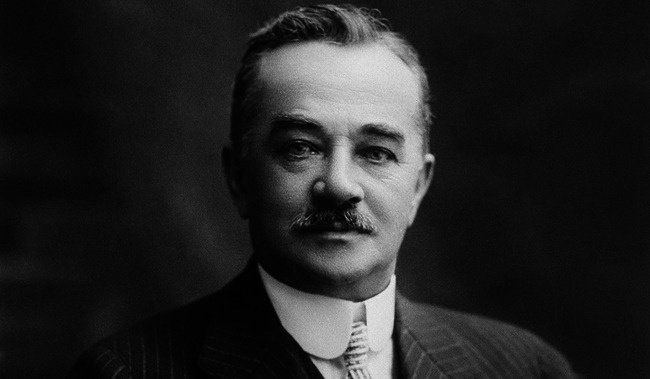
Milton Hershey knew what it felt like to fail. Before he became the “Chocolate King,” he failed—spectacularly—twice. His first candy business in Philadelphia went bankrupt. His second in New York also collapsed. By the age of 30, Hershey was broke, in debt, and living back with his parents in rural Pennsylvania.

Most people would have given up. Milton didn’t.

By 1900, he’d finally succeeded beyond his wildest dreams. The Hershey Chocolate Company was making millions, and he’d built an entire town—Hershey, Pennsylvania—for his workers, complete with homes, parks, and trolley lines. He married Catherine “Kitty” Sweeney, the love of his life, and built a mansion overlooking his chocolate empire.

They had everything—except the one thing they wanted most: children.

Unable to have children of their own, Milton and Kitty decided to give their love to those who had no families. In 1909, they founded the Hershey Industrial School, a boarding school for orphaned boys. It wasn’t a charity in name only—it was a real home, where children lived, learned trades, and were treated with dignity and care. The school began with just four boys, each personally interviewed by Milton and Kitty themselves.

When Kitty died suddenly in 1915, Milton was devastated. But instead of withdrawing, he deepened his commitment. In 1918, he did something unprecedented: he transferred the majority ownership of the Hershey Chocolate Company—worth $60 million at the time—into a trust for the school.

Every Hershey bar, every Reese’s Peanut Butter Cup, every Hershey’s Kiss would now fund the education and care of children in need.

Business peers thought he was foolish. “What if the company fails?” they asked. Milton’s reply was simple:

“If I wanted monuments to myself, I’d have built them already. I want to build futures for kids who have none.”

He expanded the school, building more homesteads and hiring teachers. Orphaned and impoverished boys now had warm beds, food, healthcare, and education.

When Milton Hershey died in 1945 at 88, he had given away nearly his entire fortune. But his legacy didn’t end—it grew.

Today, 79 years later, the Milton Hershey School educates over 2,000 students—boys and girls from low-income and single-parent families—completely free of charge. The Hershey Trust now manages over $17 billion, funding housing, meals, clothing, healthcare, and college scholarships for every student.

Over 11,000 alumni have graduated—doctors, engineers, artists, teachers, and entrepreneurs—all made possible by one man who turned failure into purpose and grief into generosity.

Milton Hershey never had biological children, but he became a father to thousands. His statue on the school grounds shows him kneeling beside a young boy, eye to eye—a reminder that his empire was never just about chocolate.

Because every Hershey bar is sweet, but the story behind it? That’s even sweeter.

Maharaja Ranjit Singh: The Sikh Emperor Who United Punjab and Kept the British at Bay for Four Decades

0

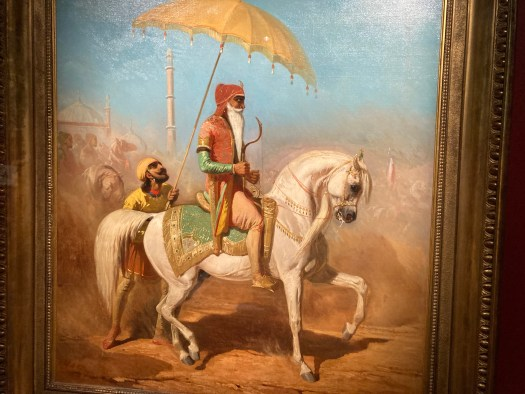
In the modern history of India, Maharaja Ranjit Singh remains one of the most successful and admired rulers. Known as the “Lion of Punjab,” he transformed Lahore (now in Pakistan) into the capital of a vast, prosperous empire that stretched from the Sutlej River to the Khyber Pass and from Ladakh to the Thar Desert. Born in 1780, he ascended the throne at just 19 and ruled for nearly four decades before his death on June 27, 1839, at the age of 58.

Despite ill health in his later years, Ranjit Singh remained vigilant against British expansion. His reign marked a rare era of stability and independence in North India—one that ended only seven years after his death, when the British finally entered Lahore.

Building a Kingdom Through Strategy and Strength

Ranjit Singh inherited the Sukerchakia misl from his father, Maha Singh, at the young age of 12. His political brilliance was evident early on—he strengthened his position through strategic marriages with the Kanhaiya and Nakai clans. His second wife, Datar Kaur (Mai Nakain), became the mother of his heir, Kharak Singh.

In 1799, at the age of 19, Ranjit Singh captured Lahore, which was then under Afghan control. By 1801, he had declared himself sovereign, establishing an independent Sikh Empire. His army—comprising Sikhs, Hindus, Muslims, and even European officers trained under Napoleonic veterans—was among the most advanced in Asia.

Modernisation, Merit, and the Dogra Connection

Ranjit Singh was a visionary administrator who rewarded merit and loyalty over lineage. Among his most trusted allies were the Dogra brothers—Gulab Singh, Dhyan Singh, and Suchet Singh—who helped expand and consolidate the empire. Gulab Singh, recognised for his valour, was anointed Raja of Jammu in 1822. The Dogra dynasty would later rule Jammu and Kashmir until India’s independence in 1947.

Legacy of the Sikh Empire

Interestingly, Maharaja Ranjit Singh never issued coins in his own name. The coins of his empire, called Nanakshahi, bore the names of Guru Nanak Dev and Guru Gobind Singh, symbolising his deep respect for the Sikh Gurus. During his rule, the Kohinoor diamond came under his possession—a prized jewel that now rests in the British Crown.

Maharaja Ranjit Singh’s disciplined leadership kept foreign invaders away from India’s north-western frontiers. The Afghans, long considered formidable warriors, were decisively subdued. His empire stood as a symbol of unity, strength, and religious tolerance—qualities that earned him a revered place in Indian history.

End of an Era

After Maharaja Ranjit Singh’s death, his successors failed to maintain the empire’s integrity. Internal rivalries and British interference led to the eventual annexation of Punjab in 1849. Yet, Ranjit Singh’s rule remains remembered as a golden chapter—an era when Punjab stood independent, proud, and unyielding to colonial power.

Delhi Toxic Air Is Choking Everyone – But This Man Built a Working Air Purifier for Just ₹2,000!

0

As Delhi gasps under a thick, grey blanket of pollution, one man has managed to do what multimillion-dollar companies couldn’t breathe cleaner air without burning a hole in his pocket. In the middle of an air emergency where branded purifiers cost upwards of ₹15,000, a Delhi resident built his own DIY air purifier for just ₹2,000 and shockingly, it works.

A Breath of Fresh Air – Literally
Posting his innovation on Reddit under the username ‘shukrant25’, the Delhiite revealed how he used an exhaust fan, a HEPA filter, a few wires, and cardboard to create his homemade purifier. The total? A mere ₹1,965. Within 15 minutes, he says, his room’s Air Quality Index dropped from a deadly 380 to a clean 50. “It’s working better than my Philips purifier,” he claimed and the internet immediately went wild.

Internet Applauds the ‘Jugaad Hero’
Within hours, his post went viral, drawing applause from across the country. “This is the innovation India needs,” one user wrote. Others begged him to upload a tutorial so they could try the same. “Air purifiers aren’t rocket science… this guy just proved it,” said another. Many even promised to replicate the idea at home this weekend because in Delhi, clean air has become a luxury.

When the City Can’t Breathe, Innovation Steps In
Delhi’s pollution has once again hit severe levels, with AQI readings nearing 400 in several areas. From stubble burning to construction dust, the crisis has turned the city into a gas chamber. Yet amid all the gloom, this small act of creativity has given people hope that perhaps, the fight for cleaner air begins not with policies, but with people.

In a city where breathing feels like a privilege, one man’s ₹2,000 invention is helping Delhi breathe a little easier.

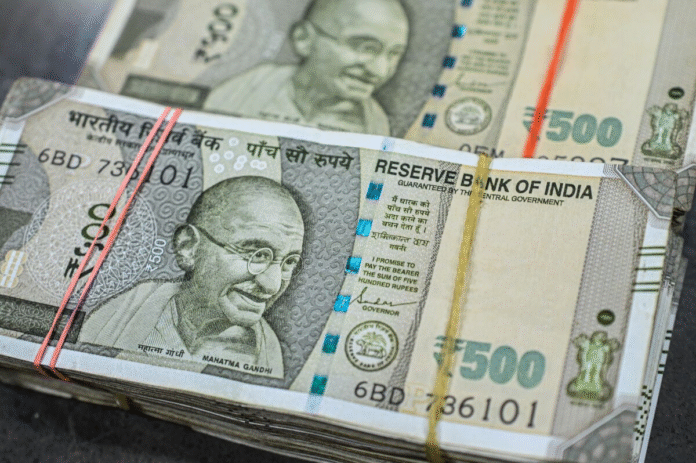
Top 5 Countries Where Indian Rupee Is Strongest – Perfect for Your Winter Getaway

0

Dreaming of a trip abroad this winter but worried about your budget? Don’t let the exchange rate hold you back! There are several countries where your Indian Rupee (INR) holds more power, meaning you can travel, eat, shop, and explore without constantly checking your wallet.

Whether you’re planning a romantic getaway, family trip, or an adventure with friends, here are 5 destinations where your rupee stretches the furthest this season.

1. Vietnam – Culture, Coffee & Coastlines (1 INR ≈ 300 VND)
If there’s one country where your rupee truly feels rich, it’s Vietnam. From the limestone cliffs of Ha Long Bay to the bustling streets of Hanoi’s Old Quarter, Vietnam offers postcard-perfect views and pocket-friendly prices.

  • Why go now: Winter is the best time – cool, dry weather and fewer crowds.
  • What to do: Cruise in Ha Long Bay, try street pho, visit ancient temples in Hoi An, or enjoy nightlife in Ho Chi Minh City.
  • Budget tip: Street food is king! You can eat authentic local meals for under ₹200.

2. Laos – The Hidden Gem of Southeast Asia (1 INR ≈ 250 LAK)
Peaceful, green, and utterly underrated – Laos is for travellers who want calm over chaos.

  • Why go now: Perfect weather for river cruises and mountain treks.
  • What to do: Visit Luang Prabang’s golden temples, float down the Mekong River, or explore Kuang Si Falls.
  • Budget tip: Stay in riverside guesthouses for as little as ₹800 per night.

3. Indonesia – Bali & Beyond (1 INR ≈ 190 IDR)
From the beaches of Bali to volcano hikes in Java, Indonesia offers adventure and serenity all at once and your rupee goes far here!

  • Why go now: Dry, breezy, and festive season vibes make it ideal for beach holidays.
  • What to do: Surf in Bali, explore ancient temples, or snorkel among coral reefs.
  • Budget tip: Local “warungs” (eateries) serve delicious meals for just ₹150–200.

4. Cambodia – History Meets Heart (1 INR ≈ 45–50 KHR)
Step into history at Angkor Wat or unwind by the Mekong River Cambodia blends culture, spirituality, and affordability beautifully.

  • Why go now: Pleasant weather for temple-hopping and city tours.
  • What to do: Visit Angkor Wat at sunrise, explore Phnom Penh’s markets, or chill in Siem Reap cafés.
  • Budget tip: Entry tickets and meals are cheap, so you can spend more on souvenirs!

5. Nepal – Adventure Next Door (1 INR ≈ 1.6 NPR)
Close to home yet worlds apart in experience, Nepal is the perfect quick international escape for Indians.

  • Why go now: Winter offers crystal-clear mountain views and cozy vibes.
  • What to do: Trek in the Annapurna or Everest region, explore Kathmandu’s temples, or simply sip chai with a mountain view.
  • Bonus: No visa required! Just carry your passport or voter ID (Aadhaar not accepted).

Ready to Pack Your Bags?
This winter, swap expensive cities for affordable adventures. These five countries promise Instagram-worthy moments, delicious food, and unforgettable memories, all on a budget.

Because when the rupee is strong, your travel dreams get stronger too.

Toyota Bubble Car for Kids: Futuristic Freedom or a Parent’s Nightmare?

0

Imagine your child hopping into a tiny, AI-powered car that safely drives them to school – no adult, no driver, just pure tech wizardry. Sounds straight out of a sci-fi movie, right?

Well, Toyota just made it (almost) real. At the Japan Mobility Show 2025, Toyota unveiled Mobi, an adorable, fully autonomous “bubble car” that’s part of its Mobility for All vision.

Designed for primary school-aged children, this miniature electric vehicle can drive kids around town all by itself. Built with advanced AI, it handles everything -from navigation to safety while keeping parents updated in real-time.

What makes Mobi stand out is its protective awareness bubble, powered by cameras, sensors, and smart algorithms that detect every obstacle nearby. It even has LED “eyes” that express emotions and an AI companion that talks, guides, and entertains kids during the ride. The transparent canopy door lets parents (and curious onlookers) see everything inside, think of it as part robot nanny, part futuristic pod!

But as fascinating as it sounds, the internet is divided. Parents are amazed yet anxious , “What if it runs off with my kid?” one user worried. Another quipped, “Looks like something to escape Earth before it explodes!” While skeptics question safety, others see potential, especially for disabled or independent kids needing mobility support.

For now, Toyota says Mobi is still a concept, with no launch date. But if it ever hits the streets, it could redefine how kids commute, freeing up parents’ time while raising new questions about trust, tech, and childhood independence.

So, would you let your kid ride alone in a driverless bubble? The future of mobility just got a lot more interesting.

Palak Muchhal: A Small-Town Girl to a Global Inspiration; Here Comes Her Heartfelt Journey…

0

Palak Muchhal Story: Sometimes, it doesn’t take power or privilege to change the world, just a pure heart and an unshakable dream.

Palak, a small-town girl from Indore, grew up with music in her soul and kindness in her veins. Today, that same girl has etched her name in the Guinness Book of World Records – not just as a singer, but as a saviour of hearts, having funded over 3,800 life-saving heart surgeries for underprivileged children.

Palak’s journey began not on a grand stage, but in a humble train compartment. As a little girl, she saw poor children begging, one of them sick and helpless. That sight changed her forever.
She made a silent promise: “One day, I’ll help children like them.” What began as a child’s wish became a lifelong mission.

Through her Palak Palash Charitable Foundation, every concert, every show, every note she sang turned into a heartbeat for someone who had lost hope. She used her fame not for luxury, but for life – donating every rupee she could to save children battling heart ailments across India.

Her compassion didn’t stop there. From supporting Kargil martyrs’ families to contributing to earthquake relief efforts, Palak proved that true stardom shines brightest in service.

Even as her songs like “Kaun Tujhe” and “Meri Aashiqui” touched millions, her biggest melody played in the quiet hospital rooms where children got a second chance at life.

Her husband, composer Mithoon, who shares her purpose. His words echo their unbreakable resolve: “Even if there’s no show, no income – a child’s surgery will never stop.”

Palak Muchhal’s story is more than music, it’s the sound of humanity. A girl from Indore didn’t just dream big; she dreamed selflessly and changed thousands of lives along the way.

When is Thanksgiving 2025? Date, Significance, and History Behind the Occasion

0

Thanksgiving 2025: From its date to the story behind its cherished traditions, here’s everything you need to know about one of America’s most beloved holidays.

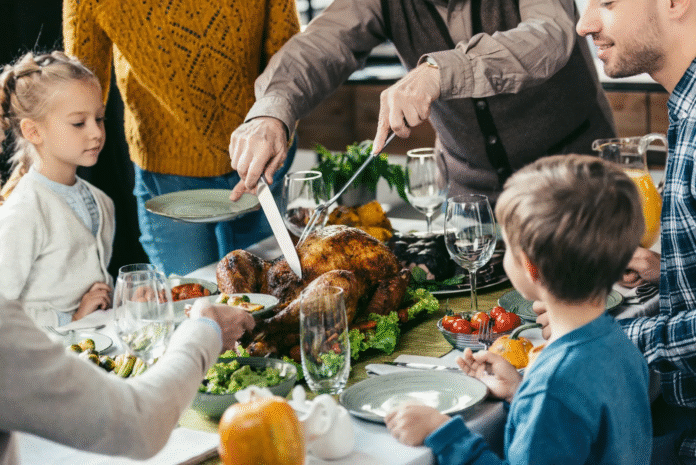
Thanksgiving is among the most celebrated holidays in the United States — a day that blends gratitude, family, and rich tradition. In 2025, Thanksgiving will be observed on Thursday, November 27. The holiday falls on the fourth Thursday of November every year, meaning the exact date changes annually. It can occur as early as November 22 or as late as November 28. (In 2024, it was celebrated on November 28.)

For millions of Americans, Thanksgiving marks the start of the holiday season — a time for travel, reunions, and reflection. Families come together to express gratitude, share meals, and celebrate the blessings of the past year.

A Feast of Traditions

At the heart of Thanksgiving is the feast, one of the most enduring symbols of the holiday. A traditional table features roasted turkey, stuffing, mashed potatoes, cranberry sauce, green bean casserole, and pumpkin pie.

Beyond food, the day is steeped in tradition. Many people tune in to the Thanksgiving Day Parade, enjoy football games, or volunteer at community centers to serve meals to those in need. It’s also a time for gratitude and reflection, when families pause to count their blessings before the festive rush of December.

When is Thanksgiving 2025? Date, Significance, and History Behind the Occasion

How Thanksgiving Began

The roots of Thanksgiving trace back to 1621 in Plymouth, Massachusetts, when Pilgrim settlers celebrated their first successful harvest with the Wampanoag people, sharing food and friendship for three days.

During the American Revolution, the Continental Congress declared occasional days of thanksgiving to mark military victories. Later, in 1789, President George Washington proclaimed the first national Thanksgiving Day, calling for a time to give thanks for peace and the newly adopted Constitution.

The modern Thanksgiving holiday, however, was established in 1863 by President Abraham Lincoln, who declared the last Thursday of November as a national day of gratitude to promote unity during the American Civil War.

The Meaning of Thanksgiving Today

Over time, Thanksgiving has evolved beyond its Puritan origins to become a celebration of gratitude, family, and community. It encourages Americans to appreciate life’s blessings, show kindness, and celebrate togetherness.

Similar traditions are observed around the world — Canada celebrates Thanksgiving in October, while Liberia, Grenada, and Saint Lucia hold their own harvest festivals inspired by thankfulness and abundance.

Whether you’re traveling, cooking, or simply relaxing, Thanksgiving 2025 — on November 27 — offers a moment to pause, share, and give thanks.

When is Thanksgiving 2025? Date, Significance, and History Behind the Occasion

FAQs

1. When is Thanksgiving in 2025?
Thanksgiving will be celebrated on Thursday, November 27, 2025. The holiday always falls on the fourth Thursday in November.

2. Why do we celebrate Thanksgiving in the United States?
Thanksgiving began as a harvest festival in 1621, when the Pilgrims and Wampanoag people shared a feast. Today, it is a national day of gratitude to give thanks for family, home, and life’s blessings.

3. Which countries celebrate Thanksgiving besides the US?
Countries with similar celebrations include Canada, Liberia, Grenada, and Saint Lucia, each observing the holiday with their own customs and traditions.

Thanksgiving Day: Know History and Controversy Behind The Grand Celebrations…!

0

Thanksgiving Day has been an annual holiday in the United States since 1863, when President Abraham Lincoln proclaimed it a national day of “Thanksgiving and Praise.” While it is widely celebrated as a time for gratitude, family gatherings, and feasting, the day also carries a more complex legacy. Many Native Americans view Thanksgiving as a reminder of the suffering and cultural destruction their ancestors endured following European colonization.

Early Origins of Thanksgiving

The origins of Thanksgiving predate Lincoln’s proclamation. Several regions in North America held earlier ceremonies of thanks long before the famous Pilgrim feast.
Some historians point to El Paso, Texas, in 1598, as the site of the first Thanksgiving, when Spanish settlers celebrated surviving a harsh journey through the desert. Another early event occurred in 1619 in the Virginia Colony, where settlers offered thanks for safe arrival.

However, most Americans trace the modern holiday to 1621, when the Pilgrims at Plymouth, Massachusetts, held a harvest celebration with the Wampanoag people. This event is often romanticized as a symbol of cooperation between Native Americans and European settlers. In reality, the relationship between the two communities soon deteriorated as colonization expanded and indigenous lands were seized.

The first true “thanksgiving” by the Pilgrims, according to records, took place in 1623, when they gave thanks for rain that ended a severe drought. These early thanksgivings were primarily religious observances, marked by church services rather than feasts.

Growth of the Tradition

By the late 1600s, thanksgiving observances after the harvest became more common across the colonies. However, these were not uniform — different communities celebrated on different days, and some even held multiple thanksgiving services each year.

In 1789, George Washington, the first U.S. president, issued the nation’s first official Thanksgiving proclamation, designating a day to give thanks for the new Constitution and the blessings of independence.

A Day of Mourning

For many Native Americans, Thanksgiving is not a celebration but a time of reflection and mourning. Since 1970, Indigenous groups and their allies have gathered at Plymouth Rock, Massachusetts, to observe a National Day of Mourning on Thanksgiving Day. The event honors Native ancestors and draws attention to the historical injustices and ongoing struggles of Indigenous peoples.

In recent years, American Indian Heritage Day, observed around the same time, has also gained recognition as a way to acknowledge and celebrate Native contributions and resilience.

Thanksgiving, therefore, remains a holiday of gratitude and gathering for many, but also one of grief and remembrance for others — a reminder that the nation’s shared history is as complex as it is enduring.

US Surgeon Performs World’s First Remote Surgery Across 4,000 Miles

0

In a groundbreaking medical milestone, doctors have successfully performed the world’s first transatlantic remote surgery, connecting Scotland and the United States through cutting-edge robotic technology. The achievement marks a transformative moment in stroke care and telemedicine, opening new possibilities for life-saving treatment across continents.

Breakthrough in Robotic Stroke Procedure

The historic operation was conducted between the University of Dundee in Scotland and Jacksonville, Florida, by Professor Iris Grunwald, an interventional neuroradiologist at Dundee, and Dr. Ricardo Hanel in the United States.

Professor Grunwald performed a remote thrombectomy—a procedure to remove blood clots from the brain after a stroke—on a human cadaver from 4,000 miles away. Hours later, Dr. Hanel performed a corresponding operation from Florida on a body in Dundee. Together, they achieved the first-ever transatlantic robotic surgery, setting a precedent in global healthcare connectivity.

Technology Behind the Innovation

The operations used advanced robotic systems developed by Lithuanian firm Sentante, supported by Nvidia and Ericsson’s ultra-low-latency network technology.

The robotic arm, equipped with standard catheters and wires, was remotely controlled with just a 120-millisecond delay over 4,000 miles—nearly imperceptible to the human operator. Surgeons viewed real-time X-rays and imaging while a local assistant handled the initial setup. Astonishingly, the system required only 20 minutes of training to master.

This breakthrough demonstrates how AI-powered robotics and 5G-speed communication can revolutionize complex medical procedures.

Global Implications for Stroke Care

Stroke treatment is a race against time—every six-minute delay can reduce a patient’s recovery chances by one percent. The ability to perform thrombectomies remotely could dramatically expand access to expert care, particularly in rural and under-resourced regions where specialists are scarce.

Medical experts hailed the achievement as a turning point for emergency medicine, suggesting that future patients could receive expert intervention within minutes—no matter where they are in the world.


Key Facts

  • World’s first transatlantic robotic surgery between Scotland and the US.
  • Conducted by Prof. Iris Grunwald (Dundee) and Dr. Ricardo Hanel (Florida).
  • Supported by Sentante robotics, Nvidia, and Ericsson connectivity.
  • Procedure showed a 120 ms lag over 4,000 miles.

Future of Remote and Robotic Medicine

The University of Dundee, a leading centre for interventional stroke research, hosted the experiment as part of ongoing efforts to expand tele-robotic healthcare.

Clinical trials are planned for 2026, with the goal of making remote thrombectomy accessible globally. Experts predict this innovation could soon allow a patient in a remote village to receive real-time expert treatment from the world’s top surgeons — revolutionising emergency and precision medicine forever.