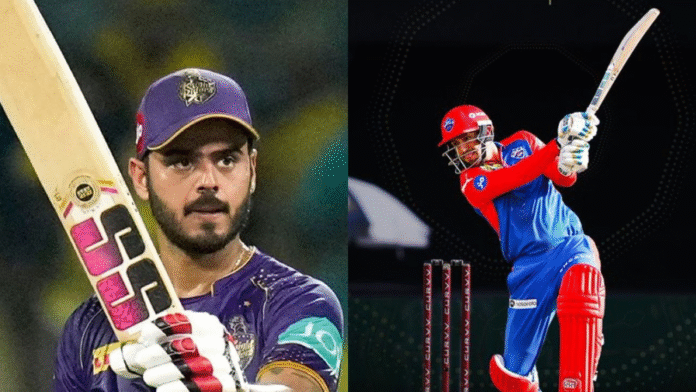
Delhi Capitals have secured Nitish Rana in a trade deal with the Rajasthan Royals ahead of the IPL 2026 retention deadline. Rana, who represented Delhi in domestic cricket and is an experienced IPL campaigner, joins DC at his existing price of ₹4.2 crore after spending just one season with the Royals. The left-hander notably captained Kolkata Knight Riders in IPL 2023, stepping in for the injured Shreyas Iyer.
In return, Rajasthan Royals receive Donovan Ferreira, the South African all-rounder who recently captained his national side during their tour of Pakistan. Ferreira is known for his explosive finishing ability—an area where Rajasthan struggled last season. His addition marks a return to familiar surroundings, having previously been part of the Royals setup earlier in his career.
This is yet another major move from the 2008 IPL champions, who have been extremely active in the trade window after finishing ninth last season. Their earlier blockbuster double-swap saw Sanju Samson traded out in exchange for Ravindra Jadeja and Sam Curran, significantly reshaping their core.
However, Ferreira’s arrival, combined with the acquisition of Curran, means Rajasthan Royals now have an excess of overseas players. As a result, several internationals—including Fazalhaq Farooqi, Wanindu Hasaranga, Maheesh Theekshana, and Kwena Maphaka—are at risk of being released as the franchise looks to balance its foreign-player quota ahead of the new season.
Ahead of the IPL 2026 Retention Deadline, franchises have finalised several high-impact player trades. Here are the official updates:
Ravindra Jadeja → Rajasthan Royals (from CSK)
Senior all-rounder and former Chennai Super Kings (CSK) captain Ravindra Jadeja will turn out for Rajasthan Royals (RR) in IPL 2026 following a successful trade. Jadeja, who spent 12 seasons with CSK and has played 250+ IPL matches, remains one of the tournament’s most decorated players. As part of the trade, his league fee has been revised from ₹18 crore to ₹14 crore.
Sanju Samson → Chennai Super Kings (from RR)
RR captain and India wicketkeeper-batter Sanju Samson will represent Chennai Super Kings (CSK) in the upcoming season, retaining his existing fee of ₹18 crore. Samson has featured in 177 IPL matches and joins only the third franchise of his career. Since his 2013 debut, he has played for RR in all seasons except 2016 and 2017, when he represented Delhi Capitals.
Sam Curran → Rajasthan Royals (from CSK)
England all-rounder Sam Curran will shift from CSK to Rajasthan Royals at his unchanged league fee of ₹2.4 crore. The 27-year-old has played 64 IPL matches so far. RR will be Curran’s third franchise, having previously featured for Punjab Kings (2019, 2023, 2024) and CSK.
Mohd Shami → Lucknow Super Giants (from SRH)
Veteran pacer Mohd Shami has been traded to Lucknow Super Giants (LSG) from Sunrisers Hyderabad (SRH), maintaining his existing fee of ₹10 crore. Shami, one of SRH’s top acquisitions ahead of IPL 2025, has played 119 IPL games across five teams since 2013. He won the Purple Cap in 2023 with 28 wickets and played a key role in Gujarat Titans’ title-winning 2023 season, where he took another 20 wickets. Although he missed IPL 2024 due to injury, he remains one of the league’s most impactful bowlers.
Mayank Markande → Mumbai Indians (from KKR)
Leg-spinner Mayank Markande returns to Mumbai Indians (MI) after a successful trade from Kolkata Knight Riders (KKR). He rejoins MI at his existing fee of ₹30 lakh. Markande began his IPL journey with MI and later represented RR, SRH, and KKR. He has 37 wickets from 37 IPL matches.
Arjun Tendulkar → Lucknow Super Giants (from MI)
Bowling all-rounder Arjun Tendulkar will now play for LSG, completing a trade from Mumbai Indians at his existing fee of ₹30 lakh. Arjun was first picked by MI in the 2021 auction and made his IPL debut in 2023.
Nitish Rana → Delhi Capitals (from RR)
Left-handed batter Nitish Rana moves to Delhi Capitals (DC) following a trade from Rajasthan Royals. He will continue at his existing league fee of ₹4.2 crore. Rana, who has played over 100 IPL matches, captained Kolkata Knight Riders in 2023 in Shreyas Iyer’s absence.
Donovan Ferreira → Rajasthan Royals (from DC)
All-rounder Donovan Ferreira returns to Rajasthan Royals, his first IPL franchise, after a trade from Delhi Capitals. His fee has been revised from ₹75 lakh to ₹1 crore.
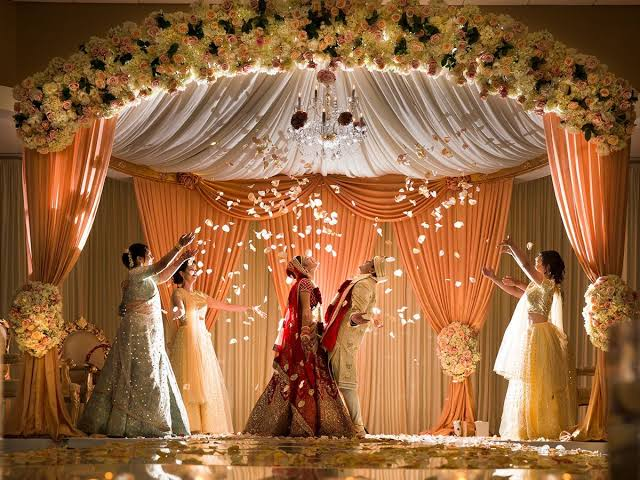
Weddings 2025 are all about new rituals, newer cultures and new aesthetics – the most unexpected shift in Indian celebrations. The 2025 weddings are not just upgraded but they are evolving. Designers, planners, families everyone is collectively rewriting how we celebrate love. And for the first time, the trends aren’t just about decor or outfits… They’re about values, perspectives, and modern identities finding a place in ancient traditions.
Welcome to the most interesting wedding year
1. The Rise of “Equality Rituals” Inspired by Cinema, Accepted by Society
Indian weddings have always belonged to families. But now, they belong to mindsets. After Rocky Aur Rani Ki Prem Kahani, a beautiful shift emerged: During the kanyadaan, the groom’s father also extends his hand symbolically saying: “You aren’t giving away your daughter… we are also giving our son.” * A ritual of balance. * A new cultural language. * A moment where both families meet as equals not givers and receivers.
Planners say this trend is quietly spreading across metros, and couples love the emotional depth it carries.
Next-gen rituals arriving in 2025 include: Dual-Parent Varmala Blessing
Both sets of parents place hands on the couple’s shoulders while they exchange garlands. *The “Promise Letter Exchange”* Before the pheras, couples read promises written for each other – short, real, raw. *The “Thank You Round”* Couples do a walk-through to personally thank elders before the wedding begins. *Tradition isn’t fading. It’s simply learning a new language.*
2. Intimate Court Weddings + After-Parties Are Becoming Aspirational
Earlier, court marriages were seen as a shortcut. In 2025, they’re becoming a statement. Couples are opting for: • A peaceful court marriage • Followed by a curated intimate celebration with handwritten vows, subtle décor, soft music, and close people *It’s minimalist, meaningful, and financially smart.* A trend driven by couples who want authenticity, not extravagance.
3. Destination Weddings: Cinematic Fever Hits India
Thanks to Bollywood & influencer culture, destination weddings have exploded not just internationally, but within India. After celeb weddings in forts, palaces, and European coastlines, couples are choosing: • Rajasthan forts (Kumbhalgarh, Neemrana, Khimsar) • Goa & Alibaug beachy vibes • Coorg tea-estate weddings • Jodhpur + Italy fusion themes • Backwater weddings in Alleppey on houseboats (yes, really) 2025 couples want cinema, not ceremonies.
Weddings 2025: New rituals. New cultures. New aesthetics. The most unexpected shift in Indian celebrations has begun. 2025 weddings aren’t just upgraded — they’re evolving. Designers, planners, and families are collectively rewriting how we celebrate love. And for the first time, trends go beyond décor and outfits… they reflect values, perspectives, and modern identities shaping ancient traditions.
Welcome to the most interesting wedding year yet.
1. The Rise of “Equality Rituals” — Inspired by Cinema, Accepted by Society
Weddings are no longer about ritual alone; they are about shared symbolism and emotional equality. A powerful social shift is emerging as families rethink how traditions are performed and what they represent.
Indian weddings have always belonged to families — now, they belong to mindsets. After Rocky Aur Rani Ki Prem Kahani, a beautiful cultural correction began…
2. Intimate Court Weddings + After-Parties Are Becoming Aspirational
The idea of a ‘simple wedding’ has transformed from compromise to luxury. Couples today are redefining intimacy as elegance, proving that less can indeed feel more. What was once seen as a shortcut is now a statement…
3. Destination Weddings: Cinematic Fever Takes Over India
The wedding venue is no longer a location — it’s a cinematic canvas. Bollywood, influencers, and visual storytelling have sparked a dramatic rise in destination-style celebrations. 2025 couples are choosing forts, beaches, and houseboats because they want cinema, not ceremony…
4. The New Fashion Shift
Bridal and groom fashion is entering its most expressive era yet. The focus has moved from trends to personal identity, with brides and grooms curating looks that speak their story.
Brides
Bridal fashion is returning to roots — but with modern emotion stitched in. Retail giants report the comeback of red and pink, while designers say personal expression still rules the palette.
Grooms
Grooms are stepping into the spotlight with more individuality than ever. Menswear has evolved from traditional uniformity to bold, minimal, modern silhouettes.
5. Decor Trends No One Saw Coming
Wedding décor is no longer just beautiful — it’s interactive, meaningful, and intelligent. From artistic mandaps to digital memory walls, 2025 décor is designed to tell a story.
Couples now want personalised installations, daylight aesthetics, and emotional experiences built into décor…
6. The Music Trend of the Year: Full Retro Revival
Nostalgia is back — and it’s leading every dance floor. 2025 weddings are rediscovering the emotional magic of old Bollywood melodies. Families are returning to classics because these songs understood relationships…
7. The Newest 2025 Wedding Shifts (Unheard, Unexpected, Unmissable)
Beyond décor and outfits, new micro-moments are redefining what celebration looks like. These emerging rituals are intimate, heartfelt, and deeply human. From ‘Unplugged Moments’ to ‘Audio Guestbooks,’ these trends are reshaping how couples preserve memories…
The 2025 Wedding Essence
Weddings this year are quieter in spirit yet richer in meaning. There is a conscious shift toward authenticity — celebrations that reflect the couple, not society’s expectations.
2025 weddings ask one simple question: “How do we celebrate love in a way that feels like us?”
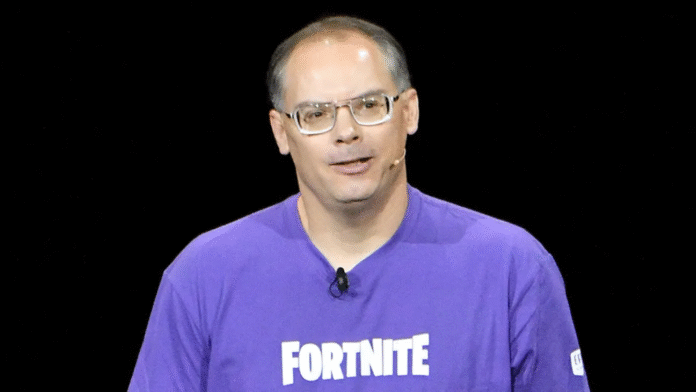
At a time when billionaire lifestyles often dominate headlines, Epic Games CEO Tim Sweeney stands out for a completely different reason – he’s using his fortune not to buy luxury toys, but to protect tens of thousands of acres of untouched nature. Since around 2008, Sweeney has quietly acquired over 50,000 acres of land across North Carolina, making him one of the state’s largest private landowners. But unlike commercial developers, his mission is clear: buy land to keep it wild.
Sweeney’s conservation efforts focus on regions known for rich biodiversity, including the Roan Highlands, McDowell County’s Foothills, and the Rocky River area. These landscapes are home to fragile ecosystems, rare species, and important water sources, all vulnerable to unchecked development.
By purchasing these lands, Sweeney ensures they remain protected from commercial exploitation. But he hasn’t stopped at buying. He has also donated thousands of acres to trusted conservation groups.
In 2016, he secured a 7,000-acre tract and donated a conservation easement to the U.S. Fish and Wildlife Service. In 2021, he pledged about 7,500 acres to the Southern Appalachian Highlands Conservancy. He has also transferred land to the state, helping expand Mount Mitchell State Park, home to the highest peak in the eastern United States.
As land prices surged post-2021, Sweeney shifted strategies. Instead of rapidly purchasing new parcels, he now focuses on holding large contiguous blocks of land until conservation groups or the state are ready to acquire them. He often sells at discounted prices, reinvesting the proceeds into future environmental protection.
Through this long-term, preservation-first approach, Tim Sweeney has become a powerful example of how wealth can restore, rather than exploit, the natural world proving that not all billionaires are chasing luxury; some are quietly protecting the planet.
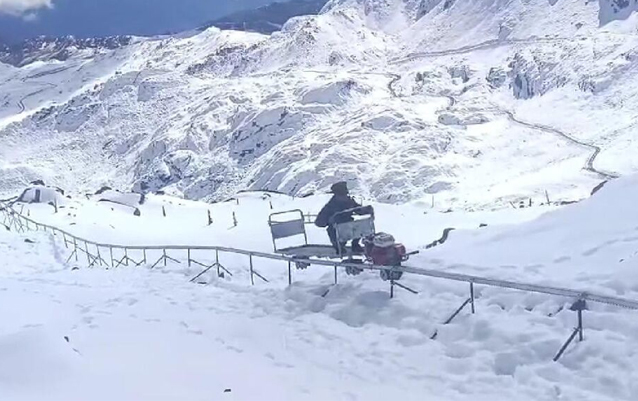
In a major leap for high-altitude logistics, the Indian Army’s Gajraj Corps has successfully operationalised an indigenous mono rail system at an elevation of 16,000 feet in the Kameng Himalayas of Arunachal Pradesh. The innovation marks a first-of-its-kind achievement in India, designed to support troops stationed in some of the country’s harshest and most remote terrain.
According to Defence spokesperson Lt Col Mahendra Rawat, the system was fully conceptualised, engineered, and deployed in-house, addressing one of the most persistent challenges in the eastern Himalayas delivering uninterrupted supplies to forward posts that remain cut off due to snow, landslides, vertical cliffs, and severe winter conditions.
A Reliable Lifeline in the Harshest Terrain The indigenous mono rail system can transport over 300 kg of load in a single run, enabling the movement of mission-critical supplies such as ammunition, rations, fuel, engineering material, and bulky equipment across steep gradients where mules, porters, and even specialised vehicles fail.
Operating day and night, the system can function with or without escort, and remains unaffected by hail, snow, storms, or freezing temperatures, Lt Col Rawat said. Its robust design ensures year-round logistical connectivity to posts with no other mode of access.
Critical for Troops and Casualty Evacuation Beyond transporting stores, the system has also shown tremendous potential for casualty evacuation. In terrains where helicopters cannot land due to turbulent winds or cloud cover and where foot evacuation is slow and risky the mono rail offers a safe, rapid alternative to move injured personnel to medical aid points.
Indigenous Innovation, Operational Impact Calling it a “testament to the ingenuity and adaptability” of the Gajraj Corps, Lt Col Rawat emphasised that the mono rail significantly enhances operational readiness and sustainability in isolated high-altitude posts. The initiative also highlights the Army’s commitment to indigenous, mission-focused solutions tailored for India’s extreme border environments.
With this deployment, the Indian Army has set a new benchmark in high-altitude logistics combining innovation, practicality, and resilience to support soldiers guarding the nation’s most challenging frontiers.
Stay young: Could learning a new language actually keep your brain younger? A major new study suggests the answer is yes. According to research published in Nature Aging, speaking multiple languages may significantly slow down brain ageing and the benefits grow with every additional language you know.
The large-scale study analysed data from over 80,000 adults aged 51 to 90 across 27 European countries.
The results were striking: people who spoke only one language were twice as likely to show signs of faster brain ageing compared to those who were multilingual. In contrast, individuals who spoke two or more languages were half as likely to experience accelerated ageing.
Researchers say these benefits come from something called cognitive reserve the brain’s ability to stay functional despite the natural decline that comes with age.
Dr Etu Ma’u, dementia researcher and lecturer at the University of Auckland, explains that the brain begins shrinking by about 5% per decade after the age of 40. However, mentally stimulating activities can strengthen cognitive reserve and help keep the brain resilient.
Speaking or learning multiple languages is one of the most powerful forms of mental stimulation. It constantly engages memory, attention, problem-solving, and processing speed essentially giving the brain a full workout. Dr Ma’u noted that each additional language provides even greater benefits, with bilinguals and multilinguals often showing brain ages that appear younger than their real age.
Monolinguals, on the other hand, showed higher levels of brain ageing, making them more vulnerable to long-term cognitive decline.
The study also reinforces that dementia develops due to cumulative damage over many years, underscoring the importance of early lifestyle habits. Dr Ma’u emphasised that promoting language learning whether in childhood or later in life can help keep the brain active, healthy, and resistant to ageing.
His message is clear: “It’s never too early or too late to learn a new language.”
Born in 1991 in a struggling family in Prayagraj, Uttar Pradesh, Alakh Pandey once feared mathematics and grew up in severe financial hardship. His father lost his job, and the family had to sell their house and scooter. But that same “average student” is today known across India as Physics Wallah, the founder of one of the fastest-growing edtech companies in the country.
In just nine years, Alakh has built a company valued at ₹30,000 crore, and his personal net worth has reached ₹14,510 crore—surpassing even Bollywood superstar Shah Rukh Khan, whose net worth stands at ₹12,490 crore.
Physics Wallah’s IPO opened on November 11 and closed today after being subscribed 1.92 times in three days.
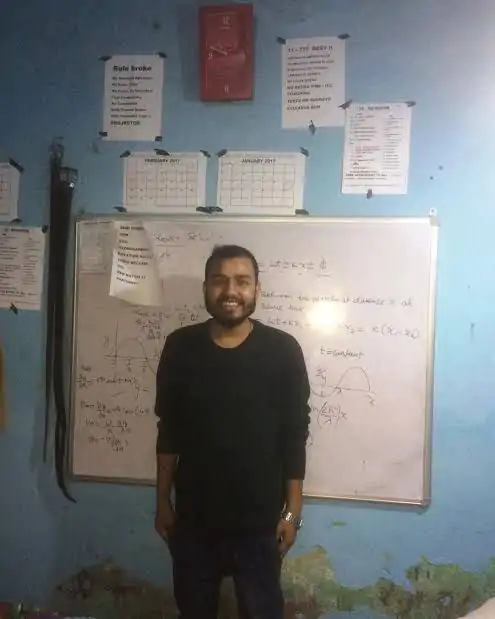
A photo from the launch of PW’s first Kota centre shows how far the company has come—today the firm stands among India’s biggest edtech success stories, valued at nearly ₹30,000 crore.
Key Highlights of the Physics Wallah IPO
Price Band: ₹103–₹109 per share
Fresh Issue: ₹3,100 crore
Offer for Sale (OFS): ₹380 crore
Promoter Selling: Alakh Pandey and Pratik Boob together offloading ₹190 crore via OFS
Promoter Stake: 40.31% combined
Lot Size: Minimum 137 shares (₹14,933 investment)
Maximum Retail Lots: 13 lots (₹1,94,129 investment)
Listing Date: November 18
The Inspiring Journey of Alakh Pandey: Chapter by Chapter
Chapter 1: Childhood in Poverty
Born in Prayagraj, Alakh’s early life was marked by financial crisis. His father lost his job, forcing the family to sell their home and move into a rented room. By Class 8, Alakh was teaching younger kids to support the family. He calls himself “average” in studies—with math being his biggest fear. A picture with his mother shows the emotional core of his story—he credits most of his success to her support.
Chapter 2: Dropping Out to Teach
Alakh joined college in Prayagraj but dropped out in his third year, saying he “lost interest in traditional education.” He began teaching physics at local coaching centres, often travelling with friends due to lack of money. In 2015, he launched a Facebook page—it failed.
Chapter 3: The First Rs 8,000 from YouTube
In 2016, he started a YouTube channel named Physics Wala, shooting and editing videos himself. After a year of consistent uploads, he earned his first ₹8,000 from YouTube. He quit his coaching job—without a plan B—to focus full-time on the channel. His unique, energetic teaching style made him a student favourite. In 2020, he launched the Physics Wallah app—35,000 users joined within days.
Behind him stood Pratik Maheshwari, an operations and startup expert who became a key force in building the PW empire.
Prime Minister Narendra Modi will visit Dediapada in Gujarat’s tribal-dominated Narmada district on Saturday to address a public gathering marking the birth anniversary of tribal icon Bhagwan Birsa Munda. Ahead of the event, he will also inspect the under-construction bullet train station in Surat to review progress on the Mumbai–Ahmedabad High-Speed Rail Corridor.
While the visit highlights major development initiatives worth over ₹9,700 crore for the region, it also brings attention to Dediapada’s unique USP — its blend of untouched natural beauty, rich tribal culture, and traditional livelihoods.
What Makes Dediapada Special?
A Natural Treasure
Shoolpaneshwar Wildlife Sanctuary: A biodiversity hotspot with dense forests, rare wildlife, and lush greenery.
Ninai & Rampan Waterfalls: Among Gujarat’s most scenic waterfalls, attracting nature lovers and adventure seekers.
Kevdi Dhodh (Saribar): A peaceful, picturesque site ideal for eco-tourism.
Culture Rooted in Tradition
Predominantly Tribal Region: Home to the Vasava and other tribal communities whose customs reflect a blend of Gujarat and Maharashtra’s cultural influences.
Folk Arts & Handicrafts: Woodwork, herbal products, and traditional crafts are integral to local identity.
Economy Connected to Nature
Agriculture-Based Livelihoods: Farming remains the backbone of the region.
Herbs & Wood Industries: Local industries that process forest-based herbs and wood continue to support the rural economy.
Spiritual Landmark
Kokam Hanumadada Mandir: A well-known temple in Kokam, frequently visited by pilgrims and locals.
PM Modi’s visit not only marks significant developmental announcements but also puts the spotlight on Dediapada’s untouched charm — a region where nature, culture, and tradition blend beautifully, making it one of Gujarat’s emerging eco-tourism and tribal heritage destinations.
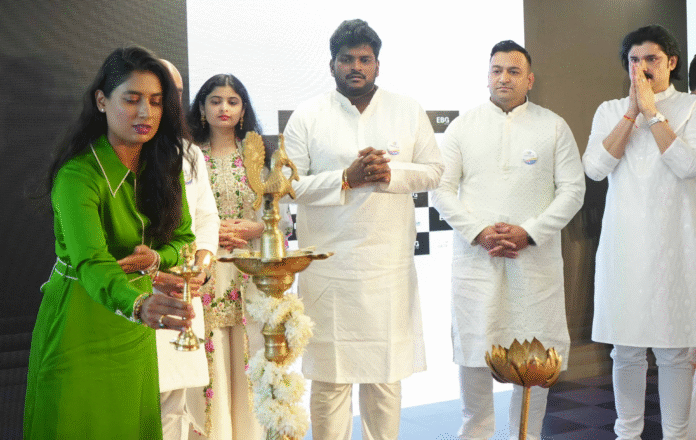
Marking Children’s Day—a day dedicated to the vision of India’s first Prime Minister, Pandit Jawaharlal Nehru—the EBG Group launched Children of Life, a flagship social-impact mission under the EBG Foundation. The initiative underscores EBG’s commitment to aligning business growth with deep, sustained community transformation.
As a symbolic beginning, ten student ambassadors attended the inauguration, representing the voices and aspirations the mission seeks to uplift. The initiative was officially unveiled in Hyderabad on Friday by former Indian Women’s Cricket Captain Mithali Raj.
Phase 1 Rollout Across Three Pilot Districts
In its first phase (2025), the initiative will operate across Hyderabad (urban), Wanaparthy (semi-rural) in Telangana, and Thiruvananthapuram (coastal) in Kerala. These districts were strategically chosen to represent diverse socio-economic contexts that can be replicated nationally.
Budget and Funding
The program’s first-year budget is ₹12 crore ($1.4 million), with a five-year outlay of ₹60 crore ($7 million). Funding will come from EBG Group CSR allocations, partner contributions, and public micro-donations through the Children of Life digital platform. Notably:
80% of total expenditure is earmarked for direct program delivery,
Less than 10% for administration, and
Less than 10% for audits and communication.
Built on Six Core Pillars
Dr. Irfan Khan, Chairman & Founder, EBG Group, said, “Launching Children of Life on Children’s Day marks a defining moment for our Group and our city. Hyderabad now houses a place where ideas become outcomes and compassion becomes action. Built on six fundamental pillars—Food, Shelter, Clothes, Health, Education, and Safety—the mission aims to fight child hunger, sustain learning, support physical and mental well-being, and safeguard children from neglect and abuse.”
Mithali Raj, unveiling the mission, said, “It is a privilege to unveil Children of Life on Children’s Day. A nation’s true progress lies in the opportunities it creates for its children. I applaud EBG Foundation for committing to measurable, long-term impact. With these young student ambassadors, we are reminded that when communities and corporates act together, every child’s dream can find a path.”
Impact Targets for the First 12 Months
Under its six pillars, the initiative will deliver:
Food: 1.5 million nutritious meals through school meal top-ups and weekend ration kits.
Shelter: Rapid repair of 200+ vulnerablehomes, identified via schools and ward offices.
Health: 12,000screenings (vision, dental, posture), plus follow-up care.
Education: Creation of 15studyrooms in government or community schools—digital-free spaces equipped with books, lighting, and mentors.
Safety: A dedicated child-protection helpdesk, POCSO SOP training in 300 schools, and integration with 1098/112 emergency systems.
Vision 2030: Long-Term Goals
By 2030, Children of Life aims to:
Support 100,000 children across 26 districts
Serve 20 million meals
Conduct 200,000 health screenings
Build 1,000 study rooms
Certify 2,000 schools under the Six-Star School Safety Framework
Progress will be transparently published in annual public impact reports by the EBG Foundation.
Implementation & Accountability
The program will be steered by the EBG Foundation’s central program office in Hyderabad and executed in partnership with verified district NGOs and schools under MoUs with local authorities. A rigorous monitoring system—including quarterly audits, a public dashboard, and third-party verifications—will ensure transparency and accountability.
About Children of Life
Children of Life is a non-commercial, evidence-based initiative dedicated to improving the lives of children born in India after 2010. Supported by CSR contributions from EBG Group companies and a nationwide partner network, it operates a unified referral and support system across states, ensuring measurable, transparent, and accountable impact at every step