International Men’s Day will be observed on November 19, a day dedicated to recognising the contributions men make to their families, communities and society. It also aims to raise awareness about issues affecting the health and well-being of men and boys.
Theme of International Men’s Day 2025
The theme for 2025 is “Celebrating Men and Boys.”
This theme highlights inspiring stories of men and boys, draws attention to the challenges they face, and encourages efforts that promote their overall health, development and quality of life. The observance also supports initiatives aimed at strengthening gender relations and acknowledging the vital roles men and boys play in society.
Why International Men’s Day Is Celebrated
The idea of a special day for men has been discussed since the 1960s. Many believed that just as International Women’s Day is celebrated on March 8, there should also be a global day to recognise men’s contributions and concerns.
International Men’s Day gained global recognition in 1999, when Dr. Jerome Teelucksingh from Trinidad and Tobago revived the idea and selected November 19 as the date for the celebration.
Link to International Children’s Day
International Children’s Day is observed a day after, on November 20. The official website notes that celebrating men on November 19 and children on November 20 creates a meaningful opportunity to honour their bond and contributions within families.
Significance
Early advocates of International Men’s Day have emphasised that the observance is not intended to compete with International Women’s Day. Instead, its purpose is to highlight men’s lived experiences, acknowledge their contributions, and bring attention to issues that affect them socially, emotionally and physically.
Indira Gandhi, known as the “Iron Lady of India,” was one of the most powerful and transformative leaders in Indian history. On her birth anniversary, celebrated on November 19, we reflect on five of her most significant decisions that reshaped the nation’s future.
Indira Gandhi Jayanti 2025 Date: Know Her 5 Strong Decisions That Shaped India
Indira Gandhi, born on November 19, 1917, served as India’s Prime Minister for an unprecedented 15 years. Her legacy is marked by bold decisions that significantly impacted India’s political, economic, and social landscape. Despite facing immense challenges and controversies, she always placed the nation’s interest above all.
On the occasion of Indira Gandhi Jayanti 2025, here are five powerful decisions that defined her leadership and shaped India’s trajectory:
1. Nationalisation of Banks
One of Indira Gandhi’s most landmark decisions was the nationalisation of 14 major banks in 1969. This move aimed at making banking services accessible to the poor, farmers, and small businesses, areas previously neglected by private banks. By bringing banking into the hands of the government, she ensured that credit and financial services reached the common people, helping foster economic growth and reducing inequality.
2. The Green Revolution
Indira Gandhi’s support for the Green Revolution was a game-changer for India’s agricultural sector. Introduced in the late 1960s and early 1970s, the Green Revolution involved the adoption of high-yielding varieties of seeds, improved irrigation techniques, and modern farming technologies. As a result, India achieved self-sufficiency in food production, reducing its reliance on foreign aid and laying the foundation for food security in the country.
3. Decisive Role in the Bangladesh Liberation War
Indira Gandhi’s leadership during the 1971 Bangladesh Liberation War remains one of her most defining moments. With unwavering resolve, she supported East Pakistan’s fight for independence, leading to the creation of Bangladesh. Her diplomatic and military strategies, along with her strong international alliances, significantly boosted India’s stature on the world stage. The success of the war cemented her reputation as a decisive and formidable leader.
4. Successful Test of Smiling Buddha
In 1974, Indira Gandhi made the bold decision to conduct India’s first nuclear test, codenamed “Smiling Buddha,” in Pokhran, Rajasthan. This move showcased India’s self-reliance in nuclear technology and strengthened its national security. The test made India the sixth country to possess nuclear capabilities, sending a clear message about India’s growing global influence and defense strength.
5. Sikkim’s Merger with India
Indira Gandhi played a key role in the merger of Sikkim with India in 1975, making it the 22nd state of the Indian Union. Her decision not only strengthened India’s territorial integrity but also helped solidify its position in the strategically important region of the Himalayas. The merger marked a significant step in India’s post-independence statehood expansion.
Conclusion
Indira Gandhi’s strong, courageous leadership and her ability to make tough decisions in the face of adversity have earned her a place as one of India’s most influential leaders. On Indira Gandhi Jayanti 2025, her legacy continues to inspire generations, and her decisions remain integral to India’s political and economic foundation.
The Raulane Festival is an ancient winter tradition celebrated in the Kinnaur district of Himachal Pradesh. Known for its spiritual depth and distinctive rituals, the festival reflects the region’s deep-rooted Himalayan beliefs and strong sense of community bonding.
Origins of the Festival
The Raulane tradition centres on the worship of celestial beings known as Saunis. These divine entities are believed to protect villagers during the harsh winter months by offering warmth, guidance, and blessings. The festival embodies Kinnaur’s enduring connection with folklore that blends nature, spirituality, and seasonal cycles.
Symbolic Rituals and Ceremony
A key feature of the festival is the symbolic union of two men who represent a divine couple. They are designated as the Raula (groom) and the Raulane (bride). Dressed in heavy woollen garments, ornaments, and distinctive face coverings, they act as vessels of the Saunis. Their slow, meditative procession through the Nagin Narayan Temple creates a sacred ambience that invites the entire village to participate.
Cultural Importance in Kinnaur
The Raulane Festival serves as a collective expression of devotion, gratitude, and cultural pride. It showcases how local communities preserve ancestral customs in a rapidly changing world. The ritual dance, temple gatherings, and shared reverence reflect the cultural unity of Kinnaur and its commitment to maintaining its spiritual heritage.
Facts
The Raulane Festival is celebrated in the Kinnaurdistrict of Himachal Pradesh.
It honours celestial protectors known as Saunis.
The ritual involves a symbolic union of two men acting as Raula and Raulane.
Celebrations are held at the Nagin Narayan Temple, featuring traditional robes and masks.
Social Media Interest and Concerns
Recent images circulating online have drawn widespread attention, prompting local residents to urge visitors to respect the sacred nature of the festival. Many community members emphasize mindful travel to ensure that cultural sanctity is preserved as the festival gains populari
Beginning this academic session, thousands of students across Uttar Pradesh will walk into school lighter literally, thanks to the state’s bold new rule: 10 Bagless Days. And no, it’s not a holiday. It’s a completely new way of learning.
Saturdays Just Got a Makeover
Forget sleepy weekend classes. The 3rd and 4th Saturdays, plus all Saturdays in December are being turned into activity zones, packed with clubs, sports, experiments, workshops, and real-world exploration. Think: classrooms without textbooks, but full of energy.
A New Education Era: ‘Anandam’ Under SCERT’s ‘Anandam’ (Joyful Learning) guidelines, students from classes 6 to 8 will learn by doing building, creating, exploring, touching, questioning. No rote learning. No heavy bags. No stress. Just pure curiosity. Where the Classroom Ends, the Real Lesson Begins Want to know how a police station works? Ever wondered what goes on behind the scenes in a bakery? Curious how a weaver turns thread into art? Bagless Days will take students into the real world, through educational trips and interactions that build confidence and practical skill.
More Than Marks: Learning for Life Director General of School Education Monika Rani says this is about helping kids:
Think independently
Observe like young scientists
Analyse real-life problems
Respect skilled work
Connect with their communities In short, they’re not just studying for exams, they’re preparing for life.
Discovering ‘Vocal for Local’ First-Hand Students will meet local artisans and entrepreneurs, learning how everyday crafts and businesses power the idea of a self-reliant India. From pottery to ODOP industry visits, these interactions are set to spark creativity and pride.
34 Activities, Endless Possibilities The Anandam module lists 34 diverse and exciting activities, grouped into:
Science, Tech & Environment
Local Industries & Public Services
History, Art & Culture Each day offers something new, something students won’t find in textbooks.
Inclusive, Accessible & Fun for All Special educators will ensure children with special needs fully participate too. Schools have been instructed to prep labs, equipment, projectors, first-aid kits, and even community tie-ups.
Parents, Get Ready Teachers are also briefing parents on why Bagless Days matter and how these experiences could help shape future innovators, leaders, and creators.
UP’s Bagless Days aren’t about carrying less
They’re about learning more. A lighter bag may just be the heaviest change the education system has seen in years.
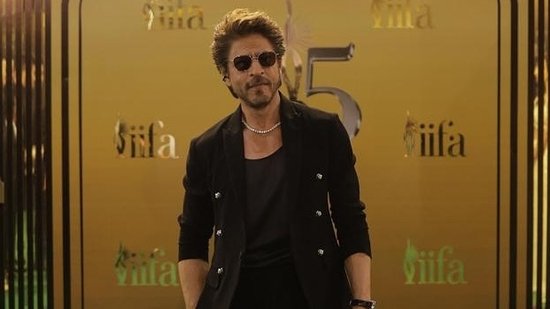
Bollywood’s King Khan has added yet another milestone to his legendary journey and this time, it’s etched into the skyline of Dubai. In a heart-warming moment that sent fans into a frenzy, Shah Rukh Khan shared a deeply emotional note after a commercial tower in Dubai was officially named after him.
The tower, called “Shahrukhz”, is set to be completed in 2029 and will proudly feature a statue of SRK in his iconic open-arms pose at its entrance, welcoming the world just the way he has welcomed generations of fans into his cinematic universe.
Taking to social media, the superstar reflected on this honour with humility and gratitude. “It is humbling and deeply touching to have a landmark in Dubai carry my name and to be an integral part of the cityscape forever. Dubai has always been a special place for me a city that celebrates dreams, ambition, and possibility,” he wrote. His words echoed the sentiment of a man who has built a global empire on nothing but resilience, hard work, and pure magic.
A collaboration with Danube Properties, the iconic tower symbolizes what SRK stands for: aspiration, belief, and timeless excellence. As he beautifully summed it up, Shahrukhz is “a symbol of how far belief and hard work can take you.”
While this honour immortalises him in Dubai’s architectural history, fans back home are equally excited for what’s next on screen. Shah Rukh Khan is gearing up for his much-awaited film “King”, directed by Siddharth Anand. Scheduled for a 2026 release, the film also stars Deepika Padukone and Suhana Khan, making it one of the most anticipated cinematic events of the decade.
With a tower soaring in Dubai and a film rising on the horizon, King Khan continues to rule not just Bollywood, but hearts across the world.
Shahrukhz by Danube Shahrukhz (styled as Shahrukhz by Danube) is being promoted as a premium commercial and lifestyle tower on Sheikh Zayed Road, Dubai’s main business artery. Reports list it as a 55–56 storey development with more than one million sq ft of built-up space, a helipad, over 40 amenities (sky pool, business lounges, valet, etc.), and a life-size statue of Shah Rukh Khan in his signature open-arms pose at the entrance. The builder’s marketing and press coverage place the finish date around 2029, a roughly three-to-four-year timeline.
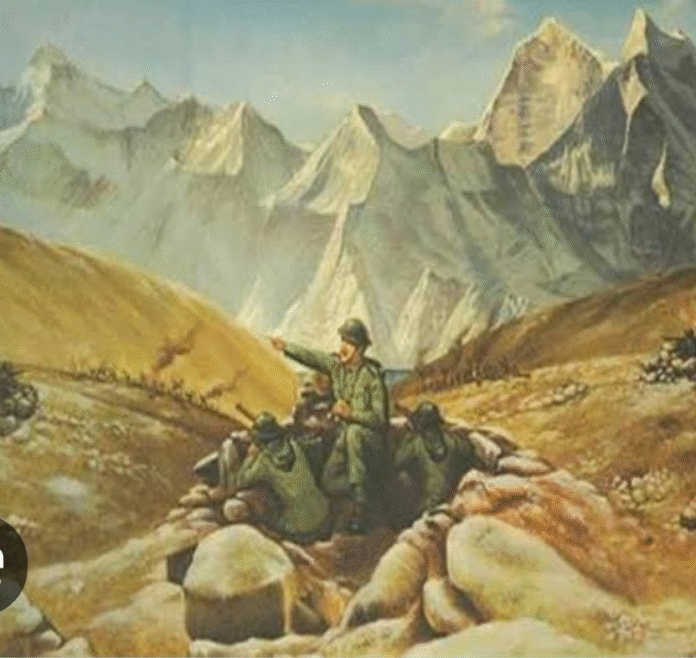
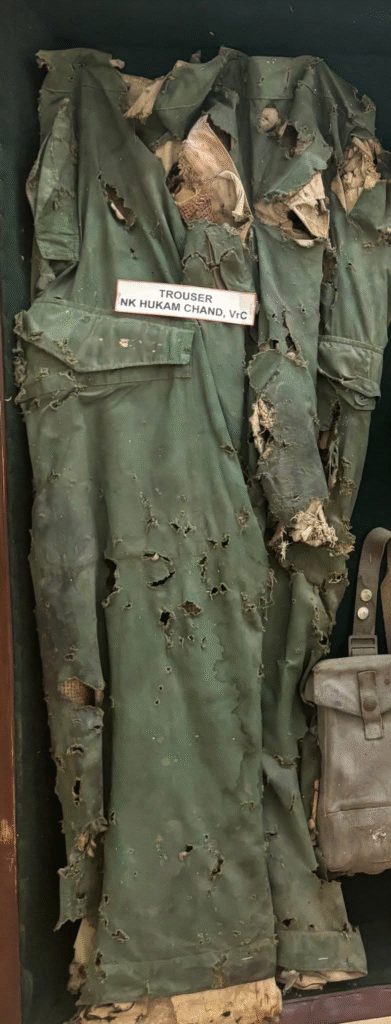
Param Vir Major Shaitan Singh : The 1962 India–China War remains etched in the nation’s memory. India lost many brave soldiers, yet their extraordinary courage created legends that continue to inspire generations. One such immortal story is that of Param Vir Chakra awardee Major Shaitan Singh, whose fearlessness at Rezang La (Chushul sector, Ladakh) has become a symbol of unmatched bravery.
Major Shaitan Singh, of ‘C’ Company, 13 Kumaon Battalion, was born on 1 December 1924 in Jodhpur district, Rajasthan. At only 37 years old, he sacrificed his life for the nation.
The Battle of Rezang La — 18 November 1962
On the morning of 18 November 1962, Major Shaitan Singh and his 120 men were positioned at a freezing altitude of 16,000 feet. The Chinese army—more than 1,200 soldiers—launched a fierce attack on the post. They believed the Indian troops, poorly equipped and unfamiliar with extreme snow conditions, would be easy to defeat.
But what the Chinese forces underestimated was the unbreakable spirit of the Indian soldiers.
As the assault intensified, Major Shaitan Singh requested reinforcements but was ordered to abandon the post. He refused. Addressing his men, he told them anyone could retreat if they wished. Not a single soldier stepped back. They chose to fight beside their commander to the very end.
What followed was one of the most heroic last stands in military history. Surrounded by snow-clad peaks, the battlefield echoed with explosions, gunfire, and the roar of courage. The Indian soldiers fought till their last breath, inflicting massive casualties on the enemy. Despite being gravely wounded, Major Shaitan Singh continued fighting. His comrades dragged him behind a boulder to shield him, but the Major insisted on continuing the battle. He tied the trigger of his machine gun to a rope, using it to fire at advancing Chinese troops even in his weakened state.
Against overwhelming odds, 120 Indian soldiers eliminated an estimated 1,200 Chinese soldiers, turning Rezang La into the Chinese army’s deadliest loss in the entire 1962 conflict.
Discovery After the Battle
After the war ceased, search parties began recovering bodies in the snow-covered landscape. What they discovered stunned everyone. Major Shaitan Singh’s body was found frozen under layers of snow—
A rope tied to his leg
The other end tied to the trigger of his machine gun
Nearby lay the bodies of his brave soldiers, each in the position they had died fighting.
Although India lost the broader war, China suffered its heaviest casualties at Rezang La—a result of Major Shaitan Singh’s leadership and the soldiers’ unwavering courage.
Honoring an Immortal Hero
For his supreme sacrifice, extraordinary leadership, and unmatched valor, Major Shaitan Singh was posthumously awarded the Param Vir Chakra, India’s highest military decoration.
He was born to Lieutenant Colonel Bahadur Hem Singh OBI and Jawahar Kanwar. His father, Lt. Col. Hem Singh, had joined the Jodhpur State Forces as a Sowar and even participated in World War I (1914)—a legacy of service that Major Shaitan Singh carried forward with glory.
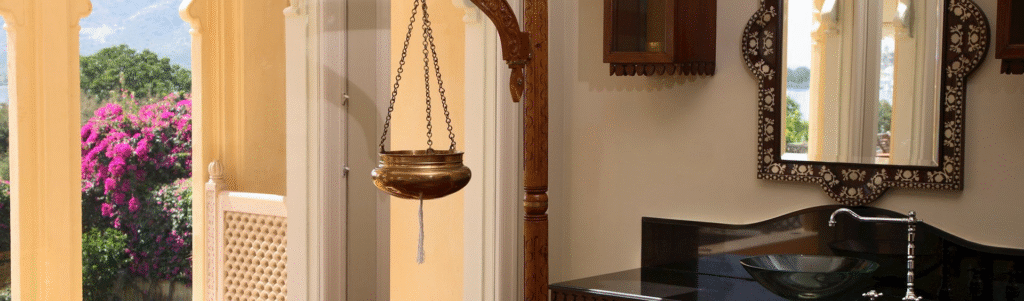
Sleep Tourism: In today’s fast-paced world, stress and anxiety have pushed many people toward a new kind of escape—sleep tourism. Instead of chasing packed itineraries, travellers are now seeking destinations where they can simply rest, disconnect, and enjoy uninterrupted sleep. This trend is rapidly gaining popularity across India, and Pushkar has already taken the lead with dedicated tent accommodations designed for restful retreats.
Experts say that if similar facilities are promoted across the Aravalli mountain range in Ajmer, tourism numbers and revenue could increase significantly.
What Is Sleep Tourism?
Sleep tourism focuses on helping people rest in serene natural surroundings. Resorts and tourism companies are offering quiet, scenic stays—whether in tents, homestays, or luxury retreats—near seas, forests, snow-capped valleys, rivers, and waterfalls. The idea is simple: travel to sleep better.
Pushkar–Ajmer: A Natural Sleep Tourism Hub
Pushkar and Ajmer together attract over 1.5 crore tourists every year. Ajmer is home to Soniji Ki Nasiyan, the shrine of Khwaja Moinuddin Hasan Chishti, and Nareli Tirtha. Pushkar draws visitors to the Prajapita Brahma Temple, Pushkar Sarovar, the Savitri Temple, and the surrounding dunes.
For foreign tourists, Pushkar is a magnet—especially those from Germany, Italy, France, England, Russia, Israel, Japan, South Korea, Singapore, Australia, New Zealand, and Sweden. Many also come to study Indian languages and immerse themselves in Sanatan traditions. The famous Bethakhabad, a popular spot among Israeli visitors, is located here.
Aravalli Range: Perfect for Nature-Based Sleep Retreats
The Aravalli range—one of the world’s oldest mountain systems—offers breathtaking views. The serpentine hills are ideal for:
nature walks
mountaineering
campfires
monsoon cloud-viewing
Ajmer’s Kazipura area will soon feature a leopard safari, adding another major attraction.
India’s Sleep Tourism Hotspots
(Percentage of travellers choosing these locations)
Goa, Shimla, Kashmir: 80%
Pachmarhi, Rishikesh, Lonavala: 50%
Darjeeling, Siliguri, Mussoorie: 55%
Wayanad, Kutch, Thrissur, Shillong: 45%
Dehradun, Aizawl, Mount Abu: 35%
Why Tourism Is Growing
20% travellers come specifically for restful sleep
45% come for sightseeing
25% for natural scenery
15% for shopping and adventure
Potential Benefits for Ajmer–Pushkar
Peaceful sleep retreats in the Aravalli hills
Luxury homestay experiences
Yoga, meditation & Ayurvedic therapy packages
Dune stays in Makkadwali–Hokra
Misty mornings at Ajmer Hills
Nature escapes at Taragarh and Nag Pahar
Quiet retreats away from city bustle near Nareli
Pushkar has already seen a rise in tent stays designed for restful sleep. Identifying more such secluded spots—especially around Nag Pahar—can significantly boost eco- and wellness tourism.
Expert Opinions
Rajendra Singh Rathore, Patron, Pushkar Hotel Association: “Sleep tourism has grown by 25% in India. Ajmer and Pushkar are already major tourist hubs. Better infrastructure will attract even more visitors.”
Prof. Shiv Prasad, Head, Department of Commerce & Management, Madras University: “Along with sightseeing, more travellers now prefer nature-surrounded stays for rest and relaxation. Ajmer–Pushkar is perfectly positioned for this trend.”
Jaipur: On 18 November 1727, Sawai Jai Singh II placed the first stone of a city that would grow into one of the world’s most beloved urban marvels. At the Gangapol Gate, in the northeast corner, amidst Vedic chants and astronomical calculations, Jaipur took its first breath. It wasn’t just built but was conceived, with the precision of the nine planets, the blessing of ancient scriptures, and the foresight of a king who imagined a city far ahead of its time.
Today, as Jaipur turns 298, the Pink City isn’t just celebrating a birthday—it’s celebrating a living legacy of mantra, tantra, and yantra, woven into its very foundation.
A City Guarded by the Cosmos
The walled city—Jaipur’s beating, historic heart—was designed like no other. Ten mighty gates still stand like guardians of time:
Gangapol, Joravarsingh, Surajpol, Ghatgate, Sanganeri, Newgate, Ajmeri, Chandpol, Samratgate, and Galtagate—each watching a different direction, each acting as a sentinel.
Centuries ago, these gates ensured Jaipur could sense danger before it arrived. Today, they stand as testaments to an urban plan that was both spiritual and scientific.
Choti Kashi: Where Every Morning Begins With a Prayer
The walled city is often called Choti Kashi, and for good reason. Hundreds of temples—big and small—lie within its grid. At sunrise, the air trembles with mantras, conch shells, temple bells, and the rhythm of age-old rituals.
To this day, the spiritual framework of the city is intact. The belief is simple: “Where mantras flow, strength grows.”
Tantra: A 298-Year-Old Urban Masterpiece
At 298, Jaipur remains one of India’s strongest urban settlements. It still surprises engineers—after heavy showers, water vanishes within minutes, thanks to its ingenious 18th-century drainage design.
Even experts say that if modern vehicular traffic is kept out of the walled city, traffic jams would disappear instantly. That’s how efficient the original blueprint was.
This is tantra in its truest sense—not rituals, but living, breathing heritage engineering.
Yantra: Jaipur’s Scientific Soul
Near Chandra Mahal sits the majestic Samrat Yantra of Jantar Mantar—Jaipur’s pride and one of the world’s most advanced astronomical instruments.
It doesn’t just tell time with near-perfect accuracy; it can predict the weather, the arrival of monsoons, and the intensity of rainfall—a 298-year-old meteorological genius still working flawlessly.
Rs1084 Rupees and a Dream
The foundation ceremony—conducted under the guidance of renowned astronomer Pandit Jagannath Samrat—cost precisely ₹1084 from the Amer treasury.
To honour him, Jai Singh built the Samrat Gate in Brahmapuri and gifted him a mansion. Every brick of Jaipur remembers this relationship between king and scholar—between vision and wisdom.
The Three Chaupars: Three Goddesses Watching Over Jaipur
Jaipur’s grand chaupars weren’t just squares—they were symbols.
Ramganj Chaupar – Mahakali’s Seat of Power
Warriors were settled here to defend the city.
Badi Chaupar – Mahalakshmi’s Abode
Home to wealthy traders and the world-famous Johari Bazaar.
Choti Chaupar – Saraswati’s Haven
Where scholars, Brahmins, and thinkers thrived in the old settlement of Brahmapuri.
Each square was not merely urban planning—it was a philosophical arch, designed to balance power, prosperity, and knowledge.
A City that Inspired Literature and Awe
In 1946, Sanskrit scholar Bhatt Mathuranath Shastri penned Jaipurvaibhavam, a tribute to Jaipur’s glory, culture, and royal heritage.
Historian Prof. Govind Shankar Sharma cites an old text Vachan Praman, which declared:
“Jaisau pur sansar me nahin, jag me aaj.” There is no city like Jaipur in the world today.
Nearly three centuries later, those words still ring true.
The Thinkers Behind the Pink City
Scholars and planners who shaped Jaipur include: Rajguru Ratnakar Paundrik, Pandit Jagannath Samrat, Diwan Anand Ram, poet Atmaram, and architect Vidyadhar Bhattacharya—the genius who gave Jaipur its famed nine-square (Chaukadi) layout.
Jaipur’s geography was imagined like a sacred landscape. Even the City Palace was positioned as though the surrounding chaukadi were mountains.
For harmony and rainfall, a Jal Mahal dedicated to Varuna, the god of water, was built according to Vastu principles.
298 Years Later…
Jaipur isn’t just a city you visit. It’s a city that remembers, recites, measures, predicts, and protects. A city where spirituality and science walk hand in hand.
At 298, Jaipur stands tall—not as a relic of the past, but as a masterpiece still teaching the world how cities should be built.
Happy 298th, Jaipur. May the mantras keep flowing, the yantras keep ticking, and the tantra keep guiding the Pink City for centuries to come.
Jaipur Foundation Day 2025: Today marks the Foundation Day of Jaipur, the capital of Rajasthan. The city was founded on 18 November 1727 by Maharaja Sawai Jai Singh II, along with the famed architect Vidyadhar Bhattacharya. Planned with remarkable precision using principles of architecture, astronomy, religion, and urban design, Jaipur is celebrated as the first extensively planned city of India.
What many people don’t know is that Jaipur was originally painted white—a color symbolising peace. It was only in 1876, during the visit of the Prince of Wales (later King Edward VII), that the city was painted pink, the color of hospitality. Since then, it has been known worldwide as the Pink City.
Over nearly three centuries, Jaipur has seen the construction of iconic structures like Jantar Mantar, Hawa Mahal, and Ram Niwas Bagh, followed by the arrival of trains, motor vehicles, and the gradual development of its now-famous art, culture, and bustling bazaars.
A Century of Transformation
In its first hundred years, Jaipur evolved into a center of science, arts, architecture, and governance. The next century brought even more growth—political, cultural, and infrastructural—shaping Jaipur into one of the most important cities of the Indian subcontinent.
Jaipur today retains its deep cultural roots while embracing modernity. Recognized globally as a UNESCO World Heritage City, it continues to attract millions of visitors every year.
Chhoti Kashi: The City of Temples
With hundreds of temples, Jaipur is also known as Chhoti Kashi. The sound of bells and devotional chants fills the city each morning and evening. Among all temples, Govind Dev Ji Temple remains the spiritual heart, drawing thousands of devotees from India and abroad daily.
Even world leaders have been captivated by Jaipur’s charm—French President Emmanuel Macron, during his January 2024 visit with Prime Minister Narendra Modi, experienced the city’s vibrant culture firsthand.
Jaipur’s 29 Historic Gates
One of Jaipur’s most remarkable features is its 29 historic gates—
13 gates inside the City Palace
16 gates in the outer fortifications
The city’s foundation stone was laid at Gangapol Gate in 1727, while the New Gate is the most recent addition.
Below are 10 of the most prominent gates, along with their original names:
Current Name
Original Name
Gangapol (Bas Badanpura)
—
Tripolia Gate
Nrisinha Pol
Ajmeri Gate
Krishna Pol
Jorawar Singh Gate
Dhruv Pol
Sanganeri Gate
Shiv Pol
Brahmapuri Gate
Brahma Pol
Chandpol Gate
Chandra Pol
Ghat Gate
Ram Pol
Galta Gate
—
Amer Valley Gate
—
These gates are not just entry points—they are chapters of Jaipur’s living history, each bearing unique carvings, colors, and stories.
Naturopathy Day is observed in India every year on 18 November to promote a healthy lifestyle through the drugless, holistic system of medicine known as Naturopathy. The Ministry of AYUSH (Ayurveda, Yoga & Naturopathy, Unani, Siddha and Homeopathy), Government of India, officially declared this day in 2018 to raise awareness about natural healing practices and overall well-being.
History of Naturopathy Day
The observance is rooted in a significant historical moment. On 18 November 1945, Mahatma Gandhi became the lifelong Chairman of the All India Nature Cure Foundation Trust. He aimed to make the benefits of Nature Cure accessible to people from all walks of life. Gandhiji is widely regarded as the founding figure of Naturopathy in India, as it was largely due to his advocacy that this European-origin practice gained popularity nationwide.
Naturopathy Day 2025 Theme
“Losing weight naturally through Naturopathy”
The official theme for Naturopathy Day 2025 highlights the growing concern of obesity and promotes safe, sustainable weight loss through natural methods. This year’s theme emphasizes:
Oillessdiet
Regular exercise and physical activity
Traditional naturopathy therapies
Healthy, habits-based lifestyle changes
The campaign focuses on making weight management achievable without drugs, chemicals, or extreme diets, staying true to the principle of healing through nature.
Key Events & Activities Across India
1. Ni-Sar-Gam – Healing & Wellness Festival 2025 (Pune)
The National Institute of Naturopathy (NIN), Pune, is celebrating the 8th Naturopathy Day with a four-day mega festival titled “Ni-Sar-Gam – Healing & Wellness Festival 2025”, held from November 15–18.
Significance of Naturopathy Day
Naturopathy Day aims to inspire people to adopt:
Natural diets
Yoga and movement
Mud therapy, hydrotherapy, and nature-based treatments
Stress reduction practices
Preventive healthcare
As lifestyle diseases rise in India, this day serves as a reminder of the power of nature-aligned living.