The perks, the power, the privilege and the prestige behind the peepal-leaf medallion. The Bharat Ratna isn’t just an award, it’s India’s final word in honour. A recognition reserved for individuals whose contributions reshape the nation’s destiny. But what actually changes in the life of someone who receives this legendary honour? The answer is more fascinating than most people imagine.
A Lifetime of Exceptional Privileges The Bharat Ratna brings with it a range of distinguished benefits designed to reflect the magnitude of the awardee’s service.
1. Lifetime Income Tax Exemption A gesture of gratitude: awardees are exempt from paying income tax for life.
2. Complimentary First-Class Air Travel They can fly Air India First Class anywhere in the country both officially and personally without paying a rupee.
3. Z-Category Security One of the highest protection levels in India, ensuring round-the-clock safety.
4. State Guest Status Across states, they are treated like official guests with premium accommodation, transport, and hospitality arranged by the government.
5. Diplomatic Courtesy Abroad In select situations, they receive diplomatic privileges while travelling internationally, reinforcing their stature as national icons.
6. Parliamentary Invitations Although not MPs, they are invited as guests of honour during special sessions and major national events.
7. Presence at National Ceremonies From Republic Day parades to Independence Day celebrations, their seats are reserved.
A Medal Rich With Meaning Designed by master artist Nandalal Bose, the bronze medal shaped like a peepal leaf features a radiant Sun and the words “Bharat Ratna.” The reverse bears the State Emblem and “Satyameva Jayate.”
More Than an Award, It’s Immortality Established in 1954 and expanded in 2011 to include “any field of human endeavour,” the Bharat Ratna is India’s eternal salute to greatness. Privileges fade. Legacy doesn’t. The Bharat Ratna writes your name into India’s history forever.
India didn’t just build a payments app, it built a global financial phenomenon. The images say it perfectly: UPI is not convenience. It’s economic freedom. And today, that freedom is shaking up the world’s biggest financial systems.
From Local Innovation to Global Benchmark Unified Payments Interface (UPI), still young compared to traditional systems like Visa, has become the fastest-growing real-time payment ecosystem on the planet. While Visa has spent more than five decades dominating global transactions, a young Indian innovation has outpaced it with:
lightning-fast transfers
zero fees
absolute accessibility
mass adoption across rural and urban India UPI made India a “first-class nation” in digital finance, a line highlighted powerfully in your images.
The World Is Now Using What India Built What began in India is now moving across borders. Countries like UAE, Singapore, France, Bhutan and Sri Lanka have officially embraced UPI, allowing Indians to pay instantly abroad using the same QR code system they use at home. When India travels, UPI travels with it. This isn’t just technology, it’s soft power.
UPI vs Visa: A Battle of Eras Another point from your images: A 20-year-old UPI is giving a tough fight to a 55-year-old Visa. Why? Because UPI solved what card companies never could:
No swiping.
No hidden charges.
No minimum balance.
No waiting. A roadside vendor and a luxury mall now operate on the same payment level. That’s not convenience, that’s equality.
The Real Success? Freedom. UPI didn’t make payments easier. It made them fairer. It gave financial independence to people who never had digital access. It connected villages, empowered small businesses, and changed how India spends, saves, and grows.
UPI is India’s boldest idea – and now the world’s favorite one.
India is home to some truly jaw-dropping world-record places. Beyond the commonly known ones, here are some of the most extraordinary and newly added records that highlight India’s diversity, spirit, and innovation.
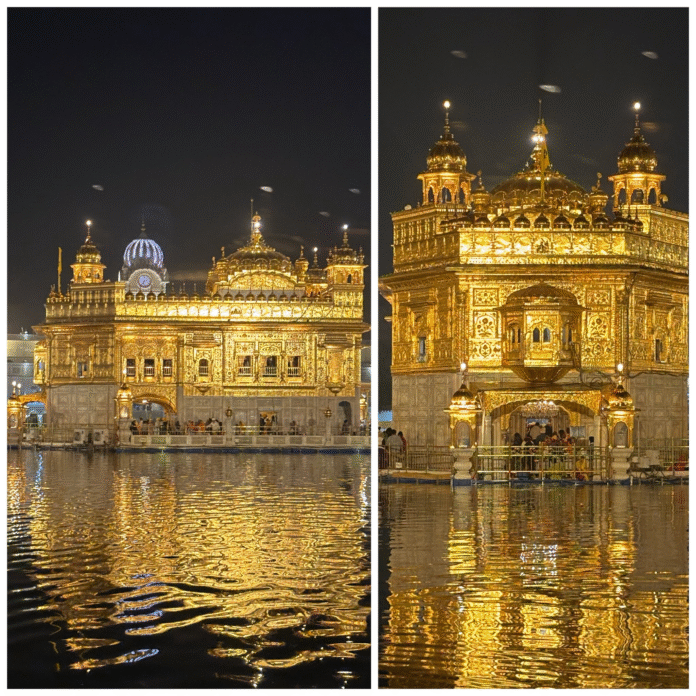
1. Golden Temple, Amritsar – World’s Largest Free Kitchen The langar at the Harmandir Sahib can serve over 100,000 free meals a day. Its massive scale is a tribute to Sikh seva (service) and community spirit.
2. Bir Billing, Himachal Pradesh – One of the World’s Highest Paragliding Sites The Himalayan terrain and altitude make Bir Billing a paragliding paradise, offering adventurous flyers some of the best high-altitude views in the world.
3. Hanle, Ladakh – Highest Astronomical Observatory The Indian Astronomical Observatory in Hanle is roughly 4,250 m above sea level. It hosts the MACE telescope, Asia’s largest imaging Cherenkov telescope, under dark, pristine skies a top spot for gamma-ray research.
4. Mawsynram, Meghalaya – Wettest Place on Earth Receiving nearly 11,872 mm of rain annually on average, Mawsynram competes closely with its neighbor Cherrapunji to be the planet’s rainiest location.
5. Keibul Lamjao, Manipur – World’s Only Floating National Park Situated on Loktak Lake, this park is built on floating “phumdi” (masses of vegetation). It’s the only national park of its kind in the world and is home to the endangered Sangai deer, also called the “dancing deer.”
6. Chenab Rail Bridge, Jammu & Kashmir – World’s Highest Railway Bridge Standing 359 m above the Chenab River, this impressive steel-arch bridge is not only a marvel of engineering but also a record-holder for its height.
7. Mig La Pass, Ladakh – Highest Motorable Road In a recent feat, the Border Roads Organisation built a road at 19,400 ft (5,913 m) at Mig La Pass, making it the highest motorable pass in the world.
8. Chail, Himachal Pradesh – Highest Cricket Ground The Chail cricket ground is located at 2,444 m above sea level, making it the highest cricket ground in the world.
9. Delhi Metro – First Rail System to Earn Carbon Credits The Delhi Metro became the first railway project globally to earn carbon credits, thanks to its regenerative braking systems.
10. Adiyogi Shiva Statue, Tamil Nadu – Largest Bust Sculpture in the World The 112-ft steel bust of Lord Shiva at the Isha Yoga Center in Coimbatore is recognized by Guinness World Records as the world’s largest bust sculpture.
From engineering marvels in the Himalayas to ecological wonders in the wetlands, India’s world-record sites display incredible grit, innovation, and harmony with nature. These are not just places, you could call them monuments of human ambition, resilience, and imagination.
Pregnancy Tourism: This might surprise you but it has become a fact that each year, millions of tourists travel to Ladakh, for the cause of getting pregnant by none other than sperms of Aryan race. The reason is that a community here is known to be coming from Pure Aryan race. While the stories of serene snow-capped valleys and unmatched natural beauty in Lakakh has been known since centuries, however, the story of pregnancy tourism is slowly garnering attraction and traction on social media. It is because hidden within this landscape lies a remote cluster of villages that has recently drawn global attention for a far more unusual reason.
A Valley of Myths and Magnetism
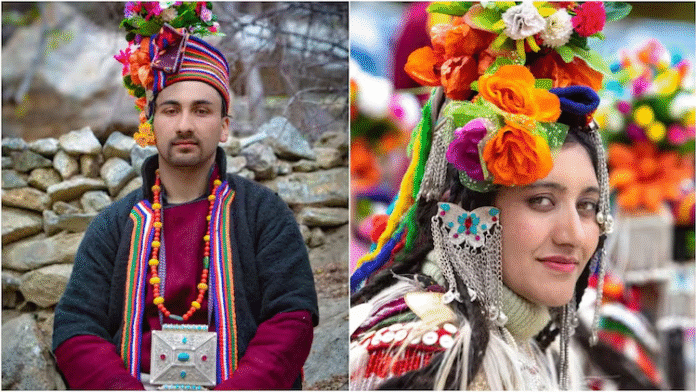
In the four secluded villages of Dah, Hanu, Darchik, and Garkone, lives the Brokpa (or Brokya) tribe, a community long romanticized as the “last pure Aryans.” Known for their striking blue eyes, tall stature, and fair complexion, they have been the subject of fascination for both travelers and researchers. Local folklore claims that the Brokpas are descendants of the soldiers of Alexander the Great, who allegedly remained in the region after the 326 BC campaign.
A Strange Trend: ‘Pregnancy Tourism’
What has recently pushed this valley into global headlines is the rise of what locals describe as “pregnancy tourism.” After reading sensational claims online, some women from the US and European countries travel to these villages hoping to conceive children with Brokpa men—believing the offspring will inherit “pure Aryan features,” including blue eyes and exceptional height. Many of these men, villagers say, are even paid for such arrangements.
Online agents have amplified this trend, offering profiles of Brokpa men along with curated descriptions of their appearance, feeding into the mythology surrounding the community.
Science Says Otherwise
Geneticists and historians, however, strongly reject the idea of the Brokpas being pure Aryan descendants. According to academic research, no scientific evidence supports claims of an unbroken lineage from Alexander’s soldiers. Experts caution that these myths have been repeatedly manufactured and romanticized—especially on the internet.
The CBI Steps In
As these practices came to light, a CBI court in New Delhi initiated an inquiry into the alleged networks facilitating such “pregnancy tourism.” Notices have been issued to clarify the process, payments, and the involvement of agents.
Some women who travelled reportedly backed out, while others went through with the arrangements—suggesting a murky system where foreign clients pay until conception is confirmed, and local young men receive substantial compensation.
Between Myth, Reality, and Exploitation
While the Brokpas’ distinct cultural identity is well-preserved and celebrated, the myths surrounding their ancestry have led to exploitation, misinformation, and international curiosity bordering on obsession.
What remains clear is that the internet has turned a once-isolated community into a global curiosity, entwining folklore, genetics, and modern-day commercial interests in a way few could have imagined.
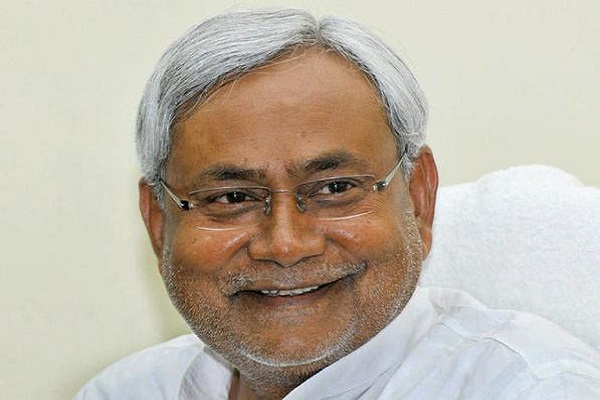
Nitish Kumar: “In Bihar’s politics, seasons change but Nitish Kumar remains.” With his 10th swearing-in ceremony scheduled for November 20, Nitish Kumar has once again proved why he is called Siyasat ka Sutradhar the master weaver of Bihar’s political landscape. Few leaders in independent India have displayed such extraordinary longevity, agility, and political instinct.
From Bakhtiarpur to Bihar’s Top Seat: A Journey of Grit
Born on 1 March 1951 in Bakhtiarpur, Patna district, Nitish Kumar grew up in modest surroundings. An electrical engineering graduate from NIT Patna, he briefly worked in the railways before entering active politics.
His political rise began with the JP Movement, where he worked alongside Lalu Prasad Yadav and other socialist leaders. While many faded, Nitish evolved. His USP became clear early: He does not chase power, he negotiates it. From MP to Union Minister to Bihar CM, he built his legacy on governance, roads, law and order, women empowerment, and rural development.
A Record 10th Oath: The Architect of Alliances
The 2025 Bihar election proved one thing Nitish Kumar’s relevance remains untouched. The NDA delivered an 85% strike rate, with BJP winning 89 seats and JD(U) 85, nearly double their previous tally. On November 20, in the presence of PM Modi and top national leaders, Nitish will take oath once again at Gandhi Maidan, sealed from the public from Nov 17-20 for massive preparations. The new cabinet formula:
JD(U): 14 ministers + CM
BJP: up to 16 ministers
LJP (RV): 3 berths
HAM-S: 1 berth
RLM: 1 berth
Why Nitish Still Wins
Because he evolves. Because he listens. Because in Bihar, he has become synonymous with one simple belief: “Leadership is not loud. Leadership is lasting.” Nitish Kumar’s 10th term is not just history, it is the return of India’s most enduring political craftsman.
About Nitish
Kumar was born on 1 March 1951 in Bakhtiarpur, Bihar, to Parmeshwari Devi and Kaviraj Ram Lakhan Singh, an Ayurvedic practitioner. He belongs to the Kurmi agricultural community, and his childhood nickname was Munna. His native village is Kalyan Bigha in Nalanda district.
He completed his Electrical Engineering degree from Bihar College of Engineering (now NIT Patna) in 1972. After graduating, he briefly worked with the Bihar State Electricity Board before shifting his focus to politics.
Kumar married Manju Kumari Sinha (1955–2007) on 22 February 1973. The couple has one son. Manju Sinha passed away in New Delhi on 14 May 2007 due to pneumonia.
Online casinos are gaining momentum rapidly, and 2026 promises to be a real game-changer. Technological breakthroughs, cutting-edge regulations, and radical shifts in player preferences are establishing new standards.
This article highlights a few leading trends reshaping the web-based casino industry in the coming years, focusing on licensed casinos in India like lucky star India, which are a part and parcel of these incredible transformations.
The Top Level of Security and Privacy
If you think players pay no mind to security issues, you are not aware of state-of-the-art trends. In 2026, safeguarding personal data will evolve into a top priority for web-based gambling establishments in India. Most Indian punters have long been no strangers to data protection concerns, and today they crave a “cyberproof shield” for sensitive information.
Therefore, licensed platforms aim to offer a competitive advantage. For instance, India, as a significant gaming market, should focus on making its online gaming policy more integrated to address countless vulnerabilities arising from anywhere.
What should be done to prevent malware and phishing attacks? The core task is to incorporate cutting-edge encryption systems and multi-layered protection systems. These promises go beyond words: licensed regulators in India strictly monitor the implementation of security standards, ensuring players stay safe while protecting their personal funds.
Betting on the Future with Digital Currency
Are you placing bets with cryptocurrency? Welcome to the future! In 2026, cryptocurrencies are likely to conquer the gambling sector, keeping your options as a gamer open. In India, more establishments are set to accept cryptocurrency transactions, enabling players to make high-speed, secure, and anonymous payments.
Why do crypto options seem so alluring? This will enhance the game’s comfort and considerably expand players’ potential. In addition, India-based licensed casinos are steadily adding cryptocurrency payments, opening a big break for those who are keen on keeping up with the times. For operators, this is also a golden opportunity to strengthen their market position.
Game developers in India do not stand still ‒ they continue to leave us flabbergasted with new formats that will take gambling to a new level. The number one trend will be the introduction of virtual reality (VR) and augmented reality (AR).
Imagine that you are no longer just sitting in front of a screen, but actually wandering around the casino, spinning roulette, or indulging in poker in real time! 2026 will be the year when VR casinos will become an indispensable part of every top establishment. This is promised to be a real revolution, providing players with a one-of-a-kind experience and the opportunity to immerse themselves in the game to the fullest.
Artificial Intelligence — Personalization at its Best
Artificial Intelligence (AI) will become a driving force in the ladbrokes casinos in the Indian market in the coming year. Are you eager to receive personalized bonuses or promotions tailored to your needs? AI powered by big data is ready to delve deeper into your game and behavior to select the offers you prefer. In this way, it will be simpler for casinos to retain customers without effort.
Key AI capabilities include:
Personalization of bonuses and promotions for each player.
Analysis and detection of suspicious actions to combat fraud.
Boosting the efficiency of customer support via streamlined solutions.
Mobile applications and PWA: the Future of Gaming in Your Pocket
Mobile gaming is not going to fall out of favor, and 2026 is expected to be the peak year. Players in India tend to switch to convenient mobile platforms due to their accessibility and the opportunity to work on the go.
Licensed casinos, including those operating in Bharat, are already investing considerable resources in developing mobile applications and progressive web applications (PWA) of all kinds. This adds convenience to your gambling story, regardless of what device you play on.
Responsible Gaming – Safety Above All
Web-based casinos are picking up steam, forcing providers to pay extra attention to the issues of safer gambling practices. In 2026, casinos across Hindustan will incorporate tools that enable players to control their gaming habits.
Deposit limits, game time controls, and self-exclusion options are all overriding mechanisms to combat gambling addiction. Regulated casinos are already actively implementing these tools, continuing to create a safer and more responsible environment for numerous players.
Responsible gaming tools involve:
Deposit and bet limits.
Long-time gaming alerts.
Self-exclusion options to combat addiction.
Local Licenses as the Key to Reliability and Security
One of the hottest trends in the gambling industry is the growing focus on smaller, local licenses. More gambling ventures are receiving official permits, which not only confirm their reliability but also guarantee full compliance with local laws.
For players, this is tantamount to a sense of tranquility: you know that your funds and data are safeguarded, and all processes take place within the legal framework.
Conclusion
2026 promises to be a turning point for the online casino industry in India. Innovative technologies, beefed-up security, and an emphasis on socially responsible gaming – all this breathes new life into gambling experiences, transforming the sector beyond habitual patterns.
International Men’s Day will be observed on November 19, a day dedicated to recognising the contributions men make to their families, communities and society. It also aims to raise awareness about issues affecting the health and well-being of men and boys.
Theme of International Men’s Day 2025
The theme for 2025 is “Celebrating Men and Boys.”
This theme highlights inspiring stories of men and boys, draws attention to the challenges they face, and encourages efforts that promote their overall health, development and quality of life. The observance also supports initiatives aimed at strengthening gender relations and acknowledging the vital roles men and boys play in society.
Why International Men’s Day Is Celebrated
The idea of a special day for men has been discussed since the 1960s. Many believed that just as International Women’s Day is celebrated on March 8, there should also be a global day to recognise men’s contributions and concerns.
International Men’s Day gained global recognition in 1999, when Dr. Jerome Teelucksingh from Trinidad and Tobago revived the idea and selected November 19 as the date for the celebration.
Link to International Children’s Day
International Children’s Day is observed a day after, on November 20. The official website notes that celebrating men on November 19 and children on November 20 creates a meaningful opportunity to honour their bond and contributions within families.
Significance
Early advocates of International Men’s Day have emphasised that the observance is not intended to compete with International Women’s Day. Instead, its purpose is to highlight men’s lived experiences, acknowledge their contributions, and bring attention to issues that affect them socially, emotionally and physically.
Indira Gandhi, known as the “Iron Lady of India,” was one of the most powerful and transformative leaders in Indian history. On her birth anniversary, celebrated on November 19, we reflect on five of her most significant decisions that reshaped the nation’s future.
Indira Gandhi Jayanti 2025 Date: Know Her 5 Strong Decisions That Shaped India
Indira Gandhi, born on November 19, 1917, served as India’s Prime Minister for an unprecedented 15 years. Her legacy is marked by bold decisions that significantly impacted India’s political, economic, and social landscape. Despite facing immense challenges and controversies, she always placed the nation’s interest above all.
On the occasion of Indira Gandhi Jayanti 2025, here are five powerful decisions that defined her leadership and shaped India’s trajectory:
1. Nationalisation of Banks
One of Indira Gandhi’s most landmark decisions was the nationalisation of 14 major banks in 1969. This move aimed at making banking services accessible to the poor, farmers, and small businesses, areas previously neglected by private banks. By bringing banking into the hands of the government, she ensured that credit and financial services reached the common people, helping foster economic growth and reducing inequality.
2. The Green Revolution
Indira Gandhi’s support for the Green Revolution was a game-changer for India’s agricultural sector. Introduced in the late 1960s and early 1970s, the Green Revolution involved the adoption of high-yielding varieties of seeds, improved irrigation techniques, and modern farming technologies. As a result, India achieved self-sufficiency in food production, reducing its reliance on foreign aid and laying the foundation for food security in the country.
3. Decisive Role in the Bangladesh Liberation War
Indira Gandhi’s leadership during the 1971 Bangladesh Liberation War remains one of her most defining moments. With unwavering resolve, she supported East Pakistan’s fight for independence, leading to the creation of Bangladesh. Her diplomatic and military strategies, along with her strong international alliances, significantly boosted India’s stature on the world stage. The success of the war cemented her reputation as a decisive and formidable leader.
4. Successful Test of Smiling Buddha
In 1974, Indira Gandhi made the bold decision to conduct India’s first nuclear test, codenamed “Smiling Buddha,” in Pokhran, Rajasthan. This move showcased India’s self-reliance in nuclear technology and strengthened its national security. The test made India the sixth country to possess nuclear capabilities, sending a clear message about India’s growing global influence and defense strength.
5. Sikkim’s Merger with India
Indira Gandhi played a key role in the merger of Sikkim with India in 1975, making it the 22nd state of the Indian Union. Her decision not only strengthened India’s territorial integrity but also helped solidify its position in the strategically important region of the Himalayas. The merger marked a significant step in India’s post-independence statehood expansion.
Conclusion
Indira Gandhi’s strong, courageous leadership and her ability to make tough decisions in the face of adversity have earned her a place as one of India’s most influential leaders. On Indira Gandhi Jayanti 2025, her legacy continues to inspire generations, and her decisions remain integral to India’s political and economic foundation.
The Raulane Festival is an ancient winter tradition celebrated in the Kinnaur district of Himachal Pradesh. Known for its spiritual depth and distinctive rituals, the festival reflects the region’s deep-rooted Himalayan beliefs and strong sense of community bonding.
Origins of the Festival
The Raulane tradition centres on the worship of celestial beings known as Saunis. These divine entities are believed to protect villagers during the harsh winter months by offering warmth, guidance, and blessings. The festival embodies Kinnaur’s enduring connection with folklore that blends nature, spirituality, and seasonal cycles.
Symbolic Rituals and Ceremony
A key feature of the festival is the symbolic union of two men who represent a divine couple. They are designated as the Raula (groom) and the Raulane (bride). Dressed in heavy woollen garments, ornaments, and distinctive face coverings, they act as vessels of the Saunis. Their slow, meditative procession through the Nagin Narayan Temple creates a sacred ambience that invites the entire village to participate.
Cultural Importance in Kinnaur
The Raulane Festival serves as a collective expression of devotion, gratitude, and cultural pride. It showcases how local communities preserve ancestral customs in a rapidly changing world. The ritual dance, temple gatherings, and shared reverence reflect the cultural unity of Kinnaur and its commitment to maintaining its spiritual heritage.
Facts
The Raulane Festival is celebrated in the Kinnaurdistrict of Himachal Pradesh.
It honours celestial protectors known as Saunis.
The ritual involves a symbolic union of two men acting as Raula and Raulane.
Celebrations are held at the Nagin Narayan Temple, featuring traditional robes and masks.
Social Media Interest and Concerns
Recent images circulating online have drawn widespread attention, prompting local residents to urge visitors to respect the sacred nature of the festival. Many community members emphasize mindful travel to ensure that cultural sanctity is preserved as the festival gains populari
Beginning this academic session, thousands of students across Uttar Pradesh will walk into school lighter literally, thanks to the state’s bold new rule: 10 Bagless Days. And no, it’s not a holiday. It’s a completely new way of learning.
Saturdays Just Got a Makeover
Forget sleepy weekend classes. The 3rd and 4th Saturdays, plus all Saturdays in December are being turned into activity zones, packed with clubs, sports, experiments, workshops, and real-world exploration. Think: classrooms without textbooks, but full of energy.
A New Education Era: ‘Anandam’ Under SCERT’s ‘Anandam’ (Joyful Learning) guidelines, students from classes 6 to 8 will learn by doing building, creating, exploring, touching, questioning. No rote learning. No heavy bags. No stress. Just pure curiosity. Where the Classroom Ends, the Real Lesson Begins Want to know how a police station works? Ever wondered what goes on behind the scenes in a bakery? Curious how a weaver turns thread into art? Bagless Days will take students into the real world, through educational trips and interactions that build confidence and practical skill.
More Than Marks: Learning for Life Director General of School Education Monika Rani says this is about helping kids:
Think independently
Observe like young scientists
Analyse real-life problems
Respect skilled work
Connect with their communities In short, they’re not just studying for exams, they’re preparing for life.
Discovering ‘Vocal for Local’ First-Hand Students will meet local artisans and entrepreneurs, learning how everyday crafts and businesses power the idea of a self-reliant India. From pottery to ODOP industry visits, these interactions are set to spark creativity and pride.
34 Activities, Endless Possibilities The Anandam module lists 34 diverse and exciting activities, grouped into:
Science, Tech & Environment
Local Industries & Public Services
History, Art & Culture Each day offers something new, something students won’t find in textbooks.
Inclusive, Accessible & Fun for All Special educators will ensure children with special needs fully participate too. Schools have been instructed to prep labs, equipment, projectors, first-aid kits, and even community tie-ups.
Parents, Get Ready Teachers are also briefing parents on why Bagless Days matter and how these experiences could help shape future innovators, leaders, and creators.
UP’s Bagless Days aren’t about carrying less
They’re about learning more. A lighter bag may just be the heaviest change the education system has seen in years.