Home Blog Page 124

Miss Universe 2025: Rajasthan’s Manika Vishwakarma in the Finals, India Just One Step Away From Its Fourth Crown

0

The 74th Miss Universe 2025 pageant is underway in Bangkok, and Rajasthan’s Manika Vishwakarma has secured a place in the finals among 130 contestants from across the globe. Her outstanding performance has sparked excitement and renewed hopes throughout the country.

Rajasthan’s daughter Manika is leading India’s journey on the global stage, impressing judges and audiences alike with her beauty, intelligence, and confidence. Her entry into the list of top finalists has placed India on the brink of winning its fourth Miss Universe crown.

Grand Finale on November 21

The grand finale of Miss Universe 2025 will be held on November 21 at the Impact Challenger Hall in Pakkret, Nonthaburi (Bangkok). Viewers can watch the event live for free on the official Miss Universe YouTube channel from 8:00 AM Thai time (6:30 AM IST).

Journey From a Small Town to the Global Stage

Manika’s journey began in the modest lanes of Sri Ganganagar, Rajasthan. She later pursued Political Science and Economics at Delhi University. Alongside her studies, she excelled in leadership, social service, and the arts. Her discipline as an NCC cadet, her training in classical dance, and her commitment to community work shaped her into a well-rounded personality.

Neuronova: A Mission for Mental Health

Manika founded Neuronova, a platform dedicated to spreading awareness about neurodivergence—conditions like ADHD and autism. She strongly believes these are not illnesses but unique ways of thinking. With this initiative, she demonstrated that true beauty reflects through compassion, awareness, and perspective.

Her involvement in the BIMSTEC Sewocon as India’s representative allowed her to share her views on foreign policy and social issues, inspiring many young minds. Recognition from institutions like the Lalit Kala Akademi and the JJ School of Arts further strengthened her artistic identity.

Rise to the National Crown

Manika won the title of Miss Universe Rajasthan and crowned her successor the same evening. On the very same day, she participated in the Miss Universe India auditions, creating a unique record.

On August 18, 2025, she claimed the Miss Universe India crown by defeating 48 contestants in a grand finale held in Jaipur. During her iconic ramp walk to the song “Tujhe Dekha Toh Yeh Jaana Sanam…”, her radiant smile and grace captivated the audience. In that moment, a new dream for India took flight.

Epstein Files Flashpoint: Inside the Viral Instagram Update That’s Shaking U.S. Politics

0

Epstein Files: The internet exploded on Wednesday night not because of a speech or a scandal, but because of a single Instagram update showing President Donald Trump seated in the Oval Office, signing a thick official binder. Above the photo, the headline blazed:
“Trump Administration Live Updates: President Signs Bill on Release of Epstein Files.”
Within minutes, the post went viral. Shares. Duets. Outrage. Celebration. Conspiracy threads.
Everyone had one question:

What exactly are the Epstein Files and why is their release such a historic moment?
The Instagram Post That Set Off a Digital Firestorm
The IG update breaks the news like a live ticker:

  • Trump has signed a bill demanding the Justice Department release Jeffrey Epstein’s files within 30 days.
  • But the post quickly adds:
    “His signature does NOT guarantee full release.”
  • The fine print reveals that ongoing investigations, classified material, and victim-related content can still be withheld.
    The image of Trump at his desk, binder open gives the moment a theatrical weight.
    This is the kind of picture that becomes history or controversy, depending on who you ask.

So What ARE the Epstein Files?
Why Is This Post Everywhere?
The Epstein Files are one of the most secretive, demanded, and mythologised document collections in modern U.S. history, containing:

  • Records of Epstein’s global trafficking network
  • Names of associates, visitors, and frequent flyers on his private jets
  • Emails, logs, transaction trails
  • DOJ and FBI internal notes
  • Details of the sweetheart deals and cover-ups that let him evade justice
  • Files on his death in federal custody in 2019

For years, the public has asked:
Who else was involved? Who protected him? What is still hidden?

But the Instagram Post Also Hints at the Twist
Despite the celebratory headline, the update adds tension:

  • Many files may remain confidential due to “ongoing investigations.”
  • Attorney General Pam Bondi refuses to confirm how much will be released.
  • A new investigation into Democrats mentioned in Epstein’s emails could delay disclosure.
  • Even Trump’s own critics say the bill is symbolic unless the DOJ complies.
    This mix of “big reveal” + “maybe nothing changes” is exactly what makes the story addictive.

Voices From the IG Update
The post also features survivor Maria Farmer’s powerful words:
“After decades in the dark… Congress finally listened.”
It’s the emotional counterpoint to Trump’s political framing claiming Democrats fear the files more, insisting he ordered the bill’s passage, and calling the attention “a distraction.”

Why This Is the Biggest Story on Instagram Right Now
Because the Epstein Files represent something bigger than politics:
They’re a symbol of hidden power and the hope of exposing it.
The IG post captures:

  • A president signing under pressure
  • Survivors demanding answers
  • Congress uniting 427-1
  • The DOJ hesitating
  • And millions of people watching like it’s a countdown to the truth
    Whether the files actually come out or stay behind redactions doesn’t matter yet.
    Right now, Instagram has turned this into the story of the moment, a rare intersection of power, secrecy, justice, and a single viral image from the Oval Office.

Delhi Khan Market Among World’s Priciest Streets, But How Does It Stack Up Against London, Milan & NYC?

0

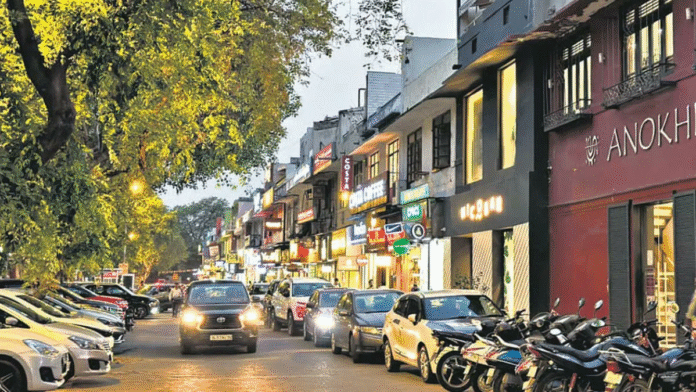
India’s luxury retail story is quietly rewriting the global map as Delhi situated Khan Market has turned up as world’s priciest streets. Wa

Khan Market: India’s Costliest Address for Retail


Delhi’s iconic Khan Market has once again been crowned India’s most expensive high street, with rents rising 3% YoY to $223 per sq ft per year, according to Cushman & Wakefield’s latest Main Streets Across the World report.
Despite this growth, its global position slipped slightly from 23rd to 24th reflecting the fierce competition among the world’s luxury retail corridors.

The Global Titans of Retail


The 2025 rankings are dominated by Europe and the US, with one major shift:
Top 3 Most Expensive Streets in the World

  • New Bond Street, London – $2,231 psf/yr
  • Via Montenapoleone, Milan – $2,179 psf/yr
  • Upper Fifth Avenue, New York – $2,000 psf/yr
    London’s New Bond Street surged to No. 1 for the first time, thanks to a 22% jump in rents.
    Hong Kong’s Tsim Sha Tsui, Paris’s Champs-Élysées, Tokyo’s Ginza, and Vienna’s Kohlmarkt rounded out the top ten, cementing their status as global luxury magnets.

India Is Quietly Outperforming the World
While global rental growth is moderate, India’s retail sector is booming, clocking a 6% YoY growth, outshining both global and Asia-Pacific averages.

Highest Rent Growth in India (YoY)

  • Gurgaon’s Galleria Market – 25%
  • Connaught Place, Delhi – 14%
  • Kemps Corner, Mumbai – 10%
    Limited supply + rising affluence = soaring demand for high-street retail spaces.
    “India’s high streets are becoming strategic hubs for brands,” says Gautam Saraf of C&W, noting that over 50% of retail leasing this year happened on high streets rather than malls.

APAC’s Most Affordable High Street? Also in India
In an interesting contrast, the report lists Anna Nagar 2nd Avenue in Chennai as APAC’s most affordable high street, with rents at just $25 per sq ft per year.

The Big Picture
From premiumisation to “phygital” retail experiences, India is emerging as one of Asia-Pacific’s most dynamic retail markets. And at the center of this evolution stands Khan Market a small, pricey, and globally significant square of India’s retail power.

Bhitiharwa Ashram: What Did Mahatma Gandhi Do at the Place Where Prashant Kishor Will Observe a Silent Fast?

0

Prashant Kishor has taken full responsibility for his party Jan Suraj’s poor performance in the Bihar Assembly elections, saying that despite sincere efforts, he was unable to win the trust of the people. “The responsibility for this defeat lies entirely with me,” he said. As atonement, Kishor has announced a 24-hour silent fast at Bhitiharwa Ashram — a symbolic return to the ideals of Mahatma Gandhi, whose concept of Swaraj originally inspired the Jan Suraj movement. After the setback, he appears to be once again turning towards the path shown by Gandhi.

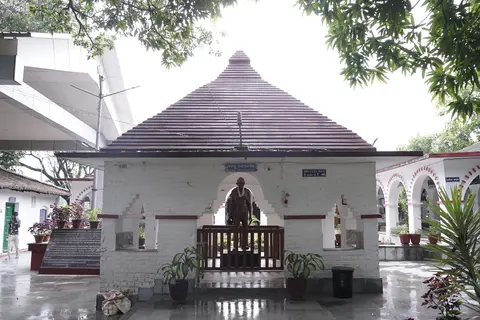
The Bhitiharwa Ashram, where Kishor will observe his fast, is located in Bhitiharwa, West Champaran. Mahatma Gandhi spent part of his Bihar stay here during the historic Champaran Satyagraha. Various symbols of Gandhi’s life are preserved within the premises, making it a significant site in Bihar’s tourism map. Many places visited by Gandhi have been recognized as historical landmarks, and Bhitiharwa Gandhi Ashram is often regarded as a temple of inspiration for Gandhians. According to the Bihar Tourism Department, it was from this ashram that Gandhi launched the Satyagraha movement in West Champaran.

A Hub of Gandhian Work

Gandhi established India’s first basic school here to promote self-reliance and skill-based education. The ashram houses several memorabilia associated with him, carefully preserved by the Bihar government. This historic site gained prominence during Gandhi’s 1917 stay, when he was deeply involved in the Champaran Satyagraha.

Prashant Kishor’s Statement:
“The people did not trust us. We collectively lost. I apologize for failing to meet the expectations of Bihar’s people. As penance, I will observe a 24-hour silent fast at the Bhitiharwa Gandhi Ashram.”

What Did Mahatma Gandhi Do Here?

Mahatma Gandhi arrived in Champaran in April 1917 after persistent requests from local farmer Raj Kumar Shukla. The British were forcing farmers to cultivate indigo and exploiting them through the oppressive teen-kathiya system. Gandhi stayed at Bhitiharwa Ashram, where he laid the foundation of the Satyagraha movement.

People at the ashram recount several stories of freedom struggle linked to his stay. A simple shelter was built for Gandhi using bricks and mud. Kasturba Gandhi also lived here and taught children in the schools established by Gandhi. Items such as Gandhi’s spinning wheel, table, bell, and personal belongings are still preserved, and his room remains intact. Visitors often come to meditate, reflect, and study his teachings.

Why Did Gandhi Come Here?

Moved by the plight of Champaran farmers, Gandhi launched a mass movement for Swaraj from this region. He mobilized villagers, formulated the structure of the movement, and worked tirelessly for social reform. Schools were set up, hygiene practices were promoted, and a new awakening spread across villages. Bhitiharwa thus became a cradle of India’s first civil disobedience movement.

How to Reach Bhitiharwa Ashram?

Bhitiharwa Ashram is accessible from both Bihar and Uttar Pradesh. Trains run from Gorakhpur (UP) to Narkatiaganj, from where the ashram is approximately 16 km away and reachable by auto or taxi. Some trains also stop at Bhitiharwa Ashram Railway Station. Visitors can also travel from Bettiah by taxi. Entry to the ashram is free.

Radioactive Horns: The Bold Experiment That Could Finally Stop Rhino Poaching

0

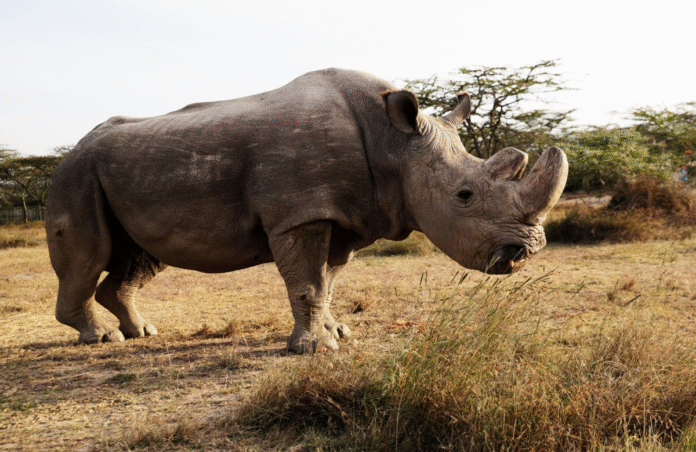
South Africa just changed the rules of the game and the world is watching. In a radical, world-first move, South African scientists have turned to nuclear science to protect one of Earth’s most threatened giants: the rhino.
The Rhisotope Project, developed by researchers at Wits University in collaboration with the International Atomic Energy Agency (IAEA), is injecting tiny amounts of radioactive isotopes into rhino horns a daring innovation that promises to expose smugglers and save lives.

For years, South Africa home to the world’s largest rhino population has battled relentless poaching. Over 400 rhinos have been killed annually since 2021, feeding a billion-dollar black market stretching from African savannas to Asian trade networks. Traditional methods failed. Poachers evolved. A new idea was needed.

Enter nuclear science.


Why This Breakthrough Matters

  • Makes horns detectable by radiation scanners at airports, ports, and borders
  • Completely safe for rhinos, proven through a pilot involving 20 animals
  • A proactive approach, shifting from chasing poachers to blocking trade routes
  • Provides real data to map illegal trafficking channels
  • Low-cost, scalable, and compatible with existing global scanning systems
  • Professor James Larkin calls it a game-changer: “At least one animal a day is still being poached. This gives us a significant tool to reduce those numbers.” Conservationist Jamie Joseph echoes the urgency: “It’s not the endgame, but it will disrupt the flow of horns leaving the country.”

A Fusion of Science & Survival


The Rhisotope Project, represents a powerful blend of innovation and necessity. By making smuggled horns instantly detectable even inside massive shipping containers it threatens the very foundation of the illegal rhino trade.

Of course, technology alone can’t save the species. Stronger laws, harder enforcement, and political will remain essential.
But for the first time in years, the odds are shifting.

Science just handed rhinos a fighting chance and the poachers a radioactive nightmare.

World Children’s Day 2025: History, Significance, Wishes and Quotes to Celebrate the Day

0

World Children’s Day is celebrated every year on November 20. The day marks the UN General Assembly’s adoption of the Declaration of the Rights of the Child (1959) and the Convention on the Rights of the Child (UNCRC) (1989). The day highlights global efforts to protect every child’s rights—without discrimination. UNICEF leads worldwide campaigns urging nations to ensure safety, education, equality, and dignity for every child.

On the eve of World Children’s Day, UN Secretary-General António Guterres shared his message for children:
“This World Children’s Day, let us listen to children. And let us amplify their voices as they stand up for their rights.”

Around the world, World Children’s Day 2025 is celebrated through various activities including dance, drama, music, and quiz competitions.

Children’s Day Wishes

  • Happy Children’s Day! May your laughter light up the world.
  • Wishing you a day full of joy, fun and sweet surprises.
  • May you always dream big and chase the stars. Happy Children’s Day!
  • Your smile is the purest magic. Happy Children’s Day!
  • May today bring you endless happiness and warm memories.
  • Stay curious, stay kind. Happy Children’s Day!
  • You are special, you are loved — today and always.
  • Celebrating the joy you bring into our lives. Happy Children’s Day!
  • Childhood is a blessing — wishing you the happiest Children’s Day!
  • Shine bright, little star. Happy Children’s Day!

Children’s Day Quotes in English

World Children’s Day 2025: History, Significance, Wishes and Quotes to Celebrate the Day
  • “Every child is a different kind of flower, and together they make this world a beautiful garden.”
  • “Children carry the hopes for a brighter tomorrow.”
  • “The soul is healed by being with children.” — Fyodor Dostoevsky
  • “Every child comes with the message that God is not yet discouraged of man.” — Rabindranath Tagore
  • “Children are the world’s most valuable resource.” — John F. Kennedy
  • “A child’s smile is the heartbeat of a home.”
  • “Children learn more from what you are than what you teach.” — W.E.B. Du Bois
  • “Let children be little, because they’re only little once.”
  • “A child sees magic because it looks for it.”
  • “If you nurture a child’s mind, you shape the future.”

World Children’s Day: UNICEF India Announces Three New Youth Advocates

0

In line with UNICEF’s commitment to work not only for children but with them—by listening to their voices, providing platforms to amplify their views, and empowering them to shape issues that affect their lives—UNICEF India has announced the induction of three new UNICEF India Youth Advocates.

The newly appointed Youth Advocates are Shyam Shukla (15) from Karnataka, Prasiddhi Singh (13) from Tamil Nadu, and Unnathi Suranaa (19) from Gujarat. At 13 and 15, Prasiddhi and Shyam are the youngest to take on this role. Each of them brings strong commitment to social causes, the ability to inspire peers, and the potential to grow as positive role models for young people across India.

They join the existing cohort of UNICEF India Youth Advocates—Gauranshi Sharma (Madhya Pradesh), Kartik Verma (Uttar Pradesh), and Nahid Afrin (Assam)—who were appointed in 2023 and 2024.

Welcoming the new Advocates, UNICEF India Representative Cynthia McCaffrey said, “Children and young people are keen to imagine and to follow their dreams — they are actively shaping solutions for their communities and our shared future. Every child’s perspective counts and strengthens our ability to fulfil our promise for quality health, education and protection for every child.”

UNICEF India Youth Advocates are part of a growing global network of young champions who promote child rights and advocate for wider spaces for dialogue at local, national, and international platforms.

UNICEF’s flagship global report, The State of the World’s Children 2025, will be released on 20 November. To mark the occasion, iconic monuments across India will light up in blue under the #GoBlue campaign, symbolizing national support for child rights.

PROFILE: New UNICEF India Youth Advocates

Shyam Shukla, 15 — Road Safety Champion

A Helmet Ambassador and road-safety advocate, Shyam leads youth workshops and represented India at the World Health Regional Summit 2024. Through his initiative, Project Safe on Roads, he promotes youth-led solutions to reduce accidents and raise community awareness. He recently contributed to a Ministry of Health and Family Welfare consultation on adolescent wellbeing.

Prasiddhi Singh, 13 — Environmentalist and Founder of the Prasiddhi Forest Foundation

Prasiddhi has led the planting of over 2 lakh trees at more than 120 locations and aims to plant 10 million trees. She has established micro-forests, climate education programmes, and Green Brigades in 200+ schools, engaging over 1 million youth across 20 countries. A Child Ambassador for the Green Tamil Nadu Mission, she has represented India at COP28, COP29, COP30, G20, Y20, and various UN forums. Her honours include the Prime Minister’s National Child Award and the Diana Award (UK).

Unnathi Suranaa, 19 — Advocate for Inclusion and Mental Wellbeing

Unnathi is the first person with a disability to win the IB MYP Innovator Grant (2022) for advancing inclusive education. As Brand Ambassador for the Down Syndrome Federation of India, she has spoken at UNICEF’s National Consultation on Adolescent Mental Health and delivered a TEDx Talk on self-belief. She acted in the film “CRAZXY,” highlighting that people with Down Syndrome can excel. A trained Kuchipudi dancer and sportsperson, she runs a YouTube channel and podcast promoting neurodiversity

Bharat Ratna: List of Perks, Privelege and Prestige Received After Getting India’s Highest Honour…

0

The perks, the power, the privilege and the prestige behind the peepal-leaf medallion.
The Bharat Ratna isn’t just an award, it’s India’s final word in honour. A recognition reserved for individuals whose contributions reshape the nation’s destiny. But what actually changes in the life of someone who receives this legendary honour? The answer is more fascinating than most people imagine.

A Lifetime of Exceptional Privileges
The Bharat Ratna brings with it a range of distinguished benefits designed to reflect the magnitude of the awardee’s service.

1. Lifetime Income Tax Exemption
A gesture of gratitude: awardees are exempt from paying income tax for life.

2. Complimentary First-Class Air Travel
They can fly Air India First Class anywhere in the country both officially and personally without paying a rupee.

3. Z-Category Security
One of the highest protection levels in India, ensuring round-the-clock safety.

4. State Guest Status
Across states, they are treated like official guests with premium accommodation, transport, and hospitality arranged by the government.

5. Diplomatic Courtesy Abroad
In select situations, they receive diplomatic privileges while travelling internationally, reinforcing their stature as national icons.

6. Parliamentary Invitations
Although not MPs, they are invited as guests of honour during special sessions and major national events.

7. Presence at National Ceremonies
From Republic Day parades to Independence Day celebrations, their seats are reserved.

A Medal Rich With Meaning
Designed by master artist Nandalal Bose, the bronze medal shaped like a peepal leaf features a radiant Sun and the words “Bharat Ratna.” The reverse bears the State Emblem and “Satyameva Jayate.”

More Than an Award, It’s Immortality
Established in 1954 and expanded in 2011 to include “any field of human endeavour,” the Bharat Ratna is India’s eternal salute to greatness.
Privileges fade. Legacy doesn’t. The Bharat Ratna writes your name into India’s history forever.

UPI Vs Visa Card: How India’s 20-Year-Old Payment Revolution Outran a 55-Year-Old Giant

0

India didn’t just build a payments app, it built a global financial phenomenon. The images say it perfectly: UPI is not convenience. It’s economic freedom. And today, that freedom is shaking up the world’s biggest financial systems.

From Local Innovation to Global Benchmark
Unified Payments Interface (UPI), still young compared to traditional systems like Visa, has become the fastest-growing real-time payment ecosystem on the planet. While Visa has spent more than five decades dominating global transactions, a young Indian innovation has outpaced it with:

  • lightning-fast transfers
  • zero fees
  • absolute accessibility
  • mass adoption across rural and urban India
    UPI made India a “first-class nation” in digital finance, a line highlighted powerfully in your images.

The World Is Now Using What India Built
What began in India is now moving across borders.
Countries like UAE, Singapore, France, Bhutan and Sri Lanka have officially embraced UPI, allowing Indians to pay instantly abroad using the same QR code system they use at home.
When India travels, UPI travels with it.
This isn’t just technology, it’s soft power.

UPI vs Visa: A Battle of Eras
Another point from your images:
A 20-year-old UPI is giving a tough fight to a 55-year-old Visa.
Why? Because UPI solved what card companies never could:

  • No swiping.
  • No hidden charges.
  • No minimum balance.
  • No waiting.
    A roadside vendor and a luxury mall now operate on the same payment level.
    That’s not convenience, that’s equality.

The Real Success? Freedom.
UPI didn’t make payments easier.
It made them fairer.
It gave financial independence to people who never had digital access.
It connected villages, empowered small businesses, and changed how India spends, saves, and grows.

UPI is India’s boldest idea – and now the world’s favorite one.